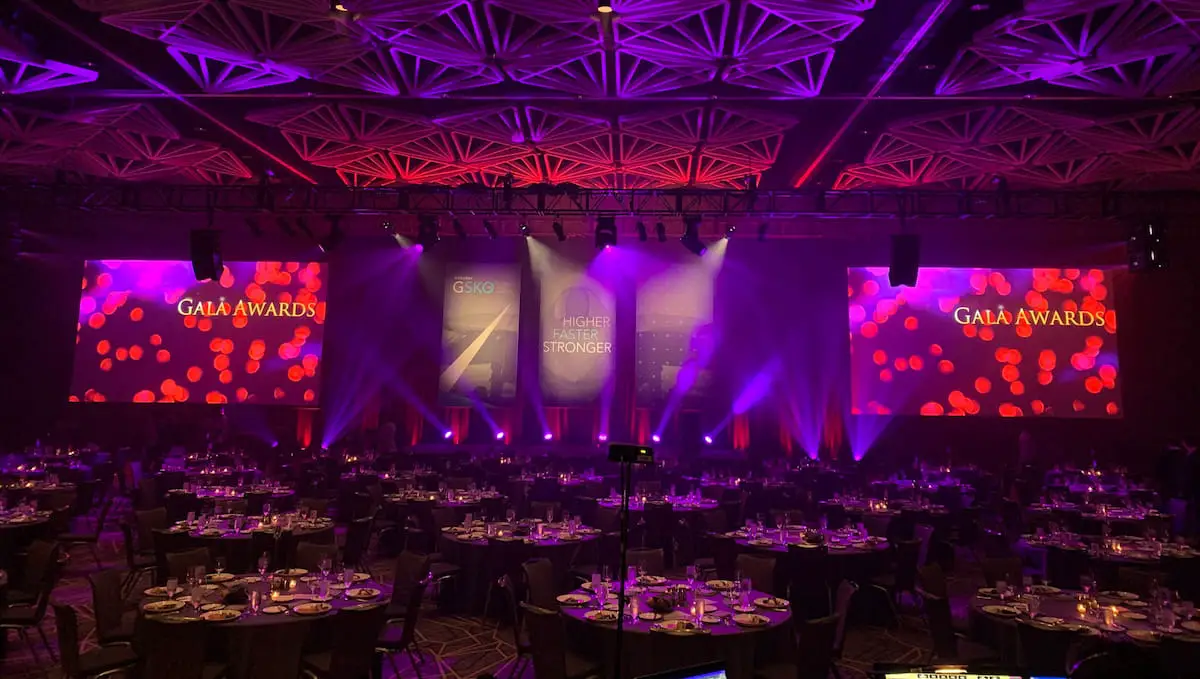
The ballroom smelled like polished wood, wet wool coats, and the kind of perfume people wear when they want money to notice them first. Rain tapped against the tall windows while every champagne flute on every white tablecloth caught the chandelier light, and for one foolish second I let myself believe my father had meant it when he told me to come.
Then Vivian saw me.
She crossed the ballroom with that neat little smile she always used when she wanted a knife to look like a dinner fork. Her beige dress was perfect. Her hair was perfect. Even the way she held her fundraiser program looked rehearsed. What are you doing here, she asked, loud enough for the closest table to turn.
I kept my coat folded over one arm. My black dress was plain, damp at the hem from the parking lot, and my old key ring was still pressed into my palm. Dad invited me.
Her eyes moved over me like I was a stain on the carpet. There has been a mistake. This is a private event. Family only.
The little circle around us widened. A waiter froze with a tray of glasses. Someone near the bar lifted a paper cocktail napkin to his mouth and pretended not to listen.
I am family, I said.
Vivian raised one manicured finger toward the security staff by the ballroom doors. Security, she said, each word smooth and cold. Remove her. She is not family.
The silence after that was worse than laughter.
Forks paused over salad plates. A woman in pearls stared down into her water glass like it might save her from witnessing anything. The band at the far end of the room kept playing softly, some gentle piano version of a song everybody knew, and somehow that made it more humiliating, not less. Nobody moved toward me. Nobody said my name.
Then I saw Dad.
He stood between two guests in dark suits, his face flushed, his mouth half-open, his eyes doing all the pleading his spine refused to do. Gabby, please. Not here. Don’t embarrass me.
For sixteen years, I had swallowed that look. Sixteen years since Mom died. Sixteen years since her name had been slowly scrubbed off brochures, plaques, banquet menus, even the framed photograph that used to hang near the lobby desk. This hotel had been dragged back from ruin by her hands, her phone calls, her sleepless nights at the kitchen table with cold coffee beside a stack of invoices. And yet, in that ballroom, Vivian had made me the trespasser.
People love family history when it raises the value of a building. They become very quiet when the daughter of that history walks in wearing last season’s coat.
So I did what I had always done. I left. No shouting. No tears for them to enjoy. No speech about what Mom built or what Dad allowed. I walked across the polished floor while people stared into their plates, and the security guard followed two steps behind me as if I had stolen something instead of being stripped of my own life in public.
Outside, the rain had turned the pavement silver. My breath shook once. Only once. Then something inside me went still. Not calm. Not forgiven. Still.
Because as I stood there with the ballroom lights glowing behind the glass, I remembered the cedar chest in storage. Mom’s cedar chest. The one I had avoided for years because grief can make even a key feel too heavy.
My name is Gabriel Townsend. I am a property attorney, which means I have spent years helping other people protect what belongs to them while quietly failing to protect what belonged to me. I was thirty-four years old, standing in a hotel car park in the rain, and I had just been ejected from a room my mother’s work had built.
It was past nine when I drove to the storage unit off the highway. The place smelled of dust, cardboard, and old varnish, and the fluorescent lights hummed over rows of metal doors. My fingers were stiff from the cold as I pulled the cedar chest forward and opened it.
I expected letters. Scarves. Photographs. The kind of sentimental wreckage that can ruin you on an ordinary night.
Instead, tucked beneath the lid as carefully as a secret, was a spotless business card. Marian Webb. Independent Corporate Trustee. Under it, in my mother’s handwriting, were three words.
Call her first.
I sat down on the concrete floor. The cold came straight through my dress, but my mind had already changed shape. I knew what that wording meant. This was not some grieving widow’s keepsake. This was not a standard will Dad could steer or soften or reinterpret over dinner. A corporate trustee with independent authority operated outside the family entirely. Mom had not left this as sentiment. She had left it as structure.
This was a lock. And she had left me the key.
I dialed the number with one trembling thumb. A woman answered after the second ring.
This is Marian Webb.
I swallowed, staring at Mom’s handwriting until the ink blurred. My name is Gabriel Townsend. I believe you knew my mother.
The line went quiet. Not confused. Not surprised. Waiting.
Then Marian breathed out, very softly, and said, Miss Townsend, I have been waiting sixteen years for this phone call.
She told me to come immediately. I drove across the city with the business card on the passenger seat and rain sheeting the windscreen.
Her office was on the fourth floor of a building that had survived two financial recessions and appeared proud of the fact. The corridors smelled of paper and old wood and the particular seriousness of rooms where important things get decided without fanfare. Marian Webb herself was in her late sixties, silver-haired, compact, with the unhurried precision of someone who had never needed volume to be heard. She had a paper coffee cup going cold beside a stack of trust documents and she moved through them with the efficiency of a woman who had been ready for this meeting for a very long time.
She explained what my mother had done.
Elaine Townsend had not been a passive participant in the hotel’s finances. She had been its architect. The property schedule attached to the trust covered the hotel building itself, the land beneath it, and a private asset register that listed seventeen million pounds in holdings Dad had always described as belonging to the family business. What he had never told me, what he perhaps did not know himself with any precision, was that my mother had structured her contribution through a discretionary trust with Marian as independent trustee and me as sole beneficiary. The trust had been dormant for sixteen years, waiting for activation. Waiting, specifically, for me to find the business card and make the call.
My mother had known something. She had not known exactly what, but she had understood the shape of what might happen. A second wife. A daughter edged slowly out of a room. A history rewritten in small increments until the woman who had worked through the night became a sentence in a brochure.
She had also known me. She had known I would not reach for what was mine until I had no choice left. The cedar chest, the business card, the three words in her handwriting, these were not just legal instruments. They were a message from my mother to the version of me she knew would eventually need to hear it.
The documents took two hours to review. My training helped. I read every schedule, every rider, every asset description with the practiced attention of someone who had spent years doing this for clients and never once imagined doing it for herself. Marian answered my questions without impatience and with the occasional dry precision of a woman who has seen enough family law to know that the truth usually lives in the footnotes.
At ten fifty-two, I signed the instruction letter. At eleven-oh-six, Marian sent the notices. The hotel. The land. The asset register. All of it moved into the trust under my authority as beneficiary, effective immediately, with independent trustee oversight that no other party could override without my consent.
At eleven-fourteen, my phone lit up for the first time. Dad. Then Vivian. Then Dad again. Then two more calls I let pass into silence while I sat at Marian’s conference table with the cold coffee and the stack of papers that had just reorganized my life.
By eleven thirty-nine, there were sixty-eight missed calls.
I thanked Marian. She walked me to the door and held it open with one hand. Miss Townsend, she said, your mother was an extraordinary woman. I told her I knew. She looked at me for a moment. Now people will know it too, she said.
I drove home through rain that had eased to a fine mist. My apartment was on the third floor of a building I had chosen for its quiet and its distance from the hotel, from the memories, from the version of my father I had spent sixteen years trying not to see clearly. I made tea I did not drink and sat in the kitchen under the yellow light, which was, I realized only then, the same color as my mother’s kitchen light. The one she had worked under at two in the morning while my father slept and the invoices accumulated and the hotel stayed alive because she refused to let it die.
At midnight, headlights swept across the front windows.
Dad’s SUV pulled up at the curb. Vivian got out first, still in her gala dress, one hand clenched around her phone, her perfect composure finally and completely gone. She stood on the pavement in the fine rain looking at my building with an expression I had never seen on her face before. She looked small. She looked like someone who has just discovered that the ground she built on belonged to someone else all along.
Then Dad stepped out. He stood on the pavement for a moment, looking up at my windows, and then he walked to the door and raised his fist to knock.
I sat in the kitchen for a long moment. The tea was cold. The building was quiet. The yellow light was warm over my hands.
Then I stood and went to the door.
I did not open it right away. I stood on my side of it and listened to the knock, and then the silence after, and then his voice coming through the wood. Gabby. Please. And then Vivian’s voice behind him, tighter, more controlled, all the smooth certainty finally stripped out of it, saying my name like a fact she had not accepted.
I thought about my mother in the storage unit. I thought about three words written in her handwriting. I thought about sixteen years of photographs removed from walls and names removed from plaques and a daughter standing in a ballroom being told she was not family.
I thought about Marian Webb sitting with those documents for sixteen years, waiting.
Then I opened the door.
My father’s face when he saw mine was not the face of a man who had arrived to apologize. It was the face of a man who had arrived to manage something, to find the right words to make the problem smaller, to fold this moment into a version of events that would allow him to wake up tomorrow without having had to change. I had seen that face my whole life. I had always let it work on me.
His eyes were red. Whether from emotion or the cold or the shock of the past ninety minutes I could not tell. Gabby, he started. We need to talk.
I looked at him. Then at Vivian, standing one step behind him with her phone in both hands and her jaw set against whatever she was feeling. She was not going to cry. Vivian was not built for tears. She was built for control, and she had just lost all of hers in the space of an hour.
I know, I said.
I opened the door wider and stepped back.
They came in. I made tea for three that nobody touched. We sat at my kitchen table under the yellow light, the three of us, with the kind of silence that arrives after something irreversible has happened and everyone in the room knows it.
Dad started with the word investment. He moved from there to legacy, then to complication, then to surely your mother would have wanted. He talked for seven minutes without stopping, which is longer than it sounds when you are sitting across from someone and watching them try to reconstruct a world that no longer exists.
I let him finish.
Then I told him what I knew. Not everything. Enough. I told him about the cedar chest and the business card and the three words. I told him I had been a property attorney for eleven years and I understood every document I had signed that night. I told him that the trust had independent oversight and that his name appeared nowhere in the chain of authority. I told him these things without heat, without tears, without the shaking hands I had driven away from the hotel with. I had left those things in the storage unit, I think, somewhere on the cold concrete floor.
Dad looked at the table for a long time after I finished. Vivian looked at me with an expression that had moved beyond calculation into something I had not expected. Something that might, in a different life, have been respect.
She did not say anything. Neither did I. There was nothing to say between Vivian and me that we had not both already understood in the moment she raised her finger at the ballroom doors. We knew exactly who we were to each other. At least now we knew it clearly.
Dad looked up eventually. His eyes were still red. He looked older than he had at the gala, smaller somehow, without the dark suits on either side of him. Why didn’t you just tell me, he said. What you knew. What you had. Why all of this tonight.
I thought about how to answer that. I thought about the missing photographs and the rewritten brochures and the sixteen years of Gabby, please, not here. I thought about a woman at a kitchen table at two in the morning who had chosen to protect her daughter rather than fight her husband, who had built a door instead of a wall.
Because she told me to call Marian first, I said. Before I talked to anyone. Before I made any noise. She knew I would only reach for it when I was ready, and she made sure it would still be there when I was.
Dad pressed his hands flat on the table. He looked at them for a moment the way men look at things when they do not know how to hold them. Your mother was always three steps ahead of me, he said quietly. Even when she was dying.
That broke something open in me that I had not expected to feel in front of him. Not anger. Something older and sadder and quieter than anger. I looked at my father and I saw, for the first time without flinching, that he had loved my mother and failed her simultaneously, that these two things had existed in him at the same time for their entire marriage, and that he had spent sixteen years with Vivian rather than sit with that contradiction alone.
I understood it. I did not forgive it. But I understood it.
They left just after one in the morning. Vivian went first, down the stairs and out to the car without looking back. Dad paused in the doorway. He did not apologize. He opened his mouth once and then closed it, and I think what he had wanted to say was too large and too late for a doorway at one in the morning. Instead he said, she would be proud of you. Then he went.
I locked the door.
I stood in the kitchen for a while, not doing anything. The tea cups were still on the table. The light was still yellow and warm. Outside, the rain had stopped entirely, and the street was quiet in the way streets get quiet in the very early morning, that particular silence that belongs to nobody and therefore belongs to everyone.
I thought about my mother choosing a corporate trustee over a solicitor. Choosing independent oversight over family. Choosing a business card in a cedar chest over a letter that could be lost or contested or explained away. She had been three steps ahead. She had known the shape of what might come, and she had made a structure that could hold it.
I picked up my phone and looked at the sixty-eight missed calls. I set it face-down on the counter.
Then I thought about the hotel. About the ballroom with its chandelier light and its white tablecloths and its polished floor that she had made possible. About the lobby desk where the photograph had once hung and had been quietly removed. About the ribbon Dad had cut while the journalists took photographs and my mother stood one step to the left, already thinking about the next invoice.
The hotel was not the point, I understood now. It had never been the point. The point was the three words in her handwriting. The point was a woman who had known her daughter would one day need a door and had quietly built one sixteen years in advance.
The point was that she had trusted me to find it.
I slept eventually. Not long, but deeply, in the way you sleep when something that has been pressing against you for a very long time has finally lifted. In the morning the sun came through the window and the street was ordinary again and I made coffee and stood at the kitchen counter while it brewed and looked at nothing in particular.
Marian called at nine. She wanted to schedule a full briefing on the trust’s operational management. She said it in the careful, unhurried way she said everything, and I said yes and wrote down the time and felt, for the first time in sixteen years, that I was operating from solid ground.
In the weeks that followed, I moved carefully and quietly, the way my mother had taught me by example if not by instruction. I met with the hotel’s management team and introduced myself not as a disruption but as a continuity. I replaced the photograph near the lobby desk. I had her name restored to the original plaque, which turned out to still exist in a storage room on the second floor, wrapped in brown paper, leaning against a wall.
Someone had kept it. I did not ask who. I chose to believe they had been waiting.
The legal conversation with Dad’s lawyers took six weeks and concluded without drama, which is the best outcome in property law. Vivian sent no messages and I sent none. Some silences are not comfortable but they are accurate, and accuracy is its own kind of peace.
Dad called once, on a Sunday afternoon in October. He did not say much. He asked how I was. I told him I was well. He said he was glad. Then he said he had been to the hotel that morning and stood in the lobby for a while and looked at the photograph. He said her name on the plaque looked right. I agreed that it did. We were on the phone for four minutes, which is a short time and also, for us, a long time.
I told Marian about it at our next meeting. She listened with her hands folded on the desk and said, your mother would call that a start. She said it without sentiment, which is how Marian said most things, and which is also how I was coming to understand my mother’s kind of love. Practical. Structural. Built to outlast the person who made it.
The cedar chest is in my apartment now. I kept the business card inside it. Some nights when I pass it I think about a woman at a kitchen table at two in the morning, knowing that the person who would need this door had not been born ready to open it, choosing to build it anyway, trusting the wait.
There are women like that in every family. They work at night. They circle invoices in red ink. They tuck business cards beneath the lid of a cedar chest and write three words that mean everything in exactly the right order.
Call her first.
I called her first.
And everything my mother built was still standing.

Sophia Rivers is an experienced News Content Editor with a sharp eye for detail and a passion for delivering accurate and engaging news stories. At TheArchivists, she specializes in curating, editing, and presenting news content that informs and resonates with a global audience.
Sophia holds a degree in Journalism from the University of Toronto, where she developed her skills in news reporting, media ethics, and digital journalism. Her expertise lies in identifying key stories, crafting compelling narratives, and ensuring journalistic integrity in every piece she edits.
Known for her precision and dedication to the truth, Sophia thrives in the fast-paced world of news editing. At TheArchivists, she focuses on producing high-quality news content that keeps readers informed while maintaining a balanced and insightful perspective.
With a commitment to delivering impactful journalism, Sophia is passionate about bringing clarity to complex issues and amplifying voices that matter. Her work reflects her belief in the power of news to shape conversations and inspire change.