The text came in while I was smiling at a couple from St. Louis.
That is the detail I return to. Not the cold that moved through my hands, not the tight sensation in my chest that I would recognize later as controlled fury. The smile. Because hospitality has a particular requirement that most people do not understand from the outside: you become whatever the moment requires. Steady, warm, unhurried, easy to trust. You learn early that your internal weather is irrelevant to the guest standing across the desk from you.
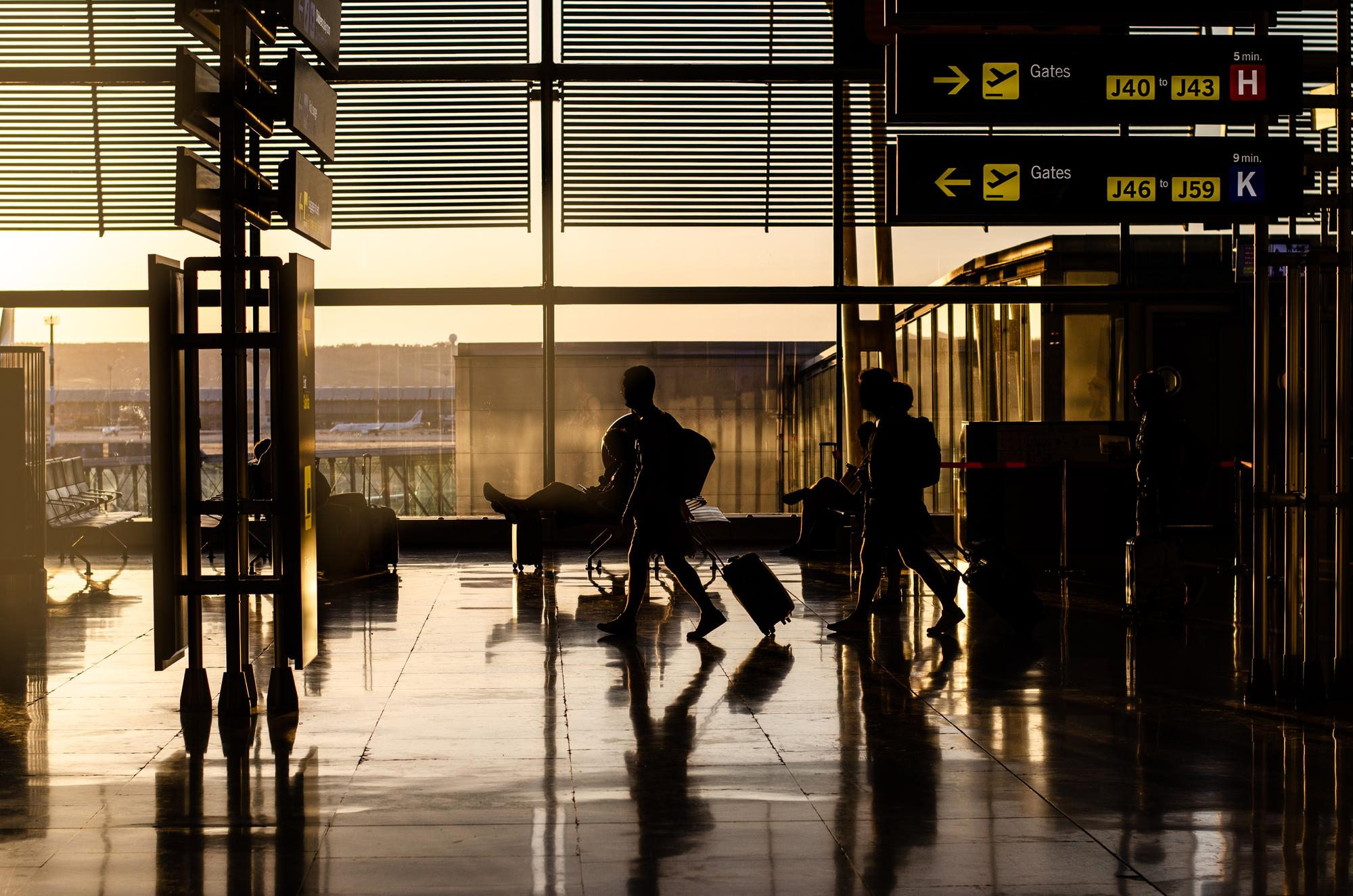
I was behind the front desk at the Ashford Grand in downtown Charlotte, amber lamps lit against polished marble, the lobby carrying its usual evening smell of citrus cleaner and fresh coffee and the kind of quiet money that does not announce itself. A family from St. Louis had just completed an eleven-hour drive with seven-year-old twins, and the father was sliding me his ID with the expression of a man who had been holding himself together by sheer stubbornness and was requesting that the universe reward this.
“We need a miracle,” he said, “and a late checkout.”
I gave him both, and I meant it, and I watched the little girl in the purple hoodie press both palms against the luggage cart like she was claiming territory. Her mother was mid-apology for something the twins had done in the elevator. I told her not to worry. The lobby had seen worse.
Then my phone buzzed on the shelf beside the monitor.
Vanessa.
My fiancée texted me during evening check-in for a limited number of reasons, most of them small: approval on a last-minute birthday detail, a request to pick up wine, occasionally money for something she had already committed to before remembering I had not agreed. I glanced down expecting something routine and mildly irritating.
Hey, we talked and gave Ethan and Ava’s spots to my sister’s crew. They’re just more fun for this kind of trip lol.
I read it twice.
Then a third time.
The family from St. Louis moved toward the elevator. The little girl waved at me over her father’s shoulder. I waved back.
Let me tell you who Ethan and Ava are, because the word spots does not begin to account for them. Ethan is eleven. He had spent the two weeks before this trip watching YouTube videos about Punta Cana, practicing Spanish phrases he kept getting wrong and refusing to give up on. He would come find me in the kitchen to show me his progress, mispronouncing the same word three different ways in a row and asking which one sounded most local. Ava is seven. She had assembled a packing list on a piece of pink paper decorated with glitter that she had applied herself in excessive quantity. At the bottom of the list, below sunscreen and her favorite stuffed animal, she had written one question in careful capital letters: ASK DAD IF FLAMINGOS BITE.
These were the people Vanessa had designated as spots. These were the people replaced by her sister’s crew because they were more fun. And she had communicated this with a laughing emoji.
“Sir?” the guest said. “Everything all right?”
I looked up.
“Perfect,” I said.
The word came out exactly as it always came out. I handed over the room keys, pointed out the breakfast hours and the hot chocolate station the twins had already identified, wished them a great stay, and waited until the elevator doors closed and the lobby returned to its normal register.
Then I read the message one more time.
I have worked in hotels for sixteen years, starting as a front desk associate at twenty-two and moving through rooms manager, assistant general manager, and eventually general manager at two different properties before landing at the Ashford Grand four years ago. The hours are long and the emotional labor is invisible and the pay is decent but not exceptional and I have never once regretted the choice. I like the logic of it. I like the problem-solving. I like the fact that when things go wrong, as they always do, someone who knows what they are doing can usually make them right.
What hospitality teaches you, underneath the guest management and the operational skills and the ability to remain pleasant when a person is screaming about a billing error, is a particular form of patience. You learn to wait. You learn to gather information before acting. You learn that a person yelling at the front desk at ten in the evening is rarely angry about what they say they are angry about, and that the fastest way to resolve a situation is to understand it accurately before responding.
That skill served me well that evening.
I understood the situation accurately before I did anything at all.
Vanessa had not misunderstood anything. She had made a deliberate calculation: my children were optional to her, my money was communal, and my response to being dismissed would be to choose peace over the spectacle of a reaction. She had been comfortable enough in these assumptions to type them out with a laugh.
I typed back two words: Understood.
Then I put my phone in my pocket and finished my shift.
At six-seven in the evening, I stepped into my office, closed the door, and sat down at my desk under the low hum of the overhead lights. Through the wall I could hear the muted sounds of a hotel at capacity: rolling suitcases, elevator chimes, bar laughter, the clink of glassware from the lobby restaurant. My desk smelled of printer toner and cold coffee. Everything was exactly where I had left it that morning.
I opened my laptop.
The Punta Cana folder sat on the desktop. I had built it over three months. Flights out of Charlotte, flights back, airport transfers, two adjoining suites and one ocean-view king room that Vanessa had described as the perfect setup for family memories. Sunset dinner reservation. Morning snorkeling excursion. The resort itself chosen because it had a shallow-water section appropriate for Ava and an activities program Ethan had already researched.
Total spent: nine thousand four hundred dollars.
Total I had been asked to contribute to the planning process: nothing, because I had handled it.
I also noticed, when I opened the shared itinerary thread, that Vanessa had added her sister Mariah three days ago. Below Mariah’s name was a message from my brother Caleb, who had been living in the guest room of my house for four months due to what he described as an apartment situation that was nearly resolved.
Enjoying the view already, Caleb had written. About time the boring half got trimmed.
I read that sentence until I understood exactly what I was looking at.
So it was not Vanessa alone. Caleb had known. Caleb had known before I did and had found it funny.
I sat with that for a long moment.
Then I thought about the house. The house I leased in my name, furnished with my money, where Vanessa lived, Caleb occupied the guest room, and Mariah treated the secondary bathroom as personal storage. I paid the rent, the utilities, the groceries, two of the three car notes, and the streaming subscriptions Mariah had requested be added to our bundle. Vanessa called it our home with complete natural ease, the way you call something yours when you have never had to calculate what it costs.
I opened the airline reservation at six-thirteen.
By six-twenty-one, the outbound flights were canceled.
By six-twenty-eight, the return flights were gone.
At six-thirty-four, I canceled the airport transfer.
At six-forty-one, I terminated the resort booking and the birthday dinner reservation.
At six-forty-nine, the final cancellation confirmation arrived and I leaned back in my chair.
A trip Vanessa had rearranged had disappeared, because it had always belonged to the person who paid for it, and that person had changed his mind.
I called the property manager, Denise, at seven-oh-two. She had managed properties for me for six years and we had a working relationship built on the mutual understanding that paperwork was not bureaucracy but protection.
She answered immediately. “Alan? Everything all right?”
“I need to convert the month-to-month add-ons and remove all secondary access tonight,” I said.
A brief silence. “Is this documented?”
“Very.”
“Send it over. I’ll handle the locks.”
I forwarded the lease, the proof of payment, and the occupancy clause that covered unauthorized long-term guests. Denise did not ask questions because she did not need to. By seven-thirty-three, the smart-lock codes were reset. By seven-forty-six, Caleb’s parking tag was deactivated. By eight-oh-five, I had moved my direct deposits, frozen the household emergency card, and removed the authorized-user access Vanessa used with the casual frequency of someone who has stopped thinking about where money comes from.
Then I looked at the rent renewal sitting in my email, unsigned.
I declined it.
There is a specific kind of quiet that happens after a series of decisions with consequences. Not peace exactly. More like the absence of noise you had stopped registering. I sat in my office for a while in that quiet, not angry, not satisfied, just clear. Clearer than I had been in some time.
The next morning, I was sitting at my kitchen table with Ethan and Ava in pajamas eating chocolate-chip pancakes. I had called the school and told them both children were taking a mental health day with their father, which was accurate.
Ava’s flamingo packing list was beside her plate.
I had told them only that the trip had changed. That adults had made selfish choices and none of it was their fault. Ethan, who was old enough to understand more than I wished he needed to, looked at my phone when it started ringing.
“Is she mad?” he asked.
I poured syrup onto his plate. “Probably.”
“Because of us?”
I set the syrup down and made sure he was looking at me and Ava was looking at me before I answered.
“No,” I said. “Because she forgot you matter.”
Ava looked down at her packing list. Then she picked up a pencil and carefully crossed out flamingos.
That one small motion nearly finished me.
I answered when Vanessa called.
Her voice came through surrounded by airport noise, sharp and breathless. “Alan. What did you do?”
“Good morning, Vanessa.”
“Don’t good morning me. The airline says our tickets were canceled.”
“That’s correct.”
A pause, then Mariah’s voice in the background: “Ask him about the resort!”
“The resort says the rooms are gone too,” Vanessa said.
“Also correct.”
“Are you insane?”
I walked into the hallway so my children would not hear my voice when it changed, because it was about to change.
“No,” I said. “I’m finally accurate.”
“What does that even mean?”
“It means when you removed my children from a trip I paid for, I removed the trip.”
“You’re punishing everyone because two kids aren’t going?”
Two kids.
Not Ethan. Not Ava. Not my children, who had trusted her and prepared for this and built their anticipation over weeks. Just two kids. Two inconvenient slots in an itinerary.
“Listen carefully,” I said. “You are at Charlotte Douglas with your sister, her husband, my brother, and your parents. You are all adults. Buy your own tickets. Book your own resort. Enjoy the fun people.”
“You know none of us have money for that.”
“I know.”
“You promised me this trip.”
“I planned a family trip. You made it something else.”
“That’s dramatic.”
“It’s also over.”
“What is over?”
I looked at the front door and the dark panel of the smart lock that no longer recognized Vanessa’s code.
“Everything,” I said.
Before she could answer, I heard Caleb’s voice in the background, then Mariah’s: “My card declined!”
Vanessa came back on the line. “Why is my card not working?”
“It was an authorized-user card. I removed the authorization.”
“You canceled my card?”
“I removed access. There’s a distinction.”
“You can’t just cut me off.”
“I did.”
She laughed, high and unsteady. “Fine. We’ll come home and talk about this.”
“You won’t.”
Silence.
“The lease has been updated. The house is in my name. The unauthorized occupants are no longer permitted. Your belongings and Caleb’s will be packed by a licensed moving service and delivered to Mariah’s address by this afternoon.”
“You changed the locks.”
“Yes.”
“While I was at the airport.”
“After you removed my children from the trip while I was at work. The timing makes sense.”
Caleb grabbed the phone. “You think you’re tough now? Throwing your own brother out over a vacation?”
“I’m throwing you out because you lived off me for four months and mocked my kids with a laughing emoji.”
He went quiet.
“Your parking tag is inactive,” I said. “Don’t try the gate.”
He hung up.
I stood in the hallway. Ethan appeared at the kitchen door.
“Dad?”
He looked smaller than eleven in that moment, which children sometimes do when they have been listening to things they were not supposed to need to understand.
“Are we still going somewhere?” he asked.
I knelt in front of him.
“Yes,” I said. “But not with people who think loving you is something they can negotiate.”
By noon, I had booked three nights at a cabin in Asheville. Fireplace, board games, mountain air, and a hot tub that Ava assessed with the seriousness of a home inspector before declaring it fancy soup.
We left that afternoon. Ethan talked more as the miles accumulated, the specific loosening that happens when children have been holding something and finally feel safe enough to put it down. Ava asked whether mountain bears liked pancakes. I told her I sincerely hoped not, because I had packed the mix.
For three days, my phone received messages I did not answer. Vanessa moved through the stages in order: anger, explanation, apology, appeal. Mariah had pressured her. Caleb had made it sound funny. She had never meant to hurt the kids. She was overwhelmed. She loved me. She loved them.
By the fourth message, I had recognized the pattern.
She loved us most when her cards stopped working.
On the second night at the cabin, Ethan beat me at chess and showed no mercy about it. Ava fell asleep on the couch with hot chocolate on her sweatshirt. I sat on the porch under a sky that had more stars than Charlotte allowed and listened to a voicemail from Vanessa, this one different in texture. She was crying.
She said she was sorry. She said she had messed up. She asked me not to end our life over this. She said she had not understood how much the kids cared.
I sat with that sentence.
She had not understood that children cared about being included.
That was not a mistake I could marry.
I deleted the voicemail and went inside to cover Ava with a blanket.
When we returned to Charlotte, the house had the specific quality of a space that has been correctly sized for the people in it. Vanessa’s boxes were gone. Caleb’s gaming chair was gone. Mariah’s collection of shopping bags no longer occupied the guest closet. Denise had handled it properly, as she always did.
Two envelopes on the kitchen island: keys returned, occupancy terminated, no property damage found.
We made spaghetti that night, garlic bread, a salad nobody touched. We ate at the counter and Ava got sauce on her nose and Ethan told her she looked like a clown and she said that was the nicest thing anyone had ever said to her.
At eight-thirty, the doorbell rang.
Vanessa stood on the porch without makeup, her hair pulled back, her eyes swollen. Behind her, Caleb sat in a rideshare with his arms folded in the posture of someone who has decided that being here is beneath him but has no other options.
I stepped outside and pulled the door closed behind me.
“Please,” she said. “Let me talk to them.”
“No.”
“Alan.”
“You don’t get access to my children for the purpose of making yourself feel forgiven. That is not what they’re for.”
Her face moved through several things. “I was going to be their stepmother.”
“You were showing me who you are,” I said. “I was watching.”
She flinched slightly. For a moment I could see clearly the woman I had fallen in love with, the one who had remembered Ava’s favorite cereal and helped Ethan with a science project and danced barefoot in the kitchen one August night when the air conditioning was broken and she had decided to make it funny instead of miserable. I had loved that woman. I still did not entirely know whether she had been real or only the version Vanessa performed when being kind cost her nothing.
“I made one mistake,” she said.
“No,” I said. “You made a revealing one.”
Tears came down her face. “I don’t have anywhere to go.”
“You have Mariah,” I said. “You chose her crew.”
The sadness shifted briefly into something harder, and there it was again, the edge that the tears had been covering.
“You’re cruel,” she said.
I shook my head. “Cruel was making my daughter cross flamingos off her packing list. Cruel was letting my son practice Spanish for a trip you had already taken from him. Cruel was doing all of that with a laughing emoji.”
She looked past me toward the window beside the door. Inside, Ethan and Ava were visible, Ava showing Ethan something on her tablet, both of them completely unaware of the conversation happening ten feet away.
I shifted slightly to block the view.
“Goodbye, Vanessa.”
The ring arrived in a padded envelope two months later. No note. I sold it. Not because I needed what it would bring. Because I wanted the last material object connecting me to that particular fiction turned into something with a different meaning.
I put the money into college accounts for Ethan and Ava.
Caleb sent one message six months later. It said: I was stupid. I’m sorry. I replied: Yes. You were. Then I blocked him, not in anger but because the conversation was complete and I did not want to leave a door open that should be closed.
A year after the text that started everything, the kids and I took the trip they had actually wanted. Not Punta Cana. We chose Puerto Rico because Ethan still wanted to use his Spanish and Ava had conducted research indicating that while flamingos were not native to Puerto Rico, iguanas were, which she had decided was even better.
We stayed at a small oceanfront hotel where the staff learned the kids’ names by the second day. Ethan ordered breakfast in careful Spanish that was considerably improved from the previous year’s attempts. Ava interrogated every tour guide about iguana behavior. On the last night, we sat at a plastic table near the water eating fried plantains from paper plates and listening to the sound of the ocean.
Ethan leaned against my shoulder.
“Dad?”
“Yeah?”
He watched Ava chase foam near the shoreline, running back when a wave came close, which it always did.
“I’m glad we didn’t go on the birthday trip.”
I looked at him. “Why?”
He was quiet for a moment in the way he gets quiet when he is finding the right words for something he has been thinking about for a while.
“Because this one feels like ours.”
I did not say anything back. There was nothing to add to that.
Later, after they fell asleep with the balcony door cracked and the ocean sound coming through, I stood outside in the warm air and thought about the word understood. The two words I had typed back to Vanessa in the lobby of the Ashford Grand while the family from St. Louis was heading to the elevator.
At the time, it had meant I understood what she had done.
Now it meant something different. Something I had been arriving at over the course of a year, through a canceled trip and a reset lock and a cabin in Asheville and a porch conversation in the dark and a flight to San Juan and a plate of plantains and a boy who said this one feels like ours.
It meant I understood what my children’s stability was actually worth. It meant I understood that love offered conditionally, withdrawn when inconvenient, extended only when the cards were working, was not love but a different transaction being called by the same name.
And it meant I understood that Ethan and Ava would never again have to wonder whether there was room for them in a life I was building. Their spots were not spots. They were the entire purpose. Everyone else was a guest, and guests were welcome as long as they acted like it.
The ocean kept moving in the dark.
I went back inside.
My daughter was sleeping with her arm around the stuffed animal she had packed on her glitter-covered list. My son’s Spanish phrasebook was on the nightstand, its cover worn from being carried back and forth.
I stood in the doorway for a moment, just looking.
Then I turned off the light and let them sleep.
There is a particular kind of grief that comes from losing someone you had not yet finished becoming sure of. Vanessa and I had been together for three years. The first year was the best year of a relationship, when everything is still a discovery and you are learning the shape of another person and the surprise of it feels like abundance. The second year we talked about what came next. The third year I proposed, and she said yes, and somewhere in the months after that something shifted in ways I had been trying not to fully acknowledge.
She had stopped asking how I was and started asking what I could handle. She had stopped listening to my answers and started assessing my resources. The trip had been her idea, her vision, her birthday, her family, and I had funded it because I wanted her to have what she wanted and because love involves wanting that. But somewhere between the first deposit and the evening she typed that message, the trip had stopped being something we were doing together and had become something I was paying for while she managed.
I had noticed this, in the ambient way you notice things you are not yet ready to act on. The message made it impossible to pretend I had not.
Looking at the closed laptop and the empty inbox that evening, what I felt most clearly was not anger. It was the specific sadness of something you thought was one thing turning out to be another. And underneath that, something steadier: a decision, arrived at without drama, that my children deserved a person in their lives who did not calculate their worth against the fun quotient of a competing family.
I had made my decision. The rest was logistics.
When Ethan and I sat on the porch in Puerto Rico on the last night and he said this one feels like ours, he was right about more than the trip. Everything we had built in the year following that evening felt like ours in the same way: sized correctly, occupied by the right people, built without the ambient anxiety of waiting to find out who we were in someone else’s accounting of us.
I went inside and turned off the light and listened to the ocean from the doorway.
That was enough. It was exactly enough.
People who have not worked in hospitality sometimes ask what the hardest part of the job is. The answer is not the difficult guests, though there are many. It is not the staffing challenges or the revenue pressure. The hardest part is that you spend the day becoming whatever the moment requires, and after enough years you start to wonder whether the person doing the becoming is still intact underneath all the adaptation.
The answer, I found out on a night when my kids were asleep in a hotel room in Puerto Rico with the ocean sound coming through the door, is yes. The person is still there. He just sometimes needs a situation that finally costs enough to bring him back to the surface.
Ethan’s Spanish phrasebook was on the nightstand with its cover worn from being carried back and forth over two trips’ worth of practice. Ava’s stuffed animal was tucked in beside her. Both of them were sleeping with the complete untroubled ease of children who trust that the adult in the other bed will handle whatever comes next.
That trust is the only thing that has ever felt like a true responsibility. Not the lease, not the bills, not the ring I had sold, not the brother I had blocked, not the career or the title or the money I had spent and recovered and redirected. Just two kids asleep in a room by the ocean, trusting that I would handle whatever came next.
I handled it.
I still am.
That is the ending, if there is one.
Not the ring sold, not the locks changed, not the cards declined at Charlotte Douglas while Vanessa stood at the airline counter trying to understand what had happened. The ending is the Spanish phrasebook on the nightstand and the stuffed animal in the crook of Ava’s arm and the sound of the ocean coming through a cracked door in a country they chose because they wanted to be there.
That is what their spots were always for.
That is what I had always been building.
I think about the family from St. Louis sometimes. The twins with their hands on the luggage cart. The father who had held himself together for eleven hours on the highway and was asking, with the exhausted honesty of a person at the end of their resources, for a small miracle and a late checkout.
I gave him both. I meant both.
That is the thing about hospitality that is easy to misread from the outside. When you become what the moment requires, you are not performing. You are choosing. Every time you steady yourself and take a breath and give someone your full attention when you have something else pressing against your ribcage, you are making a decision about who you want to be in that specific moment, for that specific person.
I made the same choice for Ethan and Ava.
Not in the dramatic sense of the canceled flights and the reset locks and the phone call at the airport. Those were logistics. The actual choice was quieter. It was the decision not to let their places in my life be something anyone else could calculate the value of. It was the decision that the answer to we gave your kids’ spots to my sister’s crew was not a paragraph of hurt feelings or a tearful negotiation but two words, a closed laptop, and a set of methodical steps toward a situation that matched the truth.
The last message Vanessa ever sent me, three months after the ring came back in the padded envelope, said simply: I hope the kids are good.
I waited a day before answering. Then I typed: They’re great.
That was true.
That is still true.
That will keep being true.

Ethan Blake is a skilled Creative Content Specialist with a talent for crafting engaging and thought-provoking narratives. With a strong background in storytelling and digital content creation, Ethan brings a unique perspective to his role at TheArchivists, where he curates and produces captivating content for a global audience.
Ethan holds a degree in Communications from Zurich University, where he developed his expertise in storytelling, media strategy, and audience engagement. Known for his ability to blend creativity with analytical precision, he excels at creating content that not only entertains but also connects deeply with readers.
At TheArchivists, Ethan specializes in uncovering compelling stories that reflect a wide range of human experiences. His work is celebrated for its authenticity, creativity, and ability to spark meaningful conversations, earning him recognition among peers and readers alike.
Passionate about the art of storytelling, Ethan enjoys exploring themes of culture, history, and personal growth, aiming to inspire and inform with every piece he creates. Dedicated to making a lasting impact, Ethan continues to push boundaries in the ever-evolving world of digital content.