The Message
The text message arrived at 2:13 a.m., illuminating Alexandra’s nightstand like someone had turned on a lamp inside her chest.
“Disappear before we get back. I hate old things, and I work too hard not to deserve a new life.”
Below it, almost immediately, another message appeared.
“Don’t cause drama. The kids are coming with us.”
Alexandra sat perfectly still on the bed, her phone trembling between her fingers. Outside, in the gated community of Oak Brook, all she could hear was the distant hum of a motorcycle and the sprinklers hitting the grass. Everything seemed normal. Everything was still in its place. But those two sentences had finally shattered something that had been cracking for years.
She read the messages again, searching for some other interpretation. Perhaps he was drunk. Perhaps he had sent them to the wrong person. Perhaps there was some context that would make these words mean something different than what they so clearly meant. But the messages were short and precise, exactly like Richard. No explanation. No ambiguity. Just a man telling his wife of nineteen years to vanish.
Richard Stone had always possessed a talent for making cruelty sound like an office directive. Short sentences. No explanation. No room for debate. It was how he had built his advertising career. It was how he managed people. It was how, she realized now, he had managed her for nearly two decades.
Three weeks earlier, he had announced he was marrying Valerie, a twenty-seven-year-old woman who worked at his advertising agency and who, according to him, made him feel alive again. The words had felt like a blade. Not because infidelity was a shock anymore. But because he said it while standing in their kitchen, while she was cutting fruit for their children, while he was already looking past her like she had become transparent. Like she was furniture that had gone out of style.
He had told her in the kitchen while Alexandra was brewing coffee and cutting strawberries into careful slices for Dylan and Chloe. Richard was leaning against the granite counter wearing a freshly ironed white shirt, his phone placed face down on the marble as if he needed it within arm’s reach at all times. As if another world existed inside that screen and he could not bear to be separated from it for even a moment.
“I am starting over,” he said.
Alexandra did not answer. She kept slicing the strawberries, the knife moving through red flesh with mechanical precision. One slice. Another slice. Her hands knew how to do this without her brain being present.
He continued, as if he were presenting a business plan to a conference room full of people who cared. “The wedding will be in Maui. My parents are going. My cousins too. The kids need to see me happy.”
“Our kids?” she asked, feeling her voice begin to break at the edges.
“Do not turn them against me, Alex. Playing the victim does not suit you.”
She had wanted to throw the knife. Instead, she set it down carefully on the cutting board and excused herself to the bathroom. That night, she cried with the shower running so no one would hear. She sat on the edge of the tub in the dark and let her body shake with sobs that came from a place she did not know existed inside herself. Sobs that contained not just grief but years of accumulated insignificance, of dinners that did not impress him, of accomplishments he did not notice, of quiet competence that he had mistaken for weakness.
But in front of Richard the next day and every day after, she did not shed a single tear. She did not beg. She did not ask if he still loved her. She already knew the answer. Perhaps she had known it for years, watching him come home later each night, watching him check his phone in that particular way that meant the person he wanted to talk to was not in the room.
For almost two decades, she had been the one who remembered vaccines and school meetings and medications and birthdays and bills and uniforms and family dinners. She had kept track of every detail that made a household function. She had remembered things Richard had never even known he should forget. She had been the architecture of their life together, invisible and essential, like the foundation of a house that nobody ever thought to appreciate.
Richard, meanwhile, was the successful one. The provider. The man who came home late and expected a hot meal because his day had been much harder than hers, never mind that she had managed an entire household while working part-time as a real estate agent, which meant she was always on call, always available to show properties at inconvenient hours, always expected to earn just enough to matter but not so much that she could claim equal status.
And now, after using that house as if it were his throne, after sleeping in the bed she had decorated and eating at the table she had maintained and raising children she had nurtured, he was asking her to disappear.
At 6:41 a.m., while Richard was in the shower preparing for work, an email was mistakenly sent to their shared account. It was the travel itinerary. Departure flight on Saturday. Hotel reservations in Maui. Return flight the following Friday at 4:47 p.m. The exact time of arrival back in Chicago. Alexandra read it three times. She memorized every detail with the precision of someone who was suddenly thinking very clearly. Richard was not just cruel. He was careless. He had sent her the exact timeline of his absence, the exact moment when he would return to his old life, expecting to find her gone and the house emptied of her presence.
At 7:20 a.m., after Richard had left for the office, she went down to the laundry room in her bare feet. The concrete floor was cold against her skin. She pulled out a plastic storage bin where she kept her father’s old papers. Deeds. Receipts. Contracts. Yellowed copies that smelled of dampness and time and old decisions made long ago.
Her father, Arthur Reed, had inherited that plot of land to her before he died eight years earlier. She had been twenty-four then, just married, too young to understand why her father insisted on putting the property in her name only. Richard had not seemed to mind at the time. Or perhaps he had not noticed. Perhaps he had assumed that everything she owned would eventually be his anyway, that marriage meant the dissolution of her separate identity into his larger life.
“The house might fall down, sweetheart,” her father told her one afternoon, sitting on the porch with a cup of tea growing cold beside him. He was already sick then, though she did not know it yet. His hands had begun to shake. “But you never give the land to someone who confuses your love with obedience.”
Richard had always mocked that sentiment. “Your dad and his paranoia,” he would say. “As if I wanted to steal a patch of dirt from you.” He had said it like the idea was absurd, like wanting nothing from her was somehow proof of his devotion. But what he had really meant was that he could not imagine any woman owning anything he might want. The fact that she owned the land had simply never registered as important enough to question.
Now, holding the deed in her hands, Alexandra understood that her father had known something about men like Richard long before she did.
She opened the folder and found the deed, documents printed in official language that she had read exactly once, at her father’s insistence, on the day he signed them over to her. The paper was thin, almost fragile, but the words printed on it were permanent and binding. Then, she logged into the County Recorder’s Office portal and searched the property address with shaking hands.
The name appeared clear, cold, and impossible to argue with.
Owner: Alexandra Reed.
Not Richard Stone.
Not Richard and Alexandra.
Just her.
For the first time in days, Alexandra smiled. It was not a happy smile. It was a tired, hardened smile, the kind that is born when a woman realizes she still holds a card no one else saw. She had been so busy being erased that she had forgotten what she still possessed. Her father had protected her. Even in death, he had protected her.
Two days later, she walked into a small office in a strip mall, sandwiched between a salon and a stationery store. The building smelled like nail polish and fresh ink and the particular staleness of places where important decisions are made in small rooms. Attorney Gloria Miller was a woman in her sixties who had the kind of face that had seen everything and had decided long ago not to be surprised by any of it.
Gloria read Richard’s texts without interrupting. Her eyes moved across the screen, and her expression did not change. She reviewed the deed, the itinerary, and the bank statements that Alexandra had brought in a folder. She did not offer sympathy or outrage. She simply made notes on a legal pad, her handwriting precise and economical.
“He thinks you are going to leave quietly,” Gloria said finally.
“He does.”
“What do you want to do?”
Alexandra looked out the window at the parking lot. A woman was loading groceries into her trunk while a child sat on the curb eating chips. Life went on. People bought groceries and loaded them into cars and drove home to houses and made dinner and existed. But hers could no longer go on the same way. She had spent nineteen years building a life for someone who had never actually wanted a life with her. He had wanted a status symbol. A competent manager. A woman who would disappear into the background of his success and ask for nothing.
“I want him to come back and understand exactly what he threw away,” Alexandra said quietly.
Gloria set the pen down on the desk and looked at Alexandra with something like respect.
“Then we do it right. No yelling. No threats. Just paperwork.”
That very same day, Alexandra filed for divorce. She changed passwords on every account he could access. She froze credit lines. She opened a new bank account. She printed every text message, every email, and every receipt that documented years of financial imbalance. Richard had taken credit for providing for the family while she had quietly paid for half the household expenses from an inheritance he had publicly dismissed as old family money. She had receipts. She had documentation. She had been careful, methodical, building evidence the way she built everything else in her life. Carefully. Quietly. Thoroughly.
But the most drastic decision came forty-eight hours later, when an engineer specializing in prefabricated homes walked through the living room of the Oak Brook house. His name was David Chen, and he had a calm manner and precise eyes that noted every detail. He tapped the light steel columns. He inspected the supports underneath the floor. He walked through every room, making notes on a clipboard, occasionally humming quietly to himself.
Finally, he told her something she had never known. “It can be dismantled and moved,” he said, his voice matter-of-fact. “It is not easy, but it can be done. The house was built on a modular foundation. When was it constructed?”
Alexandra told him the year. She had bought the house before marrying Richard. It had been important to her then that she own something in her own name. She had not known then that ownership would mean nothing to someone who believed everything he built was his.
“Good,” David said. “That was the era when modular construction was becoming more sophisticated. The house can be dismantled into sections, transported, and reassembled on a new foundation. Do you want the lot completely cleared?”
Alexandra walked through her house one more time before answering. She looked at the kitchen where she had served thousands of dinners, where she had hosted holidays and birthday parties and ordinary Tuesday nights that felt sacred because her family was together. She looked at the hallway where her children had run barefoot in their pajamas on Sunday mornings, where they had learned to walk, where they had played games and fought and laughed. She looked at the window above the sink where she had stood countless nights waiting for Richard to come home, waiting for him to notice her, waiting for him to be someone he had no intention of becoming.
She looked at the bedroom where she had felt invisible even while lying beside him.
Then, she remembered the text from 2:13 a.m.
“Yes,” she replied. “When he gets back, I want him to find absolutely nothing.”
The next two weeks became a kind of controlled chaos. Permits were filed. Notifications were sent to the county. The contractors arrived early on a Monday morning with equipment that looked like it belonged on a film set. Alexandra watched from a distance as they began the delicate work of dismantling the house that had been her life for so long.
The roof came off first. Sections of it, carefully removed, stacked on trucks with the precision of people handling something fragile and valuable. Then the walls. The contractors worked systematically, treating the house like a puzzle that could be carefully disassembled and reconstructed elsewhere. The kitchen cabinets came out. The flooring. The electrical systems. The plumbing. Every piece was labeled and catalogued and placed in the proper truck.
Mrs. Hernandez from across the street watched from her porch with watering can in hand. She did not ask questions. She had been in the neighborhood long enough to know that sometimes women did extraordinary things when they finally decided to reclaim their lives.
Meanwhile, in Maui, Richard toasted to his new life. He stood on a beach at sunset, raising his glass surrounded by his parents and cousins and his new bride. He looked happy in the photographs that he posted online. He looked like a man who had finally achieved exactly what he had always wanted. No one in those photographs looked worried. No one looked like they were thinking about the wife he had left behind. No one looked like they were thinking about the house that was being systematically dismantled three thousand miles away.
The convoy arrived on a bright Saturday afternoon, three days ahead of schedule. They had cut their honeymoon short because Richard was restless, ready to return to his normal life, eager to see how efficiently his wife had managed their affairs in his absence. The rental SUV pulled into the driveway of Oak Brook, and Richard stepped out wearing sunglasses, one arm around Valerie’s waist. Behind them, Dylan and Chloe climbed out sleepily, dragging suitcases covered in airport stickers. Richard’s parents laughed as they admired the neighborhood they had not seen in two weeks.
“Wait until you see the house,” Richard said with confidence. His voice had the tone of a man accustomed to being right about things. “I have made some changes. Alex finally understood she could not fight reality.”
But as they turned onto the street, his smile faded.
The house was not there.
Not damaged. Not boarded up. Not even partially demolished in a way that suggested chaos or vandalism. Simply gone. Vanished as completely as if it had never existed at all.
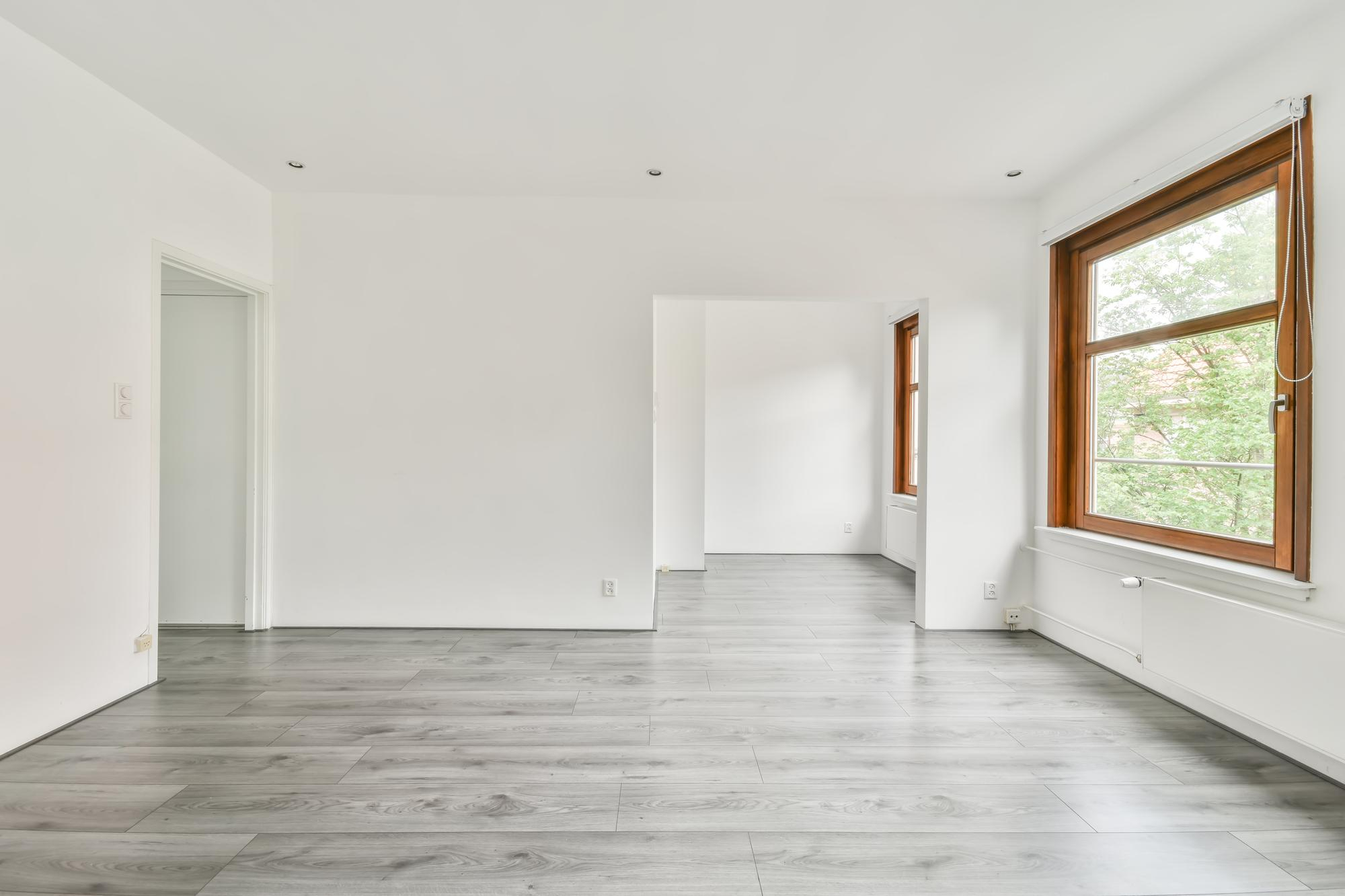
Only a perfectly leveled lot remained, covered with fresh soil and neat rows of newly planted grass. A small white survey stake stood near the sidewalk, marking the address with mathematical precision. The address marker was still there, but the house that had once sat at that address had vanished completely.
Richard stopped walking.
“What…?” His voice sounded small and confused, like a child’s.
Valerie frowned. “Is this the wrong address?”
“No.” His voice cracked on the word. “No, this is it.”
His father looked around, visibly disoriented. “There was a two-story house here. I remember the porch. The roof line. The way the morning light hit the east side.”
Across the street, Mrs. Hernandez was watering her roses. She looked up and waved politely.
“Oh, you are back.”
Richard hurried over, his legs suddenly unsteady. “What happened to my house?”
She paused, considering the question carefully. Then she said, “Your wife’s house.”
“What?”
“The crews worked for almost two weeks. They dismantled it piece by piece. Quite impressive, really. They were very careful not to damage anything.”
Richard laughed nervously. “No. That is impossible.”
“She had permits,” Mrs. Hernandez said calmly. “Police came by once to direct traffic. Everything was legal. Very legal, actually. The county supervisor came by personally to inspect the work. I think he was curious about the process.”
Richard dialed Alexandra. Straight to voicemail. He called again. Nothing. Then his phone buzzed. An email. Subject line: Final Notice.
Attached were documents from Attorney Gloria Miller.
His smile vanished as he opened the first page. The property deed. Clean and official. Owner: Alexandra Reed. The second attachment contained the divorce petition. Detailed. Meticulous. Twenty pages of legal language that spelled out exactly how little he had contributed to the household and how much he had extracted from it. The third attachment listed temporary financial orders freezing several shared accounts pending the court’s decision.
The fourth attachment was only one page.
At the bottom was Alexandra’s signature, precise and steady. Above it, one sentence.
“You asked me to disappear. I simply took what belonged to me.”
Valerie slowly stepped away from him. “You told me you owned the house.”
“I…”
“You said everything was yours. You said you built an empire.”
“I thought…”
“You thought?”
She looked at him with an expression that shifted from confusion to clarity to something colder. She was seeing him, really seeing him, for perhaps the first time. And she did not like what she saw.
Richard looked around desperately. His parents refused to meet his eyes. His father finally spoke quietly. “Richard, did you even read the deed when you married?”
Silence.
His mother whispered the answer herself. “He never bothered.”
Three months later, the divorce hearings concluded. The judge was unmoved by Richard’s arguments. The land had always belonged to Alexandra. The house had been legally classified as a prefabricated structure that could be relocated. Every permit had been approved. Every notification had been filed. Every financial transaction was documented. Richard had no claim to the property. He had signed nothing. He had contributed nothing. The deed had always been in Alexandra’s name.
Worse still, years of financial records showed Alexandra had quietly paid many household expenses from an inheritance Richard had dismissed as old family money. His attempts to hide bonuses and move assets into separate accounts did not impress the court. The judge reviewed the evidence methodically and rendered a verdict that left him with almost nothing.
When Richard left the courthouse, reporters were not waiting. Neither were friends offering support. Only Valerie stood there, and she handed him a small envelope.
“My apartment key,” she said.
He looked confused. “What?”
“I am moving out.”
“Valerie…”
She shook her head. “You did not leave your wife because you found love. You left because you thought life should always be newer, younger, easier. One day I will be older too. And you will trade me in just like you did her.”
Then she walked away. She never looked back. He called after her, but she did not turn around. She simply got into her car and drove away, and he never heard from her again.
Meanwhile, fifty miles outside the city, Alexandra stood on the porch of the home that had once sat in Oak Brook. It looked different now. The walls had been painted warm white. A wraparound porch overlooked a small lake. Flower beds surrounded the entrance with hydrangeas and roses and native wildflowers that had been chosen carefully for their resilience and their color. The moving company had rebuilt every room exactly as she wanted it, not as it had once been, but better. Brighter. Peaceful. The kitchen faced east to catch the morning light. The bedroom windows opened onto views of water instead of the neighbor’s hedge. The study, which Richard had never set foot in, had become hers. Just hers.
She had renamed the property. Reed House. Her father’s weathered wooden sign hung beside the front door. The wood was soft with age, and the letters were almost worn away, but they were still legible. “Land lasts longer than pride.”
Dylan and Chloe arrived every other weekend at first. The visits were awkward in the way that children’s visits become when they sense that something fundamental has shifted in the world. They were confused by the new house. Confused by their father’s absence. Confused by the way their mother moved through the world now, less apologetically, more directly.
One evening, Dylan quietly asked, “Mom, did Dad really tell you to disappear?”
Alexandra looked at her son and could have lied. She could have protected him with a comfortable fiction. But instead, she nodded. “He did.”
Chloe’s eyes filled with tears. “Why did not you tell us?”
“Because I never wanted you to choose between your parents. That is not a choice children should have to make.”
There was a long silence. Finally, Chloe stood up and hugged her. “So can we choose where we feel safe?”
Alexandra wrapped both children in her arms. “Always. You can always choose where you feel safe.”
Over the next year, something unexpected happened. The weekends became weeks. The weeks became requests to stay longer. Richard missed school concerts. He forgot birthdays. He canceled visits because of work. He bought expensive gifts to compensate for his absence, but the gifts did not fill the void. Alexandra never criticized him. She never pointed out his failures. She simply kept showing up. Homework. Soccer practice. Science fairs. Late-night fevers. College planning. Everything she had always done, now without the resentment, now because she wanted to, not because she was obligated to.
One afternoon, the family court approved an updated custody arrangement reflecting the children’s wishes. As they left the courthouse, Dylan smiled. “Can we go home now?”
Alexandra looked at him. “You mean my house?”
He grinned. “No.” He pointed toward the tree-lined road leading to Reed House, toward the place that smelled like fresh paint and possibility. “I mean ours.”
Two years later, Reed House became more than a home. Alexandra converted part of the property into a retreat for women rebuilding their lives after divorce and financial abuse. She hosted workshops on budgeting, legal rights, and starting over. Every guest who arrived carried a story of loss. Every guest left with a plan for tomorrow. She had learned that the most valuable thing she could offer was not advice but proof. Proof that it was possible to reclaim your life. Proof that land lasted longer than pride. Proof that a woman could disappear on her own terms and emerge somewhere better.
One autumn afternoon, while volunteers prepared a community picnic, a delivery truck stopped at the gate. The driver handed Alexandra a small package. There was no return address. Inside lay a single photograph. It showed the old Oak Brook house exactly as it had once stood, perfect in every detail, a monument to her former life. On the back, in familiar handwriting, were four words.
“I was terribly wrong.”
There was no signature. She did not need one. She knew who it was from. She knew what it meant. He was asking for forgiveness. He was asking for an opening. He was asking for a way back in.
Alexandra looked at the photograph for a long moment. Then she smiled, not with triumph, but with peace. The peace that comes from knowing you have already moved on. She walked to the fireplace, placed the picture into the flames, and watched it curl into ash. The paper turned brown at the edges first, then black, then fragmented into nothing. Some memories deserved gratitude. Others deserved release.
As the fire faded, laughter echoed from outside. Dylan was helping Chloe hang lights across the porch. Friends and neighbors filled the yard. Children chased one another through the grass. Music drifted across the lake, carried on the cool evening air.
Alexandra stepped onto the porch, breathing in the autumn night. Her father had been right. The house could be moved. The land could be protected. But the greatest thing she had saved was herself. And this time, no one could ever ask her to disappear again.
She looked out at her children laughing together, at the lights strung like promises across the porch, at the lake that reflected the stars. She thought about the woman she had been when she cut fruit in that kitchen in Oak Brook, the woman who had believed her worth was measured by what she provided to others. She thought about the woman who had cried in the shower and endured silently and asked nothing for herself.
That woman was gone. And Alexandra was grateful for it.
She turned and walked inside, into the light and warmth of her own house, her own land, her own life. No one followed her. No one needed to. She had finally learned to walk forward alone, and it felt like everything she had been searching for.

Adrian Hawthorne is a celebrated author and dedicated archivist who finds inspiration in the hidden stories of the past. Educated at Oxford, he now works at the National Archives, where preserving history fuels his evocative writing. Balancing archival precision with creative storytelling, Adrian founded the Hawthorne Institute of Literary Arts to mentor emerging writers and honor the timeless art of narrative.