My name is Ernest Coleman. I am sixty-eight years old, and I live in Nashville, Tennessee. For thirty-one years I worked in courtrooms across Davidson County as an official court reporter, transcribing every word spoken under oath, every denial, every careful pause, every polished lie.
That kind of work changes the way you listen.
You learn to hear the silence before an answer. You learn to watch what people do with their hands. You learn that the truth rarely arrives loudly. Most of the time it slips into a room quietly and waits to see who notices.
I retired in 2019. I thought the courtrooms were behind me.
My son David was forty-one when he passed. The official report called it sudden cardiac failure. He was careful. He did not smoke. He ran three miles every Thursday. He took the stairs instead of elevators. At forty-one, a man like that is not supposed to simply stop existing over a quiet breakfast in March. Not unless something about the story is missing.
I need to tell you about Tara before I tell you what happened after the funeral.
David met her four years earlier at a work dinner downtown. She was striking in the way certain people are striking, beautiful in a way that worked best when others were watching. She had a son already, Brett, twenty-two, with a permanent look of mild contempt carved into his face. When David introduced her to me, Tara shook my hand like she was doing me a favor.
I gave her the benefit of the doubt.
I am, by nature, a patient observer. Thirty-one years of transcribing other people’s words at their worst will either make you cynical or careful. I chose careful. I told myself David was happy. I told myself my job was not to be his judge.
But over the following months, I watched Tara move into every corner of David’s finances the way water moves into a cracked foundation. Slowly. Quietly. With complete commitment. First a joint account for household expenses. Then she handled the bills. Twice she mentioned that David seemed overwhelmed and maybe she should manage his banking apps, just to help.
David was a good man, which sometimes means a man who does not see certain things coming.
Brett moved in six months after the wedding, told David he needed a few months to get his dropshipping business running. That was two years before David died. As far as I could tell, Brett’s business consisted mostly of sitting on my living room couch with a laptop and periodically asking his mother for money. He called me “the old man,” not to my face at first. But houses carry sound differently than people expect. I heard it. I filed it away.
The funeral was on a Thursday. Fifty-three people came. Tara wore black with remarkable composure and accepted condolences with lowered eyes and soft, practiced grief. Afterward we came back to the house. Within twenty minutes, Tara was on her phone in the living room, one hand working through the mail on the side table. She pulled a bank envelope halfway out and read the return address. She felt me looking. She put it down and turned toward me with an expression of such swift, seamless grief that I almost second-guessed myself.
Almost.
Upstairs, Brett’s music started. The kind that tests the strength of plaster. The kind that says I am here, I am comfortable, this house is as much mine as anyone’s.
I made coffee and thought: my son has been gone less than eight hours, and his wife is reading my mail while her son rattles the windows above my head. Something is wrong. I did not know the exact shape of it yet. But thirty-one years of courtroom instinct told me to pay very close attention.
So I drank my coffee and said nothing for the rest of the night.
The following morning at 8:40, my phone rang.
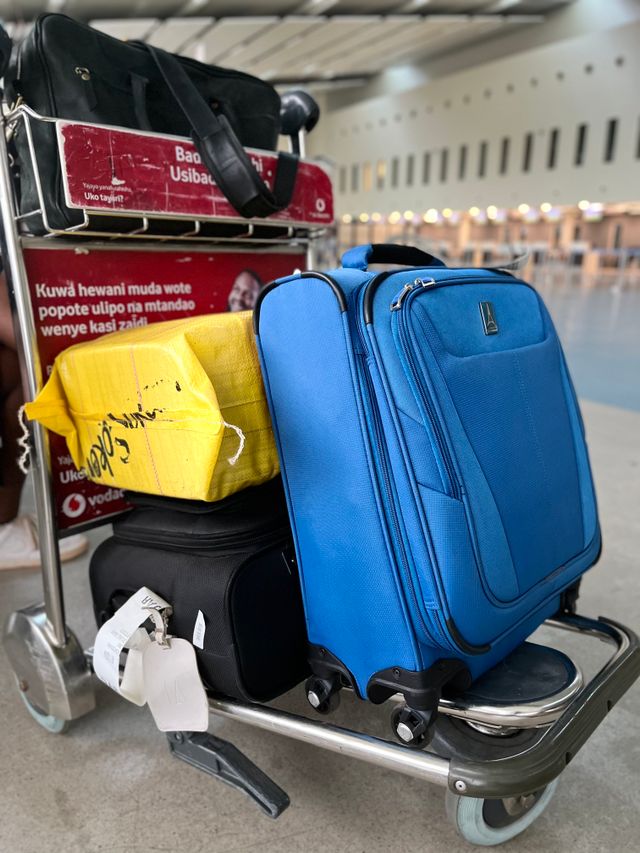
“Mr. Coleman?” Young voice. Professionally apologetic. “My name is Charlie Griffin. Nashville International, Terminal C. Passenger services and lost property. Your son, David Coleman, checked in for an early flight this morning. He checked a bag at the counter and left it. The baggage tag has your name on it and this phone number.”
I set my coffee cup down very carefully. “He checked in this morning?”
“Yes, sir. The 5 a.m. departure to Miami. But he never boarded. He left the bag at the counter and left the building.”
My son had been laid to rest less than eighteen hours earlier.
I put on my coat, walked past Tara’s closed door, past Brett’s closed door, through the silent house, and drove to the airport with both hands on the wheel and one thought running steady and quiet as a metronome.
David left me something.
The bag was an old navy-blue carry-on. On the interior lining, written in black permanent marker, was D. Coleman. Not a label. Written directly into the fabric. David’s handwriting. I would have known it anywhere.
I carried it to my car in the parking structure and sat with it in my lap before opening it. His passport was on top. Below it was an unsealed white envelope containing twenty stacks of bills, each banded with a paper strip. $20,000 in cash, arranged with the careful precision of a man who needed his father to understand this was not an accident. Under the envelope was a digital voice recorder. Cheap black plastic, about the size of a deck of cards. On the back was a Post-it note, the adhesive faded but still holding.
David’s handwriting again.
Dad, press play.
So I did.
The first sound was the ambient hiss of a room I recognized immediately. The kitchen on Hilldale Drive. The refrigerator hum. The flat echo of tile floors. Then Tara’s voice, clear and businesslike.
“If the old man draws up a new power of attorney before we move, the whole thing collapses. I already talked to Hunter. He says we can establish incapacity through two physicians. It just needs documentation going back far enough.”
Then Brett, flatter, slightly bored: “What if he goes to a lawyer?”
Tara answered without hesitation. “He won’t. He doesn’t suspect anything. He just sits in that garage with his watches.”
I turned off the recorder.
I sat in the parking structure and stared at the concrete wall four feet in front of me.
I thought about the past four years. About the way Tara had moved through the house from the beginning, not like a guest, not even like a resident, but like a surveyor taking stock. I thought about David sitting on the stool in my garage in his last weeks, turning a pocket watch in his hands, saying it runs perfectly now, and not being able to say the rest of what he had come to say.
He had known.
Not everything.
But enough.
He had spent his last weeks building me this. A passport to establish identity and legal presence of mind. $20,000 to fund whatever came next. Thirty seconds of audio recorded in his own kitchen. I know what evidence is. I spent thirty-one years in courtrooms. I know what one-party consent means in the state of Tennessee.
Whatever Hunter Voss and his two cooperative physicians had planned, they had not planned for a dead man who did his homework first.
I put the recorder back in the bag, zipped it shut, and searched for estate attorneys on my phone. The third result was Lindsay Reed, JD, on Church Street, specializing in probate litigation. One reviewer described her as not someone you want on the other side of a table. I called and left a voicemail. My son had recently passed. His estate was about to be contested in bad faith. I had documentation. I needed a meeting the next morning.
I kept my voice level.
I have had a lot of practice keeping my voice level.
Lindsay Reed was in her mid-forties. Precise posture. The kind that develops from years of sitting across tables from difficult people. She shook my hand and said, “Tell me everything. Don’t summarize. I’ll decide what matters.”
I talked for forty minutes. She wrote on a yellow legal pad in handwriting I could not read from across the desk. When I finished, she set down her pen.
“The recording. Tennessee is a one-party consent state. If David initiated it and was present, he is the consenting party. That helps. The passport helps establish the bag was his. The handwriting will need authentication, but that is manageable. Has she moved on the estate yet?”
“Nothing has arrived.”
“Give it a week. Maybe two. In the meantime, do not change anything in that house. Do not ask them to leave. Do not escalate. The moment you do, you hand them a narrative. Grieving widow. Difficult father-in-law. Let them be comfortable. Comfortable people make mistakes.”
She recommended a private investigator named Claude Wilson on Eastland Avenue. “Thorough,” she said. “Not given to unnecessary conversation.” Exactly what I needed.
What I found when I returned home stopped me in the hallway.
David’s study had been emptied. Not ransacked. Emptied with the efficiency of someone who knew exactly how much time they had. Six sealed cardboard boxes stood in the hallway, each labeled in black marker: Donate.
I made four trips. Six boxes to the garage, stacked against the back wall. I locked the deadbolt and kept the key on me.
When Tara returned an hour later, she walked past the empty hallway without a word. Through the kitchen window I could see her standing very still, looking out toward the garage. I was at the workbench. I caught her eye through both panes of glass, and I smiled. Small. Pleasant. Entirely genuine.
She could not have known the smile was not confusion or courtesy. It was the expression of a man who had just moved his most important pieces off the board before his opponent could reach them.
That night around eleven, the power in the garage went out. Not the house. Just the garage. The exterior breaker panel was accessible from outside. I heard the click and sat in sudden darkness. Then I took the flashlight from the second drawer of the workbench, where I have kept one for twenty-two years because I am a man who plans for the obvious.
And I kept working.
Past one in the morning, near the bottom of the fourth box, I found a printed email chain marked correspondence. Six messages between Tara’s address and one belonging to Hunter Voss, attorney at law. The first message was dated early December, three months before David died. The subject line read: Re: Timeline Revised.
I read every word by flashlight. By the time I finished, my hands were completely steady.
They had been planning this since December.
I also found something in the fifth box that changed everything. A printout: emails between David and a cardiologist on Charlotte Pike, December and January, six weeks before he died. David was describing symptoms. Sudden fatigue. Occasional dizziness. A heaviness in his chest he said felt different from anxiety. In the fourth message, he asked carefully whether such symptoms could result from something in his diet. Not an accusation. Just a man trying to understand his own body. The doctor recommended an in-person appointment.
David never made it.
I sat with those pages for a long time. I thought about David coming to the garage twice in his final weeks. Standing in the doorway talking about nothing, then saying Dad, if I ever and stopping when Tara called from the house. He had not just been afraid. He had been trying to document what was happening to him quietly, alone, the same way I had documented other people’s proceedings for three decades. He simply had not known the right person was sitting forty feet away in a garage, working on a pocket watch.
Wilson met me the following afternoon above a coffee shop on Eastland Avenue. His office had a desk, two chairs, a filing cabinet, and nothing on the walls. Just the tools.
I gave him Tara’s full name, addresses, David’s financial institutions, and photographs of the emails I had taken by flashlight the night before.
He looked at the photographs without expression. “How did you come by these?”
“They were in my son’s files, in my garage, on my property.”
One nod. “Sufficient.”
On the ninth day, Tara slipped an envelope under my bedroom door. Inside was a handwritten page explaining that as David’s widow she had an emotional connection to the house deserving thoughtful consideration. Near the bottom, almost as an aside: I’m sure we both know that prolonged stress isn’t good for anyone’s health, especially at a certain age. The right doctors would certainly agree.
I read it twice. Then I put it in a folder labeled, with quiet satisfaction, Exhibit A.
On day eleven, Wilson called. He came to the coffee shop downstairs and set a nine-page printed report on the table.
Tara had opened a personal account at Regions Bank the previous October, five months before David died. Between October and February, that account received eleven transfers totaling $34,200, all initiated through David’s mobile banking application. All eleven occurred between 11 p.m. and 1 a.m.
“That is when a person is asleep,” I said.
“Or when someone else has their phone,” Wilson said.
He turned to page four. The previous November, a notary on Murfreesboro Road had received a request from a woman matching Tara’s description to prepare a durable power of attorney on behalf of David Coleman. The notary refused because the principal was required to appear in person. Tara left without incident.
“Voss,” I said. “Did you find anything?”
“Civil attorney, licensed since 2018. Primarily estate litigation. Represented a client in a probate dispute in Shelby County in 2022. Settled out of court.”
Wilson closed the report. “Pattern.”
I paid him $1,800 in cash from David’s envelope. It felt like the right source.
I brought the cardiologist emails to Reed and told her what I thought they meant. I told her I wanted her to take them to the district attorney’s office.
She looked at the pages carefully. “This changes the nature of the case. Significantly. Are you prepared for that?”
“Yes,” I said.
Three days later her voice was quieter than usual. “I met with an investigator at the district attorney’s office. They are opening a preliminary inquiry into the circumstances of David’s death. Not a formal case yet, but they are looking.”
A pause. “Tara does not know.”
Outside, I heard Tara’s car pull into the driveway.
The hearing was on a Tuesday morning at the Davidson County Courthouse, a building I had walked through hundreds of times over thirty-one years, though never from this side of the bar.
Tara arrived with Hunter Voss, mid-thirties, well-fitted suit, the practiced confidence of a man accustomed to controlling rooms. Brett arrived separately and took a seat in the gallery. He caught my eye and looked away. Judge Morris was a woman in her sixties with silver-streaked hair and the bearing of someone who had heard every variation of human difficulty and still maintained just enough willingness to be surprised.
Voss presented in twelve minutes. Undue influence. Lack of testamentary capacity. Two physician witnesses. The first doctor had seen David once the previous October for a wellness visit and testified that David had seemed “not fully present.” Under Reed’s cross-examination, he confirmed he had conducted no standard cognitive assessment, that “not fully present” was not a clinical term, and that a single wellness visit was not a basis for a diagnosis of incapacity. His answers grew shorter as the questions continued. The second witness had never met David in person. He had reviewed a symptom description provided by Tara and formed an opinion that David may have experienced cognitive decline. Reed asked pleasantly whether he had reviewed David’s actual medical records. He had not. She asked whether forming clinical opinions about a patient he had never examined, based on a description from an interested party in a legal proceeding, was standard practice. He said the situation was unusual. Judge Morris wrote something down.
Then Reed said, “Your Honor, we would like to submit a piece of evidence directly relevant to the credibility of this petition.”
She handed copies to the clerk and to Voss at the same time.
Voss looked at the transcript summary. Something moved in his jaw. Not a reaction exactly. More the suppression of one.
“Objection. This recording was made without the knowledge or consent of the parties.”
Reed turned to him with an expression of patient explanation. “Under Tennessee’s one-party consent rule, only one party to a conversation has to consent. David Coleman initiated this recording and was present throughout. He is the consenting party.” She faced the judge. “We are prepared to submit the physical recorder, the bag it was found in, authentication of the handwriting on the label and note, and a signed receipt from Nashville International Airport documenting chain of custody from the moment of retrieval.”
Judge Morris admitted the recording.
The clerk played it through the evidence speaker.
I had heard those thirty seconds many times by then. Hearing them in a courtroom was different.
The refrigerator hum. The flat tile sound of my own kitchen. Then Tara’s voice: “If the old man draws up a new power of attorney before we move, the whole thing collapses. I already talked to Hunter. He says we can establish incapacity through two physicians.”
I watched Tara.
She sat with her hands folded on the table and did not move. Not a flinch. Not a visible breath. Whatever was happening behind that composure stayed invisible. I will give her credit. It was a masterful performance under the worst possible conditions.
Brett was not masterful. When the recording reached his voice, “What if he goes to a lawyer?”, he put one hand flat on the gallery rail to steady himself. The color had left his face and had not come back. His mouth was slightly open. The expression of someone watching a structure collapse and realizing too late that he was standing inside it.
I had seen that face in courtrooms before.
Judge Morris adjourned for review and scheduled a continuation roughly two months out.
In the corridor outside, Tara caught up to me. She moved with purpose. Still controlled.
“You don’t understand what you’re getting into,” she said, low voice, even tone.
But something behind it had worn thin.
I thought about David in December, writing careful emails to a doctor he never got to see again. Three decades of sitting still while people said things they believed no one could prove otherwise.
“I spent thirty-one years recording people who lied under oath,” I said quietly. “You are beginners.”
Then I walked to the elevator.
Behind me, there was nothing. Not a word. Not a step following. Just the marble corridor of Davidson County Courthouse and the particular silence that falls when someone finally understands the situation they are actually in.
The financial audit results came through Reed’s office three weeks after the hearing. The $34,200 was fully documented. Eleven transfers, all initiated between 11 p.m. and 1 a.m. The forensic accountant had identified the IP addresses associated with each transaction.
Ten of the eleven matched a device registered to Brett Shaw.
Not David’s phone. Brett’s.
I sat with that for a moment. David had been asleep or medically vulnerable, and Brett had been sitting somewhere in my house, under the roof I paid for, using his own device to move money from his stepfather’s account to his mother’s in the middle of the night.
The report also addressed an insurance policy. David had held a $150,000 life insurance policy since 2019, naming me as primary beneficiary. In September of the previous year, six months before David died, the beneficiary designation had been changed to Tara Coleman. The change had been processed through an online portal. The IP address for that transaction also matched Brett’s device.
I had found the original 2019 policy in the garage boxes, the version signed by David, naming me. It was in the same folder as the email chain and the cardiologist correspondence. The folder Tara had labeled Donate without opening.
She had not known what was in those boxes.
That was her first and most consequential mistake.
I brought copies of the insurance documents to Garrett at the district attorney’s office myself.
He looked at the policy change documentation for a long time. The investigation was expanding.
That same week, Tara came to the garage. I was at the workbench. I heard footsteps on the gravel outside, then a knock on the frame of the open door.
She stood there with her hands folded in front of her and delivered her offer in a voice that had been practiced into evenness. She would withdraw the will contest petition fully and unconditionally if I agreed to allow her and Brett to remain in the house for one additional year and if I agreed to a payment of $50,000 from the estate as a settlement.
I listened to all of it without interrupting. Then I said, “I’ll think about it.”
She nodded once and left.
I waited until I heard the back door of the house close. Then I reached into the drawer of the workbench and took out the small black recorder, the same one David had left in the bag, the one that had played in the Davidson County Courthouse three weeks earlier.
I had put new batteries in it the day after the hearing.
I pressed stop.
I had pressed record the moment I heard her footsteps on the gravel outside. The offer. The terms. The dollar amount. The arrangement she was proposing. Documented. An offer made to the opposing party in active litigation, outside the presence of counsel, recorded with my own knowledge and consent.
Legal. Clear. Useful.
She still thinks she can negotiate her way out of this, I thought.
The call from Garrett came two evenings later. A judge had signed an order for further medical review. “I thought you should hear it from me directly,” he said.
Neither Tara nor Brett knew what had just been approved.
The medical report came back just over three weeks later. Reed called at 7:31 in the morning. I was in the garage with the Hamilton open on the workbench, the movement reassembled.
“Ernest,” she said.
She had never called me by my first name before.
“The examiner found elevated levels of a compound in David’s tissue samples, levels that did not match any known prescription or supplement he had been taking. The pattern suggests repeated exposure over time. Garrett is moving forward.”
I set the phone on the workbench and looked at the wall for a long moment.
David had known something was wrong. He had written to a cardiologist asking whether something in his diet could explain what he was feeling. The doctor had recommended an appointment. David never made it.
“Garrett is executing search warrants this morning,” Reed said. “He expects to bring both of them in for questioning today.”
I looked through the garage window at the back of the house. The kitchen light was on.
“Should I do anything?” I asked.
“Go about your morning,” Reed said. “You’ve already done everything that needed doing.”
At 9:15, two unmarked Davidson County vehicles pulled up outside. I heard the front door. Two detectives introducing themselves, formal and even. Tara’s voice stayed controlled for approximately forty-five seconds before it broke into something I had not heard from her before. Not calculated. Not composed. Something real.
Brett’s voice was shorter. “I didn’t know.” Repeated twice in quick succession. Then silence.
They were both brought in for questioning.
I watched from the kitchen window as Tara walked to one of the vehicles. She did not look toward the garage.
That same night, Reed called nearly at 10 p.m. Brett had given a full statement. In exchange for cooperation and a recommendation of leniency, he confirmed what the IP evidence had already shown. He had made the transfers. He had changed the insurance beneficiary. He had done those things at his mother’s direction. He said he had believed it was simply managing finances for a man too stressed to deal with them. He said he had not known about the medical compound. Garrett believed him.
The continuation hearing before Judge Morris came roughly two weeks later. The petition to contest David’s will was dismissed in full. The will stood. The house on Hilldale Drive was legally and unambiguously mine. The savings account of $87,500 transferred to my name. The $34,200 was ordered returned as fraudulently obtained funds.
I sat in the second row of that courtroom and did not feel what I might have expected. Not relief exactly. Not satisfaction. Something quieter. The particular stillness of a room after a long argument has finally ended.
On the way out, Reed walked beside me. “You handled this well.”
From Lindsay Reed, that was the equivalent of a standing ovation.
The house was empty when I returned. Tara was under conditional release. Brett was already making arrangements to leave. I walked through the rooms alone for the first time in months, through the particular quiet of a house where no one is performing for anyone.
The sentencing hearing was on a Wednesday morning in late October. The air in Nashville had turned cool. I wore the charcoal wool jacket I had owned for twelve years, the one I had worn to court dozens of times, always from the other side of the bar.
Tara arrived dressed plainly, not in the calculated composition she had worn to earlier hearings. Her hands were folded in her lap. She sat very still, looking at the table in front of her. Whatever composure she had left was concentrated entirely on holding herself together for the next hour. Brett was not present. He was in Memphis, beginning three years of probation, carrying restitution obligations and whatever weight comes from knowing what you were part of.
Judge Morris took the bench at 9:00.
The district attorney’s office had accepted the plea. Fifteen years. No eligibility for early release consideration in the first ten.
Judge Morris read the sentence in the same measured voice she used for everything. Not theatrical. Not soft. Just the language of a court doing its work.
Tara sat without visible reaction until the final word of the sentence, when something in her shoulders moved. Not a collapse. Not dramatic. Just the small physical acknowledgment of a weight that had finally landed.
I watched all of it. What I felt was something closer to the quiet at the end of a very long day of careful work. The kind that means you can put down the tools now because the thing that needed doing is done.
Reed said quietly beside me, “That is as clean a resolution as I have seen in a case like this.”
“David did the work,” I said. “I just carried it forward.”
She looked at me for a moment. “Take care of yourself, Ernest.”
I sat in the empty courtroom for another minute after everyone had gone. There is a particular quality to an empty courtroom. The ceiling higher than it needs to be. The acoustics flat. The whole space designed for occasions that have just concluded.
Then I got up, put on my coat, and walked out through the marble corridor, down the elevator, through the lobby, and out the front door onto Public Square. The light was thin and October clean. Traffic moved along James Robertson Parkway. The ordinary business of a city on a Wednesday morning, entirely indifferent to what had just happened inside.
I stood on the top step and reached into my coat pocket.
The 1962 Illinois Bunn Special was there, the one I had been restoring when everything started, the one that had sat half disassembled under the lamp while I read cardiologist emails by flashlight. I had finished it weeks ago. It kept near-perfect time, which for a movement of that age was something.
David had liked this watch. He used to pick it up off the bench when he sat on the stool and turn it over in his hands, listening to it the way you listen to something that works exactly as it should. He never asked to keep it. He just liked knowing it was there.
I wound it two turns, opened the case, looked at the dial, and closed it again.
David had known something was wrong, and he had not been able to say it. So he had built me something instead. A passport. $20,000. Thirty seconds of audio. A last act of the careful, patient man he had always been. The man I raised in the house on Hilldale Drive. The man who used to sit on a stool in a garage and say it was the only place where nothing was urgent.
He had trusted me to know what to do with it.
I put the watch back in my pocket and walked down the courthouse steps to where I had parked the car.
The drive back to Hilldale Drive took twenty minutes. I pulled into the driveway. The house was there the way it had always been. The painted wood. The roof I had replaced in 2011. The front walk that needed repointing in one section. The garage light glowing because I had left it on when I left that morning.
My house.
My street.
The only place I had ever particularly wanted to be.
I got out of the car and went inside.

Laura Bennett writes about complicated family dynamics, difficult conversations, and the quiet moments that change everything. Her stories focus on real-life tensions — inheritance disputes, strained marriages, loyalty tests — and the strength people find when they finally speak up. She believes the smallest decisions often carry the biggest consequences.