The MP pointed at me like I was a lost secretary.
Staff park in Lot C, he snapped.
He did not say it like a suggestion. He said it like a door closing.
Behind him, a young captain stood near a concrete pillar with a paper coffee cup in his hand, polished boots on damp concrete, and the kind of smile men wear when they believe the room has already chosen their side.
Ma’am, he said, this entrance is for people who actually have business inside.
My driver did not raise her voice. She did not argue. Master Sergeant Alicia Reed put the Suburban in park, stepped out into the cold gray light of the Pentagon garage, walked to the rear of the vehicle, and opened the trunk.
The fluorescent lights buzzed above us. Tires hissed over wet concrete somewhere behind the security lane. The air smelled of burnt coffee, diesel exhaust, floor wax, and rainwater that had been tracked inside on government shoes.
At 0615, the Pentagon has a sound that belongs only to people who have worked there long enough to hate and respect it at the same time. Doors slam too loudly. Radios crackle from shoulders. Coffee lids snap over paper cups. Men and women move quickly because they want everyone to see they are important before the sun is fully up.
I sat in the back seat of the black Suburban with a sealed red folder on my lap and watched Staff Sergeant Damon Pike mistake habit for authority.
He had planted his boots in front of our vehicle like he owned the garage. He was young enough for arrogance to still look fresh on him. Square jaw. Shaved head. Gym-built arms under a clean uniform. Military Police badge clipped to his chest. Radio on his shoulder. Sidearm secured.
He did not look dangerous in the way battlefields teach you to recognize danger. He looked worse in that moment. He looked certain.
Alicia had driven convoys in Kandahar. She had taken armored SUVs through embassy riots. She had learned long ago that the loudest person near a checkpoint is rarely the most serious person there.
She kept her voice flat.
Credentials were submitted at 0500, she said through the windshield before she got out. Vehicle clearance is on file. We’re expected upstairs.
Pike leaned in and looked through the glass. Not at the placard. Not at the system screen near the post. Not at the ID case Alicia had placed where he could see it. At me.
His eyes made the inventory fast. Woman. Dark wool coat. Gray scarf. No medals. No visible rank. Back seat. Therefore, staff. Or spouse. Or nobody.
Expected by who, he asked.
The Chairman’s office, Alicia said.
The captain near the pillar gave a small laugh into his coffee. His name tape read WHITAKER. Captain Nolan Whitaker. I knew the name before I saw it on his chest. That was the first unpleasant detail of the morning.
Everybody says that, Whitaker said, lifting his cup like he was watching a small show put on for his benefit. If you’re here for admin onboarding, Lot C is across the west side. They have shuttles.
Pike tapped two fingers against the hood. It was not hard. It was not damage. That almost made it more insulting. It was the touch of a man who wanted me to understand that he could decide how small this morning would make me feel.
Turn around, he said.
Alicia looked at him through the windshield. Sergeant, step away from the vehicle.
Pike smiled. Not because he was amused. Because he thought he had found a fight he could win.
Driver, he said, I gave you an instruction.
Alicia’s left thumb tapped once against the steering wheel. That was our language. Do you want me to handle this?
I gave the smallest shake of my head. Not yet.
The red folder rested beside my gloved hand. INTERIM COMMAND REVIEW. EYES ONLY. It was sealed, stamped, and heavier than paper should ever feel.
Inside were transcripts from fourteen interviews. Access logs from 2024 through 2026. Three missing procurement signatures. A manipulated readiness report. An email chain that should have been deleted months before but had survived because arrogance and incompetence are close cousins.
At 5:12 a.m., the Chairman’s aide had confirmed receipt. At 5:40, Alicia had printed the final vehicle clearance. At 6:03, we entered the River Entrance garage. At 6:15, a staff sergeant decided my coat mattered more than the clearance in front of him.
Someone inside that building had spent two years building a little kingdom out of intimidation. Someone had learned how to bury complaints by calling them attitude problems. Someone had convinced junior officers that rank mattered more than truth. And someone had made the mistake of dragging my daughter’s name into it.
That was the second unpleasant detail of the morning.
My daughter, Hannah, was not in the military. She had grown up on bases and in temporary houses with white walls and borrowed furniture, but she had chosen a different life on purpose. She taught high school history outside Arlington and had inherited my stubbornness without inheriting my tolerance for uniforms. She had once told me that the military could make good people brave, but it could also make weak people feel decorated.
I had laughed when she said it. Then I stopped laughing when her name appeared in an email chain she had no business being anywhere near.
Two weeks before that morning, a lieutenant had sent a complaint through the wrong channel because every right channel had already failed her. She attached a screenshot. Then another. Then a forwarded message with my daughter’s name used as leverage in a sentence that made my blood go still.
It was not a threat in the movie sense. It was worse. It was casual. That was how I knew the rot had settled in. People are careful the first time they abuse power. By the tenth time, they abbreviate it.
I had been calm since 0430. Calm through coffee I did not taste. Calm through the secure call from Joint Staff. Calm through the drive under a sky the color of old steel.
But when Pike looked through the windshield and dismissed me without reading the clearance, the cold in my chest sharpened. Because this was not just bad protocol. It was habit.
The other MPs nearby suddenly found reasons to look busy. One adjusted a clipboard that did not need adjusting. One stared down at the toe of his boot. One glanced at Whitaker and then away, as if the safest object in the garage were the painted line on the floor.
Whitaker did not lower his voice. He did not have to. He believed the space belonged to him. He believed the staff sergeant would perform the humiliation, and he could remain technically uninvolved while still enjoying it.
That is how these systems protect cowards. They let someone else touch the hood.
Alicia lowered her window two inches. Cold air slid into the vehicle.
Staff Sergeant Pike, she said, reading his badge without effort. Verify the vehicle clearance.
Pike leaned closer. Or what.
There it was. Not confusion. Not procedure. A challenge.
Alicia’s eyes moved to the rearview mirror.
I opened the folder, removed my identification case, and held it forward. The leather creaked softly in my hand.
Pike looked at it through the gap in the window. He did not take it. He barely glanced.
Ma’am, he said, you can wave whatever contractor badge you want. This lane is reserved.
Whitaker laughed under his breath. It was a small laugh. That kind can be worse than a shout. A shout at least admits it wants to hurt you. A smirk pretends the injury is your embarrassment.
I looked past Pike to the two enlisted MPs five yards away. They had heard him. They had seen the ID case. They looked away.
That told me everything.
This was not a misunderstanding. This was a performance. One they had run before. A woman in the wrong coat gets redirected, delayed, embarrassed, and taught to be grateful when someone finally lets her through. A contractor gets told the system is down. A lieutenant gets asked if she is sure she wants to make this formal. A complaint becomes an attitude problem. Paperwork disappears. A career stalls. A little kingdom survives.
I closed the ID case. Slowly.
Whitaker took another sip of coffee.
Lot C, he said again. It’s not complicated.
I looked out at him. Captain Whitaker.
His eyes jumped just a fraction. Enough.
You know my name, he asked.
I know more than your name.
The coffee cup lowered in his hand.
Pike turned slightly, suddenly interested.
The air around the Suburban changed the way a conference room changes when a man realizes the quiet woman at the far end of the table has not been taking notes. She has been collecting evidence.
Alicia opened her door. The movement was calm and exact. She stepped out, closed the door, walked to the back of the Suburban, and opened the trunk.
No one stopped her. No one understood quickly enough that they should.
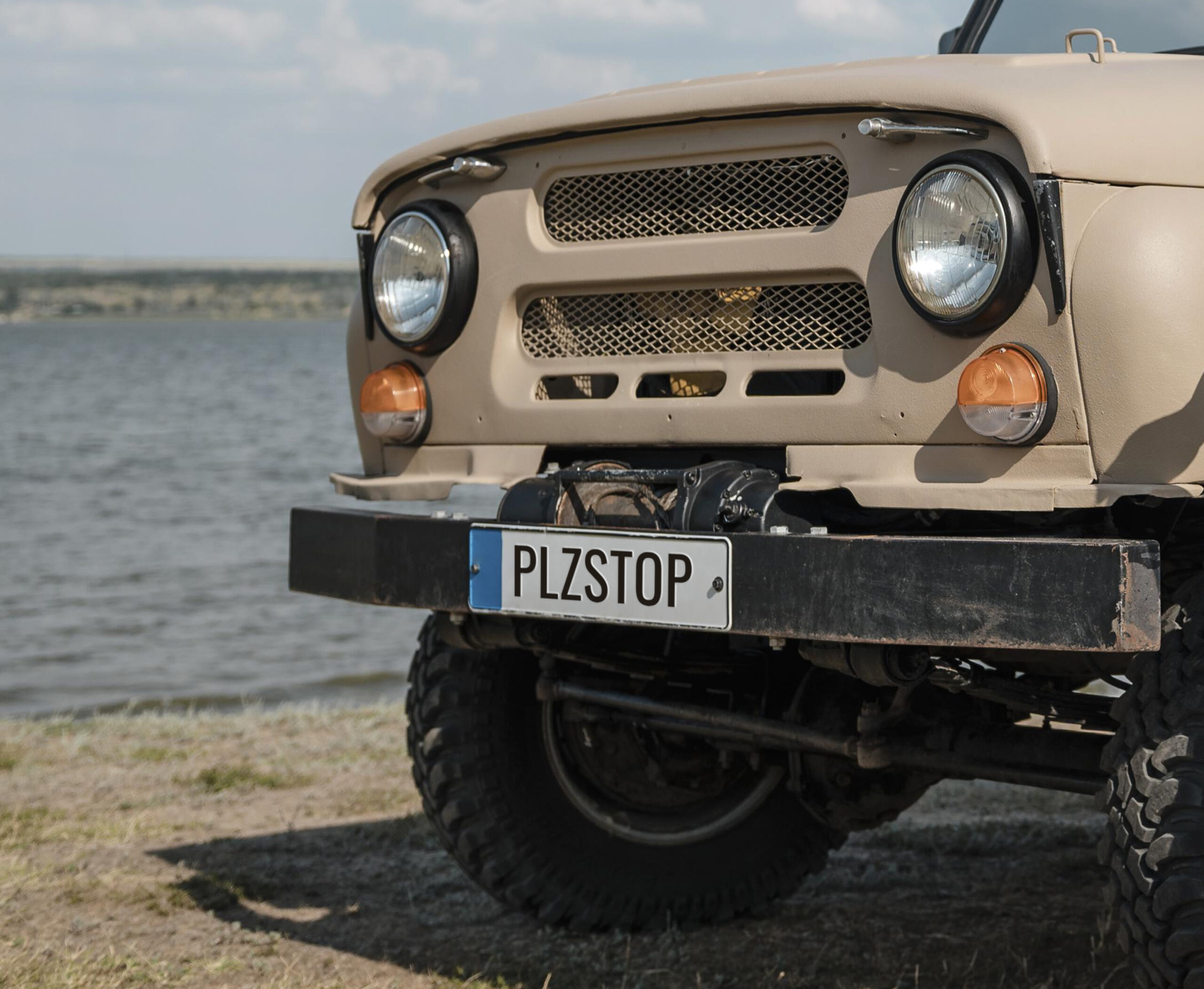
Inside the trunk, under a dark canvas cover, were the four-star plates.
Alicia lifted them with both hands. The metal caught the garage light.
For one second, it was just an object moving through cold air. Then it became consequence.
She clipped the first plate onto the rear bracket. The sound was small. Metal against metal. A click. That click traveled farther than Pike’s voice had.
Every conversation within thirty feet stopped. The MP at the clipboard lowered it. The staffer near the door froze with his coffee halfway to his mouth. Pike’s hand stopped halfway back to his vest. Whitaker stopped smiling.
I watched him understand the morning too late.
Alicia clipped the second plate into place. Then she stepped aside.
Four stars sat on the black Suburban where a moment before there had been nothing for Pike to respect.
I opened the rear door myself. Cold air hit my face, clean and sharp. The concrete beneath my shoes was slick from rainwater tracked in from the outside.
I stood beside the vehicle with the red folder in my left hand.
Pike looked at my face, then at the plates, then back at my face. His mouth opened. No sound came out.
Whitaker managed one word.
General.
Not ma’am. Not contractor. Not Lot C.
General.
Titles are funny things. Bad men ignore them when they think the title belongs to someone harmless, then worship them the second the title turns into a weapon pointed back at them.
I did not raise my voice. That would have given him somewhere to hide.
Captain, I said, before you finish that coffee, you may want to explain why your name appears on page seventeen of my command review.
Whitaker looked down at the folder. Pike’s radio crackled once. No one answered it.
I broke the seal. The paper made a soft tearing sound that seemed indecently loud in the garage.
Page seventeen was tabbed in yellow. I opened to it and held the folder low enough that Whitaker could see the header but not the full content.
Access-log override, I said. February 12, 2025. Conference Room 3B. Procurement complaint rerouted through your office. Signed statement from a lieutenant who was told her career would be over if she filed through command channels.
Whitaker swallowed. That’s not—
Careful, I said.
He stopped.
Alicia stood behind me, still as a locked door. Pike shifted his weight. The motion was tiny, but I saw it. He wanted to step back without looking like he was stepping back.
General Monroe, he said, and his voice had changed completely. I apologize for the confusion.
Confusion is when two people read the same rule differently, I said. This was refusal.
His face flushed.
Whitaker tried again. General, I didn’t know it was you.
That, I said, is exactly the problem.
The sentence landed where it needed to land. Not on his rank. On his character.
Behind him, one of the enlisted MPs lifted a phone at waist height. The screen glowed. He was recording.
Pike saw it. Put that away, he snapped.
The MP did not move. His face looked terrified. But his hand stayed still.
That was the first brave thing I saw in that garage.
Whitaker turned on him. Sergeant, I gave you—
No, I said.
The word cut through both of them.
You do not give orders in this lane right now, I said.
The elevator doors opened behind the security post. Three people stepped out. A senior officer in service dress. Two aides. A security binder tucked beneath one arm.
The senior officer looked at the plates first. Then at me. Then at Whitaker and Pike.
General Monroe, he said, very quietly. Are these the two names you wanted held at the entrance.
Whitaker turned as if rescue had arrived and found instead that the rescue had walked past him. Pike’s face drained.
Yes, I said. And I want their devices secured before anyone has a chance to misplace a message.
The senior officer nodded once. One of the aides stepped forward.
Pike raised both hands slightly, not in surrender exactly, but in the posture of a man trying to look cooperative before the word becomes compulsory.
Whitaker still had the coffee cup in his hand. His thumb had pressed so hard into the paper that the lid buckled. Coffee slipped over the rim and ran down his glove. He did not seem to feel it.
General, he said, there has been a misunderstanding.
I turned page seventeen toward him. Then explain the timestamp.
He looked down. I watched his eyes move. Header. Date. Access line. His own identifier. The name of the lieutenant. Then the routed complaint.
He went quiet. The garage went quieter with him.
There are silences that hide things. There are silences that reveal them. This one did both.
The senior officer held out one hand to Pike. Radio and phone.
Pike hesitated.
Alicia took one step forward. That was enough.
He unclipped the radio. Then he handed over his phone.
The MP who had been recording lowered his hand only after the aide took Pike’s devices. His eyes met mine for half a second.
I gave him the smallest nod. It was not praise. Not yet. But it was acknowledgment.
He looked away fast, like the nod itself weighed too much.
Whitaker tried to recover the old voice. Sir, he said to the senior officer, with respect, General Monroe is basing this on incomplete context.
The senior officer did not look at him. Captain Whitaker, you will remain silent unless addressed.
Whitaker’s jaw tightened. For men like him, silence feels like punishment because they have used it that way on others.
I opened another tab.
This is not incomplete, I said. This is 184 pages of pattern.
Alicia watched Pike. The senior officer watched Whitaker. The aides watched both of them. The enlisted MPs watched the floor, except the one with the phone, who finally watched me.
I read the next line.
March 6, 2025. Complaint marked personality conflict after no interview was conducted. April 18, 2025. Readiness correction memo altered after submission. June 2, 2025. Procurement discrepancy forwarded to Captain Whitaker and closed within eleven minutes.
The aide with the binder lifted his head. Eleven minutes, he asked.
Eleven, I said.
Whitaker’s mouth opened. I turned the page before he could speak.
And then, I said, there is the email referencing my daughter.
That changed the room again. Not because they knew Hannah. Because even in a place built on hierarchy, some lines are still visible to decent people.
Pike looked genuinely confused. Whitaker did not. That mattered. His eyes dropped to the folder before he could stop them.
I saw it. The senior officer saw it. Alicia saw it.
Captain, I said. Look at me.
He did. The polished officer was gone. What remained was a man calculating distance to the nearest exit in a building full of cameras.
You used a civilian family member’s name in an intimidation chain connected to a protected complaint, I said. You did that because you believed the person reading it would be too junior to challenge you and too scared to document you.
His voice dropped. I never threatened anyone.
No, I said. You delegated the threat to atmosphere.
That was when Pike looked at him. Not at me. At him.
It was a small thing, but small things are where institutions either start healing or keep rotting. Pike had spent the morning performing power for Whitaker. Now he was beginning to understand he had been useful, not respected.
The senior officer gave a quiet instruction to the aides. They moved with practiced calm. Whitaker’s phone was requested. Then his government device. Then his access badge. He surrendered each one like it had become heavier between his hand and theirs.
The garage began breathing again in pieces. A radio clicked. A door opened. Someone whispered behind the post and immediately stopped.
I closed the folder.
Captain Whitaker, I said. You will report upstairs under escort.
His eyes flicked to the four-star plates again. He looked like a man who wanted to say that this was unfair, but could not find a version of the sentence that would survive the presence of evidence.
Staff Sergeant Pike, I said.
His face tightened. Yes, General.
You had an ID case presented to you. You refused to inspect it. You had a clearance claim you could verify. You chose not to. You had two other MPs watching you. You taught them something this morning.
His throat moved. I understand, General.
No, I said. You are beginning to.
The one who had recorded the exchange looked down again. His phone was now in an evidence sleeve. The aide labeled it with time, date, and location. 0619. River Entrance garage. Video capture from enlisted witness.
There is something strangely merciful about paperwork when it is finally used for truth. It cannot undo humiliation. It cannot erase fear. But it can keep a powerful man from pretending the room never happened.
By 0640, Pike and Whitaker were no longer at the entrance. By 0715, Alicia and I were upstairs. By 0830, the command review was open on a long table beneath clean white conference lights.
No one smiled too much in that room. No one asked me whether I was sure.
The lieutenant whose complaint had started the final chain sat across from me with both hands wrapped around a bottle of water she had not opened. She looked younger than her file. Most victims of professional retaliation do. Paper makes them sound procedural. The body remembers it as survival.
She told the room what had happened in Conference Room 3B. She told them who was present. She told them which door had been closed. She told them who told her that pushing the complaint would be bad for everyone attached to her.
Then she looked at me and said, I didn’t know they meant your daughter until I saw the email.
Her voice broke on daughter. Not because she knew Hannah. Because she understood what kind of person uses a family member’s name as a tool.
I did not touch her hand. I wanted to. But command is sometimes the discipline of not making someone else’s fear serve your comfort.
So I only said, you documented it. That mattered.
She nodded once.
Alicia stood along the wall with her hands folded in front of her. She had not said much since the garage. She did not need to. She had clicked the plates into place when the room required a language no one could ignore.
Over the next hours, the pattern came out the way patterns always do when people stop protecting the person at the center. One interview became five. Five became nine. Nine became names, dates, access logs, calendar invites, altered notes, and messages forwarded from private accounts because someone had finally decided to keep a copy.
Whitaker had not acted alone. Men like him rarely do. But he had been the smile at the doorway. The one who made cruelty look casual. The one who taught smaller men when to laugh.
Pike’s role was narrower, but not clean. He had ignored verification because he liked the power of refusal. He had enforced a hierarchy he had not bothered to understand. He had mistaken a woman in a dark coat for someone without consequence.
That mistake did not end his life. It did end the version of his career where he could pretend tone was not conduct.
By noon, the first formal removals had begun. By 1400, devices had been imaged. By close of business, three offices had been notified that the review had expanded.
People always imagine consequences arriving like thunder. Most of the time, they arrive as calendar holds, badge deactivations, escorted walks, and a closed door that does not open again.
Weeks later, I received a short statement from the enlisted MP who had recorded from waist height. He wrote that he had watched small humiliations happen before and had told himself they were not serious enough to report. He wrote that when he saw the four-star plates, he realized the behavior had only looked small because the victims had been easier to dismiss.
I read that line twice. Then I sent it to Hannah.
She called me after school. I could hear lockers slamming somewhere behind her, teenagers shouting in a hallway, the ordinary chaos of a life that had nothing to do with access logs or command reviews.
Mom, she said. Are you okay.
It was such a daughter question. Not what happened. Not who got fired. Are you okay.
I looked out my office window at a sky that had finally cleared.
I am, I said.
You don’t sound okay.
I almost laughed. Then I did not.
I’m tired, I told her.
Good, she said. That means you were human while doing it.
That was Hannah. Soft hands. Sharp blade.
I told her only what I could tell her. That her name had been used. That it had been documented. That it had been handled.
She was quiet for a long moment.
Then she said, they thought I was a pressure point.
Yes.
And you made me evidence.
I closed my eyes. Yes.
She breathed out. Good.
The next morning, I arrived through the same entrance. Not because I had to. Because places remember what you allow to stand.
Alicia drove. The black Suburban rolled over the same damp concrete. The fluorescent lights still buzzed. The coffee still smelled burnt. The garage still felt like ambition had been poured into the walls and left to harden.
But the security lane was different.
A new MP stepped forward. He checked the placard. He checked the clearance. He looked at Alicia. Then he looked at me.
Good morning, General Monroe, he said.
Not loud. Not dramatic. Correct.
Alicia drove on.
As we passed the blue-striped pillar marked B2, I saw a faint coffee stain still dark on the concrete where Whitaker’s cup had buckled in his hand. No one had cleaned it yet. Maybe someone would. Maybe rainwater from tires would eventually blur it away.
But for that morning, it remained. A small brown mark beside a place where a man had learned that a woman in a dark coat was not nobody.
That was enough.
Not because it fixed everything. It did not. One command review does not repair a culture. One clipped plate does not erase every smirk, every delay, every lost complaint, every person who learned to swallow the truth because the room felt rigged.
But sometimes the first repair is not a speech.
Sometimes it is a document preserved. A name spoken. A phone raised. A driver stepping into cold gray light and clicking four stars into place while every conversation in the garage dies.
And sometimes power changes hands in the smallest sound imaginable.
Metal against metal.
A click.

Specialty: Legal & Financial Drama
Michael Carter covers stories where money, power, and personal history collide. His writing often explores courtroom battles, business conflicts, and the subtle strategies people use when pushed into a corner. He focuses on grounded, realistic storytelling with attention to detail and believable motivations.