When I was sixteen, I knew I wasn’t the favorite. But I never thought my own father would one day look me in the eye and say, pack your things, Elias. You don’t belong here anymore.
I’m thirty-one now, and that sentence still plays on a loop more often than I care to admit.
My name is Elias Miller, and I’m the second son in a family that worshipped the first. My older brother Preston is three years older than me, tall and charming, always knowing the right thing to say. He had an uncanny ability to make people believe whatever fell out of his mouth. He could crash a customer’s car, lie about it to my face, and somehow get praised for eventually admitting some version of the truth. He was the golden boy, the heir apparent, the son who could do no wrong.
I was the quiet one. I kept my head down, tried to be helpful, cleaned up messes I didn’t make, and still got asked why I couldn’t be more like Preston.
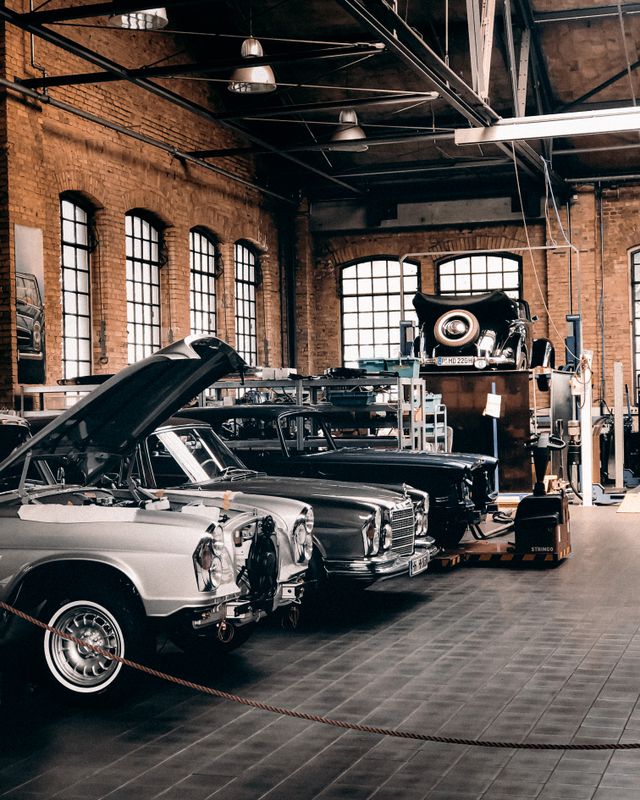
We grew up in a small town where our last name meant something because of what my grandfather had built from nothing. Miller and Sons Custom Garage was not just a repair shop. It was an institution, a place that had become legendary for breathing life back into forgotten Detroit iron. Classic muscle cars, heavy-chested Mustangs, rumbling Impalas, and mean-looking Chargers passed through our bays like family heirlooms. There was deep, undeniable pride in that grease-stained concrete.
My grandfather was a man forged in a different era. He believed in handshakes, hard work, and the absolute sanctity of doing a job right the first time. I grew up practically breathing in the scent of motor oil, stale coffee, and welding ozone. To me, that garage was a cathedral. It was where broken things were given a second chance.
My dad, Arthur Miller, took over when Grandpa retired. Arthur didn’t have Grandpa’s soul. He ran the shop like a military compound, strict and efficient, heavily focused on the bottom line. He demanded perfection, from the torque on a lug nut to the sweep of the floor. But beneath the surface he was a hard man to please, especially with me. He had a vision for the future of Miller and Sons, and that vision wore a tailored polo shirt, flashed a million-dollar smile, and answered to the name Preston.
Preston had never rebuilt a carburetor in his life. He didn’t know the firing order of a standard V8 and couldn’t tell the difference between a blown head gasket and a bad spark plug. But he knew how to talk. He could schmooze wealthy clients who brought in their midlife-crisis Corvettes, completely derail a meeting with golf stories, and still get a hearty pat on the back from our father.
For me, the rules were different. I was the grunt, the workhorse. I’d spend four extra hours after closing time with my hands bleeding, meticulously organizing the tool bay, wiping down every wrench, color-coding the sockets, ensuring the hydraulic lifts were properly lubricated. My father would walk in, look at the perfectly clean bay, glare at me, and say: don’t waste time on garbage no one sees, Elias. Focus on revenue-generating activities. Look at your brother. He just upsold a paint protection package.
He never mentioned that I was the one who actually applied that package while Preston was at the country club.
By the time I hit my late twenties, the writing was on the wall. Preston would inherit the business. For a long time, I convinced myself I was okay with that. I never wanted to sit in a glass office wearing a clean shirt. I liked the grit. I liked being behind the scenes, tuning engines until they sang that perfect guttural idle. I loved finding obsolete parts no one else could track down. I loved the vibration of a resurrected engine rumbling in my chest.
I didn’t need the spotlight. I just wanted to be part of the legacy.
I thought if I worked hard enough, if I bled enough motor oil for the Miller name, my father would eventually see past Preston’s smoke and mirrors and recognize what I was worth.
I was dead wrong.
The year everything fractured, Preston strutted into the Christmas living room showing off a five-thousand-dollar Omega Speedmaster our father had bought him to celebrate his executive leadership potential. I, the lead mechanic who routinely worked sixty-hour weeks to keep the shop from drowning in backlogs, received a thirty-dollar gas card and a half-hearted handshake. I stood there in the living room, feeling the cheap plastic of the gift card digging into my palm while my mother pretended to be fascinated by the Christmas tree ornaments.
I swallowed the insult. I told myself it was just money.
But the real knife in the back wasn’t about a watch or a paycheck. It was about my truck.
My 1978 Ford F-150.
For three years, I had poured my soul into that vehicle. I found it rotting in a barn two counties over, a rusted-out shell with the floorboards eaten through and the engine block seized, barely a ghost of a truck. I dragged it into a forgotten back corner of our lot and spent every spare dime I earned on it. Every weekend, every holiday, every late night under a single flickering fluorescent bulb, I was out there slowly bringing it back from the dead.
I sourced original parts from scrapyards across the Midwest. I hand-sanded the body panels until my knuckles were raw, taking everything down to bare metal before treating the rust. I pulled the 351 Windsor V8 and rebuilt it piece by piece on my living room floor because it was too cold in the shop during winter. I bored out the cylinders, installed a high-performance camshaft, tuned the carburetor to perfection, and painted the block a deep aggressive black. I spent months prepping the body, finally laying down a flawless coat of midnight blue.
That truck wasn’t just a vehicle. It was my sanctuary. It was physical proof that I could create something beautiful from nothing. It was the one pure thing I had in a garage full of toxic family politics.
Then came the second week of November.
We had a high-stakes contract with a wealthy vintage car collector who needed his 1969 Camaro Z28 finished by Monday. We needed a rare heavy-duty TREMEC T-56 transmission to handle the upgraded horsepower we’d built into the engine. Preston was specifically assigned to drive to a specialty supplier in Ohio, a six-hour drive each way, to pick it up on Friday so I could install it over the weekend.
Friday afternoon rolled around. No Preston.
I called his phone. Voicemail. At four in the afternoon, I found a sticky note slapped onto my locker. Hey bro, something came up. Headed to Lake Tahoe with Jessica for the weekend. Need you to grab the trans from Ohio. Don’t drop the ball on this one. Dad will be pissed. P.
He had packed his bags and driven off for a ski weekend, leaving me a scribbled note and zero context.
I didn’t have a choice. If that transmission wasn’t in the shop by Saturday morning, the client would pull the contract and Arthur would blame me. I grabbed the keys to the shop’s cargo van, fueled up on stale black coffee, and hit the road.
I drove twelve hours straight through the freezing night, navigating black ice, my back screaming from the terrible seats, fueled by nothing but gas station coffee and a simmering resentment that had been building for years. I did exactly what I always did. I sacrificed my own life to clean up my brother’s mess.
I arrived back at the shop on Saturday morning, exhausted, eyes bloodshot, muscles aching. I backed the van into the loading bay and started wrestling the heavy transmission crate onto a dolly. As I pushed it through the main garage, my eyes drifted toward my designated corner of the lot, the spot under the old oak tree where my midnight blue F-150 was parked.
The spot was empty.
A sickening drop hollowed out my stomach. I dropped the dolly handle and sprinted outside into the freezing air. The gravel was bare. The truck was gone.
I ran back inside, bursting through the doors of the main office.
Preston was sitting there. Not in Tahoe. Lounging in our father’s leather chair, his boots propped on the mahogany desk, scrolling through his phone and sipping an iced latte like he owned the world. My father was on the sofa across from him, looking over paperwork.
“Where is it?” I demanded, my voice a hoarse, shaking rasp. “Where is my truck?”
Preston lowered his phone slowly, gave a lazy wave, and smirked. “Oh, hey, little brother. Welcome back. Good job on the parts run. Yeah, about the truck. I had a VIP walk in yesterday afternoon looking for a custom vintage build. A tech CEO from the city. He saw the F-150 out back, loved the midnight blue paint, and made a massive cash offer on the spot. I sold it. The shop really needed the liquidity.”
The room started to spin.
“You sold it?” I whispered. “I bought every single part of that with my own money. I built that engine with my own hands. The title is in my name.”
“Relax,” Preston scoffed. “I forged your signature on the transfer. It’s not a big deal. We’re a family business. What’s yours is the shop’s. I’ll throw you a couple grand from the profit once the marketing budget is settled. You should be thanking me.”
I turned to my father.
I waited for Arthur Miller, the man who preached about integrity and hard work, to tear into his eldest son for grand theft and forgery. I waited for him to demand Preston get the truck back.
Instead, my father slowly took off his reading glasses, pinched the bridge of his nose, and looked at me with cold, tired irritation.
“Calm down and lower your voice in my office, Elias. It was taking up too much space in the back lot anyway. It was an eyesore. Preston found a lucrative deal and secured necessary capital for the future of this business. You should be learning from your brother’s entrepreneurial mindset instead of throwing a tantrum over a pile of rusty scrap.”
He was protecting him. He was praising him. Preston had committed a felony against his own brother, and Arthur was framing it as brilliant executive leadership.
My father then looked past me toward the transmission crate on the dolly, walked over to the window, clapped his hands once, and smiled. “Excellent work getting the transmission here on time. That’s my boy. Always reliable.” He paused. “It’s good to have someone like you supporting Preston’s leadership. Not everyone’s meant to lead, Elias. Some men are just meant to turn the wrenches, and that’s perfectly okay.”
Something inside me snapped. A crucial wire, cut clean.
I realized with terrifying clarity that I was never a son to Arthur Miller. I was a highly efficient piece of machinery, an asset to be used and depleted so his golden boy could shine.
The formal severing came a few weeks later.
Arthur called a family meeting at the main house. We never did family meetings. The Millers communicated through grunts, slammed doors, and passive-aggressive notes. So a formal sit-down was its own kind of warning. I walked in with my hands still stained with grease I couldn’t scrub out. My mother had made a beef casserole but kept her eyes on her plate, shoulders hunched, not looking in my direction. Preston was sitting tall in a crisp button-down, swirling expensive bourbon, grinning like a predator that had finally cornered its prey.
Arthur cleared his throat and rested his hands flat on the table.
“I’ve made a decision. I’m getting older. I can’t run this floor forever, and it’s time to ensure the long-term future of Miller and Sons. I’ve met with the lawyers. I’ve officially signed the business, the brand, the client list, and all operational control over to Preston. Effective the first of next month.”
He paused.
“And Elias, you’ll need to vacate the apartment above the shop by the end of the month. Preston is going to need that space. He’s planning to build a VIP client lounge. You don’t belong here anymore. It’s time you figured out your own path.”
I looked at my mother. I looked at Preston, who took a slow deliberate sip of his bourbon. I waited for someone to say it was a bad joke. No one did.
I didn’t argue. I didn’t yell. I had too much dignity left for a screaming match, and I knew exactly how they would play it. They wanted a reaction so they could call me unstable and jealous.
I nodded slowly, stood up, and walked out the front door into the freezing air.
I didn’t wait until the end of the month. I went straight up to the apartment above the garage, grabbed two canvas duffel bags, and packed my life into the back of my daily driver. My clothes, my boots, my paperwork. Then I went down to the bay and packed every wrench, socket, and diagnostic tool from my personal tool chest, everything I had paid for myself. I left their cheap shop tools exactly where they were.
I drove away at four in the morning, the cold engine of my car roaring to life in the silent town. I watched the Miller and Sons sign fade in my rearview mirror.
I was not broken. I was free.
I drove fifty miles and found a cheap one-bedroom apartment in an industrial part of the next town over. The walls were paper-thin, the heat barely worked, and the pipes rattled. I walked into a large competitor’s garage, a multi-bay operation Arthur had always mocked as second-rate corporate, and asked to see the floor manager. I didn’t mention my last name. I said I had fifteen years of heavy mechanical experience and needed a wrench and a chance.
They pointed me at a botched Chevy 350 engine rebuild that their junior mechanics had been struggling with for two days. I diagnosed the timing issue by ear, pulled the distributor, reset the timing curve, and had the engine purring in forty-five minutes.
They hired me on the spot.
The beautiful thing about starting over in a place where nobody knows who your father is: they judge you by the calluses on your hands and the results of your labor. No toxic family politics. No golden children. No shadows to hide in. The owners saw exactly what I brought to the table. In four months they promoted me to lead floor manager.
But the daytime hustle wasn’t enough to quiet the ghosts rattling around in my head at night. I needed my own project. Something Preston couldn’t steal and Arthur couldn’t belittle.
Secretly, I took my first few bonus checks and rented a small drafty storage shed on the edge of town. I bought a tripod, some decent lighting gear, and a high-definition camera. I started a YouTube channel. I called it Steel and Rust.
I filmed myself working on weekend restoration projects. It was raw, authentic, and completely unpolished. No flashy intros, no manufactured garage drama. Just me, cold steel, my tools, and the methodical process of bringing dead metal back to life. I did voiceovers late at night in my apartment, keeping my voice low and calm, explaining the history of specific parts, the physics of the combustion cycle, my personal philosophy of restoration.
The first two dozen videos barely scraped a hundred views. I didn’t care. It was my therapy.
Then I found a wrecked 1969 Pontiac GTO sitting in a scrapyard. I bought it for almost nothing, towed it to my shed, and set up the camera. I did a complete frame-off teardown and rebuild, documenting every hour of rebuilding the massive 400-inch V8 and installing the iconic Tri-Power carburetor setup. I edited it into a gritty two-hour documentary-style timelapse scored with nothing but natural sounds: ratchets clicking, grinders throwing sparks, and the final earthshaking roar of the engine firing to life.
The algorithm caught it.
The video didn’t just do well. It exploded. Two million views in a single month. People weren’t just responding to the car. They were responding to the authenticity, to watching a craftsman work without Hollywood nonsense. Within three months, Steel and Rust passed 150,000 subscribers. Automotive tool brands were reaching out offering sponsorships. Print magazines wanted interviews. Real money, the kind my father used to stress over during slow winters, was coming in steadily.
I kept it completely secret. I didn’t put my last name on the channel. I didn’t brag to anyone from my old life. I didn’t send a petty link to my father to rub it in his face. This new life was for me alone. I was healing. I was thriving. I was finally the man my grandfather would have been proud of.
Then, exactly eight months after I drove away in the dark, my phone lit up on the workbench.
Arthur Miller.
I stood in the silent garage staring at the screen until it stopped ringing. A voicemail notification appeared. I let it sit for an hour. Then I tapped the icon and held the phone to my ear.
“Elias.” The voice that came through didn’t sound like Arthur Miller. He sounded completely broken, his voice wavering with an exhaustion that went down to his bones. “Elias, please. I don’t know who else to turn to. I need you to call me back. It’s bad over here. It’s about the shop. It’s about Preston. Things have gone completely wrong. I made a mistake. A massive mistake. Please, son, just call me.”
The recording clicked off.
I played it a second time. Listened to the exact frequency of his breaking voice. Then I deleted it and didn’t call him back.
But curiosity started gnawing at me. If Arthur Miller was swallowing his enormous pride to beg me for help, something had gone seriously wrong.
The following Saturday I drove back across the county line into my old hometown. I didn’t go near the shop. I parked three blocks away across from a greasy spoon diner where all the senior mechanics used to grab lunch, a place where gossip flowed faster than cheap black coffee. I sat in a corner booth, pulled my baseball cap down low, and ordered eggs.
Around noon, the door opened and in walked Hank, a master welder who had worked at Miller and Sons since I was a teenager, the man who had first taught me how to lay a perfect TIG weld. He looked older, his shoulders slumped, wearing a jacket that no longer had the Miller logo on it. I waved him over.
Hank stopped dead in his tracks. “Elias. I’ll be damned. The ghost returns.”
He slid into the booth and shook his head. “We all thought you moved out of state, kid.”
“What’s going on over there?” I asked.
He let out a heavy, bitter sigh. “Your brother made a spectacular mess of the place. After you left, Preston went full Hollywood CEO. He fired three of our best senior techs because they didn’t fit the new modern aesthetic. He spent tens of thousands rebranding the place, brought in flashy marketing agencies, hired kids off the internet to take photos of cars they didn’t know how to start. He built that VIP lounge, stocked it with top-shelf liquor, and tried to cater to tech millionaires who only care about the paint job.”
“And the actual work?” I asked.
“What work? With you gone, there was nobody to manage the floor, nobody to double-check the diagnostics. Preston was too busy playing golf. Cars were sitting in the bays for months. Parts were ordered wrong. Engines were blowing up on test drives. The old loyal customers who kept us alive through the lean years pulled their cars out entirely. Word got around fast. Nobody trusts Miller and Sons anymore. The legacy your grandpa built? Preston burned it to the ground for Instagram likes.”
Hank shook his head with visible disgust. “I walked out two months ago when my paycheck bounced. A Miller and Sons check bouncing. Half the vendors in a fifty-mile radius have cut them off for non-payment. Your dad is wandering around that empty shop looking like a ghost. He tried to take back control, but he legally signed everything over to Preston. He’s trapped.”
Eight months. It only took Preston eight months to destroy a fifty-year-old institution.
I paid for Hank’s lunch, shook his hand, and walked out into the cold air. But I needed the exact financial details, the hard proof.
I drove back to my apartment and pulled up an old contact. Sarah, the shop’s head accountant, a razor-sharp woman in her late forties who had managed the Miller books for over a decade. She had always treated me with genuine professional respect. She picked up on the third ring.
“Elias, my God. Are you okay? Where are you?”
“I’m fine, Sarah. Better than fine. I ran into Hank today. He told me things are bad. I need to know exactly how bad. Off the record.”
A bitter, exhausted laugh came through the speaker. “I put in my two weeks’ notice yesterday. I can’t legally or morally attach my name to the sinking ship anymore.”
We talked for over an hour. Sarah told me everything. Preston had treated the company bank accounts like a personal ATM from the moment Arthur handed him the keys. He had completely drained the operational reserves: a brand-new Porsche 911 GT3 purchased as a promotional vehicle, luxury vacations and expensive dinners billed to the company card, massive consulting fees paid to marketing agencies that produced nothing. When the cash flow dried up because the loyal customers left, he took out a massive second mortgage on the property lease and secured high-interest bridge loans just to make payroll.
“But the worst part,” Sarah said, her tone laced with disgust, “is what he’s doing to cover his tracks. He’s blaming you.”
The silence in my apartment became suffocating.
“He’s gaslighting your father. He’s telling Arthur that the missing funds, the angry vendors, and the ruined client relationships are all your fault. He fabricated a story that you intentionally sabotaged the shop’s inventory system and ordered hundreds of thousands of dollars in wrong parts before you left in a fit of jealousy. He’s claiming you poisoned the relationships with the old clients because you were bitter about not inheriting the business.”
The sheer audacity of it took my breath away. Preston hadn’t just stolen my truck and my inheritance. He was actively trying to rewrite history to make me the villain.
A week later, a thick envelope arrived from a high-priced corporate law firm. I tore it open. Preston was suing me for $250,000 in compensatory damages, alleging corporate sabotage, breach of fiduciary duty, and intentional destruction of client relationships prior to my departure. It was a complete fiction, a desperate attempt by a drowning man to drag someone down with him. He knew he couldn’t win in court, but he thought the threat of massive legal fees would intimidate me and force a quiet settlement.
He thought I was still the quiet, submissive little brother who would take the beating and clean up the mess. He had no idea who he was dealing with anymore.
I sat at my workbench and looked at the framed photograph of my grandfather that I kept next to my tools. He was a man who let his craftsmanship speak louder than his words. I remembered something he told me once when I was struggling to fix a badly mangled carburetor someone else had ruined. He put his oil-stained hand on my shoulder and said: Elias, you don’t win by burning the garage down to prove a point. You win by keeping your head down and building a better engine.
I didn’t need to fight a trash fire with gasoline. I needed to build something so undeniable that the smoke from their collapse couldn’t hide it anymore.
My first move was infrastructure. Using the sponsorship revenue and ad payouts I had been quietly stockpiling, I went hunting for real estate. I found a massive abandoned industrial warehouse on the outskirts of town, incredible bones, exposed brick, heavy steel I-beams, and enough square footage for five hydraulic lifts and a dedicated fabrication bay. I signed a long-term commercial lease under a newly registered LLC.
I spent the next month working like a possessed man. I called in favors from guys in the trade. We rewired the electrical grid, poured fresh epoxy on the floors, and installed state-of-the-art diagnostic equipment. I painted the walls midnight blue and gunmetal gray.
Once the physical shop was ready, I made more phone calls. I reached out to the people Preston had discarded. Sam, the master fabricator who had quit in disgust. Tina, the brilliant front desk manager Preston had fired for not fitting the vibe. I offered them higher salaries, full benefits, and a stake in something built on actual respect. They accepted before I finished the pitch. I quietly contacted the old loyal clients, the guys with the classic cars who had pulled their accounts from Miller and Sons. They brought their cars over without hesitation.
But the final piece of my strategy required information that Sarah had mentioned almost in passing during our long phone call. A crucial legal detail that Preston, in his arrogance, had completely overlooked.
When Arthur transferred the business to Preston, he had only transferred the LLC, the brand name, and the physical inventory. He hadn’t transferred the land because Arthur didn’t own the land. Since the 1980s, Miller and Sons had leased the lot from a reclusive local property magnate named Henderson for tax liability reasons. And according to Sarah, Preston was currently five months behind on the commercial rent payments.
I put on my best suit, not a mechanic’s uniform but a sharp tailored suit paid for by my own success, and drove to Henderson’s private estate.
Henderson was a shrewd old-school businessman who despised incompetence. I sat across from him in his mahogany-paneled study and slid a thick folder across the desk. Inside were the certified financial statements for my YouTube company and my new LLC, showing substantial liquid reserves and explosive month-over-month growth.
“Mr. Henderson, I know Miller and Sons is defaulting on their lease. I know Preston Miller has leveraged the business into the ground. I’m not here to ask for a favor. I’m here to solve your problem. I am offering to buy the entire commercial lot, the building, and the land out from under Miller and Sons LLC. I have the cash for a substantial down payment and I’m preapproved for the commercial mortgage. Clean buyout. No more chasing a delinquent tenant. You get a clean exit. And I get the dirt my grandfather built his life on.”
Henderson stared at the financials. He had known my grandfather. He knew the difference between the men in my family. A slow, calculating smile spread across his weathered face.
“Your brother is a fool, Elias, and your father is blind for handing him the keys. If you can wire the earnest money by Friday, the land is yours.”
We shook hands.
The culmination of my strategy aligned with the annual Founders Auto Fair, the biggest automotive expo in the state. For the first time in thirty years, Miller and Sons did not have a booth. The organizers had quietly blacklisted them after several clients filed formal complaints regarding Preston’s fraudulent business practices and ruined vehicles.
I was there.
I had secured the premium center-stage booth under my new brand, Steel and Rust Restorations. Brilliant halogen lighting, professional banners, a live-action engine rebuild demonstration happening right in the middle of the floor. My crew, Sam, Tina, Hank, and three new apprentices, wore matching black shop shirts. We had five flawlessly restored classic muscle cars on display.
By noon, the booth was controlled chaos of the best kind. Fans of the YouTube channel lined up for photos. Wealthy collectors handed me blank checks for custom builds. I was mid-interview with a national automotive magazine when I saw them out of the corner of my eye.
Preston and Arthur, standing about fifty feet away, completely frozen, staring at the crowd gathered around my display.
Preston was wearing his usual designer shirt with sunglasses perched on his head, but his face was pale. He looked like a man who had just seen a ghost holding a shotgun. Arthur looked ten years older than the last time I saw him, stooped, his face deeply lined with stress, the arrogant fire in his eyes completely extinguished.
They started walking toward the booth.
My crew noticed them and tensed. Hank gripped a wrench a little tighter. I held up a hand, signaling everyone to stand down, and stepped forward to meet my family at the edge of the carpet.
“Elias,” Preston said, forcing his usual arrogance despite the visible effort it took. “Nice setup. You max out a dozen credit cards to try and compete with the family business?”
I didn’t blink. “There is no competition, Preston. Not when one side is completely bankrupt.”
His jaw locked. A flash of genuine panic crossed his eyes. “My lawyers are going to bury you for what you did to my shop.”
“Your lawsuit is a joke and we both know it,” I replied. “I’ve countersued for malicious prosecution, defamation, and grand theft auto regarding my Ford F-150. By the time my legal team is done ripping apart your books in discovery, you’ll be lucky if you don’t face federal fraud charges.”
Preston opened his mouth. Arthur stepped in front of him.
My father looked up at me, and for the first time in my entire life, I saw genuine shame in his eyes. Not irritation, not disappointment. Shame.
“Elias, please,” Arthur whispered, his voice cracking. “Stop. Both of you. Can we speak privately, just for a moment?”
I nodded and gestured behind the display wall to a quiet staging area. Preston tried to follow. I put a hand on his chest and stopped him. “Just him.”
Behind the wall, Arthur seemed to collapse into himself. He rubbed his hands over his face, trembling.
“I was wrong,” he choked out, the words sounding like glass tearing his throat. “God help me, I was so wrong. He destroyed it, Elias. He spent everything. The shop is drowning in debt. Your grandfather’s legacy is gone. I gave him the crown but I didn’t give him a map. And he burned the kingdom.”
I stood there feeling nothing but a profound emptiness.
“You didn’t give him a map because you knew he couldn’t read one,” I said quietly. “You handed a fifty-year-old institution to a man who treated it like a shiny toy. Because he looked better in a suit than I did.”
“I know,” Arthur said, reaching out a shaking hand. “I know I failed you. But I’m begging you. You have the skills. You clearly have the capital. Come back. Help me save Miller and Sons. I’ll make you an equal partner.”
I stared at the man who had thrown me out into the freezing night.
I thought about my stolen truck.
I thought about the years of verbal abuse, the blatant disrespect, the lawsuit designed to ruin my life.
“No,” I said.
Arthur’s face crumpled. “Please, son. If we don’t pay the rent by the end of the month, the landlord is going to evict us. We’ll have nothing.”
I reached into the inner pocket of my suit jacket. I pulled out a legal envelope and handed it to my father.
Arthur took it, his hands shaking. He opened the flap and pulled out the notarized documents. He read the first page. His eyes widened. He looked up at me, his mouth opening and closing soundlessly.
“You’re not dealing with Mr. Henderson anymore,” I said. “I bought the land, Arthur. I bought the building. I own the dirt you’re standing on. And attached to that deed is a formal thirty-day eviction notice for Miller and Sons LLC. You have until the end of the month to pack your things. You don’t belong there anymore.”
His exact words. Returned to him with the full weight of everything they had cost me.
Arthur dropped the papers, put his face in his hands, and wept.
I didn’t comfort him. I turned around and walked back out onto the showroom floor, back to my crew, back to my life.
Thirty days later, Miller and Sons LLC officially filed for Chapter 7 bankruptcy. Preston’s Instagram account vanished overnight. He moved out of state, dodging creditors. My father retired to a small condo, the reality of his own choices finally undeniable.
I took possession of the old property.
I didn’t tear the building down.
We gutted the VIP lounge, expanded the heavy machinery bays, and removed the old name from the brickwork. A new steel sign went up above the main garage doors.
Steel and Rust Legacy Division.
I kept a few of the old black-and-white photographs of my grandfather on the wall. I wasn’t erasing history. I was honoring the only parts of it that had ever actually mattered.
I finally had a shop full of engines humming in harmony, grease permanently under my fingernails, and a name on the sign that meant something real.
Not because someone handed it to me. Because I survived the fire, took the ashes, and built an unstoppable engine of my own.
My grandfather used to say: a name is only as good as the work that carries it.
He was right about that.
He was right about most things.
I think about him sometimes when I’m alone in the shop late at night, the kind of alone that isn’t lonely but peaceful, the air smelling like oil and fresh paint, a half-restored engine waiting on the stand under the lights. I think about what he built and what it cost him and what it eventually became in other people’s hands.
I think he would understand why I had to do what I did.
And I think, on balance, he would be proud.

Adrian Hawthorne is a celebrated author and dedicated archivist who finds inspiration in the hidden stories of the past. Educated at Oxford, he now works at the National Archives, where preserving history fuels his evocative writing. Balancing archival precision with creative storytelling, Adrian founded the Hawthorne Institute of Literary Arts to mentor emerging writers and honor the timeless art of narrative.