They found my truck on the shoulder of Route 9 with the engine still running, the hazard lights blinking into the gray New Jersey afternoon, and coffee splashed across the dashboard like someone had thrown it in a hurry.
A trucker was the one who called 911. Not my wife. Not my son. A stranger in a Peterbilt heading north saw my truck sitting crooked on the shoulder, my forehead resting against the steering wheel, and my horn giving out one long weak cry into the traffic. He pulled over, climbed down from his cab, and banged on my window until he realized I was not sleeping.
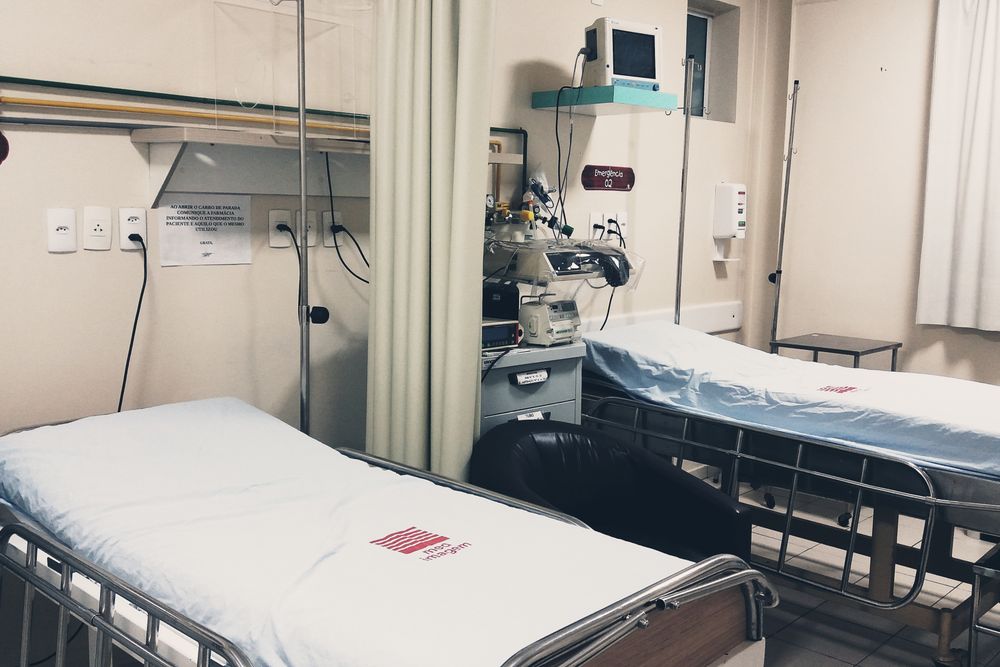
By the time the paramedics arrived, I had been slumped there for nearly twenty minutes. They cut open my flannel shirt in the ambulance. They put oxygen over my face. Someone kept saying, “Stay with us, sir,” in a voice that sounded calm only because she had practiced being calm around dying men. Then the ceiling of Overlook Medical Center rushed above me as they wheeled me through the emergency entrance.
Severe heart attack. Possible blockage. Cath lab ready. Family notified.
That last part was what I held on to. Family. After sixty-seven years of working, building, providing, fixing, paying, and forgiving, I thought at least one person in my own house would come running when the hospital called.
My wife, Vivien, answered first. The nurse put her on speaker because I was still conscious, lying under a sheet with wires stuck to my chest and a doctor hovering near my shoulder.
“Mrs. Brennan,” the nurse said gently, “your husband has suffered a serious cardiac event. He is being prepared for emergency intervention. We need you here as soon as possible.”
There was a burst of laughter in the background. Women’s voices. Glasses clinking. Then Vivien sighed. Not cried. Not gasped. Sighed.
“Oh,” she said. “How serious is serious? Because Arthur does have a way of exaggerating discomfort.”
The doctor leaned toward the phone. “Mrs. Brennan, your husband’s right coronary artery appears to be almost completely blocked. The next few hours are critical.”
A pause. Then my wife said, “I’m at Sandra’s book club. We just opened a very nice bottle of Sancerre, and I really cannot leave in the middle of the discussion.”
Nobody in that hospital room moved. The heart monitor kept beeping, each sound suddenly louder than the last.
“Mrs. Brennan,” the nurse said, her voice thinner now, “your husband may not survive the night.”
Vivien lowered her voice, as if the inconvenience embarrassed her more than my condition. “Well, he is already at the hospital. That is where sick people are supposed to be. Please just do what you need to do. And don’t keep calling me unless there is a real decision to make.”
Then she hung up.
I stared at the ceiling and felt one tear slide sideways into my ear.
I had known for years that my marriage had grown cold. Men know these things even when they pretend not to. You notice when your wife stops asking how your day went and only asks whether the AmEx bill has been paid. You notice when she laughs louder at country club dinners than she ever does in your kitchen. You notice when your presence becomes useful only when a signature or a checkbook is involved. But knowing a thing quietly is different from hearing it said out loud while you are fighting to stay alive.
The nurse, Dolores, pressed her lips together, then looked down at my phone again.
“Your son?” she asked softly.
Derek was thirty-five. My only child. The one I had carried on my shoulders at Little League games, sent through private school and college, whose mistakes I had been cleaning up since he was old enough to make them expensive.
Dolores called him. He answered on the third ring with wind and waves in the background.
“What’s up?”
“Mr. Brennan, this is Overlook Medical Center. Your father has suffered a severe heart attack. He is being prepared for emergency surgery. He needs family here immediately.”
Silence. For one second, I let myself hope. Then Derek said, “I’m in Cape May. It’s a three-hour drive, minimum. And we have dinner reservations tonight.”
“Your father may not survive the night,” Dolores said.
Derek exhaled like a man being asked to cancel a tee time. “Dad is tough. He always pulls through. Tell him I’ll come by Monday or Tuesday when things settle down.”
A gull screamed in the background. Then Derek added, “Actually, if he wakes up, tell him I need to talk to him about an investment opportunity. It’s time-sensitive.”
The line went dead. Dolores stood there holding my phone like it had become something dirty. A minute later she called again. This time a woman answered. Megan. Derek’s fiancée.
“Please stop calling,” she said. “We’re trying to enjoy our weekend.”
I closed my eyes.
The pain in my chest was terrible, but it had competition now. There is a special kind of pain that comes when you realize the people you spent your life protecting would rather protect their dinner reservations. I had paid for Derek’s college, his condo, his cars, his golf trips, his business ideas. I had made him a vice president at Brennan Mechanical because he wanted the title, even though the men who could actually read blueprints had earned more respect in a single week than Derek had in his entire adult life.
Dolores hesitated before making the last call. She had seen the name on my phone.
Frank Jr.
He was not my son. He was my nephew. My brother Frank’s boy. Frank Sr. died eight years earlier from pancreatic cancer. Toward the end, when the disease had taken most of his strength but none of his pride, he squeezed my hand and said, “Look after my kid if you can.” I told him I would. I did more than look after Frank Jr. I brought him into Brennan Mechanical, put him on job sites, let him learn the business from the ground up. He started carrying pipe and sweeping floors. He never asked for special treatment. He never called from a resort with a small emergency involving money. He showed up early. He stayed late. He cared.
Dolores called him. He answered before the first ring finished.
“Uncle Art?”
Dolores explained. I heard a chair scrape back so hard it hit something.
“I’m on my way,” Frank Jr. said. His voice broke once, but he did not waste time falling apart. “Tell him I’m coming. Please tell him I’m coming.”
He made it in thirty-two minutes. When he rushed into that room, he still had drywall dust on his boots and a streak of grease on his forearm. His hair was a mess. His eyes were red. He looked terrified, and I loved him for it. He took my hand with both of his.
“I’m here, Uncle Art. I’m not leaving.”
The doctor came in with the consent forms. I signed them myself. Frank Jr. stood beside me, one hand on my shoulder, as they rolled me toward the operating room. The last thing I saw before the anesthesia pulled me under was Frank Jr. standing there in his work boots, refusing to look away.
I woke up two days later. My throat was raw. My chest felt like someone had opened it, rearranged the machinery, and closed it with a carpenter’s impatience. Triple bypass, the doctor said. He said I was lucky. I wanted to laugh, but laughing hurt.
Frank Jr. was asleep in the vinyl chair beside my bed. Dolores told me he had not gone home. He ate vending machine sandwiches, drank coffee that looked like roofing tar, and slept in short miserable stretches whenever the nurses bullied him into resting.
Vivien had not called. Derek had not called. Megan certainly had not. No flowers arrived. No balloons. Just Frank Jr., snoring softly in a chair designed by someone who hated the human spine.
When he woke and saw me looking at him, his face changed so fast it nearly broke me.
“You scared the hell out of me,” he whispered.
“Language,” I rasped.
He laughed once, then wiped his eyes with the heel of his hand.
On the third morning, when my head was clear and my anger had stopped shaking, I asked Frank Jr. to bring my laptop from the truck. He came back with the laptop, my phone charger, reading glasses, and coffee from a diner down the road because he said the hospital coffee tasted like hot pencil water.
I opened the laptop and saw a notification from our home security system. Motion detected at main residence. I clicked the camera feed and rewound.
There was my dining room in Summit. Candles on the table. The good china. Fresh flowers in the center. A room full of Vivien’s country club friends, all dressed as if sorrow had been postponed for a better occasion. At the head of the table, in my chair, sat Derek. He was wearing my navy sport coat, too broad in the shoulders, too long in the sleeves, looking like a boy playing a grown man in a school play.
Vivien moved through the room with a bottle in her hand. My bottle. A 2005 Opus One I had been saving for retirement, bought years ago after landing the largest contract Brennan Mechanical had ever won. I had told Vivien we would open it when I finally stepped back from the business. She had called it silly then. Now she was pouring it for Sandra from book club.
I turned up the volume.
Vivien raised her glass. “Arthur is resting comfortably,” she said, in that bright social voice she used when she wanted people to admire her composure. “The hospital has everything under control. So tonight, for once, we can enjoy a peaceful dinner without him complaining about the thermostat.”
The table laughed. Derek leaned back in my chair.
“The best part,” he said, “is Dad can’t check the credit card statements from the hospital. I ordered new golf clubs this morning. Twelve grand.”
More laughter. Megan swatted his arm. But she was smiling. Vivien took a sip of my wine and let out a soft sound of satisfaction.
Then she said the sentence that finally burned the last thread between us.
“If the surgery doesn’t go well,” she said, lowering her voice just enough to make everyone lean in, “we would be taken care of. The insurance alone is substantial. And then there’s the business, the house, the investments.”
Sandra murmured something. But she did not sound horrified. She sounded entertained. Derek lifted his glass. “I’d finally be able to run Brennan Mechanical without Dad breathing down my neck about invoices and payroll.”
“To freedom,” Megan said, half joking, half not.
They laughed again. Vivien smiled.
In that moment I understood something I should have understood years earlier. They were not waiting for me to get better. They were waiting to see what they could collect if I did not.
I closed the laptop. Frank Jr. was watching me from the chair.
“Call Raymond Costello,” I said.
Raymond was my attorney. Not the kind who kept tissues on the desk and spoke gently about family harmony. Raymond Costello was the kind of lawyer other lawyers hired when they were afraid of losing. I had kept him on retainer for years, partly for business and partly because Derek had once forged my signature on a company check, and I had needed Raymond to scare him straight without sending my only son to jail. That was three years earlier. Derek cried in my office. Swore it would never happen again. I forgave him. But I also asked Raymond to prepare a contingency plan.
“What kind of contingency?” Raymond had asked.
“The kind a man prepares when he realizes love has made him stupid,” I said.
Now, from a hospital bed with a fresh scar down my chest and the taste of betrayal sharper than any medication, I called him. He arrived before noon with a leather briefcase, two paralegals, and a notary who looked like she had notarized documents in stranger places than a cardiac recovery room.
Raymond listened to the recordings. He listened to the hospital call notes. He listened to Frank Jr. describe who had come and who had not. Then he removed his glasses and cleaned them.
“Arthur,” he said, “once we begin, this will not be a warning shot.”
“I know.”
“It will be complete separation. Financial access. Business authority. Estate directives. Medical decision-making. Property control. Everything that can be legally secured will be secured.”
“Good.”
He studied me for a long moment. “You are certain this is not pain talking?”
I looked at the hospital window. Outside, a helicopter lifted from the roof and thudded away into the gray sky. “No,” I said. “Pain was what kept me married. This is clarity.”
That afternoon, I signed more papers than I had signed the day I bought my first building. Raymond moved fast but not carelessly. He had already built the structure years earlier. Now he activated it.
My separate assets were transferred into the Brennan Legacy Trust, with me as lifetime beneficiary and Frank Jr. as successor trustee. The house in Summit, purchased before Vivien’s name ever touched a mortgage document. The cabin in the Poconos. Two rental properties in Hoboken. The commercial building in Elizabeth. My shares in Brennan Mechanical. My investment accounts. Every account Vivien could legally be removed from, she was removed from. Every card issued under my name or the company’s name was canceled. Vivien’s three cards. Derek’s two. Megan’s authorized-user card, which I had never personally approved and Raymond found interesting in a way that made his paralegal start typing faster.
Derek’s salary ended that day. His title ended with it. Vice President of Business Development. A title so inflated it should have come with a warning label. He had never developed anything except a talent for spending money he did not earn. The men who climbed ladders in February, who crawled through tight mechanical rooms, who answered emergency heat calls at midnight, had built Brennan Mechanical. Derek had wandered through the office twice a month with sunglasses on his head and a coffee in his hand, asking Gail in payroll whether his expense reimbursement had cleared. That stopped.
Raymond snapped the last folder closed. “You have done what you can do from here.”
“Good. Now get me out of here.”
He had already arranged it. A private cardiac recovery center in Vermont. Quiet. Discreet. Good doctors. Better food. No Vivien arriving in sunglasses to perform concern once the cards stopped working.
Before I left Overlook, I wrote a letter. Not a long one. Long letters are for people still hoping to be understood. I only needed them to know I had heard them.
Frank Jr. drove me north himself. He helped me into the passenger seat carefully, like I was made of old glass, then tucked a blanket around me despite my complaining. We crossed through New Jersey, into New York, then up toward Vermont, where the roads narrowed and the air began to smell cleaner. An old Johnny Cash song came on the radio. Frank Jr. reached to turn it down.
“Leave it,” I said.
My brother Frank had loved Johnny Cash. He used to sing off-key in the garage while trying to fix whatever junk car he had dragged home that month. Frank Jr. smiled. For the first time since Route 9, I felt something loosen in my chest that had nothing to do with surgery.
Six days passed before my wife and son came looking for me. Not because they missed me. Because Vivien’s platinum card was declined at Nordstrom.
Vivien arrived at Overlook in a cream cashmere coat and irritation disguised as concern. Derek came behind her, checking his phone. Megan followed a few steps back, quieter than usual, perhaps because people who survive on borrowed status can smell danger before the owner of the status does.
Vivien tapped one manicured nail on the nurses’ station counter. “I need to see my husband. Arthur Brennan. Room 412.”
Dolores looked up. “Mrs. Brennan, your husband was discharged three days ago.”
Vivien blinked. “Discharged where?”
“That information is not available to you.”
“Excuse me?”
“Mr. Brennan left instructions. You are no longer listed as an authorized contact for his medical information.”
Derek’s head snapped up from his phone. “That’s ridiculous. I’m his son.”
Dolores looked at him the way only a nurse can look at a man who should be ashamed and is not. “I’m aware.”
Vivien laughed once, sharp and nervous. “This is absurd. We have urgent banking issues.”
“I’m sure you do,” Dolores said.
Then she reached beneath the counter and handed Vivien a white envelope. Vivien tore it open in the hallway. Inside was Raymond’s formal notice first. Clean language. Cold language. The kind that sounds polite while closing every door. Then came my letter. Vivien read it once in silence. Derek took it from her and read it aloud because patience had never been his gift.
“You wanted a peaceful weekend without me. You got it. I heard every word at your dinner table. The wine was not yours to open. The chair was not yours to sit in. The company was not yours to inherit while I was still breathing. Do not call me. Do not look for me. Call Raymond Costello. He will explain what is left.”
Derek’s face changed before he finished the last sentence. He opened his banking app. Then opened it again, as if the numbers might have been shy the first time.
“Mom,” he said. “There’s one dollar.”
She snatched her phone out of her bag. Checked one account, then another. Savings. Household. Brokerage access. Credit line. One dollar. One dollar. One dollar. Not zero. Raymond had left one dollar wherever legally possible because Raymond believed in poetry when the client’s pain justified it.
Vivien called the credit card company. Her voice started polished, then tight, then shrill. The representative informed her that every card connected to Arthur Brennan or Brennan Mechanical had been canceled. Derek called Gail at the company.
“Gail,” Derek barked when she answered, “something’s wrong with my corporate card.”
“No,” Gail said. “It was canceled.”
“What do you mean canceled?”
“Canceled means it no longer works.”
“I know what canceled means. Put my father on the phone.”
“Mr. Brennan is unavailable.”
“Then put me through to payroll.”
“That won’t be necessary. Your employment has been terminated. All company property in your possession is to be returned. Interim operational authority has been assigned to Frank Brennan Jr. and the executive team pending restructuring.”
“Frank?” Derek shouted. “Frank installs ductwork.”
“Yes,” Gail said. “He also shows up.”
Then she hung up.
By the time Vivien and Derek reached the house in Summit, Raymond’s people were waiting. A black SUV in the driveway. Two men in suits on the porch with a locksmith and a clipboard. They were professional, polite, and absolutely uninterested in emotional arguments.
The residence had been placed under trust control pending inventory and preservation of property. Vivien and Derek could collect clothing, medication, personal papers, and basic personal effects. Everything else remained.
Vivien stared. “This is my home.”
“No, ma’am. It is a trust-controlled property.”
They were given one hour. Vivien tried to take jewelry from her upstairs dressing room. The security team allowed her wedding band and personal documents. They stopped her at the diamond bracelet I had bought for our twentieth anniversary and the sapphire necklace from our trip to Charleston. Derek tried to take a television, a bottle of scotch, and the keys to the Lexus. No to all three. The Lexus was registered under Brennan Holdings.
By the end of the hour, Vivien stood in the driveway with two suitcases, one garment bag, her medication, and a face she no longer knew how to arrange for an audience.
That night they were in a motor lodge off Route 22, paid for with the last cash in Derek’s wallet. It is amazing how quickly people who laughed at your hospital bed discover the cost of ordinary life.
In Vermont, I recovered slowly. Real recovery is not dramatic. It is walking ten more steps than yesterday. It is learning how to sleep without rolling wrong. It is being proud of a lap around the garden like you just won a marathon.
Frank Jr. stayed the first week, then drove back and forth between Vermont and New Jersey as the company stabilized. He called every night. Not to ask for money or discuss emergencies of his own making. Just to ask whether I had eaten, walked, slept, and behaved myself with the nurses.
Once Raymond’s accountant started reviewing the company books, old suspicions became numbers. Unauthorized bonuses. Fake vendor invoices. Personal charges disguised as client development. Cash advances. Golf weekends. Hotel rooms. Gifts for Megan. A watch Derek had claimed he bought with savings, a word he used the way children use fairy tales. The total came to just over three hundred thousand dollars. A criminal referral went to the Essex County Prosecutor’s Office. Derek was questioned. He lied, then lied differently, then blamed Megan, then blamed me. Paperwork has a way of outlasting excuses. Derek was charged with fraud, embezzlement, and forgery.
He took a plea deal. Eighteen months in a minimum-security facility, restitution to be determined, probation after that. I did not celebrate. I did not cry. I simply read the update from Raymond and set it down. He is my son by blood. That fact no longer requires me to be his shelter.
Vivien moved into a studio apartment in East Orange. She works part-time at a department store fragrance counter. The thought of Vivien standing behind glass bottles, smiling at women in cashmere, did not please me. It did not pain me either. It simply felt like gravity. For years she had wanted to live among surfaces, polished, scented, expensive, admired from a distance. Now she did.
I sold the Summit house. I did not go back to walk through it one last time. Houses remember things, and I had no interest in hearing what that one had to say. I sold the cabin and the rental properties. Brennan Mechanical stayed, but I changed it. Frank Jr. became operations manager because he had earned the respect of the men who mattered. I hired a professional CEO for corporate growth and contracts. I moved myself into an advisory role.
The company did better. Much better. Funny thing about a business: when you remove the person draining money and morale from the middle of it, it breathes. The crews liked Frank Jr. because he knew their names and never asked anyone to do work he considered beneath him. Revenue rose. So did morale.
I used part of the property sale proceeds to create the Frank Brennan Sr. Memorial Scholarship at Newark Technical High School. My brother would have loved that. He always said not every good life begins in a college lecture hall. Some begin in a shop class, with a kid learning how to fix what everyone else throws away.
Then I bought a small house on the coast of Maine. Cedar shingles. Stone chimney. Narrow porch facing the Atlantic. A workshop out back with enough room for tools, trouble, and one old truck that had no intention of making things easy for me. It was not grand. That was why I loved it.
The first morning there, I made coffee and stood barefoot on the porch while the ocean beat itself against the rocks below. The sky was pale. The gulls screamed like unpaid creditors. The air smelled of salt, pine, and cold stone. For the first time in decades, no one asked me to fix anything before breakfast. No one needed my card. The silence was not empty. It was mine.
I found a 1970 Ford Bronco in a barn two towns over. Rusted fenders. Bad transmission. Carburetor full of old problems. The seller told me it might not be worth saving. I bought it that afternoon. Some men take cruises after a near-death experience. I bought a truck that needed patience.
Frank Jr. drove up every other weekend. He brought Sophie, his girlfriend, a veterinarian with kind eyes and a laugh that came easily. She asked real questions, not polite ones. How did you build the company? What was her father-in-law like as a kid? Can you teach me how to change oil? The first time she said father-in-law, she blushed because she and Frank were not married yet. Frank looked at her like she had hung the moon over my workshop. I pretended not to notice.
We ate lobster rolls from the shack down the road. We argued about whether the Bronco’s original paint was worth saving. Sometimes we sat in silence while the light changed over the water. That was when I learned the difference between loneliness and peace. Loneliness is sitting at the head of a full table where everyone wants something from you. Peace is sitting beside two people who would drive five hours just to help you wrestle with a rusted bolt.
Last month, a letter arrived from Vivien at Raymond’s office. He scanned it and asked whether I wanted the original sent to Maine. I said yes. Curiosity is not forgiveness. It is just curiosity.
The envelope arrived on a Thursday. Her handwriting looked smaller than I remembered. I opened it on the porch with coffee beside me and the Bronco’s carburetor soaking in cleaner inside the workshop. She said she was sorry. She said she had been frightened. She said the dinner party was misunderstood. She said she missed our life, not me exactly, our life. The house. The dinners. The ease. The soft landing of my work beneath her feet. Near the bottom of page two, her real voice returned. She needed help with rent.
There it was. The old invoice wearing a black dress to look like grief.
I read the letter twice. Then I folded it carefully, took it inside, and placed it in the fireplace. I struck a match and watched the paper catch. The edges curled first. Then the ink darkened. Then thirty-eight years of explanations turned into ash.
I did not feel triumphant. I felt clean.
A week later, Frank Jr. and Sophie came up for the weekend. Sophie was quieter than usual. Frank kept picking up tools he did not need. He held a socket wrench for almost ten minutes before I finally said, “Frank, unless that wrench owes you money, put it down and tell me what’s going on.”
He laughed, but his eyes were wet.
Sophie reached for his hand. “We’re having a baby,” she said.
For a moment, the workshop blurred. Not like Route 9. There was no pain this time. Just a rush of something so large and warm it made me sit down on the fender of the Bronco.
Frank cleared his throat. “And we wanted to ask if you’d be the godfather.”
I tried to make a joke. Something about not being reliable with diapers. Nothing came out. So I nodded. Then I said yes. Then I said it again because once did not feel like enough.
Sophie cried. Frank cried. I pretended the dust in the workshop had gotten aggressive.
That night we ate chowder at the kitchen table with the windows cracked open to the sound of the ocean. Frank talked about baby names. Sophie talked about not wanting a nursery that looked like a catalog. I talked about building a rocking chair, though none of us knew whether I had the patience for furniture fine enough for a baby.
Later, after they went to bed, I stood on the porch alone.
The moon was bright over the water. My scar pulled a little when I breathed deep, the way old damage reminds you it still has a voice. I put one hand over my chest and felt my heart working under my palm.
Still there. Still stubborn. Still mine.
I thought about Route 9. The coffee. The trucker. The paramedics. Dolores standing over me with my phone in her hand. Vivien choosing wine. Derek choosing dinner. Megan telling the hospital to stop ruining their weekend.
Then I thought about Frank Jr. running into that hospital with drywall dust on his boots.
I used to believe family was something declared. A name. A ceremony. A house full of framed photographs. A person at the other end of a holiday table.
I was wrong.
Family is not the person who waits to see whether your death will be convenient. Family is the person who shows up while your hands are cold, your machines are beeping, and nobody knows whether morning will come. Family is the one who brings bad coffee because it is better than no coffee. The one who sleeps in a vinyl chair. The one who learns the business from the floor up. The one who drives five hours to sit on your porch and say nothing because silence, with the right person, does not have to be filled.
My phone still rings sometimes with numbers I do not recognize. I let those calls ring. Then I set the phone down.
There is always something better waiting in the workshop. A bolt that needs patience. A carburetor that needs cleaning. A piece of old metal that can still be saved if someone is willing to do the work.
My name is Arthur Brennan. I am sixty-seven years old. I survived a heart attack, a cold marriage, and a son who mistook inheritance for love.
I lost the family I thought I had. Then I found the one that had been standing beside me all along.
And if the best revenge is living well, then mine sounds like gulls over the Atlantic, a wrench turning in my hand, and a young man calling from the driveway on Saturday morning, saying, “Uncle Art, I’m here.”
This time, I believe him.
Because he always is.

Laura Bennett writes about complicated family dynamics, difficult conversations, and the quiet moments that change everything. Her stories focus on real-life tensions — inheritance disputes, strained marriages, loyalty tests — and the strength people find when they finally speak up. She believes the smallest decisions often carry the biggest consequences.