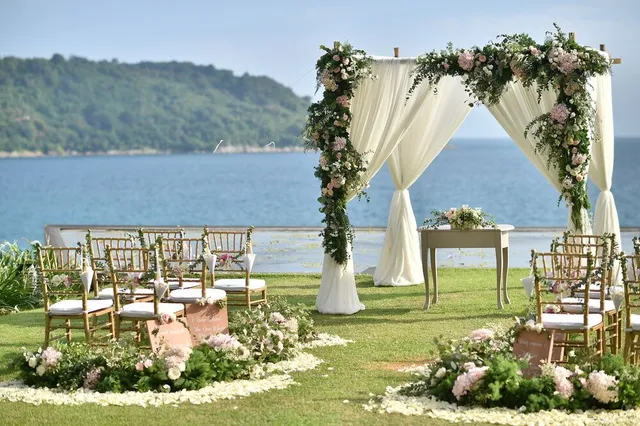
My brother pulled up to my grandmother’s farm on Memorial Day with fifteen people, coolers, overnight bags, and kids already asking about the pool, right in the middle of a paid wedding event I had booked months earlier. When the locked gate stopped him, he laughed and told my estate manager, I’m family. Tell my sister we’re here. She knows. Then the manager asked for his full legal name, and his smile started to disappear.
By the time my brother’s third car rolled up to the gate that afternoon, the bride’s string quartet had already begun tuning by the pond.
I was standing just inside the open barn doors with a clipboard tucked against my ribs, watching white fabric move in the warm breeze and servers carry trays of sweet tea and lemonade across the lawn. The whole place smelled like fresh-cut grass, roses, warm rolls from the caterer’s kitchen, and the faint clean scent of the pond after a sunny afternoon.
For once, everything was exactly where it was supposed to be.
The aisle chairs were straight. The candles in the barn were trimmed. The bride’s mother had stopped worrying about the weather after Leah showed her the updated radar on her phone. The florist was pinning one last spray of greenery to the arbor, and the wedding planner had just whispered, we might actually be ahead of schedule.
Then I heard tires snap over gravel.
Not one car. Three.
The sound came fast up the long drive, too fast for anyone arriving at a private event. Gravel popped under the wheels, doors opened before the engines had fully settled, and a child’s voice carried across the lawn toward the pool.
I did not have to look to know who it was.
Still, I did.
Derek climbed out of the first SUV wearing a loud blue Hawaiian shirt, sunglasses pushed into his hair, and the same wide, lazy grin he always wore when he expected a room to rearrange itself around him. He slapped the roof of his vehicle and turned back to the people piling out behind him.
Told you, I heard him say. Plenty of room.
There were fifteen of them. Children, coolers, overnight bags, folding floaties, beach towels, a stroller, a woman I had met exactly once at Christmas eight years earlier, and a man I had never seen before carrying a case of beer like he was walking into a lake-house cookout.
Two boys spotted the pool through the hedges and started yelling. Mom, look! She does have a pool! A younger girl had already kicked off one sneaker.
The old version of me would have gone out there immediately. The old version of me would have smiled too tightly, apologized to the bride’s mother for a problem I had not caused, and tried to make Derek understand something he had no interest in understanding. I would have lowered my voice. I would have explained. I would have negotiated with my own property as if I were asking permission to protect it.
But that afternoon, I stayed where I was.
Because between Derek and the wedding lawn stood a locked black iron gate, eight feet tall, wired to a keypad and a camera, with a sign mounted neatly beside it that read: Private event property. Admitted guests and scheduled vendors only.
And in front of that gate stood Leah Whitmore.
Leah had managed a boutique inn outside town for twenty years before she came to help me run the farm. She was fifty-nine, silver-haired, narrow-eyed, and elegant in the way some women become when they have spent decades being underestimated and have quietly decided never to be inconvenienced by it again. She could calm a crying bride, reorganize a seating chart in seven minutes, spot a late caterer from the sound of a truck engine, and shut down a problem without ever raising her voice.
Derek strode toward her smiling, one hand lifted like he was greeting the hostess at a restaurant.
Hey there, he said. We’re good. I’m family.
Leah did not smile.
Private event today, she said. Invited guests only.
Derek laughed like she had made a sweet little mistake. No, no. You don’t understand. I’m her brother. Tell Nora we’re here. She knows.
From behind the barn doors, I saw the small twitch in his jaw. I knew that twitch. It was the one that came when somebody failed to fall in line fast enough.
I had spent most of my life responding to that look before Derek had to say another word. I had learned to read his mood at family dinners, on holidays, in hospital waiting rooms, in Grandma June’s kitchen. I had learned that if I gave him what he wanted quickly enough, the afternoon might stay pleasant.
That was how Derek had trained all of us. Not with shouting most of the time. Not even with cruelty that could be easily named. He trained people with inconvenience. With disappointment. With a joke that cut a little too deep. With a sigh at just the right moment. With the ability to turn a perfectly normal boundary into proof that you were difficult, selfish, dramatic, or cold.
Leah, blessedly, had not been raised with him.
She folded her hands in front of her. I’m afraid I can’t admit anyone whose name is not on the confirmed guest list.
Derek turned slightly and glanced through the bars of the gate. He could see the lawn. He could see the white chairs. He could see the barn strung with warm lights and greenery. He could see the servers in pressed white shirts moving trays from the catering tent. He could see the pond where the quartet had begun softly working through their scales.
Most of all, he could see what the farm had become.
And that, I think, was the first thing that truly startled him.
Because three years earlier, nobody in my family wanted anything to do with Grandma June’s farm.
They called it too far from town. Too old. Too much work. Too quiet. Too muddy in March and too hot in July. My sister once stood in the kitchen with her purse still over her shoulder and asked why Grandma insisted on living all the way out here as if the farm were a punishment someone had assigned her.
Derek had a harsher name for it.
The dump.
He said it so often that after a while it stopped sounding cruel and started sounding normal, which was probably worse. Why are you always going out to the dump? Grandma still rattling around in that dump? One day the county’s going to condemn that dump and save us all the trouble.
Grandma June heard him say it once.
She was sitting at the kitchen table with a mug of tea, her hair pinned back, her hands curled around the cup because the arthritis in her fingers was acting up that week. Derek did not think she heard him. Or maybe he did and did not care.
Her eyes went to the window over the sink, where the pasture rolled down toward the pond. She did not raise her voice. She only said, a place can survive being called ugly by people who never bothered to understand it.
Derek laughed, because that was what he did when he did not want to admit a sentence had landed.
I remembered that line on Memorial Day while he stood outside the gate with fifteen people and a cooler, trying to turn the word family into a key.
Grandma June was eighty-one when I moved in with her.
It was supposed to be temporary.
Her hips had gotten bad. She had stopped driving after a frightening afternoon when she mixed up the brake and the gas in the grocery store parking lot. My parents were already gone by then, and my sister had two teenagers and a husband who traveled. Derek lived forty minutes away, but he had a way of making forty minutes sound like crossing the Rockies in a covered wagon.
So I packed a duffel bag and told myself I would stay for a few weeks.
A few weeks became nineteen months.
In those nineteen months, I learned the farm in the way you only learn a place when you stop visiting and start belonging to its daily needs. I learned that the upstairs bathroom toilet would run all night unless you jiggled the handle just right. I learned which floorboards popped loud enough to wake Grandma June and which ones only complained under your feet. I learned that the front porch rail looked solid until you leaned on the third post from the left. I learned that the furnace made a sound like an old man clearing his throat before the heat kicked on.
I learned her medicines by color and shape before I trusted myself with the names. I learned that she got dizzy if she took the blue pill without toast. I learned that she pretended not to be lonely when I drove into town for groceries, but watched from the kitchen window until my taillights disappeared.
At first, I thought caregiving would shrink my life. In some ways it did. I gave up dinners, weekends, the easy selfishness of coming and going without explaining myself. I missed birthdays. I canceled a trip to Charleston. I slept lightly, with one ear turned toward the hallway in case she called.
But in other ways, the farm gave me back to myself.
There was dignity in doing necessary things. There was steadiness in being useful to someone who had once been useful to everyone. There was a strange, quiet grace in helping Grandma June button a sweater, then sitting with her on the back porch while the sun dropped behind the tree line and she told me stories about the land as if the land were an old relative.
The pond had been my grandfather’s idea. He dug it too wide, she said, because he had never believed in doing anything modestly if there was room to make it difficult. The rose beds along the south fence were planted after her first child was born, when she was lonely and tired and needed something that bloomed without asking her for supper. The barn was older than anybody alive, with hand-hewn beams overhead and an east wall her father had patched with salvaged lumber during a hard year when nobody had money but everyone still had hands.
If you look close, she told me one evening, pointing with her cane, you can see where the grain changes. That’s how you know something was saved instead of replaced.
She said things like that. Simple things. Then months later, they would return to me as instructions.
Grandma June died in January on a still, gray morning while I was making oatmeal.
There was no dramatic decline that week, no sudden ambulance, no final speech at a bedside. She had simply been slowing for a long time, like a clock running down. That morning, when I carried her tray into the bedroom, she was gone.
For a few minutes, I did not call anyone.
I sat in the chair by her window and listened to the old house settle around us. The bare branches tapped lightly against the glass. Downstairs, the oatmeal pot clicked on the stove because I had turned the burner off but the metal was still hot.
I knew that as soon as I picked up the phone, the quiet would be gone.
So I let the quiet have a little more time.
The will was read three weeks later in a small law office downtown, above a bakery that smelled like cinnamon rolls and coffee. Derek arrived late, wearing a sport coat and irritation. My sister came in with a paper cup and cried before anyone said a word.
The attorney, Mr. Hanley, had known Grandma June for thirty years. He read the will in a calm voice.
Grandma June had left small amounts of money to each grandchild. The farm went to me. Not divided. Not held in trust. Not for the family. To me.
The room changed after that.
My sister looked stunned, then hurt, then careful. Derek stared at Mr. Hanley as if the attorney had personally arranged the insult.
That can’t be right, he said.
Mr. Hanley looked over his reading glasses. It is right.
She left Nora the whole farm?
Yes.
Derek turned to me. You knew?
I had not known. Not for certain. Grandma June had said things in her last months that I understood only afterward, but she had never sat me down and told me outright.
No, I said.
Derek’s face hardened in a way that made me feel twelve years old.
Well, he said, that’s convenient.
There it was. The suggestion that nineteen months of care had been a strategy. That I had positioned myself beside an old woman’s bed like a salesperson waiting for commission. That showing up was suspicious because he had not done it and therefore could not allow it to mean anything honorable.
I did not argue. By then, I had learned that arguing with Derek was never really a conversation. It was a sport he had practiced longer than I had, and he always arrived with sharper equipment.
So I took the folder Mr. Hanley gave me, signed where I needed to sign, and went home to the farm.
For a while, I did not know what to do with it.
The house was too quiet without Grandma June. Her cane still leaned beside the kitchen door. Her gardening gloves were on the shelf in the mudroom, stiff with dirt. A half-finished crossword sat under a magnet on the refrigerator, one clue filled in with her small precise handwriting.
Grief lived in objects, not in any single wave, just in the mug she always chose even though the handle had been glued back on twice, in the indentation her chair had made in the porch rug, in the way I still turned my head when the furnace coughed because for nineteen months that sound had meant checking whether she needed another blanket.
The idea of turning the farm into an event venue did not come all at once. Good ideas rarely do. They arrive while your hands are busy with something else.
I was repainting the barn interior in April, standing on a ladder with an old roller and a paper mask hanging under my chin. The afternoon light came through the high windows in wide pale sheets, catching dust in the air. I climbed down, stretched my back, and stood in the center of the barn floor.
For the first time, I did not see repairs. I saw possibility.
The timber beams. The height. The wide doors opening toward the pond. The way the light softened everything without making it look staged. The rose beds beyond the fence. The old oak where Grandma June used to sit with iced tea during the worst of July.
Someone would pay to get married here.
The thought frightened me because it felt both ridiculous and obvious.
I knew nothing about weddings except that they involved more opinions than anyone admitted. I knew nothing about permits, insurance, vendor load-in, restroom requirements, noise ordinances, parking plans, or rental contracts. But I knew the farm. And I knew it deserved better than being sold off in pieces to somebody who would flatten the barn, fill the pond, and name the subdivision something like Rose Meadow Estates.
So I started learning.
I went to planning commission meetings where men in khakis debated setbacks like scripture. I learned about occupancy limits, fire lanes, portable restroom contracts, liability coverage, septic inspections, and the difference between a charming old barn and an expensive public hazard.
I made mistakes. I hired the wrong plumber first. I underestimated the cost of commercial bathroom upgrades so badly that I had to sit at the kitchen table with a calculator and a sick feeling in my stomach. I spent one whole week arguing with a vendor who insisted rustic meant splinters are part of the charm.
Then I met Leah.
She was speaking at a zoning meeting, polite as a church bulletin and twice as firm. Afterward, in the parking lot, she asked what I planned to do with the farm. I told her, badly. She listened, asked six questions that made me realize I had not thought nearly hard enough, and handed me her card.
Her consulting rate made me blink. She was worth every dollar.
Leah knew which caterers were reliable and which ones were merely charming, which she considered far more dangerous. She knew how to keep a florist from blocking a fire lane, how to write a contract that prevented guests from deciding the pool was included, and how to say absolutely not in a tone that made people thank her for the information.
Together, we turned the farm into a business.
Not quickly. Not magically. There were no montage moments in real life, only receipts, sore shoulders, county forms, paint under my nails, and nights when I sat at Grandma June’s table wondering if I had lost my mind.
But slowly, the place changed. The barn floor was refinished. The dangerous porch rail was replaced. The driveway was widened enough for shuttle vans. The old tack room became a prep space. The rose beds were cleaned and replanted. The pond edge was cleared and fitted with discreet lighting that made it look like the water was holding stars.
We named it June’s Crossing. Leah said it sounded like a place people could remember without needing to ask how to spell it.
Our first event was a retirement party for a high school principal who had apparently taught half the county and frightened the other half into successful adulthood. I was so nervous I forgot to eat until nine at night. When the last guest left, Leah handed me a paper plate with two slices of sheet cake and said, congratulations. You survived being responsible for other people’s memories.
That was exactly what the work was. Being responsible for other people’s memories.
It is a heavier thing than it sounds.
For a while, my family stayed away. Then the farm started appearing online. A photographer posted wedding images that were shared all over town. A regional magazine included June’s Crossing in a feature about restored rural venues. After that, Derek became interested.
Not in the work. Never in the work. In the access.
The first time he showed up unannounced, it was a Saturday in July. I was walking a bride’s mother through the barn while Leah checked the catering schedule. Derek drove straight through the open gate with eight people, two kids, and a cooler. His friend had already opened the back of the SUV before I reached them.
Surprise, Derek said, spreading his arms. We were in the area.
You live forty minutes away, I said.
Exactly. In the area.
His kids ran toward the pool. I called them back so sharply they froze.
Derek’s smile thinned. Relax. They’re kids.
I have a rehearsal dinner here in three hours.
So? We’ll stay out of the way.
He said it like the problem was my imagination, not the fact that eight uninvited people had arrived at a contracted event property with swimsuits and lunch meat.
I lowered my voice because the bride’s mother was still standing near the barn.
You need to leave, I said.
Derek looked at me as if I had embarrassed him on purpose.
This is Grandma’s farm.
No, I said. It was Grandma’s farm. Now it’s mine, and today it’s rented.
His eyes went cold.
Grandma would be ashamed of you talking like that.
It was a good line. He knew it was a good line. He had always been skilled at finding the place where love and guilt overlapped.
For a second, it worked. I felt the old pull in my chest. The instinct to soften. To apologize. To make this easier for Derek because making things easier for Derek had been confused with keeping peace for as long as I could remember.
Then I looked past him at the barn I had painted, the lawn I had mowed, the vendor I had paid, the bride who had trusted me, and I heard Grandma June’s voice.
Your tendency to apologize for things that are not your fault is a waste of a perfectly good sentence.
So I did not apologize.
I need you to go, I said.
He left angry. Not loud angry. Derek was too socially polished for that when strangers could hear. He left with tight movements, hard hands, cooler slammed into the back, children gathered with unnecessary drama, tires biting the gravel as if the driveway had personally offended him.
I thought that would be the end of it.
It was not.
He came back on Labor Day with twelve people. That time, Leah handled him because I was in the kitchen solving a crisis involving the wrong centerpieces and a bride who had gone silent in a way that scared me more than tears would have. By the time I stepped outside, Derek was gone and Leah was standing by the drive with her arms crossed.
You need a gate, she said.
I have a gate.
You have a suggestion. You need a gate.
The black iron gate was installed three weeks later.
Derek called the first time he saw it.
You put up a gate?
Yes.
That feels hostile.
It’s a business boundary.
He gave a short laugh. That’s what people call hostility when they want to sound educated.
I have an insurance inspection in twenty minutes, I said. I need to go.
Nora. There was warning in my name. I let the silence answer it. Then I hung up.
For six months, the gate did its job. Vendors received codes. Booked clients received instructions. Guests checked in through the event planner or shuttle service. Nobody wandered in because they felt like seeing the place.
Then Memorial Day came.
Rachel and Simone’s wedding had been on our calendar for seven months. They were kind, organized, and deeply attached to the idea of a wedding that felt like a gathering rather than a performance. Rachel had grown up on a farm one county over. She cared about the light, the old wood, the sound of gravel under tires. Simone cared about food, music, and making sure her mother had a comfortable chair where she could see everything without walking too far.
Their families had been lovely. Their mothers had met on the property walk-through the previous fall and spent twenty minutes discussing biscuit recipes like diplomacy was being conducted through flour.
I wanted their day to be perfect.
The roses had cooperated. The weather had behaved. The pond lanterns had been tested twice. The caterer had arrived early. The string quartet was in place.
Then Derek arrived with fifteen people.
At the gate, he was still trying to smile.
Look, he told Leah, I don’t know what she told you, but this is family property.
Leah’s expression did not move. It is private property under contract for a scheduled event.
Right, and I’m the owner’s brother.
That does not place you on today’s guest list.
He stared at her for a moment, then gave a laugh meant for the people behind him.
Can you just call Nora?
I can pass along a message.
No, I need you to call her.
I’m not going to interrupt the event manager during a contracted wedding setup for an unscheduled visit.
That sentence landed so cleanly that even from the barn I felt it.
Derek turned and looked through the gate again. The children had quieted. The woman with the baby shifted the child higher on her hip. The man with the beer case looked suddenly less certain about being there.
Derek had brought an audience because he thought an audience would pressure me. Instead, the audience was watching him stand outside a locked gate while my business continued without him.
It was the first time I had ever seen Derek realize in public that his confidence was not a credential.
He took out his phone. Mine buzzed in my pocket. Derek. I let it ring. It stopped. It started again. I let it ring again.
The wedding planner, a calm woman named Marcy with reading glasses on a chain around her neck, looked toward the drive.
Everything all right, she asked.
Yes, I said.
And for once, it was true. Because everything important was all right. The bride was not being bothered. The guests had not arrived yet. The caterers were still moving on schedule. The quartet had drifted into a gentle piece that made the entire lawn feel more expensive than it was.
At the gate, Derek put his phone away. He spoke to Leah again. His body language had changed. Less charm now. More edge.
The kids were told they could swim.
By whom?
His mouth tightened. Leah waited. He did not answer.
She said, this property is not open for swimming, tours, visits, or family gatherings today. You’ll need to turn your vehicles around.
You people are unbelievable, he said.
Leah nodded once, as if he had said the weather was humid. I’ll make sure Ms. Caldwell knows you stopped by.
Ms. Caldwell. Not Nora. Not his sister. The owner.
I will admit, privately, that I enjoyed that part.
Derek stood there another few seconds. Maybe he expected me to appear. Maybe he thought I was hiding. Maybe he imagined I was watching and feeling guilty enough to change my mind.
I was watching. I was not guilty.
The children began climbing back into the cars. A cooler went back into a trunk. The man with the beer case looked down at his shoes.
Derek got into his SUV last. Before he did, he looked once more through the iron bars at the lawn, the barn, the pond, the roses, the staff, the chairs, the quiet order of a place he had once dismissed because he had not been able to benefit from it yet.
Then he drove away.
The gravel popped under his tires in the opposite direction. The sound faded. The quartet continued. And the gate stayed locked.
I thought I would feel triumphant.
I did not. Not exactly. Triumph is too sharp a word. What I felt was steadier than that. More like setting down a heavy box you did not realize you had been carrying until your arms stopped aching.
For years, I had absorbed Derek’s choices. His lateness became my flexibility. His entitlement became my hospitality. His rudeness became my job to smooth over. His absence during Grandma June’s last nineteen months became a subject we all politely stepped around because naming it would make dinner uncomfortable.
The gate did not punish him. It simply refused to convert his choices into my emergency.
That was all a boundary ever was, I realized. A refusal to keep paying someone else’s bill.
Rachel and Simone’s wedding began at six. By then, the light had turned soft over the pond. Guests arrived by shuttle from the church parking lot in town. Women in summer dresses stepped carefully onto the gravel, laughing as they held the backs of their heels. An older gentleman in a linen jacket paused near the barn doors and said, well, I’ll be. This is something.
I stood behind the last row of chairs while Rachel walked down the aisle with her father. Simone saw her and covered her mouth. Rachel cried through half her vows. Simone laughed because Rachel was crying, then cried because she had laughed. Their guests laughed with them, and the sound moved over the lawn like warmth.
I watched the ceremony and felt, as I often did during events, that the farm was doing exactly what it had been waiting to do. Grandma June’s roses were behind them. My grandfather’s pond held the light. The barn her father had repaired stood open and glowing. All that care, all those years, all that work that looked ordinary while it was happening, had become the background for someone else’s joy.
That mattered to me more than Derek would ever understand.
After dinner, Leah found me near the catering tent with a plate of untouched food.
You need to eat, she said.
I’m holding food.
That is not the same thing.
I took a bite of chicken because arguing with Leah was rarely productive.
She watched me chew, then said, he called the main line.
Derek?
Left a voicemail.
I sighed. Of course he did.
He wants to discuss a formal family agreement about property access. She raised one eyebrow. He used the phrase family agreement three times.
I laughed then. Not because it was funny. Because it was so perfectly Derek.
When Derek could not get what he wanted informally, he made it sound official. When guilt did not work, he tried principle. When principle did not work, he tried legacy. Family agreement. Family legacy. Family access. Family property. Always family when he wanted something. Rarely family when someone needed help.
Leah leaned against the catering table and looked out toward the barn.
You know what he’s doing, right?
Yes.
Good. I just wanted to make sure grief wasn’t making you polite.
That was Leah. She could slice you open and hand you a napkin.
I’m not feeling polite, I said.
Excellent.
But that night, after the wedding ended, after Rachel and Simone left under a tunnel of sparklers and their guests climbed into shuttles smelling like perfume and champagne and summer air, I sat alone at the kitchen table and listened to Derek’s voicemail.
His voice was controlled. That was the first sign he was angry.
Nora, we need to talk about what happened today. I think this has gone far enough. Nobody’s saying you shouldn’t run your little business, but this is still Grandma’s farm, and there needs to be some understanding that family can use it. The kids were humiliated today. I was humiliated. That woman at the gate was rude. We need a formal agreement so this doesn’t happen again.
I played it once. Then I played it again. Not because I needed to hear it, but because I wanted to notice what was missing.
No apology for arriving unannounced. No acknowledgment of the wedding. No concern for the bride and groom, the contracts, the insurance, the staff, the liability, the months of work. No recognition that he had tried to bring fifteen people onto an active event property with coolers and pool toys. Only his humiliation. Only his children’s disappointment. Only his belief that my boundary was the event, rather than his trespass.
I deleted the voicemail. Then I made tea.
Grandma June always made tea at the end of a hard day. Not because tea fixed anything, but because waiting for water to boil forces a person to stand still long enough to remember they have a body.
The next morning, I called Mr. Hanley. He listened without interrupting. When I finished, he said, do you want the family version or the legal version?
Both.
The family version is that your brother is embarrassed because he assumed the rules did not apply to him and discovered they did.
And the legal version?
The legal version is that you’re operating a business with liability exposure, active contracts, insurance requirements, and private property rights. You should formalize an access policy and put it in writing.
By Wednesday, we had one. It was not dramatic. No threats, no emotional language. Just clear terms drafted on letterhead. June’s Crossing was a private event venue. Access required prior written approval. No unscheduled visits. No pool use during booked events. No overnight stays unless arranged through a private family visit outside operating dates. Unauthorized entry would be treated as trespass.
Mr. Hanley sent it to Derek, my sister, and the few relatives most likely to be pulled into Derek’s version of the story before they had heard mine.
My sister called first.
I didn’t know he brought that many people, she said.
How many did he tell you?
He said he stopped by with the kids.
I laughed softly. Fifteen people, three cars, coolers, overnight bags, and pool floats.
There was a long silence.
Oh, she said.
Yes.
He made it sound like you locked his children out in the heat.
His children were in air-conditioned cars for less than ten minutes.
Another silence. Then, quieter: Nora, I’m sorry.
Those three words surprised me so much I stopped folding napkins.
For what?
For not seeing it. Any of it. Grandma. The farm. What you were doing.
My sister was not cruel. She was busy, conflict-avoidant, and skilled at letting other people make difficult choices so she could regret them later without revisiting her own part in them.
I didn’t see it either at first, I said, though that was kinder than true.
No, she said. You saw enough to show up.
I did not know what to do with that. So I said the safest thing.
Thank you.
Derek did not call for four days. Then he called on Sunday afternoon, when I was in the barn helping Leah measure for new drapery panels.
You sent me a legal letter, he said.
Mr. Hanley sent an access policy.
You sent me a legal letter like I’m some stranger.
You arrived like one.
The silence after that was immediate. Leah, who was holding the other end of the measuring tape, looked at me with open appreciation.
Derek said, that’s ridiculous.
No, Derek. What’s ridiculous is bringing fifteen people to an active wedding venue without calling and telling them they can swim in a pool you do not own.
I didn’t know there was a wedding.
You didn’t ask.
It was Memorial Day weekend.
Yes. Which is why the property was booked.
He exhaled hard.
You’ve changed.
It was meant as an accusation. Maybe it was true.
I hope so, I said.
He had no quick answer for that. So he shifted, as he always did, to Grandma June.
She would hate this. She would hate seeing that gate. She would hate family being treated like outsiders.
For the first time, the line did not cut as deeply. Maybe because I had spent enough evenings with Grandma June to know the difference between what she valued and what Derek found useful to quote.
Grandma locked the pantry when Uncle Ray kept taking jars of peaches she’d canned for church baskets, I said. She put a chain across the north pasture when the neighbor boys started riding dirt bikes through it. She made Dad return the tractor washed and fueled every time he borrowed it. Grandma understood generosity. She also understood that people who respect a place don’t mind respecting its rules.
Derek said nothing.
I continued before I lost my nerve.
You called this farm a dump for years. You didn’t come when she needed groceries. You didn’t come when the porch rail broke. You didn’t come when I was sleeping with my phone under my pillow in case she fell. And I’m not bringing that up to punish you. I’m bringing it up because you keep using the word family like it erases history. It doesn’t.
The barn was very quiet. Even Leah had gone still.
When Derek spoke again, his voice was lower.
I thought we’d all still have it.
There it was. Not an argument. A confession.
For one brief second, I could hear the boy he had been before he became so practiced at taking up space. A boy running through the pasture in July. A boy fishing badly at the pond. A boy eating Grandma June’s biscuits at this same kitchen table with butter running down his wrist.
I know, I said.
And I did know. That was the difficult thing. Entitlement often grows around a real grief. Derek had lost something too. He had lost the version of the farm that existed in his memory, the one he could visit when convenient and ignore when it needed him. He had lost the illusion that belonging requires nothing but wanting access after the work is done.
But grief did not give him keys.
I’m not keeping you from the farm, I said. I’m keeping you from treating it like it has no owner, no schedule, and no cost. Those are different things.
He was quiet for a long time.
Finally, he said, so what am I supposed to do? Make an appointment to see my grandmother’s porch?
Yes, I said. If it’s during event season.
He gave a short laugh, but it had no force behind it.
That sounds insane.
It sounds respectful.
Another silence. Then I said, come in October. Bring the kids. We’ll pick a weekend before the holidays. The farm is beautiful then.
He did not answer right away. When he did, his voice was tired.
Fine.
It was not warm. It was not graceful. But it was the first time he had accepted a boundary without turning it into a war.
I took it.
Summer moved on. June’s Crossing booked every Saturday through mid-October and half the Fridays too. We hosted weddings, anniversary dinners, a retirement party for a county judge, and one very emotional vow renewal for a couple in their seventies whose grandchildren surprised them with a slideshow in the barn.
The work was hard, but it was honest. There is a particular fatigue that comes from building something that belongs to you. It is different from the exhaustion of being used. Both can make your bones ache, but only one lets you sleep with your dignity intact.
Derek stayed quiet. Once, in August, his wife sent me a text asking if I had any photos of Grandma June with the kids. I sent what I had. She replied with a heart and nothing else.
My sister came out in September to help me inventory chairs. She brought sandwiches from the deli in town and a bag of peaches from the farmers market. We worked in the barn with the doors open and ate lunch on the porch. At one point she looked across the lawn and said, I should have come more.
I did not rush to comfort her. That was another thing I had learned. Sometimes people need to sit with the sentence they earned.
After a while, I said, you’re here now.
She nodded, eyes shining. Yeah, she said. I am.
In October, Derek came.
Not early. Not with strangers. Not with coolers and floaties and an assumption dressed up as a smile.
He arrived at two o’clock on the Saturday we had agreed on, with his wife, his three children, a grocery-store pie, and a strange carefulness in his posture that made him look slightly uncomfortable inside his own body. The maples along the drive had turned red and orange. The grass had lost the high green of summer and settled into something softer. The pond reflected the sky like a piece of polished tin.
I opened the gate before he reached it. He drove through slowly. That, more than anything, told me he was trying.
His youngest daughter, Lily, pressed her face to the window when she saw the barn.
Is that where people get married, she asked as soon as she climbed out.
Sometimes, I said.
Can I see?
I looked at Derek. He looked back, then said, ask Aunt Nora if it’s okay.
Such a small sentence. Such a large shift.
I nodded. It’s okay.
The children ran across the lawn, not toward the pool, but toward the barn, their voices high and bright in the fall air.
Derek stood beside his SUV and looked around. For once, he did not fill the silence.
His wife, Allison, touched my arm lightly. Thank you for having us, she said. There was apology in her voice, though she did not say the word.
You’re welcome, I said.
We ate on the porch that evening. My sister came with her husband and youngest son. Leah came too, carrying a bottle of wine and a store-bought pumpkin cake she claimed was practically homemade if you put it on your own plate.
The children chased each other across the lawn until dusk. Lily crouched at the edge of the pond and stared into the water with the grave concentration of a child discovering that quiet things can be interesting. Derek’s oldest boy asked if the barn was haunted, and Leah told him only by invoices.
For the first hour, the adults were careful. Families have weather. Even when the sky looks clear, everyone can feel where the pressure changed. Derek complimented the porch repair. My sister asked Leah about bookings. Allison offered to help clear plates. Nobody mentioned Memorial Day.
Then, after dinner, Derek walked down toward the barn. I followed because I knew that walk. He wanted to say something where not everyone could hear.
The barn doors were open. The inside smelled faintly of wood, wax, and dried flowers. A few chairs were stacked along the wall. The string lights were off, but the last of the sunset reached through the high windows and touched the floor in long amber rectangles.
Derek stood near the east wall. The patched section.
I remember this, he said.
I stood beside him.
You fell off a hay bale there when you were nine.
He looked at me, surprised. You remember that?
You cried before you hit the ground.
He laughed, then rubbed the back of his neck.
For a moment, we were children again. Not fully. Never fully. But enough for the barn to hold both versions of us.
He looked back at the patched boards.
I called it a dump, he said.
I did not answer. He deserved the silence.
He swallowed.
I don’t know why I did that.
I did. But I let him find his own way there.
After a while, he said, maybe because if it was just an old dump, then I didn’t have to feel bad for not coming.
That was the truest sentence he had spoken in years.
Outside, one of the children shrieked with laughter. The sound came through the open doors, clean and high.
Derek kept his eyes on the wall.
I’m sorry, Nora.
I had imagined that sentence so many times that when it finally arrived, it did not feel the way I thought it would. It did not repair everything. It did not erase the missed grocery runs, the Christmases he left early, the jokes, the voicemail, the gate, the way he had made me feel greedy for accepting what Grandma June had chosen to give me.
But it mattered. A late apology is still late. It can also still be real.
Thank you, I said.
He nodded. Then, quieter: it’s your farm.
The barn seemed to settle around those words.
Because he had finally stopped taking language that did not belong to him.
The next morning, before he left, Derek helped me replace two loose boards on the old equipment shed. He was clumsy with the drill and complained once about his back, which was very Derek, but he stayed until the job was finished. His kids carried small scraps of wood to the burn pile and acted as if they were saving the farm from ruin.
When he loaded the car, Lily ran back to hug me.
Can we come again when there’s no wedding, she asked.
I looked at Derek. He smiled, small and a little sheepish.
If Aunt Nora says it’s okay, he said.
It’s okay, I told her. With notice.
Lily nodded solemnly, as if notice were a sacred family tradition.
After they drove away, I stood by the gate and watched the dust settle behind their car.
Leah, who had stayed over in the guest room, came down the drive with two mugs of coffee.
Well, she said, handing me one. Nobody tried to swim.
Progress.
Nobody said family agreement.
Miracle.
She looked at the closed gate, then back at me.
You know, a lot of people think boundaries keep love out.
I took a sip of coffee.
And?
They don’t, she said. They keep disrespect from walking in and calling itself love.
Late that afternoon, after everyone had gone, I walked the property alone. I checked the barn doors. I walked past the rose beds, now gone to hips, small orange-red beads against the fading leaves. I stood by the pond and watched a pair of geese cut across the water. I paused at the porch rail, solid now under my hand.
The farm was quiet in the way it always was after people left. Not empty. Holding.
I thought about Grandma June. Not as she had been at the end, small under a quilt, her hand light in mine. I thought of her younger, standing in the garden with her sleeves rolled up, carrying jars of peaches to the church basement, telling my grandfather where he had dug the pond wrong but admitting years later that wrong had turned out beautiful.
I thought about what she had left me.
Not land. Not just land. Responsibility.
The kind that looks, from the outside, like privilege because people see the finished porch, the glowing barn, the weddings, the gate opening at the press of a code. They do not see the nineteen months. They do not see winter wind through old windows, county permit forms, unpaid invoices, the fear of failing at something everyone else had already decided was worthless. They do not see you standing in a law office while your brother suggests love was manipulation. They do not see you learning, slowly, that peace purchased with your own erasure is not peace. It is only silence with a prettier name.
The farm had taught me that. Grandma June had taught me that.
A gate, I had learned, does not make a place less welcoming. It makes welcome mean something.
By November, June’s Crossing was booked well into the next year. A bride from Nashville cried when she saw the barn in the rain and said it looked like the kind of place where people kept promises. A retired couple reserved the porch for their fiftieth anniversary dinner. Life went on, as it has the nerve to do after every ending.
My sister came more often. Derek called before he came. Not every relationship healed into something soft. That is not how real families usually work. Some things remained awkward. Some subjects stayed tender. Some apologies needed time to prove they were more than mood.
But the rules held. And because the rules held, the visits that happened after them felt cleaner. Nobody arrived with entitlement hidden under a cooler lid. Nobody treated Grandma June’s porch like a public park. Nobody called the farm a dump again.
One evening in early December, after our last event of the season, I closed the barn alone. It had been a small winter wedding, candles everywhere, evergreen on the tables, guests wrapped in wool coats and good perfume. The couple left in an old pickup truck decorated with white ribbon, and their families stood on the gravel waving until the taillights disappeared.
The caterers packed up. Leah went home. The last shuttle turned onto the county road.
I turned off the barn lights one row at a time. The room slowly returned to darkness. Before I locked up, I stood in the center of the floor and looked toward the east wall, though I could barely see it. I knew where the patch was. I did not need the light anymore.
That, I thought, was what showing up does. It teaches you the shape of things in the dark.
I locked the barn and crossed the lawn toward the farmhouse. The air was cold enough that my breath showed. The pond was black and still. The rose beds slept under their mulch.
Inside, the kitchen lamp was on.
I washed my hands at the sink, watching the dark window reflect me back to myself. Older than I had been when I arrived with a duffel bag. Tired. Stronger. Less apologetic.
I made a cup of tea. Grandma June’s old table sat in the center of the kitchen, scarred and solid, the same table where she had shelled peas, paid bills, scolded grandchildren, rolled pie crust, signed birthday cards, and once told me that a place becomes yours when you stop asking what it can give you and start asking what it needs.
I sat down in the lamplight.
The house was quiet around me. Not lonely. Quiet.
Outside, the gate was closed. The barn was locked. The farm rested under the winter sky, no longer waiting for anyone to recognize its worth.
It had been recognized. By the couples who married there. By the families who gathered there. By the woman who had left it to me because she knew the difference between wanting a place and loving it enough to care for it.
And, finally, by me.
For years, I had thought inheritance meant receiving something. Now I knew better.
Inheritance is also what you refuse to surrender.
I wrapped both hands around my mug and looked out toward the dark lawn, toward the place everyone once called a dump, toward the gate that had stayed locked when it needed to, toward the barn that had been saved instead of replaced.
The farm was mine. Not because a document said so, though it did. Not because Derek finally admitted it, though he had.
It was mine because I had known it in all its seasons. Because I had answered when it needed work. Because I had protected its peace from people who mistook access for love. Because I had learned, at last, that being generous did not require leaving every gate open.
Somewhere in the walls, the old house gave a familiar winter creak.
I smiled into my tea.
For once, I did not get up to fix anything. There was nothing urgent left to prove.
The place was standing.
So was I.

Sophia Rivers is an experienced News Content Editor with a sharp eye for detail and a passion for delivering accurate and engaging news stories. At TheArchivists, she specializes in curating, editing, and presenting news content that informs and resonates with a global audience.
Sophia holds a degree in Journalism from the University of Toronto, where she developed her skills in news reporting, media ethics, and digital journalism. Her expertise lies in identifying key stories, crafting compelling narratives, and ensuring journalistic integrity in every piece she edits.
Known for her precision and dedication to the truth, Sophia thrives in the fast-paced world of news editing. At TheArchivists, she focuses on producing high-quality news content that keeps readers informed while maintaining a balanced and insightful perspective.
With a commitment to delivering impactful journalism, Sophia is passionate about bringing clarity to complex issues and amplifying voices that matter. Her work reflects her belief in the power of news to shape conversations and inspire change.