My name is Evelyn Harper, and I am sixty-eight years old. I spent thirty-one years teaching third grade in Cleveland, Ohio, which means I have seen every excuse a child can invent for a torn permission slip and every kind of parent who walks through a school door, the loving ones and the tired ones and, every so often, the ones who shouldn’t have been trusted with a goldfish. I raised two children of my own and buried a husband who used to tease me for keeping an emergency folder in my desk drawer, the same folder I would end up grabbing on the worst morning of my grandson’s life. I tell you all of this because you need to understand that I am not an excitable woman. I do not call the police over nothing. I do not sue people for sport. What happened to my grandson Noah on a Tuesday morning in June was not nothing, and by the time I was finished, everyone involved understood that.
I was on my balcony that morning, watering the basil, when my phone rang. The caller ID showed a number I didn’t recognize, one of those long strings that usually means a payphone or a hospital line. I almost let it go to voicemail. I’m glad I didn’t.
“Grandma?”
The voice was so small I almost didn’t recognize it as Noah’s. My grandson is ten years old, all elbows and baseball statistics, the kind of kid who narrates his own life like a sports announcer when he’s excited. This was not that voice.
“Noah? Baby, aren’t you supposed to be on a plane to Orlando right now?”
Silence stretched out long enough that I pulled the phone away from my ear to check the call hadn’t dropped. Then I heard him suck in a breath, the shaky kind that comes right before real tears.
“They left me.”
My hand went still around the watering can, water dripping onto my slippers, and I didn’t even notice.
“Who left you, sweetheart? Left you where?”
“Mom. Dad. Everyone.” His voice cracked in the middle of the sentence. “I’m at the airport. Gate B14. Mom said I was grounded because I got into it with Mason yesterday. She told Dad I was in the bathroom. Then they got on the plane without me.”
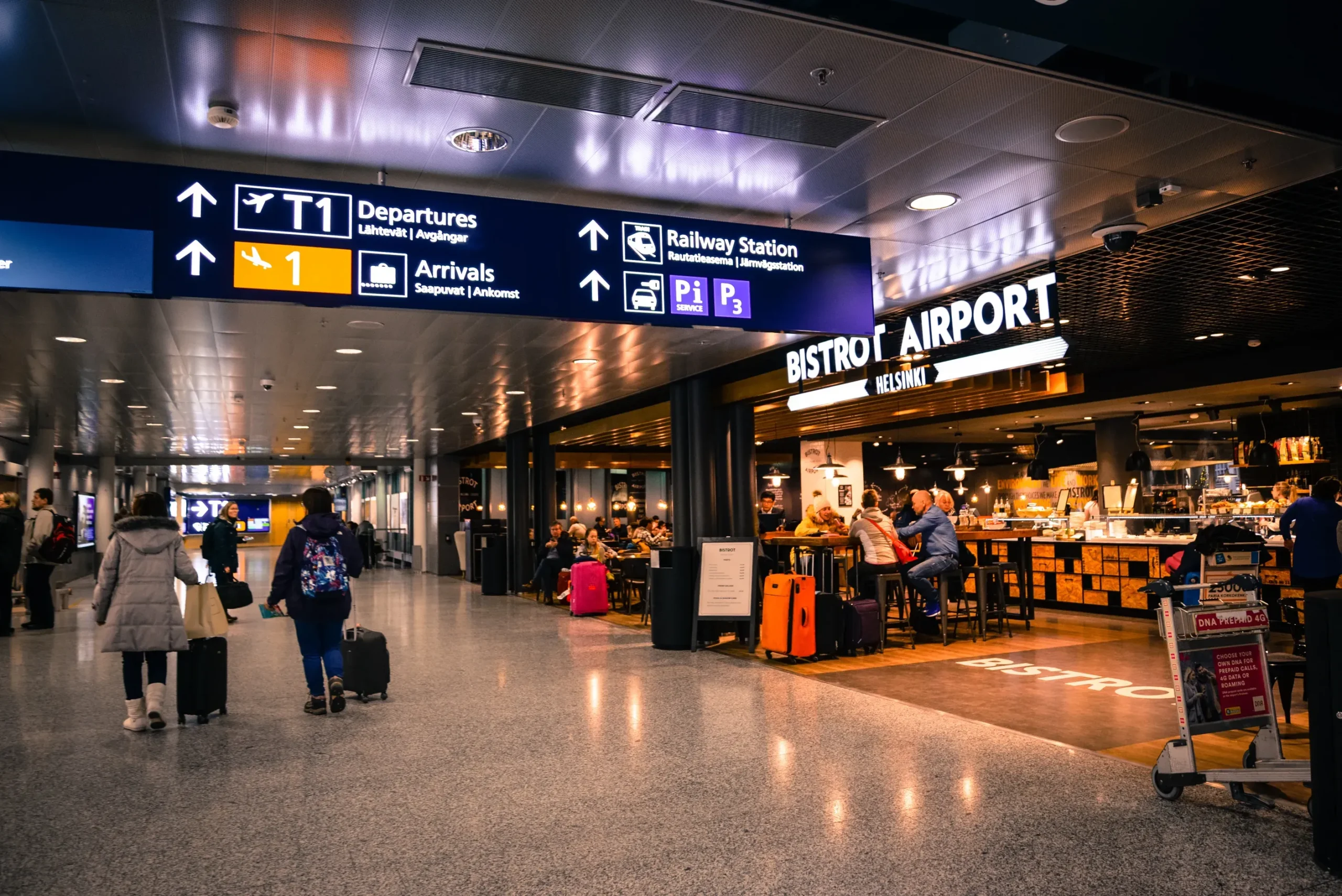
For three full seconds, I could not make my mouth form words. I want you to understand what that felt like, standing on my balcony in my gardening clothes, basil dirt still under my fingernails, hearing my ten-year-old grandson tell me he had been left behind in one of the busiest airports in Ohio.
Then my phone buzzed against my ear with an incoming text. I pulled it away just long enough to see who it was from. Lauren. My daughter-in-law.
I opened it with fingers that weren’t entirely steady.
I’ve decided Noah is grounded and will stay at home. He needs consequences. We’re already boarding, so please pick him up. Don’t make this dramatic.
I read it twice. Don’t make this dramatic. As if my grandson sitting alone in an airport terminal, watching his family walk onto a plane without him, was a matter of tone and not a matter of a child’s safety.
“Noah,” I said, forcing my voice into the calm I used to use on eight-year-olds who’d skinned their knees on the playground, “listen to me very carefully. I am coming right now. Do you understand me? Stay exactly where you are. Is there a police officer or airport worker nearby?”
“There’s a security guard by the gate,” he said. “I already told her my name.”
“Good boy. Stay with her. I am fifteen minutes away.”
I hung up, and something in me that had been quietly simmering for two years, ever since Daniel married Lauren, finally boiled over completely. I grabbed my purse, my car keys, and, out of some old instinct my late husband used to laugh at me for, the emergency folder I kept in my desk drawer, the one with copies of Noah’s birth certificate and my power of attorney paperwork from when I used to watch him after school. I was in my car and calling airport police before I’d even backed out of my parking space.
The drive to Cleveland Hopkins felt longer than it’s ever felt in my life, though it couldn’t have taken more than fifteen minutes. I ran two yellow lights I shouldn’t have run and said a small prayer of gratitude that no officer pulled me over, because I don’t know what I would have done if anything had slowed me down that morning.
When I got to Gate B14, I saw him before he saw me. He was sitting in one of those hard plastic airport chairs beside a security officer, his backpack clutched against his chest like a life raft, his blue hoodie soaked through at the sleeve where he’d been wiping his face. His eyes were red and swollen in that particular way children’s eyes get when they’ve been trying very hard not to cry in public and failing.
He saw me and stood up, but he didn’t run to me. He just stood there, waiting, like some part of him wasn’t sure I’d actually come. That, more than anything else that day, is the moment that broke something open in my chest.
I knelt down right there in the middle of the terminal and opened my arms, and he walked into them slowly, carefully, like he was testing whether I might change my mind too.
“I didn’t do anything that bad,” he whispered into my shoulder.
“I know,” I said, holding him tighter. “And you are not in trouble. Not with me. Not ever, over this.”
The security officer, a heavyset man with kind eyes and a name tag that said Ruiz, asked to see identification. I showed him my driver’s license, a copy of Noah’s birth certificate from the folder, and then, because he asked whether there was anything else he should know, I showed him Lauren’s text message. I watched his face change as he read it.
“Ma’am,” he said quietly, “this is serious. You should know we’re required to file a report on this.”
“Please do,” I said. “I intend to file a few reports of my own.”
Before we left the airport, I called my son. Daniel answered with the sound of resort music playing faintly behind him, some steel drum version of a song I couldn’t place, the kind of soundtrack that belongs to people who are on vacation and have no idea their world is about to change.
“Mom, please don’t start,” he said, before I’d even gotten a word out.
I looked down at Noah, who was watching me with those red, exhausted eyes, and then at Officer Ruiz standing a few feet away with his notepad still out.
“Oh, Daniel,” I said. “I haven’t even started.”
I drove Noah back to my apartment in near silence, not because there was nothing to say but because I understood, in the way you understand things after thirty-one years of teaching frightened children, that he needed quiet more than he needed questions. His hands sat flat on his knees the whole ride. Every so often he glanced over at me, checking my face, as if he were still waiting to find out I secretly blamed him for all of it.
I pulled into the parking lot of a pharmacy about halfway home and turned off the engine.
“Noah,” I said gently, “look at me.”
He did.
“You did not deserve to be left behind. Not for a second. Do you understand?”
His chin started to tremble. “She said I ruined the trip. Mason took my headphones out of my backpack and I grabbed them back, and he fell into the couch cushions. He wasn’t even hurt. But Lauren said I’m always making things hard for everybody.”
Mason was Lauren’s eight-year-old son from her first marriage. Her daughter, Chloe, was twelve. Ever since Daniel married Lauren two years earlier, I had watched my grandson slowly become the extra child in every room they shared, the one who was always expected to adjust, to share, to apologize first, to understand more and need less. I had noticed it. I had said something to Daniel about it more than once, gently at first and then not so gently.
He always gave me the same answer. “Lauren’s trying her best, Mom. Blending a family isn’t easy.”
That day proved, beyond any argument, that Lauren had been trying something entirely different.
Back at my apartment, I made Noah grilled cheese and tomato soup, his least favorite combination in the world, but it was what I had on hand and he ate it without complaint, slowly, like his body wasn’t sure yet whether it was allowed to relax. Halfway through, he looked up at me.
“Is Dad gonna be mad?”
“Your father has other things to worry about right now,” I told him, and that much, at least, was true.
That night, after Noah showered and finally fell asleep in my guest room, I sat down at my kitchen table with my laptop, my phone, and a yellow legal pad I still had from my teaching days. First I called the airport officer, who gave me a case number and the direct line for the detective who’d be following up. Then I called Ohio Children Services and gave a full statement to an intake worker with a voice so calm and practiced I found myself calming down just listening to her. Then I called Mark Feldman, a family law attorney I’d known for years, ever since his daughter Kaylee sat in my third-grade classroom and struggled with her multiplication tables until she suddenly didn’t anymore.
Mark listened without interrupting once. When I finished, he was quiet for a moment.
“Evelyn,” he finally said, “save every message you get from either of them. Don’t try to negotiate anything over the phone unless you’re recording it properly under state law. Keep Noah with you tonight and tomorrow. I’m going to start drafting an emergency custody petition first thing in the morning.”
“Can we even do that? With them out of state?”
“With a text message like that, with airport police already involved? Yes. We can do that.”
Next I called Daniel again. This time, Lauren answered from his phone.
“Evelyn, you’re being ridiculous,” she snapped before I could say a word. “He was safe. You picked him up.”
“He was safe because I picked him up,” I said, keeping my voice as even as I could manage. “Not because either of you protected him.”
“He needed discipline.”
“He needed a parent standing next to him at that gate.”
Her voice dropped lower, sharper. “Don’t you dare threaten me. Daniel agrees with what I did.”
“Then Daniel can explain that to a judge.”
The line went dead in my ear.
An hour later, Daniel called back, his own voice tight and clipped in a way I hadn’t heard from him since he was a teenager caught somewhere he shouldn’t have been.
“Mom, why is a Cleveland Hopkins officer leaving messages on my voicemail?”
“Because your son was abandoned at the airport, Daniel.”
“He wasn’t abandoned. Lauren texted you.”
“After the plane had already boarded.”
He exhaled hard, the kind of sound a man makes when he’s cornered and knows it. “We’ll talk about this properly when we’re back.”
“No,” I said. “You’ll talk about it now.”
By the next morning, Mark had the emergency petition filed. By noon, both Daniel and Lauren had been formally contacted about it. By that evening, their resort had received official notice that they were required to appear remotely for an emergency hearing before their vacation could continue as planned.
That was when things really started to unravel for them.
Lauren called me fourteen times that day. Daniel called six. I answered none of them. I saved every voicemail. I took a screenshot of every text. Lauren wrote that I was destroying a family vacation over what she called one spoiled kid. Daniel wrote that I had gone too far, that I didn’t understand the pressure he was under trying to keep a blended family functioning.
Noah, mercifully, read none of it. He spent that whole day wrapped in a blanket on my couch, watching old baseball documentaries with the sound low, pretending not to notice every time my phone buzzed against the table.
The hearing happened on the third day. Daniel appeared on video from what looked like a hotel business center, sunburned across his nose in a way that told me he’d spent at least one full day at a pool while his son sat in my guest room jumping at every unfamiliar sound. Lauren sat beside him in a white sundress with a resort wristband still on her arm, her mouth set in a hard, flat line.
The judge, a woman with sharp eyes and very little patience for excuses, asked one question first.
“Mrs. Whitaker, did you knowingly board an aircraft after leaving a ten-year-old child alone at the airport?”
Lauren tried to explain. She talked about discipline and consequences and the importance of follow-through with children. The judge did not look impressed by a single word of it.
By the end of that hearing, temporary custody of Noah was placed with me. Daniel was ordered to return to Ohio immediately for an in-person review. Lauren was instructed not to contact Noah directly in the meantime.
Their two-week vacation had lasted three days.
Daniel flew back to Cleveland late the following night, and he did not come to my apartment first. I learned that from Mark. He checked into a hotel near the courthouse instead, while Lauren and her two children stayed behind in Florida with her sister, who had flown down specifically to help them, in her words, salvage what was left of the trip.
That told me a great deal about where everyone’s priorities still sat.
Noah asked about his father only once, right before bed that first night after the hearing. “Is Dad coming here?”
“Not tonight,” I said.
He nodded slowly, like he’d already known the answer before he asked it. He rolled onto his side, tucking his hands under his cheek the way he’d slept since he was a toddler. “Maybe he’s mad at me.”
“Noah, adults make their own choices. What happened wasn’t about you.”
He stared at the wall for a long moment. “Dad says that too, sometimes.”
I sat down on the edge of the bed. “Then maybe it’s time he understood what it actually means.”
Daniel showed up at my door at 8:12 the next morning, wearing wrinkled khakis and the expression of a man who’d rehearsed several different speeches in the car and trusted none of them. I opened the door but I didn’t step aside.
“Mom,” he said, “I need to see my son.”
“He’s eating breakfast.”
“I’m his father.”
“Yes,” I said. “Which is exactly why this is so serious.”
His jaw tightened. “You embarrassed us. In front of a judge, Mom.”
I looked at him for a long moment. “You left your son at an airport, Daniel.”
“Lauren made a bad call.”
“And you got on the plane anyway.”
“I didn’t know until we were already in the air.”
That was the first genuinely useful thing he’d said since arriving.
I crossed my arms. “Then why didn’t you turn around the moment you landed?”
He looked away from me, down at his shoes, and the silence that followed answered the question better than anything he could have said out loud. Because turning around would have been inconvenient. Because Lauren would have made a scene about it. Because the hotel was already paid for. Because Chloe and Mason were excited about the pool. Because Noah, somewhere along the way, had been quietly trained into the child who could wait, the one who wouldn’t cause a scene if he was the one left behind.
“You chose peace with your wife over your son’s safety,” I said.
Something shifted across Daniel’s face. Anger first, quick and defensive, then something closer to shame, and then anger again, because shame is a much harder thing to hold onto than anger is.
“You don’t know what my marriage is like, Mom.”
“No,” I said. “But I know exactly what Noah’s childhood is starting to look like, and I won’t stand by and watch it happen.”
From the kitchen, I heard a chair scrape against the floor. Daniel heard it too. We both turned.
“Noah?” he called out.
Noah appeared in the hallway in his pajama pants and one of Daniel’s old Ohio State sweatshirts, the one that hung down past his knees, his hair sticking up on one side from sleep. He looked younger than ten in that moment, and somehow, at the very same time, older than any ten-year-old should have to look.
Daniel’s voice softened instantly. “Hey, buddy.”
Noah didn’t move any closer. “Hi.”
“I’m sorry about what happened.”
Noah studied him carefully, the way children do when they’re deciding how much of an apology to actually believe. “Did you know they were going to leave me?”
Daniel swallowed hard. “Not at first.”
“But you knew once the plane landed.”
“Yes.”
“Then why didn’t you come back for me?”
Daniel opened his mouth, closed it again, and finally managed, “I should have. I’m sorry. I really should have come back.”
Noah nodded once, slowly, and didn’t cry, didn’t raise his voice, didn’t do anything dramatic at all. He just turned around and walked back into the kitchen.
Somehow, that was worse than if he’d screamed.
The full in-person review happened two days later, in a courtroom that was small and plain and cold enough that I kept my coat draped over my lap the entire time. Noah wasn’t required to attend; Mark had arranged in advance for a child advocate to meet with him privately beforehand and relay his wishes to the court.
Lauren flew back the night before the hearing, walking into that courtroom in a navy blazer with a wounded, put-upon expression, like a woman arriving early to secure the role of victim before anyone else in the room could claim it first.
Her attorney stood and described the entire incident as a disciplinary misjudgment during a stressful morning of travel.
Mark simply placed the printed text message on the table in front of the judge.
I’ve decided he’s grounded and will stay at home.
Not “I made a mistake.” Not “please come get him, I’m scared.” Not anything close to remorse. Decided. The word sat there in that cold courtroom like a stone nobody could pick back up.
Then came the airport police report. Then the Children Services intake summary. Then a recording of Lauren’s own voicemail, the one where she’d called Noah “one spoiled kid” to a friend, apparently forgetting the message had somehow ended up on a shared family voicemail line that Daniel’s phone still picked up. Then Daniel’s own texts to me, accusing me of going too far, without once, in any of them, asking whether his son had eaten, or slept, or been afraid.
The judge listened to all of it without interrupting. Daniel stared down at the table in front of him. Lauren kept glancing sideways at him every few minutes, waiting for him to step in and rescue her the way he apparently always had.
This time, he didn’t.
When the judge finally asked Daniel directly what had happened once the plane touched down in Florida, his voice came out rough and low.
“I turned my phone back on and saw the missed calls from my mother. Lauren told me she’d already texted her and that Noah was being picked up and everything was handled. I was angry, but I didn’t want to upset the other kids or start a fight right there at baggage claim. I told myself we’d sort it out later, once we were settled.”
The judge leaned forward slightly. “And do you believe now that was an appropriate response to leaving a ten-year-old alone in an airport?”
Daniel closed his eyes for a second. “No, Your Honor. It wasn’t.”
Lauren’s head snapped toward him so fast I heard the small gasp she let out.
The order that came down that day was temporary but firm. Noah would remain in my custody pending a full review. Daniel would be granted supervised visitation at a family center. Lauren would have no unsupervised contact with Noah whatsoever. Both Daniel and Lauren were ordered to complete formal parenting evaluations before anything further would be decided.
Outside the courthouse afterward, Lauren finally dropped the polished composure she’d worn all morning. “This is your fault,” she hissed at me, right there on the courthouse steps.
I adjusted my purse strap and looked her dead in the eye. “No. This is the receipt.”
Daniel stood a few feet away, pale, saying nothing at all.
Lauren rounded on him. “Say something.”
He looked at her for a long, silent moment. “You left him.”
“I made a decision because you never discipline that child!”
“You left him at an airport, Lauren.”
Her face flushed a deep red. “He is not my child.”
The words came out sharp enough that a few strangers passing by on the courthouse steps turned to look. Daniel actually flinched, like she’d struck him.
And there it finally was, spoken out loud where anyone could hear it. Noah was not her child. That had been the quiet rule running underneath Lauren’s household from the very beginning, whether Daniel had let himself see it clearly or not. Her children got explanations. Noah got consequences. Her children got comfort when they cried. Noah got lectures. Her children were described as sensitive. Noah was described as difficult.
After that day, Daniel stopped defending her.
It didn’t happen all at once, in some dramatic scene on my porch with raised voices and slammed doors. It happened slowly, in paperwork and scheduled appointments and missed calls and quiet realizations that seemed to land on him one at a time, weeks apart.
Noah stayed with me through the rest of that summer. I enrolled him in a day camp at our community center, where he learned chess from a retired firefighter named Gus and spent his afternoons playing basketball badly but happily, usually coming home with grass stains and a wide, easy grin I hadn’t seen on him in longer than I wanted to admit. In the evenings, we cooked dinner together in my small kitchen. He burned pancakes twice. He oversalted a batch of scrambled eggs so badly we both ended up laughing until we had to spit them out. He learned, slowly, that mistakes in my house ended in laughter instead of punishment, and I watched some of the tightness in his shoulders start to loosen a little more each week.
Daniel visited every Saturday at the family center. The first few visits were painfully awkward, Noah answering every question with a single word, Daniel bringing gift after gift until the center’s supervisor gently pulled him aside and suggested he bring attention instead of presents.
So he did. He brought a deck of cards. He brought a model airplane kit they built together over three separate visits. He brought old photographs of Noah’s mother, who had passed away when Noah was four, photographs I hadn’t seen myself in years. Slowly, cautiously, Noah started asking him questions.
“What was Mom like when she laughed?”
“Did she like baseball, or did she just pretend to for you?”
“Did she ever get mad at you?”
Daniel answered every single one honestly. Sometimes his voice broke while he talked. Noah watched him carefully during those moments, like he was quietly deciding whether a father who cried in front of him was still a safe person to trust. Eventually, somewhere in that long, slow summer, he decided that he was.
Lauren completed her parenting evaluation late, and complained the entire way through the process according to the caseworker’s notes. Her written statement described Noah as defiant, attention-seeking, and resentful of what she called the blended family structure. The evaluator’s final report noted, in careful clinical language, that Lauren displayed limited emotional attachment to the child and poor insight into the severity of the airport incident.
That single sentence, tucked into an official report, mattered more than almost anything else in the entire case.
By the full custody review that September, Daniel arrived alone. Lauren had moved out two weeks earlier to stay with her sister in Columbus, and Daniel had already filed for separation. I didn’t celebrate the news when I heard it. I simply noticed that Noah seemed to breathe a little easier once he understood what it meant.
The judge reviewed everything laid out before her: Daniel’s full compliance with every requirement, Lauren’s own statements from the evaluation, the child advocate’s report, the home assessment from my apartment, and the steady, documented progress from months of supervised visits.
Noah had told his advocate, in a private conversation weeks earlier, that he wanted to keep seeing his father, but that he did not want to live with Lauren again under any circumstances.
“I want Dad to choose me even when it’s hard,” he’d said, according to the report Mark read aloud to me later that week.
I had to sit down at my own kitchen table when I heard that line read back to me.
By October, the court allowed Daniel unsupervised day visits. By December, overnight visits began at Daniel’s new apartment, a modest two-bedroom place with mismatched secondhand furniture and one small room painted a pale blue, because Noah had picked the color himself out of a hardware store sample book.
The first night of the very first overnight visit, Noah packed and unpacked his backpack three separate times in my living room before Daniel came to pick him up.
“What if I want to come home in the middle of the night?” he asked me.
“Then you call me. Any hour. I’ll come.”
“Will Dad be mad if I do that?”
“That would be his problem to manage, not yours.”
He considered that for a moment, then nodded. “Okay.”
Daniel called me at 9:30 that night, and I answered before the phone even finished its first ring. Everything in my chest stayed tight and coiled until I heard Noah laughing somewhere in the background on the other end of the line.
“We’re fine, Mom,” Daniel said quietly. “He wanted me to call and tell you we ordered way too much pizza.”
I sat down slowly at my kitchen table and pressed my palm flat against the wood.
“Good,” I said, and I meant it more than that single word could hold.
There were no miracles in any of this. Real life rarely hands out miracles. Daniel had to rebuild trust with his son one ordinary, unremarkable choice at a time, showing up when he was tired, listening when it was uncomfortable, learning to stop asking a ten-year-old to make his own adult failures easier to carry. Lauren remained part of the official record from that point forward, but she was never again part of Noah’s daily life. Her own children continued seeing Daniel occasionally throughout the separation, but Noah was never placed under her care again. The divorce was finalized the following spring.
A little over a year after that terrible morning at the airport, Noah and I drove past Cleveland Hopkins together on our way to visit my sister in Akron. I wondered quietly whether he’d even notice as we passed the exit signs.
He did. He stared out the passenger window at the terminal in the distance for a long moment.
“That’s where it happened,” he said.
“Yes,” I said. “It is.”
He was quiet for a while after that, and then he asked, “Were you scared when I called you that day?”
“Yes,” I told him honestly. “Very scared.”
“Were you mad?”
“Yes.”
“At me?”
“Never at you. Not for one second.”
He leaned back into his seat, and I watched the answer settle into him somewhere deep, the way important things do when a child finally lets himself believe them. After another minute of quiet, he said, “I’m really glad I remembered your phone number that day.”
“So am I, sweetheart. So am I.”
That following summer, Daniel took Noah on a short trip up to Lake Erie, just the two of them, no resort, no complicated blended family performance to manage. They stayed at a small lakeside motel with a flickering neon sign, ate fried perch out of paper baskets at a shack by the water, and came home two days later sunburned across their noses and grinning the exact same grin.
Noah showed me a photo Daniel had taken of him standing alone on a wooden pier at sunset, the light gold and low behind him. His smile in that photo was wide and completely unguarded, missing every trace of the tightness I had grown so used to seeing around his eyes over the past two years.
“Dad said next time you can come too,” Noah told me, handing me his phone to look closer.
“Next time?”
“Yeah,” he said. “He said we’re gonna start doing trips differently from now on.”
That, more than the custody order, more than the judge’s ruling, more than any of the paperwork Mark had filed on my behalf, was the sentence that finally let me exhale.
People still ask me sometimes whether I regret making the whole situation so official, whether I wish I had handled it quietly, privately, kept it inside the family the way families are so often pressured to do. I always give them the same answer.
A child was left behind in an airport terminal by the two adults responsible for keeping him safe. Quiet was exactly how it had been allowed to get that far in the first place.
Three days. That’s how long it took to bring their vacation to an end. Three days that also happened to expose a truth Daniel could no longer look away from, that placed my grandson somewhere he was finally safe, and that forced every single adult involved to answer honestly for what they had done, or failed to do, when it mattered most.
Noah is twelve now. He still spends plenty of weekends at my apartment, even though he lives mostly with Daniel these days. He plays baseball on a real team with a real uniform, he’s obsessed with science podcasts about space, and he still refuses to eat tomato soup unless I make it with extra pepper and pair it with a grilled cheese cut on the diagonal, never straight across.
Sometimes, when he heads home after a weekend visit, he turns back from my porch steps and waves twice before he gets in the car.
I always wave twice back.
Not because we ever planned it that way, or talked about it, or decided on some sort of signal between us. Just because, ever since that morning at the airport, we both seem to understand something simple without ever having to say it out loud.
Children should never have to wonder who is coming back for them.
And Noah never has to wonder that again.

Specialty: Quiet Comebacks & Personal Justice
David Reynolds focuses on stories where underestimated individuals regain control of their lives. His writing centers on measured decisions rather than dramatic outbursts — emphasizing preparation, patience, and the long game. His characters don’t shout; they act.