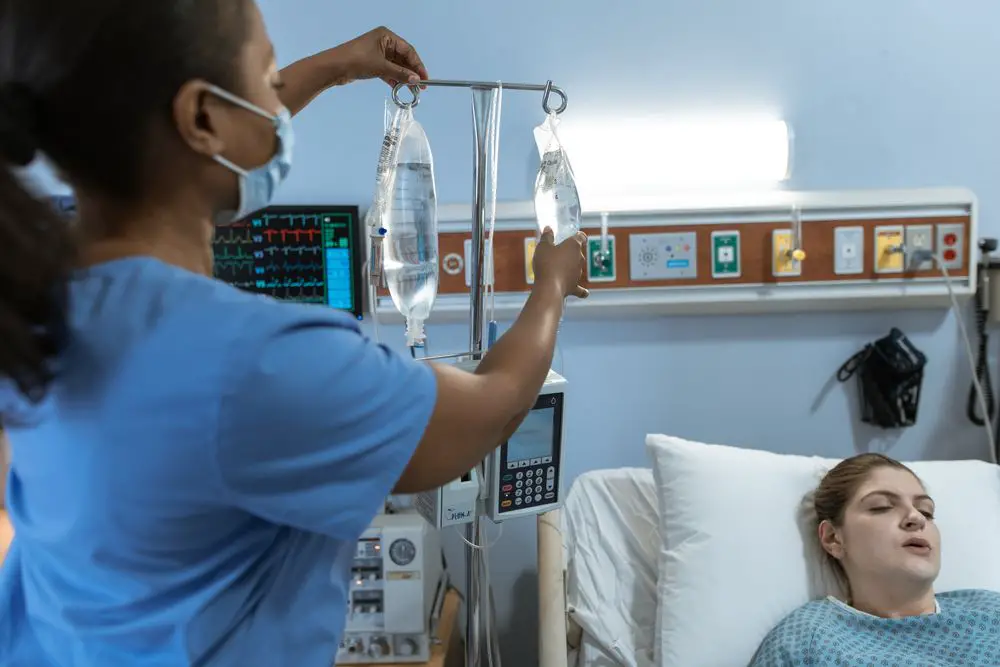
The doctor stopped short when he saw me. For half a second nobody spoke. He was a thin man in his late fifties, silver haired, tired eyed, wearing the kind of controlled panic that trained professionals only show when something has gone badly wrong behind closed doors. His gaze went first to Sylvie, then to the twins in my arms, then to me.
Mr. Vexley, he said, breathless. I’m Dr. Adrian Kell. I need to speak with you both immediately.
Sylvie’s face changed. Not fear exactly. Recognition. Dread. What happened, she asked.
Dr. Kell closed the door behind him and lowered his voice. There was an unauthorized request made for the infants’ discharge documentation.
My arms tightened instinctively around the babies. What does that mean, I demanded.
It means someone tried to access their medical records before they were formally entered into the hospital system.
Who.
The doctor hesitated, and that hesitation told me everything. I had built an empire by reading silences, in boardrooms and courtrooms and congressional hearings, and men in expensive suits always betrayed themselves before their words did. Dr. Kell was afraid, not of me, but of what he had to say.
The request came through a legal office, he said. Attached to a petition for emergency guardianship.
Sylvie shut her eyes. I turned toward her. You knew, I said.
Her lips parted, but no words came. The baby in my left arm stirred, making a soft, fragile sound that cut through my anger like a blade through silk. She was so small. Too small for all the ugliness already circling her life.
Who is trying to take my children, I asked, my voice gone quiet.
Dr. Kell’s fingers tightened around the folder. The petition names Mr. Conrad Vale.
For a moment the name meant nothing. Then memory surfaced. Conrad Vale, my former chief legal strategist, a man with a face made for sympathy and a soul made for loopholes. He had left Vexley Pharmaceuticals eleven months earlier after I discovered he had been feeding information to a competitor. I never proved it enough to bury him in court. But I knew.
My mother had always known how to enter a room like a verdict. Even from twenty floors above the lobby, I could feel her presence crawling through the hospital walls. Vivienne Vexley was not loud. She did not need to be. She had built her life around silence, polish, and the terrifying patience of a woman who never raised her voice because she had trained everyone else to lower theirs.
Sylvie’s hand tightened around mine. For seven months we had been divorced. For years before that we had been strangers pretending to share a life. But in that moment, with Elian and Mira crying between us, we were no longer ex husband and ex wife. We were parents, and something ancient had awakened in both of us.
Do not let her up here, Sylvie whispered.
I won’t, I said, though my voice sounded too calm even to me.
My phone buzzed. I gave you everything, Damon. Do not embarrass me in public. I typed back one sentence. You are not coming near my children. Three dots appeared, vanished, appeared again. Finally, they are not yours to protect. They are yours to surrender.
A knock came at the door. Rafael, my head of security, opened it only a few inches. A security supervisor stood outside, and behind him the hallway was suddenly crowded with hospital staff, two police officers, and a woman in cream cashmere with silver hair pinned perfectly at the nape of her neck. My mother. Vivienne did not look like a woman who had rushed through a storm. Her coat was dry. Her pearls were straight. Her lipstick was flawless.
Damon, she said softly. Move.
For a sickening second I was a boy again. Then Elian cried, and the sound cut the leash. No, I said.
I am their grandmother, Vivienne said.
You are a stranger.
Vivienne finally looked at Sylvie. My dear Sylvie, you look unwell.
I just gave birth to twins while running from your lawyer, Sylvie said. Forgive me if I didn’t dress for company.
I see motherhood has made you theatrical, Vivienne said.
No, Sylvie said. Motherhood made me dangerous.
For the first time in my life, I saw my mother blink first. Conrad Vale stepped into view behind her, his charcoal coat unchanged, his smile returned. Mr. Vexley, this doesn’t need to become unpleasant, he said.
It already is, I said.
Vivienne lifted a folder. We have documentation establishing immediate concern for the infants’ welfare.
Forged concern, I replied. A police officer shifted uncomfortably, and Vivienne noticed, of course she did, turning to him with a wounded, dignified expression. My son is under extreme emotional distress. His former wife concealed a pregnancy, delivered prematurely, and has been moving between unknown locations for months. I am only asking that the children be placed under neutral protection until the court reviews the facts.
Neutral protection meant her house, her staff, her lawyers, her cages.
Sylvie stepped carefully out of bed, ignoring Dr. Kell’s protest, wrapped in a hospital blanket, her hair loose, her face pale, looking fragile enough to break. But when she walked to the door carrying Mira against her chest, she looked more royal than Vivienne ever had.
These are my children, Sylvie said. I carried them. I protected them. I bled for them. You do not get to call yourself their shelter after becoming their storm.
Vivienne’s gaze lowered to Mira, and for one brief second something strange passed across my mother’s face. Not love. Recognition. Hunger. She has your father’s eyes, Vivienne whispered.
I stepped in front of Sylvie. You don’t get to look at her.
You have no idea what your father built, Vivienne said.
I know what he left.
No, she said, her voice hardening. You know what I allowed you to inherit.
That was when Martin Cho, my attorney, arrived, tie crooked, rain on his glasses, two junior lawyers behind him carrying sealed folders. Mrs. Vexley, step away from the recovery room, he said, addressing my mother, not Sylvie.
Martin, still loyal to whoever pays you most recently, Vivienne said with a faint smile.
Still loyal to signed law, Martin said. Which is more than I can say for everyone in this hallway. He lifted a document. Court certified expedited paternity testing has been initiated. Hospital affidavits confirm both parents are present and consenting. Any emergency petition based on abandonment or unknown paternity is defective before filing.
Conrad’s jaw tightened. Vivienne turned to him, one small, deadly glance, and I watched him swallow, understanding suddenly that my mother was not using Conrad. She was controlling him, and beneath that control he was afraid of her.
You are making this difficult because you are emotional, Vivienne said to me.
Yes, I said. For once, I am.
Your father was emotional too. It killed him, she said.
The hallway seemed to vanish. What did you say, I asked. Perhaps she had not meant to say it, perhaps anger had loosened something old and buried, because for a moment everyone in the hallway went still.
I said weakness killed him, she said, recovering instantly.
No, I said. You said emotion did.
Rafael stepped forward. Mrs. Vexley, where were you the night Alistair Vexley died.
You work for my son. Do not mistake yourself for family, Vivienne said.
I never do, Rafael said, without warmth.
For years my father’s death had been a closed room inside me. A heart attack, they said. Sudden. Private. Convenient. I had been twenty seven, newly crowned, too buried under grief and corporate collapse to ask the questions that might have saved me from a decade of lies. Now my mother stood outside the maternity ward, and the past had cracked open.
Damon, let me see the children, then we can discuss this privately, Vivienne said.
No.
This is bigger than your pride, she said.
It has nothing to do with pride.
Everything with you is pride.
No, I said. Pride lost me Sylvie. Pride kept me from knowing my children existed. Pride made me easy for you to manipulate. But this, this is not pride. Elian whimpered in the bassinet behind me. I looked at my mother. This is love.
For the first time, Vivienne Vexley looked disgusted. Then you have already lost, she said, and turned and walked away. Conrad hesitated, then leaned close enough for only me to hear. She won’t stop. And when she burns you, remember I offered a legal solution. I smiled. You should run before she decides you know too much. A small crack of fear crossed his face, and he followed her down the hall.
When the door finally closed and the room went quiet, Sylvie leaned against the bed, trembling. Damon, she whispered, what did your mother mean about your father.
I looked down at our sleeping children. For the first time in fifteen years I allowed myself to say the thing I had never dared think. I don’t know how my father died.
By noon, Mount Sinai had become a fortress pretending to be a hospital. Rafael posted men at every elevator, Martin filed emergency protections before Conrad could poison the court record, and Dr. Kell moved the twins’ medical files into restricted access. Martin arrived with a stack of files and the expression of a man who had discovered the world was worse than expected.
We found the original trust reference, he said. Your father created two versions. The public trust instrument we’ve operated under for years, and a sealed private codicil. The public document gives future heirs protected equity at adulthood. But the codicil gives control to a parental guardian starting at birth, until the heirs turn twenty five. Not the company. Not the board. Not Vivienne.
So if someone controls Elian and Mira, Sylvie said.
They control their voting rights, Martin said. And through those rights, a blocking position in Vexley Pharmaceuticals.
Why would my father do that, I asked.
Because he did not trust your mother, Martin said, and slid another paper forward. This was attached to the codicil.
It was a letter, my father’s handwriting, strong and slanted and familiar enough to hurt. Sylvie placed it gently into my hands. My son, it began. If you are reading this, then either I failed to tell you the truth in life, or Vivienne succeeded in burying it after my death. The company was never meant to be a throne. It was meant to be a shelter. Your mother believes blood is ownership. She is wrong. Blood is responsibility. If you have children, protect them from the hunger of our name. The codicil gives your children power at birth because Vivienne would never expect me to trust infants more than I trusted her. Their guardian must be chosen by both living parents. If those parents are divided, the court must appoint an independent protector, not a Vexley family member.
That clause is why Vivienne needs Sylvie declared unfit and you emotionally unstable, Martin said. If both of you are discredited, she can argue herself into the protector role.
She planned everything, Sylvie whispered.
Not everything, Rafael said from the corner. She did not plan Damon believing you.
My phone rang. Unknown number. Vivienne’s voice filled the room on speaker. My son, she said. What do you want, I asked. To prevent you from ruining your life over a woman who abandoned you. You think this is romance because you are frightened, she continued. But when the babies cry for six months, when she resents you, when the press discovers she hid heirs worth billions, you will remember who knew you best.
You never knew me, I said.
I made you.
No. You trained me.
She laughed softly. Fine. Let us be honest. Sylvie will never forgive you. You will never trust her fully. Those children will become weapons between you. I am offering stability.
You are offering captivity.
I am offering legacy.
No, I said. You are offering the same cold room you raised me in.
Your father wanted to give everything away, she said. He had become sentimental. Weak. He wanted to restructure the company into a public benefit foundation. Imagine it, Damon. Your empire handed to committees, doctors, charity boards. He would have destroyed the Vexley name.
You stopped him, I said.
I preserved what was ours.
How.
Silence. Then, do not ask questions you cannot survive.
My father did not die of a heart attack, did he, I asked.
Your father died because he forgot what power requires, she said, and the line disconnected.
That sounded like a confession, Martin said quietly.
Recorded, Rafael asked.
Every word.
I felt hollow. All these years I had mourned a ghost with the wrong story. Sylvie swung her legs carefully over the bed. I’m coming with you, she said. You just gave birth, I said. And you just found out your mother may have killed your father. Neither of us is in ideal condition.
They need a secure location, Rafael said. Hospital is compromised. There’s one place Vivienne won’t expect. Your father’s old house in the Hudson Valley.
Nobody goes there, I said.
Exactly.
That evening, under gray skies and relentless rain, we left the hospital through a service corridor, Sylvie pale but steady in a wheelchair with Mira in her arms, me carrying Elian beneath my coat. As the ambulance doors opened my phone buzzed one last time. Run if you like. I know every place you have ever belonged.
The Hudson Valley house stood at the end of a road swallowed by wet trees, stone walls, black shutters, ivy crawling along the east wing. I had grown up there until I was twelve. It looks haunted, Sylvie said. It is, I told her. By what happened after my father left.
Inside, the house smelled of lemon oil, old wood, and rain. Dr. Kell had arranged a private neonatal nurse named Ruth, calm and unimpressed by billionaires or bodyguards or family conspiracies. For two strange hours, life became almost ordinary. Mira refused to settle unless Sylvie hummed. Elian sneezed and made me panic. In the old nursery, someone had covered the furniture with sheets, and beneath them was the carved wooden crib I had slept in as a child, with a tiny brass plate tucked into the corner. For Damon, so he may dream without fear. Father. I had never seen it before.
He loved you, Sylvie said softly.
I don’t know what he knew how to love, I said.
Maybe none of us do at first, she said.
Near midnight, carrying a crying Elian down the hallway, I felt a floorboard creak, and a wall panel beside my father’s old study clicked open half an inch. Behind it was a narrow staircase leading to a hidden room beneath the study, dry and sealed, a desk against one wall, metal cabinets along another, an old tape recorder, banker’s boxes, a safe. On the desk lay an envelope with my name in my father’s hand.
Inside was a cassette tape and a note. Damon, if this room is found, then either my grandchildren exist, or your mother has finally forced the truth into daylight. Rafael found an old player, and the tape hissed, and then my father’s voice filled the room, older than memory, closer than death.
Damon, if you are hearing this, forgive me, the tape began. I married your mother believing ambition was a form of strength. I was wrong. Ambition without love becomes appetite. I discovered Vivienne had been moving assets through dormant subsidiaries, preparing to seize control if I changed the trust. I intended to convert controlling shares into a medical access foundation. She found out. After that I began to feel ill. Dizziness. Weakness. I suspected poisoning but could not prove it quickly enough. I have left documentation here, lab reports, samples, names. If I die before I speak publicly, do not confront her alone. She is most dangerous when cornered. And Damon, I know I failed you by staying silent. Your mother taught you power because I did not teach you tenderness loudly enough. I hope one day someone does.
The tape ended. No one spoke. Then Mira cried upstairs, softly, hungry, alive. He left this for them, I said, staring at the wall of evidence.
Inside the safe, Rafael found medical reports, financial ledgers, and a sealed packet marked Vivienne, confession contingency. It was not a confession. It was worse. Photographs of Vivienne meeting with Conrad years before he ever worked for me, before my father died, before any of it had supposedly begun. Conrad had never become my enemy. He had always been my mother’s weapon. And in the last photograph, a much younger version of Liana Pierce, my longtime assistant, stood beside them. Six years of loyalty, six years of my schedule quietly reported back to my mother.
My phone rang, a video call from Vivienne. So you found the room, she said, smiling from somewhere elegant and dimly lit. Your father was sentimental, not clever, she said. You have his documents, Damon. I have something better. The camera shifted to a live feed of the nursery upstairs, Elian and Mira sleeping, filmed from inside the room. You brought them exactly where I wanted, Vivienne whispered.
Sylvie ran. Rafael reached the nursery first, the door open, the bassinets empty. Ruth, the nurse, staggered out of the adjoining room clutching her head. They sprayed something, she gasped. I heard the door, then nothing.
My phone still showed Vivienne’s calm face. Do not panic, she said. They are safe. Where are my babies, Sylvie demanded. You will lower your voice, Vivienne said. Hysteria will not help your case. Sylvie went utterly still, and when she spoke again her voice was quiet enough to frighten me. If you hurt them, I will spend the rest of my life becoming worse than you.
For the first time I understood that my mother was not afraid of me. She was afraid of Sylvie, because I had been raised inside Vivienne’s rules, and Sylvie had not.
You will receive instructions, Vivienne said. Bring the evidence your father hid. Bring the hospital DNA report. Bring Sylvie’s signed consent to temporary family protection. Come alone.
No, I said.
Then the court receives evidence that you staged a disappearance to manipulate trust control.
You kidnapped newborns.
Prove it, she said, and the line went dead.
Rafael tore the nursery apart. Service corridor, two person extraction, he said. They knew our blind spots. Inside help again, Martin said, sick.
Sylvie stood beside the empty bassinet, knuckles white on the rail. You said they were safe here, she whispered. I was wrong, I told her, and gave no defense beyond that, because none existed. Then she slapped me, hard, and the sound cracked through the nursery. I needed you to be right, she said. I needed one person to be right. Her face crumpled, and she collapsed against me, sobbing into my shirt, and I held her, because no apology would bring them back and no vow would feed them, so I did the only useful thing left. I listened.
Rafael reconstructed the abduction within twenty minutes, an old servants’ tunnel beneath the east greenhouse, sealed on modern blueprints but still passable, someone with historical knowledge of the house directing the kidnappers. But they made one mistake. In my panic I had forgotten the tiny hospital bracelet still on Elian’s ankle, a passive chip that had pinged when passing a toll reader on the private road. North, Rafael said. Twenty three minutes ahead.
I called Liana. She answered sobbing. Where would my mother take newborns, I asked. I don’t know, she said. Wrong answer, I told her. Sylvie is listening. Silence, then, there is a property. Not hers officially. An old retreat near Cold Spring. Your father bought it for someone. For whom, I asked. Your half brother, Liana whispered.
My what, Sylvie said. His name is Gabriel, Liana said. Vivienne erased him from the family records. He was your father’s first son, before Vivienne. His mother died. Your father wanted to bring him into the family. Vivienne refused. After your father died, Gabriel disappeared from every legal structure.
That explains the codicil, Martin said through the car speaker. Alistair knew Vivienne would erase heirs who threatened her control.
We drove through rain black roads without headlights and stopped half a mile from a stone lodge behind an iron gate, no guards visible, which was worse. We approached on foot, soaked in minutes, and at the edge of the property saw a lit nursery window, a woman moving past the curtain holding a baby, then a tall dark haired man with broad shoulders holding Mira, carefully, awkwardly, with visible wonder. Gabriel. My half brother. Vivienne entered the room, they argued, and then she struck him across the face. He looked down at Mira, and his expression changed from fear to decision.
The lights went out. A siren shrieked inside, men shouted, glass shattered, and the front door burst open. Gabriel ran into the storm with both twins against his chest, Vivienne screaming his name behind him, not mine, his. He stumbled near the trees, and I caught him. Take them, he gasped. Sylvie reached for Mira with a broken cry. I took Elian, warm, alive, furious against my chest.
I’m sorry, Gabriel said, rain streaming down a face painfully like my father’s. I didn’t know she would take them. I thought she was protecting them from you. Then his knees buckled, blood spreading through his shirt. Vivienne stood at the lodge door, a gun in her hand, and still called through the rain, Damon, bring them back.
Rafael fired once, at the stone beside her head. Drop it, he shouted. She did not, looking at me instead, as if the world might still rearrange around her will. Damon, you are making a mistake, she said. No, I said. I made the mistake years ago when I believed you were all I had left.
You ungrateful child, she said.
Join the club, Gabriel rasped from the ground, then coughed. She told me you knew about me, he said. She told me you chose to erase me. I didn’t know, I said. I believe you now, he answered.
Rafael’s men surrounded Vivienne, police arrived, then federal agents. She did not scream when they cuffed her. She only looked at me and said, you will come back to me when they disappoint you. No, Sylvie said. He won’t. Vivienne smiled faintly. You think love makes people stay. No, Sylvie said. Love makes people choose. Every day. Even when it hurts. Especially then.
Conrad was found locked in a pantry, crying. She was going to kill me, he said. Eventually, I replied. She killed your father, he said, and the room went still. I helped cover it up. He talked for forty seven minutes, describing how Vivienne had suspected my father’s restructuring plan, how she used Conrad to draft alternate documents, how when my father discovered the betrayal he built the hidden room, and how her panic became a slow medication substitution, a weakening staged as a cardiac event during a weekend when staff were dismissed.
By dawn, Gabriel was in surgery, the bullet missing his heart by less than an inch. The twins were back under medical care. Sylvie refused to release them unless absolutely necessary, and I did not blame her.
Sitting beside her in a private hospital suite under federal guard, each of us holding one child, she finally said, you have a brother. I know, I said. You nearly lost him tonight. I know. You nearly lost us. Yes, I admitted, because that one was harder. Damon, I cannot live inside your war, she said. I don’t want you to, I told her. But war follows your name. Then I’ll change what the name means.
I failed you already, I said. I can’t undo that. But I can stop pretending love is proven by winning. I waited so long to hear something like that, she whispered. I know. No, she said, you don’t, and she was right. I did not know the full shape of her loneliness, every night she had slept with one hand over her stomach, afraid someone would come through the door. But I could learn, if she allowed it, if I earned it.
The trust required both parents to appoint a protector for the twins’ voting rights, Martin said near sunrise. With Vivienne disqualified, the court will ask for your nomination. Not me, I said immediately. I won’t control their shares. That power almost got them killed, I told them. My father made the codicil to protect children from being erased, not to put another crown over their crib.
Then who, Martin asked.
Gabriel, I said. He was lied to. Used. Erased. And when it mattered, he ran through a storm carrying our children away from the woman who owned his whole life.
Sylvie added one more condition. No Vexley alone controls their future, she said. Not Gabriel. Not you. Not me. Martin nodded. A three person protector structure. Gabriel, an independent fiduciary, and one parent approval for major votes.
And the company, Sylvie asked, and I knew what she meant, not legally but morally. What happens to the empire everyone tried to steal. My father wanted a medical access foundation, I said. For fifteen years that sentence would have frightened me. Now it sounded like oxygen. You would do that, Sylvie asked. No, I said, watching her face fall slightly before I corrected myself. We would.
Six months later, the trial began. The press called it the crime of the decade, poison and inheritance and secret heirs and a grandmother so elegant she looked incapable of leaving fingerprints on anything as crude as murder. Conrad testified for immunity and cried twice. Liana testified without asking for immunity and cried once. Gabriel testified quietly, and when asked why he ran with the twins, he told the jury, because I knew what it felt like to be stolen from your own life. That was the moment the jury turned.
Sylvie took the stand in a navy dress and no jewelry except a tiny gold chain with two initials, E and M, and described fear without drama, the break in, the threats, the camera, the empty bassinets. When Vivienne’s attorney suggested she had concealed the children to manipulate inheritance, Sylvie looked at the jury and said, I concealed them because I wanted them alive. No one spoke for several seconds.
I testified too, and I expected to feel powerful on the stand. I did not. They asked about my marriage, whether I had been emotionally absent, whether Sylvie had reason to believe I would not protect her, and I answered yes to all of it, and a murmur moved through the courtroom. Vivienne looked at me with contempt. Sylvie looked at me too, and in her eyes I saw something that mattered more than victory. She saw me telling the truth even when it made me smaller.
The verdict came after nine hours. Vivienne Vexley was convicted on conspiracy, kidnapping, fraud, obstruction, and later, in separate proceedings, charges connected to my father’s death. When they led her away, she paused beside me. You will regret destroying me, she said. No, I said. I regret needing to. Her face fractured, briefly, grief or rage or something less human than either, and then she was gone.
Gabriel survived, furious about hospital pudding and confused that everyone kept calling him heroic. I don’t deserve this, he said the first time he held Elian again, his hands shaking. Probably not, Sylvie told him, placing Mira beside him too. But babies don’t care what we deserve. They care what we do next.
The Vexley Medical Access Foundation was announced that autumn, transferring a controlling portion of the company’s long term voting structure into a trust overseen by physicians, patient advocates, Gabriel, Sylvie, and an independent fiduciary. I retained enough control to run the company. Not enough to make it a kingdom. That distinction changed everything. Drug access programs expanded. Predatory pricing divisions were gutted. I fell in love with Sylvie again in pieces, not in a lightning strike but in mornings, in arguments about bottle temperatures, in the way she corrected my swaddling with merciless patience, in the way she did not forgive me quickly just because the story had become dramatic enough to tempt an easy ending.
For months we lived separately inside the same restored house, Sylvie in the east wing with the twins, me in the west, meeting in the nursery at midnight and again at four in the morning, two exhausted survivors negotiating peace over diapers and formula. One night, during a snowstorm, I found her in my father’s study rereading his letter. He knew tenderness had to be taught, she said. I’m learning, I told her. I know, she said, and looked at me, and something in the room shifted, not back to what we had been, but forward.
I don’t know if I can marry you again, she said. I didn’t ask, I told her. You were thinking it loudly. I don’t need that right now, she said. I need honesty. Patience. No lawyers between us unless we both invite them. No disappearing into work when emotions become inconvenient. Done, I said. You say that too fast. I’ll prove it slowly.
On the twins’ first birthday we held a small party at the house, no champagne towers, no photographers, only people who had earned the right to stand near our children. Gabriel arrived late, walking with a cane, carrying two small wooden boxes with silver keys inside. To the east greenhouse tunnel, he said. I had it rebuilt. Properly this time. As an escape route, he added. And a wine cellar. Then his expression changed, and he handed me an envelope in my father’s hand. For my sons, if they ever stand together.
Inside was a photograph, my father standing between two boys, Gabriel at about ten, me at about five, a day I did not remember but that had happened anyway, before Vivienne separated the story. Behind the photograph, a note. You were brothers before anyone taught you to be strangers. Find each other again. Protect what I could not. And when the Vexley name becomes too heavy, put it down. Choose a better one.
A year later, Vexley Pharmaceuticals became Vexley Rhodes Medical Foundation, using Sylvie’s family name beside mine, not because the world demanded it, but because I did, because my children would inherit more than blood. They would inherit proof that names can change, empires can kneel, and broken families can become something better than old dynasties.
Sylvie did not marry me that year, or the next. She made me court her properly, dinner after bedtime, coffee before dawn, apologies without excuses, arguments without exits, trust rebuilt one ordinary day at a time. On the twins’ third birthday, under the same trees where I had once arrived in terror, she stood beside me in a simple white dress. Elian carried the rings until Mira threw them into a flowerbed, and Rafael found them, and Gabriel officiated, and Martin tried to quote a legal statute about second marriages until Sylvie’s glare silenced him.
I once built walls around everything I loved, I told her when it was time for vows. You taught me that love is not protected by walls. It is protected by presence. I cannot promise never to be afraid. I cannot promise never to fail. But I promise this. I will never again make you stand alone in a room where you should have been held.
You always did become dramatic when cornered, Sylvie said, and everyone laughed. Then she took my hands. I loved you once when you were powerful, she said. I love you now because you became brave enough to be gentle. That was the happiest sentence anyone had ever given me.
We married there, not as a billionaire and his ex wife, not as scandal survivors, but as Damon and Sylvie, parents of Elian and Mira, brother of Gabriel, son of Alistair, no longer son of Vivienne’s shadow. That evening, after the guests left and the twins fell asleep beneath the old blue rug with its faded silver stars, we stood together at the window. The house was quiet, not empty, quiet, and there is a difference.
Do you ever wonder what would have happened if I had told you sooner, Sylvie asked.
Yes.
And.
I think I might have ruined it, I said, and she did not disagree, which was how I knew we were finally honest with each other. But you didn’t ruin the ending, she said. I kissed her hair. No, I said. You changed it.
Outside, rain began to fall softly over the Hudson Valley, nothing like the storm that had once brought me to the hospital, nothing like the night my mother came for my children. This rain was gentle, almost kind, and in the nursery Mira stirred, opened her eyes, and smiled at something none of us could see. Maybe a dream. Maybe my father, finally watching the family he had tried so hard to save. Whatever it was, Elian smiled too, and for the first time in generations, the Vexley children slept without fear.

Ethan Blake is a skilled Creative Content Specialist with a talent for crafting engaging and thought-provoking narratives. With a strong background in storytelling and digital content creation, Ethan brings a unique perspective to his role at TheArchivists, where he curates and produces captivating content for a global audience.
Ethan holds a degree in Communications from Zurich University, where he developed his expertise in storytelling, media strategy, and audience engagement. Known for his ability to blend creativity with analytical precision, he excels at creating content that not only entertains but also connects deeply with readers.
At TheArchivists, Ethan specializes in uncovering compelling stories that reflect a wide range of human experiences. His work is celebrated for its authenticity, creativity, and ability to spark meaningful conversations, earning him recognition among peers and readers alike.
Passionate about the art of storytelling, Ethan enjoys exploring themes of culture, history, and personal growth, aiming to inspire and inform with every piece he creates. Dedicated to making a lasting impact, Ethan continues to push boundaries in the ever-evolving world of digital content.