“It was junk, Vernon. Ash. You should thank me for the closure.” That is what my brother-in-law Stanley told me in the spring of 1987, standing in his driveway with his thumbs hooked in his belt loops, while I stared at the garage where everything I brought home from Vietnam was supposed to have burned.
I want you to hold on to that sentence, because I held on to it for thirty-nine years. I chewed on it at night. I heard it at funerals. I heard it every Memorial Day when the color guard came up the street and I stood on the curb with my hand over my heart and nothing, not one object in this world, to prove where I had been or what it cost me.
And then, on a Tuesday morning in June, a stranger knocked on my front door holding my dog tags in a little zippered plastic bag, and the whole story my family had told me came apart in the time it takes to read a name.
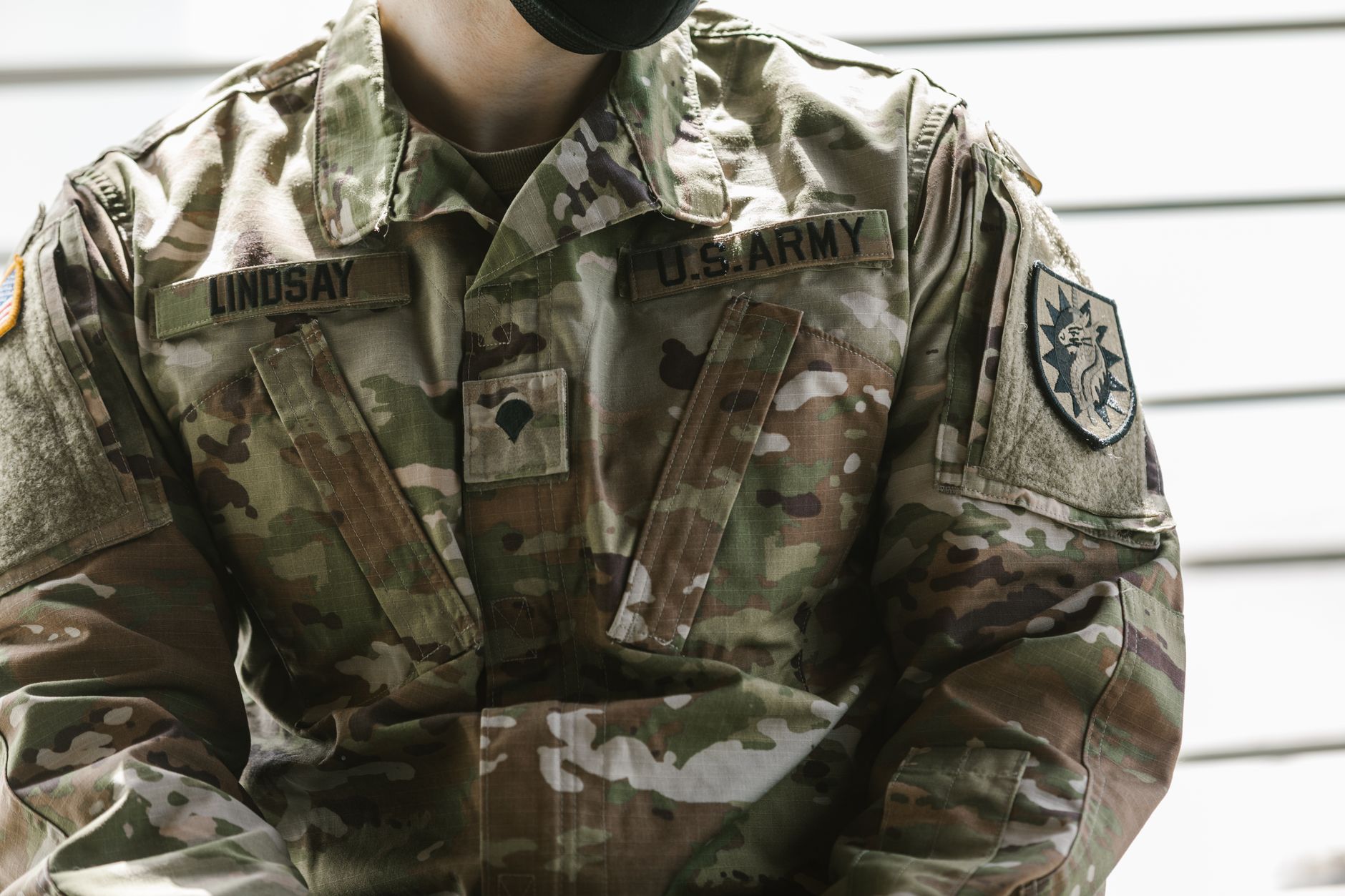
My name is Vernon Pruett. I am seventy-four years old. I live in the same small town I was raised in, four blocks from the feed store my daddy used to haul for, in a white frame house with a porch swing my wife Adele picked out from a catalog in 1979. I served in the United States Army from 1970 to 1972. I went to Vietnam as a private and came home a Specialist Fourth Class, which is not a rank anybody writes movies about. Specialists are the ones who keep the trucks running and the radios working and the water moving. I drove and I fixed and I carried. I did what they told me and I came home, which is more than some of the boys from this county can say, and I have never once needed my service to be more than it was. I only ever needed it to be mine.
Let me take you back before I take you forward, because you need to understand what was in that garage.
What a footlocker holds
When you come home from a war, they do not hand you your memories in any organized fashion. They come home in a green duffel and a footlocker, and they smell like canvas and oil and somewhere else. In mine: my dog tags on their beaded chain. My field jacket with my name tape over the pocket, PRUETT, in letters that had gone soft at the edges from washing. My Army Commendation Medal in its flat presentation box, which I received for keeping a supply route’s vehicles running through a season I still do not talk about at length. A marksmanship badge. A short stack of photographs, maybe forty of them, taken with a little camera I bought at the PX. Boys leaning on sandbags. Boys holding up letters from home. A dog we fed that had no name and every name. Two of the boys in those photographs did not come home, and those pictures were, as far as I ever knew, the only ones on this earth of Teddy Vaughn laughing.
That is what a footlocker holds. Not junk. A man’s proof.
For fifteen years that footlocker sat in the back of my closet, and I will be honest with you, I did not open it much. In those years you did not talk about Vietnam in a small town or anywhere else. You learned that the war embarrassed people, so you kept it in the closet in every sense there is. But I knew it was there the way you know your own heartbeat is there. You do not check on it. You just could not live without it.
In 1985 the machine shop where I had worked for nineteen years cut back to one shift, and Adele and I did the arithmetic at the kitchen table like grown people and sold our house on Deller Road and moved into the smaller place in town, the one I am sitting in right now. Small house, small closets. My sister Lorene, God love her, offered her garage. She and Stanley had that big two-bay out behind their place with room for a boat Stanley kept threatening to buy. “Bring your boxes,” Lorene said. “They’ll be safe as church.”
So the footlocker went to Stanley and Lorene’s garage in the fall of 1985, along with Adele’s mother’s china barrels and my good winter tools. I carried it in myself. I set it on a shelf Stanley had built along the north wall, up off the concrete so nothing would wick up damp. I remember Stanley watching me square it on that shelf, and I remember what he said, because Stanley always had a sentence for everything. He said, “All that fuss over a box of Army stuff.”
I let it go. You let things go with family. That is either the best thing about us or the worst, and I have come to believe it depends entirely on who you are related to.
The fire that explained everything
In April of 1987, Adele took a phone call in the kitchen and came out to the porch with her hand on her collarbone, and told me there had been a fire in Stanley and Lorene’s garage. Electrical, Stanley said. Started in the wall by the workbench, smoldered through a Saturday afternoon while they were at a fish fry in the next county, and by the time a neighbor saw smoke it had eaten the whole north end. Nobody hurt. The cars were out. But the shelves along the north wall, everything on them, gone.
I drove out there the next morning. And here is the thing I need you to understand, the thing I have turned over ten thousand times since June. By the time I got there, Stanley had already “cleaned it up.” Hauled it all to the county dump, he said, because Lorene couldn’t stand looking at it. What I saw was a garage with a swept floor and a big gray scorch shadow up one wall that, I realize now, could have come from a burn barrel dragged inside and lit for an afternoon. What I saw was what Stanley wanted me to see. And when I stood there in the doorway of that garage with my hat in my hands like a man at a graveside, Stanley put his hand on my shoulder, and delivered the sentence.
“It was junk, Vernon. Ash. You should thank me for the closure.”
I did not hit him. I want that on the record, because for years afterward I wondered if I should have, just on instinct, the way your hand pulls back from a stove before your brain knows why. Something in me knew that sentence was wrong. Grief does not usually make you angry at the comforter. But I was fifty-one years old, and he was my sister’s husband, and the fire was an accident, and accidents are nobody’s fault, and so I swallowed it. I said something like, “Well.” That is a full sentence in this county. And I drove home and sat in the truck in my own driveway for one hour and eleven minutes. Adele timed it from the window and never once came out, because that woman knew when a man needed the cab of a truck to himself.
I grieved that footlocker like a person. I am not ashamed to say it. The tags especially. You wear something against your chest for two years, through heat and fear and boredom deep enough to drown in, stamped with your name and your number and your blood type, and it stops being metal. It is the receipt for the years the government kept. And Teddy Vaughn’s laugh, in those photographs, went to the county dump in a wet ash pile, or so I believed, and there was no funeral for it and no way to explain to anyone why there should have been.
Lorene wept and apologized for a solid year, as if the wiring had been her fault. Stanley replaced my winter tools, made a show of it at Christmas, brand new socket set with a bow on it. Everyone said how decent that was. And life closed over the whole thing the way a pond closes over a stone.
Adele passed in the fall of 2021. Forty-six years married. In her last month, in the hospital bed we set up in the front room, she brought it up out of nowhere, the way the dying reach back for the unsettled things. She said, “I always hated that we never had one picture of you from over there. You were twenty years old once and I’ve got no proof.” I told her she was proof enough. It was the truthful thing and the kind thing, and it was also the emptiest I have ever felt saying something true.
Hold all of that. Now come to the door with me.
The knock
Tuesday morning, first week of June, I was at the kitchen table with coffee and the county paper when somebody knocked. Not the doorbell. A knock, polite and even, the knock of a man who has practiced what he is going to say.
Through the screen I saw a Black man of about fifty in a golf shirt and good jeans, holding a manila folder against his chest like a schoolboy with a report card. Behind him at the curb sat a clean silver pickup with Ohio plates. He took one step back from the door as I opened it, which I noticed, because it is what you do when you want an old man to feel safe, and he said:
“Sir, are you Vernon Pruett? Specialist Vernon Pruett, United States Army?”
I have not been called Specialist Pruett out loud in this century. I said I was. And this man’s whole face did something I do not have a good word for. Relief is close. Arrival is closer.
“My name is Ray Okafor,” he said. “I’m from outside Columbus. I collect militaria, service items. Mr. Pruett, eleven months ago I bought a lot at a flea market in Indiana, and there was something in it that belongs to you. It has taken me this long to find you, and I apologize for that. I’d have driven here the first day if I’d known where here was.”
And he opened the folder, and lifted out a small zippered plastic bag, the kind collectors use, with a white card in it labeled in neat block printing. And through that plastic I saw a beaded chain gone dark with age, and two stamped steel tags, and even upside down and forty years away I knew the font, because it is the font my own name has worn in my memory every day since 1970.
PRUETT, VERNON E.
My blood type. My number. I could have recited that number for you at three in the morning any night of my life.
I am going to tell you exactly what I did, because I promised myself when I sat down to write this that I would not make myself out to be any steadier than I was. I sat down. Not gracefully. My hand went out and found the porch rail and I went down onto the top step like a puppet with a cut string, and Ray Okafor came forward quick and easy and sat down right next to me on the step, this stranger, and put the bag into my hands, and then looked out at the street and gave me the privacy of his profile while I came apart.
The tags were supposed to be ash. Everything was supposed to be ash. And they were in my hands, cool and real, and the chain pooled into my palm with that exact small sound, that tick-tick-tick I had not heard in four decades, and my body remembered the sound before my mind caught up, and I sat on my own front steps and cried like the twenty-year-old who wore them.
Ray Okafor sat with me the whole time and never said one word until I was ready. I have thought a lot about what kind of man does that for a stranger. I am getting to what kind.
What the stranger paid
I got us inside and got coffee going because my hands needed a job. Ray sat at my kitchen table, in the chair that had been Adele’s, and laid his folder out flat, and this is where I learned what kind of man had driven three and a half hours to my door.
Serious collectors keep provenance. Everything in that folder was in plastic sleeves. There was the receipt from the flea market in Indiana, dated the previous July. There were printouts of his search: unit rosters he had requested, a query to the National Archives in St. Louis, letters to two county veteran service officers, a note from a man in my old unit’s association who remembered “Pruett from Kentucky, the one who could fix anything with a fan belt and a bad attitude,” which I will be having engraved on something, and finally the church directory photo that matched my name to this town and this street.
Eleven months of evenings. For a stranger.
“Mr. Okafor,” I said, “what do I owe you?” Because I am from here, and a debt is a debt.
He looked straight at me, level, the way a man does when he is about to refuse you and means it.
“Mr. Pruett, you paid for these in 1970.”
I pushed. He refused. I pushed again, told him at least the gas, and he turned the folder around instead and put his finger on the flea market receipt, and said, “If you want to talk about money, I’ll tell you what I paid, because I think you’re owed the whole truth of where these have been.”
He had paid sixty dollars. For the tags alone. The seller, a picker who cleaned out storage units and bought box lots at country auctions, had wanted forty and Ray had handed him sixty, and when the picker looked at him funny, Ray had said, “A man’s name is on this.”
Sixty dollars, eleven months, three and a half hours of highway, for a stranger’s name.
Now turn the coin over, because Ray had traced the tags backward too. Collectors do. The picker’s box lot came out of an estate liquidation in Indiana, and the estate paperwork trailed back to a dealer who had bought inventory in the late eighties from swap meets along the river. And in that folder, in a plastic sleeve, was a photocopy of a dealer’s intake ledger from May of 1987, one month after the fire that ate my footlocker. One line item. “Army footlocker + contents: jacket, medal box, tags, photos, misc.” And a purchase price, paid out to the seller, of forty dollars.
Forty dollars. For all of it. The jacket with my name gone soft on the pocket. The Commendation Medal. Teddy Vaughn laughing. Forty dollars, even.
And on the intake line, a seller’s name, first initial and last, in a dealer’s lazy ballpoint.
S. DELPH.
Stanley Delph. My sister’s husband. The man who stood in his swept garage with his hand on my shoulder and told me to thank him for the closure.
Ray Okafor watched me read that line, and he said, quiet, “I didn’t know if I should bring that page. My wife said an honest man brings the whole folder.” Then he said the thing I expect I will hear in my head for the rest of my days. “Mr. Pruett, I’ve been collecting thirty years. I’ve returned nineteen sets of tags. And I have learned that the tags are usually the easy part. It’s the story of how they got loose in the world that a family has to carry.”
The fire that never was
I did not drive to Stanley’s that day. I want you to know that, because everything in me wanted to, and I am seventy-four, and a man my age has finally learned the difference between what the chest wants and what the day needs.
Instead I did what a Specialist does. I checked the equipment. I verified.
Our fire protection out here in 1987 was a volunteer department, and volunteer departments keep logbooks, and old volunteer chiefs keep everything. Dwight, who ran that department for thirty years, is in the assisted living out by the bypass now, sharp as a tack from the eyebrows up. I sat with him on a Thursday and asked him plain: April 1987, structure fire, garage, the Delph place out on the Corinth road.
Dwight did not even reach for the logbook his son keeps for him on the shelf. He frowned at me the way a man frowns at a wrong-shaped puzzle piece and said, “Vernon, we never ran a call to the Delph place. Not in ’87, not ever. I’d know. We ran that whole road for thirty years. Who told you there was a fire?”
There it was. Not even a clever lie. A lazy one. A lie that worked for thirty-nine years for one reason only: because nobody checks on family. The swept floor. The scorch shadow a burn barrel would leave. The rush to haul the “ashes” to the dump before anyone looked. My winter tools replaced at Christmas with a bow, which I understand now was not decency. It was a receipt Stanley bought for his own conscience, and everyone applauded him for it.
And underneath the anger, which was real and had a long tail, there was a smaller, colder thing that hurt worse. Forty dollars. He had not even sold it like it mattered. A stranger in Ohio paid sixty for the tags alone and eleven months of his evenings on top. My family had let the whole of my war go, jacket, medal, the only photographs of a dead boy laughing, for forty dollars, even, to a swap meet dealer, one month after telling me it was ash.
That is the arithmetic I sat with in my truck in the driveway, one more time, thirty-nine years later. Adele was not at the window anymore to time me. I did the hour anyway. It felt owed.
The kitchen table
I called Lorene on a Saturday and told her I needed to come by Sunday after church, and I needed Stanley at the table. Lorene is eighty and has been my big sister my whole life, and she heard something in my voice, because she did not ask one question. She just said, “I’ll make coffee.”
I will tell you what I brought, because I thought hard about it. I did not bring anger. Anger lets a man like Stanley turn a reckoning into an argument, and an argument has two sides, and this did not. I brought the folder. Ray had made me copies of every page. I brought it in one of Adele’s old canvas grocery bags, and I set it on my knee, and I sat in my sister’s kitchen where I have eaten a thousand meals, and I put the dog tags on the table in the middle, between the sugar bowl and the napkins, without one word.
I watched my sister’s face go through joy first. That is the part I was not braced for. She gasped and reached for them, “Vernon, they found them, how, out of the ashes?” and her hand stopped over the tags without touching, and she looked up at me. And then she looked at Stanley.
Because Stanley had not moved. Stanley had not said, how about that, or would you look at it, or any of the sentences a surprised man reaches for. Stanley, seventy-nine years old, was looking at those tags like a man looking at the far-off dust of something he had spent four decades telling himself was never coming up the road.
“There wasn’t any fire,” I said. Not a question. I put Dwight’s word beside it, and then I laid the dealer ledger photocopy on the table and turned it around so the line faced him. S. Delph. Forty dollars.
The kitchen was quiet the way it gets quiet after a screen door slams somewhere, that ringing kind. Lorene picked up the ledger page and read it, and I watched thirty-nine years reorganize themselves behind my sister’s eyes. Her garage. Her offer. Safe as church. Her year of weeping apologies for faulty wiring that was never faulty because it never burned.
And Stanley. I have known that man since he came courting Lorene in a borrowed Fairlane, and I have watched him talk his way around fenders and debts and Thanksgiving arguments for sixty years, and I watched him open his mouth to do it one more time. I watched him look for the sentence. He always had a sentence.
He did not find one. His mouth closed. His shoulders came down off their hooks, and Stanley Delph got old right in front of me, in the space of one held breath, and he put both hands flat on the table like a man steadying himself on a rail, and he said, “The boat.”
That was how it started. It came out of him in pieces, the way a confession does when it is forty years overdue. In 1987 he was in a hole. The boat he had bought without telling Lorene the whole price of, and a loan on top of a loan from a fellow in the next county who did not send statements in envelopes, if you follow me. He was hauling anything he could turn into cash out of that garage in the spring of ’87, a little at a time so Lorene would not notice, and my shelf, he said, “was just there.” He told himself Army surplus was Army surplus. He told himself I never opened the box anyway. He drove my footlocker to a swap meet on the river and a dealer gave him two twenties, and it was not until he was driving home that it came over him what he had done, and by then, he said, “there wasn’t a way to say it out loud. So I said the other thing.”
The other thing. The fire. The burn barrel dragged inside to make a shadow on the wall. Ash, Vernon. Thank me for the closure.
“You watched me grieve it,” I said. “For thirty-nine years. You stood at Adele’s funeral knowing she died wanting one photograph of me at twenty, and you knew where the photographs went, and you knew what you got for them.”
“Yes,” Stanley said. Just that. And I will give the old man this one thing, because I promised the whole truth: he did not cry to make it about himself, and he did not reach for a sentence. He sat there and let it be exactly the size it was. First honest thing he had done in the whole business.
Lorene stood up, walked to the sink, and stood with her back to us, and my sister’s back, ramrod straight in her church dress, was the loudest thing in that house. When she turned around she was not crying either. She said, “Stanley, you let me apologize to my brother for a year. For wiring.” Sixty years of marriage were in that sentence, rearranged for good.
What got made right
Here is where I am supposed to tell you either that I threw him out of the family or that we all hugged and the pie came out. Neither one happened, because life out here does not run on television time. What happened was slower and smaller and, I have come to believe, worth more.
I told Stanley what I wanted, and it was not money. I have no use for a check with forty years of interest on it, and there is no figure that buys back a dead boy’s laugh. I told him: you will tell it. Not my version. Yours. To the family, out loud, all of it, the boat and the twenties and the burn barrel, so that no niece or grandnephew of mine ever repeats the fire story like it was history. A lie that old has roots, and I wanted every root pulled while the man who planted it still had the hands to pull.
And he did it. Fourth Sunday of June, the whole family on Lorene’s back porch, and Stanley stood up off the glider without anyone making him and said, “Before we eat, I have owed Vernon the truth since 1987, and all of you have been owed it just as long.” And he told it. Straight through, no sentence-work, voice going gravelly in the middle. My grandnephew Cody, who is fifteen and thought until that afternoon that his great-uncle Stanley hung the moon, learned something that day about how long a lie costs, and I watched him learn it, and I thought, there. That is the interest paid.
Stanley has one job now, and he gave it to himself. Ray Okafor put out word on the collector networks, the forums and the show circuits, with photographs and descriptions of what was in that footlocker. And Stanley, seventy-nine years old, drives to every swap meet and estate auction within a hundred miles, every weekend, rain or shine, with a printed card in his shirt pocket listing a field jacket with PRUETT on the tape and an Army Commendation Medal in a flat presentation box and a stack of photographs from 1971. He calls me every Sunday night to report, mostly nothing. In September a dealer in Indiana wrote back to Ray: the medal box had passed through his table years ago and he had a name for where it went. It took six more weeks, and it cost Stanley a fair piece of change he did not once mention, and on a Sunday in October my brother-in-law stood on my porch, on the same steps where I had come apart in June, and put my Commendation Medal back in my hands, and could not manage one word, which from Stanley Delph is the longest speech I have ever heard.
The photographs are gone. I want to say that plainly, because this is a true accounting and not a fairy tale. Box lots of loose photos from forty years back scatter like milkweed, Ray says, and the chance that Teddy Vaughn’s laugh is in a shoebox at some flea market between here and the river is real but thin, and I have made my peace with thin. Although I will tell you that Ray has every collector he knows looking, and Stanley checks every shoebox on every table, every weekend, an old man bent over strangers’ photographs looking for a boy he never met. Whatever that is, it is not nothing.
The tags
Ray Okafor and I talk every couple of weeks now. He came down for the Fourth with his wife, and we sat on my porch, and he finally let me buy something: two plates at the VFW fish fry, and he had to hear about it from me the whole meal, that I finally got him to take something off me and it was catfish.
I asked him once why he does it. Nineteen sets of tags before mine, all that hunting for no pay. He thought about it for a while, the way he does, and he said, “My father served. Twenty years, Army. When he passed, everything of his came to me in one box, and I know what that box is. Somewhere out there are boxes that never made it home. I just walk them home.”
I wear the tags now. Not every day. Sundays, and the days the flag goes up, Memorial Day and the Fourth and Veterans Day, and any day the weather or the memory turns. They sit against my chest where they sat when I was twenty, and the chain still makes that tick-tick-tick, and every time it does, I am in three places at once: a supply road in 1971, a swept garage in 1987, and my own front steps in June, with a stranger from Ohio sitting quiet beside me, looking out at the street, giving me the privacy of his profile.
Here is what I know now that I did not know in April of 1987.
What a thing is worth is not one number. My war was worth forty dollars to a man who had known me sixty years, and it was worth eleven months of evenings and sixty dollars and three and a half hours of highway to a man who had never met me at all. Both of those numbers are true. I carried the first one bitter for about a season, and then I set it down, because Ray taught me the second number was just as real and a sight better company.
And family is not the people who never fail you. I have given up on that definition; it has no members. Family is the people who, when the folder finally comes out on the kitchen table, sit there and let the truth be the size it is, and then get up the next Saturday, and drive to a swap meet in the rain, and start looking through shoeboxes.
The tags were never ash. Turns out the truth was not either. It was just sold cheap and scattered, and it took a stranger to start walking it home.
Specialist Vernon E. Pruett, United States Army, 1970 to 1972. It is stamped in steel, and the steel is on my chest, and no fire, real or invented, is ever taking it off me again.

Adrian Hawthorne is a celebrated author and dedicated archivist who finds inspiration in the hidden stories of the past. Educated at Oxford, he now works at the National Archives, where preserving history fuels his evocative writing. Balancing archival precision with creative storytelling, Adrian founded the Hawthorne Institute of Literary Arts to mentor emerging writers and honor the timeless art of narrative.