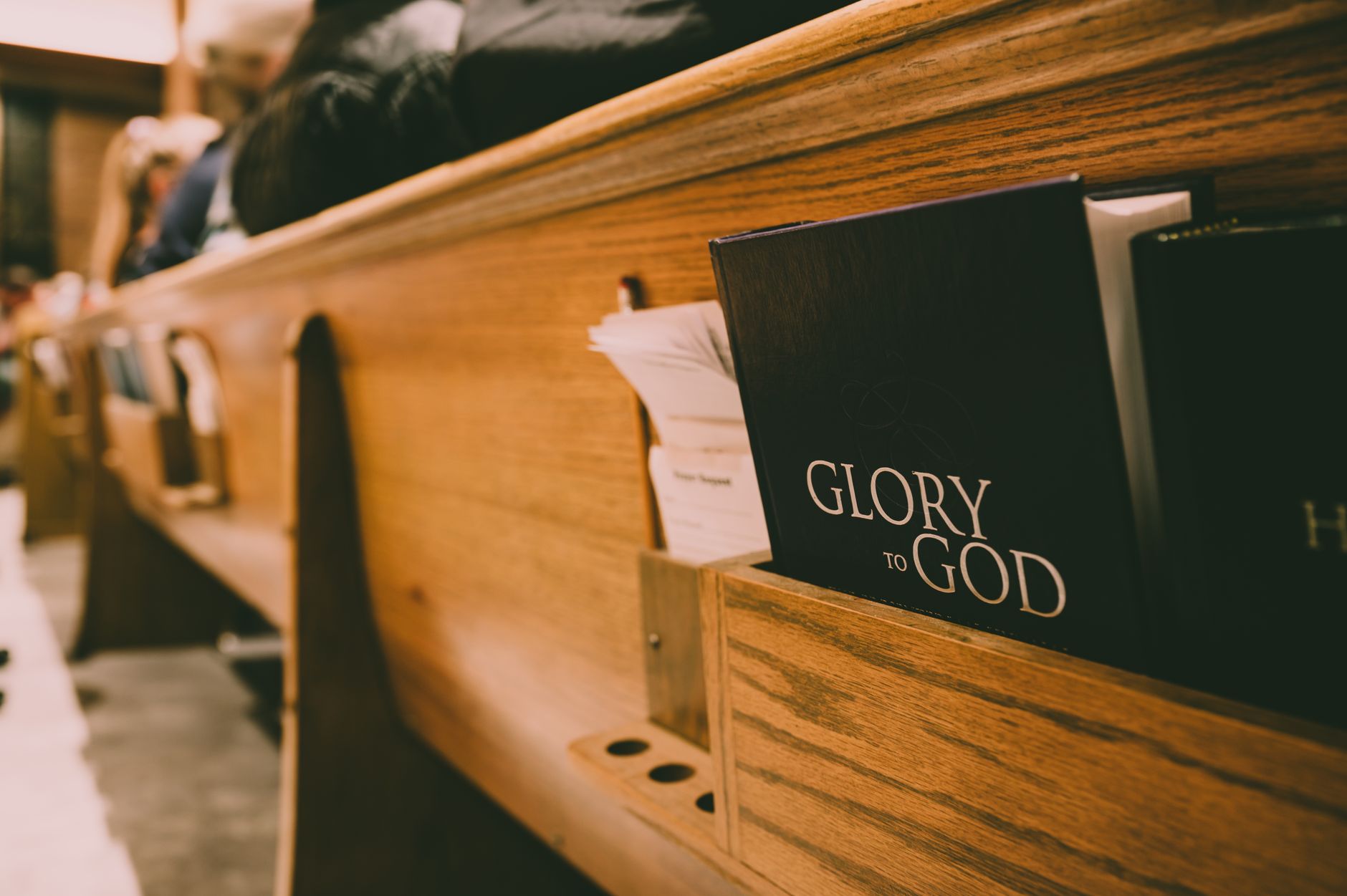
Blake Innes stood at the front of our sanctuary on a Wednesday night in March, with thirty-two years of my life seated in the choir loft behind me, and told me my choir sounded like a funeral. He said it just like that, no softening, no shame. He was holding a tablet in one hand and a coffee in the other, and he looked at me the way a man looks at an old refrigerator he has already decided to haul to the curb. “I’m going to be honest with you, Miss Ochoa,” he said. “Your choir sounds like a funeral. This church needs a modern experience, not a memorial service.”
Behind me I heard Doreen’s oxygen machine click, the little sigh it makes every few seconds, and I heard Stan Petrie shift his weight in the bass row the way he does when he is deciding whether a thing is worth getting angry about. Nobody said a word. Twelve people in that loft, some of them singing in that church since before Blake Innes was born, and we all just stood there in our folders and our cardigans while a thirty-four-year-old man in a fitted polo told us we sounded like death.
I am sixty-seven years old. I have buried my parents, my husband, and two members of that choir. I know exactly what a funeral sounds like. And I can tell you that what Blake heard on Wednesday nights was not a funeral. But I am getting ahead of myself, and if my husband Rogelio taught me anything in forty-one years of marriage, it is that a story is like a hymn. You do not get to skip to the last verse. You have to sing your way there.
My name is Marisela Ochoa, and for thirty-two years I directed the choir at Grace Community Church on Mesquite Street in Cedar Gap, Texas. Cedar Gap is the kind of town that people drive through on the way to somewhere else, two blinking lights, a feed store, a Dairy Queen, and a courthouse square that fills up exactly twice a year, for the Christmas parade and the Fourth of July. The church is the oldest building in town that still does what it was built to do. It went up in 1921, limestone blocks the color of buttermilk, and the men who built it did not have microphones, so they built the ceiling high and curved so a single voice at the front could reach the last pew without shouting. Remember that. It matters later.
I came to Cedar Gap in 1985 as the new elementary school music teacher, twenty-six years old, the first Ochoa most of that town had ever met. My family is from the Valley, McAllen, and my mother cried when I took a job seven hours north among strangers. Some of those strangers took a while to warm up to me, I will not pretend otherwise. But the church was where it turned. The first Sunday I visited Grace Community, the choir was four ladies and a tone-deaf deacon, and when the service ended the old director, Miss Ottie Blackmon, grabbed my sleeve with a hand like a bird’s foot and said, “You’re the music teacher. Sit by me.” Three years later she handed me the folder and told the pastor she was retiring, and that was the entire hiring process. No interview. No committee. Just Ottie Blackmon telling everyone the way it was going to be.
I built that choir person by person for three decades. I recruited Stan Petrie out of the feed store because I heard him humming along to the radio in a bass voice that sounded like a diesel engine praying. I taught Bess Whitfield’s fingers to find their way back to the piano after her stroke, one hymn at a time, both of us crying through “Blessed Assurance” until her left hand remembered. I put a folder in the hands of a skinny seventeen-year-old named Micah Dunlap whose daddy had just gone to prison, because a boy like that needs somewhere to stand on Sunday where people are glad to see him. My sister-in-law Lupe drove in from her ranch twenty minutes out every Wednesday for twenty years and never once missed, not for calving season, not for weather.
And Rogelio. My Rogelio was not a singer. He was an electrician, the best in three counties, and his ministry was everything in that building with a wire in it. In 1998 he climbed around in that hot attic for a week and wired the church’s first real sound system, and he did it so carefully and so stubbornly that it worked for twenty-five years without one Sunday of failure. He used to sit in the third pew on the left, every service, and when we sang he would close his eyes. Not sleeping. Listening. He told me once, “Mari, I can hear every one of them, and I can hear you holding them together.” He died three years ago, an aneurysm, quick as a light going out, in the truck in our own driveway. The choir sang at his funeral. So yes. I know precisely what my choir sounds like at a funeral. It sounds like twenty voices holding a widow upright when her legs will not do it. Blake Innes has no idea what he said to me that Wednesday night.
Blake came to us the way trouble usually comes to a small church, wearing the face of help. Our pastor, Wes Camden, is a good man, and I want to be fair to him because this story is not about blame. Pastor Wes is sixty-three and tired in the way pastors get tired, and for a few years our attendance had been sliding the way it slides everywhere. Young families moving to the city for work. Old members moving to the cemetery. The board got scared, and scared boards do strange things. They hired a church growth consultant out of Fort Worth who walked through our building for two hours, and his report used the word “dying” four times. I read it. The board voted to create a new staff position, something called a Worship and Experience Coordinator, and they found Blake Innes.
I want to be careful here, because it would be easy to make Blake a cartoon, and he is not one. He is a real person, and by the end of this story you will understand him differently than you do right now, the same way I did. But I will tell you honestly what those first months were like, because they happened.
Blake arrived in January with a trailer full of equipment and a vocabulary none of us had ever heard in that building. Engagement metrics. Experience design. Attractional model. He walked the sanctuary his first week with an app on his phone that measured the room’s acoustics, frowning at the ceiling that had carried a cappella hymns for a hundred years like it was a structural defect. He said our stained glass “read as dated” on the livestream. We did not have a livestream. That was coming too.
The changes came fast, and each one arrived wearing the same disguise, just a trial, just a season, just seeing what works. In February a screen went up over the baptistry, a big gray rectangle like a bandage over the window where the morning light used to come through colored glass and land on the communion table. The hymnals were “consolidated,” which meant most of them went into boxes in the fellowship hall closet, though the pew racks kept a few because the ushers quietly refused to finish the job. Bess’s piano got pushed to the corner behind the flag stands. The organ, which needed repairs we had been saving toward for two years, was declared “not a priority in the new direction.”
And then it was our turn. First the choir was cut back to one song a service. Then to special occasions. Then in March came that Wednesday night, when Blake stood in front of us with his tablet and told us the choir was being “sunsetted for a season,” which is consultant language for killed, and that Sunday worship would now be led by what he called a “curated experience.” Recorded tracks. Professional ones, from a subscription service out of Nashville, with the lyrics on the screen over videos of wheat fields and mountain sunrises that had nothing to do with Texas or with us. When I asked him, calm as I could, what a church full of people was supposed to do while a recording sang at them, he looked at me with real patience, which was somehow worse than contempt, and that is when he said it. Funeral. Memorial service. Modern experience.
Doreen Kessler is eighty-one years old and sang soprano in that loft for forty-four years, longer than me. She stood up that night, unhooked her music folder, set it on her chair, and worked her way down the loft steps with her oxygen cart, and the click of that cart’s wheels across the hardwood was the loudest sound I have ever heard in an empty church. Stan followed her. Then Lupe. I stayed to the end, because a captain does not step off first, and when they were gone Blake said to me, not unkindly, “Change is hard, Miss Ochoa. But we can’t keep doing things just because we’ve always done them.”
I drove home and sat in Rogelio’s truck in the driveway, which I still cannot bring myself to sell, and I yelled at God for a while. I am telling you that because this is an honest story. I did not pray anything holy that night. I said, Lord, I gave that loft thirty-two years, I gave it my Wednesdays and my voice and my husband’s wiring, and you let a boy with a tablet call it a funeral. I said things I will not put on paper. And somewhere in the middle of all that hollering, quiet as anything, a thought came to me that did not feel like my own. It felt like Rogelio, or like Ottie Blackmon, or like Someone older than both. The thought was this: they can take the loft. They cannot take the choir. A choir is not a room.
So here is what we did, and I want you to notice what we did not do. We did not write letters to the board, though Stan wanted to. We did not stand up in a business meeting and make a war of it, splitting a small church down the middle the way music fights have split a thousand churches. We did not quit and drive forty minutes to the church in Alden like six families eventually did. We just kept singing. Every Tuesday night, my living room. Twelve people, then fourteen, because two ladies from the congregation asked if they could join once the choir was not official anymore, which should tell you something. Bess on my old upright piano that Rogelio bought me in 1989. Doreen in the good chair with her oxygen. Micah, twenty years old now and working at the co-op, still coming, still standing where people were glad to see him.
And we kept our third Sundays. For eleven years, the choir had driven out to Cedar Gap Manor, the nursing home on the county road, one Sunday afternoon a month, and sung for the residents. Blake did not know about it, so he could not cancel it, and honestly I am not sure it would have occurred to him that it counted as anything. No screen. No metrics. Just us in a dayroom that smells like disinfectant and canned peaches, singing “In the Garden” to people who cannot remember their own children’s names but can remember every word of the second verse. There is a woman out there, Miss Pauline, ninety-six, who has not spoken a full sentence in two years, and when we sing “Amazing Grace” her mouth moves through the whole thing. Every word. You want to talk to me about engagement metrics. I have seen engagement, and it does not fit on a tablet.
Meanwhile, Sunday mornings at Grace Community got shinier and emptier at the same time. I kept going. I want that on the record, because people ask me now why I stayed, and the answer is that it was my church before it was Blake’s stage, and you do not leave your family because somebody rearranged the furniture. I sat in the fifth pew with Lupe and I watched my congregation learn to be an audience. The tracks were professionally perfect, sung by session singers in Nashville with voices like polished chrome, and our people stood and watched the words go by on the screen the way you watch a commercial. Some mumbled along. Most just stood. The old ceiling that was built to carry voices had nothing to carry.
You could feel the difference and nobody had words for it, or nobody but Stan, who has words for everything. He said, “It’s like they took out the fireplace and put in a video of a fire.” That is exactly what it was. The room was warmer before. The pictures of flames were prettier now.
I will give Blake this, he worked like a mule. He was there every week before dawn, running cables, adjusting lights, editing videos. Whatever was driving that young man, it was not laziness. Attendance ticked up for about six weeks, curiosity mostly, and the board passed around a printout with a little upward arrow on it. Then it sagged again, lower than before, because the people who want chrome have bigger churches to get it from in Abilene, and the people who wanted Cedar Gap were quietly grieving what Cedar Gap had stopped being. Pastor Wes preached on through all of it looking like a man watching his house be remodeled by strangers while he was still living in it.
That brings us to the Fourth of July.
You have to understand what the Fourth of July weekend service means in a town like ours. It is the biggest Sunday of the summer, bigger than Easter some years, because the Fourth is when Cedar Gap’s scattered children come home. Every pew fills with grown kids from Dallas and Lubbock and San Antonio, sunburned from the lake, sitting next to their mamas. The VFW color guard presents the flag. We recognize the veterans, and in our church that is two long rows of them, Korea to Kabul, standing while their names are read. Doreen’s late husband is on that list read aloud every year, and every year she holds a tissue ready in her fist like ammunition. For a hundred years, give or take, the whole thing ran on voices. “America the Beautiful.” “It Is Well.” The old ones first heard those songs in that room, sitting on their mothers’ laps.
Blake had been building toward that Sunday for a month. He called it Freedom Weekend, with a logo. There were teaser videos on the church’s new Facebook page. He brought in extra speakers on rented stands, a hazer, which is a machine that makes a thin fog so the new lights would show up dramatic, moving lights, a countdown clock. A countdown clock, in our sanctuary, ticking down the seconds to worship like a rocket launch. The plan, as the bulletin explained it, was a “cinematic worship experience,” a patriotic video package timed to a professional track, lights synced, images of flags and eagles and soldiers on the big screen. The choir was not in it. The veterans would be asked to stand “during the visual tribute.” A tribute on a screen, to men and women sitting right there in the room, breathing.
The Sunday came in hot, ninety-four degrees by ten in the morning, with big anvil thunderheads stacking up west of town the way they do when the whole sky is deciding something. The sanctuary was packed to the walls, folding chairs down the side aisles, babies on laps, the fire marshal choosing not to count. I sat in the fifth pew with Lupe on one side and Micah on the other, and scattered through that crowd, because our families all sit where they have always sat, was my whole choir. Doreen down front left with her daughter. Stan halfway back on the aisle. Bess near her piano in exile, out of habit, the way you sit near a grave.
The service started at eleven. The countdown clock hit zero, the lights went blue and dramatic, the hazer breathed its little fog, and the screen lit up with an eagle. The track kicked in, drums like a movie trailer, and I will admit it was impressive the way a car dealership commercial is impressive. Blake stood at the side at his console, headset on, running the whole thing like a launch director, and for the first twenty minutes it went exactly the way he had planned it.
At 11:26 by the clock on the back wall, the storm arrived. We heard it before anything, that low freight-train roll of thunder that makes every farmer in the room do math about their hay. Then the rain hit the roof all at once, a hundred years of rain has hit that roof and it always sounds like applause. And then, right in the middle of the big patriotic video package, with an eagle mid-soar, there came a crack of thunder directly overhead, close enough that the whole congregation flinched as one body, and the power surged, browned, came back, and gave out.
The screen died first, the eagle collapsing into a black rectangle. Then the track choked off mid-note with a pop that echoed. The moving lights froze and faded. The microphones went dead. Even the little red exit signs blinked over to their pale battery glow. And that room, that packed, sweating, holiday room with four hundred people shoulder to shoulder in it, went silent in a way I do not have adequate words for. Not peaceful silent. Stranded silent. All that noise had been holding the room up, and when it fell away all at once, you could hear four hundred people not knowing what to do.
Rain on the roof. A baby fussing somewhere back right. Doreen’s oxygen machine, running on its own battery, clicking its faithful little click. And Blake Innes at his dead console, stabbing at a screen that had nothing to give him, his headset useless around his neck, his whole cinematic experience gone to black glass, and on his face, visible even in the storm light, something I recognized in one heartbeat because I have felt it. Panic. The particular panic of a person watching the thing they built fail in front of everyone whose approval they need. Pastor Wes stood up at the front and moved his mouth at the room, but the man has preached into a microphone for thirty years and his voice came out thin, lost in the rain noise, and he knew it, and he stood there with his hands half raised like a man trying to calm a horse he cannot reach.
I want to tell you that what I did next was brave, or that I heard the voice of the Lord telling me to stand. The truth is simpler and stranger. I felt the room. Thirty-two years of directing teaches your body to read a room of voices the way Rogelio could read a breaker panel, and that room was full of people who had a song in them and no way to start. A congregation is a choir that has forgotten itself. It does not need a screen. It needs a downbeat.
So I stood up. Sixty-seven years old, in my good blue dress, in the fifth pew of the church where I have sung since 1985, with the rain coming down like the Jordan on the roof, and I did the only thing I have ever been good at.
I sang.
“Amazing grace, how sweet the sound.”
The first line went out alone into all that dark air, one voice, and that ceiling, that beautiful, dated, 1921 buttermilk limestone ceiling that was built by men who knew no other way, picked my voice up and carried it to the back wall like it had been waiting a hundred years for the electricity to get out of its way.
“That saved a wretch like me.”
Stan stood up halfway back, and that diesel-engine bass came in under me like a floor. Then Lupe beside me, her alto steady as fence wire. Doreen was up by the end of the second line, hand on her daughter’s shoulder, that forty-four-year soprano thinner now but dead on pitch, and Micah’s tenor cracked in the way it used to when he was seventeen and he kept singing anyway. All over that sanctuary, one by one, my scattered choir stood up out of the crowd where they had been planted all along, like the room itself was remembering.
“I once was lost, but now am found.”
And then it was not the choir anymore. It was the room. The farmers came in, and the sunburned grown children who had not sung it since Vacation Bible School and were shocked to find every word still filed away in them. The veterans’ rows came in low and rough. Somewhere behind me a woman hit the descant on the second verse, full and fearless, and I never did find out who she was. Four hundred voices in a room built for exactly that, no track, no screen, no fog, just the storm outside and the song inside standing up against each other, and I promise you, I have sung that hymn ten thousand times, at weddings and gravesides and Tuesday nights, and I have never in my life heard it like that.
Bess got to her piano by the third verse. It is not electric. It does not need permission. She pulled the flag stands away from it herself before two ushers hurried to help, and when those first chords came in under four hundred voices, I looked at the ceiling because I did not trust myself to look at anybody’s face.
We sang it through, all the verses, even the ones the screen never showed because the track had always faded out early. Then, because it was the Fourth of July weekend and because the room asked for it in that wordless way rooms do, I lifted my hand, and my hand still knows how to do this, and we went into “America the Beautiful.” The color guard, who had been standing along the back wall waiting for a cue from a dead console, straightened up and came down the center aisle with the flag on their own authority, boots in time, and the veterans stood, all of them, both long rows, and Doreen held her tissue to her mouth and sang around it. When we hit “and crown thy good with brotherhood,” the thunder rolled again, long and low, and I am a rational woman, I taught school for thirty years, but I will go to my grave telling you it rolled in time.
Then “It Is Well with My Soul,” because after a storm you sing about a storm. Pastor Wes had come down from the platform by then. No microphone, so he did what preachers did for nineteen hundred years, he walked the center aisle and preached loud and plain from the middle of his people, ten minutes, no notes, on Paul and Silas singing in the dark of the jailhouse at midnight, and how the doors came open, and I watched forty years fall off that man as he did it.
And Blake. I have thought so much about this moment, and I want to tell it exactly right, because it is the hinge the whole story turns on. Somewhere in the second hymn I looked over at the console, and Blake Innes was not fixing anything anymore. He was standing very still with his headset hanging around his neck, watching four hundred people do effortlessly, joyfully, from memory, the thing he had spent six months and most of a budget trying to manufacture. And his face was not angry and it was not even embarrassed. It was bewildered. It was the face of a man watching something he had been told his whole professional life was dead, standing up in front of him and breathing.
Here is where I had my choice. I knew it even in the moment, the way you sometimes do. Half of me, and I will confess it, wanted to let him stand there alone in it. That half of me had earned it. That half had heard the word funeral and boxed up robes and watched Doreen’s oxygen cart click across the hardwood floor of her own church like she was being escorted out of her life.
But I am going to tell you what I know at sixty-seven that I did not know at forty. Cruelty is a debt, and passing it on does not pay it off, it just changes whose hands it is in. And a choir director’s whole job, the entire job, thirty-two years of it, is looking at somebody standing off to the side and waving them in.
So during the last hymn I caught his eye, and I did the same thing I did to Micah Dunlap when he was a skinny scared seventeen-year-old hiding in the back pew. I reached into the pew rack, held up a hymnal, and tipped my head. Come on. There is room.
He came. I watched a thirty-four-year-old worship coordinator walk the side aisle of a sanctuary in the dark and stand next to a sixty-seven-year-old widow, and I put the open hymnal in his hands and pointed to the line, and Blake Innes sang. Badly. Off the beat, unsure, mouthing half of it. Singing the way everybody sings before somebody teaches them. The lights came back on somewhere in that verse, the screen flickered back to life with its eagle frozen mid-wing, and I felt him tense beside me, some reflex toward the console, toward the plan. Then he looked around the room at four hundred people singing with their heads up instead of reading a screen, and he reached over to his console and turned the whole thing off himself. The screen went dark on purpose this time. Nobody noticed. That was the point. Nobody needed to notice.
Afterward there was a potluck in the fellowship hall that ran two hours long because nobody wanted to leave. It is a strange truth that a disaster is sometimes the best Sunday a church has had in years. People kept starting up songs over the fried chicken. The teenagers, and hear me on this, the teenagers, the very demographic all that equipment was purchased to reach, thought the power outage service was, and I quote a fifteen-year-old, “the coolest church has ever been.” Make of that what you will. I have.
Blake found me by the coffee urns when the hall was thinning out. He stood there a moment with his hands in his pockets, and then he said, “Miss Ochoa, I owe you an apology I don’t know how to make big enough. I called it a funeral.” He stopped, and his voice did the thing young men’s voices do when they are trying to outrun feeling. “I’ve been to funerals with less life in them than what happened in that room today.”
I could have said a lot of things. I had rehearsed some of them in Rogelio’s truck, if I am honest. What I said was, “Mijo, sit down and eat something. You look terrible.” And he laughed, and he sat, and over a paper plate of Lupe’s tamales, because my sister-in-law brings tamales to a Fourth of July potluck and no one has ever objected, he told me the part of the story I had never once thought to wonder about.
Blake Innes grew up in a church like ours, a small one, outside Wichita Falls. His grandmother was in the choir. He sat under a high old ceiling on her lap and learned the same hymns I taught my kids. And that church shrank, and aged, and shrank, and refused to change one blessed thing, and by the time he was twenty-five it closed. Fifty-one members left at the end. The building is a wedding venue now. He helped his grandmother pack her choir robe into a cardboard box, the exact thing he made my people do, and he swore on that day that no church he served would die of stubbornness while he stood there and watched.
“I thought the music was the problem,” he said. “The old music, the old way. Because that’s what everybody at every conference said. Attract or die.” He looked at his plate. “Nobody at any conference ever told me a room full of people singing from memory in the dark was even possible. I thought that was gone. I thought I was building a replacement for something that didn’t exist anymore.”
And there it was. He had not been trying to kill our choir. He had been trying to outrun his grandmother’s cardboard box, and he could not recognize the living version of the thing he was grieving, because grief does that. It makes you protect people from the wrong danger. I know about that too. After Rogelio died I would not let anyone touch that truck, change its oil, move it, as if keeping it still could keep him. The truck was never the thing. Some part of me knew that boy across the table because some part of me was that boy across the table.
So I told him about Miss Pauline at Cedar Gap Manor, ninety-six years old, who cannot say her daughter’s name but sings every word of “Amazing Grace.” I told him what I had figured out over thirty-two years in that loft, and I will put it here because it is the truest sentence I own: a screen can play a song at people, but a choir is the sound a family makes. You cannot subscribe to it from Nashville. You have to build it, voice by voice, casserole by casserole, funeral by funeral, and it takes years, and it is the only sound on this earth that gets richer as the singers get older.
He was quiet a while. Then he asked me, and his ears went red when he asked it, whether the Tuesday thing at my house was invitation only.
The choir sang at Grace Community again the second Sunday of July, official, reinstated, robes out of the boxes, though half of us have shrunk or grown since the robes were fitted and there was a certain amount of laughing in the choir room about it. Pastor Wes and the board did not need persuading. Four hundred witnesses had already made the argument. But we did not put things back the way they were, and I want to be honest about that too, because this is not a story about winning the past. Blake still runs sound, real sound now, voices in microphones instead of tracks instead of voices, and he rewired half of it himself over two weekends, and I did not tell him until he was done whose careful 1998 work he kept finding in that attic, labeled in a steady hand, every wire tagged. When I told him, he sat down on the loft steps and did not say anything for a while. Rogelio would have liked him. It took me a long time to be able to write that sentence.
The screen is still there over the baptistry. On regular Sundays it mostly shows announcements and the second verses for visitors, and there is one thing it does now that I asked for myself, so let no one tell you Marisela Ochoa cannot embrace the modern experience. On third Sundays it shows photographs from Cedar Gap Manor, because Blake comes with us now, every month, hauling nothing but Doreen’s oxygen cart and a crate of hymnals. The first time, he stood in the back of that dayroom like a man at the edge of cold water. By the third month he was sitting next to Miss Pauline with a hymnal open across both their laps, ninety-six and thirty-four, and when we hit the second verse I watched both their mouths moving with all the words, and I had to turn and face my choir so nobody would see my eyes, and my choir saw my eyes anyway, because they have been watching my face for thirty-two years and there has never been one thing I could hide from them.
He sings tenor now. In the loft, third row, next to Micah, who is teaching him the same way I taught Micah, with patience and mockery in equal parts. He is not good yet. That is fine. Nobody joins a choir good. You join, and then the choir makes you good, slowly, the way it makes you everything else.
Last Sunday after service he was breaking down the microphone stands and he asked me why I stood up. That day, in the dark, in the storm, why me, why did I stand up when four hundred people were sitting frozen. I told him the truth. I said, “Because I knew the song, mijo. That’s the whole secret. When the power goes out, somebody in the room has to already know the song.”
That is why you keep a choir, in a church or a family or a town. Not for the performance. For the outage. All those years, all those Wednesdays, all those funerals and potlucks and third Sundays, we were not sounding like a funeral. We were memorizing the song in the light so we could find it in the dark, and on the Fourth of July weekend, when the dark came, four hundred people found out it had been in them the whole time.
The board never did get around to fixing that countdown clock. It sits in the fellowship hall closet now, next to the empty robe boxes, frozen at zero. Doreen says we should sell it at the fall rummage sale. Stan says we should keep it as a monument. I say let it be, because it finished its work. It counted down to the only thing it was ever going to find at zero.
Us. Standing in the dark. Singing.

Adrian Hawthorne is a celebrated author and dedicated archivist who finds inspiration in the hidden stories of the past. Educated at Oxford, he now works at the National Archives, where preserving history fuels his evocative writing. Balancing archival precision with creative storytelling, Adrian founded the Hawthorne Institute of Literary Arts to mentor emerging writers and honor the timeless art of narrative.