That morning began with an ordinary lie disguised as tenderness. Ethan kissed my forehead in our kitchen while I stood barefoot on the cold tile, trying to convince myself that reheated coffee still counted as coffee. The house smelled like toast I hadn’t had time to eat and the sharp lemon cleaner our housekeeper used every other Thursday. Dawn was barely through the windows, a weak gray wash over the brownstone across the street. I had on navy scrubs, my hair twisted into a knot already coming loose, and my mind was three steps ahead of me, running through a trauma case before I’d even reached the door.
Ethan looked polished, as always. Charcoal coat, expensive suitcase, the watch I’d given him on our tenth anniversary, the one with the dark face and leather band he liked to say made him look like a man who actually understood airports. He kissed my forehead, warm and familiar, and gave me the easy smile that had carried him through twelve years of marriage, three renovations, my residency, and every hard season between.
“Back by Sunday,” he said. “Don’t let the hospital steal your whole weekend.”
“Tell Paris I said hi,” I told him, half joking.
“South of France, technically,” he said, lifting his suitcase. “But sure.”
Then he left. No hesitation, no flicker of guilt slipping through the cracks. Just the door opening, the suitcase wheels bumping once over the threshold, then the heavy click of the latch I’d heard a thousand times before.
I believed him, because believing Ethan had become muscle memory. That is the most dangerous part of a long marriage. Not love, not habit, but trust. Trust becomes a hallway you walk down in the dark simply because you assume you know where the walls are.
I was a trauma surgeon at St. Vincent’s in Chicago, and my whole professional life ran on sequence. Bleeding before beauty. Airway before everything else. In my world, people either told the truth or ran out of time for lies to matter. Ethan’s job, in contrast, was built out of polite vagueness. Medical logistics, conferences, supplier dinners, calls taken in hallways, trips that appeared with tidy regularity. I never loved the arrangement, but I had learned to live inside it. Marriage is partly trust and partly exhaustion, and exhausted people call a great many things normal.
That afternoon, after six brutal hours trying to save a seventeen year old boy from what a guardrail had done to his chest, my back felt like someone had driven a rod through it. I peeled off my gloves, stripped my mask, and stepped into the fluorescent hallway with one modest goal: caffeine, sugar, and maybe ninety seconds of quiet before the next case. The nearest vending machines were past maternity. I cut through automatically, half reading a chart on my phone, my mind still somewhere inside the boy’s rib cage, when I heard a laugh that didn’t belong there.
It was Ethan’s laugh. Not a close enough laugh, not a maybe. My husband’s laugh carried a small hitch at the end, as though the joke had caught him off guard, and I knew it better than I knew my own pulse. My head lifted before the rest of me caught up.
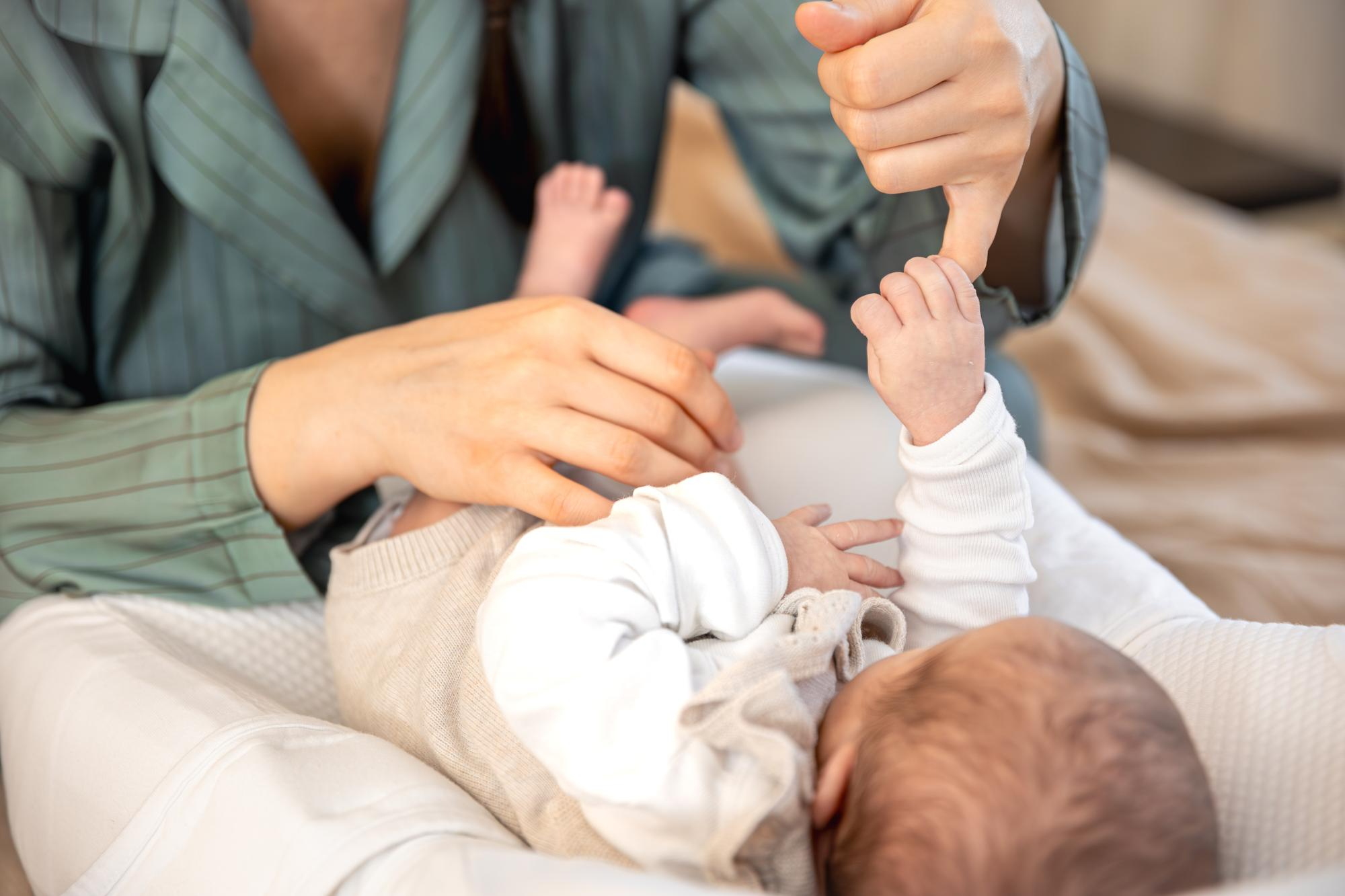
He was standing just outside a postpartum room. For one merciful half second my brain tried to hand me a harmless explanation. Vendor tour. Lost visitor. Helping a stranger. Anything but what was actually in front of me. Then I saw the baby, pink faced and impossibly small, wrapped in a striped hospital blanket. Ethan held her with the easy caution of someone who had practiced. He adjusted the blanket beneath her head with two fingers, then bent down smiling in a way I hadn’t seen directed at me in years. Soft, full, undivided.
Inside the room, propped against white pillows, sat a woman I had never seen before, pale in the particular way women look after labor, hair damp at the temples, hospital gown loose across narrow shoulders. She was smiling through tears, one hand reaching toward him as though she had every right to touch him, as though she’d been reaching for him a long time already.
Then I heard him say, low and tender, “She has your eyes.”
Not mine. Hers.
I stopped moving so completely it felt like my body had simply been switched off. The chart on my phone dimmed. My badge swung once against my scrubs and settled. Every small detail sharpened with a strange, vicious clarity: the waxy smell of the floor, the squeak of a nurse’s shoes somewhere behind me, a pale pink balloon tied to the room’s handrail, condensation sliding down a Styrofoam cup on the windowsill inside.
He hadn’t gone to France. He hadn’t even left Chicago. Every small thing I had filed away without wanting to name it came rushing back at once. Late night calls taken outside on the porch. A second phone he claimed was strictly for international travel. Canceled weekends. Hotel charges he blamed on billing errors. His strange calm every time I brought up finally trying for children once things slowed down, as if slow was weather that might simply drift through on its own schedule.
I didn’t walk into the room. I didn’t throw anything, didn’t ask the universe for strength, because strength is for people who still believe they have choices. What I had instead was clarity.
I stepped back into the shadow of the hallway. Ethan shifted the baby, smiling down at her. The woman touched the sleeve of his coat. My husband looked like a man arriving at the center of his life, and something inside me went very still. I slid my phone into my hand, opened the banking app, and stared at the screen until my fingerprint unlocked every door we had ever built together. Joint checking, savings, the vacation fund we never used because my schedule kept collapsing it, the reserve account for the house, the brokerage sweep tied to both our names, numbers I had fed with overtime, bonuses, holidays missed, nights I ate crackers from the surgeons’ lounge at two in the morning because I hadn’t had time to leave the building.
Inside room 614, my husband was whispering to his mistress and their newborn daughter. Outside, under lights that made everyone look faintly dead, I opened the transfer screen and moved everything I legally could.
Then I looked up and saw the name written on the whiteboard mounted beside the door.
Lauren Mercer.
And I understood, standing there in that hallway, that this was only the first thing I was about to lose, or perhaps the first thing I was about to take back.
Shock is useful for about ten seconds. After that, if you’re lucky, training takes over. I stood beside a humming vending machine and turned my marriage into a trauma protocol. First, stop the bleeding. My fingers moved quickly while my thoughts stayed cold and clean. Joint checking into my private account. Vacation fund moved. House reserve moved. Brokerage sweep moved. I knew exactly what I could legally touch and what I couldn’t, and I stuck to it precisely. Reckless is noisy, and noisy gets punished.
Next, secure access. I locked the joint credit cards through their apps, changed the passwords on our utilities, streaming accounts, and home security system, and downloaded eighteen months of bank statements to a cloud folder only I controlled. Then I called the one person in Chicago I knew wouldn’t waste my time with sympathy before strategy.
Rebecca Sloan answered on the second ring, her voice brisk and already halfway through three other things. I had operated on her brother after a pileup two winters earlier, and surgeons become family legends that way.
“I need a divorce attorney,” I said. “Today.”
There was a pause, not shocked but alert. “What happened?”
“My husband told me he was flying to France this morning. I just found him in maternity holding a newborn with another woman.”
She exhaled once. “Did you confront him?”
“No.”
“Good. Don’t, not yet. Screenshot everything. Preserve every account record, every message, every transfer. Protect liquid assets, secure your passport and any identification, and if you can still work today, do your job. Then come to my office.”
I went back to work. People imagine betrayal as something cinematic, a scream in the rain, but mine happened under sterile light while I tied off an artery and asked for another clamp. A stabbing victim was bleeding into his abdomen, and panic doesn’t stop blood loss any more than it fixes a husband. When it was over, a nurse told me I looked oddly rested for someone on her third coffee. I almost laughed.
By six thirty I was in Rebecca’s office on the thirty first floor, the conference room windows framing a river gone the color of old steel in the fading light. She went through my screenshots in silence, nodding occasionally. Transfer confirmations, account balances, the joint card lock notices, security app access logs, a statement showing repeated charges to an LLC I’d assumed belonged to one of Ethan’s vendors.
“You did well,” she said finally, and it should not have comforted me the way it did.
She brought in a forensic accountant and texted a private investigator before I’d finished my coffee. While they got started, I pulled down every folder Ethan had ever told me was too boring to bother reading. It turns out too boring is often precisely where men hide the bodies. Buried among renewal paperwork and utility statements was a lease for a two bedroom condo downtown, complete with a parking space, guaranteed by an LLC neither of us had ever discussed. My money had been paying for another woman’s windows.
Rebecca read through it in silence, then asked whether this had been an affair or a parallel household. The distinction sounded legal, but I understood exactly what she meant. A mistake, or an architecture.
By eight forty one, a photograph arrived from the investigator. It had been posted seven months earlier and later deleted. Lauren stood in profile in a mustard colored dress, one hand cradling a small pregnant belly, smiling at something outside the frame. Ethan stood behind her, palm spread across her stomach as though it belonged there. The caption read, building our little future.
Not a fling. Not an accident. A future, planned in installments while I covered the mortgage, maxed out retirement contributions, and came home too tired to question a man who had always known exactly how to sound wounded by doubt.
At 9:12, his name lit up my phone. I let it nearly ring out before answering. His voice was casual, warm in that irritatingly intimate way only a liar can manage. Flight got delayed, he said. Might land late.
I looked at the photograph on the table between me and Rebecca.
“That’s strange,” I said. “France usually doesn’t deliver babies in Chicago.”
The silence on the line was total. When he finally spoke, his voice had changed, lower and tighter, the sound of a man hearing the floorboards give way beneath him.
“Claire,” he said. “I can explain.”
He started talking the moment I stopped, words tumbling out like he’d been rehearsing a stage entrance for months. It’s not what you think, he said, which is always the first mistake men like Ethan make, trying to manage your interpretation before admitting a single fact. I told him I’d seen him holding a newborn and to try again. Lauren had the baby early, he said, as though I’d asked why he was late for dinner.
How long, I asked.
About a year, he finally admitted.
A year. Not one bad month, not a single impulsive mistake, but a full year of breakfasts, anniversaries, my birthday dinner in March when he’d raised his glass to the next decade of us. A year of kissing my forehead and picking up my dry cleaning while quietly assembling a second household stable enough to produce a child.
I told him not to come to the house, that I had already moved our liquid funds, that I had a lawyer sitting across from me and records of everything. His breathing changed. The softness disappeared.
“You had no right to touch the accounts,” he snapped.
There it was. Not shame, not grief, not a single word resembling I’m sorry. Just property.
“I had every right,” I said. “You used our marriage as infrastructure.”
He tried every angle after that. They hadn’t planned the baby. He’d been confused. He still cared about me. He kept repeating that last part, as though love were some abstract gas that filled whatever container he happened to pour it into. When I finally asked whether he’d told Lauren he was married, the silence on the line answered before he did.
I hung up.
What followed was paperwork. Temporary orders, a timeline built from bank records that told an unmistakable story once you knew what to look for. Flowers I’d never received. Furniture delivered to a condo I’d never seen. Prenatal pharmacy charges. Restaurant bills on nights he’d claimed to be stranded at O’Hare.
By the time I got home it was close to midnight, the city wet with old rain, streetlights bleeding across the pavement like torn ribbons. The brownstone looked exactly the same, which was the cruelest part. Betrayal almost never rearranges the furniture. Inside, it smelled faintly of cedar and the tomato sauce I’d frozen the week before, lined up in glass containers like orderly little lies. His coffee mug still sat in the sink. His shoes waited by the radiator. The photo from our Seattle trip sat on the entry table, me laughing into the wind, him looking at me like I’d hung the moon.
I went room by room, not hunting for some cartoonish clue but needing to touch the life I had built and find its seams. In his dresser drawer I found cuff links, rolled ties, and an empty passport holder. In the office, underneath a stack of dull corporate folders, I found a receipt from a downtown jewelry store, eleven months old. A white gold bracelet with an infant charm attached. The note line read, for Sophie. Not the baby. A name, chosen, engraved, paid for. I found a pamphlet from a birthing class, parking stubs from obstetrics appointments, a gift card from a children’s bookstore with ducks painted on the envelope. He hadn’t been improvising. He’d been collecting fatherhood in careful little purchases and hiding them in my house.
My phone buzzed. Can we please talk in person like adults. Then another message arrived, from a number I didn’t recognize. You’re Claire, right? I think we need to talk too. Signed with one name. Lauren.
I didn’t answer her right away, unsure which version of her existed, the woman who’d knowingly built herself inside another woman’s marriage and wanted to bargain, or someone genuinely blindsided. I slept badly and woke with my cheek creased from the pillow and my phone still in my hand. She had sent one more line. I didn’t know about you the way I should have. He said things. Please just hear me out.
I met her two days later in a coffee shop in River North that smelled of espresso and wet wool. She arrived ten minutes late, moving carefully the way women do after giving birth, one hand on the strap of an oversized diaper bag. She was smaller than I’d expected, tired in an honest way, no makeup except what remained from yesterday. She sat down across from me and said she was sorry before either of us had said much of anything else.
He told me you were basically finished, she said. That you stayed married for the taxes and the property, that you lived like roommates, that you were emotionally gone. I let the words settle. There is a difference between a marriage under strain and a marriage abandoned, and Ethan had used my exhaustion as a costume and worn it into someone else’s life.
She told me she’d learned three months earlier that he still lived with me. When she pushed him about why he hadn’t filed for divorce, he’d said the timing was complicated, that if she pushed too hard everything would explode before he could do right by the baby. Then she pulled a stack of folded papers from her bag and slid them across the table. Apartment invoices. An email thread with a realtor discussing eventual family housing in Evanston, fenced yards, give me a little more time, I’m almost free. And one screenshot that made the whole coffee shop go soft and distant around me. Ethan telling her, in black text on a white screen, that Claire can’t have kids and stopped wanting a family years ago.
I had wanted children. Not with some singular desperate ache, but honestly and earnestly, enough to have raised it with him more than once, enough to have bookmarked a fertility clinic when later finally started sounding like a lie we told ourselves.
Did he tell you that before or after he got you pregnant, I asked.
Before, she said.
There was one more thing. A printed confirmation from a title company, an inquiry into equity release options on our lake house, dated six weeks earlier. He’d told her that once the paperwork with me was finished, he’d use the Michigan property to buy them something bigger. The lake house wasn’t just an asset. It was the one dream we’d built slowly and faithfully, summer by summer, quiet mornings on the dock, maybe kids one day running across cold grass with towels around their necks. He’d been using that future as collateral somewhere else entirely.
Before I left, Lauren handed me a brass key. A storage unit, she said. He told me it was for vendor samples. I think it’s where he keeps whatever he doesn’t want either of us to see.
The unit turned out to be rented under the same LLC that covered her condo, paid for out of our joint account. Rebecca insisted we do this properly, with lawful access rather than any dramatic break in, and by Saturday morning we had it. The facility sat behind a chain link fence beside a tire shop, the hallway narrow and lit by flickering fluorescent strips. When the investigator rolled up the door to unit 4C, I braced myself for boxes, brochures, something forgettable.
Instead I found a crib still in pieces, a changing table, a rolled nursery rug patterned with little yellow moons, plastic bins labeled baby clothes and bottles and winter gear, a framed watercolor fox leaning against the wall, and in the corner, a small assembled bookshelf holding three children’s books already waiting in place. He had been building a room. I didn’t cry. I didn’t have enough spare feeling for that yet.
Inside the file boxes were condo lease records, car financing, a second phone bill, cashier’s check stubs, tax paperwork, and one manila folder with my name on it. Not Mrs. Ethan Bennett, not household. Claire. Inside were copies of my pay stubs, my bonus notices, my retirement projections, and a draft loan application listing expected marital asset distribution after divorce, with a note about my significant post settlement liquidity. He hadn’t just been cheating. He’d been planning my usefulness after the marriage the way you’d forecast a line item.
At the bottom of the last box was a printed itinerary. Paris, France. Not the week he’d claimed, but next month. Two tickets. Ethan Bennett and Lauren Mercer.
He hadn’t only lied about France to me. He’d promised it to her.
There are moments when anger burns hot and clean, and moments when it turns almost elegant. This was the second kind. Not because it hurt less, but because it finally clarified the shape of the man I’d married. Ethan didn’t only lie when he needed cover. He recycled fantasies and used the same glittering props on more than one woman at a time, trusting charm to smooth over the seams.
By Monday, the legal machine was fully in motion. Temporary financial restraints, discovery demands, a forensic review of years of spending. Ethan’s lawyer, a smooth faced man named Philip Gaines, opened with the usual soft language about privacy and respect. Rebecca answered with three brutal paragraphs that amounted to, then your client shouldn’t have built a second household out of a marriage.
Ethan tried every side door he could find. Flowers, returned. Voicemails, unheard. A text insisting we owed each other one honest conversation without lawyers, deleted. I drove up to the lake house that week for inventory and documentation, and in a kitchen drawer among old manuals and takeout menus I found a folder from a local contractor. Clipped behind it was a penciled sketch of a nursery, a small room off the upstairs hall, soft green walls, built in shelving, a safety gate for the stairs. Behind the sketch, a printed email thread from six weeks earlier discussed timing the room for August occupancy.
I sat down on the floor of that upstairs room because my legs simply stopped cooperating. He had been talking to a contractor about window locks and washable paint while climbing into bed beside me in Chicago every single night. I cried there, quietly, not dramatically, tears that changed nothing but needed somewhere to go.
On the drive home, an overnight envelope waited in my mail slot, no return address, but I recognized his handwriting before I’d even bent down to pick it up. Inside was one sheet of paper. He wrote that with me things had become duty, that with Lauren things felt alive again, and that this didn’t mean what we’d had wasn’t real. Please don’t destroy me because I fell apart, he wrote.
Duty. I stood there with that word sitting in my chest like a stone. Duty was paying the mortgage on time. Duty was driving across the city after twenty hours on my feet to pick him up from the airport because cabs made him carsick. Duty was showing up, over and over, while he treated alive like a coupon he could redeem wherever he wanted. I burned the letter in the kitchen sink and watched the ink curl into itself until nothing remained but a bitter smell and ash.
That same night, Rebecca called with news that reframed everything again. My electronic signature had appeared on a home equity inquiry tied to the lake house. I had signed nothing. The timestamp showed it had been submitted while I was standing in the operating room.
Forgery is a different animal than infidelity. It doesn’t say a man got lost or flattered or weak. It says he studied the edges of your life and calculated exactly what he could take without you noticing. Rebecca filed fast, and Philip Gaines responded with indignant language about misunderstandings and marital informality, as though a wedding ring turned identity theft into a scheduling matter.
At the temporary hearing, the courtroom smelled of old paper and cold air. Ethan sat across the aisle in a beautifully tailored suit, his face arranged into the look of a man dragged reluctantly into tragedy. Philip spoke of overlap and emotional complication and pressure from multiple directions. Rebecca stood and, without raising her voice once, walked the judge through every transfer, every condo expense, every forged signature, every hidden LLC payment, until the facts simply stacked themselves into a wall he couldn’t climb. When the judge asked him directly whether he had represented himself to a lender using my authorization while I remained unaware, he tried the word preliminary. That is not an answer, she told him, and something in the room exhaled.
Temporary possession of the brownstone stayed with me. The court froze further discretionary transfers and ordered full financial disclosure, including LLC activity and records tied to the condo. Ethan was instructed not to contact me outside of counsel except in documented emergencies. In the hallway afterward, he caught my arm and told me I’d made my point, that this was enough.
No, I told him. Enough was before the baby.
Something flickered across his face that wasn’t anger or guilt. It was fear, the recognition, maybe for the first time, that this was not a fight he could charm or exhaust his way out of. I was not waiting to calm down. I was building an ending.
The disclosure packet that followed turned up a hidden account opened fourteen months earlier, well before the condo furniture, possibly before the pregnancy itself. Consulting fees that weren’t consulting fees. Travel reimbursements that mapped neatly onto condo expenses. Small, careful withdrawals designed to stay beneath anyone’s notice. Around the same time, Lauren called to tell me he’d shown up at her sister’s place and asked her to sign a statement claiming she’d known all along that our marriage was over and that he’d supported her with money that had nothing to do with me. She’d refused and told him to leave. He’d told her, on his way out, that I was cold enough to let him drown. Before hanging up, she mentioned the flowers he’d brought her that night, the same arrangement, the same card stock, the same line he used after every fight. For brighter days. Apparently he had a template for remorse as well as for love.
The next blow arrived through her attorney rather than mine. An affidavit describing a folder Ethan had brought when he showed up at her sister’s, full of draft settlement budgets built around predictions of my behavior. One line, in his own words, read that I avoided discomfort and would likely overcompensate financially to end things quickly and quietly. Another instructed him, if cornered, to remind me that I had chosen career over family first. He had gamed my grief in advance and written the strategy down.
Mediation, when it finally came, felt less like a fight and more like a formality by then. The proposed terms were firm and painfully fair. I kept the brownstone. The lake house equity split heavily in my favor given the misuse attempts. The hidden account was folded into the total. No spousal support. In the hallway afterward, Ethan found me one last time and, in a rare unguarded moment, admitted something closer to the truth than anything he’d offered before. He said he’d thought I could take it. That I handled crisis better than anyone he knew, that he’d assumed I would survive it and land on my feet while Lauren, in his mind, needed more immediate protection. There it was, laid bare. The quiet belief that a strong woman exists to absorb impact, that competence is simply a nicer word for expendable.
That, I told him, is exactly why you lost.
The decree was entered two weeks later. He moved into a smaller apartment after Lauren finally took Sophie and left for her sister’s place in Milwaukee, unwilling to keep performing a family that had never been honestly built. I didn’t celebrate any of it. Instead I bought herbs, basil and thyme and rosemary and mint, small green things in clay pots lined up along my back steps where the evening light landed warm and slanted. I repainted the guest room. I changed the art in the hallway. I slept with the windows cracked when the weather allowed it, and slowly the house stopped feeling like a stage where a lie had once performed and started feeling like shelter again.
Somewhere in the middle of all that paperwork, I wandered into a small neighborhood bookstore two blocks from the hospital because I couldn’t face another cup of hospital coffee. It smelled of dust and warm paper and quiet jazz. A man behind the counter, sleeves rolled up, pencil tucked behind one ear, asked if I’d had a rough day and handed me tea strong enough to dissolve a spoon before I’d even finished answering. His name was Noah. He and his sister owned the place. He didn’t pry, didn’t perform sympathy, didn’t smell fresh damage and lean into it the way some men do. He simply existed in front of me like weather of his own making, and over the following months, through careful dinners and long walks and one good kiss outside his shop that tasted faintly of cinnamon, something steady began to grow where nothing dramatic was required of either of us.
In October I flew to France. Not for Ethan, not to reclaim some romantic notion he’d tried to poison, but because a lie occupies real estate in your mind, and reclaiming that ground felt practical. I landed in Paris under a sky so bright it made the terminal glass shine like water, then took a train south, uninterested in reenacting anyone else’s fantasy. I wanted stone streets and honest windows and coffee strong enough to reset a heart. I stayed in a small town that smelled of rain on limestone and butter from the bakery below my room, ate peaches over a sink, sat by a river with my shoes off and watched the light move across the water. It wasn’t healing in any cinematic sense. No violins, no sudden revelation. Just the slow pleasure of standing somewhere my ex husband had once used as decoration and finding it full of ordinary, beautiful facts that belonged entirely to me now.
Noah called while I sat on a stone wall above a vineyard the color of old gold, the air smelling of dry grass and distant woodsmoke. He asked how France was treating me. Very inconsiderate, I told him. Turns out it was real all along. He laughed and asked me to bring him back something impractical, and I told him I could do better than a spoon.
Before I hung up, an email notification appeared. Ethan’s name, a subject line that read, I owe you an apology. I looked at it for a long moment, the old reflex stirring faintly, the habit of managing his feelings even now. Then I deleted it unopened, not because I felt powerful, but because I was finally, completely done treating his internal weather as relevant to mine.
When I got home the following week, the maples on my block had gone red at the edges. A small parcel waited inside, the last piece of administrative cleanup from the divorce, final transfer confirmations, deed adjustments, closed account notices, and a short note from Rebecca scrawled in the margin. All finished, for real this time. I stood in the kitchen with my suitcase still by the door and let that sentence settle all the way through me. Not because the marriage had ended months earlier on a judge’s docket, and not because the money had finally been divided down to the last account, but because something in me had genuinely stopped bracing for impact from a man who no longer had any access to my life.
The following Sunday I met Noah at the bookstore before opening, where he was making a questionable attempt at hanging a string of paper stars in the front window. I handed him a small wrapped package, a hand painted ceramic dish from a market in Provence, blue glaze, crooked edges, useless except for being lovely. He turned it over in his hands and smiled, then made tea in mismatched mugs without asking how I took mine anymore, because by then he simply knew.
That, I had come to understand, is what intimacy sounds like when it’s honest. Not grand declarations or forehead kisses laid over lies, but attention, repeated gently enough to be trusted.
There are endings that explode and endings that settle quietly into place. Mine began in a maternity hallway with a laugh I recognized too well and a baby who proved my marriage had cracked long before I ever saw the fracture. It moved through bank statements and courtrooms, through a forged signature and a folder that tried to predict my grief with the precision of a spreadsheet. It passed through humiliation and anger and that colder place beyond anger where you finally stop negotiating with reality altogether.
And it ended here, in a small bookstore that smelled like paper and cinnamon, with herbs growing wild on my back steps and my name still on the deed to a house that had finally stopped feeling like a stage. Not with forgiveness, not with some tidy redemption arc, not with a speech about how pain makes everyone wiser in the end. It ended with me keeping what was mine, work I still loved, a trip across an ocean he’d once used as a lie, and a man beside me who had never once asked me to make myself smaller so his choices could fit more comfortably around him.
Ethan believed, right up until the moment he didn’t, that he could live two lives at once. He lost me on an ordinary afternoon under hospital lights, in a hallway that smelled of antiseptic and stale coffee, the instant I chose not to keep either version of his life alive for him any longer.
He just didn’t know it yet.

Adrian Hawthorne is a celebrated author and dedicated archivist who finds inspiration in the hidden stories of the past. Educated at Oxford, he now works at the National Archives, where preserving history fuels his evocative writing. Balancing archival precision with creative storytelling, Adrian founded the Hawthorne Institute of Literary Arts to mentor emerging writers and honor the timeless art of narrative.