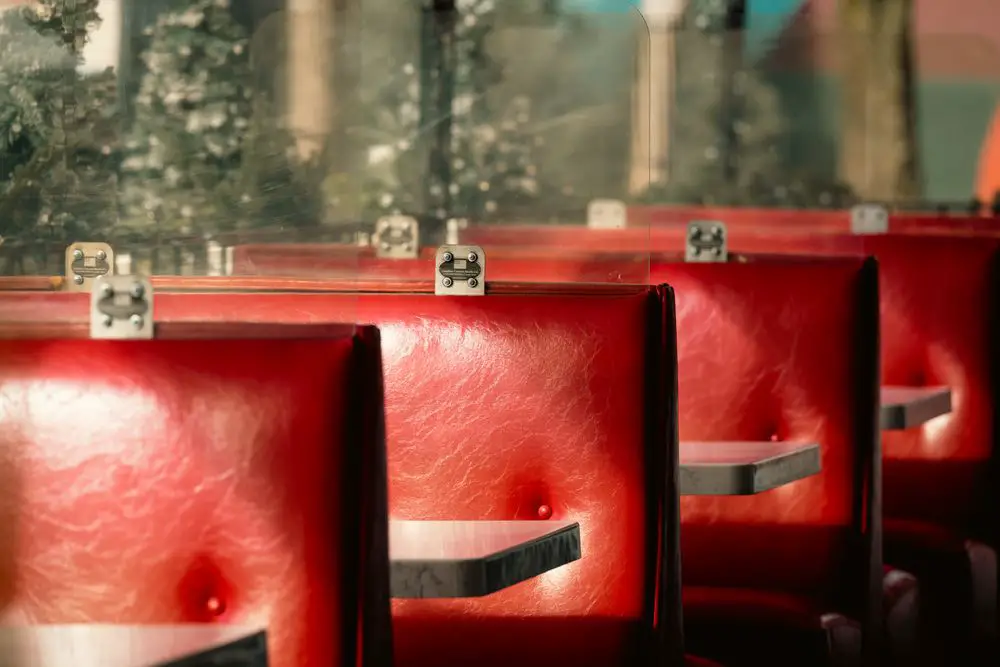
I used to think the worst part of my life had already happened, the morning my husband walked out and left me to raise two kids alone. Then one ordinary Tuesday, a man in a tailored suit walked into Marla’s Diner, snapped his fingers at me like I was a piece of furniture that had wandered too close to his table, and pushed me right up to the edge of what I thought I could survive without finally breaking apart.
I was twenty eight when Dale left, standing by the front door with an overnight bag already packed, his good coat on as though he were heading somewhere important instead of simply away. Two kids were asleep down the hall, the sink was full of dishes from a dinner nobody had finished, and a stack of past due bills sat spread across the kitchen table like a warning I hadn’t wanted to read that week.
“I can’t do this anymore,” he said.
“What are you talking about?” I asked, though some old, tired part of me already knew.
“This life,” he said, and that was the sentence he chose to end eight years of marriage with, two words tossed off like he was describing weather rather than the family sleeping thirty feet away.
I have turned that sentence over more times than I can count in the years since, trying to understand exactly what he meant by it, because I never did get the chance to ask him properly before he was gone. This life, I eventually decided, must have meant the version of us that existed after the honeymoon ended and the actual living began, the version with a colicky infant and a mortgage that never quite balanced and a wife who fell asleep most nights before she could finish a sentence about her own day. He had married someone with plans, I think, and watched those plans quietly dissolve into diaper bags and pediatrician co-pays, and somewhere in there he decided the dissolving was my failure rather than simply what happens to most young families who don’t have much of a financial cushion between themselves and disaster.
By sunrise, half the closet was empty. I had dropped out of college when I got pregnant with Owen, and then Katie came along not long after, and every plan I’d ever made for myself kept getting quietly shoved behind diapers and rent and groceries and the particular, grinding math of simple survival.
Marla hired me not long after Dale left, at the diner she’d owned for going on twenty years, the one that sat on the corner of Maple and Third and had, at one point or another, fed nearly half the town. She told me later she’d hired me because I looked like somebody who would actually show up, and she wasn’t wrong about that, even on the mornings I genuinely didn’t know how I’d manage it. Owen needed money for a school field trip I could barely stretch to cover. Katie needed a dentist appointment I kept quietly postponing, mostly because I was afraid of the number I’d hear when I finally called to schedule it.
Marla ran her diner the way some people run a small ministry, without ever calling it that. She extended tabs when somebody was short before payday and never once made a show of it. She packed leftovers for the night janitor at the hardware store down the block. She kept her soup cheap enough that nobody in this town ever had to choose between lunch and their own pride, which is a smaller kindness than people realize until they’ve needed it themselves.
I had come to know the rhythm of that diner the way you come to know the sound of your own house settling at night. The bell over the door that stuck slightly on humid mornings. The particular squeak of booth four’s vinyl seat when somebody shifted their weight. The way Luis hummed old boleros under his breath while he worked the grill, never loud enough to be a performance, just loud enough to fill the small silences between orders. I had learned, in the two years since Dale left, that a diner like Marla’s could become something closer to a family than the one you’d lost, not because anybody there owed you anything, but because they simply showed up for you anyway, morning after morning, without being asked.
Ruth was already sitting in her booth that Tuesday morning, same as she was most mornings, oatmeal, rye toast, tea with a wedge of lemon set carefully on the side. She’d been coming in so faithfully, for so many years, that I had learned to set her silverware down before I’d even finished tying my apron behind my back.
“Morning, sweetheart,” she said.
“Morning, Ruth. The usual?”
“If I ever order something wild,” she said, “you call my doctor first.”
Ruth had been widowed longer than I’d been alive, and she filled her mornings the way some people fill a job, with purpose and routine and a small, specific dignity that I found myself admiring more the longer I worked there. She always left exactly the same tip, calculated to the dollar, and always asked after Owen and Katie by name, remembering details I’d mentioned weeks earlier that I’d half forgotten myself. I didn’t know yet, that particular Tuesday, that she had once waited tables herself for over a decade before she married, or that she still remembered precisely what it felt like to stand on your feet for eight hours only to be treated, by certain customers, as though you were somehow less than the coffee you were pouring them.
By ten thirty the breakfast rush had thinned out to the last few stragglers nursing their coffee. Marla stood at the register with her pencil tucked behind one ear, studying a stack of invoices with the particular expression she wore when the numbers weren’t cooperating with her again. I noticed her glance toward the front windows twice in a row, something close to worry crossing her face.
“Everything okay?” I asked, topping off coffee along the counter.
“Maybe,” she said. “Grant’s been making a show of visiting local businesses lately.”
“Sounds charming,” I said, not really meaning it.
She didn’t smile back. “Rumor is he’s been dropping in unannounced, pretending he’s just another customer, and then telling the chamber exactly what he thinks of the place afterward.”
That put a small, cold knot in my stomach, though I couldn’t have told you why at the time.
“If he comes in,” Marla said, “let me handle him.”
“Why,” I asked.
“Because we could genuinely use that grant money,” she said. “And because men with too much power tend to enjoy being reminded they have it.”
He walked in maybe twenty minutes later, wearing a navy suit that had almost certainly cost more than my entire month’s rent, the kind of man who moved through a room with a confidence that had never once had to be earned. He took booth seven without waiting to be seated and snapped his fingers once, sharp and impatient, before he’d even bothered picking up a menu.
I kept pouring coffee for a trucker at the counter, in no particular hurry.
He snapped again. Then a third time, louder, clearly expecting the sound alone to summon someone.
I finished the pour, set the pot down, crossed the floor, and kept my voice as level and pleasant as I could manage.
“Sir, I’ll be right with you, but please don’t snap at me.”
His smug little smile disappeared so cleanly it was almost impressive to watch happen in real time.
“I beg your pardon?” he said.
“I said I’ll be right with you.”
His eyes narrowed slightly. “You call me sir.”
I held my order pad flat against my apron. “What can I get you?”
“Black coffee. Wheat toast. Two eggs, over medium. Sausage on the side. And maybe a lesson in basic respect while you’re at it.”
I needed the tips from that particular shift badly enough that I could practically taste the need in the back of my throat, so I swallowed every single retort that wanted to climb out of me right then. When I brought his coffee, he took exactly one sip and set the mug back down.
“Lukewarm,” he said.
I replaced it without comment. The next cup, apparently, was too hot. Then his eggs came out wrong, though I’d made them exactly as he’d ordered them.
“When you speak to a customer,” he said, leaning back in the booth like he was patiently educating a slow student, “you say sir.”
Marla started toward the booth once, half a step, then stopped herself the moment Grant glanced up and recognized her from across the room. I was wiping the edge of his table a few minutes later when he did it, deliberately, watching my face the whole time. He looked down at the mug in his own hand, then at me, and shoved it off the table with two fingers, almost lazily.
The ceramic hit the tile and shattered into a dozen pieces. Hot espresso splashed across my shoes and spread into a dark, ugly pool across the floor. The whole diner went quiet all at once, the way a room does right before something happens that everyone will remember differently later.
Grant didn’t even glance down at the mess he’d made.
“Get on your knees and clean it up,” he said.
Nobody moved. Nobody said anything.
“You’re paid to clean up after your betters,” he said, pointing at the spill with two fingers. “Down on your knees. Now.”
“On my knees,” I repeated, mostly to make certain I’d actually heard him correctly.
He smirked, clearly pleased with himself, clearly expecting me to fold the way he assumed a tired, overworked waitress with two kids at home would fold.
So I set my tray down, walked calmly to the supply closet, and came back out with the yellow wet floor sign, which I placed carefully beside the spill. Then I looked at him directly.
“I’m going to clean this up because someone could genuinely slip and get hurt,” I said. “I’m not doing it because you ordered me to.”
His expression shifted from triumph to real anger in the space of a single blink.
Before he could respond, Ruth rose slowly from her booth. She moved without hurry, not because age had slowed her down exactly, but because she had never once in her life needed speed to command a room the way she was about to command this one.
“Young man,” she said, “your mother would be deeply ashamed of that tone.”
Grant went very still. “Ruth,” he said quietly, almost pleading.
“Don’t you Ruth me after that little performance,” she said, resting one hand against the back of her booth and fixing him with more authority than I have ever witnessed one person hold in a single glance.
“This isn’t what it looks like,” he said.
“It looks,” Ruth said, “exactly like you told a working mother to get down on a dirty floor because you enjoyed the idea of it.”
Marla came out from behind the register then, her voice clipped short. “On behalf of the chamber, is this how you conduct your little visits?”
Grant hesitated a beat too long before answering. “No,” he admitted. “On behalf of myself. I visit places quietly before I make my recommendations. Nobody at the chamber asked me to handle it this particular way.”
“And you decided the best way to learn how a business handles pressure,” Marla said, “was to become the pressure yourself?”
“The chamber vote is Thursday,” he said, a little defensively now. “I sponsor the business grant, though I don’t decide the outcome alone. I wanted to see what kind of operation this really was, once things got difficult for the staff.”
“And you thought the way to find that out was to act like a bully in front of a full dining room,” I said.
He looked at me for a long moment. “I pushed too far.”
“You think,” Marla said flatly.
Ruth stepped closer to his booth. “When your mother worked doubles at the Parkway Cafe,” she said, “what did she come home with each night?”
Grant frowned, clearly caught off guard. “What?”
“You heard me perfectly well.”
He looked down at his own hands. “Swollen feet,” he said quietly.
“Anything else?”
He didn’t answer that one. Ruth answered it for him.
“Coffee stains on her cuffs. Grease in her hair by the end of the shift. Barely enough energy left most nights to manage a smile for you. Twenty three years she waited tables at that place, and not once, not a single time in all those years, did she come home calling herself beneath the very people she served every day.”
Her voice never rose, never once cracked into anything like shouting. “You sat at my own kitchen table after school more afternoons than I can count, eating sandwiches while she finished closing up down the street. You knew exactly where you came from, Grant. So tell me, when precisely did you decide that people like her had become your lessers?”
He opened his mouth, then closed it again without a single word coming out. Nobody in that diner moved to help him find one.
“Your mother came home with swollen feet,” Ruth said, “so that you could grow up wearing shoes like the ones you’re wearing right now.”
Marla crossed her arms. “You need to leave.”
But Ruth shook her head slowly. “Not yet. After he fixes what he did.”
Grant gave a small, stiff nod, and then, to my genuine surprise, he crouched down beside the mess himself, gathering the larger pieces of broken ceramic into his own hands and dropping them carefully into the bus tub I kept near the counter. Then he held one hand out toward me, palm up, waiting.
“Please,” he said, and there was no bark left in his voice at all, no order, no demand, just a plain, quiet request.
I handed him the rag.
He knelt there in the spilled, cooling espresso and wiped the tile floor himself, in full view of the whole diner, while nobody said a word. When he finally stood back up, his suit pants stained dark along both knees, he looked considerably less like a powerful businessman and considerably more like a boy trying, somewhat clumsily, to fit himself into his father’s old work clothes.
He faced me first. “I’m sorry,” he said. “I was arrogant, and I was cruel, and you didn’t deserve one moment of it.”
Then he turned to Marla. “Neither did your diner.”
He reached into his jacket and set a thick envelope down on the counter between us.
“This isn’t a check,” he said. “It’s the full chamber packet, along with my written recommendation. Final voting happens Thursday. But honestly, this place was already sitting at the top of my list before I ever walked through that door this morning.”
“Why,” Marla asked, flat and unconvinced.
He glanced slowly around the room, at Ruth still standing near her booth, at Luis working the kitchen window, at Tina restocking the sugar caddies along the counter, at the row of old men who’d barely looked up from their coffee the whole time.
“Because you feed people on credit when you know they genuinely need it,” he said. “Because you stayed open straight through the ice storm two winters back, when half this block shut its doors entirely. Because you hire locals nobody else bothers giving a real chance to. Because every single person I quietly asked about this place had a story that started with food and ended, somehow, with kindness.”
That sounded truer, honestly, than anything else he’d said to any of us all morning.
He left shortly after that, shoulders a little slumped, pants still stained dark at the knees, and none of us said much of anything until the door had fully closed behind him.
For a long moment the diner just sat there in its own quiet, the way a room does after something has happened that everyone will need time to fully understand. Ruth sat back down slowly in her booth and picked her spoon back up as though nothing at all had interrupted her oatmeal. Marla stood very still by the register, the envelope in her hand, and I noticed her thumb pressing lightly against the corner of it, testing whether it was real. Tina finally exhaled, a long breath she’d apparently been holding the whole time, and said, to nobody in particular, that she had never in her life seen a grown man kneel down and clean up his own mess like that.
I went back to wiping down the counter because my hands needed something to do, and because some part of me was still catching up to what had just happened in front of a room full of regulars who would be telling this story at their own kitchen tables for weeks afterward. I kept replaying the moment Ruth stood up, the particular stillness in her voice, the way she had known exactly which memory would land and had aimed it with total precision. I thought about how rarely anyone in this town got to see somebody like Grant actually held accountable for anything, and how strange it felt that the person doing the holding was a seventy some year old woman with a cardigan draped over her shoulders and a cup of tea going cold in front of her.
It didn’t erase my rent that week. It didn’t make Katie’s dentist visit any cheaper, or Owen’s field trip suddenly free. Marla opened the envelope once he’d gone and scanned through the first page, her eyes widening slightly. He had scored us highest across the board, community reputation, employee loyalty, neighborhood impact, and that was apparently true even before the whole scene with the coffee mug had unfolded.
We won the grant that Friday.
The money kept the diner from cutting any of our hours. It finally fixed the walk in freezer that had been failing intermittently for over a year. And after Marla paid down what absolutely had to be paid down first, there was enough left over, she told us, to build something entirely new.
She called the whole staff together one evening after close and leaned back against the glass pie case, arms crossed loosely.
“I’m starting a paid training program,” she said. “Bookkeeping, shift management, catering coordination, whatever actually helps people move up in life instead of just barely staying afloat where they already are.”
Then she looked directly at me. “And you’re taking the bookkeeping track, because you light up every single time you talk about numbers, whether you’ve noticed that about yourself or not.”
That morning, Grant had tried to make me kneel on a dirty floor in front of a room full of strangers. That evening, Marla was quietly offering me a way to stand on my own two feet for the first time in longer than I could remember.
I sat in my car in the parking lot after that meeting for a good ten minutes before I drove home, turning the idea over in my mind. Bookkeeping had never been anything I’d imagined for myself, not back in the version of my life where I still had plans, but Marla wasn’t wrong that something in me had always leaned toward numbers, toward the quiet, orderly satisfaction of a column that finally balanced. I used to help my own mother reconcile her checkbook at the kitchen table when I was barely older than Owen was now, and I remembered liking it, the way everything either fit together or it didn’t, no ambiguity, no guessing at somebody else’s mood before you knew where you stood.
I enrolled in one evening class at the community college the following week. It felt small at the time, one class, two nights a week, nothing especially dramatic about it. But it felt bigger than that too, somewhere underneath. If I failed, I understood clearly, I couldn’t blame Dale anymore, or the bills, or simple bad luck the way I’d been quietly doing for two years running. I would have to admit, finally, that I had simply been afraid to try.
The first month nearly broke me twice over. Once when Owen forgot to mention a school permission form until ten o’clock at night, the night before it was due. Once when Katie woke up with a sharp, sudden toothache and I ended up missing half a chapter of reading, sitting beside her in an urgent care waiting room instead. I did my homework at the laundromat some weeks, balanced account codes on my lap during unpaid lunch breaks, fell asleep more than once with my cheek pressed against a spreadsheet spread out across the kitchen table.
There were nights I sat in my car outside the community college building, engine running for the heat, telling myself I could just skip this one class, that nobody would notice, that Owen and Katie needed me more at home than some instructor named Mr. Halloway needed me in his classroom learning about accrual versus cash basis accounting. But I kept going in anyway, most nights, because some stubborn part of me had started to suspect that skipping even one class would make skipping the next one easier, and I had already spent two years watching how easily a person’s whole life could get talked down to nothing, one small surrender at a time.
Marla never once asked how the classes were going in a way that felt like checking up on me. She just started leaving the schedule a little more flexible on the nights I had class, swapping me onto earlier shifts without making a production out of it, the same quiet, practical kindness she extended to everybody who walked through her door needing a tab or a warm bowl of soup. Ruth asked, though, every single Tuesday, over her oatmeal, what I’d learned that week, and made me explain it back to her in plain language, which turned out to be the best studying I did the entire course, because explaining something to Ruth meant you actually had to understand it first.
Three months in, I paid for Owen’s field trip without pulling a single dollar away from rent. Two weeks after that, Katie finally got her tooth fixed properly, no more postponing, no more flinching at the number.
When my first bookkeeping course ended, the instructor handed me a certificate printed on heavy cream colored paper, my name centered in blue ink across the middle of it. I brought it home and stuck it to the refrigerator with a strawberry shaped magnet Katie had picked out at the dollar store years earlier, and my kids cheered like I’d won something enormous and official.
I remember standing in the kitchen doorway for a moment just watching them celebrate, Owen doing some kind of victory lap around the table, Katie already rummaging through the freezer for the good ice cream we usually saved for birthdays, and thinking that this, exactly this, was the thing Dale had walked away from calling it dirty. Not the bills, not the exhaustion, but this, two kids losing their minds with joy over a piece of paper that meant their mother had proven something to herself.
“Mom passed!” Owen shouted, loud enough that our downstairs neighbor probably heard it through the floor.
Katie threw both hands straight up in the air. “We need dessert. Immediately.”
Dale had called this life dirty once, standing by our front door with his good coat already on, something he needed to escape from as quickly as possible. But this particular life, the one he’d walked away from without looking back, had Owen’s laugh running all through it. It had Katie’s crooked, gap toothed grin. It had my own name, printed in blue ink, on a certificate I had earned entirely by myself, at night, exhausted, one slow chapter at a time.
I stood in my kitchen that evening looking at that certificate stuck to the fridge, and then at the next week’s diner schedule folded up in my purse on the counter, and I thought about how, for nearly two years straight, every floor I’d stood on had felt slightly unsteady beneath me, like one bad shift or one more red envelope in the mail could knock the whole fragile arrangement flat without warning.
Standing there that evening, my two kids grinning over a crooked piece of paper taped up with a plastic strawberry, I felt something I honestly hadn’t felt in longer than I could remember. It wasn’t rescue, and it wasn’t luck, and it certainly wasn’t anything Grant or his envelope had handed me, however useful that grant money had ultimately turned out to be for all of us.
It was simply the quiet, solid feeling of ground finally holding steady beneath my own two feet, for the first time in years, entirely because I had finally been brave enough to test whether it would.
I think about Dale sometimes, still, though far less often than I used to. I wonder occasionally whether he ever heard about the grant, or the certificate on my refrigerator, or the fact that his children are doing better now than they were the morning he stood by our front door with his good coat on. I don’t wonder it with any particular anger anymore, mostly just a kind of distant curiosity, the way you might wonder about weather in a city you used to live in but haven’t visited in years. He called this life dirty, something worth escaping. I have come to understand, slowly and in my own time, that it was never the life that needed escaping at all. It was simply that he never learned how to stand still inside a hard season and wait for the floor beneath him to hold.
Mine held. It took two years, one broken coffee mug, one furious old woman defending me like I was her own daughter, and one long, tired string of evening classes at a community college with bad fluorescent lighting, but it held, and it has kept holding ever since, sturdier now than it has ever been in my whole adult life.

Ethan Blake is a skilled Creative Content Specialist with a talent for crafting engaging and thought-provoking narratives. With a strong background in storytelling and digital content creation, Ethan brings a unique perspective to his role at TheArchivists, where he curates and produces captivating content for a global audience.
Ethan holds a degree in Communications from Zurich University, where he developed his expertise in storytelling, media strategy, and audience engagement. Known for his ability to blend creativity with analytical precision, he excels at creating content that not only entertains but also connects deeply with readers.
At TheArchivists, Ethan specializes in uncovering compelling stories that reflect a wide range of human experiences. His work is celebrated for its authenticity, creativity, and ability to spark meaningful conversations, earning him recognition among peers and readers alike.
Passionate about the art of storytelling, Ethan enjoys exploring themes of culture, history, and personal growth, aiming to inspire and inform with every piece he creates. Dedicated to making a lasting impact, Ethan continues to push boundaries in the ever-evolving world of digital content.