I secretly bought my dream house after six years of hard work. On moving day, I found my sister’s husband and his whole family already inside with a moving truck, unloading their furniture like it was theirs.
I smiled at them. I invited them in politely.
Then I called the police.
The first thing I remember from that morning wasn’t anger. It was my mother’s voice on the phone, calm and light, like she was reminding me to pick up milk.
“You’re single, Jenny. You don’t need a house that big. We’re family. It should be shared, right?”
That was my mother, Diane Ford. She had a talent for saying outrageous things in the most ordinary tone possible. If she sounded calm enough, if she acted like reasonable people had already agreed on something, then anyone who pushed back became the problem.
She knew exactly what day it was. Move-in day. Not just any house. My house. The one I’d spent six years saving for, dollar by dollar, skipping vacations, eating soup out of a mug at midnight after fourteen hours on a muddy job site. I picked out every window. I chose the kitchen stone after three separate trips to the stone yard. The floors still smelled like fresh sealant.
“You’re single,” she said, like that made me smaller. Like being unmarried meant I needed less space, less dignity, less of anything good.
An hour before that call, before the police lights, before my sister’s face fell apart, I pulled up to my house on the slopes of Oakwood Hills.
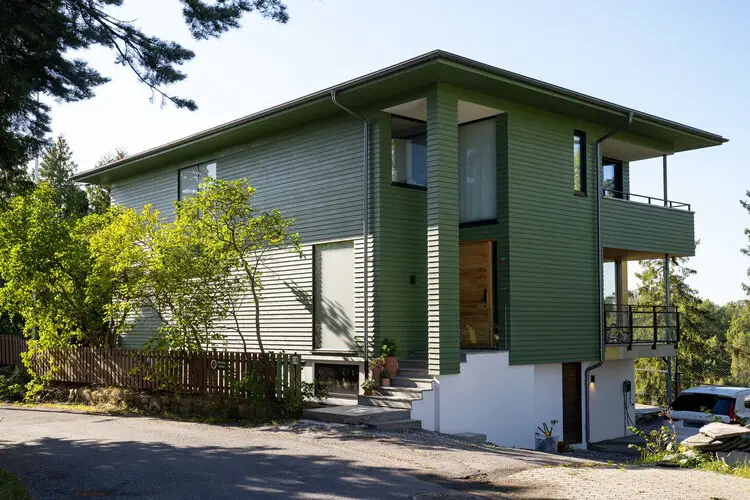
It wasn’t the biggest house on the street. But it was the first place that had ever truly belonged to me. Glass walls facing the valley. A wide terrace. Clean modern lines softened with cedar beams. From the road, it looked peaceful.
I’d imagined this exact morning for months. My moving truck pulling up behind me. My drafting desk. My grandmother’s reading chair. Boxes of dog-eared landscape books. Walking through the front door alone, setting my keys on the counter, standing in silence and realizing nobody could tell me what to do inside those walls anymore.
Instead, the first thing I saw was a moving truck I didn’t recognize.
It was huge, white, parked at an angle like whoever drove it owned the driveway. The rear doors were open. Two men were carrying a sagging brown sofa up a ramp. Behind them, another guy struggled with a gold display cabinet so gaudy it looked stolen from a wedding hall.
I sat there with my foot on the brake, not understanding what I was looking at.
Then I recognized the sofa. Lucy’s sofa. The one with the grape juice stain she’d complained about for years.
Then the cabinet. Also Lucy’s.
“More to the right!” a man shouted from my terrace. “Don’t scratch it, this is my new office, you know.”
Steve. My brother-in-law. Standing there in a blazer over a T-shirt, sunglasses pushed up on his head, holding a coffee like he was supervising a corporate move. Steve always talked like a man being followed by invisible cameras. Founder. Visionary. Innovator. He’d tried crypto mining, a vegan restaurant with gold flatware, a luxury pet wellness app. Every business came wrapped in language shiny enough that my mother forgot to ask basic questions. Every one ended the same way — unpaid bills, quiet panic, a phone call to me.
Through the glass, I saw Lucy’s three kids running across my new white oak floors. In their shoes. One dragged a backpack against the wall. Another pressed muddy handprints flat against my custom glass.
I couldn’t get out of the car.
I sat there gripping the wheel, my moving checklist sitting on the passenger seat. Kitchen towels. Coffee maker. Max’s dog bed. It looked so innocent now.
Something colder moved through me. The part of me that survived construction sites full of men who called me “sweetheart” until I corrected their drainage math. I picked up my phone, opened the camera, hit record.
“This is my property,” I said quietly into the lens. “I have not authorized this move.”
Then I got out of the car.
“Hey, you’re in the way,” a mover snapped at me, carrying a box marked KIDS’ ROOM. He had no idea who I was.
I walked past him into my own house.
Inside, it smelled wrong. Fast food, sweat, cardboard, someone else’s old couch. On my kitchen island — the Italian quartz I’d spent months choosing — sat greasy fast food bags and a spilled soda ring.
Lucy sat right next to it, scrolling her phone, looking completely at home.
“Oh, Jenny,” she said, glancing up with a bright smile. “You’re here already. I was hoping to surprise you. Did Mom tell you?”
“Lucy,” I said. “What is going on? Why is your furniture in my house? Why are your kids running around inside?”
She blinked like I’d said something ridiculous. “What do you mean? You weren’t seriously going to live alone in a house this big, were you? That’d be such a waste. We’ve been struggling — our place doesn’t have enough bedrooms. And Steve needs a good address for his new business.”
“We’re family,” she went on, warming up. “This works for everyone. The kids get space, Steve gets a business address, Mom feels better knowing you’re not alone up here.”
Behind her, one of her kids slammed a toy truck against my glass wall. A sharp crack echoed through the room.
I turned. Lucy just sighed. “Kids, be careful. Aunt Jenny is very particular about things.”
Particular. Not protective of something I’d earned. Just particular.
I set my phone on the island, still recording. “I never agreed to this. Get the furniture out. Tell the movers to stop.”
That’s when Steve strolled in from the terrace, pulling off his sunglasses like a man handling a delicate HR issue.
“Hey, hey, don’t get worked up. We’re family, right?” He spread his hands. “Sure, you’re paying the mortgage, but it’s on us to make good use of this place. You’re always covered in mud on some job site. What are you really gonna do with a house like this alone?”
I said nothing.
He took that as an invitation. “If I bring clients here, my business takes off. This house has presence. When investors see this view, they’ll take me seriously. And hey — I’ll pay you maintenance fees once things get moving.”
“Maintenance fees?”
“Exactly. We’ll talk numbers. Family arrangement.”
Family arrangement. That phrase had covered everything for years. When Steve needed ten grand to cover a “temporary gap.” When Mom needed me to drive Dad to appointments because Lucy was “overwhelmed.” When I said no, I was selfish. When I said yes, everyone forgot by dinner.
A mover walked by with an old dented fridge — Lucy’s — swinging dangerously close to my cabinets.
“Careful,” I snapped.
“It’s fine, they know what they’re doing,” Steve said.
“No. It is not fine.” I looked at both of them. “How did you even get in here? I locked the door myself last night.”
Lucy’s face lit up with something like triumph. She reached into her cardigan pocket and pulled out a key on a little silver dogwood keychain.
My keychain.
“This? Mom gave it to me. She said you’re too busy with work to get ready for the move, so family should go in first and set things up.”
My stomach dropped. That key. I’d given it to my mother three weeks earlier, after she showed up at my apartment with banana bread and watery eyes.
“I just want to help,” she’d said. “Let me come by before move-in. Water the plants, wipe the shelves. A mother should be allowed to help her daughter.”
I’d known better. Some part of me always knew better with her. But when I hesitated, her eyes filled up. “I can’t even have a spare key? After everything we did for you? I suppose Lucy was right — you’ve changed since you started making money.”
I gave her the key that afternoon. Not because I trusted her. Because by then, I’d already prepared for exactly what that trust might cost.
Seeing that key dangling from Lucy’s fingers still made something in me go cold.
“You had no right,” I said.
“Don’t be dramatic,” Lucy said. “Mom gave it to me. Look around — we’re making this place livable.”
“You’re moving into my house without permission.”
“Don’t say it like that. We’re your family.”
I called my mother. She answered before it even rang twice.
“Oh, Jenny! Have you gotten to the new place? Lucy’s family should be there helping already. Surprised?”
“Why did you give Lucy my key? They’re moving furniture in without permission. Make them stop.”
A pause. Then a sigh — not regret, disappointment. “Jenny, calm down.”
Calm down had meant one thing my whole life: stop noticing.
“You really only think about yourself,” she said. “You don’t need a house that big. Lucy has three kids, Steve’s business needs an address. This is a chance for the whole family. It’s incredibly selfish to keep that house all to yourself.”
“Have you forgotten how many businesses of Steve’s have already failed?” I said. “The crypto crash that ate your savings? The restaurant that closed in three months? Every single time you asked me to pitch in too.”
Steve’s face went red. “Hey. Don’t drag up the past. The market behaved unpredictably. This time’s different. My AI consulting is already getting attention. Investors don’t meet with someone at some run-down rental address. I need the Oakwood Hills brand.”
“The Oakwood Hills brand,” I repeated.
“Exactly. You understand presentation, that’s your whole job. This house tells a story — stability, success, vision.”
“It tells my story.”
Lucy stepped forward, jaw tight. “Jenny, sharing this house is your duty as family. More than half the truck’s unloaded. We already started the kids’ school transfer paperwork.”
“You what?”
“We had to move fast. The school district here is excellent.”
“And I deserve strangers registering at my address?”
“They’re not strangers,” my mother said through the phone. “They’re your niece and nephews.”
“This is my house. I paid for it.”
“No, Jenny,” she said, voice hardening. “Even the money you earned comes from us raising you and paying for your education. That means your assets are family assets too. Lucy and Steve are already giving up their old lease. The facts are already in place.”
The facts are already in place. There it was. Not a request. A trap built on momentum. Move in first. Explain later. Bet on me being too ashamed to push them out.
She hung up.
Steve, forcing brightness back into his voice, said, “So, the main bedroom has the best light. I’ll take the upstairs room for client calls. Jenny, you can take one of the rooms downstairs. Or the basement, actually — that’d work great for your design stuff.”
“My design stuff,” I repeated.
“Yeah, your drafting table, samples. You don’t need a view for that. You’re just looking down at plans anyway.”
Lucy turned to her kids. “Pick rooms after the movers finish. No fighting.”
The youngest cheered.
Something in me went quiet then. Not hurt exactly. Recognition. I understood exactly why they thought so little of me — because for years, I’d taught them I would endure it. I was the practical one. The dependable one. Tired but always showing up.
When I landed my first big landscaping contract, my mother’s first response was, “That’s wonderful, honey. Maybe now you can help your sister catch up on the mortgage.”
“You don’t have children,” she’d told me once. “You have flexibility.”
Flexibility. Another word for easier to bend.
My job wasn’t glossy magazine photos. It was drainage plans in hard rain, standing ankle-deep in red clay arguing with contractors, walking half-built subdivisions in a hard hat, shouting over machinery. Beauty without structure fails. That was the whole rule of my life. A family without boundaries collapses the same way.
For six years I built both, in secret. Drove the same dented Subaru. Packed lunch in old containers. Kept a spreadsheet that looked less like a budget and more like a battle plan.
Then I found Oakwood Hills. Rain that first day. Water running down the hillside in clean lines. I’d stood in the unfinished living room and known exactly where I’d plant native grasses, where Max would sleep in the afternoon sun.
More than anything, I knew the silence I’d get. No phone buzzing with another family crisis. No mother at the door with a favor hidden in a casserole dish.
That’s what they’d walked into and covered with cardboard boxes.
“Jenny,” Lucy said, snapping me back. “This counter would be perfect for the kids’ homework desks. You can move your work stuff to the basement.”
Something inside me quietly flipped. They probably didn’t notice the small curve at the corner of my mouth. They thought I was breaking. They didn’t know I’d already been preparing for this exact moment.
Three weeks earlier, alarm bells had already been ringing when my mother pressed me for that key. I knew her patterns. Refuse, and she cries. Argue, and she calls relatives. Stand firm, and I become the cold, arrogant daughter.
So I smiled. “All right, Mom. That would help a lot.”
Then, after she left with the key in her purse, I drove straight downtown to see Peter Morgan.
Morgan Law Offices sat between a credit union and a bakery. Peter was in his sixties, gray-haired, patient, the kind of man who’d watched a hundred people confuse family access with legal rights.
“Mr. Morgan,” I said. “There’s a possibility my family will try to occupy my new home against my will.”
He didn’t laugh. He just picked up a pen. “Tell me what makes you believe that.”
So I did. The fake loans. The manufactured emergencies. The way my mother had already started calling Oakwood Hills “a family blessing” before I’d even closed on it.
He listened without interrupting. When I finished, he leaned back.
“Hope for courtesy,” he said. “Prepare for paperwork.”
Over the next week we prepared everything. A copy of the deed with only my name on it. Bank records proving I’d bought it with my own money. A signed affidavit stating that no relative had permission to enter, live in, or use the property without my written consent. A formal trespass warning. A draft no-contact notice, ready if things escalated.
“Do not argue ownership in your living room,” Peter told me. “Produce proof. Let the law speak.”
That morning, all of it sat inside a white envelope in my bag. Lucy had no idea. Steve had no idea. My mother, who thought she’d outmaneuvered me with a spare key, had absolutely no idea.
Steve wandered back in, brushing his hands together. “Okay, I’m thinking catering tonight. Make it a proper housewarming. Invite some people. Jenny, you’ll cover it, obviously.”
Lucy brightened. “The kids would love that. Mom will want pictures.”
Pictures. Of my house. My stolen move-in day, repackaged as a happy family milestone. I could already see it — Lucy posting a smiling photo in front of my glass wall, some caption about new beginnings, my mother commenting with heart emojis, relatives calling me dramatic if I said a word.
Take first. Smile publicly. Make the injured person look unkind for telling the truth.
That was when my waiting ended.
I picked up my phone. Called Peter’s direct line first.
“Yes, it’s me,” I said when he answered. “It happened. Unauthorized entry, unauthorized move-in, refusal to leave. Documents are here. I’m calling the police now.”
“Unauthorized what?” Steve frowned.
I dialed the local police station and gave the dispatcher facts, nothing else. “My name is Jenny Ford. I am the legal owner of this property. Several individuals entered using a spare key without my authorization and are moving belongings into my house. I’ve asked them to leave. They’ve refused. I have documentation proving ownership. I need officers to remove them peacefully.”
“Jenny, who are you talking to?” Steve demanded.
I hung up only after the dispatcher confirmed officers were on the way.
Then I turned to him. “There’s a very big problem, Steve.”
Lucy stood up. “What did you do?”
I pulled the white envelope out of my bag. Morgan Law Offices printed in dark blue on the corner. Lucy saw the logo and the color drained from her face.
“There’s a rule in this house,” I said. “Nothing exists here without my permission. Not one box. Not one chair. Not one person who decided my life was too empty to fill myself. You crossed that line.”
Steve laughed, but it had no weight behind it. “You’re not seriously making this legal.”
“You made it legal the second you entered my home without permission and refused to leave.”
“We had a key.”
“You had my mother’s bad judgment in your pocket. That’s not ownership.”
Sirens started, faint at first, winding up the hill through the trees. Steve rushed to the window.
“What is this? What’s going on?”
Three officers stepped onto my lawn. The movers froze. One slowly lowered a box.
A knock at the door. “Police. We received a report.”
Lucy got there before me, her whole demeanor shifting in half a second. The smugness vanished, replaced with the soft wounded look she’d used since childhood whenever consequences got too close.
“Oh, officers, thank goodness,” she said. “There’s been a misunderstanding. My sister’s under a lot of stress and is trying to interfere with our move. We’ll calm her down.”
Steve stepped in beside her. “I’m the homeowner. Steve Watson. Newly relocated CEO. Sorry about my sister-in-law causing trouble.” He offered his hand.
The officer didn’t take it. His eyes moved across the room — the half-unloaded furniture, the fast food bags, the muddy handprints, the frozen movers, Lucy’s too-bright smile, Steve’s too-polished blazer.
Then he looked at me. “Are you the one who called?”
“Yes.” I laid three documents on the island. “My name is Jenny Ford. I’m the sole legal owner of this property. These are notarized copies of the deed. This is proof the house was purchased entirely with my personal funds. This is a formal notice of trespass prepared by Attorney Peter Morgan.”
Lucy made a small sound. “Jenny, don’t do this.”
The officer read through everything in silence. Nobody spoke. Outside, another car slowed on the street. A curtain moved across the road. Oakwood Hills was watching.
He finally looked up. “According to this deed, the sole owner is Jenny Ford.” He turned to Lucy and Steve. “Your names don’t appear anywhere. This is not your house.”
“That can’t be right,” Lucy said. “We got the key from our mother. She told us Jenny agreed to the family plan.”
“I did not,” I said.
“She’s being emotional,” Steve said. “We’re family. This is a private arrangement.”
“Possession of a key does not establish ownership,” the officer said flatly. “A family relationship does not establish residence. The owner has told you to leave. Stop the movers immediately and return the belongings to the truck.”
“Officer, with respect, this is a family matter.”
“With respect, I’m looking at legal ownership documents. The owner’s position is clear.”
Lucy’s eyes filled with tears — the fast kind, the kind that arrive right when they’re needed. “We have children. You can’t throw a family out.”
“No one is throwing you out of a home you legally occupy,” the officer said. “You’re being asked to leave a property you don’t own and don’t have permission to be in.”
The movers started shifting uneasily. One glanced at Steve. “Sir, want us to load it back?”
“No,” Lucy snapped. “Don’t move anything.”
The officer turned to the movers. “You should return the belongings to the truck.”
That was all it took. The men moved fast. The old fridge went back on a dolly. The gold cabinet made its humiliating trip toward the door. The sofa that had entered like it owned the place got carried right back out.
“Wait,” Lucy said, chasing after them. “We’re not done. Steve, tell them.”
Steve didn’t move.
Then tires screeched at the top of the driveway. A silver sedan stopped crooked behind the patrol cars. My mother jumped out before the engine even finished dying.
“Jenny!” she shouted, running toward the house in beige flats, cardigan flapping. “What do you think you’re doing?”
She burst inside and stopped short at the sight of the officers, the furniture being carried back out, Lucy crying, Steve pale and silent.
For one second, she actually looked stunned. Then her eyes found mine.
“I nearly had a heart attack seeing police cars,” she said. “Call them off. Aren’t you ashamed, dragging family business into public like this?”
Even then, part of me wanted a mother. Not Diane the strategist. Just — a mother. Someone who’d walk into that room and say, Jenny, I’m sorry, I shouldn’t have done this.
She didn’t say that. She reached for the documents instead. The officer stopped her with one hand. “Ma’am, please don’t touch those.”
“Mom,” I said, “the one being shameful here isn’t me. It’s you. You handed out a key without permission. You let people into my home against my will. You created the need to call the police.”
“How dare you speak to your mother like that?”
Then, just as fast, she turned toward the officers with the smile she saved for church luncheons. “Officers, I’m so sorry. My daughter is under a lot of stress and isn’t thinking clearly. This house was meant for the whole family’s future. She bought it on our behalf, really. I hold the key legitimately.”
The officer didn’t blink. “Ma’am, these documents list one owner. Jenny Ford. It doesn’t matter who you gave a key to. All furniture inside this property needs to be removed immediately.”
“That’s impossible,” she said. “Jenny, call your father. He won’t allow this.”
“He doesn’t own this house either,” I said.
For a second I saw something flicker across her face — not sorrow, disbelief. The tool she’d used for years had stopped working.
Father. The final authority. As a kid, I’d feared his silence more than his anger. Even as an adult, some part of me still braced whenever Mom said, “I’ll tell your father.”
But standing there with my deed on the island and three officers in my living room, I understood something simple. My father’s disapproval couldn’t unlock my front door. My mother’s tears couldn’t put Steve’s name on my deed. Lucy’s kids couldn’t turn my six years of work into their inheritance.
The movers kept going. Piece by piece, the life they’d tried to drop into mine got carried back into the driveway.
Lucy hissed to Steve near the wall, “This is humiliating. The neighbors are watching.”
The officer checked his watch. “If everything isn’t cleared in fifteen minutes, we’ll proceed accordingly. This isn’t a threat. It’s a warning.”
Steve finally moved, grabbing the chair meant for his “CEO suite” and hauling it out with the stiff posture of a man trying not to look defeated while doing exactly what he’d been told to do.
Outside, a neighbor pretended to check her mailbox behind her hydrangeas. Another watched from behind a curtain. Oakwood Hills had a way of noticing without seeming to stare. That was part of the reckoning Lucy never saw coming — not just police, but witnesses. For years our family fights happened behind closed doors, softened before they reached anyone else. Out here, in daylight, there was no elegant version of the story available. They’d entered a house that wasn’t theirs. They’d tried to stay. Now they were being made to leave.
My mother’s voice dropped, but it still carried. “Jenny, you’re truly frightening. Putting your own family through this.”
“I only protected myself, Mom,” I said. “From today on, no more uninvited guests in my life. No more helping yourselves to the fruits of my labor.”
“Helping ourselves? I raised you. I loved you.”
“The love always came with a price,” I said. “You funneled money I earned into covering Steve’s failures. You used my time for Lucy whenever it was convenient. You tried using my home for their vanity. That isn’t love. That’s control dressed up as care. It’s over.”
For a moment the practiced mother disappeared, and I saw the woman underneath — tired, angry, cornered by the fact that the story she’d controlled for decades was slipping away.
“You’ll regret this,” she whispered.
“No,” I said. “I’ll remember it.”
I pulled one more document from my bag. Lucy looked up sharply. “What now?”
“A draft no-contact order from Attorney Morgan,” I said. “It’s being served to all of you tomorrow. If any of you set foot on my property again, use my address, or contact me after being told to stop, I take legal action. This is your final warning.”
My mother stared at the paper like it was written in another language.
Lucy started crying for real then, loud, theatrical. “Jenny, please. The kids are watching.”
I looked toward the door. The kids stood there, confused, their excitement long gone. None of this was their fault. Kids believe the adults who bring them places.
“I’m sorry they were brought into this,” I said quietly. “But I didn’t bring them here.”
The last box got carried out. The truck’s rear gate slammed shut with a metal bang that sounded final.
Steve stood by the truck, shoulders stiff, not mentioning investors or maintenance fees anymore. Lucy gathered the kids toward the car. My mother lingered in the living room a few seconds longer, looking around at the bare beauty of the house now that their things were gone. The light through the glass. The valley beyond.
For one second I wondered if she finally saw it — not as space to be divided, but as something I’d built from years of effort she’d never cared to understand.
If she did, she said nothing. She adjusted her cardigan and walked out.
The police stayed until every unauthorized person was gone. One officer handed my documents back. “You might want to change the locks immediately.”
“Already arranged,” I said.
He nodded, something like approval in his eyes. “You did the right thing keeping calm and documenting everything.”
I almost laughed. Keeping calm had taken me thirty-two years to learn.
When the last patrol car pulled away and the moving truck disappeared down the hill, real silence settled over the house. Not peaceful yet — it still smelled like fast food and old furniture, muddy handprints still marked the glass — but it was empty.
Mine again.
Then my phone buzzed. Dad.
The old reflex kicked in — throat tight, thumb hovering. I answered anyway.
“Jenny,” he said, no greeting. “Have you lost your mind? Calling the police on your own sister and her kids? You’ve gone too far. Call Lucy and apologize.”
Not a question. A command.
Years ago that tone would’ve hollowed me out. But I’d just watched documents stand on their own, watched facts speak for themselves.
“You can believe whatever story you want,” I said. “I documented everything.”
“That’s not the point.”
“It’s exactly the point.”
“Family doesn’t handle things this way.”
“No,” I said. “Healthy families don’t create the need for this.”
“You’re speaking like a stranger.”
“I’m speaking like the owner of my own life.”
Long silence. Then, colder: “If you choose this road, don’t expect sympathy from us.”
“I’m not asking for sympathy,” I said, and hung up.
I blocked his number. Then my mother’s. Then Lucy’s. Then Steve’s. Then every aunt and cousin already lining up to tell me to be the bigger person — which had always just meant make yourself smaller so everyone else stays comfortable.
That evening my actual moving truck arrived, two hours late. The driver took one look at my face. “Rough day?”
“You could say that.”
By sunset my own boxes sat in the living room. Not Lucy’s sofa. My books. My dishes. Max’s bed, placed by the glass where he could watch birds in the morning.
My friend Caroline dropped Max off, and he bounded through the door, sniffed the air, then stopped and looked confused.
“What happened here?” Caroline asked, looking at the handprints still on the glass.
“They tried to move in,” I said, and told her the short version.
When I finished, she said, “I’m proud of you.”
Simple words. Nobody in my family had said them the day I bought this house. Nobody had said, Jenny, you did it. Caroline did.
“Do you want me to stay?” she asked.
I wanted to say yes. But I also knew this was the first night of the life I’d fought six years for. If I filled the silence right away because it scared me, my family would’ve taken even that from me.
“I’ll be okay,” I said.
By midnight I was sitting on the floor with Max asleep beside me, eating grocery store soup from a mug because I hadn’t found the bowls yet. Outside, the valley was dark except for scattered lights. I was too tired to cry. But I wasn’t sorry.
The days after became a second kind of move-in. Not furniture — defense. The locksmith came first thing, replacing every lock; my mother’s stolen key became useless before noon. Then a security company installed cameras at the driveway, the terrace, sensors on every window, a biometric lock on the front door keyed only to my fingerprint and iris.
“Family situation?” the technician asked, not unkindly.
“Something like that.”
“Then don’t share codes. Not even temporary ones.”
“I won’t.”
Attorney Morgan formally served the no-contact notices, along with letters warning that no one was authorized to use my address for mail, school records, or business registration.
The first week, my phone felt strangely light without the constant family static. Then the guilt trips found other routes. A cousin emailed that my mother was “devastated.” An aunt left a voicemail saying I’d embarrassed the family. Nobody once asked why Lucy had been in my house, or how Steve planned to use my address without asking. So I stopped reading. Forwarded anything important to Peter. Deleted the rest.
Guilt still visited sometimes — while I made coffee, or passed the empty guest rooms and heard Lucy’s voice in my head: you don’t need all this. But I learned guilt isn’t always proof you did something wrong. Sometimes it’s just the feeling of an old leash finally being cut.
Every time it tightened, I walked through the house and named what was mine. My kitchen. My hallway. My office. My silence. My choice.
Slowly the house became what I’d imagined. I planted native grasses along the slope, little bluestem swaying like water in the wind. I put two Adirondack chairs on the terrace facing the valley, just because I liked how they looked. I set up my drafting room upstairs — not the basement Steve had tried to hand me — with my long table by the window where morning light poured across it in a gold sheet.
Months passed. Through people I no longer answered, bits of news reached me anyway. Lucy and Steve moved into a cheaper apartment outside town after their lease fell apart. The school transfer they’d started went nowhere once Peter’s letter reached the district. Steve’s AI consulting business lost steam after word spread among investors that he’d been involved in a police incident trying to use a property he didn’t own as his business address. He called it a misunderstanding, a paperwork issue. But Oakwood Hills had watched the moving truck leave. Some stories don’t need explaining twice.
My parents didn’t come out of it well socially either. My mother had always been the gracious center of the family, the one who kept everyone connected. After the incident, people started asking quiet questions. Why did Diane give away Jenny’s key? Why did Lucy think she could move in? My mother, who’d built her whole identity on being believed first, discovered that public embarrassment has its own gravity.
I didn’t celebrate it. But I didn’t rescue them from it either. That was new for me.
One Saturday morning in early spring, almost six months after that day, I found a letter in my mailbox. No return address. My mother’s handwriting.
I carried it inside, made coffee, fed Max, sat down before I opened it.
One page. Not really an apology. She hoped I was happy. The family had been through enough. Lucy missed the old days. My father’s blood pressure was high. Forgiveness was a virtue. Near the end: I only wanted everyone to share in what you built.
I read that line three times. Then I flipped the page over and wrote one sentence on the back.
What I built was never yours to give away.
I didn’t send it. I put the letter in a folder for Peter, because boundaries aren’t just feelings. They’re records.
That evening I took Max out onto the terrace. The sun was setting behind the trees, sky turning peach and lavender. A neighbor’s flag moved in the breeze. Someone was grilling somewhere down the hill.
It was ordinary. Beautifully ordinary.
For years I’d confused peace with loneliness, because my family taught me that noise meant love — calls, demands, guilt, obligation. Without it, the silence had felt strange at first. Then it started to feel like air.
I no longer needed to carve pieces out of myself for anyone else’s comfort. I no longer needed to sacrifice what I’d built to fix choices I hadn’t made. I no longer needed to prove I was a good daughter by handing over whatever part of my life someone wanted next.
I used to think freedom would feel dramatic — sirens, documents, a big scene where everyone finally saw the truth. Some of it did feel that way.
But the deepest freedom came later, in the small things. A clean kitchen island. A locked door. A quiet phone. A dog asleep at my feet. A view no one could ever put their name on but mine.

Specialty: Quiet Comebacks & Personal Justice
David Reynolds focuses on stories where underestimated individuals regain control of their lives. His writing centers on measured decisions rather than dramatic outbursts — emphasizing preparation, patience, and the long game. His characters don’t shout; they act.