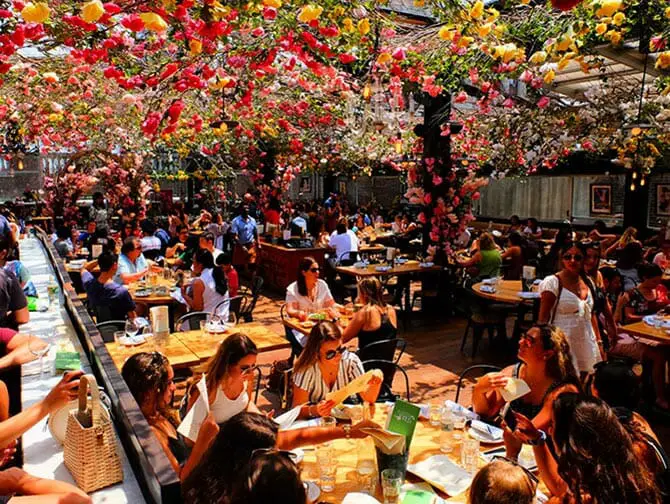
My parents had already finished their anniversary dinner by the time I walked through the door.
Mom looked up first. She smiled — that soft, practiced smile she always used right before asking for something impossible.
“Oh, you’re late,” she said. “Cover the bill, will you?”
Tiffany laughed without even looking up from her phone. “Still as clueless as ever.”
I stood there holding a gift bag I’d spent three months putting together, and I realized something that made my stomach drop straight through the floor.
I hadn’t been invited to celebrate anything.
I’d been invited exactly when the meal was ending.
My name is Melody Carter. I’m thirty years old. I live in a quiet apartment building downtown, the kind with black fire escapes and a little American flag hanging in the lobby every summer. That night, I walked into Livetta — the most expensive Italian place in the city, the one you need weeks to get a reservation for — carrying a leather photo album I’d spent months restoring for my parents’ thirty-fifth anniversary.
I was fifteen minutes late. I’d texted them. A work meeting ran long, I said, please order appetizers without me, I’m so sorry, I’m coming.
Forty-five minutes later, I walked in to find the table already cleared.
Empty dessert bowls. Scraped clean. Espresso cups drained. A half-empty bottle of red wine sitting by my father’s elbow. Crumpled napkins tossed across the tablecloth like nobody had bothered thinking about who might still be arriving.
There was no plate at my seat. No water glass. No menu.
Just a black leather folder sitting exactly where my dinner should have been.
The check.
“You don’t mind covering the bill, right, Melody?” Mom asked, like she was asking me to pass the salt.
I stood there in the middle of that candlelit restaurant, soft jazz drifting over from the speakers, and I finally understood something that had been sitting underneath the surface of my whole life.
I wasn’t family to them. I was funding.
To understand how I ended up standing in that restaurant holding a gift nobody would thank me for, you have to go back to when I was seven years old, because that’s when the roles got handed out. In every family, somebody becomes the star. Somebody becomes the trouble. And somebody — usually the quiet one — becomes the background noise everyone forgets to notice.
That was me.
“Melody is such a breeze,” my mother used to tell her friends, patting my head like I was a well-behaved dog. “I never have to worry about her. She just takes care of herself.”
I thought that was praise. I was seven. I thought needing less made me good.
My sister Tiffany was two years older, louder, prettier, and impossible to ignore. If she had a bad day at school, the whole house changed weather. If she cried, dinner got cold while everyone rushed to comfort her. If she wanted a toy, my parents drove to three stores to find the right one.
If I was hungry, I made myself a sandwich. If I scraped my knee, I bandaged it myself in the bathroom. I thought I was helping. I didn’t realize I was training them to stop looking at me at all.
By sixteen, the pattern was locked in stone. I asked for one small thing on my birthday — pizza, a grocery store cake, four of us in one room. Three days before, Tiffany got dumped by her boyfriend after football practice, and the entire house declared a state of emergency. My mother held cold towels to her swollen eyes. My father drove around town hunting down her favorite ice cream flavor.
My birthday came and went. Nobody mentioned it. I sat alone on the porch eating a gas station cupcake with blue frosting and a plastic ring stuck in the top, and I told myself: they have a lot on their plate.
I said that sentence to myself for the next fifteen years.
By the time I graduated college, the pattern had shifted from emotional to financial. I was good with numbers — clean, orderly, satisfying. I landed a job in data analysis right out of school. Not flashy work, but it paid well, and I was careful. I saved. I invested. By twenty-five I was comfortable.
Tiffany, meanwhile, was “finding herself.” Acting, fashion design, influencing — she tried them all, moved back home each time and called it temporary. My parents covered her car, her phone, her credit cards, every new dream she announced with total confidence and zero follow-through.
The first time I gave my parents money, it felt good. Mom called sounding frantic — the electric bill was due, Dad’s paycheck hadn’t cleared. Could I spot them two hundred dollars?
“Of course,” I said, and felt proud. Finally, something to offer.
“You’re such a lifesaver, Melody,” Mom said. “Thank goodness you’re so responsible.”
That praise was a drug. It was one of the only times they ever looked at me like I mattered.
So it happened again the next month. And the month after that. The amounts crept up. Electricity. A car repair. An apartment deposit for Tiffany’s “big move out.” Groceries before a family party. I paid all of it, and somewhere along the way I started lying about my own life to keep the peace — because if they knew how much I actually made, they’d ask for more.
To my family, I wasn’t a senior data analyst downtown. I was a clerk. I drove an old sedan I could’ve traded in years ago. I wore plain clothes to dinners and never mentioned bonuses or my investment account, because I was terrified that if they knew the truth, they’d stop seeing me as a daughter and start seeing me strictly as a bank account.
Deep down, I think I already knew. I just didn’t want to say it out loud.
The easy child had become the convenient adult. I was the safety net. As long as I kept quiet and opened my wallet, I got to sit at the table.
Family dinners became a ritual over the next five years — but not the warm, chaotic kind you picture. Ours weren’t casseroles in a kitchen or Sunday meals with too many stories. Ours were transactions.
The pattern never varied. A text from Mom: Family dinner Friday. 7:00. Always somewhere expensive — a steakhouse, a French bistro, valet parking, appetizers that cost more than a week of my old groceries. They never asked if I was free. They never asked if I could afford it. They just assumed.
I’d arrive to find them already seated, already ordering drinks. My father studying the menu out loud: “I think I’ll do the ribeye. Maybe lobster tail on the side.” My mother waving over the waiter for the calamari, the shrimp cocktail, the cheese board — “just something small.” Tiffany ordering the priciest thing on the menu, taking three bites, pushing it away, complaining her martini was mixed wrong.
I drank tap water. I ordered the cheapest pasta. I did math in my head while they talked over me about neighbors I barely knew, Dad’s golf game, Tiffany’s latest crisis. If I mentioned anything about my week, I got three seconds and a “that’s nice, honey” before someone changed the subject to the calamari arriving.
At the end of the night, the black leather folder always showed up like a curtain call. My father would pat his jacket. “Oh, shoot — think I left my wallet in the other coat.” My mother would look at me with big innocent eyes. “Melody, do you have this? We’ll get the next one.”
There was never a next one.
I paid, every single time, and told myself I was being generous. I told myself I was lucky I could afford it. What I never let myself admit was that it wasn’t generosity — it was a pattern, and I was the ATM with a pulse.
Six months before that anniversary dinner, we went out for my father’s birthday. I paid nearly six hundred dollars. Walking to the parking lot after, Dad put his arm around Tiffany. “Great dinner, sweetie. Thanks for coming.” He never looked at me. Never thanked me for the food.
I cried so hard on the drive home I had to pull over on the highway. I sat there in the dark with headlights sweeping past and screamed without making a sound. That was the first crack.
So when the anniversary invitation came, I told myself it would be different. Thirty-five years deserved something real. I’d found a box of old photos in their attic months earlier, scanned them secretly, hired someone to restore the damaged ones, and built a leather-bound photo book — their wedding, their first apartment, Dad’s ridiculous mustache beside a red pickup, Mom holding baby Tiffany, me in a tiny yellow raincoat on the porch of our old house.
I thought maybe, just this once, we could talk about memories instead of money.
I texted them I’d be fifteen minutes late. I rushed home from work, changed, grabbed the gift, drove across town checking my watch at every red light.
By the time I got there, it was 7:45. The table had already been cleared. Empty bowls, drained espresso cups, a half-finished wine bottle. They’d eaten a full dinner and dessert and coffee in forty-five minutes — either racing through the meal or starting long before the time they’d given me.
“Oh, look who decided to show up,” my father said. Bored, not angry.
“I’m so sorry,” I said, gripping the gift bag. “Traffic was terrible—”
“It’s fine, Melody,” Mom said, dabbing her mouth with a napkin. “We were starving, so we went ahead.”
No one asked if I’d eaten. No one offered a menu. Just the black folder, sitting where my plate should have been.
“You don’t mind covering the bill, right?” Mom asked, light as air.
Tiffany smirked at her phone screen, fixing her lipstick. “Relax, Mel. You’re always good at this.”
“Besides,” Dad said, not even glancing my way, “I forgot my card.”
“Again,” I whispered.
“Don’t be petty,” Tiffany snapped, finally looking up. “It’s their anniversary. Don’t ruin it.”
I looked at the three of them. My father, who taught me to ride a bike, picking his teeth and avoiding my eyes. My mother, whose approval I’d chased my whole life, smiling expectantly at my purse. My sister, bored by my humiliation.
I opened the folder. $485.50.
Something clicked in my chest. Not loud. Not dramatic. Just a lock turning shut.
“Sure,” I said. My voice sounded strange even to me. Calm. Almost mechanical. “I’ll take care of it.”
I handed the waiter my card, but I didn’t sit down. When he came back with the receipt, I signed it, folded my copy, and slid it into my pocket. I placed the gift bag on the table without a word.
“Happy anniversary,” I said, and walked out. I heard them tearing into the bag as I left. Nobody said thank you for dinner.
The drive home was silent. I didn’t cry. I didn’t scream. Something colder had taken over — the data analyst in me, wanting numbers instead of feelings.
Caleb, my boyfriend, was reading on the couch when I got home. He took one look at my face and stood up. “What happened?”
“They ate without me. Stuck me with the bill. I paid it.”
He went very still. He’d hated this for years, always told me to stop, but he never pushed harder than that. He knew I had to get there myself.
“I need to work,” I said, and went to my office. I opened my laptop and made a spreadsheet.
I named it Family Tax.
I went through five years of bank statements. Dinners. Tiffany’s bills. Emergency loans. Group vacations I’d quietly bankrolled. Line by line, I typed it all in.
June 12. $120. Mom’s birthday lunch, where she criticized my hair the entire meal.
August 4. $350. Tiffany’s concert tickets — for her and a friend. She never even invited me.
Two thousand for a car repair. Eight hundred for dental work. Fifteen hundred Dad borrowed for a business idea that never became a business. Countless four-hundred-dollar dinners.
Then the final entry: $485.50.
I hit the sum button.
$62,450.
I stared at the number until it stopped looking like numbers at all. That was a house down payment. A master’s degree. A wedding.
Caleb had walked in quietly behind me and let out a low whistle. “Melody.”
“I basically bought them a luxury car,” I whispered. “Piece by piece.”
“And what did you get in return?” he asked. Not cruel. Just honest.
I thought about it. Love? No. Respect? No. I got ignored. I got used. I got to be a background character in their lives while I financed the whole show.
“Do you want this to keep going?” Caleb asked. “In another five years it’s over a hundred thousand. Is that the life you want?”
“No,” I said, and for the first time, the guilt was gone.
“How do you want to do this?” he asked. “Tell them?”
“No. That gives them power. They’ll cry, they’ll call me ungrateful, Tiffany will scream. I’m not announcing anything. I’m just going to stop.”
“Cold turkey?”
“Cold turkey,” I said. “I’ll accept the next invitation. But the bank is closed.”
That night, we ordered cheap pepperoni pizza and ate it on the living room floor. It cost twenty dollars. It tasted better than anything I’d ever paid five hundred for at Livetta.
The next morning, I woke up with a strange quiet inside me — no guilt hangover, none of the usual replaying of every word I’d said. Just silence. I picked up my phone out of habit, saw the family group chat lit up with complaints about tiredness and headaches, and for the first time in years, I closed the app without typing a single word.
The following days tested me more than I expected. Monday, Mom texted asking me to explain an insurance document for Dad — normally my job, the family translator of anything complicated. I replied after work: I’m swamped this week. I think it explains it on page three. Polite. Direct. A no.
Her reply dripped with passive aggression: Oh, okay. I guess I’ll try to figure it out.
By week two, Tiffany reached out privately. My hours got cut. Can I borrow $300? I’ll pay you back next week.
She never paid anyone back. Not once, not ever. I typed: I can’t right now, Tiff. My budget is tight.
Seriously? You have a huge salary. Don’t be a jerk. Then: Mom said you guys went to the movies last weekend.
They were tracking me. Measuring my spending against their needs. I sent one line back — I can’t help this month — and got a row of angry emojis in response.
I sat shaking on the couch that night. “Is this mean?” I asked Caleb. “What if she really needs it?”
“She lives with your parents, Mel,” he said. “She’s not getting evicted. She wants weekend spending money.” He was right. I knew he was right. But breaking a lifelong habit felt like breaking a bone.
The next invitation came exactly two weeks after the anniversary disaster. Family dinner Friday, Mom texted. We missed you. Then Dad: Let’s go to the Blue Pearl. Craving oysters. Then Tiffany: Yes, I need a celebration drink.
The Blue Pearl. Waterfront views, white linens, an appetizer tower alone running eighty dollars. This was the test — whether the ATM was back in service.
“I’m going,” I told Caleb. “But I need a plan.”
I didn’t dress down this time, the way I usually did to look poor, to look small. I pulled out a black blazer, tailored jeans, a silk blouse, red lipstick. I rehearsed the moment in my head for two days. Separate checks, please. I won’t be paying for the table. No.
Friday night, I parked in the self-parking lot two blocks away instead of paying for valet, and walked in against the wind. Inside, the whole family had already started without me — a seafood tower three tiers high, champagne popped and chilling in a silver bucket.
“There she is!” Dad shouted, crab leg in hand. “We thought you got lost.”
“Traffic,” I said, and sat down without apologizing.
“We ordered some appetizers,” Mom said, waving at the tower. “Dig in.”
“And another bottle,” Tiffany added, taking a selfie with an oyster.
The waiter appeared. “Can I get you a glass of champagne?”
“No, thank you,” I said clearly. “I’ll stick to iced tea.”
Mom frowned. “Oh, come on, Melody. It’s a celebration.”
“I’m driving,” I said. “Just iced tea.”
When it came to ordering, I asked for the house garden salad with grilled chicken. Tiffany laughed. “A salad? Mel, this is the Blue Pearl. Live a little.”
“I’m fine with the salad,” I said.
Dad ordered the largest lobster on the menu with surf and turf. Mom got scallops and truffle fries. Tiffany got lobster risotto and another round of oysters. They ordered with total abandon — spending money they clearly believed would disappear the moment the check arrived, because I always made it disappear.
Not tonight.
Dinner dragged on for two hours. They talked over me, complained about gas prices while cutting into steaks that cost more than some people’s groceries, whined about rent while sipping twenty-dollar wine. I ate my salad slowly and said almost nothing. For the first time, I really watched them. They weren’t monsters. They were spoiled. And I’d helped spoil them.
Finally the black folder arrived. The air changed instantly. My father started patting his pockets, looking at the ceiling. “Boy, I’m stuffed.”
My mother nudged the folder one inch toward me. “Melody, thank you for coming out. It’s so nice to have the family together.”
Tiffany checked her makeup in a compact, not even worried.
I picked up the folder. Total: $845.50.
I reached into my pocket instead of my wallet. I pulled out a twenty and a five, laid the cash on top of the receipt, and slid the folder back toward the center of the table. Toward Dad.
“Here’s twenty-five dollars,” I said, steady, though it felt loud in that quiet room. “That covers my salad, my iced tea, and a generous tip.”
My mother’s hand froze on her purse strap. Tiffany snapped her compact shut. Dad stared at the check, then at me.
“What?” He laughed nervously. “What is this?”
“My payment,” I said. “For what I ate.”
“Melody, stop joking,” Mom whispered. “People are watching.”
“I’m not joking. I’m not paying for the lobster. I didn’t order the champagne. I didn’t eat it.”
“But we didn’t plan for this,” she stammered.
“I know,” I said. “You planned for me.”
I stood up and waved the waiter over. “Excuse me. I just want to be clear — I’ve paid for my meal in cash. I’m not responsible for the rest of this bill. Please don’t charge any card you might have on file for me.”
“Of course not, ma’am,” he said, then turned to my parents. “How will you be settling the balance?”
The silence at the table was total. My father’s face went red. “Melody,” he hissed. “Sit down now.”
“No,” I said.
“You can’t do this,” Tiffany snapped. “You can’t invite us out and stick us with the bill.”
“I didn’t invite you,” I said calmly. “Mom sent the text. Dad chose the restaurant. You ordered the champagne. I just attended.”
“It’s eight hundred dollars,” Dad said, loud enough that people at the next table turned to look. Mom shrank into her scarf, hating the scene more than anything.
“I don’t have eight hundred dollars,” Dad snapped, pointing a shaking finger at me. “You know things are tight. You know I’m waiting on my commission.”
“I know,” I said. “So why’d you order the surf and turf? Why the second bottle of wine?”
“Because we were celebrating. We thought you were handling it. That’s what you do.”
“That’s what I did,” I said. “Past tense.”
The manager arrived — tall, in a dark suit, the kind of face that had seen every version of restaurant drama except maybe this quiet one.
“Is there a problem?”
“There’s a misunderstanding about the bill,” Dad said.
“There’s no misunderstanding,” I told the manager. “I paid for my portion. My family seems to be having trouble covering theirs.”
Mom’s eyes filled with real tears. “Melody, please. Just pay it this one last time. We’ll pay you back. I swear.”
I looked at her — the woman whose approval I’d chased my whole life. I loved her. I really did. But enabling her wasn’t love. It was poison. If I paid this bill, nothing would ever change. We’d be right back here next month.
“No, Mom,” I said softly. “I can’t.”
Dad pulled a worn credit card from his wallet and handed it to the manager. “Try this.”
The minutes waiting felt endless. Tiffany texted furiously. Mom stared out the window. Dad wiped sweat from his forehead.
The manager came back. “I’m sorry, sir. The card was declined.”
Dad closed his eyes. “Declined? That’s impossible.”
“Try the Visa,” Mom said, digging in her purse. “The emergency one.”
“This isn’t an emergency, Helen,” Dad snapped. “This is dinner.”
“Just give it to him.”
Another agonizing wait. Tiffany glared at me. “I hope you’re happy. You’re humiliating Dad.”
“I’m not the one who ordered oysters, Tiffany.”
“You’re unbelievable.”
“You’re thirty-two,” I said. “Maybe you should have a card that works.”
The manager returned. “That one was approved.” The relief at the table wasn’t warm — it was the relief of surviving a crash, not avoiding one.
Dad signed without leaving a tip. “We’re leaving,” he said, standing abruptly. “Don’t follow us.”
“I won’t,” I said.
Through the window, I watched them argue with the valet over a twenty-dollar fee, watched Tiffany cross her arms and turn away from Mom. I stood alone in the middle of that restaurant feeling nauseous, and then — strangely — not.
I found the manager on my way out. “I’m sorry about the scene.”
“It happens,” he said, giving me a knowing look. “Family is complicated.”
“Yes,” I said. “But mine just got a lot simpler.”
I walked two blocks to my car, got in, locked the doors, and let out one loud, raw scream of pure release. Then I drove home.
By the time I got there, I had twelve missed calls. Seven from Mom. Three from Dad. Two from Tiffany.
Caleb was waiting with a glass of wine. “You’re alive,” he said.
“I did it. Dad had to use the emergency card.”
“How was it?”
“Awful,” I admitted. “And amazing.”
The texts kept coming. Tiffany: You are dead to me. Do you know how embarrassed I was? Mom: I don’t know who you are anymore. The Melody I raised was kind. Money has changed you.
I laughed at that one. Money hadn’t changed me. Their need for my money had shaped my whole life until now.
I didn’t reply to any of them. I set one rule: I will not engage with insults.
The weeks that followed were a slow, quiet revelation. Without my financial buffer, reality started catching up to them fast. My aunt Sarah mentioned Dad tried returning a luxury grill he’d bought the month before but couldn’t find the receipt. Tiffany started posting on Facebook — closet cleanout, DM for prices — designer bags with sparkle emojis and quiet panic underneath.
Mom called a week later, voice trembling. “Your father is so stressed. His blood pressure is up. If you could just help with half, just this once—”
It was a trap. If I paid half, I was admitting fault. “I can’t, Mom,” I said. “I have my own bills. Dad needs to budget better. Maybe sell the boat he never uses.”
“How can you be so heartless?”
“It’s not heartless,” I said. “It’s math.” And I hung up.
Tiffany’s shopping sprees vanished from social media. My parents stopped hosting their lavish backyard parties. It was strange, watching a small kingdom quietly crumble because the treasury had finally locked.
But in the middle of their chaos, my own life started to open up. At the end of that first month, I checked my bank account — usually I had two hundred dollars left after the family tax. This month: $2,400.
“Caleb,” I called. “Look at this.”
He smiled. “That’s Italy money.”
“That’s house money,” I said.
We booked a weekend at a mountain cabin. Just us. Hiked, cooked cheap pasta, drank wine by the fire. Didn’t check my phone for three days. I realized I’d spent ten years hiking uphill with my family strapped to my back like a bag of rocks. Now that I’d set them down, I could finally breathe.
There was grief in it too. I mourned the family I’d wanted — the one that would love me just for showing up. But I loved who I was. Caleb loved who I was. That had to be enough.
A month after the Blue Pearl, my phone rang. Dad.
“Melody,” he said, gruff but not angry. Tired. “Your mother and I are selling the boat.”
“Oh?”
“Costs too much to dock. We don’t use it. We’re having a garage sale next weekend too. Get rid of some junk.”
He didn’t ask for money. He wasn’t asking for anything. He was just telling me about a decision he’d made on his own.
“Good luck with the sale,” I said.
“Thanks,” he said. “Talk later.” And hung up.
It wasn’t an apology. He’d probably never give me one. But it was something. It was independence.
Six months have passed since that night at the Blue Pearl. My life looks completely different now — quieter, but real. I still see my family, but on my terms. We don’t do restaurant dinners anymore. I told them simply I was saving for a house, so I wasn’t eating out. They couldn’t argue, because they couldn’t afford to treat me, and they knew by now I wouldn’t treat them either.
Now we do coffee. A small café near a park — I buy my own latte, they buy theirs. We talk about the weather, TV shows, safe little things that don’t require anyone bleeding money to prove love. When Tiffany got a real job as a receptionist, she told me with quiet pride: “It’s boring, but the paycheck is steady.” She bought herself a donut to celebrate. She didn’t ask me to buy her a drink.
By cutting them off, I’d actually helped them. My father is managing his debt. My mother is learning to cook instead of ordering out. Tiffany knows what a paycheck feels like when it’s actually hers. They didn’t fall apart without my money. They became normal people.
Caleb and I bought a house last week. Small, with a big backyard and a porch, an American flag mounted by the front steps because Caleb insisted every house with a porch needs one, and for once I didn’t argue. When we signed the papers, the loan officer looked at our down payment. “This is substantial. You two have been saving well.”
I squeezed Caleb’s hand. “We stopped spending on things that didn’t matter.”
Yesterday, cleaning out my old desk before the move, I found the black leather folder from the Blue Pearl at the bottom of a drawer, tucked under old notebooks. I must have taken it by accident that night, or kept the receipt without thinking.
I opened it. The total was still there. $845.50. The lobster. The champagne. The oysters. All the greed, printed neatly on a slip of paper.
I took a lighter out to the balcony. The city moved below — cars, a dog barking somewhere, music drifting through an open window. I held the receipt over an old ashtray and lit it. Watched it curl and darken. Watched the numbers disappear into smoke.
I blew the ash into the wind and went back inside, where Caleb was taping up a box marked Kitchen.
“Ready?” he asked.
“Ready,” I said, and picked up a marker to label the next one.
Melody’s Office.
I’m not the victim anymore. I’m not the ATM. I’m not the easy one.
I’m Melody. And for the first time in my life, I’m free.
If you’ve ever felt that heavy knot in your stomach when your phone buzzes, if you’ve ever paid the bill just to keep the peace — here’s what I’ve learned. Peace you have to buy isn’t peace. It’s a subscription. And you’re allowed to cancel it.
You can love your family and still say no. You can be a good daughter and still keep your own money. You can walk away from the table.
Because the only people who get angry when you finally set a boundary are the ones who were benefiting from you never having one.
I canceled my subscription. And the music of my life has never sounded sweeter.

Lila Hart is a dedicated Digital Archivist and Research Specialist with a keen eye for preserving and curating meaningful content. At TheArchivists, she specializes in organizing and managing digital archives, ensuring that valuable stories and historical moments are accessible for generations to come.
Lila earned her degree in History and Archival Studies from the University of Edinburgh, where she cultivated her passion for documenting the past and preserving cultural heritage. Her expertise lies in combining traditional archival techniques with modern digital tools, allowing her to create comprehensive and engaging collections that resonate with audiences worldwide.
At TheArchivists, Lila is known for her meticulous attention to detail and her ability to uncover hidden gems within extensive archives. Her work is praised for its depth, authenticity, and contribution to the preservation of knowledge in the digital age.
Driven by a commitment to preserving stories that matter, Lila is passionate about exploring the intersection of history and technology. Her goal is to ensure that every piece of content she handles reflects the richness of human experiences and remains a source of inspiration for years to come.