My mother spent seven years praying to my dead sister. Every morning, before coffee, before the local news, before she opened the curtains in our little house outside Asheville, North Carolina, she would stand in front of the framed photograph on the hallway table and whisper the same thing. Good morning, Valeria. Then she would touch two fingers to the glass, as if my sister could feel her through the frame.
The photo had been taken the summer before Valeria vanished. She was twenty two, wearing a yellow sundress, standing barefoot on the dock at Lake Junaluska with her hair blowing across her face and her smile aimed at something just outside the picture. My father had taken it. He used to say it was the best photograph he ever made.
For seven years, that picture became the center of our house. My mother kept fresh flowers beside it every Sunday. She lit a small candle on Valeria’s birthday. She spoke to it when she was folding laundry, when she was too tired to cook, when rain hit the roof hard enough to make the house sound empty. Sometimes I caught her apologizing. I should have called you that night. I should have known. I’m sorry, baby.
The urn sat beneath the table in a white marble box my father bought from a funeral home in Hendersonville. My mother never liked it. She said it felt too polished, too cold, too final. But she still dusted it every Friday with the same care she gave the little porcelain angels around it.
My father did not pray to Valeria. He tolerated the shrine, that was the word he used when he thought my mother could not hear him. You’re keeping yourself trapped, Nora, he would say. That shrine is not healthy. My mother would lower her eyes and say nothing. She had become smaller after Valeria died, not physically, exactly, though grief had thinned her face and turned the soft brown of her hair into gray almost overnight. She became smaller in the way she moved through the house, careful not to make noise, careful not to upset my father, careful not to ask questions that made him sigh.
I was twenty six when Valeria disappeared and thirty three when I saw her alive on national television. Even now, I can remember every ordinary detail of that evening because ordinary things have a way of becoming cruel when they stand next to the impossible.
It was Tuesday. My mother had made chicken soup because rain was coming down in sheets and her knees ached when the weather changed. My father was not home yet. He had called earlier and said he had a meeting in Charlotte that was running late. That was normal. My father always had meetings. He owned a chain of small logistics companies across the Carolinas, offices near Spartanburg, Raleigh, Knoxville, and Atlanta. He wore pressed shirts, kept two phones, and smelled faintly of cedar cologne and airport coffee. People in town respected him. He donated to the church roof fund. He sponsored the sheriff’s youth baseball team. If a man smiles beside the mayor at the Fourth of July pancake breakfast often enough, people stop wondering what he does when nobody is watching.
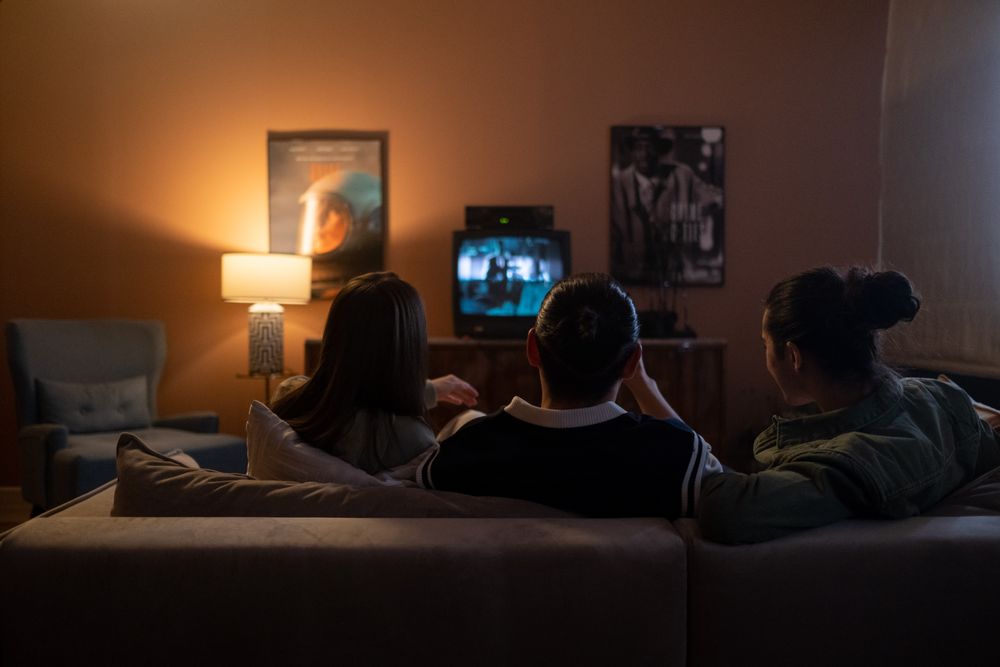
That night, my mother and I ate in the living room because the kitchen felt cold. She liked watching the six o’clock news, mostly for the weather. A breaking news banner flashed across the screen, and at first I barely looked up. Then the anchor said a sentence that made my mother’s spoon fall into her bowl.
A woman rescued during a federal operation near the Tennessee border has identified herself as Valeria Whitmore, a North Carolina woman believed to have died seven years ago.
The room went silent in a way I had never heard before. Not quiet. Silent. Like the house itself had stopped breathing.
The screen changed to a hospital hallway. Cameras crowded around two federal agents and a woman in a navy sweatshirt with a blanket around her shoulders. At first I did not recognize her. She was too thin, her hair shorter than it had been, her cheeks hollow. But then she turned her head slightly, and I saw the small crescent scar near her eyebrow from when she fell off my bike at age nine.
My mother made a sound I had only heard once before, the day the police came to our house with the news that Valeria was gone.
My name is Valeria Whitmore, the woman on the television said, her voice rough but hers, older, broken in places, alive. I was not missing. I was held. The man who did this to me is my father, Raymond Whitmore.
The station cut to a photograph of the suspect. My father’s face filled the screen, the same face from church directories and charity dinners, the same gentle smile, the same man who had held my mother at Valeria’s memorial service and told everyone he wished God had taken him instead.
My mother stood up too fast, her hand went to her chest, and she collapsed onto the living room floor.
For several seconds I could not move. The television kept talking. Rain hammered against the windows. Then I dropped to my knees and called 911, fumbling through everything I had ever learned about fainting and shock, while my whole life rearranged itself around a single fact. My sister was alive. My father was a monster.
My phone buzzed. Unknown number. I answered without thinking, and there was static, then a woman’s voice, faint and trembling. Daniel? Nobody had called me Danny since Valeria disappeared. Val, I whispered. Don’t trust Dad, she said. I stood there with my mother unconscious on the floor and the television still flashing my father’s photograph. Where are you, I whispered. I can’t stay on, she said. They’re moving me. Listen to me. The grave is not mine. Mom knew something was wrong. He made everyone stop asking. Trust Mom. Only Mom. He kept everything in the places nobody remembered. He’s coming home. The line went dead.
My father walked in six minutes later, rain shining on his coat and concern arranged perfectly on his face. What happened, he demanded, rushing to my mother’s side. For thirty three years I had believed every version of that man, the patient father, the proud businessman, the grieving parent who said no father should ever bury his child. That night, watching him kneel beside my mother and stroke her hair, I saw the performance inside the tenderness for the first time.
I don’t know, I told him. The news came on. They said Valeria’s name. Mom passed out. He froze for less than a second, a pause most people would not have caught, but I was watching him the way a drowning man watches the shore. That’s impossible, he said. That’s sick. Who would do something like that? They showed your picture, I said. He looked wounded, not angry first, wounded, which was what made him so convincing. My God, he whispered. Daniel, you know me. That was the problem. I thought I did.
The paramedics only had room for one family member, and when my father looked at me expecting me to step back, I did not. I’ll go, I said. His face hardened for a fraction of a second before he recovered. Of course, he said, kissing my mother’s forehead. Call me from the hospital. I’m going to find out what kind of circus this is.
At Mission Hospital, my mother woke just after midnight. Valeria, she whispered. I told her, she’s alive, Mom. Her face crumpled but no tears came. Your father, she asked. He left, I said. He said he was going to speak to the police. She closed her eyes. I knew, she said, so softly I thought I had imagined it. I didn’t know she was alive. God forgive me. But I knew something was wrong.
She gripped my hand. The night they found the remains, they wouldn’t let me see her. They said there was nothing to see, that it would be better if I remembered her as she was. Your father kept saying, Nora, don’t torture yourself. I asked for a second test. He told me I was having a breakdown. Our lawyer stopped returning my calls. When I pushed, he hired someone else and told me reopening the case would destroy us. I let him convince me that grief was making me irrational.
She told me Valeria had come to her two days before she vanished, upset, asking where Dad kept the old company records, and had said something strange. Mom, if something happens, don’t let Dad explain it for me. My mother had gotten angry and told her not to be dramatic. That was the last real conversation I had with my daughter, she said.
I told her Valeria had called me. I showed her the unknown number and repeated everything Valeria had said. Don’t trust Dad. The grave is not mine. He kept everything in the places nobody remembered. Trust Mom. Only Mom. My mother went still. The places nobody remembered, she repeated, and then something old moved behind her grief, memory, fear, recognition. My father’s house, she said.
My grandfather, Eli Mercer, had owned a small vacation house outside Asheville where cell service disappeared past a certain bend in the road. Valeria and I had called it the fern house as kids. After my grandfather died, nobody used it, the property having been folded into one of his old companies and forgotten. My father hated the place, said it smelled like mildew and bad memories. Valeria loved it. She always said that was where people forgot to look.
At 3:17 in the morning my phone buzzed with a text from the unknown number, an address, and one line. Come alone. Trust only Mom. My mother read it twice. That’s the house, she said. We need to call the police, I said. No, she said, gripping my wrist. Not yet. She said if my father still had people inside the police department, inside the district attorney’s office, we could not risk it. Somebody helped him bury my child while she was still breathing, she said, and the words, which should have sounded impossible, did not, not anymore.
She called an old friend, Margaret Sloane, who worked, or had worked, at the district attorney’s office. Margaret answered half asleep and alarmed. My mother told her Valeria was alive, that my father was involved. I know, Margaret said. Years ago, after you stopped calling, I pulled what I could. The file had missing pages, substituted pages, a chain of custody that made no sense. I tried to flag it and was told to stop digging unless I wanted to lose my job. I’m ashamed of that, but I kept copies of what I could. If Valeria has evidence, protect it properly. Don’t give it to anyone random. Take Daniel. Keep your phones on. Don’t call Raymond. I’ll start making calls to federal people, quietly.
The nurse wanted to keep my mother for observation. She signed herself out against medical advice with a calm that frightened me more than panic would have. Outside, the rain had slowed to a mist, and we drove through a washed clean, unfamiliar Asheville before dawn, past the grocery store where Valeria had worked one summer, past the church where people had lined up after her memorial to tell my mother she was in a better place. Your father chose the hymns, my mother said at one point. I was too sedated to think. He chose everything. He buried an empty story and made me decorate it.
The old vacation house sat at the end of a gravel road bordered by dripping rhododendrons. Dawn had begun to lighten the sky but the house still looked like part of the dark, its white paint peeling, its porch sagging. The front door was unlocked. I stepped in first holding a tire iron from the trunk, the only weapon I could find. We moved room by room, kitchen empty, living room empty, small bedroom empty, every sound making me flinch.
On the dining room table sat a manila folder with my name written on it, three notebooks, and four USB drives arranged in a neat row. Inside were photographs, bank statements, deeds, corporate records, and a note in Valeria’s handwriting. If I don’t make it, take this to Margaret Sloane. Not Dad. Not local police. Margaret first.
Then a floorboard creaked above us. A woman stood at the top of the stairs, wrapped in an oversized gray cardigan, her hair uneven and cut short, her face thinner than any memory I had of her, but her eyes were the same, dark, watchful. My mother took one step forward. Val, she said. My sister’s mouth trembled. Hi, Mom.
The sound my mother made was not a cry, not a scream. It was grief reversing direction so violently it tore through her body. She climbed the stairs with both hands on the railing, and Valeria came down at the same time, meeting her halfway. My mother touched her face, her cheeks, her hair, her shoulders, like she had to prove bone by bone that this was not another lie. Then she pulled Valeria into her arms. For seven years my mother had held a marble box. Now she held her child. I stood at the bottom of the stairs with the tire iron hanging uselessly from my hand and cried harder than I had at the funeral.
When I hugged her she stiffened first, then slowly, painfully, let herself lean into me. I’m sorry, she said, and I almost laughed because the words were so wrong. You’re sorry? I left you with him, she said. You survived him, I told her, and her face broke, and that was when I understood that survival was not the clean, triumphant thing people like to imagine. It arrived shaking, exhausted, suspicious of every closed door.
We sat around the dining table as daylight filled the dirty windows. Valeria kept her back to the wall. My mother noticed and quietly moved her own chair so she could see both doors, a tiny act that undid me completely, because even after seven years of mourning, my mother still knew how to become someone’s shelter.
I don’t have much before people start looking, Valeria said. Who, I asked. Dad’s people. Maybe federal agents who are supposed to be protecting me. I don’t know yet. I escaped from one cage. I’m not sure how many more are around it.
She told us the night she disappeared had started with a fight in our father’s office. She had been helping with accounts that summer, fresh out of UNC Asheville with a business degree, and had noticed odd transfers, small amounts broken into pieces, payments to vendors that existed only on paper, freight invoices for routes never driven, warehouses rented under one company and paid for by another. She asked questions. He gave too many answers, which was what made her suspicious. She began copying files onto flash drives, searching county records, finding companies registered under our grandfather’s name, then under dead relatives, then under names she did not recognize at all, tied to properties across North Carolina, Tennessee, and Georgia, some used for storage, some for money, some, though she did not understand it then, for people.
She told Dad she was going to report it. He didn’t yell, she said. That was the worst part. He smiled like I had disappointed him at dinner. He said, you have no idea what you’re touching. When she said she knew enough, he told her Mom would lose the house, I would lose my job, everything he built would crush us on the way down. She went home shaken but determined to tell our mother the next morning, but Dad was waiting before dawn, said he wanted to talk somewhere private. I thought maybe he was ready to confess, she said. I was stupid. You weren’t stupid, I said. I got in the car, she said.
He drove her to a company warehouse outside Hendersonville, where two men were waiting, one a security contractor Dad used at business events. They took her phone and purse. He told her she had forced his hand, that he was not going to let one emotional girl destroy thirty years of work. He had already sent texts from her phone making it look like she had gone hiking, then like something terrible had happened. I remembered the search, the volunteers, the flyers, my father crying on television. He practiced, Valeria said flatly.
The remains found nine days later in a mountain ravine were not Valeria’s. They belonged to a woman missing nearly a year, poor, with no powerful family pushing for answers, her disappearance never having made the evening news. My father used her twice, Valeria said. Once when nobody cared enough to find her. Again when he needed someone dead in my place. A forensic contractor who owed him money altered the DNA test. The dental comparison was rushed. The chain of custody was broken and repaired on paper. A district attorney facing reelection accepted closure because closure looked better than an open case.
What did he do with you, I asked. He kept me useful, she said, and the phrase sat in the room like a living thing. There were houses, basements, back rooms in rural properties registered under dead companies, a lake cabin in Tennessee, a duplex outside Macon, a farmhouse near the South Carolina line. She was moved whenever someone asked too many questions, her hair cut and dyed, her name changed, sometimes told police were watching, sometimes told our mother had moved on. He never acted like a kidnapper, she said. He acted like a disappointed father.
He needed her alive because he had built part of his financial network using her identity, needing biometric confirmations and signatures from a living person tied to accounts opened before her disappearance. She learned to cooperate enough to stay alive, to hide evidence in places they forgot to check, to notice which guards were cruel and which were careless.
My mother listened with her knuckles white. I prayed at that urn every day, she whispered. And you were somewhere waiting for me. I heard you sometimes, Valeria said. Dad recorded you. Had cameras in the house, not always, but enough, and showed her clips when he wanted her obedient, me crying in the hallway, Mom lighting candles, both of us at Christmas. He said if I tried to run, he would let you suffer for nothing.
My mother stood so abruptly her chair scraped the floor, walked to the sink, gripped the edge, and stared out at the trees. What do we do now, she asked when she turned back. This, Valeria said, opening the folder.
There were years inside it. Bank records showing transfers through shell companies. Property deeds under false names. Audio recordings of my father speaking with lawyers and officials. A ledger in his own handwriting, since he had always distrusted computers and preferred expensive fountain pens. One letter read, Nora knows less than she thinks. Her father’s old holdings remain useful as long as she keeps believing they are sentimental clutter. My grandfather had been a decent man with bad recordkeeping, and my father had married into those loose ends and turned them into hiding places. The betrayal was not only that he had taken Valeria. It was that he had hollowed out our entire family history for profit. I want him buried under every page, my mother said, and I understood then that grief had not made her weak. It had made her slow burning, and now there was air.
We called Margaret from a prepaid phone Valeria had hidden behind a loose kitchen drawer. Margaret cried when she heard Valeria’s voice and gave instructions. We were not to go home, not to contact my father, not to hand evidence to anyone local. She had reached a federal prosecutor in Charlotte and an agent from a financial crimes task force already quietly investigating one of my father’s companies. They didn’t know about Valeria, Margaret said. But they knew the money was wrong.
By noon, unmarked federal cars pulled onto the gravel road. Agent Denise Caldwell, gray haired and practical, did not rush Valeria, asking only whether she wanted medical care first or to secure the evidence first. Evidence, Valeria said. They photographed everything, bagged the notebooks, cloned the drives, recorded her statement at the dining table because she refused to leave until it was properly logged.
At 2:43 that afternoon my father called me. I let it ring out, then he texted. Where are you? Your mother is fragile. Do not let strangers confuse her. This is bigger than you understand. I showed the messages to Agent Caldwell, who read them without expression and said, do not respond. When my mother read the last one she laughed once, with no humor in it. He finally told the truth, she said.
By evening the first warrants were signed federally, and searches hit his house, his office, a warehouse outside Spartanburg, storage units under a defunct construction company my grandfather had opened decades earlier. The news broke that Raymond Whitmore, respected businessman and father of a woman long believed dead, was wanted for questioning in connection with financial crimes, witness concealment, evidence tampering, and falsification of death records. My father disappeared before agents reached him, having built escape routes into his life long before any of us knew we were trapped inside it.
For sixteen days he stayed missing while our old life kept falling apart around us. Reporters camped outside the house. Church ladies left casseroles and whispered. Federal agents moved us to a bland extended stay hotel outside Charlotte. Valeria slept with the bathroom light on. My mother slept in the chair beside her bed. Every few hours I woke thinking I had heard my father’s keys in the hallway.
Valeria gave statements for days, in pieces, because trauma does not tell a story in order. A paper cup made her remember a guard. A certain aftershave made her go pale mid sentence. My mother learned to stop asking what happened next and start asking do you want water, which helped more.
Margaret recovered an archived forensic report stating the remains found seven years earlier could not be identified with certainty due to contamination, a report that had been quietly replaced in the official file by one confirming a positive match. When my mother saw the two versions side by side, she said, I want the name of every person who told me to grieve quietly. The forensic consultant who had signed the altered report, Dr. Alan Price, had supposedly died in a boating accident five years earlier and was found living under another name in Arizona. A fake death connected to a fake death. The headlines wrote themselves, but to my mother it was one more door behind which her daughter had been hidden.
On the seventeenth day, agents found my father at a property outside Roanoke, sitting at a kitchen table with coffee, a packed suitcase, and cash in the pantry. He asked for his lawyer by name. Not his wife. Not his son. Not Valeria. Inside they found forged passports, corporate seals, ledgers, and proof of life photographs, Valeria beside newspapers, signing forms, looking into cameras she had been forced to acknowledge. My mother refused to look at those. I know she lived, she said. I do not need to see how he measured it.
The investigation expanded into a retired deputy, a former records clerk, a private security contractor, the forensic consultant, and two business associates. Watching a report about it one afternoon, Valeria turned down the volume and said, I used to think nobody would believe me. I believe you, my mother said. You believed me too late, Valeria answered, and my mother did not defend herself. Yes, she said. That was the beginning of something honest between them, not easy, honest.
Real life is less generous than reunion stories. Valeria came back alive but not returned. She forgot food in the microwave because sudden beeping made her panic. She kept a notebook of exits. She could not stand locked doors. The first time our mother hummed while cooking, Valeria cried, because a guard at one of the houses had hummed the same hymn. My mother had to learn that love could not be rushed just because grief had waited long enough. I’m not breakable, Valeria snapped once, and my mother stepped back and said, I know, then cried later in the bathroom with the fan running so Valeria would not hear.
I was angry more than anything, at my father, at the officials, at every neighbor who had admired him, at myself, because I had believed him too, had sat across from him at dinners, asked his advice about mortgages, watched football with him while my sister was behind a locked door somewhere. Once, years earlier, I told him I still dreamed she was alive. That’s guilt, son, he said, putting a hand on my shoulder. You have to let her rest. He said that while knowing she could not rest.
The trial crept forward through motions and jurisdiction arguments and expanded charges. My mother learned legal language she never wanted to know, sitting at the kitchen table with reading glasses and colored tabs. Never again, she said once at midnight, will I let someone explain my own life to me.
Valeria began therapy, adopted small routines, morning walks, coffee where the barista didn’t know her story, a phone she kept turned off half the time. One afternoon she asked me to drive her to Lake Junaluska, to the dock from the photograph. This is where people remember me smiling, she said. You were happy that day, I told her. I know, she said. That’s the hard part. Knowing I was happy in pictures taken by a man who was already lying to us. Pictures don’t belong to him just because he held the camera, I said, and after a moment, very slowly, she smiled. Not the old smile. But hers.
The trial began the following spring, courtroom seats filled with reporters and curious locals. Valeria chose to testify. He made me disappear in public, she told us. I want to come back in public. She wore a navy dress and a silver necklace my mother had given her, her hands shaking as she took the oath but her voice holding steady. She told the jury about the warehouse, the threats, the forged death, the houses, the proof of life photographs, the way our father used our mother’s grief as a leash. When the defense suggested trauma had confused her memory, she said, trauma affected many things. It did not affect my ability to recognize my father. When the prosecutor played a recording of his own voice, calm and patient, saying she signs when she understands the alternative, fear works better when it has manners, my mother reached for my hand, and that line destroyed the last polite version of him.
The jury deliberated two days. Guilty, the foreperson read, again and again, each word landing like a door unlocking somewhere deep underground. My mother did not cry until the ninth guilty. Valeria did not cry at all, watching our father the entire time, and when the final verdict came and he turned toward us as if waiting for someone to look away first, none of us did.
At sentencing, my mother stood at the podium and barely looked at her prepared statement. For seven years, she said, I woke up every morning and spoke to my daughter’s photograph because my husband told me she was dead. You did not only steal my daughter’s freedom. You stole our memories, our home, our faith in our own judgment. You made love into a weapon. And still, you failed. Because she came home. Because the truth came home with her. And because the woman you trained to be quiet is no longer praying to a lie.
My father was sentenced to spend the rest of his life behind walls he did not control. No sentence could give back seven years, could return Valeria’s twenties or our mother’s peace or the dignity of Marlene Ortiz, the woman whose remains had been used to bury my sister’s story. But justice does not have to repair everything to matter. Sometimes it matters because it tells the truth where everyone can hear it.
My mother insisted on meeting Marlene’s mother, Rosa, in a quiet room at a funeral home outside Greenville, no cameras, no reporters, just two mothers who had each prayed to an empty place. My mother brought the marble urn. I am sorry, she said. I loved what I thought was inside this. I spoke to her every day. I didn’t know she was yours. Rosa touched the urn and wept quietly. My girl was here, she whispered. Yes, my mother said. And yours was not, Rosa said. No, my mother answered. But because of yours, I kept looking in my heart even when everyone told me to stop. They buried Marlene under her own name on a clear Saturday. Valeria sent white lilies with one line. I am sorry your name was taken too.
Afterward, my mother asked me to take her home, not the hotel, home. Federal agents had cleared the house by then. The hallway shrine remained untouched, the flowers dried, the candle burned to a hard puddle, the urn gone, returned to Marlene’s family. I don’t know who I was praying to, my mother said, standing in front of the photograph. To Valeria, I told her. She wasn’t there, she said. She heard you in the only way she could.
We spent the afternoon undoing the shrine, not erasing Valeria, rescuing her from the lie. We packed the porcelain angels in newspaper, threw away the dried flowers, cleaned the wax from the table. Then my mother opened Valeria’s bedroom, closed for seven years because my father said it helped preserve her memory. Now I understood it had helped preserve his story. When Valeria arrived and stood behind us, she said, I don’t want it like this. This room belongs to a girl who didn’t come home. I came home different. What do you want, my mother asked. Paint, Valeria said, and for the first time since her return she sounded almost practical.
We painted the room a soft green the next week. We moved out the childhood bed, boxed the clothes, kept what she chose. She kept one photograph, not the dock picture, but a smaller one of the two of us muddy in the backyard, holding a crooked snowman, our mother laughing behind us, our father not in the frame because he had been the one taking the picture. I want to remember there was a time before I knew, Valeria said. Was it real, she asked, and the question ached in the room. Some of it was, my mother said. Not him. But us. You and Daniel. Me loving you. That was real.
Months passed. My father’s trial had ended but the legal fallout continued, assets frozen, properties seized, investigations into everyone who had helped him. Valeria kept going to therapy, kept building small routines, and slowly began to laugh again in ways that made me leave the room so she wouldn’t see me cry from happiness.
We eventually returned to the old vacation house one last time, in late spring, when the rhododendrons were blooming and the trees were bright with new leaves. This place saved me, Valeria said, standing in the dining room. It also hid things, I said. So did I, she answered. My mother arrived carrying a small cardboard box of the porcelain angels from the old shrine. Mom, Valeria said, raising an eyebrow. I know, my mother said. They’re awful. Valeria laughed, hard, for the first time in months. What are we doing with them? Getting rid of things that never helped anybody, my mother said, and we boxed them for a church thrift shop down the road. Let somebody else dust them, Valeria said.
Then she walked to the edge of the yard where the ferns had started growing wild again, and my mother stood beside her, and after a while Valeria reached for her hand. My mother took it. They stood like that under the trees, not fixed, not finished, not returned to what they had been. But together. That was the part my father never understood. He thought control was stronger than love because control moves faster. It signs papers, closes files, changes locks, buys silence. Love moves slower. It sits beside a hospital bed. It answers a phone at three in the morning. It believes a shaking voice. It reads every page. It paints walls green. It learns not to touch until invited.
A year after Valeria came home, my mother stopped marking the anniversary of her disappearance and started marking the day she returned instead, not with candles or prayers, but with dinner, chicken soup, because that was what she had made the night the television changed our lives. We sat at the kitchen table while rain tapped the windows. Valeria teased me for chopping carrots too big. My mother burned the rolls. I spilled salt. Nothing was perfect, and perfect would have felt suspicious anyway.
Halfway through dinner, Valeria looked toward the hallway where her photograph used to be. I used to imagine this, she said. What, I asked. Being home and nobody whispering. My mother reached across the table, palm up, and Valeria placed her hand in hers, and no one said anything for a while, because we did not need to.
The house was no longer a museum. It was no longer a shrine. It was no longer my father’s stage. It was just a house in North Carolina on a rainy evening, with soup on the stove, dishes in the sink, and three people learning how to live after the lie finally died. And for the first time in seven years, when my mother closed her eyes before bed, she did not pray to the dead. She whispered down the hallway, to the daughter breathing behind a half open door. Good night, Valeria. And this time, from the room with the green walls, my sister answered. Good night, Mom.

Lila Hart is a dedicated Digital Archivist and Research Specialist with a keen eye for preserving and curating meaningful content. At TheArchivists, she specializes in organizing and managing digital archives, ensuring that valuable stories and historical moments are accessible for generations to come.
Lila earned her degree in History and Archival Studies from the University of Edinburgh, where she cultivated her passion for documenting the past and preserving cultural heritage. Her expertise lies in combining traditional archival techniques with modern digital tools, allowing her to create comprehensive and engaging collections that resonate with audiences worldwide.
At TheArchivists, Lila is known for her meticulous attention to detail and her ability to uncover hidden gems within extensive archives. Her work is praised for its depth, authenticity, and contribution to the preservation of knowledge in the digital age.
Driven by a commitment to preserving stories that matter, Lila is passionate about exploring the intersection of history and technology. Her goal is to ensure that every piece of content she handles reflects the richness of human experiences and remains a source of inspiration for years to come.