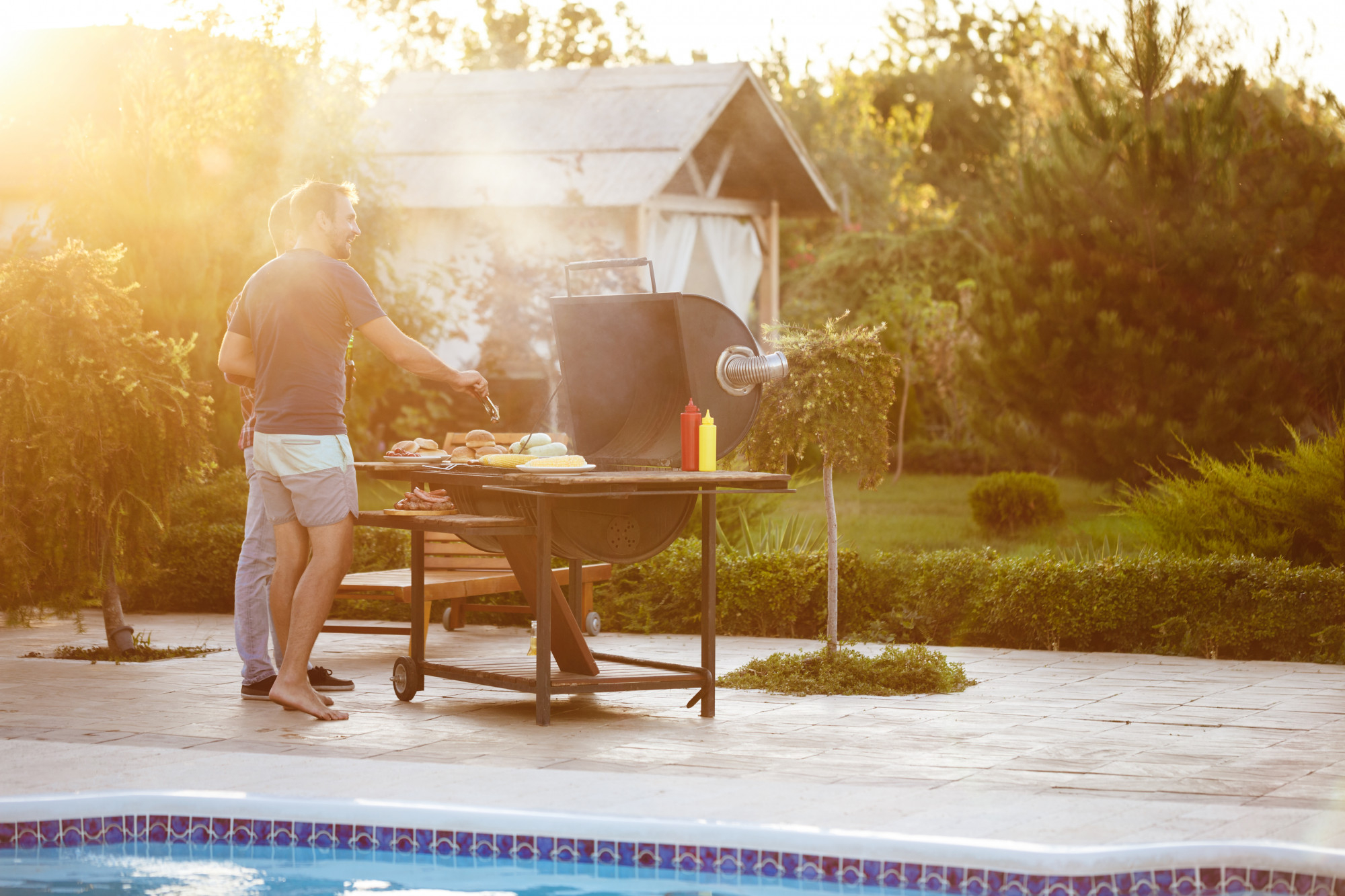
Every family has that one person who treats your home like an all inclusive resort but never once thinks to bring so much as a bag of chips to the table. In my case, that person was my mother in law, Juliette, and she never arrived alone either. She came with her daughters, their children, their opinions about my furniture arrangement, and absolutely nothing in the way of food, drinks, or even a token contribution toward the day. So when they showed up empty handed yet again for the Fourth of July, after years of this exact pattern repeating itself with the reliability of a tide chart, I finally decided it was time to serve them a meal none of them would ever forget.
My name is Annie, and after years of hosting family cookouts for my husband’s side of the family, I had learned one particularly painful truth about the arrangement. Throwing a barbecue for Bryan’s relatives felt less like welcoming guests into our home and more like operating a restaurant where nobody paid, nobody tipped, and somehow, by the end of the meal, everyone still walked away convinced I owed them something more.
I had been married to Bryan for seven years by that point. We had two sweet kids, a cozy home out in the countryside with enough yard for the children to run wild and a garden I’d spent years cultivating, and a life that used to feel calm and genuinely manageable before Juliette decided our house was her preferred holiday destination, every holiday, without exception.
She carried herself with the confidence of a queen, the manners of a professional restaurant critic, and the self awareness of a paper plate caught in a stiff summer windstorm. Whenever she visited, and she visited often, she brought along her two daughters, Sarah and Kate, plus a rotating cast of six grandchildren who seemed to physically multiply the second they crossed our threshold, as though our doorway had some kind of magical amplifying effect on their number and their volume both. They arrived like a traveling carnival made entirely of noise, demands, sticky fingers, and conspicuously empty hands.
A few weeks before that particular Fourth of July, she called to announce their Memorial Day visit as though she were doing me some enormous favor by gracing us with her presence.
Annie, darling, we’re coming for Memorial Day, she said brightly into the phone, her voice carrying that particular musical lilt she used when she wanted something and had already decided the conversation was merely a formality. The kids just love your ribs.
Of course they loved the ribs. I bought them. I marinated them overnight in a rub I’d perfected over years of trial and error. I stood over a hot grill in the summer heat, sweat trickling down my back, turning them at exactly the right intervals so the meat stayed tender and didn’t dry out. I served them on platters I’d arranged carefully. Then Juliette sat comfortably in my patio chair, fanning herself with a paper plate, and told me exactly what I had done wrong with the seasoning.
That particular Memorial Day had been another exhausting performance, one in a long series that had started to blur together in my memory, each one indistinguishable from the last except for the specific insult that landed hardest.
Juliette walked through my front door and immediately began rearranging my living room as though someone had hired her specifically to redesign the space, which nobody had, least of all me.
This couch would look much better facing the window, she announced, already shoving the heavy sectional across my hardwood floor with a determination that startled me every time, given that she was seventy three years old and moved furniture like a woman half her age when the mood struck her.
I actually like it where it is, I replied, trying to keep my voice light and pleasant.
Nonsense, dear, she said, not even pausing in her rearranging. I have a good eye for these things.
She moved the sectional until my coffee table nearly blocked the entrance to the hallway, creating an obstacle course my children would inevitably trip over later that evening, then stood back with her hands on her hips, admiring her work as though she had just unveiled some kind of masterpiece to a waiting gallery.
And those roses outside, she added, glancing through the window toward my garden. You really should trim them. They’re looking a little wild.
Those roses were, quite honestly, my pride and joy. I had spent three careful years growing them from small, unpromising starts into the lush, full bushes that now lined my back fence, learning through trial and considerable error exactly how much water and sun and pruning each variety required. But to Juliette, anything that existed outside her direct control apparently needed correcting, whether it was furniture, flowers, or, as I would eventually learn, entire family relationships.
While she busied herself criticizing my furniture placement and my gardening choices, Sarah and Kate had already taken over my kitchen island entirely, spreading snacks and bags and sippy cups and baby wipes and an assortment of toys across my clean counters without so much as asking first. Their children ran through the house like a small, sticky storm system with shoes still on, despite the shoe rack I kept prominently placed by the front door specifically for this purpose.
Eight year old Tyler dripped bright red popsicle juice onto my white living room carpet and then demanded, at full volume, to know where the bathroom was located, as though this were somehow not a house he had visited at least a dozen times before.
Down the hall, sweetie, I said, already mentally calculating how long it would take me to get the carpet cleaner out and treat the stain before it set permanently into the fibers.
His sister Madison peered into my pantry with the critical eye of a food inspector and whined loudly, why don’t you have good snacks?
The good snacks, naturally, were the exact same snacks I always bought for these gatherings, purchased specifically with their preferences in mind, using my own grocery budget every single holiday without fail, while their mothers arrived carrying nothing but their designer handbags and their opinions.
Outside on the patio, Juliette called through the open window, Annie, the meat looks a little dry over here. Are you sure you’re not overcooking it?
I smiled, because screaming, however satisfying it might have felt in the moment, was not considered polite behavior at a family gathering, even one where I was clearly the only person doing any actual work.
By the time they finally packed up and left that evening, they had eaten through nearly two hundred dollars worth of food I had purchased and prepared, left scattered trash across my yard, sticky handprints on my glass doors, and no fewer than four abandoned juice boxes wedged behind the couch cushions, which I discovered days later when I finally worked up the energy to vacuum properly.
Bryan helped me load the dishwasher that night while I crawled around my flower beds picking discarded popsicle sticks out from between my hostas.
Bee, I said, using the nickname I’d called him since our second date, when he’d made a joke so terrible it somehow circled back around to being funny, your mother moved the couch again.
She’s just trying to help, Nini, he said gently, using his own nickname for me, though I could see the guilt written plainly across his face even as he defended her out of pure reflex.
She also ate two hundred dollars worth of groceries. Again, I said, not looking up from the popsicle sticks.
He sighed, a long, tired exhale that told me he understood exactly what I meant even if he wasn’t ready to fully acknowledge it. I know, he said. I’ll talk to her.
But we both understood, standing there in the fading evening light with sticky popsicle residue on my fingers, that he probably would not actually talk to her, not in any way that would change anything. Bryan loved me, genuinely and deeply, in a way I never once doubted throughout our marriage. But he had spent his entire life carefully avoiding upsetting his mother, a habit formed long before I ever entered the picture, and I had spent years since our wedding trying to be patient with that particular pattern, hoping it might eventually shift on its own.
The next morning, right on schedule, Juliette called again.
Annie, darling, we had such a wonderful time yesterday, she said, her voice bright and entirely oblivious to the previous evening’s cleanup. The children are still talking about those ribs.
I’m glad they liked them, I said, pouring my coffee and bracing myself for whatever was coming next.
And we’re all coming for the Fourth of July, she continued, as though this were simply the natural next chapter in an ongoing story rather than an actual request requiring my input. The whole gang. We’ll make a weekend of it. Won’t that be fun?
My hand tightened around the phone. The whole weekend, I asked.
Yes, she said, delighted. We’ll arrive Friday afternoon. Make sure you get plenty of those little sausages, the kids devour them. And Sarah has not stopped talking about your potato salad. Don’t forget the ribs, dear. Juicy, like last time.
Then she hung up, without waiting for any response from me, without asking whether I had the time or the budget or the energy for an entire weekend of hosting, without offering, even in the smallest way, to contribute anything at all toward the meals she was already planning in detail. She simply informed me, the way one might inform a caterer of a booking, that I would be feeding her entire extended family for three full days.
That evening, I told Bryan. She’s coming for the Fourth, I said.
He looked up from his laptop, already visibly nervous, sensing correctly that something in my tone had shifted. That’s nice, he said, though it came out more like a question than a statement.
With everyone, I clarified. For the whole weekend.
He closed the laptop slowly. Are you okay with that, he asked.
Was I okay with spending another three hundred dollars I didn’t particularly have to spare on groceries for people who treated my house like a free vacation rental with an on call chef? Was I okay with being criticized while I cooked and cleaned and served and smiled through gritted teeth for three consecutive days? Was I okay with picking sticky fingerprints off my walls and popsicle sticks out of my carefully tended garden for what felt like the hundredth time?
I looked at him and smiled sweetly, the kind of smile that should probably have worried him more than it did. I’m fine, I said. Absolutely fine.
And that, right there in my kitchen with my husband’s confused, hopeful expression watching me, was when my plan quietly began taking shape.
I want to explain something about myself before I get to what happened that weekend, because I think it matters. I am not, by nature, a confrontational person. I grew up in a household where disagreements were handled through polite avoidance rather than direct conversation, where my own mother absorbed decades of small slights from various relatives without ever once raising her voice about it. I carried that inheritance into my own marriage, that particular instinct toward smoothing things over, toward being the reasonable one, toward assuming that if I simply worked hard enough and stayed pleasant enough, eventually people would notice the effort and adjust their behavior accordingly. Seven years of Juliette had taught me, slowly and expensively, that this assumption was entirely wrong.
I spent the two weeks leading up to the Fourth of July doing something I hadn’t done before. I paid close attention. I started keeping a small notebook, the kind you’d use for a grocery list, except mine tracked something else entirely. Every holiday for the past four years, dated, with a rough estimate of what I’d spent and what, if anything, anyone else had contributed. The pattern, once I actually wrote it down and looked at it clearly instead of simply feeling it in my exhausted bones, was staggering. Thanksgiving, I had spent nearly four hundred dollars and cooked for eleven hours while Juliette rearranged my dining room chairs and Sarah complained the stuffing needed more butter. Christmas, similar numbers, similar complaints, this time about the tree being decorated in what Juliette called an unconventional color scheme. Easter, the Fourth before this one, my birthday, which nobody remembered but everyone still showed up for the barbecue anyway. Every single time, the same story. My money, my labor, my patience, and their appetite for all three.
I didn’t tell Bryan about the notebook. Not yet. I wanted to see how this next weekend would unfold before I decided what, exactly, I was going to do with the information I’d gathered.
Friday afternoon arrived right on schedule, with three separate cars pulling into our gravel driveway in quick succession and, notably, zero grocery bags visible through any of the windows.
Juliette stepped out of the lead car first, wearing an oversized sun hat that looked expensive and the general expression of a woman expecting full, attentive service the moment she crossed our property line. Sarah and Kate followed close behind her, each carrying a designer purse and, as far as I could tell from my vantage point on the porch, absolutely nothing else. The six children came pouring out onto the lawn all at once, the way water pours out of an overturned bucket, loud and directionless and immediately underfoot.
Annie, Juliette said, sweeping me into a hug so thoroughly saturated with her particular brand of perfume that my eyes actually watered slightly. I hope everything is ready. We’re starving.
Almost ready, I said brightly, and I meant it, though probably not in the way she assumed.
I had, in fact, spent considerable time that morning setting the picnic table beautifully. Mason jars filled with wildflowers I’d cut from the edges of my garden that morning, the dew still clinging faintly to some of the petals. Cloth napkins folded into neat triangles at each place setting. A large glass pitcher of fresh lemonade, made from real lemons rather than the powdered mix I usually resorted to when short on time, glowing amber gold in the afternoon sunlight. It looked, if I do say so myself, like something pulled directly from the pages of a lifestyle magazine, the kind with a title like Simple Summer Gatherings or Effortless Backyard Entertaining, though nothing about the past seven years had ever felt effortless to me.
Sarah sat down at the table and glanced around approvingly. You always make things look so nice, she said, which was, in its own way, the closest thing to a genuine compliment I’d received from her family in longer than I could easily remember.
Kate looked around the table more critically. Where’s the food, she asked.
Coming right up, I said, and disappeared into the kitchen.
I returned a few minutes later carrying my actual masterpiece, the culmination of two weeks of careful, quiet planning.
A tray of cucumber sandwiches. The crusts had been removed with precision, the way you’d trim a formal tea sandwich, and the remaining bread cut into neat little triangles arranged in careful rows. Beside the tray sat a modest pot of black tea, gone slightly lukewarm during the short walk from kitchen to patio.
For one full, glorious moment, absolutely nobody at that table said a single word.
Juliette stared at the tray as though I had placed an itemized tax bill in front of her instead of food. Annie, she said slowly, each word carefully weighted, where is the barbecue?
I tilted my head slightly and smiled, the same sweet, entirely unbothered smile I’d been perfecting in the bathroom mirror for the past two weeks. Oh, I didn’t shop this time, I said, my voice light and conversational, as though this were the most natural thing in the world. Since everyone loves our barbecue so much, I thought you’d want to bring the meat yourselves this time.
The silence that followed was, without exaggeration, one of the most beautiful things I had ever experienced in my own backyard.
Sarah’s mouth fell open slightly. Kate froze entirely, her hand still hovering over the sandwich tray as though she couldn’t quite decide whether it was safe to proceed. Juliette blinked several times in rapid succession, the way a computer looks when it’s struggling to load a page that simply won’t appear.
There’s a butcher about fifteen minutes down Riverview Road, I continued cheerfully, filling the silence before anyone could recover enough to fill it themselves. They’re open until six today. The grill’s already fired up and ready, and there’s fresh charcoal in the storage bin by the shed if you need more.
Juliette’s face tightened into an expression I hadn’t seen directed at me before, something between genuine shock and rising indignation. But you invited us, she said.
Actually, I replied, keeping my voice perfectly calm and pleasant, you invited yourselves.
The children, sensing the shift in adult energy the way children always do, immediately began voicing their own protests. Where are the hot dogs, Tyler demanded, looking around the table as though they might materialize simply from asking loudly enough. I want hamburgers, Madison cried, her voice climbing toward a pitch that promised tears if not immediately addressed. Three year old Connor poked cautiously at the small triangle of cucumber sandwich on his plate and announced, with the blunt honesty only very small children possess, this tastes like plants.
Juliette stood up so abruptly her chair scraped loudly across the wooden deck boards. This is incredibly rude, Annie, she said, her voice rising. We’re family.
Exactly, I said, and I want you to understand that I said this with genuine calm, not performed calm, but the real, settled kind that comes from having decided something firmly in advance. And family helps family. We’ve hosted every single holiday for four years running. I thought it was finally time everyone pitched in a little.
Sarah and Kate exchanged a look between them, the kind of look people give each other when they’ve just witnessed something they can’t quite believe actually happened, as though I had committed some genuine crime rather than simply declining to spend another three hundred dollars feeding people who never once offered to help.
Bryan, who had been standing quietly near the kitchen door throughout this entire exchange, watching with an expression I couldn’t quite read, finally stepped forward.
Morrison’s Meat Market has a great selection, he said, his voice steady and reasonable. I can give you directions, or honestly, we could all just drive over together if you’d rather.
Juliette turned on him immediately, her indignation finding a new, more familiar target. I cannot believe you’re supporting this selfishness, she said.
Bryan’s voice stayed remarkably calm, the calmest I’d heard him during any conversation involving his mother in the entire seven years I’d known him. I’m supporting my wife, he said simply.
In that particular moment, standing on my own patio surrounded by wildflowers I’d grown myself and a table of cucumber sandwiches nobody wanted, I loved my husband more purely and more completely than I think I ever had before, even on our wedding day, even during the births of our children. Something about watching him finally, finally choose me out loud, in front of his mother, without hedging or softening or trying to please everyone at once, settled something in my chest that had been unsettled for years.
They left less than an hour later, the cars pulling out of our driveway in a hurried, disorganized convoy, but not before Juliette delivered one final, thoroughly dramatic parting line, leaning out of the passenger window as Sarah backed the car around.
You’ve turned my son against his own family, she hissed, while the disappointed children climbed reluctantly into their car seats behind her, still grumbling about hot dogs and hamburgers that had never materialized. I hope you’re happy.
I’m getting there, I said, and I waved cheerfully as they drove off down our long gravel driveway in a cloud of summer dust and thoroughly wounded pride.
That night, after the kids were finally asleep and the house had settled into the particular quiet that comes after a long, strange day, Bryan and I sat together on our porch steps, the crickets starting up their evening chorus somewhere out past the garden.
I don’t think I’ve ever seen my mother that angry, he said, though there was something almost like admiration threading through his voice.
I don’t think I’ve ever cared less, I said, and I meant it entirely.
He was quiet for a moment, turning his glass of lemonade slowly in his hands. I should have said something years ago, he said finally. I just always felt like I was choosing between the two of you, and I didn’t know how to do that without hurting someone.
You weren’t choosing between us tonight, I told him. You were just choosing what was fair. That’s different.
He reached over and took my hand, and we sat there together for a long while, not saying much else, just letting the evening settle around us the way it always did, except that this particular evening felt lighter than any Fourth of July I could remember in recent years.
The next morning, I woke to find seventeen missed calls stacked up on my phone screen, along with a single notification from Facebook that, once I actually opened the app and read it, nearly sent my blood pressure through the roof.
Juliette had written an extensive, deeply emotional post about her heartless daughter in law who had, in her words, ruined the Fourth of July for innocent children. She claimed I had refused to feed her family entirely, that I had deliberately turned Bryan against his own mother, and that I had treated all of them cruelly after everything, in her exact phrase, the love and joy they had brought into our lives over the years.
I read the post twice, sitting at my kitchen table with my coffee slowly going cold beside me, and I felt something interesting happen inside my chest. Not the old familiar anxiety, the reflexive urge to fix things, to apologize, to smooth everything back over before it got any worse. Instead, something calmer and more deliberate settled in.
That was Juliette’s fundamental mistake, the one thing she had genuinely failed to account for in all her years of careful complaining. She forgot that I keep records.
I did not argue with her post. I did not fire back an angry comment or send her a furious text message demanding she take it down. I did not even mention it to Bryan right away, not until I’d had time to think through exactly what I wanted to do with it.
Instead, over the course of that Saturday afternoon, I sat down at my laptop and gathered photographs from every single family barbecue we had hosted over the past four years, pulling them from old phone backups and forgotten cloud folders I hadn’t opened in months. Tables absolutely groaning under the weight of food I had personally purchased and prepared. Juliette herself, smiling contentedly with a full plate balanced on her lap, clearly enjoying every bite. Sarah and Kate laughing together beside trays piled high with ribs and burgers and grilled sausages and my much requested potato salad and platters of fresh fruit and homemade desserts. Their children, all six of them at various points across the years, eating happily and messily in my yard, clearly having a wonderful time at an event they had contributed nothing toward.
Then, methodically, I went through my kitchen drawer where I kept old receipts, and I photographed those too. Grocery store totals, dated clearly, adding up over the years to a sum that, once I actually calculated it all together, made me feel slightly ill. Hundreds upon hundreds of dollars, organized chronologically, undeniable and unambiguous.
I posted the full collection of photographs to Facebook myself that evening, with one simple, entirely unremarkable caption underneath.
Just sharing some happy memories from all our family gatherings, it read. So grateful for the wonderful times we’ve had together.
That was the entire post. No accusations spelled out in the text. No angry rant to match Juliette’s. Just photographs, dates, and evidence, laid out plainly for anyone who cared to look closely enough to understand what they were actually seeing.
The internet, as it turns out, understood almost immediately, and far more thoroughly than I had even hoped.
Comments began appearing under my post within the hour, then multiplying steadily throughout the evening. People I barely knew, distant acquaintances and old college friends and even a few of Bryan’s coworkers who had somehow found their way to the post, began asking pointed questions in the comment section. Why did such a loving family, as Juliette had described them, never seem to bring anything at all to these gatherings? Several people shared their own stories about relatives who treated them like unpaid caterers year after year, describing situations that sounded remarkably similar to mine. Someone pointed out, with what I imagine was considerable satisfaction, that cucumber sandwiches were, in fact, still food, which meant Juliette’s original claim that I had refused to feed her family entirely wasn’t even technically true.
Within two days, Juliette’s original dramatic post had quietly disappeared from her profile entirely. No apology followed. No explanation was ever offered, not to me directly and not, as far as I could tell, to anyone else either. It simply vanished, the way things people regret often do once they realize the audience isn’t responding the way they’d expected.
And for the first time in years, genuinely the first time since Bryan and I had gotten married, my house remained quiet on a holiday weekend that had, until that particular Fourth of July, always meant exhaustion and resentment dressed up as family togetherness.
The weeks that followed brought their own kind of reckoning, quieter and slower than the dramatic scene at the picnic table, but in some ways more meaningful. Bryan called his mother, alone, without me in the room, and had what he later described as the most honest conversation they’d had in years. He didn’t relay every detail to me, and I didn’t ask him to, understanding that some conversations between a mother and son needed to happen without an audience, even a sympathetic one. What I did notice, over the following months, was a shift in how our holidays began to unfold.
Juliette didn’t disappear from our lives entirely, and honestly, I never wanted her to. Despite everything, despite years of moved furniture and unwelcome criticism and countless unpaid meals, she was still my children’s grandmother, still a woman who, underneath all the difficult behavior, genuinely loved being around her family, even if she’d never quite learned how to show that love in a way that didn’t cost me hundreds of dollars and considerable peace of mind. But something had fundamentally changed after that Fourth of July, some unspoken understanding had been reached that couldn’t be undone by a single Facebook post disappearing quietly into the internet’s memory hole.
Thanksgiving that year arrived differently than any before it. Juliette called two weeks in advance, and instead of simply announcing her arrival plans, she actually asked what she could bring. I nearly dropped the phone. We settled on her bringing the pies, a task I suspected she’d delegate to a bakery rather than attempt herself, and I was right about that, though the pies were genuinely delicious and nobody complained about their store bought origins.
Sarah, somewhat to my surprise, showed up that Thanksgiving with a case of sparkling cider and a homemade green bean casserole that, while slightly overcooked, represented more effort than I’d seen from her in the entire seven years I’d known her. Kate brought paper goods, plates and napkins and cups, which wasn’t glamorous but meant one less thing I had to purchase and one less item on my endless list of holiday preparations.
It wasn’t perfect. Juliette still occasionally eyed my furniture arrangement with visible disapproval, still made the occasional comment about my cooking that landed somewhere between constructive criticism and genuine insult. Old habits, especially ones cultivated over seven years of getting away with them, don’t simply evaporate overnight because of one uncomfortable barbecue and a viral Facebook post. But the fundamental dynamic had shifted in a way that mattered enormously to me, even if the change was gradual rather than dramatic.
I kept my little notebook going, though these days it told a different story. Contributions logged alongside expenses, a slowly balancing ledger that reflected something closer to actual reciprocity than the one sided arrangement I’d endured for so many years. I don’t know if Juliette ever fully understood why that particular Fourth of July had become the turning point it did, whether she connected the cucumber sandwiches directly to some deeper lesson about respect and fairness, or whether she simply learned, through embarrassment and social consequence, that certain behaviors carried costs she hadn’t previously considered.
What I know for certain is this. Sometimes the strongest message a person can send isn’t shouted across a dinner table or fired off in an angry text message at midnight. Sometimes it’s served quietly on a tray, with the crusts carefully cut off, presented with a smile that gives absolutely nothing away until the exact moment it needs to.
And sometimes, when people spend years quietly taking advantage of your kindness, mistaking your patience for an endless resource rather than a finite one, the very best thing you can offer them in return is exactly, precisely what they brought to your table all along.
Nothing at all, served with a smile, and the quiet, satisfying knowledge that you finally, after all those years, chose yourself.

Specialty: Quiet Comebacks & Personal Justice
David Reynolds focuses on stories where underestimated individuals regain control of their lives. His writing centers on measured decisions rather than dramatic outbursts — emphasizing preparation, patience, and the long game. His characters don’t shout; they act.