Olivia Collins was not late because of traffic. She was late because she had spent five years learning the difference between disrespect and self respect, and some lessons take exactly as long as they take.
At 7:05 in the evening she stood outside the private dining room of the country club and listened to the rain tap against the windows. Inside, silverware clicked against china and someone laughed too loudly. It was her brother Ethan, laughing through a mouthful of wine, the kind of careless laugh she had heard her whole life whenever he knew somebody else would clean up whatever mess came next.
“She thinks she’s special now just because she got lucky with some hotels,” Ethan said.
Olivia did not move. Then her father’s voice cut through the room. “Where is she? It’s 7:05. Disrespectful.” The word landed against her chest, but it did not enter the way it used to.
Five years earlier, it would have. Five years earlier, Olivia had stood in a church hallway in a white dress, holding her phone so tightly her knuckles ached, while her mother fixed a pearl pin in her hair and Daniel waited at the front of the church. Her father, Richard Collins, sent one text. Can’t make it. Important meeting. That was all. No phone call. No rushed apology. No explanation that sounded remotely human. Olivia walked down the aisle alone while an empty wooden chair in the front row said everything the Collins family would never say out loud. Her father had not missed traffic. He had not been trapped in some hospital hallway. He had made a choice, and he had made it easily, the way men make choices when they’ve never once had to weigh the cost of disappointing someone who loved them.
Years later, when a blender arrived at her apartment in the mail with no card and no note attached, Daniel found her sitting on the kitchen floor beside the box. He did not tell her to be grateful. He did not say fathers were complicated. He simply opened a cabinet, put the blender away, and sat down on the floor beside her until she could breathe again. That was Daniel’s love language. He stayed. He built things. He noticed what silence did to her and refused to ever use it as a weapon against her the way her own family had for thirty years.
She had met him during the ugliest stretch of her twenties, back when she was working two jobs to pay off the business school loans nobody in her family had offered to help with, back when Ethan was already being handed titles at Collins Enterprises he hadn’t earned and would never have to justify. Daniel was quiet in a way that made people underestimate him, the kind of quiet Olivia had learned to be suspicious of after growing up around men who filled every silence with the sound of their own certainty. It took her almost a year to understand that his quiet wasn’t emptiness. It was attention. He noticed which restaurant she ordered from when she was anxious. He noticed she flinched slightly whenever a phone buzzed unexpectedly at dinner. He never once asked her to explain why, and somehow that made her want to explain everything.
Olivia had started Ember Collection with one exhausted coastal lodge that smelled like salt, mildew, and old carpet. The floors sloped in two of the rooms. The front desk computer crashed every time anyone so much as touched the printer. The garden behind the property was mostly weeds, broken patio stones, and one leaning fence that Daniel had insisted, against all visible evidence, could still be saved. Olivia sanded floors until her wrists burned. She made beds when staff called out sick. She folded towels in the laundry room at midnight and signed payroll at eleven forty three while cold takeout sat untouched beside her laptop. On the bad weeks she paid her employees before she paid herself. On the worse weeks, Daniel patched drywall, fixed loose cabinet handles, and planted cheap flowers from a grocery store clearance rack, because he believed, and eventually taught her to believe too, that guests deserved to arrive somewhere that looked loved, even if loved had to be built out of clearance flowers and stubborn optimism.
One lodge became two. Two became five. Five became eleven. People kept coming back because Ember never felt like polished emptiness. It felt warm. It felt cared for. It felt like somebody had actually thought about how tired you might be when you finally walked through the door after a long drive. Olivia knew exactly why that mattered to her so much. She had spent her whole childhood walking into rooms where nobody had thought about her at all.
The morning the valuation hit the business pages, her executive team opened champagne in the office kitchen. Ember Collection valued at five hundred eighty million dollars. Her face appeared beside the headline in three different outlets before lunch. Daniel pulled her into his arms in front of everyone and whispered, you did it, and for a few minutes Olivia let herself believe the whole day could actually belong to her.
She stood by the window of her office looking down at the parking lot, remembering the coastal lodge with its sloped floors and its stubborn leaning fence, remembering the nights she’d fallen asleep at her desk with a highlighter still in her hand. None of it had felt inevitable while she was living through it. It had felt like survival stretched thin enough to look, from a distance, almost like ambition. She wondered, briefly, whether her father would call. Some small, stubborn part of her, the part that never quite finished growing up no matter how much of the rest of her did, still hoped he might.
Then her phone buzzed. Family dinner. 7:00 p.m. Don’t be late. No congratulations. No I saw the news. No I’m proud of you. Just a summons from a man who had spent his entire life confusing obedience with love.
At noon, her CFO Lena walked into Olivia’s office with a blue folder under one arm and the celebration entirely gone from her face. Lena did not dramatize numbers, which was exactly why Olivia trusted her more than anyone else on the executive floor. She laid out the first page, then the second, then a bank demand letter dated the previous Tuesday. These are Collins Enterprises documents, Lena said.
Olivia looked down at missed loan payments, overleveraged properties, a cash flow schedule marked entirely in red, a company card ledger with Ethan’s name appearing again and again in places where it had no business being. Luxury car lease. Cabo. Vegas. Private flights. Restaurants coded as client development for clients who did not appear to exist anywhere else in the paperwork. The room went very still, though not because Olivia was surprised her brother had taken more than his share. She was only surprised by how neatly the numbers told the truth, the way some families keep photo albums and the Collins family, apparently, kept expense reports instead. A father shielding his son. A mother smoothing the air between them. A daughter expected to feel grateful for being remembered the moment the bill finally came due.
There’s more, Lena said, turning another page, and Olivia read the rest in silence.
At six fifteen, Lena set the thin blue folder on Olivia’s desk. Take this with you, she said. Olivia touched the cover, and rain slid down the glass wall of her office in long crooked lines. For one second she was twelve years old again, walking into a dark house with a second place ribbon from the state science fair because everyone had gone to Ethan’s game instead. Then she was twenty seven, a bride holding a phone in a church hallway. Then she was thirty two, standing in her own company’s headquarters, looking at proof that her father had never once called because he missed her. He had called because he needed her.
On the drive to the club, Daniel texted her. I love you. Remember who you are. She read it at a red light, turned the phone face down, and kept driving.
By the time she reached the country club, the rain had softened into mist. The lobby smelled like carpet cleaner, old money, and roses that were trying too hard to earn their keep. Through the open doorway she could see a small American flag on a stand near the host podium and the reflection of the dining room chandelier in the polished floor. She paused outside the private room and listened. That was when Ethan called her lucky. That was when her father called her disrespectful. Olivia let both words pass through her without opening the door. Then she went in.
Conversation stopped so suddenly it felt staged. Richard Collins sat at the head of the table in a dark suit, thinner than she remembered but still holding his shoulders the way men do when they expect a room to arrange itself around them automatically. Evelyn sat to his right with both hands wrapped around her wineglass. Ethan lounged on the left, all polished watch, expensive shirt, and soft hands that had never once done a real day’s work.
You’re late, Richard said. Not hello. Not congratulations. Not even a flicker of curiosity that the daughter he had ignored for most of her adult life had become the only person at this table who could actually save him.
Traffic, Olivia said, taking the empty chair opposite him and setting the blue folder down on the white tablecloth. Evelyn looked visibly relieved to have something harmless to say. You look wonderful, Olivia. Thank you, she answered.
Ethan smirked. Five hundred eighty million, huh? Who did you bribe for that valuation? Olivia looked at him steadily until the smirk started to weaken on its own. Hard work, she said. You should try it sometime.
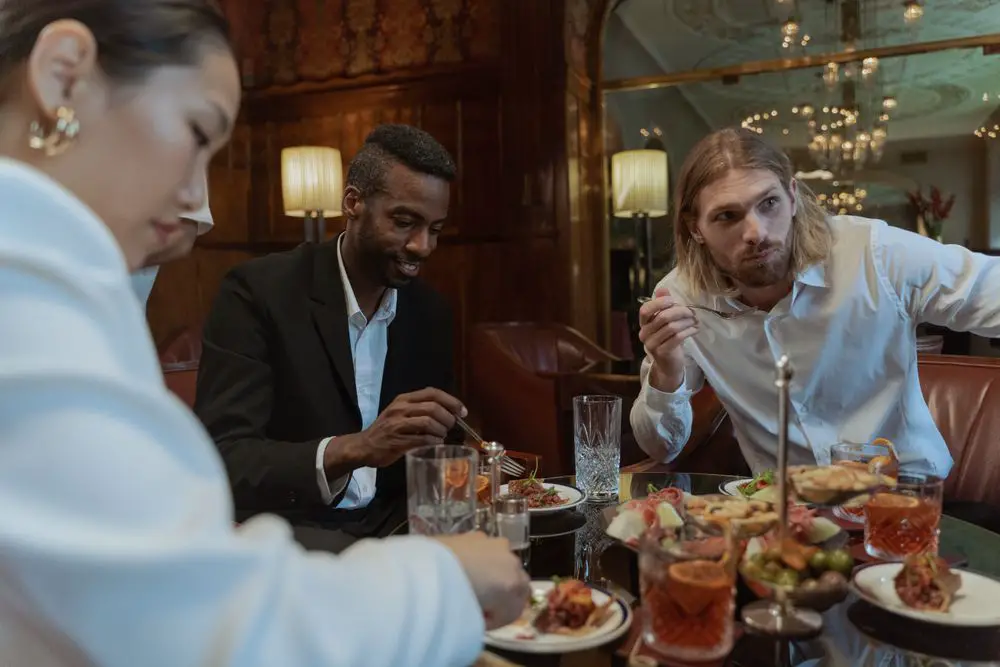
The waiter arrived with menus. Richard ordered steak. Ethan ordered lobster without so much as glancing at the price. Olivia asked for sparkling water and nothing else. Richard noticed immediately. You’re not eating? I’m not staying long, she told him, and his jaw shifted, because he had always disliked answers that didn’t leave room for his control.
She watched him glance at the folder on the table, then back at her face, trying to read what kind of daughter had walked into this dinner. He had prepared for tears. He had prepared for anger, maybe even for the old guilt she used to carry into every room with him, the automatic apology that used to rise in her throat before she even understood what she was apologizing for. He had not prepared for calm. Calm, she was beginning to understand, unsettled men like Richard far more thoroughly than shouting ever could, because shouting could be managed, waited out, folded into a story about her being emotional. Calm left him with nothing to correct.
When the waiter left, Richard folded his hands and put on the voice he usually reserved for investors. The market has been difficult, he began, and Olivia watched him build the sentence carefully, smoothing shame into strategy the way he’d been doing her entire life. We’ve had some temporary cash flow issues. Nothing permanent. I need a bridge loan. There it was. No apology hiding underneath the request. No father clumsily trying to reconnect. Just a demand dressed up as family.
How much, Olivia asked. Richard hesitated for less than a full breath. Fifteen million. Evelyn looked at Olivia as though the number itself should have made her tender toward him. Ethan picked up his wine. Richard kept talking, formal terms, short term, interest, a clean bridge until the banks calmed down. Olivia listened. She had learned in boardrooms that silence made careless people fill the room with evidence all on their own.
When he finally finished, she asked, will the fifteen million cover Ethan’s Porsche too? Ethan’s head snapped up. Richard’s face darkened. What are you talking about? The company lease, Olivia said. And Cabo. And Vegas. And the private flights. Should I include those in the rescue package as well? That is company business, Richard snapped. No, Olivia said. That is family business wearing a company badge.
Ethan laughed once, ugly and short. You think you know everything because you run some luxury inns? Luxury inns. Olivia almost smiled at that. Men like Ethan always made other people’s work sound small the moment they realized they couldn’t survive the actual weight of it themselves.
Evelyn leaned forward. Please, Olivia. Your father is under so much stress. There it was again, the old family prayer. Men got stress. Boys got mistakes. Daughters got told to be understanding. Olivia looked at her mother for a long second, then looked back at her father.
Where was this family when I was twelve and won second place at the state science fair alone, she asked. Richard’s hand stilled near his glass. Where was this family when I was sleeping on the floor of my first hotel because I couldn’t afford a night manager yet? Ethan rolled his eyes, but he was listening now, whether he wanted to admit it or not. And where was this family ten minutes before my wedding, when my father texted me, can’t make it, important meeting?
Evelyn’s eyes filled. Richard exhaled hard through his nose. We are not doing this, he said. Oh, Olivia answered. We are.
The room changed, not loudly, not all at once, but the way weather changes right before a storm, when every living thing senses something coming long before the first crack of thunder actually arrives.
That was years ago, Richard said. You’re going to punish the whole family because your feelings were hurt? Hurt. Olivia felt the word move through her and turn into something colder on the way down. He had reduced an entire lifetime to a bruise he expected her to simply stop mentioning by now. Across the table, the blue folder seemed to gain weight all on its own. Forks hovered above plates. Evelyn’s wineglass trembled faintly against its stem. Ethan’s lobster fork sat untouched beside his hand. Near the wall, the waiter looked at the brass door handle like it might offer some way out of the room. The rain kept tapping the windows. Nobody moved.
Richard mistook the silence for surrender. Olivia saw it happen in the small loosening of his shoulders. He believed the old reflex would return, that she would fold herself back into the child who used to apologize when nobody had bothered to come for her.
So, Richard said, reaching for his water, I’ll have my attorneys draft something tomorrow. Olivia placed her hand flat on the folder. No need. His eyes narrowed. What is this? She slid the blue folder across the table until it stopped beside his plate. Open it, she said. Richard gave a short, irritated laugh, the laugh of a man who still believed authority lived permanently in his chair, his voice, and his last name. Then he opened it.
The first line read, confidential forensic review, Collins Enterprises. His face changed instantly. Color drained from his cheeks. His eyes moved down the page faster now, and Olivia watched the exact moment he understood she had not brought emotion into that room. She had brought records. The report listed the missed payments, the Tuesday demand letter, the red marked cash flow schedule, the card ledger, the approvals, and the internal notes tying Ethan’s spending directly to Richard’s protection of him.
Ethan leaned in. Richard slapped one hand flat over the paper. Dad, Ethan said. Richard did not answer. Evelyn whispered, Richard, what is it? No one else spoke. The waiter took one step backward and stopped where he stood. Olivia reached for her water and took a sip, and her hand did not shake at all.
Richard looked up. How did you get this? Lena had warned her he would ask exactly that question. Not whether it was true. Not whether his son had actually done it. Not whether the employees and vendors and lenders had been put at real risk by any of it. Just how she had found out. Your lenders are tired, Olivia said. Your vendors are scared. Your own records aren’t nearly as private as you think once a company starts looking for money.
Richard’s jaw tightened. You had no right. Olivia leaned back in her chair. You invited me to dinner to ask for fifteen million dollars. That doesn’t give you the right to humiliate me, he said. Humiliate you, she repeated. You asked me to write a check for a fire you helped Ethan build in the first place.
Ethan shoved his chair back a few inches. I didn’t build anything. Olivia turned to him. For once, we agree, she said, and his face flushed red.
Richard lowered his voice. This family does not air private matters in public. Olivia glanced around the private room, the white tablecloth, the steak plates, the flowers, the country club walls, the waiter frozen near the doorway. Then maybe this was the wrong place to ask your ignored daughter for fifteen million dollars, she said.
Evelyn covered her mouth with one hand. Richard flipped to the second page, and that was when a smaller envelope slid loose from the back of the folder and landed against his plate. The handwriting on the front was Lena’s. Wedding day, 6:18 p.m.
Olivia had not known it was in there until that exact moment. She stared at it, and for the first time all evening her chest tightened without warning. Richard saw the envelope and went completely still. Ethan saw it too. What is that, Olivia asked. Richard did not move, and the silence answered before he ever could.
For a moment nobody reached for it. The rain outside seemed to grow louder in the pause, or maybe it only felt that way because everything else in the room had gone so quiet. Evelyn’s hand hovered over the table as though she meant to take the envelope herself and make it disappear before Olivia could open it, the same reflex she’d spent a lifetime perfecting, smoothing things over before anyone had to actually look at them. But she didn’t move fast enough, or maybe some part of her had finally stopped trying to protect what could no longer be protected.
Olivia reached across the table and picked it up. Her name was not written anywhere on it. Inside were three printed pages. The first was an old calendar entry pulled from Richard’s account, recovered from a company archive attached to a financing file. The second was an email chain about an emergency meeting with the bank. The third was an internal memo that made Evelyn start crying before Olivia had even finished reading it.
The meeting Richard had chosen over Olivia’s wedding had never been about saving the company at all. It had been about Ethan. Five years earlier, Ethan had run so far over a property budget that a lender had threatened to pull financing entirely unless Richard appeared in person and personally guaranteed the shortfall. Richard had gone. He had not missed his daughter’s wedding because the company would have collapsed without him standing there. He had missed it because his son needed rescuing again, and rescuing Ethan had always, without exception, come first.
Olivia set the pages down slowly. The room seemed to tilt around her for a moment. Evelyn whispered, I didn’t know. Olivia believed her, but belief did not make the years suddenly smaller. Ethan looked down at the table. It was complicated, Richard said. No, Olivia answered. It was familiar. That landed harder on him than shouting ever could have. For one second she saw the old Richard again, the man who had always expected a daughter’s sadness to stay conveniently manageable. Then she saw what actually sat beneath that expectation. Fear. He was not afraid of her anger. He was afraid of her clarity.
Olivia opened the last section of the folder and slid a document back across the table. Richard looked down. This one was not a report. It was a term sheet, and not for a bridge loan. For a rescue, on her terms. Ember Collection would not simply hand Collins Enterprises fifteen million dollars and pretend none of this had ever happened. Richard would step down from operational control until an outside review was fully complete. Ethan would resign from payroll immediately. Every personal charge would be documented, cataloged, and repaid through asset sale or salary clawback. Vendors would be paid first. Employees would be protected first. Evelyn’s home, which had apparently been quietly pledged as collateral without any real explanation given to her, would be removed from the risk pool wherever the lender negotiations allowed it. And Olivia would not put a single dollar into the company without full access, full authority, and a board record showing exactly why.
Richard read the page with a look Olivia had never once seen on his face before. It was not anger. It was recognition. He had spent her whole childhood teaching her to survive cold rooms, careless words, and empty chairs at important moments, and he had never once considered that survival might eventually become a skill sharp enough to be turned back around on him.
You want my company, he said. No, Olivia answered. I want the people you put at risk to keep their jobs, and I want Mom’s house out of Ethan’s blast radius.
Ethan stood up fast. You can’t do this. Olivia looked at him without flinching. I can choose not to fund you, she said. He opened his mouth, then shut it again, and that was the first honest thing he had done all night.
Richard’s fingers tapped once against the term sheet. You expect me to sign this at dinner? No, Olivia said. I expect you to read it carefully, send it to your attorneys, and understand that the answer to your original request is no.
Evelyn looked up. Olivia, she said softly, her voice almost breaking something open in the room. I am not saying no to saving what can still be saved, Olivia told her. I am saying no to being used as the family wallet.
The words sat there in the silence. Not cruel. Not loud. Final. Richard looked older suddenly. Ethan looked smaller. Evelyn looked like a woman just realizing that years of peace had been quietly purchased with her own daughter’s silence, and that the bill had finally come due for all of them at once.
Olivia pushed back from the table. The chair legs made a clean, final sound against the floor. Richard said her name. She paused, and for one brief moment she thought he might actually say the thing she had been old enough to stop needing and young enough to still, somewhere underneath everything, wish for. I’m sorry. Instead he said, don’t make this harder than it has to be.
Olivia almost laughed. That was the Collins family, even standing at the very edge of collapse. They could stand in their own wreckage and still ask her to step carefully around their comfort on the way out.
She picked up her coat. I did that for thirty two years, she said. Then she took the wedding day pages, folded them once, and placed them inside her purse. The blue folder stayed on the table. Richard could keep the numbers. She was keeping the truth.
Outside the private room, the country club hallway sat quiet. The small American flag near the host stand barely moved in the air from the vents overhead. The rain had finally stopped. Olivia stepped under the covered entrance and found Daniel’s car already waiting at the curb, because he had known, somehow, without being told, that she would not want to drive home alone tonight of all nights.
He got out before she even reached the passenger door. One look at her face told him everything he needed to know. He did not ask whether they had apologized. He did not ask whether she had won. He simply opened his arms, and Olivia held herself together for exactly three seconds before she finally leaned into him and let the whole night leave her body at once.
In the days that followed, the lawyers called constantly. Richard’s attorneys sent sharp, formal emails. Ethan sent one furious text, deleted it, then sent another one blaming her for embarrassing the entire family in front of people who mattered. Evelyn called twice, and the second time she said nothing at all for almost a full minute before finally whispering, I should have gone to your wedding without him. Olivia closed her eyes. Yes, she said. It was not forgiveness. It was simply the truth, finally spoken out loud between the two of them.
There were nights that week when Olivia sat awake beside Daniel, staring at the ceiling, waiting for the guilt to arrive the way it always used to whenever she disappointed her father, even when disappointing him meant refusing to be robbed. The guilt never came, not really, and its absence felt strange at first, like reaching for a familiar bruise and finding smooth skin instead. Daniel noticed the change before she could name it herself. You keep waiting for something, he said one night. What is it? I keep waiting to feel bad, she admitted. He was quiet for a moment, then said, maybe you already paid that debt in full a long time ago, and just never got the receipt.
Weeks later, Collins Enterprises accepted a version of the rescue terms, because by then there was no softer money left anywhere for them to find. Richard stepped back from daily operations. Ethan left the payroll entirely. The outside review began in earnest. Vendors were paid in order, employees received direct notice of every change, and the worst of the personal charges were separated from the operating accounts the way infection gets carefully cut away from otherwise living tissue.
Olivia did not enjoy any part of that process, and that surprised the people who only understood power as a form of revenge. But power, once you have been powerless long enough, does not actually feel like revenge at all. It feels like finally choosing your own door and walking through it with your name still fully intact on the other side.
Months later, Olivia returned to the old church where she and Daniel had married, not for a ceremony and not for anything as neat as closure. A local fundraiser was being held in the church hall, and Ember had donated a stack of hotel stays for the auction table. She stood in the doorway for a moment and looked at the front row. The chair was not the same chair, of course it wasn’t, chairs get replaced and reupholstered and eventually thrown away entirely, but memory has never once cared about furniture.
She thought about the girl who had walked down that aisle alone, certain that a wedding without her father in the front row meant something was permanently broken in her, that she carried a kind of deficiency other brides didn’t have to explain to anyone. She did not feel that way standing in the doorway now. She felt, if anything, a strange tenderness toward that younger version of herself, the one who hadn’t yet learned that some absences say more about the person leaving than the person left behind.
Daniel came up beside her and slipped his hand into hers. You okay, he asked. Olivia looked at the aisle she had once walked down completely alone, then looked at the man standing beside her now, the same man who had once sat on a kitchen floor next to a boxed blender because he understood that grief does not always announce itself by wearing black.
I am, she said, and this time she meant every word of it completely. The rain had started again outside, soft against the church windows, the same kind of quiet rain that had followed her through half the important moments of her life, though this time it did not feel like an omen of anything. It just felt like weather, ordinary and indifferent, the way rain is supposed to feel when nothing terrible is actually happening underneath it.
Her father had spent her whole life teaching her that men got stress, boys got mistakes, and daughters got told to be understanding about all of it. Life, eventually, had taught her something far better than that lesson ever could. A daughter can stop auditioning for a seat at somebody else’s table. She can build her own house instead, set her own terms from the very foundation up, and leave the people who once ignored her standing alone in a private dining room, staring down at a folder they should have seen coming from a hundred miles away.
She thought sometimes about the second place ribbon from the state science fair, still folded somewhere in a box she’d carried through four apartments and never once thrown away, not out of sentiment for the ribbon itself but for the girl who had earned it entirely alone and still smiled for the photo anyway. That girl had not known yet that being unaccompanied in a moment did not mean being unworthy of company. She had simply been early, ahead of a truth the rest of her family would take decades longer to catch up to, if they ever did at all. Olivia hoped, in the quiet way people hope for things they’ve stopped needing, that someday her mother might finally understand it too. But hope, she had learned, could exist perfectly well without being owed anything in return, and that, more than any folder or term sheet or courtroom victory, was the freedom she had actually been building toward the whole time.

Lila Hart is a dedicated Digital Archivist and Research Specialist with a keen eye for preserving and curating meaningful content. At TheArchivists, she specializes in organizing and managing digital archives, ensuring that valuable stories and historical moments are accessible for generations to come.
Lila earned her degree in History and Archival Studies from the University of Edinburgh, where she cultivated her passion for documenting the past and preserving cultural heritage. Her expertise lies in combining traditional archival techniques with modern digital tools, allowing her to create comprehensive and engaging collections that resonate with audiences worldwide.
At TheArchivists, Lila is known for her meticulous attention to detail and her ability to uncover hidden gems within extensive archives. Her work is praised for its depth, authenticity, and contribution to the preservation of knowledge in the digital age.
Driven by a commitment to preserving stories that matter, Lila is passionate about exploring the intersection of history and technology. Her goal is to ensure that every piece of content she handles reflects the richness of human experiences and remains a source of inspiration for years to come.