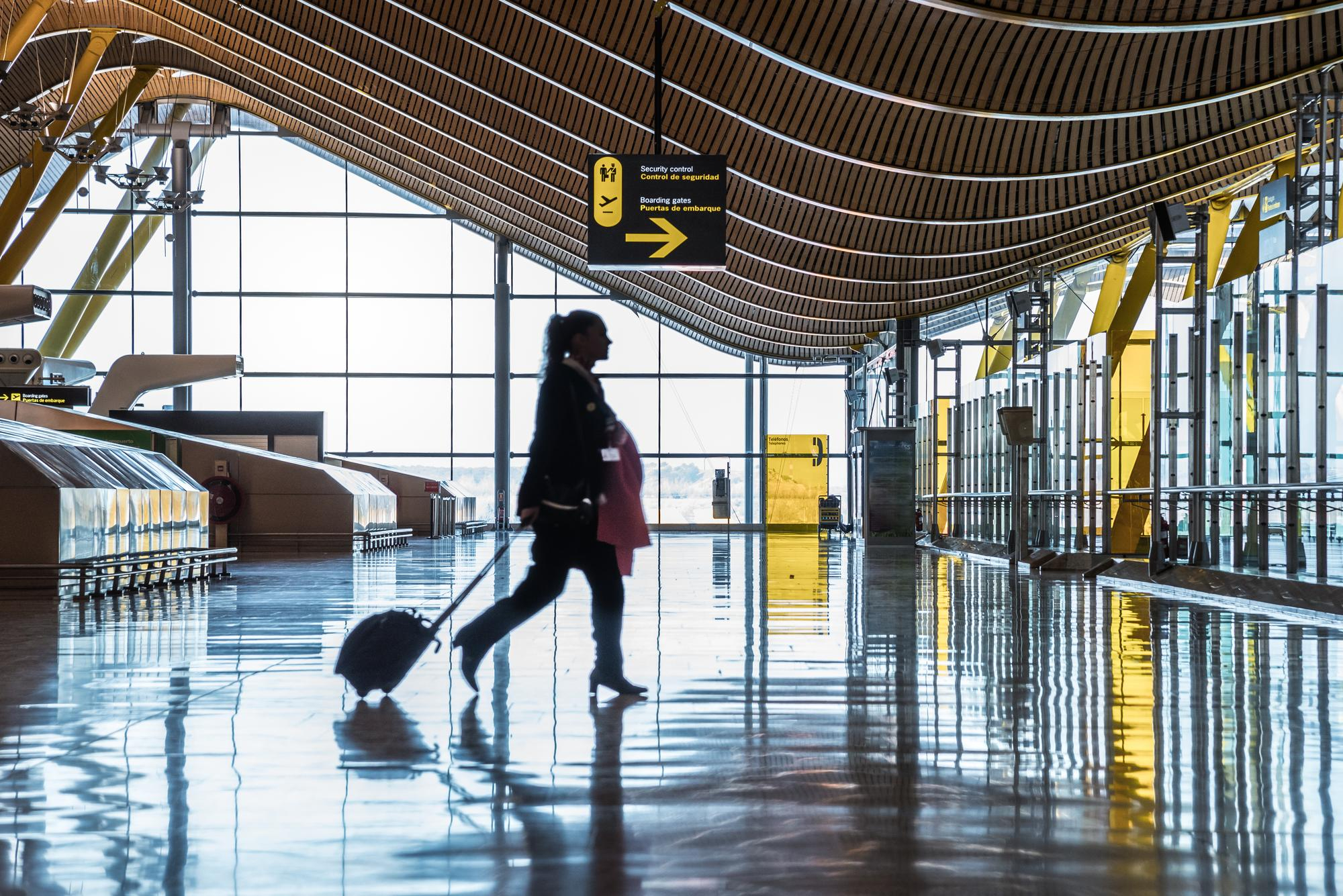
My daughter’s vacation ended before it ever began, and it ended under the flat white lights of an airport terminal with an empty passport case shaking in her nine-year-old hands.
Ellie was small for her age, still young enough to sleep with a stuffed fox tucked beneath her chin, but she was old enough by then to feel humiliation the way an adult feels it, as a wound that goes all the way down. The night before the trip she had packed her own little backpack, zipping every compartment with great ceremony, because she wanted to be responsible. She said that word to me with such pride that I had to turn away so she would not see how close it brought me to tears. Responsible. As if being nine years old and careful with your things was the most grown-up accomplishment in the world.
We were supposed to be flying to Cancun.
It had taken five months of planning. There had been matching swimsuits bought on sale, a countdown calendar taped to the refrigerator, and a row of little palm trees that Ellie had drawn into the squares with a purple marker, crossing off each day as it passed. She had been counting down to this for so long that the trip had stopped feeling like a plan and started feeling like a promise.
Then the airline agent asked for her passport, and Ellie opened the case, and there was nothing inside it.
For one long second, nobody moved.
Then my daughter looked up at me, and in a voice so small it barely reached me over the noise of the terminal, she whispered, “Mom, it was in here. I put it in here.”
I checked the case myself, as if my hands might find something hers had missed. I checked her backpack. I checked every zipper and every pocket and every folded sweater. I checked my own purse even though I knew, with total certainty, that I had never touched her passport, that she had insisted on carrying her own. I found nothing, and the longer I searched the more the panic rose in my chest, because I could feel Ellie unraveling beside me and I did not know how to stop it.
Behind us, my mother-in-law Carol stood beside her rolling suitcase and watched. She had a particular expression she wore whenever someone else was in pain, a calm, polished, faintly satisfied look, and she was wearing it now. She did not look worried. She looked interested.
The agent gave us the soft, professional smile that people use right before they deliver news that will ruin your day. “I’m so sorry,” she said. “Without a passport, she can’t check in for an international flight. There’s nothing I can do.”
And Ellie broke.
It was not a small cry. It was not the ordinary frustration of a tired child in a busy airport. It was a full-body, terrified sob, the kind that made strangers turn their heads and then look quickly away, embarrassed to be witnessing it. “I didn’t lose it,” she kept saying, the words tumbling over each other. “I swear I didn’t lose it. I put it in there. Mom, I did, I did put it in there.”
I pulled her against me and felt her whole body trembling through her sweatshirt. “I know,” I said into her hair. “I know you did. I believe you.”
That was when Carol stepped closer, her voice arriving syrupy and sharp at the same time, the way only hers could. “Poor thing,” she said. “Well. Maybe this will finally teach her to be more responsible with important things.”
I turned my head slowly toward her. “Not now, Carol.”
She lifted her eyebrows as though I were the one behaving unreasonably, as though I had raised my voice in church. Beside her, my father-in-law George shifted his weight and muttered, mostly to himself but loud enough to be heard, “Well, we can’t all miss the trip because she misplaced something.”
That was the family I had married into, distilled into a single sentence. A child could be coming apart in the middle of a crowded airport, and the true tragedy, the thing that actually required addressing, was the inconvenience it caused everyone else.
My sister-in-law Janelle drifted back from the security line, thumb moving across her phone screen, barely lifting her eyes. “You sure you don’t want to just go?” she asked me, as if she were suggesting we skip an appetizer. “Brian can pick her up after work. Seems like kind of a waste of money otherwise.”
Ellie heard every word of it.
That was the part that lit something on fire inside my chest. It was not only that they were prepared to leave my daughter behind. It was that, standing right in front of her, they were teaching her that she was easy to leave, that she was a line item, a waste of money, a problem to be solved by subtracting her from the group.
I grabbed her little suitcase, wrapped my arm around her shoulders, and said, loud enough for all of them to hear, “We’re going home.”
Carol looked at me the way you might look at someone with a strange and slightly excessive hobby, as if motherhood were a thing I had simply taken too far.
The drive home was one of the worst hours of my life. Ellie cried until her voice went hoarse, and then she went quiet and sat in the back seat clutching her fox, whispering “I’m sorry” over and over, to me, to the window, to no one. I kept glancing at her in the rearview mirror and telling her she had nothing to be sorry for, but the words did not seem to reach the place inside her where the hurt had settled.
At home, she curled up on the couch without even taking off her shoes. I sat beside her and stroked her hair back from her damp forehead.
“You are not in trouble,” I told her. “Do you hear me? None of this is your fault.”
“But I ruined it,” she said.
“No,” I said, and my voice nearly cracked on the word. “You didn’t ruin anything. Something happened, and we’re going to figure out what. But it was not you.”
At the time, I truly believed that. I thought we would eventually find the passport wedged behind the couch cushions, or fallen into the laundry basket, or slipped beneath a bed. I thought some ordinary, forgivable mistake had reached out and stolen my daughter’s dream, and that the worst of it was simply the bad luck of it. I had no idea yet that the cause was standing in an airport somewhere, boarding a plane, wearing that calm and interested expression.
Brian came home a little after six.
When he walked into the living room and saw Ellie asleep on the couch with her eyes swollen half shut and her fox tucked under her chin, his whole face changed. “What happened?” he asked.
So I told him. All of it. The empty case at the counter. Carol’s comment about responsibility. Janelle’s shrug and her waste of money. The way Ellie had sobbed under the lights and then apologized the entire drive home for a disaster she could not even explain.
Brian sat down on the edge of the couch beside our daughter and gently, carefully, touched her hair. He looked crushed. And that mattered, because Brian was not a man who was easily crushed. He had spent his entire life making himself small around his mother, learning to swallow disappointment so smoothly that no one ever saw it go down. Carol had trained him into that shape from boyhood. Janelle had always been the golden child, the one whose feelings were treated as weather that everyone else had to plan around. Brian was the quiet one. The useful one. The one who understood, the one who helped.
And how he had helped.
A phone plan here. A credit card there. Money transfers that were always described as temporary and somehow became permanent, arriving every month like a subscription. Condo fees. Utility bills. Emergencies that showed up with such regularity, always wearing a slightly different costume, that you could have set a calendar by them. Carol called all of it family. I had started, privately, to call it what it actually was. A leash.
That night, after Ellie finally shuffled off to her own bed, Brian and I sat together in the living room under one dim lamp, both of us too wrung out to say much. My phone buzzed on the coffee table. It was the family group chat, the one I mostly muted. Janelle’s teenage son had posted a photo, and I opened it without thinking.
The room went completely silent.
There, sitting on a patterned hotel blanket in a room in Cancun, photographed in bright vacation sunlight, was Ellie’s passport. Closed. Clean. Unmistakably hers, the little blue book we had gotten her the year before, when she had grinned so hard for the photo that the clerk had to ask her to relax her smile.
The message underneath the photo read: “Look what I found lol. It was mixed in with Grandma’s stuff. She must have packed it by accident.”
I stopped breathing.
Brian leaned over my shoulder to look. “Is that,” he started, and could not finish the sentence.
“Yes,” I whispered.
He took the phone from my hand and stared at the picture for so long that the screen dimmed and then went dark, and he had to tap it awake again. I watched his jaw work. I watched him do the arithmetic that I had already done, the arithmetic that turned an accident into something else entirely, because a passport does not climb out of a zippered case and hike three feet across a table into a grandmother’s carry-on. Someone has to move it.
Then he called Carol.
She answered on the second ring, bright and warm, as though nothing in the entire world was wrong. “Hi, honey. Are you and the girls coming down tomorrow after all? It’s just beautiful here. You should see the water.”
“Mom,” Brian said, and his voice had gone low and very controlled. “Why was Ellie’s passport with your things?”
There was a pause on the line. It was not the pause of confusion. It was not the pause of a person who has just been surprised by an unexpected question. It was the pause of someone calculating exactly how much of the truth she could afford to admit.
Then Carol sighed, a long, theatrical sigh, and said, “Well. Maybe now she’ll finally learn something.”
Brian’s jaw tightened. “Learn what, Mom?”
“She knows what she did.”
I leaned in close to the phone. “No,” I said. “Say it out loud. Say what she did.”
Carol’s voice sharpened into something I recognized, the voice she used when she felt she was being challenged by someone beneath her. “She refused to hug me. Again. At the door, in front of everyone. I will not tolerate that kind of disrespect from a child.”
The room seemed to drop several degrees.
Ellie had a sensitivity to touch. It was nothing dramatic and nothing dangerous, just a boundary, a feature of who she was. Sometimes physical affection overwhelmed her, especially when it was unexpected or came from someone she did not feel close to, and years ago we had taught her a simple, polite way to handle it. She was allowed to say, “No thank you.” That was all. She would smile and say no thank you and offer a wave instead, and any reasonable adult would let it go.
That was the crime. That was the entire offense for which my daughter had been made to collapse in an airport in front of a hundred strangers. My mother-in-law had taken a nine-year-old’s passport and hidden it in her own luggage and boarded a plane, all because a small girl would not perform affection on command.
Brian did not yell. Somehow that was worse than yelling would have been. He looked down the darkened hallway toward Ellie’s bedroom, and then back down at the phone in his hand.
“You did this on purpose,” he said quietly.
Carol scoffed. “The two of you coddle that girl. You’ve made her impossible.”
Brian ended the call. For a long moment he just stood in the middle of our living room, holding my phone, staring at nothing. And then something in him shifted. It was not a snap. I keep coming back to that, because I had expected, if this moment ever came, that it would be an explosion. It was not. It was a settling. Something that had been off balance in him for his entire life quietly moved into place.
He walked to the kitchen table, opened his laptop, and pulled up our bank account. The blue glow of the screen lit his face from below as years of payments loaded in a long descending column, one line after another after another. Credit card charges. Phone lines. Transfers. Condo fees. Mortgage support. Carol had stolen from our daughter’s heart that day, and there was no ledger that could quantify that, but everything else, every dollar, was sitting right there in front of us in plain black and white.
He looked up at me, and he was calm in a way I had never once seen in the years I had known him.
“She wanted Ellie to learn respect,” he said.
Then he clicked into the first account and added, “Fine. Tomorrow, she learns consequences.”
I did not say anything at first. Not because I disagreed with him, but because for the first time in our entire marriage, Brian did not look like a son trying to survive his mother. He looked like a father.
He opened a spreadsheet, one he had made a long time ago, back when I had begged him to sit down and actually look at how much money was hemorrhaging out of our house every single month. He had opened it once, that first time, glanced at it for less than ten minutes, and then closed the laptop and said, in a tired voice, “She’s my mom. I can’t just abandon her.” We had never opened it again after that. It had sat there, an inconvenient file he preferred not to think about.
Now he kept scrolling, and the numbers filled the screen like evidence at a trial. Carol’s phone bill. George’s medication copays. Janelle’s temporary rent help, which had been temporary for going on three years. A credit card in Brian’s name that Carol used for groceries and clothes and salon appointments and, on one occasion that still made my head spin, a four hundred and thirty dollar hotel spa charge she had later described, with a straight face, as a medical treatment.
And then there were the automatic transfers. Five hundred here. Eight hundred there. One thousand dollars labeled family emergency. Another labeled condo. Another labeled, with an almost breathtaking simplicity, help mom.
Brian’s face grew stiller with every line he read. I watched him understand, in real time, that his mother had taken his love and quietly restructured it into a payment plan.
“How long?” I asked softly.
He swallowed. “I honestly don’t know anymore.”
Then he clicked a filter and set it to the last twelve months, and the total appeared at the bottom of the screen. Twenty-eight thousand, seven hundred and forty dollars.
I pressed my hand over my mouth.
That was Ellie’s braces, the ones we had put off. That was the emergency fund we never quite managed to build. That was the summer camp she had asked to attend and that we had told her, gently, was a little too expensive this year. That was every single time Brian had told me we needed to be careful, that money was tight, that we should wait, while his mother sat by a pool in Mexico with our money in her account, having just humiliated our daughter in an airport for the crime of not wanting a hug.
Brian stared at the number for a long time. Then he whispered, “No more.”
He moved quickly after that, but it was not the frantic speed of anger. It was clear and deliberate. He cancelled the automatic transfers first, one after another. Then he removed Carol’s line from our family phone plan. Then he froze the credit card she had been using and requested a replacement with an entirely new number. Each click was a small, quiet sound in the kitchen. But every one of them felt to me like a lock being turned in a door that had stood wide open for years.
His phone began to ring before he had even finished. Carol. He let it ring. Then George. Then Janelle. Then Carol again. By the sixth call, he turned the phone face down on the table without looking at it.
I put my hand on his shoulder. “You don’t have to do all of this tonight,” I said.
He glanced once more down the hallway toward our daughter’s room. “Yes,” he said. “I do.”
Ellie woke up quiet the next morning. That was worse than the crying had been. She shuffled into the kitchen in her pajamas, dragging her fox by one paw, her hair a tangled cloud around her face. On the refrigerator, the Cancun countdown calendar was still taped up, frozen forever on the last square she had never gotten the chance to cross off.
Brian was at the stove making pancakes, which he almost never did.
Ellie stopped in the doorway and looked at him. “Are we still mad at me?” she asked.
The spatula slipped out of his hand and clattered against the pan. He turned around slowly and crouched down to her level. “No, sweetheart. We are not mad at you. We were never mad at you.”
She looked from him to me and back again, trying to read whether it was safe to believe him. “But Grandma said I should have been more responsible.”
Brian took her small hands in his. “Grandma was wrong.”
Ellie blinked, as if the sentence did not quite fit inside the world she understood. Grandmas, in the world she had been raised to believe in, were not simply wrong about things like this.
“You did not lose your passport,” Brian said, holding her gaze. “You did not ruin the trip. You did not do a single thing wrong. I need you to hear me.”
Her chin began to tremble. “But it was gone.”
“I know it was,” he said. “And I know why.” I watched him choose his next words with enormous care, not to protect Carol, who deserved no protection, but to protect Ellie from being crushed by a truth she was not built to carry. “Grandma took it out of your case, sweetheart. It didn’t disappear. She took it and put it with her things.”
I watched the understanding move across my daughter’s face. At first she did not grasp it. And then she did, and the hurt spread over her features slowly, like the shadow of a cloud passing over a sunny yard.
“Because I didn’t hug her?” she asked.
Brian closed his eyes for a moment. “Yes.”
“I said no thank you,” Ellie said. “Like you taught me.”
“I know you did,” Brian said. “And you were allowed to say that. You will always be allowed to say that.”
Her tears fell silently this time, without the great heaving sobs of the airport, and somehow that quiet weeping broke me more completely than the loud kind ever had. I had watched Ellie cry over scraped knees and thunderstorms and once over a dead ladybug she found on the porch. But this was something different. This was the specific, terrible moment in which a child discovers that some adults will punish you not for doing wrong, but for having a boundary at all.
Brian pulled her into his arms. “She was wrong,” he said again, stronger now. “And I am so sorry I didn’t protect you from her a long time ago.”
Ellie clung to him, and that was when his phone started buzzing across the counter again. Carol. He looked at it, and then he did something I did not expect. He picked it up and put it on speaker.
“Brian,” Carol snapped before he could even say hello, “what on earth is going on with my phone?”
Ellie stiffened in his arms. Brian glanced at her, then at me, and kept his voice level. “Your line was removed from my account.”
There was a sharp, startled silence. “What do you mean, removed?”
“I mean you’ll need to set up your own phone plan.”
Carol laughed once, a short disbelieving sound, waiting for him to walk it back. “Don’t be ridiculous.”
“I’m not being ridiculous.”
“Brian, I am in Mexico.”
“I’m aware of that.”
“My phone service cannot simply stop while I am out of the country.”
“It hasn’t stopped,” Brian said. “It’s been transferred off my responsibility. You have until the end of the billing cycle to make your own arrangements.”
Then her voice dropped into the register that had worked on him his entire life, the soft, wounded, dangerous one. “You would really do this to your own mother?”
Brian looked down at Ellie, who was watching his face with wide, wet eyes. “No,” he said. “I’m doing this for my daughter.”
Carol inhaled sharply. “Oh, I see. So now I’m the villain, because that child decided to make a scene at the airport.”
Ellie flinched at the words that child, and Brian’s whole expression hardened. “Do not,” he said, very quietly, “call her that child.”
I had never in my life heard him speak to his mother that way. Neither, from the silence that followed, had she.
“I am your mother,” Carol said finally.
“And she is my daughter,” Brian answered.
The words landed like a door swinging shut. Carol was quiet for a beat too long. Then she said, in a voice gone cold, “You’re going to regret this.”
“No,” Brian said. “The only thing I regret is waiting this long.”
He ended the call and set the phone down. Ellie looked up at him. “Is Grandma mad?”
He kissed the top of her head. “Yes.”
“Are we in trouble?”
“No, baby,” he said. “She is.”
By noon the family group chat had erupted. George wrote first, a single accusing line: Your mother is crying. Then Janelle: This is insane, you’re punishing the whole family over one passport mistake. Then Carol herself, resurfacing to type: After everything I have done for this family.
I stared at that last message until the letters swam. Everything she had done. She had stolen a child’s passport. She had stood and watched that child sob beneath fluorescent lights, and then she had boarded a plane and flown to a beach.
Brian typed one sentence in reply. It was not a mistake. You admitted it. And then he attached the screenshot, the photo of Ellie’s passport lying on the Cancun hotel blanket, and sent it into the chat.
The group went silent. For almost three full minutes, nobody wrote anything at all. Then Janelle replied: Mom was upset. Ellie has been rude to her for months.
Brian’s jaw clenched, and he typed again, slowly and deliberately. Ellie is nine years old. She is allowed to say no to a hug. Mom is sixty-four. She is not allowed to steal a passport.
I looked at him standing there in our kitchen, phone in hand, and I saw the man I had married surfacing at last from under all those years of guilt and obligation. The man I had always known was in there. The one who understood the difference between right and wrong even when doing right was going to cost him everything he was afraid to lose.
Carol left the group chat. George sent a thumbs-down emoji, which would almost have been funny under any other circumstances. Janelle fired off one last message: Hope you’re proud of yourself for destroying Mom’s vacation. Brian answered simply, Mom destroyed Ellie’s, and then he put his phone in his pocket and did not look at it again.
That afternoon we called the passport office and reported the document as having been taken without our permission, and they walked us through the steps we needed to follow. Then Brian called the hotel in Cancun and asked to speak with the manager. He was polite. He was calm. He was, in his quiet way, absolutely terrifying.
“My mother is currently a guest at your hotel,” he said, “and she is in possession of my minor daughter’s passport. She removed it from my daughter without our consent before leaving the country. I need it secured and returned to us immediately, and I need you to understand that this is not a family misunderstanding. It is a document belonging to a child, taken without permission.”
I could hear the manager’s tone shift through the phone, could hear the moment the situation stopped being a routine guest request and became something the hotel very much wanted resolved.
Within twenty minutes, Carol called again. This time she was not wounded. She was furious.
“How dare you embarrass me in front of this entire hotel,” she hissed.
Brian stood in our kitchen with one hand resting flat on the counter. “You embarrassed yourself.”
“They sent security to my room.”
“Good.”
“They treated me like I was a criminal. Like I stole something.”
“You did steal something.”
“It is my granddaughter’s passport.”
“It is not yours.”
“I was making a point.”
“You made it,” Brian said. “Loud and clear.”
“And what exactly is that supposed to mean?”
His voice never rose. “It means Ellie knows exactly who you are now. And so do I.”
Carol’s breathing came heavy and offended through the speaker. “You have changed,” she said, as if it were the worst thing she could accuse him of.
Brian looked across the kitchen at me. “No,” he said. “I finally stopped.”
The passport arrived by overnight courier two days later, sealed inside a plain hotel envelope with no note, nothing, as though Carol were returning a room key she had absentmindedly walked off with. Ellie would not touch it. She stood a few feet from the kitchen table with her arms wrapped tightly around herself.
“You can hold it if you want,” I said gently. “It’s safe now. Nobody’s going to take it again.”
She shook her head. So Brian picked it up instead. He opened it and checked every page, and then he placed it inside the small lockbox where we kept our important documents. “This stays with your mom and me from now on,” he told her. “Nobody else ever touches it. That’s a promise.”
Ellie nodded. But the damage had been done, and it did not undo itself just because the passport had come home. For the next week she was careful in a way that no child should ever have to be. She asked permission before opening the refrigerator. She apologized when she dropped a spoon. She packed and repacked her school bag three separate times every night, checking and rechecking that everything was where it belonged, as if the world had taught her that things could vanish out of sealed places without warning.
One evening I found her sitting on the floor beside her bed, crying quietly into her fox.
“What happened, sweetheart?” I asked, kneeling down next to her.
She wiped her face fast. “Nothing.”
“Ellie.”
She looked up at me, and her question came out in a whisper. “What if I say no to someone, and they take something else?”
My heart tore straight down the middle. I pulled her into my lap the way I had when she was very small. “Then we deal with that person,” I said into her hair. “Not you. Them. If a grown-up ever punishes you for having a boundary, that is the grown-up doing something wrong. It is never you.”
“But Grandma said respect means doing what grown-ups want.”
“No,” I said. “That is not what respect means, and I need you to remember this for the rest of your life. Respect means treating people like they matter. And you matter too. You matter just as much as any grown-up in any room.”
She leaned her weight against me. “Even if I don’t want hugs?”
“Especially then,” I said.
That Friday Brian came home early with a folder tucked under his arm and a look on his face that made me get up off the couch before he had even set down his keys.
“What is it?” I asked.
He laid the folder on the table. “I met with somebody today.”
My stomach knotted. “A lawyer?”
“A financial advisor first. Then a lawyer.” He opened the folder, and inside were printed statements, transactions highlighted in yellow, credit card reports, years of payments laid out in careful rows. “I wanted to know how much we’ve actually given them. All of it. Not the number I’ve been avoiding. The real number.”
I looked down at the pages, but the figures blurred together. “How much?”
Brian exhaled slowly. “In seven years? A little over one hundred and seventy-four thousand dollars.”
I sat down because my legs stopped being sure of themselves. One hundred and seventy-four thousand dollars. Not birthday gifts. Not the ordinary generosity of a family helping each other through hard times. An entire second household, quietly funded out of ours for the better part of a decade.
“That includes the credit card,” Brian went on, his voice tight, “the transfers, the phone plan, Janelle’s rent help, Mom and Dad’s condo payments, all the emergency requests. Everything.”
And I thought about every argument we had ever had over money. Every time I had clipped coupons at the kitchen table while Carol was getting her nails done on our card. Every weekend Brian had worked overtime while Janelle posted pictures from restaurants she claimed she could not afford. Every single time our own daughter had asked for some small thing, a toy, a class, a trip, and we had said, maybe later, sweetheart, maybe when things are a little less tight.
Brian’s voice broke. “I’m so sorry.”
I got up and went to him. He looked ashamed in a way that made me ache for him and furious for us at the same instant, both feelings tangled together and impossible to separate.
“I let them take from you,” he said. “From Ellie. I stood there and I let it happen.”
I took his face in my hands. “You were trained to believe that saying no made you cruel,” I said. “That’s not a character flaw. That’s something that was done to you, for years, starting when you were a little boy.”
He closed his eyes. “But I’m not trained anymore.”
The lawyer had told him that we would almost certainly never recover most of the money, because Brian had paid all of it voluntarily. But we could stop the bleeding completely, and we could protect what remained. So we did. We changed every emergency contact that still listed Carol’s name. We changed our passwords. We opened a new savings account that she knew nothing about and moved our money into it. Brian removed his parents and his sister from every shared service, every account, every automatic anything. And then he sat down and wrote a formal message to the family, and he showed it to me before he sent it.
Mom, Dad, and Janelle, it read. After what happened with Ellie’s passport, we are stepping back completely from all financial and family obligations involving you. We will no longer pay phone bills, credit cards, housing expenses, utilities, travel costs, or emergency requests of any kind. Ellie’s passport was taken deliberately, as a punishment, because she did not want physical affection. That is not something I am able to overlook. Until there is a sincere apology directed to Ellie herself, and a genuine understanding of what was done to her, there will be no visits, no unsupervised contact, and no access to our home. This is not up for debate. Brian.
He hovered his finger over the send button, and I saw his hand shake. And then Ellie wandered into the room holding her fox, and she looked at the laptop screen.
“Is that for Grandma?” she asked.
Brian nodded.
Ellie swallowed. “Can you tell her I wasn’t trying to be mean?”
His face collapsed for half a second before he caught it. Then he reached over and added one more line to the message. Ellie was not being disrespectful. She was using a boundary that we taught her, and we are proud of her for it. And then he pressed send.
Carol replied eleven minutes later. Not to apologize. Not to explain herself. To attack. After every sacrifice I have made for you, this is how your wife repays me. She has poisoned you against your own mother. One day Ellie will learn the hard way that the world does not revolve around her feelings.
Brian read it once. And then he blocked her. I stood beside him and watched him do it. One button. One long breath. A lifetime of conditioning quietly dismantled with a single tap.
Janelle turned up at our house the next morning, and she did not knock gently. She pounded on the door. Brian opened it but did not step aside to let her in, and I stood a few feet behind him with Ellie safely upstairs where I had asked her to stay.
Janelle looked furious, sunglasses shoved up into her hair, a designer bag hanging off one elbow. “Are you being serious right now?” she demanded.
“Yes,” Brian said.
“Mom is a wreck. She’s falling apart down there.”
“Then she should apologize to my daughter.”
“She is your mother, Brian.”
“She stole my child’s passport out of a locked case and let her sob in an airport.”
Janelle rolled her eyes so hard I could see it from where I stood. “Oh my God, she didn’t sell the kid to pirates. She moved a passport a few feet. Everyone needs to calm down.”
My hands curled into fists at my sides. Brian stepped out onto the porch and pulled the door mostly closed behind him, and even so I could hear every word.
“You need to go home, Janelle.”
“No, what you need to do is grow up. Mom has always been there for you.”
Brian almost laughed. “Been there for me with what, exactly?”
Janelle blinked, thrown off. “What?”
“Name one thing. One single time she was there for me and not the other way around.”
“She raised you.”
“That was her job. That’s what you do when you have a child. It doesn’t buy her the rest of my life.”
Janelle’s mouth opened and then shut again. Brian kept going, and his voice was calm and absolutely devastating.
“You’ve been living off of me for years. So has she. That is over now. Both of those things are over.”
And there it was. Her face changed, and what surfaced was not concern for Carol and not outrage about family loyalty. It was fear. Plain, naked fear.
“You can’t just cut everyone off like this.”
“I already have.”
“My rent is due next week.”
“Then pay it.”
“I can’t.”
“Then call Mom.”
Janelle stared at him as though he had begun speaking a foreign language. “She doesn’t have it,” she said.
Brian nodded once, slowly. “I know she doesn’t.”
And that was the whole truth of it, laid bare on our front porch. Carol had never been the one who gave. She had always been the one who collected. She had positioned herself at the center of the family not as its source of support but as its most reliable drain, and Janelle, who had spent her life feeding at the same trough, was only now realizing that the trough had been ours all along.
“You’re really going to let me struggle,” Janelle said, her voice dropping low.
Brian looked back over his shoulder at the closed door, at the house behind it where our daughter had cried herself to sleep because grown adults had decided her pain was an inconvenience.
“Yes,” he said.
Janelle left angry. Carol, after being blocked, sent emails. Then physical letters. Then messages relayed secondhand through cousins and aunts. And every one of them said the same thing in slightly different words. I am hurt. I am disrespected. I am your mother. Not once, in any of it, did she write Ellie’s name with anything like love. Not once did she come close to the two words that would have changed everything, which were, simply, I’m sorry.
Three weeks later a large envelope arrived in the mail with no return address. Inside was a single printed photograph. It was Ellie, at the airport, crying into my sweater. Someone had taken it that day from a distance, without our knowledge. And on the back, in Carol’s careful handwriting, were five words. This is what drama creates.
I showed it to Brian. He read it, and the color drained out of his face, and then he walked outside and stood alone in the yard for ten full minutes without moving. When he came back inside, he was holding his phone.
“I’m done being quiet about this,” he said.
I thought he meant another message to the family group. He did not. He meant that he was going to pick up the phone and call, one by one, every relative who had spent the last month pressuring us to forgive and forget and let it go. Not text them. Call them. And he told each of them the entire truth, in plain and unhurried words. Carol took Ellie’s passport. Carol admitted it to me directly. Carol did it because a nine-year-old would not hug her. Carol watched that same nine-year-old sob under the airport lights and then got on the plane anyway. And when we set a boundary in response, Carol mailed us a photograph of our crying child in order to shame us.
Some of the relatives went quiet. Some of them apologized, genuinely, and I heard the shift in their voices as the story rearranged itself in their minds. A few of them reached for the old excuse, the one that families like ours always keep close at hand, that Carol came from a different generation, that things were different back then. And every time, Brian answered the same way.
“Then she can learn to do better in this one.”
By the end of that week, Carol had lost control of the story, and I came to understand that this, more than anything else, was what wounded her. Not the loss of access to Ellie. Not the loss of the money. Not even the loss of Brian’s lifelong obedience. What she could not bear was that she had lost the one role she had always played most skillfully and loved most dearly. The victim. For the first time in her life, the family was not gathered around her, murmuring sympathy. They were beginning to see.
Two months passed, and slowly, in small pieces, Ellie began to come back to herself.
At first it was almost nothing. A single giggle at the breakfast table. A silly, shuffling dance while she brushed her teeth. A real, loud, delighted laugh during a movie when a cartoon dog stole an entire pizza off a counter. Each one was a small light coming back on in a house that had gone dark.
Then one evening she brought me the old Cancun countdown calendar, the one that had been living in the junk drawer since the day of the airport. “Can we throw this away?” she asked.
I braced myself. “Of course we can, sweetheart.”
She stood there for a moment, looking down at the little purple palm trees she had drawn all those months ago, counting down to a trip that never happened. And then she said, so quietly I almost missed it, “Or maybe we could make a new one.”
I looked at her.
She shrugged, shy and hopeful at the same time. “Not with Grandma. Just us.”
When Brian got home that night and I told him, he did not hesitate for even a second. He opened his laptop, and this time it was not to look at bank statements or transaction histories. It was to look at flights.
Three months later, the three of us stood in an airport again. The same terminal. The same bright, flat lights. The same rolling suitcases moving past us in every direction. But everything that mattered was different. Ellie wore a yellow hoodie and held her fox tucked under one arm, and her passport was zipped into a small pouch that hung on a cord around my neck, because that was the arrangement that made her feel safe, and her feeling safe was the only thing either of us cared about.
At the check-in counter, the agent smiled at us. “Passports, please.”
Ellie looked up at me. I unzipped the pouch and handed hers across the counter. The agent scanned it, and the few seconds that it took felt impossibly long, both of us holding our breath without meaning to.
Then the agent smiled again. “You’re all set.”
Ellie went completely still. “All set?” she whispered.
“All set,” the agent repeated, sliding the little blue book back across the counter.
Brian crouched down beside her. “You did it,” he said.
Ellie’s face crumpled, but this time it was not grief that folded it. It was relief, pure and overwhelming, the release of a fear she had been carrying for months. And then she hugged him. She hugged him first, and then she turned and hugged me, and neither of us had asked her to, and no one had demanded it or made it a test. She did it because she wanted to.
On the plane she took the window seat, and as we lifted up through the clouds she pressed her fox against the glass and whispered, “We’re really going.” Brian reached across and took my hand, his wedding ring catching the light coming through the window.
“I should have done it sooner,” he said quietly, and I knew he did not mean the trip. He did not mean the accounts or the phone calls or the blocked number. He meant the choosing. The choosing of us.
I squeezed his hand. “You’re doing it now,” I said.
Cancun was beautiful in the way that postcards promise and real life so rarely delivers. The water was an impossible blue. The air was warm and soft. Ellie ran barefoot across the sand with her hair streaming out behind her, and she built a lopsided sandcastle and announced, with great solemnity, that its name was Fort No Hugs Unless I Say So. Brian laughed so hard at that he had to sit down in the sand.
That night we ate dinner at a table right by the water. Ellie ordered a strawberry drink with a tiny paper umbrella in it, and she carefully tucked the umbrella behind her fox’s ear. My phone buzzed during dessert, a message from an unknown number, and I knew who it was before I even opened it. I heard you took her back to Cancun. I hope you’re happy now.
I looked up from the screen. Across the table, Ellie was explaining to her father, with total seriousness, that dolphins were almost certainly smarter than people, because dolphins had never once had to pay taxes. And Brian was listening to her as if it were the single most important lecture ever delivered by anyone.
I typed back one word. We are. And then I blocked the number and put the phone away for the rest of the night.
Six months after that first terrible day at the airport, a letter arrived addressed to Ellie in Carol’s handwriting. Brian and I sat with it unopened on the kitchen table.
“We don’t have to give it to her,” he said.
“No,” I agreed. “But we can ask her.”
Ellie was coloring at the counter. I sat down beside her and explained that Grandma had sent her a letter, and that she did not have to read it, that it was entirely up to her, and that whatever she chose was fine.
She thought about it for a long moment, her crayon paused above the page. “Can you read it first?” she asked.
Brian opened it, and I watched his face as he read, and his face told me everything I needed to know before he said a single word. There was no apology in it. There was no acknowledgment of anything she had done. There were only soft words shaped like hooks. I miss you so much. Families are supposed to forgive one another. Your parents are keeping you away from me. I hope you always remember that I love you, even when people are telling you not to.
Brian folded the letter once, and then again.
Ellie watched him. “Is it sorry?” she asked.
He looked at our daughter. “No,” he said. “It isn’t.”
Ellie nodded slowly, taking that in. “Then I don’t need it,” she said, and she went back to her coloring.
Brian threw the letter away. Not dramatically. Not with a speech or a flourish. He simply dropped it into the trash, where it belonged, and came back to the table.
A year after the airport, Ellie turned ten. We threw a small party in the backyard with cupcakes and paper lanterns and a sprinkler that the kids ran through until the whole lawn turned to mud and delighted shrieking. At one point I found Brian standing off by himself near the porch, watching Ellie laugh with her friends.
“You okay?” I asked.
He nodded. “Just thinking.”
“About what?”
He smiled, and there was something a little sad in it. “About how much peace costs.”
I followed his gaze out to the yard. Ellie was wearing a lopsided birthday crown and shouting, “My body, my rules!” because one of her friends had come at her with a fistful of frosting. The other kids were laughing and backing off, and Ellie was laughing too, no shame in her, no fear, just a little girl who had learned all the way down in her bones that she was allowed to say no and would still, absolutely and always, be loved.
“What does it cost?” I asked him.
Brian looked at the house, at the muddy yard, at the child we had protected late but, thank God, not too late.
“Less than obedience does,” he said.
That evening, after the last of the guests had gone home, Ellie curled up on the couch between us. Her fox was older now, one ear gone soft and floppy from too many trips through the wash.
“Best birthday ever?” Brian asked her.
She considered the question seriously. “Second best.”
He raised an eyebrow. “Second? What was first?”
She grinned. “Cancun. The real one.”
I laughed, but Brian went quiet, and Ellie noticed. She leaned against his side. “Dad?”
“Yeah, sweetheart?”
“I’m glad you came home from Grandma.”
He closed his eyes for a moment. Then he wrapped one arm around her and reached the other across to me, gathering us both in.
For a long time I had believed that this story began at the airport, with an empty passport case in a little girl’s shaking hands. But sitting there on the couch with the two of them, I understood that I had been wrong about that. The airport was not the beginning. It was only the moment the truth finally became visible, the moment the thing that had been happening quietly for years stepped out into the light where we could no longer pretend not to see it. The real beginning had come long before, in every objection Brian had swallowed, in every boundary that had gone unpaid and unhonored, in every single time a boy had been taught that love meant surrender and had believed it.
And it ended here. Not with Carol begging. Not with some perfect, cinematic apology delivered around a table. Not with everyone gathering to pretend the family had been repaired simply because enough time had gone by. It ended with my daughter safe and asleep in her own home. It ended with my husband no longer flinching at the sound of a ringing phone. It ended with a passport locked in a box where it belonged, and with one small girl who had finally, fully understood that respect never meant handing over every part of yourself to whoever demanded it.
Sometimes respect means closing the door. Sometimes love means locking it. And sometimes the person who most needs to learn a lesson is not the child crying under the airport lights at all. It is the grandmother standing behind her, smiling, mistaking cruelty for justice, and never once suspecting that she is the one about to be taught.

Sophia Rivers is an experienced News Content Editor with a sharp eye for detail and a passion for delivering accurate and engaging news stories. At TheArchivists, she specializes in curating, editing, and presenting news content that informs and resonates with a global audience.
Sophia holds a degree in Journalism from the University of Toronto, where she developed her skills in news reporting, media ethics, and digital journalism. Her expertise lies in identifying key stories, crafting compelling narratives, and ensuring journalistic integrity in every piece she edits.
Known for her precision and dedication to the truth, Sophia thrives in the fast-paced world of news editing. At TheArchivists, she focuses on producing high-quality news content that keeps readers informed while maintaining a balanced and insightful perspective.
With a commitment to delivering impactful journalism, Sophia is passionate about bringing clarity to complex issues and amplifying voices that matter. Her work reflects her belief in the power of news to shape conversations and inspire change.