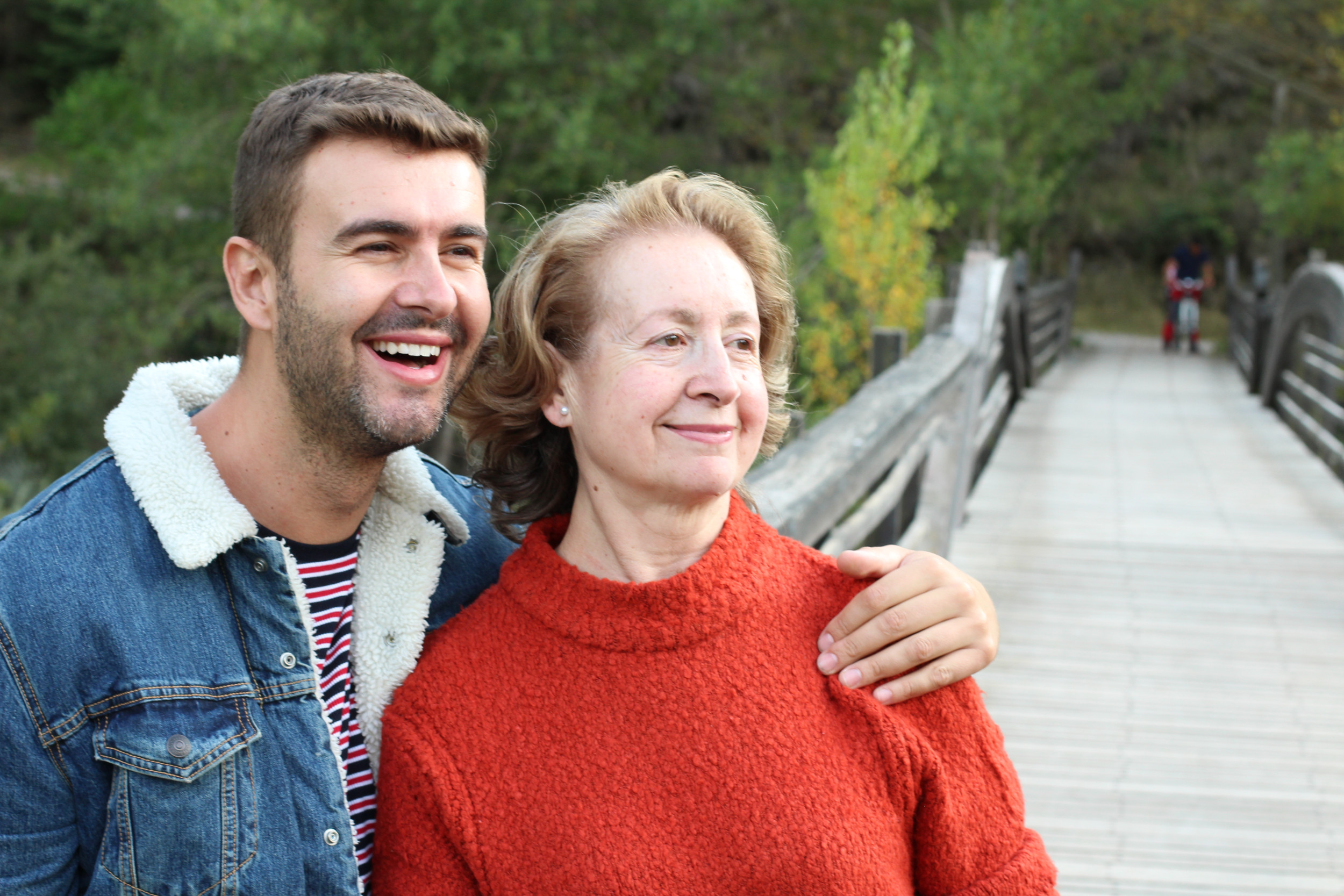
An elderly woman at the nursing home where I worked asked me to marry her as her final wish. Three days after we said our vows in her hospital room, she was gone. At her funeral, her lawyer put an old canvas bag in my arms and told me, “She chose you for a reason.” I had no idea how right he was.
The nursing home always smelled like lemon polish and old paperback books, and after a year working there as an orderly, I still found it more welcoming than most places I’d ever lived. Growing up in the foster system teaches you to notice small kindnesses wherever you find them, and that place had plenty to offer.
Most of the residents barely registered me at first. Gloria was the exception. She was eighty-two, sharp as a tack, stubborn as anything, and somehow she made everyone around her smile without even trying.
“You’re new,” she said the first morning I brought her breakfast tray. “But you don’t move like it. You’ve been carrying trays your whole life, haven’t you?”
I laughed. “Something like that. I’m Daniel. Nice to meet you, Gloria.”
“Lovely to meet you too. Sit down for a minute. Tell me about yourself.”
Nobody had asked me that in years.
After that morning it became a routine. I became the person she talked to every single day. Somewhere along the way she stopped feeling like a patient and started feeling like family. I’d bring her tea after my shift ended, and she’d tell me stories about growing up on a farm, about her late husband, about the way people used to dance in kitchens whenever the radio played the right song.
She never mentioned family visiting, unlike most of the other residents.
“I had a nephew once,” she told me one evening, stirring her tea slower than usual. “Marcus. He stopped visiting once he realized I wasn’t leaving anytime soon. But he’ll come back the moment he hears I’m gone. People are like that, Daniel. You’ll learn.”
“You don’t seem bitter about it,” I said.
“Bitterness is a house I refuse to live in.”
The one thing about Gloria I could never quite figure out was the bag. An old, faded canvas hospital bag with frayed corners that she carried with her everywhere. If a nurse ever tried moving it to make space on her nightstand, Gloria would politely reach out and take it right back into her lap.
“Is that bag important?” I asked her once.
“Everything that matters to me is inside it.”
“Can I see?”
She smiled the way people do when they’re saying no without actually saying the word. “One day, maybe.”
I let it go. Everyone’s allowed a private corner of the world, even in a place like that. Sometimes I’d catch her thumbing through the edge of a small photograph tucked at the top of the bag, then quickly zipping it closed the second she noticed me watching.
Sarah, another orderly and my closest friend at the home, teased me about it once in the break room. “You know Gloria’s basically adopted you, right? It’s funny, actually. She transferred in right before you got hired. Almost like she was waiting.”
“She’s just lonely,” I said.
“Daniel, she lights up the second you walk into the room. That woman thinks the sun rises out of your pocket.”
I didn’t know what to say to that. I wasn’t used to being anybody’s favorite anything.
A few weeks later, during a routine check, I noticed her hands trembling more than usual. Her color wasn’t right, and her breathing had a rattle in it I recognized from working there long enough. She caught me watching her and, instead of looking away, pulled the old bag closer against her chest.
Three weeks after that, the ambulance came for Gloria. I rode along with her, the bag sitting between us, because there was nobody else to call.
One afternoon during her hospital stay, she patted the mattress beside her. She looked smaller under the thin blanket, but her eyes were as sharp as the day I’d met her.
“Sit, Daniel. I have something to ask you.”
I sat. Her hand found mine, warm and steady despite everything happening to the rest of her.
“I have one final wish,” she said quietly, looking me straight in the eye. “I know this sounds strange, but I don’t have much time left. I’ve spent so many years alone, and I don’t want to leave this world knowing I never had someone to call my husband. Will you marry me?”
I just stared at her. She smiled, sad around the edges. The heart monitor kept beeping, the only sound between us for what felt like a full minute.
“Gloria…”
“Don’t answer now,” she said. “Go home. Sleep on it. But please don’t say no just because you’re worried about what people will think.”
That was exactly the problem. Of course that’s precisely what I was worried about.
I didn’t sleep that night. Tossed and turned until sunrise, then drove straight to the nursing home and pulled Sarah into the break room.
“I need to tell you something, and don’t laugh.”
She set down her coffee. “Daniel, you look terrible.”
“Gloria asked me to marry her.”
Sarah didn’t laugh. She didn’t even blink for a second. Then she rubbed her forehead like she’d just gotten a headache.
“Please tell me you said no.”
“I haven’t said anything yet.”
“Daniel.” She leaned in close. “You know how this looks, right? A thirty-four-year-old orderly marries an eighty-two-year-old woman with no family around. People are going to say ugly things. Management is going to ask questions.”
“I know.”
“If this gets out, your career here — anywhere in this field — is over.”
“She’s dying, Sarah. And she’s alone. She asked me for one thing.”
“She could have asked you for a hundred things that aren’t this.”
“But this is what she asked for,” I said.
Sarah studied me for a long moment. “You’re going to say yes, aren’t you?”
“I don’t know if what I have to lose matters more than what she has to lose,” I admitted.
She sighed. “That’s the problem with you, Daniel. You never think you have anything worth protecting.”
I went back to Gloria’s room that afternoon. She was propped up in bed reading a paperback, and she smiled the second she saw me walk in.
“You returned sooner than I expected.”
“I have my answer,” I said.
She set the book down.
“I want to do it,” I told her.
Her eyes filled up, but she blinked hard and refused to let a single tear fall. “Then yes?” she whispered.
“Yes.”
She squeezed my hand so tight I could feel every one of her thin, papery fingers. Beside the bed, that old canvas bag sat right where it always did, tucked beneath her palm.
A week later, Gloria and I were married in a small ceremony right there in her hospital room. A chaplain officiated. Sarah stood as our witness, quiet, no protest left in her by that point. Gloria wore a soft pink cardigan and the same stubborn smile she’d had the very first day I met her.
I knew most people would never understand my decision. But if I could give a kind, lonely old woman one final moment of real happiness, it felt like the least I owed her.
Three days later, and almost exactly two years after I first met her, Gloria slipped away in her sleep, my hand still resting under hers.
I stood at her funeral in a borrowed black coat, hollowed out and unsure what came next. That’s when a man named Mr. Charleston walked toward me across the wet grass, carrying the same worn old bag Gloria had never once let anyone else touch.
After introducing himself, he placed the bag in my arms. It felt heavier than it had any right to.
“She chose you for a reason,” he said, quieter this time. He reached into a folder under his arm. “There’s a letter inside, Daniel. She wanted you to read it before anything else happens. Before you make any decisions. She anticipated—”
A man in a gray suit stepped in front of us like he owned the ground we were standing on. Fifty or so, thinning hair, a tight, unhappy jaw. I’d never seen him before, but I knew exactly who he was the second he opened his mouth.
“You must be Daniel,” he said. “I’m Marcus. Gloria’s nephew.”
I nodded slowly. “She mentioned you.”
“I’m sure she did.” He looked me up and down. “A young orderly marries my eighty-two-year-old aunt three days before she dies. You can imagine how that looks.”
“It wasn’t like that.”
“It never is.”
Mr. Charleston cleared his throat, but Marcus wasn’t finished. “I’ll be contesting everything,” he said. “The marriage, the will, all of it. My lawyer’s already drafting the paperwork. You took advantage of a vulnerable old woman, and I’m not going to let it stand.”
My hands tightened around the bag. “I didn’t take anything from her.”
“Then you won’t mind handing that back.”
I looked at Mr. Charleston. He gave the slightest shake of his head.
“I need to think,” I said, and walked away, too shaken to turn back around even when he called after me.
By Monday, the whispers at the nursing home had already started. I felt them before I actually heard any of it — the pause when I walked into the break room, the way two nurses stopped talking mid-sentence when I passed them in the hallway, the way even residents I’d known for over a year started looking at me differently.
Sarah found me in the supply closet restocking towels. “Daniel.” She shut the door behind her. “Management wants to see you Wednesday. It’s a formal inquiry.”
“I figured.”
“You need a plan,” she said.
“I’m going to give it back,” I told her. “All of it. Whatever’s in the bag, whatever she left me. Marcus can have it. I don’t want anyone thinking I did this for money.”
Sarah stared at me. “Daniel, that’s exactly what Marcus wants you to do.”
“Maybe he deserves it. He’s her blood.”
“So? You were her family. I watched you with her every single day.”
I didn’t answer. I just kept folding towels.
That night I sat on my bed with the bag in front of me, unopened. Somehow opening it felt like a kind of violation — like the second I unzipped it, I’d be admitting Marcus was right about something.
My phone buzzed. Mr. Charleston.
“Daniel, I didn’t get to finish that day. Before you make any decisions, please open the bag. Read the letter. Gloria anticipated all of this.”
“Anticipated what?”
“She knew Marcus would come the moment he heard she’d passed. She prepared for it. That’s what I was trying to tell you when he interrupted us. Please, just open it.”
I hung up and stared at the zipper for a long time. Then I finally pulled it open.
There was no money inside. No jewelry, no house deeds, no safe combinations, none of the things I’d braced myself for. Instead there were letters. Hundreds of them, yellowed and brittle at the corners, tied together with faded ribbon. Some dated back to 1972. Some were from just last spring.
There was a small photograph, cracked along one edge, of a young woman holding a baby.
And on top of everything sat a sealed envelope with my name written across the front in Gloria’s shaky handwriting. I sat there a long time before I reached for it, because somewhere inside me I already knew that whatever was written in that envelope was going to change everything I thought I understood.
Mr. Charleston’s office was quiet when I unfolded her letter again, this time with Marcus sitting across from me, arms crossed, waiting to pounce the second I finished.
I began reading her words out loud.
“My dearest Daniel. When I was seventeen, I gave up a baby boy. I spent fifty years writing him letters I could never send.”
My voice cracked. I kept going anyway.
“I found the records too late. By then my son had already passed away. But he left behind a child. A boy raised in foster care, who grew up to become an orderly at a nursing home.”
Marcus shifted in his seat, the color draining out of his face.
“I recognized you the moment you walked into my room, Daniel. I had a photograph. But I didn’t want you as an obligation. I wanted to know you as yourself.”
I looked up. Mr. Charleston was watching me with a quiet kindness that told me he’d known all along.
“The marriage,” I whispered. “It was to protect her wish.”
“Yes,” he said. “A will naming you outright would have invited Marcus to drag you through probate for years, arguing the DNA was fabricated, the adoption records forged, the sealed file tampered with. But a legal spouse is next of kin the moment that certificate is signed. No challenge could freeze the estate after that.”
He slid a thick folder across the desk toward Marcus. “The unsealed adoption file. Your father’s birth certificate. And a DNA comparison Gloria commissioned last spring, using her own sample and a coffee cup Daniel left in her room one afternoon. Ninety-nine point nine percent. Contest it if you’d like.”
Marcus stared down at the folder. He stood up, opened his mouth, closed it again, and walked out without a single word.
I reached into the bag and pulled out that small cracked photograph. A young Gloria, holding a baby. My father.
“She was searching for me,” I said softly. “All those years.”
“She found you,” Mr. Charleston said. “And she made absolutely sure you’d know it.”
A month later I stood in the small house Gloria had left me, hanging that photograph above the mantel. I used part of the savings she’d left behind to start a visitor program back at the nursing home. No resident would sit there alone again, not on my watch.
Sarah helped me set it all up on the very first afternoon, squeezing my shoulder as the residents smiled at their new companions filling up the common room.
“She chose well, Daniel,” she said.
Standing there, I finally understood that the family I’d always believed I never had, had been out there looking for me the entire time.

Specialty: Legal & Financial Drama
Michael Carter covers stories where money, power, and personal history collide. His writing often explores courtroom battles, business conflicts, and the subtle strategies people use when pushed into a corner. He focuses on grounded, realistic storytelling with attention to detail and believable motivations.