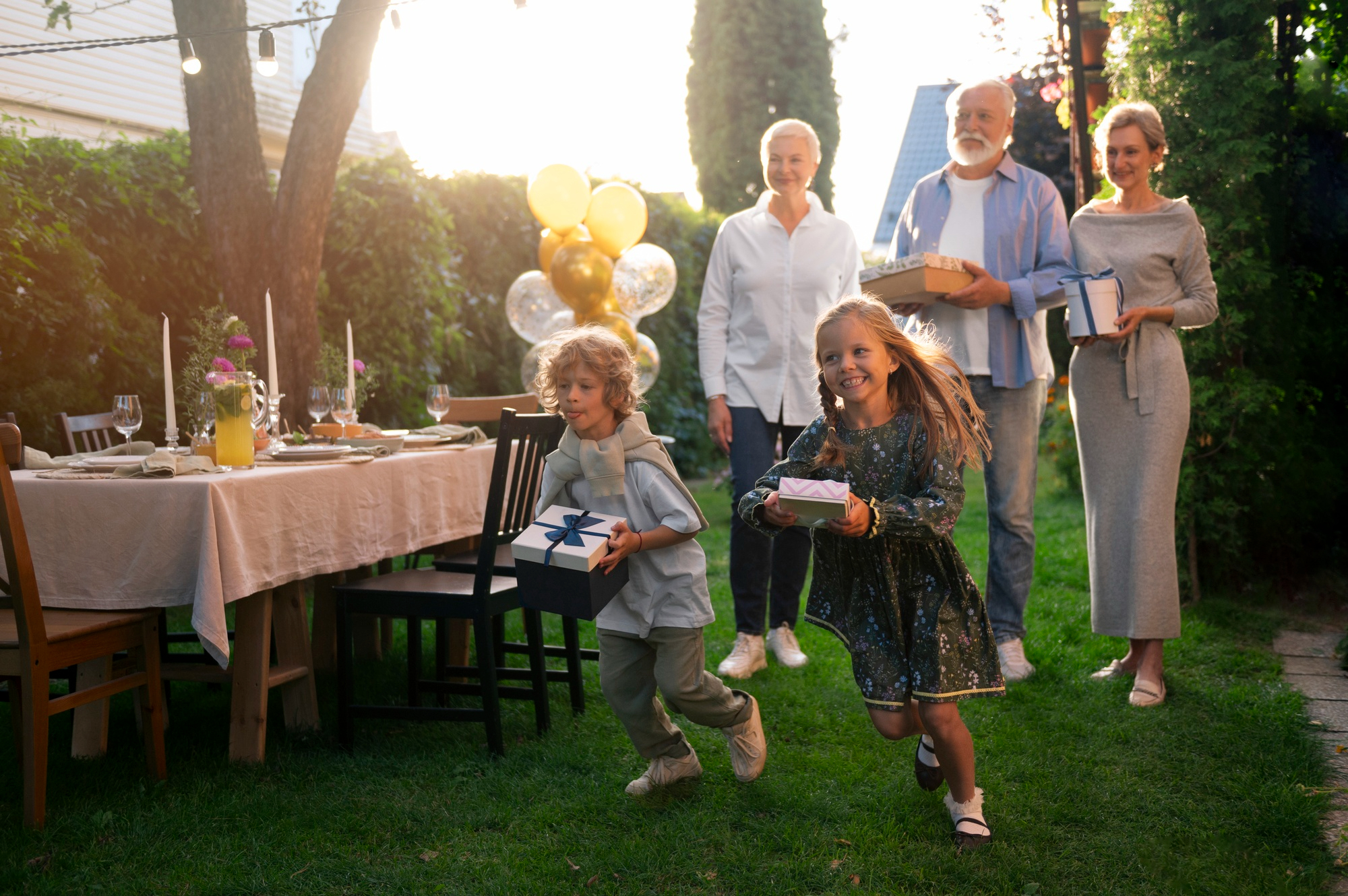
The day my parents erased my daughter from the family, they did it in pink frosting, gold cursive, and a backyard full of witnesses.
My eighteen year old daughter had just graduated first in her class. Valedictorian. Scholarship offers. Honor cords. The kind of achievement most grandparents would put in a frame and talk about until strangers begged for mercy. My parents offered to throw a graduation party for their granddaughter. When we arrived, the party was for my niece, who had just finished eighth grade. The cake said, for our only granddaughter. I didn’t yell. I didn’t throw the cake. I didn’t make a scene in front of the neighbors, the cousins, the folding chairs, the shrimp skewers, and all those smiling people who suddenly looked at my daughter like she was the awkward guest at someone else’s celebration. I simply took Mia home. Then I did one thing. Three days later, my parents got a letter. And this time, they were the ones who started screaming.
Let me tell you about the last time I trusted my parents with anything that mattered. Actually, let me tell you about the last time I trusted them at all. Because this wasn’t just another family slight. It wasn’t about forgetting a birthday or mispronouncing a name. This was betrayal baked into buttercream and served on a folding table next to lemonade, shrimp skewers, gold napkins, and lies.
It started innocently enough. My mother called me on a Tuesday afternoon, in that light, casual tone she uses when she’s about to say something that’s going to ruin my day but wants me to think it’s sweet. I was in the parking lot of a grocery store, loading bags into the trunk of my SUV while the Virginia heat shimmered off the asphalt. The cart had one bad wheel and kept trying to roll away. I remember that clearly because life has a cruel sense of timing. The ordinary details always stay sharp right before something important goes wrong.
We were thinking of throwing a graduation party, she said. I paused with a bag of rice in my hand. For our granddaughter. Just like that. Our granddaughter. I nearly dropped the rice. Oh, yes, she said, as if she had not just cracked open something tender inside me. Something small, just family, we’d love to host. That was it. I said thank you. She sounded sincere, the kind of sincere that makes your shoulders drop just a little. The kind that makes you believe, against all better judgment, that maybe this time will be different.
I didn’t even think twice about who she meant. My daughter Mia had just graduated high school, valedictorian, thank you very much. After four years of sleepless nights, scholarship essays, debate tournaments, volunteer hours, group projects with kids who didn’t do anything, and pushing through things no kid should ever have to deal with, she made it. Not just made it. She stood at the top. She had walked across that stage with a gold cord around her neck and the kind of smile that looked calm only because she was too disciplined to cry in front of hundreds of people.
And now, finally, maybe my parents saw her the way I did. Maybe they had missed the ceremony because of pride, or discomfort, or whatever excuse they were using that week, but this was their way of making it right. Maybe they understood that Mia was leaving for college soon. Maybe they finally realized that if they didn’t reach for her now, they might lose the chance forever.
I told Mia about it that night. She was sitting at the kitchen island in pajama pants, eating cereal from a mug because all the bowls were in the dishwasher, her laptop open to a spreadsheet of college costs that looked terrifying enough to qualify as a horror movie. Grandma and Grandpa, she asked. Yep. She blinked. Really? I nodded. She didn’t say anything else, but I could tell. That little spark of finally. Like after years of showing up, being helpful, being good, someone had noticed. She looked down at her cereal and tried to hide the smile, which somehow made it worse.
Mia had never been greedy with love. She did not demand attention. She did not compete loudly. She simply kept leaving little offerings at the feet of people who should have loved her easily. A good report card. A thank you text. A hand painted birthday card. A clean kitchen after family dinner. A careful explanation to my father about how to reset his phone. She gave and gave in tiny quiet ways, waiting for my parents to look at her and say, we see you. And now, for one brief, foolish second, we both thought they had. If I could go back in time, I’d tell both of us not to get our hopes up.
The day of the party was hot, sticky back of the knees hot, the kind of heat that makes your shirt cling to your spine before you even lock the front door. My husband Marcus couldn’t find his good shoes. Mia kept changing her earrings. I was sweating before we even got in the car. Gold hoops or pearls, Mia asked from the hallway. Whichever makes you feel like the girl who conquered high school, I called back. She appeared a minute later in a pale blue dress, simple and pretty, her hair curled softly around her shoulders. She looked eighteen and six years old at the same time, grown and hopeful and still too young to understand how adults can be cruel without raising their voices.
The closer we got to my parents’ neighborhood, the quieter we all got. Their house sat in an older subdivision outside Richmond, the kind with big oak trees and lawns maintained with the seriousness some people reserve for religion. Remember, I told them, this is a nice thing, let’s just smile and say thank you. I said that like a fool.
We turned the corner onto their street, and I nearly drove past the house. At first glance, it didn’t look like a party. It looked like a small wedding. White canopy tent in the yard. Dozens of folding chairs. Streamers. Gold tablecloths. A balloon arch in blush pink and ivory. Little personalized signs stuck into the grass. A rented drink station. A photo backdrop. They really went all out, Marcus said low. Mia leaned forward between the front seats. Wow. That one word carried so much hope I almost pulled the car over.
We parked under a maple tree and got out, and the second we stepped onto the lawn we were in the middle of a crowd. Hugs, air kisses, plastic cups of lemonade shoved into our hands, people I hadn’t seen since childhood. The air smelled like cut grass, sunscreen, grilled chicken, and expensive frosting. Then I saw the girl front and center. Kaye, my sister Heather’s daughter, curls done, sash across her chest, glittery dress, white sandals, lip gloss, a tiara that caught the sun every time she moved. She was fourteen, pretty in the polished way Heather preferred, practically glowing under everyone’s attention. And still, I swear, I still didn’t see it. I just thought she was excited for Mia. I smiled at her. I waved. Kaye waved back weakly, then looked away. That was the first crack.
Then I saw the cake. Three tiers, pastel pink frosting, gold piping, a little edible graduation cap on top, and written across the front in careful cursive, congratulations to our only granddaughter, class of 2025. I froze. Only. I blinked, rereading it. That couldn’t be right. There are two granddaughters. Mia and Kaye. Two. One had just graduated high school first in her class. One had just finished eighth grade. Both mattered. At least, they should have.
Then I saw the banner behind the cake. Not Mia’s high school colors. Not her school logo. Not her graduation year. The colors belonged to Kaye’s middle school. The framed photo beside the cake showed Kaye holding a rolled up certificate, wearing a sparkly white dress and that tiara like she had just won a pageant. It hit me all at once. This wasn’t a party for Mia. It never was.
Behind me, Mia was silent. Not frozen. Not panicking. Just still. I looked at Marcus. He looked back at me. No one spoke. For three seconds, I heard nothing but the distant hiss of sprinklers and the slow, terrible thud of my own heart.
We stepped into the party like ghosts. No one noticed anything. Not yet. People smiled and said things like, you must be so proud, and what a beautiful day. A few guests gave me confused looks when they realized Mia wasn’t wearing the sash. Then the gift table. One by one, guests handed over wrapped boxes and cards. We brought nothing. Why would we? We thought this was for Mia. A woman I barely knew gave me a strange look. One cousin actually tilted her head and mouthed, where’s the gift? I wanted to sink into the lawn. Mia looked at the table, then down at her empty hands. I saw her shoulders move, just once, a tiny adjustment, like she had physically pulled herself inward. That was the moment my anger became dangerous. Not loud. Not explosive. Dangerous. Because it stopped being about me.
Then Heather stood up, glass of champagne in hand. My sister had always loved a stage. Everyone, she called out, tapping a spoon against her glass. Can we gather for just a second? The crowd shifted toward her. My mother stood beside the cake, smiling proudly. My father had one hand on Kaye’s shoulder. Heather lifted her glass. Let’s all take a moment to celebrate our girl. She’s worked so hard. We couldn’t be more proud. Middle school is a huge milestone. Cheers. Laughter. Applause. Someone shouted, we love you, Kaye. Mia just stood there, not crying, not moving, just watching. I wanted Heather to look at her, just once. I wanted my father to say, and of course we are proud of Mia too. Nothing. The toast ended. People clapped again. That sound cut through me.
I waited until the crowd thinned around the cake table. Then I found my mother near the cooler, scooping ice into a plastic pitcher. The cake says only granddaughter, I said. She smiled, distracted. Oh, probably a mistake at the bakery. I didn’t move. Her smile twitched. Besides, Mia’s older. She’s not a child anymore. This was more of a milestone. I stared at her. High school graduation is not a milestone? She went back to the cups. You know what I mean. No, Mom. I really don’t. She sighed, already tired of me. Laura, please don’t do this today.
Then my dad walked up holding a paper plate piled with chicken salad. Wait, he said, laughing slightly, did Mia graduate too? I said nothing. He blinked. From what? High school. He laughed again. Oh, right. That’s right. I looked at my mother. She didn’t say anything. She just smiled and turned back toward the buffet table. That was it. No gasp. No apology. Just avoidance so practiced it looked like manners.
I walked back to Marcus and Mia. We’re leaving, I said. Mia nodded immediately. We left. No one stopped us. No one followed. No one even noticed, which somehow made it worse. And as we pulled out of the driveway, past the balloon arch and the little yard sign that said Kaye’s big day, I said, we’re not doing this again. No one argued.
There are things I didn’t notice when I was a kid, and there are things I did notice but talked myself out of. That’s what growing up in a family like mine teaches you, how to gaslight yourself before anyone else gets the chance. It wasn’t until the cake that I looked back and realized this wasn’t just an oversight. This was the punchline to a joke they had been telling behind our backs for years. And the joke was us.
I’ve always been described as easy, in the manageable child kind of way. I didn’t cry at bedtime, I organized my own lunchbox, I said thank you too often and wanted too little, which meant my parents treated me like furniture they liked having around but didn’t need to maintain. My older brother Daniel was the thinker, science fairs, chess trophies. Heather was the little sparkle, singing badly but loudly, dancing in the living room. I was practical. I packed diaper bags. I remembered whether the oven was on. When adults visited, my mother would call Daniel our future professor and Heather our little star. Then she would point at me and say, Laura is my helper. Helper. Not daughter. Not bright. Not special. Helper. It’s not that they hated me. It’s worse than that. They didn’t notice me. And you can survive that, but it leaves a bruise you don’t see until later.
The house they live in now, the scene of the cake, used to belong to my grandmother, Grandma Rose. She was the only person in my childhood who made me feel like a full sentence instead of a footnote. She smelled like lavender soap and black coffee, kept peppermints in the pocket of her robe, called everyone sweetheart, but when she called me that, it felt like she meant me specifically. When I was four, she died. Years later, I learned that Grandma Rose had left the house to my mother, Daniel, and me. One third to each. The first time my mom mentioned my name being on the deed, I laughed. I was twenty six, pregnant with Mia, sitting at my parents’ kitchen table. You’re joking, right, I said. She waved it off. You’re technically a co owner, just ignore that, it’s not a real thing. But why me, I asked. My mother’s expression changed. For half a second, something like resentment crossed her face. Your grandmother did what she wanted. Then she closed the file drawer harder than necessary. That should have told me everything. But I did what I always did. Smoothed it over.
When I had Mia, I expected something soft to unlock in them. They did neither. They said she was cute. They brought a bib. Then they asked how many hours of maternity leave I had left. Mia didn’t have doting grandparents. She had people who sent birthday cards with twenty dollars in them and forgot which grade she was in. It wasn’t mean. It was nothing. And sometimes nothing hurts more than cruelty, because at least cruelty notices you.
Meanwhile, when Heather had Kaye four years later, there were balloons, hand knitted sweaters, a silver rattle engraved with her initials. My dad learned how to use a photo printer. My mom joined a Facebook group for cool modern nanas. For Mia, they were just older adults who shared a table with us twice a month. We went to every dinner. We smiled. Mia even complimented her artwork, usually a few streaks of purple crayon claiming to be a dolphin. I think Mia knew what was happening, but she was trying. She really, honestly was. She’d offered to help clean up, laugh at Grandpa’s awful jokes, show them how to send an email. She wanted to be a good granddaughter. And she was. But it didn’t work. Not really. They liked her the way you appreciate a neighbor who brings your trash cans in. Kind. Helpful. Forgettable.
Senior year, she worked her tail off. Top of her class. Debate wins. Volunteer hours. Scholarship essays written at midnight with cold coffee beside her laptop. And I could see it in her, this growing hope that maybe the success would tip the scales. She never said it out loud. She’d casually mention things like, I think Grandpa likes history too, right? I got full marks on that project. She wasn’t asking for a parade. Just a nod.
I told them about her graduation weeks in advance. Sent the parking map, the start time, a photo of her in her cap and gown. They didn’t RSVP. Three days before the ceremony, I got a text from my mom. Sorry, not feeling 100 percent. Might sit this one out. Sit this one out like it was a neighborhood barbecue. Mia didn’t say anything when I told her. She just tied her shoes and asked if her speech sounded okay. That was the worst part. Not the silence. The normalcy. She had learned not to expect them so well that disappointment barely needed to knock anymore. It already had a room.
So when my parents called and said they wanted to throw a graduation party for our granddaughter, I didn’t hesitate. I told Mia. She lit up. She picked out a dress. She was nervous and excited and scared in that hopeful way that only teenagers are when they still think things can be different. And honestly, so did I. We were wrong.
The ride home after the party was the longest twenty two minutes of my life. No one spoke at first. Mia stared out the window. She did not cry, and somehow that made me feel worse. At a red light, I looked at Mia in the rearview mirror. Baby, I said. She blinked quickly. Don’t. Just that. So I didn’t.
When we got home, Mia went straight upstairs. Her bedroom door closed softly. Not slammed. Softly. That was Mia. Even hurt, she made herself easy to live with. I stood in the foyer holding my keys and felt something ancient inside me rise up and break. Marcus walked into the kitchen, filled a glass with water and handed it to me. Drink, he said. I’m fine. You’re not. I drank. Then I said, the cake said only granddaughter. I saw. My father asked if Mia graduated too. I heard. My mother said middle school was more of a milestone. Marcus’s jaw moved once. What kind of person does that? He didn’t answer right away. Then he said, a person who has been allowed to do smaller versions of it for years. That was the sentence that changed the room. Not because it was shocking. Because it was true.
That night, after Mia fell asleep, Marcus asked one question. Do you still own part of the house? I stared at him. The house. Grandma Rose’s house. The legal share I had ignored for decades because my mother told me it wasn’t a real thing. Yes, I said slowly, technically. He nodded. Then maybe it’s time technical became real.
I did not sleep much that night. I pulled up old records, county property documents, tax payment history, the scanned copy of Grandma Rose’s will. There it was. My mother. Daniel. Me. One third each. I had let my parents live in Grandma Rose’s home because that was what family did. And in return, they had used that same home to throw a party erasing my child.
By two in the morning, Marcus had made coffee. By three, we had found a real estate attorney. By nine, we had an appointment. I never thought I’d send a letter like that. Not a handwritten note. A letter letter. One that makes people stop breathing for a second when they open it. Marcus drafted the first version because he works in contracts and knows how to make politeness feel like a locked door. Then the attorney cleaned it up. Calm. Precise. I signed it without blinking, because I wasn’t doing this for me. I was doing it for my daughter.
We printed two copies, one for our records, one to drop off. I delivered it by hand, folded once, tucked into a plain white envelope. I intend to sell my one third share of the property located at. Clean. Legal. Non negotiable. They could theoretically buy me out. Ask Heather. Ask Daniel. Sell something. But I knew they wouldn’t. And I knew that wasn’t the point. The point was they don’t get to own me anymore. They don’t get to erase us under my grandmother’s roof.
Heather called first. She opened it in front of Kaye, Heather said, like that was the greatest crime committed all year. Mom screamed, Laura, full volume. Should I apologize to the tea, I asked. You’re destroying her, she said finally. No, I replied. She did that to herself. I’m just making it official.
Three hours later, my mom called. I’m going to pretend I misread that letter, she said calmly, and you’re going to tell me it was a mistake. It wasn’t, I said. You’re really going to sell your share of the house? Yes. Our home. No, I said, my share of Grandma’s home. This is vindictive. No, I said. This is overdue. She said Kaye needed that kind of attention, that Mia was older and didn’t need it. No, I said. You just didn’t want to give it to her. She laughed, sharp and bitter. Oh, so it’s about Mia now. Everything I do is about Mia. Then I hung up.
That evening, Marcus found me sitting at the kitchen table. Do you feel guilty, he asked finally. No, I said, I feel like I should, but I don’t. He nodded. I’ve always made excuses for them, I said. I think I thought they’d come around eventually. You don’t believe that anymore? I shook my head. They knew she got in. And they spent all that time celebrating someone else’s kid’s middle school certificate like it was a PhD.
The next few days were quiet in that way that feels more like a loaded gun than peace. I stopped answering their calls, stopped running errands. Mia stopped too. No more Kaye birthday videos. She just quietly stepped back. I asked her once how she felt. She said, like I deleted a virus I didn’t know was running.
Four days later, Heather tried again. You don’t even know what you’ve done to Mom. Then talk to her. I did. I sent a letter. Then I hung up again.
For almost two weeks, the family fractured in predictable ways. Heather turned into my mother’s spokesperson. Daniel stayed silent. My father left one voicemail that began with, this is your father, and ended with, your grandmother would be ashamed. That one nearly got me, because he knew exactly where to put the knife. I played the voicemail for Marcus. He listened without changing expression. Then he said, your grandmother gave you that share. She didn’t give it to them to use against you.
A few days later, Daniel called. Mom says you’re forcing a sale, he said. I’m selling my share. You’re really doing this over a party? I closed my eyes. Daniel, if I invite you to a party for your son, and you show up to find out it’s for someone else, and the cake says our only grandson, are you calling that just a party? He didn’t answer. Exactly, I said. There was a long silence. Then he said, quieter, Mom always had a way of making things disappear if she didn’t want to look at them. That was the closest Daniel had ever come to admitting the truth.
I thought the cake was the low point. I was wrong. It started two weeks after the letter. Mia walked in from dance class with that face. Shoulders straight, voice calm, eyes too bright. They were waiting for me, she said. Who? Grandma and Grandpa. Outside the studio. On the sidewalk. Marcus looked up from the dining table. Apparently they had shown up like two friendly ghosts, waved her over, acted like they just happened to be out on a walk. She said they were nice at first. Too nice. Then came the script. You’re really going to let your mom do this to us? She’s making us homeless, sweetie. Talk to her. Family shouldn’t fight over money. I asked how she responded. Mia shrugged. I told them no. That’s when my mother looked her dead in the eye and said, fine. But choices have consequences. Mia turned and walked away.
I stood in the kitchen for a while after she left, staring out the window. I expected guilt trips. I expected manipulation. But dragging Mia into it, ambushing her near a dance class, that was new. That was deliberate.
Another two weeks passed. We were talking about dorm furniture, meal plans, the good kind of stress. Mia had chosen her college, a private university in Pennsylvania. When she got the acceptance email, she screamed so loudly Marcus thought she had broken a bone. Now, after the house letter, after the sidewalk ambush, we were sitting in the fragile peace of summer planning bedding colors. Then the envelope arrived. Mia thought it was her housing packet. She opened it at the kitchen counter. I heard her breath catch. Then she handed it to me. It wasn’t housing. It was a notice from the admissions office. Her enrollment was under review. An anonymous report had been submitted alleging omissions, inconsistencies, undisclosed legal entanglements, and concerns regarding the accuracy of her application materials.
Mia didn’t speak. Marcus took the letter, read it once, twice, then looked at me like someone had just kicked the front door open and lit a match. This wasn’t petty. This wasn’t family politics. This was an attack. And not on me. On her. Can they take it back, Mia’s voice came out thin. No, I said immediately, even though I did not know. We’re going to fix this. She nodded like she believed me because she needed to. Then she went upstairs. The moment her door closed, I grabbed my keys. Marcus stood. I’m going there. I’m coming. No. If you come, you’ll make me reasonable. His face hardened. Good. I don’t want to be reasonable. He looked at me for a long second. Then he stepped aside. Record everything.
My father opened the door like he’d been watching through the blinds. My mother appeared behind him, not surprised. Just smug. I had already hit record before I rang the doorbell. Did you report Mia to the university? No blinking. No confusion. Just stillness. Then my mother said, you think you can do what you did and not face consequences? I stepped inside. A framed photo of Kaye sat on the entry table, right where Mia’s graduation portrait should have been. You tried to destroy her life, I said. She shouldn’t be there, my mother said. That school wasn’t meant for her. My father muttered, Evelyn. So there it was. My mother’s name, spoken like a warning too late.
She got in on her own, I said. You dragged your drama into it. My drama? You’re trying to take our home. I’m selling property I legally own. My mother’s face sharpened. She’s not special because she gave a speech in a cap and gown. I felt something inside me go very quiet. You’re right, I said. She was special long before that. You just never cared enough to notice. My father’s jaw tightened. Don’t speak to your mother that way. I turned to him. Did you know? He looked away. That was answer enough.
I did not expect you to sabotage a child’s future just to get even. She’s not a child, my mother snapped. She’s part of this. She is eighteen. She is old enough to understand loyalty. No, I said. She is old enough to understand danger. My mother laughed, a small, cold laugh. You always make yourself the victim. I stepped closer. For the first time in my life, my mother stepped back. You’re not just bad grandparents, I said quietly. You’re dangerous people. Her mouth opened. Nothing came out. I turned around and walked out. My hands shook so badly I had to sit in the driveway for almost a minute before I could drive.
When I got home, Marcus was waiting in the kitchen. Mia stood behind him on the stairs. Yes, I said. They did it. Her face did not change. That was worse. She just nodded once and went back upstairs.
That night, I posted three things to the family group chat. No intro. Just a photo of the cake. A screenshot of the university letter. And an audio clip of my mother saying that school wasn’t meant for her. Then I turned off my phone and made dinner. Pasta. Jarred sauce. The most ordinary meal in the middle of a family explosion.
The fallout was immediate. Cousins I hadn’t heard from in years chimed in. Three people left the group silently. Daniel texted only one sentence. Call me when you can. Heather eventually jumped in with, this is being blown out of proportion. No one answered her. Not even Kaye. That silence told me something had shifted. When Mia reached the end of reading it all, she said, I don’t think I ever want to see them again. I nodded.
The next morning, we called the university. The admissions officer, Ms. Patel, sounded like she had heard every ugly version of family interference before. We take anonymous reports seriously, she said, but we also verify before making decisions. I explained everything. The party, the property letter, the sidewalk ambush, the threat, the recording, the timing. We sent everything. By the end of the call, Ms. Patel said, based on what you’re describing, this appears to be a retaliatory report. We’ll review the materials, but please tell Mia not to panic.
Two days later, the review was closed. Her enrollment stood. Her scholarship stood. Mia read the email, sat down on the kitchen floor, and sobbed into both hands. I didn’t do anything, she kept saying. I know. I just wanted them to like me. I know. What is wrong with them? That one I could not answer. So I just held her.
A few days later, my phone rang. It was Daniel. They called me, he said. They want help buying you out. Said they’re desperate. I stayed quiet. Then he added, I told them no. I want to sell my third, too. I felt something in my chest unclench. For Mia, he said simply. This crossed a line. Why now, I asked. Because I can excuse a lot of things as Mom being Mom. But reporting Mia to that school? His voice lowered. That was not dramatic. That was malicious. There it was. The word I had been circling for years. Elise read the group chat, he said. She asked me what kind of man I was planning to be. I didn’t like my answer.
Within a week, Daniel had contacted the same attorney. My parents now faced two adult children selling two thirds of the house. That changed everything. Heather called me that night, starting with anger instead of tears. You’re turning everyone against Mom. No. Mom is turning everyone against Mom. I just stopped covering the windows. Did you tell Kaye Grandma tried to take Mia’s college? Heather went silent. But you keep using her as a shield, and someday she’s going to realize that. She hung up.
A month later, the attorney filed what needed to be filed. My parents received formal notice that Daniel and I intended to force a partition. They called everyone, left voicemails swinging wildly between victimhood and threat. Laura, please, you’re breaking this family. Laura, your grandmother would be devastated. That last one hurt less than it should have, maybe because being a mother had become something different to me. Not a title. A daily choice to protect instead of possess.
The house sale took almost a year. My parents resisted every step, refused appraisals, accused the realtor of bias, accused Daniel of betrayal, accused me of greed. At one point, my mother sent a letter through her own attorney claiming I had abandoned familial obligations. Our attorney read that phrase out loud and blinked. Eventually the pressure worked. The house went on the market. Before the listing photos, my mother removed every photo of Mia from the house. There were only two, both outdated. She left dozens of Kaye. I heard about it from Daniel. I didn’t go to the house. Not once.
The closing happened on a rainy Thursday. My mother refused to look at me. Then she saw Mia. Kaye looked across the table and said, quietly, I’m sorry. The room froze. I didn’t know they told you it was your party, she said. I saw the cake. I knew it was mean. Mia’s face softened just enough to hurt. It wasn’t your fault, she said. Kaye nodded, eyes shining. I know. But I still stood there. Sometimes fourteen year olds can say the thing grown adults spend their lives avoiding. My mother stood abruptly. We’re done here. No goodbye. No apology.
After closing, Daniel walked us to the parking lot. I should have paid more attention, he said. We all should have. He turned to Mia. I’m proud of you too. Mia’s eyes filled, but she held herself steady. Thanks, Uncle Daniel.
A week later, the money cleared. My third covered everything Mia needed. There was money left after that. I opened a separate account in Mia’s name. Not revenge money. Grandma Rose money. A final gift from the one woman who had seen me.
I took Mia to campus in August. We made her bed. Hung string lights. Mia taped a small photo above her desk, not one of my parents, not the graduation party, a photo of the three of us after her real graduation ceremony, her cap crooked, her smile tired and real. Before we left, she hugged me too tightly. Thank you for choosing me, she whispered. Mia, there was never a choice. She shook her head. There was. They kept asking you to choose them instead. That sentence stayed with me all the way home, because she was right.
We haven’t spoken to my parents since. No calls. No apologies. Heather is still orbiting, but the glow’s gone. I heard Kaye finally told them she didn’t want loyalty if it meant being used to hurt Mia. My parents used their cut to buy a tiny, rundown house, far from town, thin walls, sirens at two in the morning. It’s theirs now, every cracked tile of it, every room too small for the version of themselves they tried to perform. I do not celebrate their misery. But I also do not rescue them from it. That is the difference now.
Mia is steady, focused, sharp in all the right ways. She sends me photos from campus, stacks of books, her debate team, a terrible cafeteria omelet she called academically concerning. She is building a life where she does not have to earn love by being useful. And they’ll never get to take credit for a second of it.
Sometimes people ask if I regret it. No. I sold my share of my grandmother’s house after my parents used that house to erase my daughter, then tried to punish her future when I refused to keep accepting it. The cake was not the reason. The cake was the receipt. It showed the truth in frosting because apparently subtlety had failed. I didn’t go too far. I went exactly far enough to make the pattern stop touching my child. Some patterns do not end with conversations. Some patterns end with paperwork. Some families only understand boundaries when a lawyer mails them in a white envelope. And on the quiet evenings now, when I sit on my own porch and think about Grandma Rose’s peppermints and lavender soap, I know exactly whose approval I was finally answering to, and it was never theirs.

Adrian Hawthorne is a celebrated author and dedicated archivist who finds inspiration in the hidden stories of the past. Educated at Oxford, he now works at the National Archives, where preserving history fuels his evocative writing. Balancing archival precision with creative storytelling, Adrian founded the Hawthorne Institute of Literary Arts to mentor emerging writers and honor the timeless art of narrative.