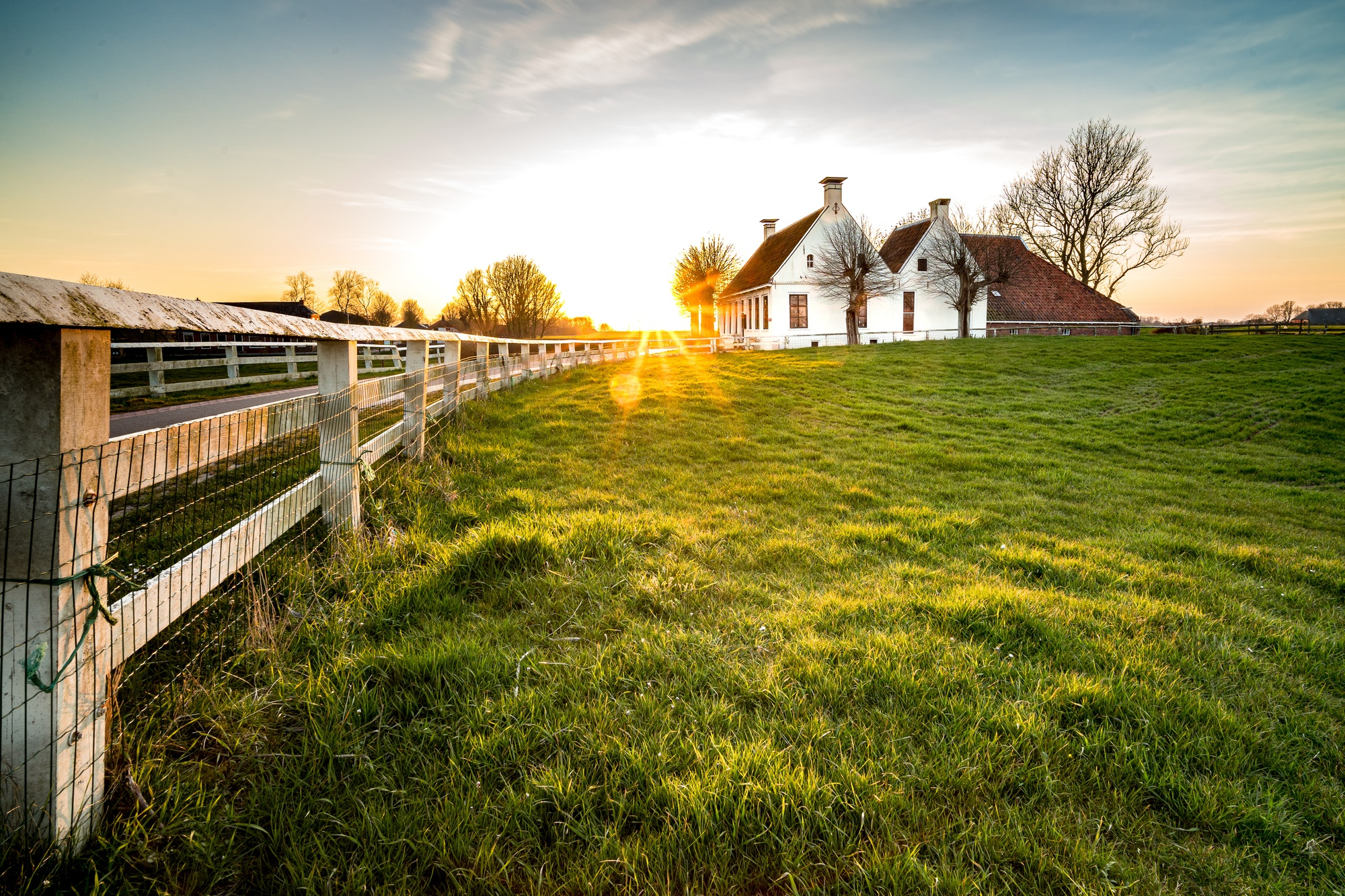
On the night my grandmother turned seventy nine, she sat by the paddock fence and fed her birthday cake piece by piece to a thirty year old horse named Duke. Forty feet away, under the string lights, my parents raised champagne flutes and posed for selfies. My mother’s caption read, big farm sale, new chapter. They had sold Ren Hollow behind her back. One hundred sixty five acres, fifty years of her work handed off in a deal she never agreed to. The next morning, strangers parked at the gate and began driving stakes into her front field.
My name is Vivian Mercer. I am thirty, an equine vet who grew up on that land. But here is what my parents never understood. My grandmother was not confused. And she was not losing. Months earlier, quietly, without one raised voice, she had already outplayed them. That night, she just smiled, pressed a folder into my hands, and whispered, tomorrow, watch.
Eight months before that birthday party, I was forty minutes away in a cold barn when my phone buzzed. Earl’s voice came through rough and breaking. Viv, your grandmother’s down. I stood up too fast. The paddock, he said, his breath ragged, by Duke, she’s not getting up. I do not remember the drive. I remember gravel spraying when I braked, and Earl on his knees in the dirt holding my grandmother’s hand. She was conscious, gray, sweating, one fist pressed to her chest, but conscious. And the first thing she did when she saw me was look past me toward the old bay horse and say, don’t let them move Duke, he worries. That was Ruth Mercer. Flat on the ground, her heart misfiring, and she was worried about the horse.
Earl had been at Ren Hollow for thirty years. He watched my grandfather build the place board by board, and when he died, everyone assumed Ruth would sell. She did not. She ran it herself for fifteen years, and better than anyone expected. She had once told me, pressing my small hand flat against a fence post, land remembers who tends it. It knows the difference between a person and an owner. I did not understand her then. I do now.
At Fauquier Hospital, my parents arrived an hour later, and I want to be fair. My father loves his mother in whatever bent shape his love takes. But they came down that corridor like people with an agenda. I heard my mother murmur to him outside the door, that property is sitting on a gold mine, subdivided estate lots in hunt country, we’re talking millions. My father said nothing. She’s laid up now, my mother pressed. We’d be doing her a kindness.
They came in with a power of attorney form. It’s just a precaution, my mother said gently, smoothing the top page on the rolling tray, so Dale can handle the small stuff if you’re laid up. My grandmother’s eyes opened, slow from the sedative. I should have stopped it. I was twenty nine and frightened, and I trusted them more than I should have. Ruth’s fingers closed around the pen, trembling, and she signed. But then she held the pen there and read her own signature for a long moment, deliberate, memorizing exactly what had been put in front of her. She set the pen down, turned to the window, and said, thank you, Sharon. Mild as milk.
That night, past visiting hours, she asked me to hand her the phone from her bag. Who are you calling this late, I asked. She waited, patient, until I understood I was being asked to leave. Through the door’s narrow window, I saw her lift the phone to her ear. I caught three words. A name I did not recognize. And the word Monday.
That name belonged to Nia, my brother Wesley’s wife, a real estate attorney out of Middleburg who handled conservation easements and old family land deals. At Wesley’s wedding two years earlier, my family had treated her like a stranger who wandered into the wrong tent. My mother had called her Nadia in the receiving line and moved on without correcting herself. Near the bar I’d overheard my mother say, she’s not really family, not the way we are. I said nothing, and I have been ashamed of that silence ever since. Nobody in my family had bothered to learn what Nia actually did for a living. My grandmother had asked. At that same wedding, the two of them had talked by the fence line for an hour while the band played.
Three days after the hospital, Ruth checked herself out and had Earl drive her to Nia’s office. Ruth, do you understand what you signed, Nia asked carefully. I think I’d like you to tell me, my grandmother answered. Nia explained it plainly. Durable, meaning it survived incapacity. Broad, covering nearly everything. With this, Dale can act on your behalf, sign on your behalf. If your health slips, they could sell the farm. Ruth sat with that. Then she asked something that surprised even Nia. If I revoke this, they’ll know I’m on to them. If I let them keep believing they’re winning, they’ll keep moving out in the open, where it can be seen. She was choosing, eyes open, to leave the trap baited with herself.
They worked for two hours that day. And before Ruth left, Nia stopped her with a hand on her arm. Whenever you talk to Dale or Sharon about any of this, keep your phone close. Within reach. Virginia’s a one party state, isn’t it, my grandmother said. Not really a question. It is, Nia said. What Ruth did not tell anyone for months was that a small voice memo had already been quietly recording, from the drive home from the hospital, the sound of my mother saying, that’s the hard part done.
Within two weeks, Ruth revoked the power of attorney, notarized and recorded in the county land records where my mother never thought to check. Then Nia drew up an irrevocable trust, and by early November, Ren Hollow’s deed had been transferred into it. The land my parents were pricing no longer belonged to the woman they thought they controlled. And there was a third piece. A conservation easement my grandmother could donate to a land trust, permanently barring the property from ever being subdivided. The exact thing that made the dirt worth millions. By Thanksgiving, the trap was finished, though you would never have guessed it from how Ruth behaved.
She let them keep pushing. My father started managing her books and began selling things. Two broodmares gone to a dealer in Culpeper, below market, fast. He said your grandmother can’t manage the herd anymore, Earl told me, jaw tight. Didn’t ask her. The green John Deere disappeared next, sold on a dealer’s site for a fraction of its worth. I started keeping notes on my phone the way I log a patient’s records, because something in this family had gone bad at the bone and I needed the pattern.
Then I found Uncle Roy walking the north fence line with a surveyor’s wheel, a stranger in a button down beside him with a tablet showing a grid of lots laid over my grandmother’s hayfield like teeth. Roy left a business card behind at the fence post. Blue Ridge Vista Partners, Estate Development. Later, crouched in the feed room, I overheard Roy tell my mother through the wall, the buyer’s already floated a number, four point two. Four point two million, for land my grandmother had walked me across by the hand.
That winter they turned colder. The front gate, open for fifty years, got a new chain and a keypad. For your grandmother’s safety, my father said. She wanders, Viv. She does not wander, I said. Her quilting friends stopped coming, told she wasn’t up to company. My mother worked the same craft she used selling houses on her own mother in law, whispering at church and the boarding barn, she’s just a confused old woman now. I heard her say it myself once, in a voice gone soft with fake grief, and my face went hot because I had sat with my grandmother two days before and she had been clearer than anyone in that house.
What I could not forgive was what they did to Duke. My father, managing the budget, canceled the standing farrier appointment. I found Duke’s feet long and flared in February, the senior feed bin nearly empty. I called the farrier back myself and put it on my own card. When I confronted my mother, she said, that horse should have been put down two years ago. You’re too attached, Vivian. Go worry about your own patients.
As I turned to leave, I caught the corner of something glossy under the mail. Blue Ridge Vista, estate living in hunt country. In Uncle Roy’s blocky handwriting, a phone number, and beneath it, underlined, call re closing. I did not sleep that night. The next morning I pulled up the Fauquier County land records myself. The most recent deed on file was dated the previous November. A transfer. The owner of record was no longer my grandmother. It was a trust I had never heard of, with a trustee I did not recognize at a Middleburg law firm.
I texted Nia, careful as stepping onto ice. I’m sorry to reach out cold. Something’s wrong with Grandma’s farm. Can I ask you about it? I can’t discuss another person’s legal matters, Viv, she wrote back. Not exactly a no. That evening Wesley called, tight and wrong. You can’t put her in the middle of this, he said. Let Mom and Dad handle it. I understood later. He was caught between the parents who raised him and the wife they had insulted, and Nia, bound by her own client’s confidence, could not even tell her husband what she knew.
So I drove to see my grandmother myself. Grandma, there’s a trust on the farm, I said. Did they make you sign something? She took my hand in both of hers, steady as anything, and looked at me a long time. You always did read the records, she said softly, almost proud. Patience is its own kind of deed, Vivian. I did not understand. She turned back to the window and talked about snow coming Thursday. I left with a riddle instead of an answer.
What I did not witness, but pieced together later, was the moment my family stopped making bad choices and started committing crimes. In late March, Roy took the power of attorney to a title company to start paperwork on the sale, and the examiner pulled the chain on the parcel and found the trust, found the revocation. The POA was worth nothing. Roy drove straight to my parents and threw the folder on the table. My father had a balloon payment coming due that spring, six hundred eighty thousand dollars, and he had been counting on his cut of the sale to save his dealership. Without it, he would lose everything.
Roy proposed they manufacture a deed. Ruth would never sign it, so someone would sign it for her, and a notary named Dennis Pruitt, who had done quiet work for Roy before, would stamp it as real. My father put his hand flat on the paper. This isn’t a gray area, he said. It’s a formality, Roy said. She’d have signed it anyway. You want the bank to take the dealership? My father lifted his hand. Pruitt brought the seal down. And my mother, I learned later, poured coffee for everyone at that table like it was any other Tuesday.
I nearly walked into the middle of it that same afternoon, dropping off Duke’s heart medication. Four faces turned when I came through the side door. Roy sweeping papers into a folder too fast, my father tapping a nervous rhythm on the table, unable to meet my eyes. I caught the return name on a heavy envelope before Roy’s hand covered it. Blue Ridge Vista Partners. Boring grown up paperwork, Roy said. I left thinking only that they were doing some ugly business refinance. I had no idea I had just walked into a felony in progress.
A week later, my grandmother did something that made no sense to me. She invited the very people robbing her to sit at her table and talk about her future, her phone resting face down beside her teacup, recording every word legally under Virginia’s one party consent law. She played the part of a confused old woman to the hilt, and my family, comfortable and certain, said all of it out loud into a microphone none of them could see. It’s for your own good, Ruth. You’re just a confused old woman now. Of course, my grandmother answered, mild and grateful. She had simply understood long before any of them that what was best and what they wanted had become two different things.
Two days later she announced she wanted a party. A big one, string lights, caterers, the whole county. My mother saw an opportunity, a stage for announcing the sale wrapped in cake and good wishes. I found my grandmother planning the menu, calm and cheerful. Order the lemon cake, she said. And set aside a slice, a big one, for Duke, it’s his birthday too, near enough, he’s earned cake. I thought, God forgive me, that the strain had finally turned something loose in her. Then she looked at me and the fog dropped off entirely. Vivian, she said, the morning after the party, come early, before anyone else. Because you’re the one I want standing next to me when it happens.
The party was beautiful and false in equal measure. My mother climbed onto a stone step and announced, with Ruth’s blessing, we’ve made the difficult, loving decision to sell Ren Hollow. Applause. Glasses lifted toward my grandmother by the fence, feeding cake to Duke, perfectly at peace, never once looking up. Across the lawn stood a man in a tailored gray suit with a leather folio, watching the property like square footage. Blue Ridge Vista’s man, come to admire what he thought he had bought.
Before I left that night, my grandmother pressed a manila folder into my hands. Don’t open it tonight, she said. Tonight you’re too angry to read it right. Tomorrow, watch. Come early. Stand where you can see the gate.
I was there at 6:30 the next morning. At 8:05, a convoy arrived. A white pickup loaded with stakes and flagging, two black SUVs. Men in work vests planted a placard against the gate post. Blue Ridge Vista, future site, estate homes. My family arrived right behind them like landlords. Roy strode toward the crew foreman with his hand out. My grandmother came out onto the porch, unhurried, and walked toward all of it at her own pace, not frightened, like a woman come to watch weather she had predicted.
Then the buyer’s representative’s phone rang. His shoulders dropped. Then we don’t own anything, he said quietly to himself. An old Volvo turned in at the gate and parked at an angle that blocked the pickup. Nia got out with a leather briefcase and crossed straight to the rep, handing him a folder without a word. Stop the crew, he called. Stop now.
The problem is the title, he said. There’s a trust on this parcel recorded last November. Roy crossed the lawn fast. That’s not possible. There’s a conservation easement too, Nia said, calm and clear. This land can’t be subdivided. Ever. My mother’s mug stopped halfway to her mouth. There’s no easement, she said. Dale, tell them.
I am, Nia said, when the buyer’s rep demanded to know who the trustee was. I’m the trustee of the Ruth Mercer Family Trust. Ruth set it up, she said. I just did what she hired me to do. She laid out the timeline on the hood of her Volvo, page by page, all of it predating everything my family had done that spring by months. My mother tried, she wasn’t competent, she was sick. She passed a capacity evaluation in October, Nia said, documented by two physicians. Ruth Mercer understood every word. She always did.
Then, about your deed, Nia said to the rep. You have a forgery. Ruth never signed that deed. She was forty minutes away when it was supposedly notarized. A forged deed is void, not voidable, from the very beginning. It transfers nothing. Roy’s heel caught the fence rail. My father sat down on the porch step, absorbing it blow by blow.
The stakes came out of the ground that morning. The consequences took weeks and fell like dominoes. Blue Ridge Vista sued Roy, my father, and my mother for the return of their deposit plus damages. The forgery went to the Commonwealth’s attorney, a felony compounded by a fraudulent notarization. Dennis Pruitt lost his commission within weeks, then faced criminal charges. Roy’s real estate license went under review while a developer with a four million dollar hole came after him with everything he had. My father’s dealership, with no farm money to cover the balloon payment, went dark, a chain across the gate by month’s end.
The story moved through Fauquier the way stories move in a small county, through the feed store, the tack room, the horse show in Upperville. People who had raised glasses at that birthday party crossed the street when they saw my mother. She stopped going to church.
I remember the afternoon it caught up with me, sitting in my truck after a routine call, my hands shaking uncontrollably, not from triumph but from the exhaustion of watching people I could not stop loving destroy themselves. My mother called that week, her voice frayed thin. We’re losing everything, Vivian. You have to talk to her for us. Ask her to make it stop. I almost softened. Then she said, she tricked us. That’s what this is. And I told her, calmly, you called her a confused old woman to her face, at her own table. She recorded you. That afternoon. All of it. Every syllable, legally, banked for months. You didn’t outsmart a senile woman, I said. You confessed to the sharpest person in this family on tape. My mother hung up.
I drove out to the farm that evening and found my grandmother at the fence with Duke, brushing his neck, steady and certain. You recorded them, all of it, I said. I did. And the confusion, the forgetting? That was a costume, she said, the corner of her mouth turning up. It fits better every year. People hand it to you. You may as well use it. I asked why she let it go this far, why not just quietly shut the door back in October. Because a closed door doesn’t change a thing, Vivian, she said. If I had stopped them quiet, they would have told themselves a story, that it was a misunderstanding, that they would have done right by me eventually. Some things have to come out into the light. Once. All the way. Or people just go right on lying, first to everyone else, then to themselves. It was never about the money, sweetheart. It was about whether the truth ever got to stand up in the open just once, where nobody could whisper it away.
The reckoning did not fall evenly. Roy got no mercy, and my grandmother lifted no finger to spare him. Roy made every choice himself, she said. He can keep them. He took a plea that fall. My father was different. He came alone one Sunday, parked at the road, walked up the lane on foot. I knew, he told her plainly. I sat at that table and let it happen because I was drowning and told myself you’d never know. I’m not going to ask them to go after you the way Roy will be, my grandmother said. That’s not a gift. What you owe, you’ll pay to the bank like any man pays his debts. And what you owe me, that you’ll spend years on, if you mean it. He set the gate key on the porch table and went home without it being demanded. Go home, Dale, she said gently. We’ll talk.
My mother never brought anything real. Just phone calls, then a campaign casting herself as the victim, then eventually a quiet move to her sister’s two counties over, a Christmas card signed only with her name, no apology ever coming. Wesley broke open instead. He went to Nia’s office and cried, told her he had known something was wrong for months and let it sit rather than choose sides. I should have believed you, Viv, he told me, and then we mucked stalls together, which is how my family says I love you when it cannot find the words.
My grandmother called us together once more, on neutral ground, a coffee shop on Main Street in Warrenton. The farm is not for sale, not now, not when I’m gone, not ever, she told everyone plainly. And there will be no money to soften any of this. If I hand you money now, you’ll tell yourselves the whole year was a rough patch. It wasn’t a rough patch. It was a choice. Yours. She turned to Nia and said, you’re more family than half this table. I should have said so out loud years ago. She told us the farm would become a therapy program, horses and veterans, horses and foster kids, endowed by the tax credits the easement had generated, credits she had sold for six hundred thousand dollars and put entirely toward the endowment rather than her own pocket. Vivian’s going to run the veterinary side, she said, telling me for the first time. My mother stood, gathered her purse, and left through a door with a slow pneumatic hinge that made no sound at all when it closed. Nobody went after her.
I drove my grandmother home in the last of the light. Vivian, she said, there’s something I haven’t told you. My heart isn’t what it was. I don’t have the years I’d want. A few, maybe. Not many. Then, gentler, there’s one last thing in that folder. Read it tonight. All the way to the end this time.
I did. Behind the pages I already understood was a trust amendment, signed the morning of her seventy ninth birthday, hours before the champagne, naming me successor trustee, veterinary director, and eventually the one who would hold all of it. A life estate in the farmhouse too, so I would always have a door of my own no one could keep shut. That evening at the fence, feeding Duke cake, she had not been the sad picture of a woman too far gone to know she’d been robbed. She had signed the last page that morning. The board was complete. She was celebrating, quietly, the way she did everything.
Ren Hollow opened its gates the following spring, filled with kids who had been handed hard stories and veterans learning to breathe again beside a thousand pound animal willing to trust them. I run the veterinary side, exactly as she said I would. Duke became the ambassador, gentle at thirty one, still certain every visitor might have cake. She lived to see it open, standing at the gate in a cardigan and good shoes, watching a boy who hadn’t spoken in a year press his palm flat to Duke’s neck the way she once pressed mine to a fence post. Land remembers who tends it, she told him softly. So does everything else worth keeping.
She passed that winter, in her own bed, in her own house, on her own land that no one could ever take. Patient to the end. Three moves ahead, even of that. I think about it now the way she taught me to. A deed is a thing you record so it cannot be argued with. It is also the long, quiet work of doing right in the right order, even when no one is watching, even when they have already decided you are finished. She left me the land. She left me the other kind of deed too. And I carry it forward every single day the gates stand open.
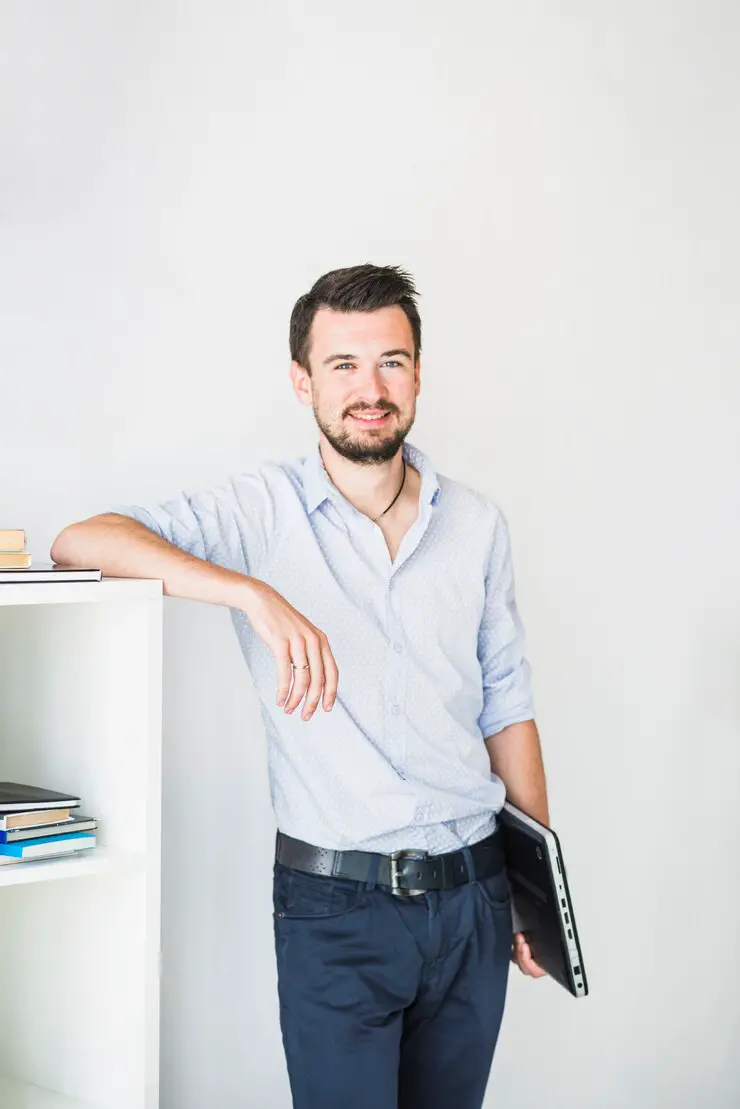
Ethan Blake is a skilled Creative Content Specialist with a talent for crafting engaging and thought-provoking narratives. With a strong background in storytelling and digital content creation, Ethan brings a unique perspective to his role at TheArchivists, where he curates and produces captivating content for a global audience.
Ethan holds a degree in Communications from Zurich University, where he developed his expertise in storytelling, media strategy, and audience engagement. Known for his ability to blend creativity with analytical precision, he excels at creating content that not only entertains but also connects deeply with readers.
At TheArchivists, Ethan specializes in uncovering compelling stories that reflect a wide range of human experiences. His work is celebrated for its authenticity, creativity, and ability to spark meaningful conversations, earning him recognition among peers and readers alike.
Passionate about the art of storytelling, Ethan enjoys exploring themes of culture, history, and personal growth, aiming to inspire and inform with every piece he creates. Dedicated to making a lasting impact, Ethan continues to push boundaries in the ever-evolving world of digital content.