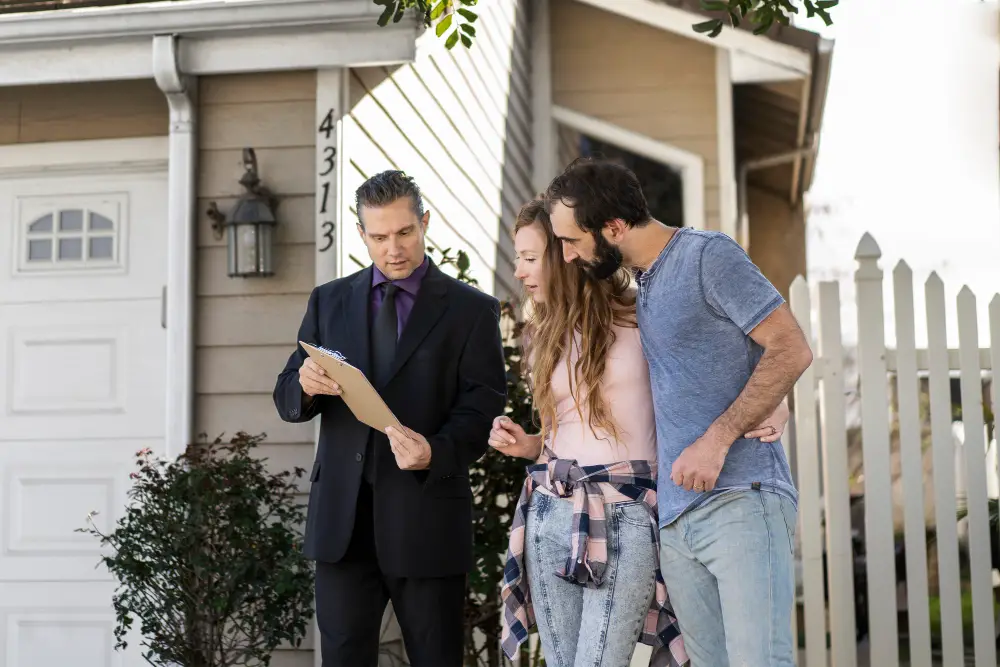
James Miller had never thought of himself as a dramatic man.
For most of his adult life he had been the one who fixed things quietly. The gutter that leaked in October. The car that made a noise nobody else could hear. The mortgage payment that went out three days early, every month, for eighteen years, because he had once read that early payments looked better on a credit file and he had never bothered to check whether that was actually true. He kept a steady voice when other people panicked. He had a way of standing in a room full of raised tempers with his hands in his pockets, saying, all right, let’s just work out what we actually know, and somehow the temperature would drop.
Megan had called that steadiness romantic once. In the early years, at other people’s dinner tables, she used to tell the story of the night the pipe burst in their first apartment, how James had shut the water off and mopped the floor and made her a cup of tea before he even swore. She would say it and then look at him across the table, and there was something in the look that he had spent the rest of his life trying to earn again. He made her feel safe, she used to say. Safe was the word she used.
He could still see those evenings with a clarity that embarrassed him. Cheap pasta with too much garlic because neither of them knew how to cook. Furniture borrowed from her aunt, the sofa with the burn mark on the arm that they covered with a folded blanket. Kelly asleep in a baby swing beside the couch, the mechanical creak of it going back and forth, back and forth, a sound James associated for years afterward with a kind of contentment so complete he had not even known it was worth noticing at the time.
Eighteen years is long enough to mistake habit for loyalty.
It is long enough to let another person learn every weakness in your life, every place you are soft, every door you never bothered to lock, and to believe with total confidence that they will never once use any of it against you. That belief is not stupidity. James would insist on that later, in the hard months, when he was going through the papers with a pen in his hand and a light on at three in the morning. It is not stupidity to trust the person you have slept beside for eighteen years. It is simply the cost of having a life. You either pay it or you live alone in a locked room, and he had chosen, at twenty-six, in a registry office with a borrowed tie, to pay it.
When the diagnosis came, he expected fear.
He expected tears and paperwork and the particular silence that follows the word cancer, that hole in the conversation where nobody knows what to put. He had rehearsed it, actually, on the drive home from the specialist’s office. He had planned how he would say it so that Megan would not be frightened. He had thought about her first, on that drive, which was so automatic he did not even register it as a decision.
What he did not expect was resentment. And he certainly did not expect it dressed up as exhaustion.
The first weeks were ugly in ways nobody prepares you for. The house began to smell like antiseptic wipes and old coffee and the strange metallic sweetness of the medication, a smell that got into the curtains and the car upholstery and the collar of every shirt he owned. Appointment cards accumulated on the kitchen counter in a drift he kept meaning to organize. The hospital bracelets left faint red channels around his wrist that took hours to fade, and he would sit in the passenger seat afterward rubbing at them absently, the way you rub a bruise to check that it still hurts.
Megan complained about the smell before she complained about anything else.
She said it clung to his clothes. Then to the car. Then to the whole house, as though the disease had colonized the building itself and she was the one being slowly poisoned by it. She started opening windows in February. She started sleeping in the guest room and calling it consideration, because he needed rest, she said, and she was such a restless sleeper lately.
Kelly stopped coming into the hospital rooms. He would drive James there and then wait in the car, and eventually he stopped doing that too. He said the rooms made his stomach turn. He was nineteen and he said it the way you say a thing you have already decided is unarguable.
James made excuses for them, and he made them well, because he had eighteen years of practice at making Megan reasonable to himself. Fear does strange things to families. Some people hover too close and smother you. Others run, because helplessness makes them cruel, because standing beside someone you cannot help is a kind of torture and not everyone has the constitution for it. He said this to himself in the small hours. He said it while he was being sick in the downstairs bathroom with the fan on so nobody would hear.
He said it until the morning it stopped working.
It was a Tuesday. He remembered that later, not because it mattered, but because his mind had begun to catalog things with a kind of forensic desperation, as though if he could just hold enough details he could hold the whole thing still.
He was leaning against the bedroom doorframe. He had begun leaning against things by then. Standing upright had become an act of strategy, a matter of choosing your surfaces in advance, the way you plan a route across a river by stones.
“I take it you’re not taking me to chemo, then,” he said.
Megan was folding silk blouses into a suitcase. The room was full of thin white morning light and every blouse made a small whispering sound as she smoothed it flat with the edge of her hand. She was very good at that. She had always been very good at that, at the small domestic competencies that make a person look loving from a distance.
She did not look at him.
“Take an Uber, James. I need a rest. And Kelly’s tired of the hospital smell.”
He stood there for a moment and let the sentence finish arriving. That was the thing about the worst sentences of your life. They keep coming for several seconds after the words have stopped.
Kelly was in the hallway with his backpack in one hand. He looked younger than nineteen and colder than James had ever seen him. When James found his eyes, Kelly looked at the carpet.
“It’s more than I bargained for,” Kelly said. “The whole thing. It’s just more than I bargained for.”
He did not say it loudly. He did not say it cruelly, not exactly. He said it timidly, as though shame had shrunk the sentence down to something he could get out of his mouth.
It landed anyway. Sentences do not need volume.
People think abandonment arrives loudly. They picture a slammed door, a thrown glass, a voice raised in the street at two in the morning. It almost never happens that way. Sometimes it comes folded between silk blouses. Sometimes it is tucked into a suitcase and spoken in the same tone a person uses to cancel a dinner reservation, and it is the ordinariness of the tone that finishes you, the discovery that in the end you were not even worth an argument.
They left that evening.
Megan took clothing, jewelry, her personal files, and a few framed photographs. She was thorough about it in a way that James, standing in the doorway with one hand on the frame because his legs had started to go, found almost admirable, and did not understand the significance of for another six months.
Kelly left behind an old baseball glove in the back of his closet.
James found it two days later, looking for a spare blanket. He sat down on the floor of that closet holding it, thumb working into the pocket where the leather had gone soft and pale, and he stayed there long enough that his hip went numb against the floorboards and the light in the room changed color, and the whole time the only thing he could think, over and over, with a kind of stupid animal insistence, was that he had oiled this glove. He had sat at the kitchen table on a Sunday in some vanished year and oiled it with a rag, and Kelly had been eleven, and they had talked about nothing at all.
After that, survival became a schedule.
He hired a nurse, a woman named Angela with brisk hands and forearms like a farmer’s, who taped medication lists to the inside of the cabinet doors and labeled water bottles by time of day in black marker. She did not pity him. That was the thing James came to value most about her. Pity, he had discovered, was a weight you had to carry on top of everything else. Angela simply told him what was happening next, and then it happened.
On February the ninth, at seven eighteen in the morning, he missed an appointment because he could not get down his own front steps alone. He remembered the time because he had been looking at the clock on the microwave through the kitchen doorway, sitting on the second step from the bottom in his coat with his keys in his hand, waiting for something in his legs to come back.
That was the day he stopped waiting for Megan to change her mind.
It was not a decision so much as a piece of internal furniture being quietly removed. He had been living, without admitting it, in a house with a room in it marked when she comes back. That morning, on the step, he took the door off that room and let the rain in, and afterward there was more space in him, and the space was cold, but at least it was his.
He hired transportation. He hired more help. He learned to answer doctors without his eyes drifting to the empty chair beside him. He learned that a great deal of human kindness comes from strangers who owe you nothing, from the driver who came around to open the car door without being asked, from the woman in the waiting room who wordlessly moved her bag so he could sit, from Angela, who held the cup when his hands would not.
And he learned about the bell.
It hung at the end of the treatment corridor on a short braided rope, and patients rang it when they finished. He saw a young woman ring it and burst into tears. He saw an old man ring it and laugh so hard he had to sit down. He saw people ring it who were too tired to do anything but let the sound happen and then be led away.
James watched them, every time, from his chair with the line in his arm, and he put his own hand on that rope a thousand times in his head.
Months later, he rang it.
The sound was brighter than he had expected. Sharp and clean, cutting the whole length of the hallway, unembarrassed. Angela clapped. A nurse hugged him and he could feel her name badge press into his collarbone. He smiled, because his body had gone and done the thing that everyone with any sense had stopped counting on.
Cancer-free did not mean whole. It meant alive. It meant he could climb his own stairs again without planning it like a military operation. It meant he could stand at the kitchen counter and open a stack of mail without needing to sit down halfway through.
Which is how he found the first statement.
The joint savings account had been emptied.
He looked at the balance for a long time. He did the thing everyone does, which is to look at a number as though it might rearrange itself into mercy if you are patient enough. Then he turned the page and looked at the dates of the withdrawals, and he found that he knew those dates. He knew them intimately. They lived in his body. They were treatment days. She had gone to the bank on the days he was hooked to a drip.
The second envelope was worse.
The retirement funds had been withdrawn under a hardship provision. The supporting documentation cited a terminal prognosis.
He read that phrase three times before the cold got as far as his hands. Terminal prognosis. Nobody had ever given him one. His oncologist, a careful, unsentimental woman who never promised anything, had told him from the beginning that his numbers were difficult but not hopeless. Someone had sat down at a desk somewhere, with a pen, and written him dead.
The third packet concerned the house.
A second mortgage had been taken out against the property. His signature was on it. He held the page up to the window and looked at it in the light, and the thing that struck him, the thing that actually got underneath his ribs, was that the signature was good. It was smooth and confident and quick. It was the signature of a healthy man. It was his own hand from ten years ago, reproduced with enough care to fool a notary who had no way of knowing that during those months his handwriting had gone spidery and slow, that he had needed two hands to sign a hospital consent form, that Angela had steadied his wrist while he did it.
That was the detail that told him what he was looking at.
Not grief. Not panic. Not a frightened woman making bad decisions in the dark.
A paper trail.
Megan had not simply left him to die. She had prepared for it. She had built the machinery of the version of events in which he died conveniently and on schedule, in which the money was already extracted and reallocated and there was no one left with the strength or the standing to object.
He sat down at the kitchen table with all three envelopes in front of him and he did not weep and he did not shout. He noticed that about himself with a mild, distant interest, the way you notice weather through a window. Something had happened to him in the treatment room, in the long hours in that chair. Some part of him that used to erupt had been burned out of him and something else had grown in its place, slower and much harder.
He did not call her. He did not call Kelly.
He got a folder.
He put every document into it. Then he made copies. Originals in one stack, copies in another, and a third stack that was nothing but a timeline, hand-written, dated, cross-referenced against his appointment cards, which he had never thrown away because he had never thrown anything away in his life.
Then he found a forensic accountant.
The man’s name was Reuben and he had the calm patience of somebody assembling a skeleton out of scattered bones. He worked through the bank statements, the mortgage records, the retirement distribution forms, the notary records. He would call James at odd hours to ask flat, unexcited questions. Did you have a doctor’s appointment on the eleventh. Do you recognize this branch. Did you ever meet a notary named Halloran.
“No,” James said, each time. “No. No.”
“All right,” Reuben would say, and make a note, and something in the world would move one inch closer to true.
Then James went to the County Fraud Division.
He brought the forged power of attorney. He brought the falsified terminal prognosis. He brought the second mortgage and the retirement withdrawal forms and the timeline and the appointment cards and the hospital bracelets, which he had kept in a drawer without ever asking himself why.
He brought dates. He brought signatures. He brought proof.
The investigator who took the file, a woman in her fifties with reading glasses pushed up into her hair, went through it in silence for twenty minutes while James sat there with his hands folded.
Then she looked up at him and said, “Mr. Miller, this is the most organized complaint I have received in nine years.”
“I had a lot of time in waiting rooms,” he said.
For three months they built it. They compared document submissions and bank camera footage and wire transfer records and motel registrations. They mapped money and movement and ink with a precision James found, to his own surprise, almost beautiful. He had spent his life fixing things quietly. This was that, at a scale he had never had access to before.
There was one problem.
Megan and Kelly had gone.
Megan’s mother had died that spring. A cousin who had taken them in had, by all accounts, thrown them out within six weeks. They were moving from motel to motel across two states, staying just far enough outside the ordinary reach of process servers and registered mail, not hiding exactly, but drifting in the way that people drift when they are living off money that is running out faster than they had budgeted for.
The investigators discussed extradition and warrants and interstate cooperation, and the language of it grew slow and heavy, and James listened and understood that this could take years.
He knew Megan better than they did.
She could ignore guilt. He had watched her do it for two decades, watched her set it down and walk away from it like a coat she had decided not to buy. She could outrun embarrassment. She could survive discomfort indefinitely, if she believed something better was waiting at the end of it. Discomfort had never frightened her. Only smallness had.
But Megan could not ignore money. Money went into her like a hook.
So James placed an advertisement.
It was a probate notice, of the kind that runs in the back pages of regional papers and in the databases that heir-hunting firms trawl through, and it concerned a thirty-six-million-dollar inheritance settlement and the search for potential beneficiaries connected to a particular family name. It was clean. It was legal enough. It promised nothing and paid nothing and it was shaped exactly, precisely, lovingly, like the kind of rumor Megan would chase across a continent.
He did not have to wait long.
Curiosity became inquiry. Inquiry became a phone call to a number that rang in an office where someone had been told what to say. Inquiry became movement. Movement became confirmation. And the case that had spent three months waiting for a location suddenly had a destination, and the destination was his own front door, because of course it was. Of course she would come back to the house. The house was the biggest number on the board.
The morning they arrived, James stood in the foyer longer than he needed to.
The house smelled of lemon cleaner and coffee. He had done that himself, at six that morning, without quite admitting why. Sunlight lay across the floorboards he had once crossed on legs that would not hold him, the boards he had once sat down on halfway to the kitchen because the distance had become too far.
Gravel cracked in the driveway.
A car door opened. Then another.
He watched through the narrow glass panel beside the door as Megan got out and adjusted her coat and arranged her face into grief. He watched her do it. That was the part he would think about afterward, more than the arrest, more than the shouting. He watched his wife of eighteen years put on an expression the way a woman puts on an earring, checking it, adjusting it, getting it right.
Kelly came around the car behind her. He wore a stiff dark shirt that did not fit him and he carried himself like a man walking into a room where he already knows he has lied. He was thin. James felt that in his chest before he could stop it, and hated himself for feeling it, and felt it anyway.
Across the street, Mrs. Pritchard paused with her garden hose. Mr. Alvarez lowered his newspaper by the mailbox.
Megan stopped on the path and spoke to them, and James, through the door, caught the pieces.
Dead. Untimely. A hospital stay. So sudden.
Poor thing, said Mrs. Pritchard.
Megan’s voice had that soft tremor in it, the one she used whenever she wanted people to believe she was being noble under pressure. James had heard that tremor at funerals and at parent-teacher conferences and once, memorably, while she returned a dress she had worn to a wedding.
She came up the steps. Her hand hovered over the doorbell.
It was trembling.
But he had seen grief. He had sat in hospital corridors for the better part of a year and he had seen what grief actually does to a hand, and this was not that. This was anticipation. This was a woman reaching toward thirty-six million dollars that did not exist.
He opened the door.
For a moment nobody said anything at all.
Megan’s face simply emptied, like a glass turned over. Kelly’s mouth came open. Behind them, across the street, Mrs. Pritchard’s hose kept running, water ticking against the curb like a clock nobody had remembered to stop.
“James?” Megan said. It came out cracked.
He stood there in the doorway, considerably healthier than the dead man she had just described to the neighbors, with a thick manila folder in one hand.
“Surprise,” he said. “I know it isn’t the thirty-six million you were hoping for. But I think you’ll find it just as life-changing.”
Her eyes went to the folder, and he watched her recover, because indignation had always been her favorite disguise and she could get into it faster than anyone he had ever met.
“What is this? What kind of sick joke is this?” Her voice climbed. “We’ve been grieving, James. We thought you were dead. That advertisement, that was you? Do you have any idea what you have put us through?”
“It was bait,” James said. “And you swam right into the net.”
He stepped back from the door. Just enough.
She hesitated. He saw the calculation cross her face, fear on one side and greed on the other, and he saw greed take it, the way he had known it would.
She came in. Kelly followed, glancing at the staircase, the walls, the polished floor, at everything except his father.
James opened the folder.
The top page was not a will. It was not an inheritance release, or a settlement, or anything that could be turned into money.
It was a police report.
The whole hallway changed. Outside, Mrs. Pritchard stopped even pretending not to watch. Kelly’s shoes squeaked once against the hardwood. Megan swallowed, and James saw the movement travel down her throat.
Nobody moved.
He went through it in order, in the same flat voice he had used for eighteen years to explain insurance renewals and school forms, because he had discovered that flatness was the most frightening thing he owned.
The joint savings first. The dates. The overlap with his treatment calendar, which he had annotated.
Then the second mortgage. The notary. The signature that belonged to a man whose hands worked.
Then the retirement withdrawal.
Then the falsified terminal prognosis, and the forged power of attorney, and the name of the doctor who had never written either.
Kelly turned, slowly, toward his mother.
“Mom.” His voice had gone very high. “You said that money was from your savings. You told me it was from Grandma.”
“Shut up, Kelly,” Megan hissed.
And there it was. The first crack, and it was not regret. It was not shame. It was strategy under pressure. She was not sorry the documents existed. She was furious that her son had begun asking questions in front of a witness.
James tapped the report with two fingers.
“For three months,” he said, “the fraud division and a forensic accountant put this together. Every page. Every transfer. Every signature. The only thing they were missing was a location.” He looked at her. “So I gave you a fortune to chase.”
Understanding arrived on Kelly’s face in stages. Confusion first. Then something that was almost admiration, which was somehow the worst of all. Then terror.
“The inheritance ad,” he whispered. “You needed us to come back.”
“I needed you back in the jurisdiction,” James said.
Tires crunched on the gravel.
Red and blue light came through the front windows and slid across Megan’s face in slow alternation, and the practiced grief went out of it entirely, all at once, like a set being struck.
She lunged for the back hallway.
She got four steps before she saw the uniforms through the patio glass. Two officers, standing perfectly still, waiting for a signal.
She spun around.
“You can’t do this.” Her voice tore. “I’m your wife.”
James looked at her for a long second.
And somewhere inside him, deep down under everything, the old reflex tried one last time to stand up. Protect her. Calm her. Fix it. Find the thing to say that makes the room stop shaking. Eighteen years of that reflex, worn into him like a groove in a stair.
He let it come. He let it pass.
“You stopped being my wife,” he said, “the day you told me to take an Uber to my deathbed.”
The front door opened behind them. The lead detective came into the foyer with one hand resting near his badge, and asked, in the even official voice of a man who has done this several hundred times, for James Miller.
“That’s me,” James said. “And these are the two individuals named in the fraud warrants.”
Kelly broke first.
He went down onto the hardwood floor, knees and then hands, sobbing into his palms. He said he was sorry. He said he had been scared, that he hadn’t understood, that she had told him it was all above board, that he was nineteen and he hadn’t known what he was signing. He said, please, Dad. He said, please don’t let them take me.
James looked down at his son. At the boy he had oiled a baseball glove for on a Sunday afternoon in a kitchen that no longer existed. At the whole world, once. It hurt more than he had allowed for. Cancer had burned through his body and left him standing, but this was burning somewhere he had no name for and no medicine.
He crouched down, which he could do now, which he had not been able to do for a year.
“You weren’t scared, Kelly,” he said quietly. “You were inconvenienced. There’s a difference, and it took me a long time to work out what it was.”
The officers read the rights over Megan’s shouting and Kelly’s crying. The words were formal and almost boring, and they changed the room more completely than any argument James could have made in a hundred years of trying.
Megan kept talking the entire time. It was marital property. He owed her. She had given him eighteen years. The sickness had made him selfish, made him cruel, made him paranoid. Every sentence was another attempt to rebuild the old world, the one where her version of events became the official version simply because she said it with enough conviction and nobody had the stomach to contradict her.
But this time the paper answered before James had to.
Reports. Signatures. Ledgers. Mortgage records. Bank footage with a timestamp and her face in it, in a branch on a Thursday, at eleven in the morning, while he sat in a chair four miles away with a needle in his arm.
None of it cared how loudly she cried.
Kelly looked back once from the doorway. James could not tell whether what was in his face was apology or self-pity. Possibly both. He suspected, later, that there are betrayals so complete that even the guilty can no longer tell the difference, that the two things fuse and the person carries them around forever, unable to separate what they did from how sorry they feel for having been the kind of person who did it.
The cruisers pulled out of the driveway in the long gold light of the early evening.
Mrs. Pritchard turned off her hose. Mr. Alvarez folded his newspaper without reading another line of it. The street took a moment, and then slowly remembered how to move.
Inside, James closed the front door and turned the deadbolt.
It was a small sound. It was an extremely satisfying sound.
The house settled around him. It was not a sickroom anymore. It was not a crime scene. It was not a waiting room for a death that never came.
It was empty.
But emptiness had changed meaning somewhere along the way, and he stood in his own hallway for a while working out how.
Six months ago the silence in this house had been abandonment. It had been the sound of a woman folding blouses and a boy looking at the carpet. Now it was space. Clean space. Earned space, which is a different substance entirely. It was the particular quiet that belongs to a man who survived not only the disease, but the people who had been standing over him with a pen, waiting for it to finish the job.
He went into the kitchen and made himself a cup of tea and did not sit down halfway through.
The case moved through the courts over the following year, and it moved the way such things move, which is slowly and with a great deal of paper. James attended every date. He wore the same suit and he sat in the same seat and he did not once raise his voice.
The documents did what emotion never could. The forged signatures, the falsified prognosis, the second mortgage, the retirement withdrawal. It was a trail, and it had a beginning and a middle and an end, and Megan could not perfume it with grief. She tried. She was, to the last, extraordinarily convincing, and it did not matter at all, and watching her discover that was the strangest experience of James’s life. She had spent eighteen years being believed. She had never once had to be right.
Kelly’s involvement became its own question, and it was a harder one. He had signed as a witness. He had been nineteen. Whether it was fear or dependence or simple greed that had guided his hand, the ink did not care, and James found that he could not decide, in the end, whether that was justice or merely the law.
He let the law handle what fatherhood could no longer soften. That was the sentence he arrived at, eventually, sitting alone in his study at two in the morning, and once he had it he was able to sleep.
There was never any thirty-six million dollars. There had never been a penny of it. The fortune was bait and the trap was built entirely out of the truth that Megan and Kelly had left lying around behind them, the way people always do, believing that nobody will ever bother to pick it up.
James kept two things framed in his study.
The first was the certificate they gave him at the hospital on the day he rang the bell, which was a slightly cheap thing with a printed border, and which he loved.
The second was the final copy of the police report.
One of them proved that his body had survived.
The other proved that his life had come back to him.
And when people asked him afterward, as they sometimes did, in the careful voices people use, how he had found the strength to open the door that morning and stand there and look at them, James always thought of the same thing.
People think abandonment arrives loudly. It usually doesn’t. It comes folded between silk blouses. It comes in a suitcase, in a bright bedroom, on an ordinary Tuesday morning, in a voice you have loved for eighteen years.
But justice, when it finally comes up the driveway, has a sound all its own.

Lila Hart is a dedicated Digital Archivist and Research Specialist with a keen eye for preserving and curating meaningful content. At TheArchivists, she specializes in organizing and managing digital archives, ensuring that valuable stories and historical moments are accessible for generations to come.
Lila earned her degree in History and Archival Studies from the University of Edinburgh, where she cultivated her passion for documenting the past and preserving cultural heritage. Her expertise lies in combining traditional archival techniques with modern digital tools, allowing her to create comprehensive and engaging collections that resonate with audiences worldwide.
At TheArchivists, Lila is known for her meticulous attention to detail and her ability to uncover hidden gems within extensive archives. Her work is praised for its depth, authenticity, and contribution to the preservation of knowledge in the digital age.
Driven by a commitment to preserving stories that matter, Lila is passionate about exploring the intersection of history and technology. Her goal is to ensure that every piece of content she handles reflects the richness of human experiences and remains a source of inspiration for years to come.