My name is Emily Carter, and I was twenty-five years old when I learned that a person can steal your entire life without ever laying a hand on you.
It was the second week of March. I had just been discharged after emergency surgery, the kind that arrives without warning and rearranges everything, and I was still weak enough that the walk from the taxi to my apartment door felt like crossing a field. I had one hand on the wall of the corridor and my discharge papers in the other and I was thinking about nothing at all except my own bed. My own blanket. The particular quiet of the first apartment I had ever paid for entirely by myself.
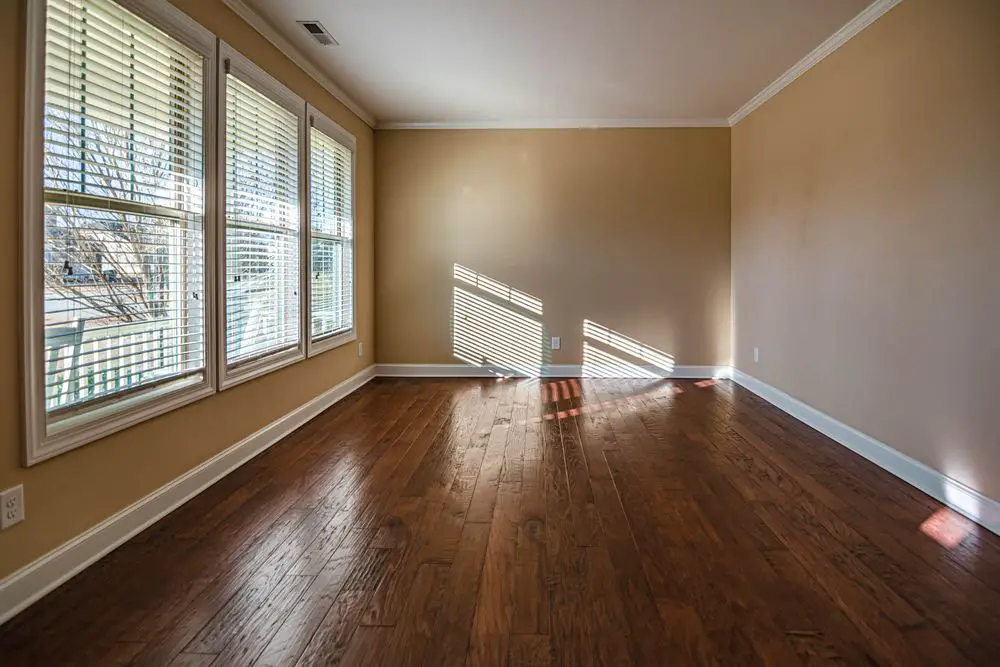
I got the door open and stepped inside and there was no bed.
There was no blanket. There was, as far as I could tell in that first blank second, nothing at all.
My living room looked like a model unit after the staging furniture has been carried out. The custom desk I had spent four months designing and two weekends building was gone. My computer was gone. The drawing tablet I used for client work was gone. The sofa I had saved for over six months, the first piece of real furniture I had ever bought new, was gone.
I opened the closet. Empty. The kitchen cabinets. Empty, right down to the eight-dollar clearance plates.
For a full ten seconds I genuinely believed I had opened the wrong door. That is what the mind does. It reaches for any explanation that is not the true one, and it reaches fast.
Then I saw the pale rectangle on the wall where my photo frame had hung, that clean unfaded ghost of a shape, and my stomach dropped harder than it had in any hospital bed.
The frame was gone. Which meant the dresser under it was gone. Which meant the small wooden box on the dresser was gone.
My grandmother’s silver locket. Her letters, the ones she had written in the fifties and kept tied with a ribbon her whole life. The photographs of me as a baby, the only ones that existed, which I had carried through six moves in a shoebox wrapped in a sweater because they were the only physical proof that I had existed before I was old enough to remember it.
I sat down on the floor because there was nowhere else to sit.
I called my mother with my hands shaking so badly I had to try twice.
She answered on the second ring, and this is the part I still have trouble explaining to people. There was no surprise in her voice. There was no pause where a person recalibrates. She answered like she had been sitting by the phone, waiting.
I asked her what had happened to my apartment.
And she laughed.
“Emily,” she said, warmly, the way she used to say it when I was small and had said something charming, “you were playing independent. I just cleaned up the fantasy.”
I asked her where my things were.
She told me, patiently, as though I were being slow, that most of it was already sold. The laptop. The furniture. My clothes. She used the word decluttering, and then she used another word, and it took me a moment to understand it.
Estate.
They had told my landlord I was dead.
Surgical complications. A tragic and sudden loss. My parents were my emergency contacts from a form I had filled out at nineteen and never updated, and they had a spare key from the week I moved in, and they had walked into the leasing office with my hospital paperwork and grief on their faces and a rental truck idling outside.
I said something. I don’t remember what.
By the time I tried to call back, forty seconds later, I was blocked. On her phone, on my father’s phone, on every platform I could think of, all of it done in advance, all of it prepared.
I sat on the floor of my empty apartment with hospital tape still on the inside of my elbow, and I understood that this had not been an impulse.
It had been a plan.
The first night I slept on Nora Bennett’s couch, I kept waking up because I thought I heard my apartment door opening.
My body was still fighting the infection. The stitches pulled every time I sat up too fast. I owned, that night, one plastic hospital bag containing my discharge paperwork, a phone charger, and the clothes I had been wearing when I collapsed at my desk two weeks earlier.
That was it. That was the entire inventory of my life.
Nora kept saying I could stay as long as I needed, and she meant it, and I watched her face while I tried to log into my client accounts from my phone and slowly worked out how bad it actually was.
I was a freelance architectural renderer. I made photorealistic images of buildings that did not exist yet, for developers and firms who needed to sell an idea before it had walls. My work lived on powerful hardware and in enormous project files. Client drafts. Contracts. Invoices. Three years of a portfolio. Backups on external drives that had been sitting in a drawer in a desk that was now in the back of a stranger’s pickup truck somewhere in the county.
My computer was not a computer. It was my income, my reputation, and every deadline I had committed to.
In the first week home I lost three clients.
One of them was kind about it and told me to focus on getting well. One said he understood but needed someone reliable, which was fair, and which I could not argue with. The third simply never answered again, and I could not even blame him, because from the outside the story sounded insane.
My mother broke into my apartment while I was recovering from surgery, sold everything I owned, and told my landlord I had died.
Who says that? Who says that and expects to be believed?
Then the messages started.
A cousin I had not spoken to in eight months texted: Emily, is this really you?
I stared at it for a full minute before I answered.
She called me immediately and cried so hard she could barely get the words out, and she asked why my mother had posted that I had passed away.
That was how I discovered the lie was bigger than my apartment.
They had told everyone. Relatives, old family friends, half their neighborhood. Sudden surgical complications. Unexpected. They were devastated. They were trying to stay strong while processing an unbearable loss.
My mother had posted a photograph of me from high school, one I had always hated, with a caption about how no parent should ever have to bury a child.
My father, who had personally helped load my drawing tablet into a truck, had accepted sympathy cards from neighbors.
Their neighborhood association sent meals. A woman from my mother’s charity circle organized a collection to help the family with unexpected expenses.
People gave them money because they believed I was dead.
I remember sitting on Nora’s couch in a pair of her sweatpants, scrolling through the screenshots my cousin was sending me one after another, and feeling something inside me go very quiet and very still.
There were comments. Dozens of them. People saying they were praying for my parents. Little heart emojis. Someone called me a beautiful soul. Several people said my mother was so brave.
I was alive, broke, and physically weak, sleeping under a borrowed blanket in a friend’s living room, while the two people who made me were being fed casseroles and comforted over a death they had invented for cash.
When I started contacting relatives directly, the reactions split three ways. Some believed me instantly. Some panicked and stopped answering. And a few, incredibly, accused me of being cruel for impersonating Emily if Emily was really gone.
Then the story changed.
Once enough people started asking questions, my parents shifted position with the smoothness of professionals. I was not dead. I was unstable. Grief had confused them. I had always been difficult and dramatic. I had cut off contact and abandoned the family, and now I was harassing them because I wanted attention.
In the space of one week, I went from dead to unstable to greedy, depending entirely on which version was most useful to them that day.
Nora drove me back to my apartment so I could photograph the empty rooms. She drove me to the library, where I printed screenshots on the public printer at ten cents a page, because I no longer owned a printer, or a computer, or a desk to put one on.
The landlord looked like he wanted the floor to open under him when I walked in alive.
He confirmed everything. My parents had come in with the spare key and copies of my hospital paperwork. They had cried. They had said they needed to clear the apartment quickly because looking at my belongings was too painful, and could he possibly help them with the truck.
He believed them because normal people do not lie about their daughter’s death in order to steal a sofa.
I asked about my security deposit.
He said the lease situation had become complicated.
I walked out before I said something I could not take back.
For three months I rebuilt from absolutely nothing.
Nora gave me half her closet. I bought a used laptop that could barely open my design software without seizing. I took work far beneath my skill level because I needed cash in the account before the first of the month. I ate cheaply and I slept badly and I made a list.
The list was of everything they had taken.
The expensive things hurt in a clean, quantifiable way. The computer. The tablet. The furniture. The clothes.
But the items I kept returning to, at two in the morning, staring at the ceiling of a room that was not mine, were the ones that had no market value at all.
My grandmother’s locket. Her handwritten letters. The photographs of a baby who was me, which no longer existed anywhere on earth.
And somewhere in that third month, my anger changed temperature.
It stopped being hot. It stopped making my hands shake. It went cold and quiet and it settled in for the long term.
I stopped asking why they had done it.
I started asking how I was going to prove it.
The police report did not go the way people expect it to go.
I walked into the station with a folder. Hospital records. Photographs of the empty apartment. Screenshots of my mother’s memorial post. A property inventory so long it looked like a moving company’s manifest.
I truly believed that once I explained it, once I laid out that I had been recovering from emergency surgery while my parents emptied my home and sold everything I owned, an officer would look up and say: yes. That is theft.
Instead he listened, and took notes, and asked questions.
Did your parents have a key? Had you allowed them in before? Were any of these items originally gifts from them? Is it possible there was a misunderstanding?
I kept giving him the same answer in different shapes.
A misunderstanding does not explain telling my landlord I was dead.
A misunderstanding does not explain selling my grandmother’s locket to a stranger.
A misunderstanding does not explain blocking my number on every device before I even got home.
He did not say he believed them. He did not say he believed me. He said it might be a civil matter, given that they had lawful access to the unit, and that ownership of each item would have to be proven individually.
I left with a report number and a sick understanding that my parents had chosen the most perfect form of cruelty available to them.
Not the kind that gets handled. The kind that gets buried in paperwork while everyone around you suggests, gently, that you calm down.
Nora found the attorney.
He read my folder without interrupting, took his glasses off, and said the first true thing anyone had said to me in months.
“They counted on you being too tired to fight this.”
He explained that the criminal side would be slow and uncertain, but civil court operated differently. If we could establish that the property was mine, that it was sold without my consent, that my income was materially damaged, and that they had used a fabricated death to gain access and collect sympathy money, we had something.
It would be slow. It would be ugly. And it would cost money I did not have.
Nora loaned me the retainer.
I cried when she did it, and not because I was fragile. I cried because after months of being treated as an inconvenient problem, somebody was willing to put money down on my version of events.
The lawsuit took almost two years.
Two years of watching my parents attempt to convert theft into concern. They had believed I was spiraling. They had staged an intervention. They had removed my belongings because they wanted me to come home where I belonged.
My mother argued that some of the items were family property. My father said I had always been irresponsible with money and they were protecting me from myself.
Their attorney filed a document suggesting that, because I had been hospitalized and medicated, my recollection of what I actually owned might be unreliable.
I read that line four times and then laughed until I felt nothing.
They were not merely defending themselves anymore. They were still trying to erase me. They had simply moved the erasure into legal language, where it was harder to see.
But I had receipts.
I had bank statements showing I had bought the desk, the sofa, the electronics, the equipment, every last item, with my own money. I had photographs of the apartment taken the week before surgery, because I had been shooting portfolio images of my workspace. I had emails from clients referencing files on drives that were now gone.
I had a written statement from my landlord confirming that my parents had told him I died of complications.
I had screenshots of online listings where my mother had sold my furniture in bundles.
And one buyer, contacted by my attorney, confirmed in writing that he had purchased a box of old photographs and jewelry as part of what the seller described as an estate cleanout.
An estate cleanout.
That phrase has never left me. I was twenty-five years old and alive and sleeping on a couch in another woman’s living room, and my mother had listed my childhood as an estate.
Nora testified. She described driving me home from the hospital and watching me open the door. She described how the color left my face. She described how I kept saying, over and over, my photos are gone, my photos are gone, as though my brain had snagged on that one fact and could not move past it.
My parents hated her for that more than they hated me.
My mother called her an outside influence. My father said she had filled my head with anger.
That was always their favorite trick. Anyone who believed me had manipulated me. Anyone who challenged them had an agenda. There was never any possibility that a person could simply look at what they had done and reach the obvious conclusion.
The court, it turned out, was less impressed by performance than they had expected.
The judge cared about documents. About dates. About contradictions.
Why tell the landlord she was dead if this was an intervention?
Why sell her professional equipment if you were preserving her future?
Why accept memorial contributions from neighbors if you knew she was alive?
Why block every method of contact instead of returning a single item?
My mother cried in the courtroom. My father looked genuinely offended that the crying was not working.
When the judgment came down, I read it three times before I fully absorbed it.
Forty-one thousand six hundred dollars. Property value, lost income, emotional damages, and a portion of my legal fees.
It was not enough to replace the locket. It was not enough to bring back a single photograph. It was not enough to give me back the two years I had spent rebuilding a career from a borrowed laptop on a friend’s kitchen table.
But it was official. It was written down by someone they could not charm.
They appealed, of course. They said the amount was unfair. They said the court had misunderstood their intentions. They said I was punishing them rather than seeking resolution, which was a phrase their attorney used repeatedly, as though resolution were a thing that could be achieved without anybody giving anything back.
They lost.
When the appeal failed and the judgment became final, I did not celebrate.
I sat at my secondhand desk in my small apartment, and I put the court order down beside the single scanned photograph of my grandmother that I still had, and I said out loud, to nobody:
“Now we collect.”
Here is the thing people misunderstand about this kind of story. They think the loudest moment is the important one.
My parents expected me to scream. They expected threats, and scenes, and me showing up at their house crying in front of relatives, giving them one clean opportunity to establish for the record that I was unstable.
I never gave them that.
For three years I was quiet in a way that made people around me uncomfortable.
I built folders. I built timelines. I archived every screenshot, every message, every post in which they performed public grief over a daughter they knew for a fact was alive.
I requested my complete medical records. I got a signed statement from the landlord. I kept court filings in labeled envelopes in a fireproof box, because I was never again going to be a person whose evidence could simply be carried out of a room.
I wrote down the names of everyone who had donated to the memorial collection, and the names of everyone who had been told a slightly different version of my death, and I noticed that the versions did not match each other.
And then I began repairing the damage, one person at a time.
I did not send emotional essays. I never once wrote the words how could you.
I sent evidence.
To my aunt Valerie, I sent my hospital admission and discharge dates.
To my cousin Paige, I sent the judgment.
To an old family friend who had delivered a lasagna to my parents’ door, I sent a screenshot of my mother’s memorial post next to a screenshot of my desk listed for sale, timestamped two days apart.
Some people apologized immediately. Some went silent, because silence was easier than admitting they had helped carry a lie.
And some told me they believed me but really thought I should move on. Those were the ones I heard most clearly. They did not dispute a single fact. They just wished the truth were less inconvenient for them.
My parents lived in North Hills, in a large house with perfect landscaping and seasonal wreaths and a kitchen island big enough for the brunches my mother liked to photograph.
That house was not where they lived. It was their costume.
It told the neighborhood they were successful and stable and respected and generous. My father worked in mortgage lending, so image was not vanity, it was inventory. My mother moved between charity committees and homeowner association events and online shopping hauls that she described as tasteful investments.
What I learned later, from the discovery process, was that they had already been drowning long before they came for my apartment.
Credit cards maxed. Mortgage payments late by a month, then two. A private financial collapse hidden behind a public smile.
My apartment had been a fast cash solution wrapped in a fake tragedy. That was all. There was no intervention, no confusion, no misguided love. There was a woman who needed eleven thousand dollars by the end of the month and a daughter who was unconscious in a hospital bed.
Once the judgment was final, my attorney asked whether I wanted to discuss a settlement.
I said no.
They had not paid a dollar. They had ignored the judgment the same way they had ignored my calls from the floor of my empty apartment.
So we enforced it.
A lien went on the house. My father’s wages were garnished. Their accounts were levied through the proper channels, with the proper paperwork, at the proper intervals.
And suddenly the consequences were no longer emotional. They were financial, they were public, and they were extremely difficult to explain away.
My father’s employer found out, because employers have to be notified for a garnishment. The HOA board heard about it. Neighbors who had contributed to a memorial collection began asking, out loud, why a daughter they had mourned was now enforcing a civil judgment against her own parents.
That is the thing about a lie. It is effortless while everyone is sad and nobody is asking for documents.
It becomes much harder to maintain once the documents arrive.
Then one morning at five o’clock, my phone rang from a number I did not recognize.
I almost let it go. Something made me answer.
At first there was only breathing and crying. Then a voice said my name.
Ethan.
My brother. I had not heard his voice in three years. Not once after the hospital. Not once after the apartment. Not once during two years of litigation in which he had sat behind our parents in a courtroom and looked at the floor.
He was sobbing so hard the words came apart.
“Mom’s in the hospital. Dad’s losing it. The lawyers won’t stop calling. The bank called again. People from the neighborhood want their money back.” A long, wet breath. “Emily, please. Please make it stop.”
I sat up in bed, entirely awake.
I asked him what, exactly, he wanted me to stop.
The lien, he said. The garnishment. The calls. The questions. The humiliation.
He said our mother had had a panic attack so severe that our father called an ambulance. He said our father had not slept in a week. He said the house was in trouble and everyone was blaming them.
And then his voice changed, and became something older and harder, and he said:
“You’re destroying us.”
For a moment I was standing in my old apartment again.
I could see the clean squares in the carpet where furniture had been. I could see the bare top of a dresser that was no longer there. I could hear my mother laughing and telling me I had been playing independent.
Ethan kept crying into the phone, waiting for me to comfort him. That was what he had called for. Not to apologize. To be comforted.
So I asked him one question.
“Did you help them carry my things out?”
The line went silent.
That silence told me everything that three years of testimony had not.
He whispered that he hadn’t known what was happening. That he was confused. That he thought our parents were handling it.
I told him I would call him back, and I hung up.
I did not call him back. Not that morning. Not after six more missed calls. Not after the voicemails.
They had spent three years telling people I was dead.
They were about to find out how patient the dead can be when they come back with paperwork.
I waited four days before I agreed to go to the house.
Not because I was afraid, and not because I needed to calm down. I waited because they had made me wait three years for accountability, and I wanted them to understand that this conversation would happen on my schedule.
When I pulled into the driveway that Saturday, the house looked exactly as I remembered it, and nothing at all like the truth. The lawn was cut. The porch had matching planters. There was a wreath on the door of the kind my mother would have called understated.
From the outside, it still looked like the home of people who had everything under control.
Ethan opened the door before I knocked. He was thinner. Exhausted. Angry in the specific way of people who want sympathy and know they have not earned it.
“Mom’s home now,” he said immediately. “Dad’s barely functioning. You need to hear them out. They’re not monsters.”
I walked past him into the living room.
My parents were on the sofa. They were not alone.
Two people from the neighborhood were sitting in the armchairs. A woman my mother had chaired charity luncheons with. A man who had served with my father on the HOA finance committee.
I almost laughed out loud.
They had not invited witnesses to the truth. They had invited an audience for a performance.
My father stood and said they thought it would be helpful to have neutral parties present, so that everyone could begin moving toward healing.
I told him there was nothing neutral about people who had donated to a memorial fund for a woman currently standing alive in their living room.
The woman turned and looked at my mother.
My mother looked at the carpet.
And that was how I knew they had not told these people everything.
My father tried to take back control of the room. He said this family had suffered enough, and that while mistakes had been made, continuing to drag things through lawyers would only create more pain.
I asked him which mistake he meant.
Did he mean letting himself into my apartment while I was recovering from surgery? Did he mean selling my professional equipment? Did he mean telling my landlord I had died? Did he mean accepting money from the neighbors currently sitting in this room, who believed they were helping with the burial of a child?
The room went very still.
The man from the HOA shifted in his chair and did not look at anybody.
My mother finally began to cry. She said I would never understand the pressure she had been under. The bills. My father’s commissions had slowed. She had been trying so hard to keep everything from falling apart. The shopping had gotten away from her, because every dinner and every event and every gathering came with expectations, and nobody understood how much it cost to simply keep up.
She said she had made one terrible decision during a terrifying time.
I told her that one terrible decision is buying a coat you cannot afford.
What she did required planning. It required a key, and a truck, and photographs, and online listings, and a story about how her daughter had died, delivered convincingly enough to a stranger that he opened the door for her. It required blocking my number before I came home, so that I could not reach her when I found out.
That is not a decision. That is a project.
She flinched when I said the word begged. I had said that I called her and begged for my grandmother’s letters back.
I was glad she flinched.
My father said they were prepared to make things right in a realistic way. He said the judgment was impossible. He said that if I continued enforcing it, they could lose the house.
He suggested we might agree to reduce the amount, pause the garnishment, and arrive at a private family arrangement.
I asked whether he meant the kind of private family arrangement where they take everything and I stay quiet so they can keep the house.
He said I was twisting his words.
I said no. I was finally repeating them clearly.
Then I turned to my brother, and I asked him again, in front of everybody.
“Did you help them carry my things out?”
He started crying before he answered.
He said he had helped unload boxes into the garage. He said he had seen my desk and my chair and my clothes in trash bags and my equipment and the small wooden box from my dresser.
He said he had picked up the box and asked whether they should keep it, because it looked personal.
And our mother had said no.
Everything had to go.
He said he was twenty-three and scared to challenge them.
I looked at him until he looked away, and then I told him that twenty-three is old enough to know the difference between helping and hiding.
He said he thought maybe it was some kind of intervention.
I asked him what kind of intervention sells a dead woman’s letters to a stranger for forty dollars.
Nobody answered.
That was the shape of the entire afternoon. They had explanations until I asked for specifics. They had tears until I named actions. They had family values right up until the moment money entered the conversation.
At one point my mother said, “I am still your mother.”
And I said, “You stopped being that when you told people I was dead.”
The woman from the neighborhood spoke then, for the first time. Her voice was very quiet.
She asked my mother whether the memorial collection had been based on a lie.
And my mother said, “It’s complicated.”
That single word did more damage than anything I could have said in an hour.
Complicated meant yes. Complicated meant the meals and the cards and the money and the public grief had all been built on a fraud, and everybody in that room understood it at exactly the same moment.
My father told me I was humiliating them.
I told him I was not humiliating them. I was declining to help them hide.
Ethan followed me out to the driveway. He said they were falling apart. He said Mom was sick. He said Dad might lose his position. He said people were turning against them.
I asked him where his concern had been when I was sleeping on Nora’s couch with a borrowed sweater and no way to work.
He wiped his face and said he was sorry.
I told him that sorry is what people say when the truth has finally cost them something. Accountability is what they do before that.
Then I got into my car and left them standing in the driveway of the house they had chosen over me.
After that meeting, the machine started up.
Not the part of the family that had checked on me after surgery. Not the part that offered me somewhere to sleep when I had nothing. That part had been very small, and very quiet, and it had already done everything it could.
The other part. The part that only wakes up when consequences reach the people who normally control the story.
My aunt Valerie called first. She said she loved me. She said what happened was terrible. She said I needed to think about the bigger picture.
I asked her what bigger picture included selling a child’s photographs.
She sighed at me, the way you sigh at a difficult teenager, and said that nobody was defending what they had done. They simply wanted a solution that did not destroy the entire family.
My uncle Mark called and told me that courts were not the place for family wounds.
I said that family homes were not the place for stolen property, but here we were.
My cousin Paige sent a long message asking whether I actually needed the full amount, or whether I was just trying to punish them.
I typed three replies and deleted all of them.
In the end I sent her the judgment and the photograph of my empty apartment, and nothing else.
She did not answer for two days. When she did, all she said was: I didn’t know it was that bad.
That became the pattern. Everybody knew just enough to hold an opinion and not quite enough to feel ashamed.
Meanwhile my parents had refined their position. They no longer denied everything. They had learned that denial made them look guilty.
Now they said they had made mistakes. They said they had handled the apartment badly. They said fear and grief and financial pressure had clouded their judgment. They said I had won in court, fairly, and that now I was refusing to allow the family to heal.
It was, in its ugly way, brilliant.
They admitted to exactly enough to appear humble, and not one inch more, and it left me looking like a woman who had received justice and wanted blood on top.
Thanksgiving is when it detonated.
Valerie invited everyone and told me it would be good for me to be around family again.
She did not mention that my parents would be there.
I walked into her dining room and saw them on the sofa and nearly turned around in the doorway. Ethan was beside them, pale and tense. My father looked older but not sorry, and there is an enormous difference between those two things. My mother looked fragile in a way she had clearly chosen with some care. Soft cardigan, no makeup, both hands trembling around a mug of tea.
The room went silent when I came in, which told me the entire evening had been arranged in advance and that everybody had been waiting for the show.
Dinner had not even been served before Mark suggested that we all sit down and speak from the heart.
I said I had no interest in a surprise therapy session with a turkey in the oven.
My father stood up anyway.
He said he wanted to apologize publicly. He said he and my mother had been under extreme financial pressure and had made decisions they deeply regretted. He said they had never meant to hurt me the way they did.
I asked him which decisions.
He blinked.
“Say them,” I said.
He said they had taken some of my belongings.
“You emptied my apartment while I was in the hospital.”
“Yes,” he said. “That.”
I asked whether he was sorry for telling my landlord I had died.
He said that had been a terrible misunderstanding.
I asked who exactly had misunderstood my pulse.
Nobody laughed.
My mother began to cry and said she could not survive being attacked like this forever. She said she had apologized.
I said she had apologized for being under pressure. She had not once apologized for what she did.
She said I wanted her to crawl.
I said I wanted her to tell the truth without decorating it.
And then I asked, in front of everyone at that table, about the memorial money.
The temperature of the room changed. Several relatives had not known about that part. I watched it move across their faces.
My father’s jaw tightened.
My mother said people had given out of kindness, and that they had never asked for it.
I said they had accepted money for a dead daughter while that daughter was alive and calling them and being sent to voicemail.
Ethan slammed his hand flat on the table and said I was impossible. He said every person in that room was trying to move forward and I wanted blood.
I looked at him and said, “No. I wanted forty-one thousand six hundred dollars, which is the number a judge assigned to what they stole.”
Valerie suggested a payment plan. Something small and monthly. A gesture of good faith.
I asked her to calculate, out loud, how long it would take at fifty dollars a month.
She looked down at her plate.
Mark said that family mattered more than money.
I said that was interesting, because when my parents needed money, family was the first thing they sold.
That ended dinner before it started.
My mother sobbed. My father called me vindictive. My brother called me selfish. I left before dessert, and by the time I got home my phone was full.
Some people said I had ruined Thanksgiving. Some said they finally understood. Some said they didn’t know who to believe anymore, which after everything, after the judgment and the appeal and the documents, was its own kind of answer.
But outside the family, it was already moving faster than any of them could control.
The neighborhood learned about the memorial fund. People who had delivered meals started asking questions in the group chat. Somebody posted about the court judgment.
The charity committee quietly removed my mother from its roster.
My father was asked to step down from the HOA finance board, because it had become difficult to explain how a man under wage garnishment for civil fraud could reasonably oversee community funds.
His clients began to hear the rumors. In mortgage lending, trust is the entire product, and his was evaporating.
The house had already been behind. The lien made refinancing nearly impossible. The garnishment made catching up impossible. The legal fees, from a fight they had chosen and lost twice, took whatever was left.
Ethan called and said they were going to lose everything.
He said that if I had one ounce of compassion, I would stop.
I told him that compassion without accountability is just permission.
He said I was tearing the family apart.
I said no. I was refusing to hold together a lie that had been cutting me for three years.
Everyone kept asking me to save the family. Not one of them could explain why saving the family required protecting the people who had destroyed it.
The foreclosure became final in early spring.
Ethan messaged me the night before they had to be out, a long message, telling me this was my last chance to do the right thing. They had nowhere good to go. Mom wasn’t sleeping. Dad looked like a broken man.
If you let them lose the house, he wrote, you’ll have to live with that forever.
I read it twice, set the phone face down on the nightstand, and slept.
The next morning I drove to North Hills and parked across the street.
There was a rental truck in the driveway. Not movers. A cheap truck and a stack of cardboard boxes sagging against the garage door.
My father was carrying lamps out. My mother stood on the porch with her arms folded, staring at the lawn as though she were waiting for it to apologize to her.
Ethan saw me first. He set down the box in his hands and came across the street with his face already twisting.
He asked me what I was doing there.
I told him the truth. I wanted to see it.
He said I had come to gloat.
Maybe part of me had. I am not going to stand here and pretend to be more graceful than I actually was.
Three years earlier I had stood in the middle of an empty apartment with hospital tape still on my arm and nobody in my family had come to see what they had done to me. Nobody had driven over to look at it. Nobody had wanted to.
So yes. I wanted to see the house empty. I wanted to watch the life they had protected with my stolen belongings collapse under the weight of itself.
My father came down the driveway slowly. He looked older and smaller and furious, and I noticed, with a clarity that surprised me, that looking defeated did not make him innocent.
“Are you satisfied now?” he said.
“Not with the money,” I said. “There wasn’t any money.”
There wasn’t. The bankruptcy would swallow most of the judgment. The house would go to the bank. What I had spent on lawyers I would never see again. In pure financial terms, I lost.
They had lost the house. They had lost their friends. They had lost every scrap of standing they had traded me for.
He asked what more I wanted from them.
And I told him. I wanted him to stop behaving as though the foreclosure was something I had done to him, instead of something he had built himself, one lie at a time, starting on a Tuesday in March while his daughter was under anesthesia.
My mother came down the steps.
She said, quietly, that she did not recognize me anymore. She said the daughter she raised would never enjoy watching her own parents suffer.
I said the daughter she raised came home from surgery to an empty apartment and found out her mother had sold her life in pieces to strangers on the internet.
She said I was cruel.
I said, “You told people I was dead.”
She looked away.
That was the closest she ever came to shame. That single half second of a woman turning her face toward a lawn she was about to lose.
Ethan started shouting that I had destroyed everyone. He said he had lost friends. He said the family barely spoke anymore. He said he could not believe I was punishing him for something our parents had done.
So I reminded him that he had carried my boxes into their garage with his own hands. That he had held my grandmother’s wooden box, and asked a question, and accepted the answer, and said nothing for three years.
That he only picked up the phone when the consequences reached his own bedroom.
He said I had no idea what it was like living under their pressure.
I said he had no idea what it was like being erased by the people who were supposed to protect you.
My father told me to leave.
Before I did, I looked at the house one more time.
The perfect porch. The empty windows. The neighbors on either side pretending not to watch from behind their curtains.
For years that house had been their stage. Every party, every committee meeting, every photograph, every smiling lie had been performed there.
Now it was just a property the bank wanted back.
They moved into a two-bedroom apartment two towns over.
My mother took a part-time job at a home decor store, which felt so precisely poetic that I have never once mentioned it to anybody without feeling slightly ashamed of how much I enjoyed it. A woman who bought a thousand beautiful objects to conceal an ugly life, now folding throw pillows for eleven dollars an hour.
My father took lower-paying work after his reputation in lending collapsed. Some of the neighbors still wanted their memorial contributions returned. Most of them simply wanted distance from the embarrassment.
Ethan moved in with a friend and spent a good year telling anyone who would listen that I had done this to them.
The family split along lines that will probably never fully close. Valerie and Mark think I went too far. Paige apologized months later and admitted, to her enormous credit, that she had allowed her own discomfort to matter more than the truth.
My grandmother Elaine calls me every few weeks. She is ninety-one and she says she is proud of me for standing up for myself, and ashamed of what her son became, and she says both of those things in the same breath without any apparent difficulty.
Those calls mean more to me than she will ever know.
As for me, I rebuilt.
Not quickly. Not perfectly. But honestly.
I have an apartment now with furniture I chose and bought a second time, and locks that only I control, and a workstation considerably better than the one they sold. My business recovered. I have clients who trust me and friends who showed up when it counted, and Nora Bennett, who I have never been able to properly repay and who has never once let me try.
I never got the locket back. The buyer had sold it on. I never got the letters. My grandmother’s handwriting, her voice at nineteen, is somewhere in the world, in a box in a stranger’s attic, or in a landfill, and I will never know which.
Some losses do not become whole simply because a court agrees that you were wronged.
But I learned something, and I would like to leave it here, because I think it is the only thing in this story worth keeping.
Family is not a permission slip to betray someone.
Forgiveness is not something other people are entitled to demand because your accountability has become inconvenient for them.
And justice does not always look like shouting. Sometimes it looks like documents, and patience, and boundaries, and a refusal to let people rewrite the harm they caused while you stand there watching them do it.
My parents wanted me to disappear so they could keep their house and their image and their beautiful story.
Instead, the truth took every bit of it from them.
I do not regret a single day of it.
I did not destroy my family.
I simply stopped protecting what was already rotten, and let everyone see it in the light.

Sophia Rivers is an experienced News Content Editor with a sharp eye for detail and a passion for delivering accurate and engaging news stories. At TheArchivists, she specializes in curating, editing, and presenting news content that informs and resonates with a global audience.
Sophia holds a degree in Journalism from the University of Toronto, where she developed her skills in news reporting, media ethics, and digital journalism. Her expertise lies in identifying key stories, crafting compelling narratives, and ensuring journalistic integrity in every piece she edits.
Known for her precision and dedication to the truth, Sophia thrives in the fast-paced world of news editing. At TheArchivists, she focuses on producing high-quality news content that keeps readers informed while maintaining a balanced and insightful perspective.
With a commitment to delivering impactful journalism, Sophia is passionate about bringing clarity to complex issues and amplifying voices that matter. Her work reflects her belief in the power of news to shape conversations and inspire change.