Grant Holloway had believed, for most of his working life, that retirement would eventually sound like silence instead of sacrifice.
Forty years. That was the arithmetic of it. Forty years of overtime shifts and unpaid favors, of Christmases worked because the money was good, of vacations postponed until they quietly stopped being postponed and simply became things he had never done. He had built the whole structure of his life the way a man builds a wall, one course at a time, and he had done it so patiently that he barely noticed the years going by on the other side of it.
Then, at sixty-eight, with the last mortgage payment made and his tools packed in the bed of a truck that had two hundred and forty thousand miles on it, he went up the mountain.
The cabin took him three summers.
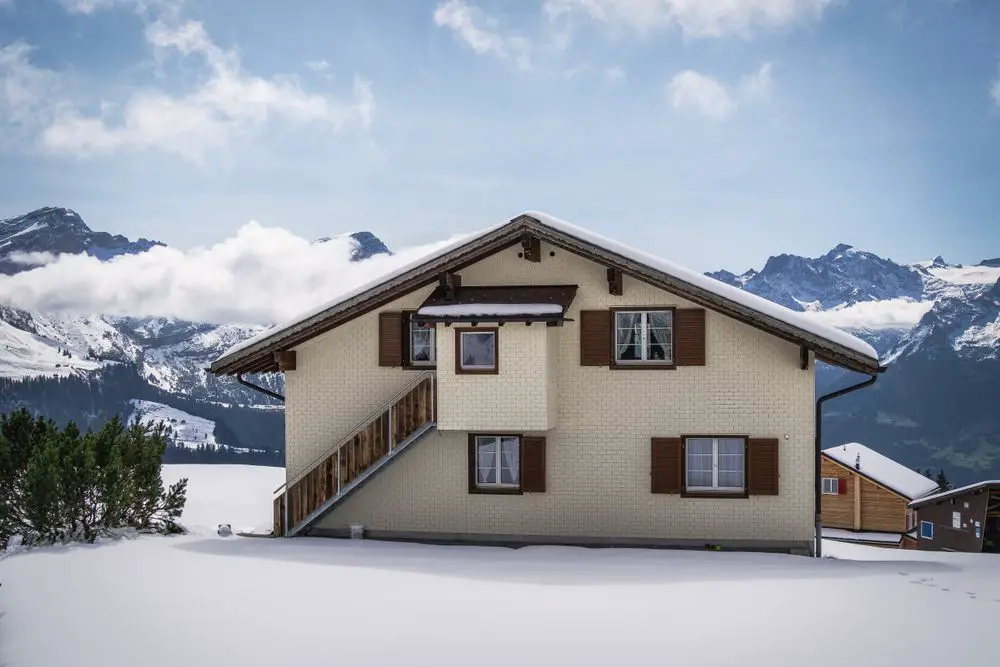
He wants that understood, because people say the word cabin and they picture something you order from a catalogue. Every board in that place carried his fingerprints. He had milled the cedar siding himself from trees that came down in the storm the second spring. He had set the joists and the ridge beam and the stone hearth, and he had done it slowly, because his knees were sixty-six years old by then and he was in no particular hurry, and because it was the first thing he had ever built that was only for him.
He had not inherited peace. There was nobody in his family who had any to leave him. He had earned it, the same way he had earned everything else, which is to say by getting up in the dark for four decades and not complaining about it where anyone could hear.
The mornings up there were cold enough to sting his lungs awake. He liked that. He would take his coffee out onto the porch and stand there in the blue light before sunrise and watch the fog sit in the valley below him like something sleeping, and he would think, with a kind of quiet disbelief that never fully wore off: this is mine, and nobody wants anything from me today.
The evenings smelled like cedar smoke and rainwater and whatever was simmering on the stove. He had gotten decent at soup. He had a chair by the fire and a radio that only picked up two stations and a shelf of paperbacks he had been meaning to read since 1987.
For the first time in his adult life, nobody was demanding anything from him.
It lasted a little over a year.
The phone rang on a Tuesday evening in October. Grant was standing at the stove with a wooden spoon in one hand, stirring a pot of chili he had put together out of whatever was left in the pantry, and the pine trees outside the kitchen window were moving against a sky the color of slate.
It was Daniel.
Grant’s son did not ask how he was doing. He did not ask whether the knee was still bothering him after the fall in August, or whether the road had washed out again, or whether he was eating properly, or whether he was lonely, which he sometimes was, though he would not have said so.
Daniel said, “So, Claire’s parents are moving into the mountain house.”
Grant stopped stirring.
He heard the sentence, and then he heard it again, and the second time he heard the grammar of it, which was the part that mattered.
Not are you okay with. Not would it be possible. Not we wanted to ask you about something.
Are moving.
He set the spoon down on the counter very carefully, the way you set something down when you have just noticed your hands are not entirely steady.
“Say that again,” he said.
“Their condo’s getting renovated. It’s going to be six, eight weeks, maybe a little more. They need somewhere peaceful. You’ve got all that space up there doing nothing.”
Doing nothing.
Grant looked around the kitchen. The counters he had planed by hand. The window over the sink that he had positioned specifically so that he could look at the ridgeline while he washed dishes, because he had spent forty years looking at a parking lot through a break-room window and he had promised himself, somewhere around 1996, that if he ever got out he would put a window where he wanted one.
Doing nothing.
“Daniel,” he said, “why didn’t you ask me first?”
There was a pause on the line. And in that pause, Grant heard something he had been half-aware of for years and had never let himself look at directly.
It was irritation.
Not embarrassment. Not the small, sheepish sound a man makes when he realizes he has overstepped. Irritation, plain and immediate, the sound of a man who has been inconvenienced by an unexpected obstacle.
“Dad. Don’t do this.”
“Do what? I’m asking you a question.”
“You’re making it weird.”
Grant sat down slowly at the kitchen table. The chili had started to catch on the bottom of the pot and he did not get up to deal with it.
He knew that phrase. Every parent of a certain age knows that phrase. Don’t make it weird is almost never a request for calm. It is a request for silence. It means: I have already decided, and I would prefer that you not make me feel anything about it.
“I built this house,” Grant said.
“Nobody’s saying you didn’t.”
“I’m saying it. Because you seem to have forgotten.”
“God.” Daniel’s voice went up. “It’s eight weeks. Eight weeks, Dad. Claire’s mother has a bad hip and they cannot live in a construction site and you have a three-bedroom house on a mountain that you rattle around in by yourself. What exactly is the hardship here?”
Grant said nothing.
He had learned, over the course of a long and mostly quiet life, that saying nothing is a remarkably effective instrument, and that it is almost never used, because most people cannot stand the sound of their own words hanging in the air unanswered.
Daniel could not stand it either.
“You know what,” his son said, “if you don’t like it, go back to the city.”
The chili was burning. Grant could smell it.
He sat at the table in the house he had built with his own two hands, at sixty-nine years of age, and listened to his only child tell him to leave.
Not we’ll figure something else out.
Not okay, that’s fair, I should have called first.
Just: go.
Leave the home you built. Leave the life you spent forty years earning. Leave because someone younger has decided that your comfort weighs less than theirs and has done the math already and found you wanting.
Grant had been insulted before. He had worked construction and then maintenance and then facilities management for four decades, and he had been talked down to by men half his age with a quarter of his competence, and none of it had ever really touched him, because a stranger’s disrespect only reaches your pride.
A child’s disrespect reaches your memory.
Sitting there with the phone against his ear, Grant remembered carrying Daniel on his shoulders through a snowstorm in 1993 because the car had died and the walk from the bus stop was a mile and the boy was six and crying. He remembered the hospital bill from the appendix, and the three months of double shifts it took to clear it, and how he had never once mentioned that to anyone. He remembered lunches packed at five in the morning. Broken bicycles fixed at midnight. Nights sitting on the floor beside a bed with a hand on a hot forehead, watching a chest rise and fall.
Parents never forget those investments. They carry them around like receipts they will never present.
Children, as a rule, do not remember them at all. And Grant had made peace with that a long time ago, because he understood that was the whole point. You do those things so that the child does not have to remember them. That is the entire arrangement.
But you do not expect the same child to look at the one thing you built for yourself and casually decide it should be repurposed.
“Dad?” Daniel said. “Are you there?”
“I’m here,” Grant said.
“So we’re good?”
“When were you planning to come up?”
“Saturday.”
“Saturday,” Grant repeated.
“Yeah. Around ten, probably.”
“All right,” Grant said, and hung up.
He got up and turned off the stove. He scraped the burnt chili into the trash and set the pot to soak. Then he stood at the sink for a while and looked at the ridgeline through the window he had put exactly where he wanted it.
He did not yell. There was nobody to yell at, and yelling had never once in his life produced a result.
He did not call back to argue. Arguing with a person who has already decided is not a negotiation, it is a performance, and Grant had no audience and no interest.
He did not beg. That was the one he had to sit with for a while, because part of him wanted to. Part of him wanted to call back and say, do you understand what you just said to me, do you understand what this house is, do you have any idea what it cost me. That part of him wanted his son to feel it.
But Grant knew, with the clear-eyed exhaustion of a man who has been reading people for fifty years on job sites, that Daniel would not feel it. That the words would be received as manipulation. That an old man’s grief, offered up honestly, would be turned into evidence that he was difficult.
So he became quiet instead.
Quietness unnerves people like Daniel, because they mistake it for surrender. They hear silence and they think: good, that’s settled.
They very rarely consider that silence might be preparation.
At 6:22 that evening, Grant opened the folder he kept in the cabinet beside the kitchen table.
It was an ordinary folder. Manila, softened at the corners, the kind of thing a man keeps because he has always kept things.
Inside were the deed, the title insurance, seven years of property tax records, the county building permits with his name on every one of them, the septic certification, the well registration, and the homeowner’s policy.
One name appeared on all of it.
His own.
That detail mattered more than any speech he could have made.
Because Daniel had spoken emotionally, and emotion is a currency that only spends where both parties agree it has value. Daniel had assumed there was a family understanding, an unspoken arrangement, a shared property that existed somewhere in the sentimental air between them.
There wasn’t.
There had never been a family cabin. There had never been shared ownership. There had never been an inheritance sitting in escrow, quietly accruing, waiting for early withdrawal.
There was a house, on eleven acres, belonging to Grant Holloway, who had built it.
Grant sat at his own kitchen table for a long time with those papers spread in front of him, and he thought about how casually people discuss their parents’ homes as future assets while those parents are still alive and standing right there in the room. He had heard it at holidays for years, from Daniel and from Claire and once, memorably, from Claire’s mother, who had asked him at a Thanksgiving table what he was “planning to do with the mountain place eventually.”
Eventually.
He had smiled at the time and said he hadn’t thought about it.
He thought about it now.
That way of talking does not honor an older person. It processes them. It quietly converts a living man into a set of holdings with a pending settlement date, and it does it with such warmth and such family feeling that the man himself often does not notice until the day someone tells him to go back to the city.
Grant Holloway had spent forty years being useful.
He had no intention of spending his retirement being invisible.
He worked through the night, and he worked the way he had always worked: methodically, without drama, one step at a time.
He photographed every room. Wide shots and close shots, timestamped, the furniture, the tools, the woodstove, the hand-planed counters. Not because he expected theft, exactly. Because a man who has spent his life around insurance adjusters knows that the person with documentation is the person who is believed.
He emailed the deed, the tax records, and the permits to a lawyer named Eleanor Voss, whose number he had kept in his wallet since she handled the closing on the land eleven years earlier. He wrote her a short message explaining the situation in five sentences and asked for a call in the morning.
She called him back at seven the next day, which he took as a good sign.
She listened without interrupting, which he took as a better one.
Then she asked him one question: “Grant, do you actually want them out, or do you want your son to understand something?”
He looked out the window at the fog in the valley.
“Both,” he said. “But mostly the second one.”
“Then don’t be in the house on Saturday,” Eleanor said. “If you’re standing there, it becomes a fight, and a fight is a thing you can be talked out of. Let the paper speak. Paper doesn’t get tired and it doesn’t feel guilty.”
Grant found that he liked her a great deal.
By Friday he had removed the spare key from under the lantern by the porch steps, where it had lived since the day he finished the stairs, and where Daniel had watched him put it.
He changed the lock on the front door himself. It took twenty minutes. His hands still knew how.
And then he prepared the envelope.
It was nothing dramatic. That was the point. It was a plain white envelope with DANIEL written on the front in the same square block capitals he had used on lumber and lunch bags and school permission slips for forty years.
Inside were three things.
A copy of the deed, with the ownership line highlighted in yellow.
A copy of the county occupancy record, which listed one legal resident.
And a single sheet of paper, typed, because his handwriting had gotten shaky and he did not want anyone mistaking that for emotion.
It said:
Daniel,
You told me that if I didn’t like it, I could go back to the city.
I want you to understand that I could have. That was always available to me. What was not available to you, and has never been available to you, is this house.
I built it. It is in my name and only my name. I have never once told you otherwise, and you have never once asked.
Claire’s parents are welcome to stay here. They are welcome the moment you call me and ask, and I mean actually ask, in a way that includes the possibility of me saying no. That possibility is what makes it a request instead of a notice.
Until then, the door is locked.
I am not angry. I want you to know that, because I think you will decide that I am, and it will be easier for you if I am.
I am simply done pretending that my life is a spare room.
Dad
He put the envelope against the front door, wedged behind the storm handle where it could not blow away.
Then he packed one canvas bag, the same one he had carried to job sites for thirty years, and he drove down the mountain and took a room at a motel in the valley town, eleven miles away.
He was not fleeing. He wants that understood too.
There is a difference between retreating and choosing your ground, and Grant Holloway had spent his entire career on job sites learning it. A man who stands in a doorway shouting is a man who can be worn down, argued with, guilted, exhausted, and eventually moved aside. A man who is simply not there cannot be negotiated with at all.
Sometimes the strongest thing you can do is step out of the way and let the consequences introduce themselves.
Saturday came in sharp and cold. Frost lay on the porch rails like powdered glass, and the light coming up over the eastern ridge made the whole valley look like something under water.
Grant parked at a turnout about two hundred yards below the cabin, a spot where the road switched back and the pines opened just enough to see the front of the house. He had put a dashboard camera in the truck three years earlier after a fender-bender on the interstate, and he had never once thought about it since. He thought about it now. He angled the truck, checked the frame, and left it running.
At 10:07, a silver SUV came up the drive, followed by Daniel’s car.
Claire’s parents got out first. Rolling suitcases. Two of them each. Her mother had a tote bag over her shoulder and was looking around at the trees with the expression of a woman evaluating a rental. Her father had a set of golf clubs.
Golf clubs. In October. On a mountain.
Then Daniel came around the front of his car, and Grant watched his son walk toward the porch of the house his father had built, and Daniel was smiling.
That was the part that stayed with him. Not the anger, later. The smile.
He looked proud of himself. He looked like a man who had solved a problem cleanly and efficiently. He had a problem, and his father’s life had been the solution, and he had applied it, and it had worked, and now he was walking up the steps in the cold October sunshine feeling like a good husband and a good son-in-law and a capable man.
He got three steps up and stopped.
Grant watched him see the envelope.
He watched the smile go off his son’s face the way a light goes off in a house at the end of a street.
Daniel took it down. He turned it over. He looked at the block capitals with his own name on them, and then he looked at the front door, and then he tried the handle.
It did not turn.
He tried it again, harder, the way people do, as though a locked door might simply need convincing.
Then he opened the envelope.
Grant could not hear anything from where he was. He did not need to. He watched his son stand on the porch of a house he had assumed was his in every way that counted, reading three pieces of paper, while behind him a woman with a bad hip stood in the frost beside a rolling suitcase and began, visibly, to understand that something had gone wrong.
Daniel read it twice. Grant could tell, because his eyes went back to the top.
Then he pulled out his phone.
Grant’s phone rang on the passenger seat beside him. He looked at it. He let it ring.
He was not being cruel. He wants that on the record too, and he has said so since, to the few people he has told about this, and some of them have believed him and some of them have not.
He let it ring because there was nothing in that phone call that could have happened yet. Whatever Daniel was feeling on that porch at 10:11 in the morning, it was not understanding. It was shock, and shock talks, and Grant had spent forty years learning that a man in shock will say things he cannot take back, and that the kindest thing you can do for him is to give him a few hours.
The phone rang eleven times over the next two hours.
Grant sat in his truck with the heater running and a thermos of coffee and watched the suitcases go back into the SUV.
Claire’s mother said something to Daniel, and Daniel gestured at the house, and then at the papers in his hand, and then he sat down on the top step and put his head in his hands.
Grant found, somewhat to his surprise, that this did not please him.
He had expected it to. He had expected some hot, bright, satisfying feeling, and instead he felt what he imagined a surgeon feels: the grim relief of a necessary cut, correctly made.
He watched his son sit on the steps of the house his father had built.
Then he put the truck in gear and drove back down to the motel.
The voicemails came in that afternoon, and Grant listened to all of them in order, sitting on the edge of a bed with a floral bedspread.
The first was angry. How could you. Do you know how humiliating that was. They drove two hours.
The second was angrier.
The third was an attempt at reason, which mostly consisted of explaining, at length, why the first two had been justified.
The fourth was quiet.
The fifth, left at 9:40 that night, was very quiet, and it lasted eleven seconds, and all it said was:
“I didn’t know it was only your name.”
Grant listened to that one four times.
Because there it was. That was the whole thing, in a single sentence, and his son had said it without any idea what he had just admitted.
Daniel had not known. He had genuinely not known. Not because anyone had hidden it from him, but because he had never once thought to wonder. He had grown up understanding, in the wordless way children understand things, that whatever his father had would eventually and naturally flow downhill toward him, and that the timing of it was a technicality.
The cabin had been, in his mind, a kind of advance. And an advance is not a gift. An advance is money you already consider yours.
Grant lay back on the motel bed and looked at the water stain on the ceiling and thought about how easy it is to raise a person like that without ever meaning to.
You give and you give and you never once make them ask, because making them ask feels cruel and small and unlike a father. And they grow up in a house where the giving is simply weather. It arrives. It has no source and no cost and no end.
And then one day you build yourself something, and they look at it, and they cannot understand why it is not also weather.
He did not call back that night.
He called on Monday.
They met at a diner in the valley town, on neutral ground, because Grant had spent enough years in union negotiations to know that where you sit is half of what gets decided.
Daniel came in looking like he had not slept. He was thirty-eight years old and Grant could still see the boy in his face, and that was the trouble with children, that you never stop seeing it, no matter what they do.
He sat down across from his father and did not pick up the menu.
“You embarrassed me,” he said.
“I know,” Grant said.
“Claire’s parents drove two hours.”
“I know.”
“You could have just called.”
“I did call,” Grant said. “On Tuesday, you called me. I asked you a question. Do you remember what it was?”
Daniel’s jaw worked.
“You asked why I didn’t ask first.”
“That’s right. And what did you say?”
His son looked out the window at the parking lot.
“I said you were making it weird.”
“And then you told me to go back to the city.”
The waitress came and Grant ordered coffee for both of them because Daniel did not seem capable of it. They sat in silence until she came back and poured.
“I was frustrated,” Daniel said.
“I understand that.”
“It didn’t mean anything.”
Grant put both hands around his cup. His knuckles were swollen and split at the joints. They had been that way for twenty years.
“Son,” he said, “everything means something. That’s the part I don’t think you’ve worked out yet. You told your father to leave the house he built. You didn’t say it in anger, either. That’s what I keep coming back to. You said it the way a man says a thing he’s already thought. You’d already decided that if I made this difficult, the solution was for me to go somewhere else.”
“That’s not—”
“Let me finish. I’m not going to say this again and I want to say it right.”
Daniel closed his mouth.
Grant looked at him. Forty years of getting up in the dark. Forty years of a body he had spent like currency.
“I gave you everything I had,” he said. “I did it gladly and I would do it again and I have never once asked you for anything back. Not once in thirty-eight years. That was my choice and I don’t regret it and you don’t owe me for it.”
He turned the cup a quarter turn on the table.
“But somewhere along the way, you stopped seeing that as a gift and started seeing it as the natural order of things. And a man who thinks that way looks at his father and doesn’t see a person anymore. He sees a resource. And a resource doesn’t get consulted. A resource gets allocated.”
Daniel’s eyes were wet. He was furious about it. Grant recognized that too. He had inherited that from somewhere.
“So no,” Grant said. “You cannot have my house. Not because I’m punishing you. Because it’s mine, and because the only way you were ever going to understand that was to stand on the porch and find the door locked.”
“They needed somewhere to stay,” Daniel said, and his voice cracked on it, and Grant heard, underneath the anger, the thing that had actually been driving all of this: a man in his late thirties, desperate to be seen as capable by his wife’s family, who had reached for the nearest available asset without ever considering that it had a heartbeat.
“I know they did,” Grant said. “And here’s what I want you to hear, because it’s the whole point and I need you to hear it.”
He leaned forward.
“If you had called me on Tuesday and said, Dad, Claire’s folks are in a bind, is there any chance they could stay with you for a few weeks, I would have said yes.”
Daniel stared at him.
“I would have said yes,” Grant repeated. “That same night. I’d have made up the beds. I’d have stocked the pantry. I’d have driven down and gotten them myself, and I’d have been glad to do it, because that is what a man does for his family when he is asked.”
He sat back.
“You never asked. You told me. And then when I noticed you hadn’t asked, you told me to get out of my own home. And you cannot do that to a person and then call it family support.”
The coffee went cold between them.
Eventually Daniel said, very quietly, “I didn’t think it would matter to you that much.”
And Grant thought: yes. That, precisely. That is the sentence at the bottom of all of it. Not malice. Never malice. Just the profound, casual, cheerful assumption that his father’s inner life had less weight than a scheduling problem.
“It mattered,” Grant said. “Everything’s always mattered. I just never made a sound about it, and I think that’s the mistake I made with you. I was quiet for forty years and you grew up thinking that meant nothing was happening in there.”
Grant went back up the mountain that afternoon.
He unlocked the door with the new key and stood in the front room and looked at the woodstove and the hand-planed counters and the window he had put exactly where he wanted it, and the house was cold, because he had let the fire go out on Friday.
He built it back up. It took ten minutes. His hands still knew how.
Claire’s parents ended up staying with Daniel and Claire for the duration of the renovation, in a two-bedroom apartment, and by all accounts it was a difficult six weeks, and Grant has never once said a word about that to anyone.
He did not hear from his son for four months.
Then, in late February, the phone rang on a Sunday afternoon, and Daniel asked, in a voice that sounded like it had been rehearsed in a car in a driveway, whether he could come up and see the place.
Not stay. See.
Grant said yes before the sentence was finished.
They spent a Saturday walking the property line. Grant showed him where the cedars had come down in the second spring, and the stump he had left standing because it was too big to move, and the ridge beam, and how the joinery was cut. Daniel asked questions. Some of them were good questions.
Around four in the afternoon, standing in the front room with the light going amber through the window, Daniel said, “You made all of this.”
“Yeah,” Grant said.
“I never really looked at it before.”
“I know.”
His son was quiet for a while.
“Dad,” he said, “would it be all right if I came up again? Not for anything. Just to come up.”
And Grant Holloway, who had spent forty years being useful and one year being invisible and one very long autumn learning the difference between the two, said the only thing there was to say.
“You never have to ask me that,” he said. “But I’m glad you did.”
Because that was the whole of it, in the end. Not the envelope. Not the locked door. Not the dashboard camera or the deed or the highlighted line.
Just a man who had finally understood that the word yes only means something when no was genuinely on the table.
And a son, standing in his father’s house, at last aware that he was a guest, and finding to his own surprise that it did not feel like a demotion.
It felt like being welcomed.

Lila Hart is a dedicated Digital Archivist and Research Specialist with a keen eye for preserving and curating meaningful content. At TheArchivists, she specializes in organizing and managing digital archives, ensuring that valuable stories and historical moments are accessible for generations to come.
Lila earned her degree in History and Archival Studies from the University of Edinburgh, where she cultivated her passion for documenting the past and preserving cultural heritage. Her expertise lies in combining traditional archival techniques with modern digital tools, allowing her to create comprehensive and engaging collections that resonate with audiences worldwide.
At TheArchivists, Lila is known for her meticulous attention to detail and her ability to uncover hidden gems within extensive archives. Her work is praised for its depth, authenticity, and contribution to the preservation of knowledge in the digital age.
Driven by a commitment to preserving stories that matter, Lila is passionate about exploring the intersection of history and technology. Her goal is to ensure that every piece of content she handles reflects the richness of human experiences and remains a source of inspiration for years to come.