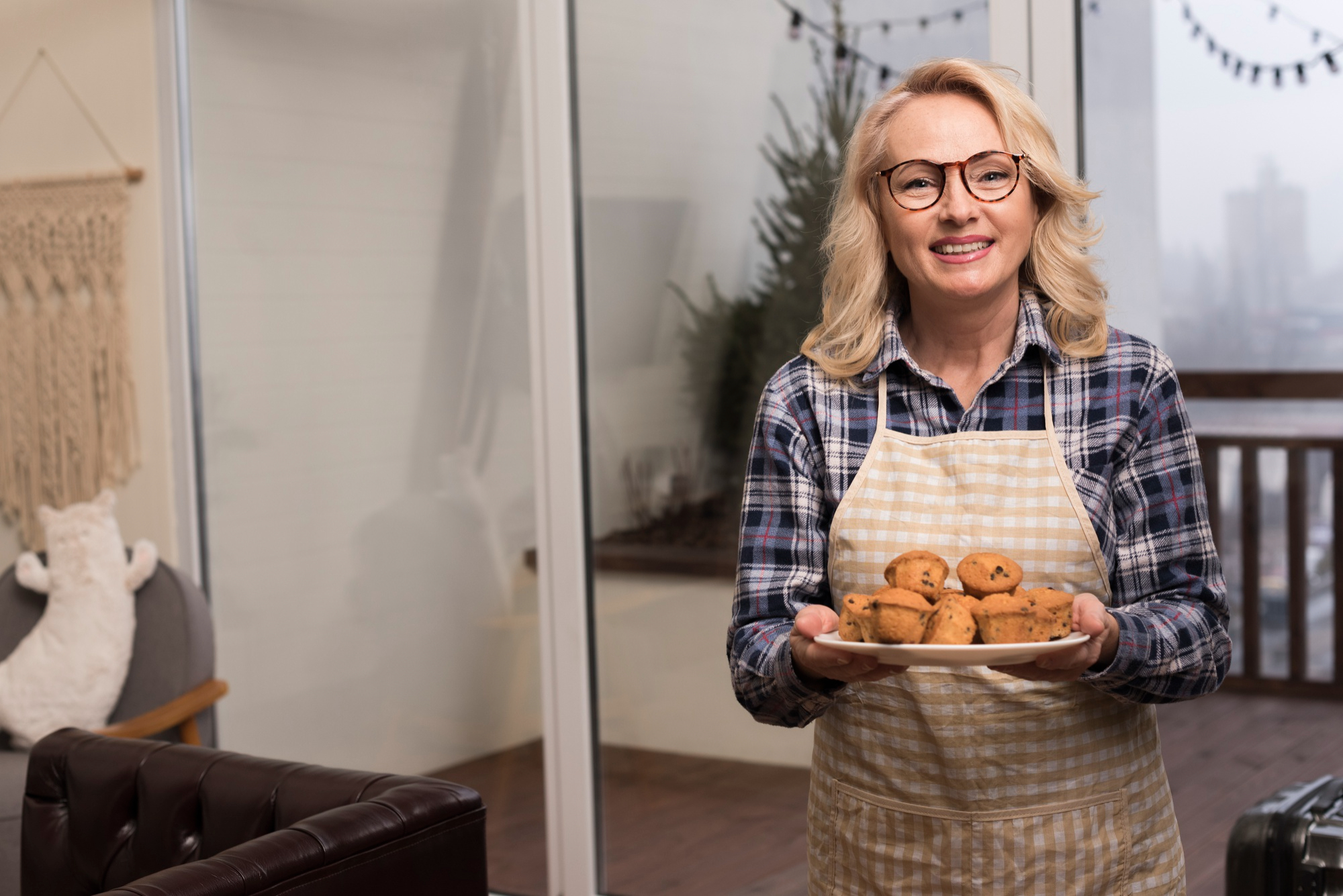
Still Standing
My son left for the lake on a Thursday morning with his wife, her mother, and three coolers packed like they were crossing the country instead of driving two hours north.
I stood at the back window of Willa Jean’s Bakery and watched him load the truck.
Evan had always been careful with things when he thought they mattered. He wedged the blue cooler against the side rail, folded two lawn chairs flat, tucked them beside a canvas bag, then checked the tailgate twice. His wife, Marissa, stood in the driveway with her sunglasses pushed up on her head and her phone in her hand, directing him like he was docking a freight ship.
Not that way. The bags will shift.
He moved the bags.
Put Mom’s tote closer to the door. She’ll want her cardigan when we stop.
Her mother, Elaine, was already in the backseat. Wide-brimmed hat. Pale linen shirt. One hand resting on her purse as though the bakery air might reach in and take something from her. She had been sitting there almost twenty minutes while the rest of us moved around her. That was Elaine’s particular gift. She could occupy a space without lifting a finger and somehow make everyone else feel like hired help.
I wiped my hands on my apron and stepped out onto the porch.
It was that early July heat that promises to get worse before lunch. The alley behind the bakery smelled like warm asphalt and fresh bread and the coffee grounds I’d thrown into the flower bed because Raymond always swore they helped the soil. A small flag hung from the back door frame, the two-dollar kind you buy at the hardware store around Memorial Day. It was faded at the edges. I kept it there because Raymond had put it up the summer before he died.
Evan finally came over.
Mom.
He gave me a quick one-armed hug, his body already angled back toward the truck.
You know where everything is, he said. Freezer inventory is on the clipboard in the mudroom. The Miller’s wholesale order is highlighted in yellow. Peach filling for Saturday is labeled. Don’t forget the baking class Wednesday morning.
I’ve run this bakery a few times before, I said.
He smiled. It wasn’t a real one. It was that polite little expression he’d started using after Raymond passed, the one meant to make me feel included without making me involved.
I know. I’m just saying.
Then he reached into his pocket and handed me a folded paper.
Marissa made a list.
Of course she did.
Three pages. Color coded. Oven times, delivery windows, prep instructions, customer pickup names. And down near the bottom, in her neat curling handwriting:
Please do not adjust the scone recipe. Last batch was dry.
I looked at that sentence a beat too long.
I had baked those scones for thirty-six years. I baked them through blizzards and power outages. Through church fundraisers and school breakfasts and funerals and baby showers and one county fair where it hit ninety-eight degrees and Raymond put ice packs under the butter table so the crusts wouldn’t melt into soup.
And now here I was, being reminded by my daughter-in-law not to ruin my own recipe.
Marissa leaned out the passenger window.
We’ll be at the lake house through Sunday. Cell service is terrible up there, so don’t panic if we don’t pick up.
Then, after a pause: Just follow the list and everything should be fine.
Elaine gave me a small nod from the backseat. Not a wave. Not a goodbye. More like an acknowledgment that I existed somewhere near something she had plans for.
Evan looked at me one more time.
You’ll be okay?
That question should have softened me. It nearly did. But then his eyes went back to the truck before I’d even answered.
I’ll be fine, I said.
He nodded, relieved before I finished the sentence.
I stood on the porch while they pulled out. The truck turned left onto Maple, past the post office, past the diner with the cracked neon sign, past the red-white-and-blue bunting the town always leaves up too long after the Fourth because nobody wants to climb a ladder in that heat.
Then they were gone.
Behind me, the sign above the door swung once in the breeze.
Willa Jean’s Bakery. Established 1987.
Raymond had painted those letters himself on a Sunday afternoon. Took him nearly five hours with a narrow brush because he said a name deserved patience. The paint has faded and the edges have weathered, and I have been told more than once that I ought to refresh it. Modernize. Hire someone to do a cleaner logo.
I never did.
Those letters are my husband’s handwriting. Some things you don’t improve. You preserve them.
I went back inside.
The kitchen was still warm from the morning bake. Yeast, coffee, butter, sugar, that faint metallic smell of the deck oven cooling. Flour dusted along one edge of the worktable where I’d rolled tart dough before dawn. The old shelves along the back wall held every sheet pan and tart ring and proofing basket we’d collected in thirty years, and the heavy copper bowl Raymond bought me for our twenty-fifth anniversary because he said jewelry would just sit in a drawer.
I stood there a while holding Marissa’s three-page list.
Then I folded it, set it on the counter, and poured myself a cup of coffee.
The stool by the east window was where it had always been. Raymond used to sit there at five-thirty with a mug in his hand while I shaped bread, reading the local paper out loud like he was a radio announcer.
Mrs. Danner’s grandson made Eagle Scout.
County commissioners are fighting about road salt again.
Football team finally got new uniforms.
Four years gone, and some mornings I still expect to hear that paper rustle.
After he died, Evan started coming around more. I was grateful at first. He hauled flour. He updated the register. He talked me into online ordering, then a card reader, then a new payroll system. He said he wanted to make things easier.
And maybe he did, in the beginning.
Grief makes you a poor judge of when help turns into control.
The first thing I noticed was the petty cash box.
I hadn’t planned on opening it that morning. I only wanted change for the farmers market orders. But something in me had been restless since that note about the scones. Not anger exactly. More like an old floorboard creaking under weight you hadn’t noticed you were carrying.
The box sat in the lower drawer of Raymond’s desk, in the back office. The desk has gouges down one side from the year the mixer motor died and Raymond set his toolbox down too hard. He apologized to the desk afterward. That was the kind of man he was.
I took the key from its hook.
The lock stuck. That was strange. It had always turned clean.
I worked it gently until it clicked, and the lid scraped open, and before I counted a single bill I already knew.
It was short.
Not empty. Nothing dramatic. Just short.
I know that box the way some women know their spice shelf. I’ve kept a running ledger in my head for thirty-six years. There should have been a little over six hundred dollars in it. It was short more than two hundred.
I counted again. Then a third time. The number stayed the number.
I stood there looking down at the bills for a good while.
Your mind is kind to you at first. It hands you the small explanations before it lets the big ones in.
Maybe I’d paid a vendor in cash and forgotten. Maybe Evan needed change for a market run. Maybe Marissa moved money somewhere and left a note I never saw.
Maybe I was tired.
Maybe I was old.
Maybe I was becoming the kind of woman people had to write lists for.
I sat down and pulled out the accordion folder where I keep receipts. Six weeks of them, mostly clean. Flour. Butter. Cream. Produce. Packaging. A repair part for the walk-in.
But the weekend after the Fourth had no petty cash slip.
I remembered that weekend. I’d gone to Harrisburg because my sister took a fall in her garage. Evan ran the bakery. He texted me Saturday afternoon to say the peach galettes sold out before noon.
I’d been so proud of him.
That’s the part that made my chest ache.
I put everything back exactly where I found it. I didn’t call him. I didn’t text.
I went back to the kitchen, because dough doesn’t care what you’ve just discovered. Bread has no sympathy. It only asks whether you’re paying attention.
By ten-thirty, Nora from the quilt shop came in for her rye loaf and two almond croissants. Nora’s had that shop two doors down almost as long as I’ve had the bakery. She knows everybody’s business and is kind enough not to mention it unless she thinks it matters.
Quiet today, she said.
Evan and Marissa went to the lake.
With Elaine?
Yes.
Nora’s eyebrows lifted a fraction.
Well, she said. That’ll be a restful weekend for someone.
I laughed in spite of myself.
I was sliding her croissants into a bag when she tilted her head.
I ran into the two of them at the hardware store last month.
My hands kept moving. Did you?
He mentioned you were thinking of stepping back.
The words landed softly. They did not land gently.
I folded the top of the bag over.
Stepping back from what?
Something moved across her face. Not much. Enough.
From the bakery, she said. He said you were ready to slow down. That they were looking at options. Maybe turning the back room into a catering space. Something for events.
The old refrigerator hummed behind me. Outside, a truck went by with lumber tied in the bed. Somebody laughed down the block and a car door slammed.
I didn’t know you’d decided that, Nora said carefully. I always thought you loved this place.
I do.
She looked at me a long moment.
Maybe I misunderstood.
No, I said. I don’t think you did.
She picked up her bag.
Call me if you need anything, Willa.
In a small town, that sentence means: I’ve seen something wrong, and I won’t look away if you’d rather I didn’t.
After she left I stood behind the counter and looked toward the back room.
That room isn’t pretty. It’s practical. Raymond and I built it one winter when we had more stubbornness than money. We bought old library shelves from a salvage yard outside York, hauled them home in a borrowed pickup, sanded them in the driveway, cut them down to fit the wall. They still hold every pan and mold and ring and bowl we’ve collected in three decades.
It isn’t wasted space. It’s history wearing a coat of flour.
Evan never asked me about changing it.
He told the town before he told me.
That night, after I locked up and turned the sign, I went into the office.
The building is different after dark. During the day it belongs to motion, bells and ovens and paper bags and timers. At night you can hear the bones of it. Pipes ticking. The cooler running. The floor settling under its own weight.
I opened the drawer where Evan had started keeping a folder after Raymond died. He’d told me it would help to have all the important things in one place, and at the time I thought that was kindness.
The folder was thicker than I expected.
I set it under Raymond’s old lamp and turned it on.
The first pages were ordinary enough. Insurance policy. Vendor contacts. Warranty cards. A note about a grease trap inspection. Copies of invoices. Exactly what a son helping his mother might keep.
And then I found the printout.
Commercial zoning inquiry.
The address was ours.
I read it twice. Mixed-use conversion. Retail bakery to event and catering space. Removal of existing fixtures. Expanded seating. Structural updates. Design consultation. Brand refresh.
I sat back in the chair.
It was dated eleven weeks earlier.
Behind it was a quote from a design firm in Lancaster. Full interior renovation. Removal of existing shelving. New service counter. Updated lighting. Consultation package. Deposit required.
The number at the bottom had five digits.
I want to be honest. I wasn’t angry first. I was cold.
And then I saw the sticky note on the inside flap, in Marissa’s handwriting.
Need Mom’s signature on LLC transfer before bank meeting.
I looked at that until the letters blurred.
Need Mom’s signature. Not ask Willa. Not talk to Mom.
Need. Like I was a formality. A box on a checklist between the lender and the lighting.
And then I remembered the paper.
Last spring, while I was packing wholesale orders, Evan had put something in front of me. Routine, he said. Insurance-related. Updating records now that Raymond’s estate had finally settled. I was covered in flour, the phone was ringing, and Marissa was waiting up front with that patient smile people use when they’re rushing you without saying so.
I signed where he pointed.
That memory sat in my stomach like spoiled milk.
I photographed every page. Then I put the folder back precisely as I’d found it, turned off the lamp, and sat in the dark for a while.
Rain started outside, soft, then harder. It ran down the alley window in crooked lines. Raymond loved summer rain. He said it made people buy more bread the next morning.
I could nearly hear him.
Look closer, Jean.
So I did.
In the morning I called Fern Atwood, my accountant. She’s handled our books since 2003. Small, sharp-eyed, impossible to charm. Raymond used to say Fern could spot a missing dollar from across a parking lot.
I need a full review, I told her. Eighteen months. Petty cash, transfers, card access, all of it.
A pause. How soon?
As soon as you can.
Another pause. Does Evan know you’re asking?
No.
Then: I’ll start today.
She didn’t ask why. That’s one of the reasons I trust her.
Then I called Adeline Strickler.
Adeline was Raymond’s attorney when he bought the little parcel of land behind the bakery in 2008. Most people don’t even know we own it. It’s a narrow lot, mostly gravel and weeds, tucked behind the alley. He bought it quietly when the grocery store next door closed and nobody knew what was going to happen to the block.
One day, he said, we might need room.
I’d laughed. For what?
He shrugged. Something good.
Her office is in a brick building on the east side of town that used to be a seed warehouse. The stairwell still smells faintly of burlap and old wood. She saw me that same afternoon, poured me water from a ceramic pitcher without asking. Some women know when your hands need something to hold.
I put it all on her conference table. The zoning printout. The design quote. The sticky note. The photographs. What I remembered about the paper I’d signed. The petty cash.
She read it without drama. No gasping, no head shaking. She made notes on a yellow pad and asked clean questions.
Have you ever agreed to transfer ownership of the LLC?
No.
Is Evan listed as an owner?
No.
Managing member?
No.
Does he have authorization on the business account?
Secondary access. Vendor payments and deposits when I travel.
Did you authorize him to move savings to outside accounts?
No.
She wrote for a while.
Do you have a copy of what he had you sign?
Not with me.
We’ll get it.
I looked at the papers spread across her table.
Can they take the bakery from me?
Adeline looked up.
No, she said. Not if these documents are what you say they are. But people don’t have to be right to make trouble.
That sounded like something Raymond would have said.
We worked most of the afternoon. By the time I left, she had contacted the bank, drafted a letter confirming I was the sole member and sole decision maker of Willa Jean’s Bakery, LLC, and begun the process of removing Evan’s secondary access pending review.
Then she asked about the parcel.
What do you want to happen to the bakery and the land if something happens to you?
I’d been avoiding that question for four years.
Before Raymond died, I assumed Evan would have it. Not because he loved it the way we did, but because he was our son, and that had felt like reason enough.
It no longer did.
I looked out her window at the flag moving slow outside the courthouse.
I want it protected, I said. And I don’t want anyone tearing it apart because they think I’m too tired to notice.
Adeline waited.
I thought about Raymond. One day we might need room. Something good.
I want a community kitchen fund, I said. For people who need certified kitchen space. Young bakers. Single mothers. Immigrants. Anybody with talent and nowhere to work.
Something in her face softened for the first time all day.
Raymond would have liked that.
Yes, I said. He would have.
So we began.
The parcel would go into a revocable trust. The bakery stayed mine. If I died, the trust would fund a community kitchen through the county foundation. Evan’s name would not appear on any ownership document. Marissa’s new lighting and her removed shelving would not survive me.
At the door, Adeline said, he may panic when he finds the account locked.
I nearly laughed. He’s at the lake. Terrible cell service, according to Marissa.
Cell service improves remarkably fast, she said, when money stops working.
She was right.
The phone rang at seven-twelve the next morning.
I was pulling the first loaves. They were crackling on the rack, that small sound good bread makes when it’s come out right. The light was just reaching the east window, turning the flour dust gold.
Evan’s name came up on the screen.
I let it ring twice.
Mom.
His voice was tight. Not frightened, exactly. Controlled fear. The kind men use when they don’t want to admit they’ve already lost hold of something.
Good morning, I said.
What happened to the business account?
I slid another loaf onto the rack.
What do you mean?
It’s locked. My card declined at the gas station, and when I logged in it said my access was removed.
Behind him I could hear Marissa. Ask her why. Evan, ask her why.
He dropped his voice. Mom, we can’t access anything.
I stood in the middle of the kitchen my husband built with me. The shelves we sanded by hand. The worktable scarred by thirty-six years of dough and knives and elbows and coffee cups. The mixer with Raymond’s handwriting still on a strip of tape by the switch. The starter bubbling by the prep sink, alive because I have kept it alive.
I breathed in.
Then I gave my son the answer he never expected.
You can’t access it because I removed you.
Silence.
You what?
I removed your access.
Why would you do that?
Because it is my business account.
He made a sound like a laugh with nothing in it.
Mom, that’s not how this works. I’ve been helping manage things for two years.
You were allowed to help, I said. You were not allowed to take over.
I didn’t take over.
No? Then why did you file a zoning inquiry on my building?
Nothing. The bakery was very still.
Where did you hear that, he said.
That is not the question you should be asking me.
Marissa said something behind him, sharper this time. He covered the phone, but not well enough.
She found the folder, he said.
There it was.
Not confusion. Not surprise. Only discovery.
When he came back on, his voice had changed. Mom, listen. This is a misunderstanding.
No, I said. It isn’t.
We were trying to plan ahead.
You were trying to transfer an LLC I never agreed to transfer.
Marissa thought.
Do not put this on your wife.
That stopped him.
You are my son, I said. You knew better.
He didn’t answer. I could hear the lake behind him now. Wind. A dock creaking. Elaine’s voice, low and urgent, somewhere close.
You locked us out without even talking to me, he said.
You made plans for my bakery without talking to me.
That’s different.
Yes, I said. It is. What I did was legal.
His breath caught.
And for one second I regretted the sharpness of it. Not because it wasn’t true. Because he was still my son, and mothers have a terrible habit of wanting to soften the landing even when the child jumped.
Then I looked at Marissa’s list, still folded on the counter.
Please do not adjust the scone recipe.
The regret passed.
I’ll be back Sunday, he said.
I know.
We need to talk.
We do.
Don’t do anything else until I get there.
I almost smiled.
Evan, I said, that is the last instruction you will ever give me about my own business.
He hung up.
I stood there with the phone in my hand while the loaves cooled beside me.
Then I went back to work.
The morning came the way it always does. Mr. Hanley from the VFW bought two black coffees and a cinnamon roll. Three nurses came in from the night shift at St. Agnes, still wearing their badges. A young father with a baby strapped to his chest bought a blueberry muffin and dropped his debit card twice. Nora came in and looked at me carefully and asked nothing.
The bell kept ringing. The bread kept selling.
Nobody knew that my son had called from a lake in a panic because a door he thought he’d wedged open had been quietly locked.
That afternoon Fern called.
It’s worse than petty cash, she said.
I sat down. Across the kitchen the oven timer beeped. I let it.
How much worse?
Two transfers from business savings to an outside account I don’t recognize. Not big enough to trip anything immediately. Not small, either. Both labeled consulting expenses. One went to a design firm. One to a business planning service.
I closed my eyes.
Evan?
His credentials were used.
I could hear her turning pages.
There are also petty cash withdrawals without receipts. A little over eight hundred dollars across fourteen months.
I looked through the office door at Raymond’s desk.
Eight hundred dollars is not enough to sink a business. That’s almost what made it uglier. It wasn’t desperation. It was comfort. It was a man taking small amounts because he believed no one would ever ask.
Document everything, I said.
Already am.
I don’t want to file anything yet.
You may need to.
I know. For now I want a record.
Fern was quiet a moment.
A record is a powerful thing, Willa.
Yes, I said. I’m learning that.
He came back Sunday evening, and of course he didn’t come alone.
They walked in the back door at six-thirty, after close. Marissa in white jeans and a pale blue blouse that looked too clean for a kitchen. Evan looking gray around the mouth, the way people do after arguing in a car for two hours.
I was wiping down the worktable.
Neither of them spoke at first. The last light was coming through the front windows. Main Street had gone quiet in that Sunday way. A pickup outside the diner. Two boys on bikes.
You changed the bank account, Evan said.
I corrected it.
Marissa stepped forward. Willa, we need to be careful with language here.
That nearly made me laugh.
Careful language is what got you into my files, I said.
Her mouth tightened. We were trying to modernize the business.
You were trying to remove shelves my husband built with his hands.
They’re old.
So am I.
That is not what I meant.
It usually isn’t, I said. But somehow it keeps being what people mean.
Evan rubbed his forehead. Mom, please. Can we sit down?
No, I said. You can stand.
That surprised him. It surprised me a little too.
For years I had let him sit at Raymond’s desk. Open the drawers. Use the computer. Talk to vendors like he’d earned the right. I told myself it was family. I told myself I was including him.
Standing there with a wet towel in my hand, I finally understood what I had actually done.
I had let him practice ownership in a place that was not his.
The renovation would have increased revenue, Marissa said. You can’t deny that.
I can deny your right to plan it.
We had interest from lenders.
Using whose business?
She looked at Evan. He said nothing.
You told people I was stepping back, I said to him.
I said you were thinking about it.
I was not.
You should be.
And there it was.
The room changed. Marissa looked down at the floor. Evan went pale, as though he hadn’t expected it to come out that bare.
Say it again, I said.
Mom.
No. Say it properly.
He swallowed. I just mean you work too hard. You’re sixty-eight. You’re here before dawn every day. Dad wouldn’t want.
Do not bring your father into this because you need cover.
His mouth closed.
Your father got up at four-thirty every morning for thirty-two years because he loved this place, I said. So do I. Work is not the same thing as suffering just because you wouldn’t want it.
I don’t want you exhausted.
You wanted my signature.
That’s not fair.
I keep hearing that from people who were very comfortable being unfair to me.
Marissa tried again, softer. Willa, nobody is trying to take anything from you.
I went into the office and came back with the folder and set it on the worktable.
It made almost no sound. They both looked at it like it had slammed.
I opened it. Zoning inquiry. Design quote. Fern’s preliminary summary. Adeline’s letter to the bank.
And the sticky note.
Marissa’s face changed when she saw her own handwriting.
Need Mom’s signature on LLC transfer before bank meeting.
She looked at Evan. He looked at the table.
You put a paper in front of me last spring, I said. You told me it was routine.
It was routine, he said, and even he didn’t believe it.
What was it?
He didn’t answer.
Adeline had already pulled the copy. It was not an LLC transfer, thank God. It was an authorization form that expanded his access far more than I’d understood at the time. Not ownership. Too much power all the same.
You let me sign something I hadn’t read, I said. And you did it while I was busy enough not to ask.
He looked up. I didn’t think of it that way.
That may be worse than if you had.
We were trying to protect the business from uncertainty, Marissa said.
No, I said. You were trying to protect your plan from me.
Nobody spoke.
And for a moment I saw him at ten years old on an overturned milk crate beside his father, brushing egg wash on dinner rolls with the grave expression of a surgeon. I saw him at sixteen complaining about Saturday shifts and eating three cinnamon twists before noon. I saw him after Raymond’s funeral, standing in this same kitchen with red eyes, saying, I’ll help, Mom. You won’t have to do this alone.
Maybe he meant it then. That is the cruel part. People can mean a thing once and betray it later, and both were real.
I am not pressing charges right now, I said.
His head came up. Charges?
Fern found unauthorized transfers. Everything is documented.
I can explain those.
You will explain them to Adeline.
Who’s Adeline?
My attorney.
Marissa’s polish finally cracked. You hired an attorney?
I called the woman your father trusted with the land behind this shop.
Evan looked toward the back wall. The parcel?
Yes. Raymond’s parcel. The one you seem to have forgotten was also mine.
The bakery is mine, I said. The land is mine. The account is mine. If either of you wants to be in this building, it will be by invitation. Not assumption.
His voice cracked. Mom, I’m your son.
I know.
How can you talk to me like a stranger?
Because you treated me like an obstacle.
He looked away.
I closed the folder. You can go now.
That’s it?
For tonight, yes.
We’re family.
Yes, I said. That’s why this hurts instead of merely offending me.
He turned and walked out. Marissa stopped at the door.
We already paid a deposit to the design firm, she said quietly. My mother helped.
I looked at her. That was unwise.
Her cheeks went red. You don’t care that we’re out money?
No, I said. Not for trying to spend mine.
She left without answering.
Elaine called the next morning. I let it go to voicemail. Her message came in clipped and formal, the tone you use on a disappointing hotel manager.
Willa, this is Elaine. I understand emotions are running high, but I think we should all behave like adults. My daughter acted in good faith based on what Evan told her. I personally contributed eighteen hundred dollars toward the design deposit. I’m sure you’ll want to make that right.
I played it twice.
Then I forwarded it to Adeline.
Her reply came ten minutes later. Save all communications.
I did.
For two weeks the bakery was the quietest battlefield in the county.
Nothing showed out front. The bell rang. Bread sold. Children pressed their hands against the pastry case and left fingerprints I wiped away without complaint, because fingerprints meant people were still coming in.
Behind it, Adeline worked. Fern worked. I worked.
Evan sent three texts.
The first: We need to talk when you calm down.
I didn’t answer.
The second: I’m sorry for how this came across.
I didn’t answer that either. Came across is what people say when they want to sound sorry without naming the thing they did.
The third arrived at 11:18 on a Wednesday night.
I miss Dad too.
I read that one for a long time.
Then I set the phone down.
People reach for the dead when they can’t answer for the living. I understood the impulse. I had wanted to ask Raymond what to do every single day since that folder opened. But he was not a shield. He was not a weapon. He was not a witness either of us got to invent.
By the end of the month, the bank confirmed my sole authority. Evan’s access was fully revoked. Adeline sent formal notice that business communications would go through her unless I initiated contact myself. Fern finished the accounting and put copies in three places.
And then we did the thing nobody expected, including me.
We announced the Raymond Holt Community Kitchen Fund.
The paper ran it on a Friday. Willa Jean’s Bakery Founder Creates Fund for Local Food Entrepreneurs. The photograph showed me in the bakery beside three women who’d applied for the first round.
Amara made Caribbean pastries out of her apartment kitchen and sold out every Saturday at the farmers market. Kelsey was a young mother with two kids, an old Honda, and a hand pie recipe good enough to stop conversation. June was twenty-three, at the community college, running a bread subscription out of her dorm until the school told her she needed a licensed kitchen.
I liked all three of them immediately. Not because they were sweet. Sweetness is overrated.
I liked them because they were serious. They asked about oven schedules, storage, liability insurance, labeling rules, wholesale pricing, and whether failure gets easier after the first dozen times.
No, I told them. You just stop treating it like a verdict.
The reporter asked why I was doing it.
Because my husband and I built this place with our hands, I said, and I know what it is to need room.
That’s the line they printed.
Evan shared the article with no comment. Marissa didn’t share it at all. Elaine, for once, said nothing.
The first Thursday Amara came to use the kitchen, she showed up fifteen minutes early with two plastic bins, a notebook, and the nervous smile of a person walking into a room she’s been imagining for years.
I showed her everything. The mixers. The proofing racks. The dry storage. The sink that runs scalding if you turn it past halfway. The oven door that needs a firm pull because the seal is old and stubborn. The paper boxes. The labels. The twine. The first aid kit Raymond mounted too high because he was six foot two and forgot the rest of us weren’t.
She listened hard. At one point she looked up and asked, how did you learn all this?
Badly, at first, I said.
She laughed.
So I told her about Raymond teaching me the deck oven back when we couldn’t afford classes. How we practiced until we stopped burning things. Then practiced until they were good. Then kept practicing, because good is not the same as right.
When she pulled her first tray, the whole kitchen filled with coconut and nutmeg and butter and warm sugar. She stood very still, just looking at what she’d made.
Then she said, quietly, okay.
I turned away and gave her the moment.
Some victories don’t need witnesses. They just need room.
Kelsey came Saturday with her youngest asleep in a stroller by the office door and her older boy coloring at the little table by the window. She apologized six times before she’d even unpacked.
I know this isn’t ideal.
Most beginnings aren’t, I said, and she looked at me like I’d handed her permission to breathe.
June came Tuesdays before class with a notebook full of questions, young enough to believe that writing everything down might keep her from making mistakes. I didn’t tell her that mistakes are more loyal than notes. They turn up regardless.
The bakery changed after that. Not loudly.
It did not become some glossy thing with exposed brick and hanging plants and a menu written in words nobody’s grandmother would recognize. It stayed Willa Jean’s. The floors still creak. The bell still sticks in humid weather. The front windows still fog when the ovens work hard in January.
But the room felt different.
For four years after Raymond died, the bakery had felt like something I was keeping alive for the two of us. After Evan, it felt for a while like something I had to defend.
Now, slowly, it began to feel like something that could breathe again.
I still missed my son.
That’s the part people don’t always understand. A boundary doesn’t erase love. It doesn’t make you cold. It doesn’t stop you remembering the boy who tucked himself under your arm during thunderstorms and asked whether the bakery would still be there in the morning.
I missed that child.
I did not miss the man who looked at my life and saw an opening.
Nearly two months after the lake, he came by alone.
I saw him through the front window before he came in. He stood under the striped awning with his hands in his pockets, looking up at the sign, and from the side he looked so much like Raymond that my breath caught.
Then the bell rang.
I was boxing pecan rolls for a woman from church. He waited until she’d gone.
Hi, Mom.
Hello, Evan.
He looked worn down in the deeper way, the way of a man who’s had to sit alone with himself for a while.
I didn’t bring Marissa.
I can see that.
A small sad smile came and went.
Can we talk?
Amara was at the back table with her headphones in. She glanced up once and looked away. Good woman.
We can talk here, I said.
He came to the counter but didn’t sit.
I was wrong, he said.
I waited.
Wrong to file the zoning inquiry. Wrong to let Marissa and Elaine get involved. Wrong to move money without asking. Wrong to tell people you were stepping back.
He looked at his hands.
And wrong to put that form in front of you without making sure you understood what it did.
It was the first honest sentence he had offered me in months. Maybe years.
I did not rush to reward it.
Why did you? I asked.
He gave a weak little laugh. Because I thought I knew better.
The answer was so simple it hurt.
I thought you were tired, he said. I thought the bakery was too much for you. I thought Dad would have wanted me to step in.
Did you think that, I said, or did you want to think it?
He closed his eyes.
Both.
Outside, a school bus went past. A woman walked a dog in a red bandanna.
Marissa wanted a different life, he said.
That may be true, I said. But Marissa didn’t raise you.
No.
You chose this.
I know.
Neither of us said anything for a while.
Then: Can I come back sometime? To work. Not to manage. Just work.
That landed somewhere tender.
I wanted to say yes because I’m his mother. I wanted to say no because I’m not a fool.
So I told him the truth.
Not yet.
He nodded, and his eyes filled.
I figured.
I need to trust the quiet around me, I said. And I don’t yet.
I understand.
I hope you do.
He turned to go, then stopped at the door.
Mom?
Yes.
I’m sorry about the scone note.
Of everything he could have said, that one nearly finished me.
I laughed. Once. Not because it was funny. Grief and absurdity come through the same door more often than anyone admits.
They were not dry, I said.
No, he said. They weren’t.
Then he left.
I did not forgive him that day. But I believed he had finally started telling the truth, and that was something.
Not enough. But something.
The seasons turned. The courthouse maples went red. The high school lost every Friday night to tremendous community loyalty. People came in wearing hoodies asking when the pumpkin bread would be back, as though I’d ever been permitted to forget the pumpkin bread.
The fund grew faster than I expected. A retired teacher gave five hundred dollars in Raymond’s name. The VFW men set a coffee can by their table and filled it with quarters. Nora ran a raffle at the quilt shop. The bank, feeling perhaps a little sheepish after Adeline’s letters, sponsored an equipment grant.
By November, Amara had gone from weekend pop-ups to holiday orders. Kelsey landed her first wholesale account with the diner. June sold out her subscription every week and still panicked every Monday like success was a trick somebody might take back.
I watched them and thought about what it means to build something.
Most of my life I believed the building was the hard part.
It isn’t. The hard part is deciding what deserves to continue, and who has earned the right to carry it.
Raymond and I built this bakery because we wanted a life with honest work in it. We did not build it so our son could use his father’s death as a shortcut. We did not build it so a woman with renovation boards and lender meetings could wipe the fingerprints off every shelf.
We built it because people need bread, and sometimes they need a place that remembers them.
That may sound small. It isn’t. Ask anyone who has ever stood alone in a kitchen before sunrise wondering how to keep going.
One cold morning in early December I came in before dawn and found a paper bag hanging on the back door.
Inside was a pair of work gloves. No note.
I knew they were from Evan because they were the same brand Raymond bought at the feed store. Brown leather palms. Stiff at first. Good once they’re broken in.
I stood there holding them a long time.
Then I set them on the shelf by the back door.
Not in the trash. Not in my apron pocket.
On the shelf.
That is where I am with my son.
Not thrown away. Not trusted in my hands yet. Set somewhere I can see him.
The morning went on. I fed the starter. I shaped loaves. I made the coffee. I opened the front door at six and watched the first customers come in stamping the cold off their boots.
Life rarely gives you a clean ending. Mostly it gives you another morning. And another.
I still think about that phone call sometimes. His panic. Marissa’s voice behind him. Elaine surely standing near enough to hear every word. The cabin porch and the lake water and the useless coolers and a weekend ruined by a locked account.
And I think about my answer.
You can’t access it because I removed you.
It was the hardest sentence I have ever said to my son as a grown man.
It was also the cleanest.
People talk a great deal about forgiveness. They don’t talk nearly enough about clarity. Forgiveness without clarity just becomes another door people walk back through carrying the same old tools. Clarity says: I know what happened. I know what is mine. I know what has to change before you stand close to it again.
I’m not bitter. I’m awake. There is a difference, and I earned it.
The east window still gets the first light. For about twenty minutes every morning, before the ovens are fully hot and before the town comes in hungry, the whole room turns gold. Flour floats in the air like dust in a church. The worktable glows. Outside, Raymond’s sign catches just enough of it that his handwriting shows through the weathered paint.
I stood in that light with him for thirty-two years. I stood in it alone for four.
Now some mornings I stand in it with Amara, or Kelsey, or June, all of us quiet a moment before the work begins.
One Thursday, while her pastries cooled, Amara looked around and said, this place feels like somebody loved it.
I was rinsing a bowl at the sink.
For a second I couldn’t answer.
Then I said, somebody did.
She smiled and went back to packing her order, and I stood with my hands under the warm water looking at the old shelves and the scarred table and the copper bowl and the starter bubbling by the sink, and the young women moving carefully through a room that had once seemed to be shrinking around me.
A few weeks before Christmas I found a photograph tucked behind a stack of recipe cards. Raymond and me in 1987, standing in front of the bakery before the sign was even finished. Jeans with flour on one thigh. Paint on his sleeve. Both of us exhausted and foolishly hopeful.
On the back, in his handwriting:
First week. Still standing.
I laughed. Then I cried a little. Then I pinned it to the corkboard above the desk, right where I’d see it every time I paid a bill or read a grant application or checked the account that only I can open now.
First week. Still standing.
It was a good enough blessing for the beginning. It turned out to be a good enough blessing for everything that came after.
I don’t know how it ends with Evan.
People want a tidy shape. A door opened or shut. A son forgiven or cut off. A family healed by Christmas dinner with snow outside and pie on the table.
Real life is less obliging.
Sometimes love stays, and trust has to sit out on the step for a while until it learns how to knock.
I love my son. That was never the question.
The question is whether I can trust him near what I built. For now the answer is no.
There is pain in saying that. There is also peace. Both are true, and I have stopped trying to choose between them.
Most mornings I unlock the front door myself. Turn on the case lights. Line up the croissants. Check the till, check the starter, run my hand once over the counter Raymond sanded smooth before Evan was born.
Then I start the coffee.
They come in around six-fifteen. The men from the VFW. Nurses off the night shift. Teachers with wet hair and tired eyes. Contractors in dusty boots. Women from church who claim they only came for bread and leave with pecan rolls too.
They don’t know everything that happened. They don’t need to.
They know the bell still rings. They know the bread is still warm. They know Willa Jean’s is still here.
And every time that door opens, I understand my husband a little better.
We were never building something to be taken.
We were building something to be tended.

Adrian Hawthorne is a celebrated author and dedicated archivist who finds inspiration in the hidden stories of the past. Educated at Oxford, he now works at the National Archives, where preserving history fuels his evocative writing. Balancing archival precision with creative storytelling, Adrian founded the Hawthorne Institute of Literary Arts to mentor emerging writers and honor the timeless art of narrative.