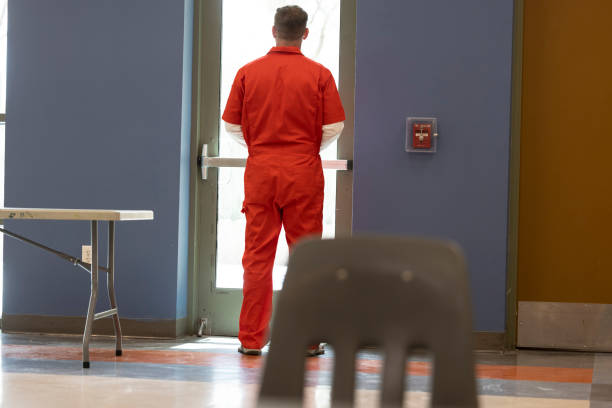
I married Jonah for two thousand dollars a month while he was serving twelve years in prison, and I told myself, over and over, that this was survival, not love. It had to be survival. Love doesn’t come with a signed contract and a monthly deposit into a checking account that was always running on empty.
I was twenty-seven years old, raising my younger brother Owen because our parents had made themselves unavailable in every way that mattered, and the final rent notice had been taped to our apartment door that same morning, bright orange against the chipped white paint, impossible to miss.
Three years later, Jonah walked free. He set a black box down on my kitchen table, and inside it was the real reason his mother had chosen me out of every desperate woman in the county.
That was the night I learned poverty hadn’t made me invisible. It had made me useful. And there is a particular kind of grief in discovering the difference.
Owen saw the rent notice before I could tear it off the door and hide it in my coat pocket. He was seventeen that year, all long limbs and awkward angles, too tall for the secondhand sneakers he refused to complain about, too proud to ever ask why the soup I made him always tasted a little thinner than it should have.
“Is it bad, Sadie?” he asked, standing in the hallway with his backpack still slung over one shoulder.
I folded the notice into quarters like it was nothing. “It’s paper,” I said. “Paper likes to act important.”
He didn’t smile. He was old enough by then to know exactly what kind of paper made me lie.
Two hours later I got a phone call from a woman working for a client named Celeste, whose son, a man named Jonah, was currently serving twelve years upstate. Celeste had gotten my contact information through legal aid, after I’d applied for help with rent assistance and the guardianship paperwork I needed to keep Owen with me instead of in the system.
That connection alone should have made me hang up immediately. It felt too coincidental, too neat, the kind of thing that only happens in stories designed to lure you somewhere you shouldn’t go. Instead, I listened. Because desperate people always listen one second too long, hoping the next sentence will be the one that saves them instead of the one that costs them everything.
My landlord wanted his rent. Owen needed shoes that actually fit. And pride, I had learned the hard way, had never once paid an electric bill. I didn’t feel like I had a choice. So I went to meet her.
Celeste’s office smelled like lemon polish and old money, the kind of scent that clings to a room after decades of careful maintenance.
“I have a shift in an hour,” I told her, sitting stiffly in a chair that cost more than my monthly rent.
“I’ll be brief, Sadie.” She folded her hands on the desk in front of her, manicured and precise. “I’m offering you two thousand dollars a month.”
“For what?”
“Your name.”
I just stared at her, waiting for the rest of the sentence, some explanation that would make the offer sound less insane than it did sitting there in the silence.
“My son, Jonah, is serving twelve years,” she continued. “He needs a wife on paper. You’d visit twice a month, write letters, show the court he still has family invested in his life. Courts like roots, Sadie. A wife gives a man roots.”
“You want me to marry a prisoner.”
“I want you to make a practical decision.”
“Is he dangerous?”
“No,” she said, without hesitation. “Entitled, careless, foolish, yes. Dangerous, no.”
“Why me?”
Her smile was soft enough to cut skin. “Because you understand responsibility.”
I should have stood up and walked straight out of that office. I think some part of me knew that even as I sat there. But instead I thought of Owen at the kitchen table the night before, pretending he wasn’t hungry after school, pushing his single serving of rice around his plate so it would look like he’d eaten more than he had.
“I want the first payment before the wedding,” I said.
Celeste’s smile widened. “Of course.”
When I told Owen that night, he looked at me like I’d transformed into someone he no longer recognized, some stranger wearing his sister’s face.
“You’re getting married?”
“On paper,” I said. “That’s all it is.”
“To a man in prison?”
“Yes.”
“You sold yourself to keep me in school?”
“I did it to keep a roof over both our heads,” I said, though even as the words left my mouth I knew he was hearing something closer to the truth underneath them.
“That’s not an answer.”
“It’s the only one I have.”
His anger, which had been building in his shoulders, softened into something that scared me far more. “I can get a job,” he said quietly. “I can drop out and get a job, and you wouldn’t have to do this.”
“You are finishing school, Owen. That’s what matters. That’s the whole point.”
“Sadie, please.”
“No. You graduate. You get out of here. And you become someone no rich woman can ever put a price tag on.”
He looked away first, out the window at the parking lot below, and that was how I knew he understood, even if he hated it.
The wedding, if you could even call it that, happened behind scratched prison glass, in a room that smelled like industrial cleaner and old coffee. Jonah sat across from me in a beige prison uniform that hung off his frame, thin, tired-eyed, nothing like the smiling photo Celeste had shown me beforehand.
“You don’t have to pretend I’m a good man,” he said, his voice quiet enough that I had to lean toward the small speaker in the glass to catch it.
“Good,” I said. “Because I’m not that generous.”
I’d expected anger from him, or coldness, maybe even a kind of entitled arrogance given his mother’s obvious wealth. Instead he looked ashamed, genuinely ashamed, in a way that surprised me.
“I did take money,” he said. “Eighteen thousand dollars, from a restricted foundation account. My trust had been frozen after my father got sick, and I told myself I was borrowing from my own future.”
“That’s a fancy way to say stealing.”
“Yes,” he said simply. “It is.”
“But I didn’t take the six hundred thousand they pinned on me,” he added, and something in his voice sharpened. “My cousin Dean did that.”
“Who’s Dean?”
“He moved the larger funds. Forged my signature on the transfer documents. Let my smaller mistake make me an easy person to blame for the whole thing.”
“Then why did you let them bury you under it?”
Jonah looked toward the guard standing near the door before answering. “Because I already hated myself enough to believe I deserved it.”
So I signed the papers. So did he. And just like that, I had a husband and enough money coming in to keep the lights on.
At first, I performed the role and nothing more. I visited twice a month because Celeste’s checks cleared like clockwork every first of the month. I wrote letters that sounded warm enough to be useful to whatever court records they’d eventually end up in, and vague enough that none of it could ever be mistaken for something real.
Jonah always wrote back. His letters were neat, careful, with small sketches doodled in the margins, a coffee cup with steam curling off it, a tired-looking waitress leaning against a counter, and once, after I’d mentioned offhand that Owen had failed a math quiz, a little cartoon of my brother wearing a cape, labeled Captain Algebra in careful block letters.
At the next visit, Jonah asked, “Did Owen retake that test?”
I blinked at him through the glass. “You remembered that?”
“You wrote it down.”
“I write a lot of things down in those letters.”
“And I read every one of them.”
That annoyed me far more than it should have, the way genuine kindness always annoys people who’ve built their whole lives around expecting cruelty instead. It’s easier to brace against someone hurting you than to figure out what to do when they don’t.
One night, after a brutal double shift at the diner, I sat on our kitchen floor reading through pages of Jonah’s case file that his appellate lawyer had sent over, trying to make sense of the legal language by the light of the one working lamp we owned. Owen stepped carefully over the scattered papers with a bowl of cereal in his hands.
“Please tell me that’s something fun,” he said, “and not more prison husband stuff.”
“Prison husband stuff,” I admitted. “Look at this date, though.”
He crouched down beside me, cereal forgotten for the moment. “October fourth.”
“Jonah was already in custody on October fourth,” I said, tapping the page. “Already locked up, already processed, already fingerprinted.”
“So he couldn’t have signed this transfer order.”
“Exactly.”
Owen leaned in closer, scanning the page himself now. “Dean?”
“I think Dean copied his signature onto this.”
“Can you prove it?”
“Not yet.”
He set his cereal bowl down on the floor beside him, no longer interested in it at all. “What do you need?”
For the first time in longer than I could remember, sitting there on that cold kitchen floor surrounded by legal paperwork, I didn’t feel entirely alone.
“A timeline,” I told him. “I need a complete timeline.”
Poor women notice dates the way other people notice weather. Rent due dates. Shutoff notices. Court appearances. The exact day a school activity fee doubles without warning. So I built Jonah’s entire case the only way I knew how to build anything, out of dates, laid end to end until the pattern became impossible to ignore.
Owen and I taped sheet after sheet of paper across our living room wall, connecting them with string and marker, listing every single fund transfer, every signature, every witness statement, and cross-referencing each one against the days Jonah was provably, verifiably locked up when someone claimed he’d personally signed those documents.
I eventually took the whole timeline to a legal aid attorney who looked exhausted before I’d even finished introducing myself.
“He admitted he took money,” she said, flipping through my folder with visible skepticism.
“I know exactly what he did,” I said. “I’m not asking you to make him look clean. I’m asking you to help me prove who made him look dirtier than he actually was.”
She looked up at me then, really looked, the way people do when they’re recalculating whether you’re worth their limited time.
“Families like this bury their mistakes very neatly,” she warned.
“Then bring a shovel,” I said.
It took three full years. Three years of prison visits and courthouse hallways, of a pro bono appellate lawyer who took the case more out of stubbornness than any real hope of winning, of missed shifts at the diner that cost me money I couldn’t afford to lose, of dinners eaten standing up in front of vending machines, of begging exhausted professionals to read just one more page before they gave up on us entirely.
Celeste warned me twice during those years, cornering me once outside the courthouse and once over the phone. “You’re confusing loyalty with intelligence, Sadie,” she told me the second time, her voice smooth as silk over a blade.
“No,” I said. “I’m finally learning the difference between them.”
Jonah told me to stop, once, sitting across from me through that same scratched glass, his eyes tired in a way that went deeper than lack of sleep. “You’re wasting your life on this,” he said. “If you need more money, I’ll talk to my mother.”
“It’s my life,” I told him. “I choose what I do with it.”
His eyes filled with tears he didn’t bother hiding. And that was the day I understood, sitting in that visitation room with the hum of fluorescent lights overhead, that I had somehow fallen in love with him. Not because he was innocent, because he wasn’t, not entirely. But because he was actually trying, for the first time in his adult life, to be honest about the parts of himself that weren’t.
When the judge finally vacated the conviction tied to the larger theft, Jonah walked out of that courthouse in a gray suit that hung loose off shoulders that had lost weight he’d never really had to spare. Dean’s forged documents and the gaps in the official records had finally been exposed for what they were. Jonah still owed restitution for the eighteen thousand dollars he actually had taken, and he served that debt without complaint. But he was no longer the thief the state had spent three years insisting he was.
I waited outside the courthouse expecting some flood of joy to hit me. Instead, when Jonah stepped through those doors into daylight for the first time in years, he looked absolutely terrified.
“Come home with me,” I said. “It’s small, and Owen leaves cereal bowls scattered everywhere, but it’s ours tonight.”
“Are you sure?”
“You’re my husband,” I said, and I meant it in a way that surprised even me.
For a full week, we practiced at being something like normal. Jonah slept badly, jolting awake at sounds that meant nothing, a car door, a dropped pan, the refrigerator cycling on. Owen asked him careful, testing questions over dinner, the way you’d approach an animal that might still bite. I went to the grocery store and bought things without doing the math twice in my head first.
On the eighth night, Jonah walked into the kitchen carrying a black box I’d never seen before, small enough to fit in both his hands.
“What’s that?” I asked, drying a plate at the sink.
He set it down on the table between us. “Now it’s my turn to be honest.”
My hand froze around the dishcloth. “Unless that box is full of back rent and a working nervous system,” I said, trying for humor, “I don’t want it.”
He didn’t smile.
“Sadie,” he said, “when you married me, you agreed to something bigger than my name.”
“I married you because Owen needed shoes and rent was due that week. Don’t make it sound like it was ever more than that.”
“My mother didn’t choose you by accident.”
My stomach tightened, that old familiar knot forming below my ribs. “What did she do?”
“Open it.”
“No. You tell me first.”
“Inside that box,” he said, his voice barely above a whisper now, “is the reason she picked you out of everyone she could have chosen. And the reason I was too much of a coward to tell you, even after I found out myself.”
I opened the latch with hands that had started shaking despite my best efforts to hold them steady. Inside sat a cream-colored notebook, worn at the corners from handling. Celeste’s precise, elegant handwriting curled across the first page.
No active parents. Minor brother dependent. Behind on rent. Likely compliant if payments remain consistent.
For a moment I genuinely couldn’t breathe, the air catching somewhere in my chest and refusing to move.
“She studied me,” I whispered.
Jonah lowered his eyes to the table. “Yes.”
“She studied my empty fridge. My work shifts. My brother’s worn-out shoes. She looked at my entire life and saw a handle. Something to grip and turn whenever she needed to.”
Underneath the notebook sat a folded trust document with my own name printed near the bottom. I read the relevant paragraph three separate times before the legal language finally resolved into something I could actually understand.
“Co-trustee?” I said.
“My father built a safeguard into the trust years ago,” Jonah explained. “If I married while incarcerated, and my conviction was later overturned, my lawful spouse would automatically receive emergency co-trustee authority over the foundation’s assets. He knew more than he ever let on, even while he was sick.”
“Because he didn’t trust Celeste. Or Dean.”
“Yes.”
“And Celeste knew about this clause?”
“Yes.”
“So she went looking for someone poor enough to control completely.”
“Yes.”
“And you knew,” I said, and it wasn’t a question anymore.
Jonah flinched like I’d struck him. “Not at first.”
“But eventually.”
“Six months before the appeal hearing,” he admitted.
Owen had appeared silently in the hallway by then, listening, one hand braced against the doorframe.
“You let me stand in prison visitation lines for three years,” I said, my voice rising despite every effort to keep it level, “without once telling me I was standing in the middle of your family’s war.”
“I told myself I was protecting you.”
“No. Say it correctly this time.”
He swallowed hard. “I was protecting myself. I lied to you by letting you stay completely oblivious to what you’d actually walked into.”
“There,” I said. “That’s the first honest thing you’ve said to me all night.”
“Sadie, please.”
“I married you for money,” I said. “I can admit that freely, without shame. But I loved you out of my own free will, and you let me walk blind through something you knew the shape of the whole time.”
I grabbed both the notebook and the folded trust papers off the table.
“Sadie,” Jonah said, alarm creeping into his voice. “Where are you going?”
“Nowhere,” I said. “You are.”
Owen came and stood beside me, silent but solid, a wall at my back.
Jonah looked between the two of us for a long moment, then lowered his head and walked out of the apartment without another word.
After the door closed behind him, Owen sat down and read through Celeste’s notes twice, his jaw tight the entire time.
“She wrote about us like we were stains on a couch,” he finally said.
“She has money,” I said. “Lawyers, board members, entire teams of people trained to believe every word out of her mouth.”
Owen tapped the trust document with one finger. “And you have her actual signature. In writing.”
“That doesn’t mean I know how to fight someone like her.”
“No,” he said. “But it means she already knows you can.”
Those words stayed with me the next morning when Celeste called my phone directly for the first time in three years.
“Sadie, dear,” she said, her tone as smooth and unbothered as ever. “We have some business to conclude.”
Her office looked exactly the same as it had three years earlier, but everything about the room felt different to me now, seen through eyes that finally understood what kind of woman occupied that desk.
She opened a folder and slid a check across to me without preamble. One hundred thousand dollars, written out in careful, confident handwriting.
For one brief second, I saw Owen’s entire college education laid out in front of me. A car that actually ran without threatening to die at every red light. Six full months of rent paid in advance, no scrambling, no watching the mailbox with dread.
“What exactly do you want me to sign?” I asked.
“A trustee resignation,” she said. “You were compensated fairly for your time, Sadie. Let’s not rewrite simple survival into some kind of romance.”
I pushed the check back across the desk toward her.
Celeste’s smile thinned to almost nothing. “Women like you survive by knowing precisely when to step aside.”
“No,” I said, standing up from the chair. “Women like me survive by remembering every single person who assumed we would simply disappear when it became convenient for them.”
Her smile vanished entirely. “Be careful.”
“I was careful for three years,” I said. “Now I’m finally awake.”
The foundation’s donor luncheon, weeks later, was meant to be Celeste’s opportunity to repair her family’s name in front of the people whose money and opinions mattered most to her. Instead, it became mine.
She stood at the podium in a cream-colored suit while Dean sweated visibly near the front row of tables. Jonah and Owen sat together toward the back of the room. When I stood up from my own seat, Jonah started to rise too, some protective instinct kicking in.
I shook my head at him, once, firmly. This part belonged to me alone.
Celeste’s smile went tight and brittle as I walked up the center aisle carrying the black box.
“Sadie, dear, this really isn’t the moment,” she said quietly, just for me.
“That’s exactly what you counted on,” I said, loud enough now for the room to hear. “You counted on me never knowing when it was actually my turn to speak.”
Dean snapped from his seat, “Sit down.”
“No,” I said.
I set the black box down on the podium itself, the small clasp catching the overhead lights.
“You paid me two thousand dollars a month to marry your son while he was in prison,” I said, addressing the room directly now. “That part is entirely true.”
Whispers rippled outward across the tables like a stone dropped into still water.
“But you didn’t choose me because I was particularly loyal, or trustworthy, or kind. You chose me because I had absolutely nothing left to lose.”
I lifted the notebook so the nearest tables could see the handwriting for themselves.
“No active parents. Minor brother dependent. Behind on rent. Likely compliant.”
Celeste reached toward me. “That notebook is private.”
“No,” I said, pulling it back out of her reach. “This is proof. You used a family trust, a public charity, and a desperate twenty-seven-year-old woman to hold onto power you were never legally entitled to in the first place. You wanted Jonah to take the full fall while you and Dean quietly managed everything behind him.”
Dean shot up out of his chair. “She’s lying.”
I turned to face him directly. “You moved money under Jonah’s name after he was already sitting in a jail cell awaiting trial. You let his eighteen thousand dollars hide your six hundred thousand.”
A board member near the front rose slowly to his feet. “Dean, don’t you dare leave this room.”
I looked back at Celeste, who was gripping the edge of the podium now, knuckles pale.
“You thought I was poor enough to rent for a couple thousand a month, and tired enough that you could eventually erase me entirely once you got what you needed. You were wrong on both counts.”
The board member stepped forward with the deliberate authority of someone used to being obeyed instantly. “Celeste, step away from the podium immediately. Counsel, I want an emergency vote called to suspend her pending a full review, and someone needs to notify the attorney general’s charity oversight division before this luncheon ends.”
Months passed after that afternoon. Dean eventually faced formal charges for the larger fraud. Celeste was quietly, permanently removed from the foundation she’d spent decades building her reputation around. Jonah completed the restitution payments tied to his own smaller, real crime, month after month, without complaint or excuse.
One evening, Jonah found me sitting at the kitchen table reading through a stack of scholarship applications, the same table where he’d once set down that black box. He paused in the doorway, watching me for a moment before speaking.
“You belong here,” he said quietly.
“I know,” I said, not looking up right away.
“I should have trusted you from the beginning.”
“Yes.”
“I’m sorry, Sadie.”
“I know that too.”
“I’ll never manage you again,” he said. “Never let you walk into something without knowing exactly what it costs.”
I looked up at him then. “You don’t get to promise that once and consider it finished,” I said. “You prove it every single day, for as long as it takes.”
He nodded slowly. “Then I will. Every day.”
Owen appeared in the doorway behind him, holding a spoon and looking between the two of us with mock exasperation. “Are we having dinner tonight,” he asked, “or are we doing emotional accountability straight through until midnight?”
For the first time in what felt like months, I actually laughed, the sound surprising even me.
I didn’t forgive Jonah all at once, in one clean, cinematic moment. Forgiveness doesn’t usually work that way, no matter how badly you want it to. The first time I married him, fear had backed me into a corner with no other visible way out. The second time I chose him, and I did choose him, deliberately, with open eyes, I did it standing squarely in the middle of my own life, on ground that finally, truly belonged to me.

Laura Bennett writes about complicated family dynamics, difficult conversations, and the quiet moments that change everything. Her stories focus on real-life tensions — inheritance disputes, strained marriages, loyalty tests — and the strength people find when they finally speak up. She believes the smallest decisions often carry the biggest consequences.