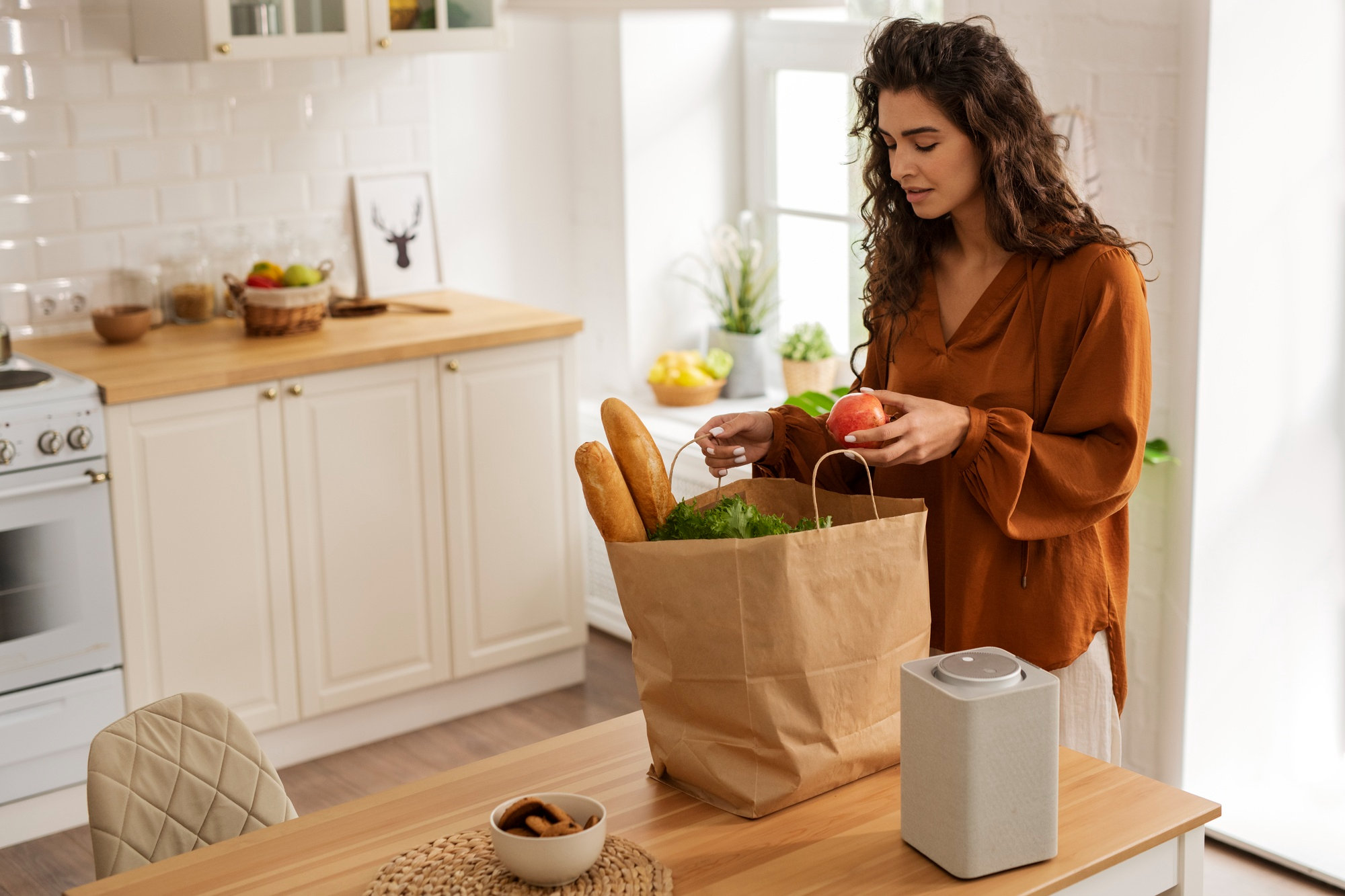
The first thing people noticed was the smell. Or maybe I should say, the lack of one. For years, when Ryan’s family came to our house, the air would already be heavy by noon. Brisket wrapped in foil and resting on the counter. Pork shoulder cooling in its own juices. Mac and cheese bubbling under a golden crust. Jalapeño corn warming in a casserole dish. A tres leches cake sitting in the fridge, cold and perfect, with caramel glaze dripping down the sides just enough to look homemade but still pretty. That was what they expected when they walked into my house on Ryan’s birthday.
Instead, there was nothing. No oven heat. No steam on the windows. No foil pans lined up on the counter. No smell of garlic or smoked meat. No me standing at the stove, sweating through my blouse while everyone else laughed in the living room. Just me, sitting at the kitchen table in my work clothes, drinking coffee from a chipped blue mug, with one deli salad in front of me. My name was written across the clear plastic lid in black Sharpie. Melanie. Every burner on the stove was cold.
Eleven people came through the front door that afternoon expecting a feast. Ryan’s mother, his brother, his aunts, his cousin, two uncles, four kids with loud sneakers and louder voices. They came carrying soda, ice, beer, and the kind of appetite people bring when they are used to somebody else doing all the work. None of them knew that the quiet kitchen was not an accident. I had been planning it for twenty three days.
But to explain why I let my husband’s birthday lunch collapse into silence, I need to start before that. My name is Melanie Reyes, and for six years, I believed I had a decent marriage. Not perfect, but I thought we were two tired adults building a life in Denton, Texas, in a house with too much summer heat and a mortgage we paid on time. I thought we had small problems, not deep ones. I was wrong.
I work as a paralegal at Caldwell and Marsh Civil Litigation. I have been there nine years. It is not glamorous work, but it teaches you how people behave when money, pride, and consequences finally meet in the same room. It teaches you that the person who speaks first is not always telling the truth. It teaches you that people lie differently when they think there is no record. And it teaches you to keep receipts. My supervisor, Patricia Chen, used to say, Melanie, the truth is only as strong as the evidence behind it. Later, I understood that she had given me one of the most useful sentences of my life.
Ryan worked as a regional sales manager for a construction supply company out of Frisco. He made decent money, more than me technically, though not nearly as much as he liked to let people think. Ryan was good at talking around numbers. At family dinners, he would lean back in his chair and say things like, business has been real strong this quarter, or, I’ve been carrying a lot lately. He never said exactly how much he made. He let the empty spaces do the work for him, and people filled those spaces with assumptions. Ryan liked assumptions when they favored him.
When I met him in 2018 at a friend’s backyard cookout, he seemed generous, standing at the grill in a faded Rangers cap, turning ribs with calm confidence. He asked real questions about my work, about the firm, whether I wanted to go to law school. We talked for four hours. That version of Ryan was real. I believe that. I loved a real man. He also became the man who humiliated me in my own dining room. Both things can be true.
For the first few years, cooking for his family made me happy. I like feeding people. There is a kind of love in that, if people recognize it. At first, I thought they did. Ryan’s family is big and loud. His mother, Helen, is small but fills every doorway she stands in. His aunts Carla and Patricia discuss seasoning like two Supreme Court justices. His brother Tyler is quieter, more watchful.
For Caitlin’s baptism, I made forty tamales from scratch, arroz con leche, and a tres leches cake with strawberries arranged the way Ryan said his mother liked. My back hurt for two days afterward. Ryan took a photo of the table and sent it to his mother before she arrived. The spread I put together for my girl, he wrote. I saw the text because his phone was lying open on the counter. I stood there with a spoon in my hand, reading that sentence twice. That is how it starts sometimes. Not with one terrible thing, but with you explaining away small things because making a problem out of them feels heavier than carrying them quietly.
When his cousin Marcus got promoted, I roasted pork shoulder overnight, made deviled eggs, slaw, beans, and ordered a sheet cake on my card because Ryan said he’d left his wallet at the office. At the party, Aunt Carla said, Ryan, you really went all out. Ryan grinned and said, you know me, I take care of my people. I stood beside him holding a tray of deviled eggs, waiting for him to say Melanie did most of it. He did not. I smiled anyway. You would be surprised how much of a marriage can happen inside a woman’s smile.
The Super Bowl party was worse. Twenty two people. I started cooking before sunrise, chili, wings, queso, cornbread, sliders, two desserts. I spent three hundred forty seven dollars at Kroger and eighty nine at Lone Star Cuts, the specialty butcher Ryan liked to brag about even though I drove there myself. That night, while I was stirring chili, Ryan’s brother Derek shouted from the dining room, man, Ryan, this chili is unreal, I don’t know how you do it. Ryan laughed. I just know how to take care of people, D. I stood there with the spoon in my hand and felt something inside me go very still. Not anger yet. Recognition. Like my mind had been circling a locked door for months, and suddenly I heard the click.
After everyone left, I pulled the Kroger receipt out of the trash before taking the bag outside, flattened it on the counter, got the Lone Star Cuts receipt from my purse, and put both in a green folder. I did not know exactly what I was building then. I only knew I wanted proof that I had not imagined it.
Once I started saving things, the pattern became impossible to ignore. Ryan posted a photo of short ribs I had braised for six hours and wrote, Sunday means we eat good, without mentioning me. He told his mother he had handled Thanksgiving sides, even though I had made everything while he peeled exactly three potatoes before getting bored. He told his cousin Deja, don’t worry about it, it’s on me, when she asked about paying for the Super Bowl food. It was not on him. It was on me, and not just money. Time. Planning. Labor. The invisible list that lived in my head and never in his. I knew who needed decaf coffee, which aunt hated cilantro, which kid would only drink Sprite. Ryan knew how to stand by the table and accept compliments.
For a while, I still hoped he would notice. That is the embarrassing part to admit. Even after I started the folder, part of me still wanted him to catch himself, to walk in one day and say, you do so much, I should have said something. But Ryan had gotten comfortable. Comfort can make people careless.
The comment that changed everything happened on a Tuesday. His brother Tyler came over for dinner. I made enchiladas, rice, and salad. Ryan had been irritated all week about the grocery bill. You spent two hundred and twelve dollars at Kroger? Yes, because your family was here Sunday. You always have an excuse. It’s not an excuse, it’s groceries. I should have stopped talking then. Instead I said, if your family is coming over every other weekend, the food costs money. Ryan rolled his eyes.
By Tuesday dinner, he was still carrying the argument around like a lit match. He looked at the enchiladas, then at Tyler, then at me. You know, he said, some people don’t understand what it’s like to support a household. I put my fork down. Tyler’s eyes shifted to me, then back to his plate. Ryan, I said quietly, don’t start. He smiled, but not kindly. No, I’m serious. You spend like money grows in the backyard, then act offended when I mention it. The money goes toward feeding people you invite. There you go again. Because it’s true.
That was when he said it. If you want to eat, pay for your own food. I’m sick of supporting you like a queen. The room went silent. Tyler stopped chewing. I did not cry. I did not yell. I reached into my pocket under the table, opened the voice recorder on my phone, and hit record. I set it face down beside my napkin. I am a paralegal. When someone finally says the quiet part out loud, you preserve it.
I stood up and began clearing plates. Ryan said, now she’s mad. Tyler said nothing. In the kitchen, I turned the water on so they could not hear my breathing. I rinsed plates slowly and let the words settle. If you want to eat, pay for your own food. I’m sick of supporting you like a queen. A queen. I looked down at my hands in the sink, nails short because long ones tore through gloves, a small burn mark on my wrist from the oven rack the Sunday before, my feet aching from standing hours making dinner for people Ryan wanted to impress. Something in me did not break exactly. It straightened. His birthday was twenty three days away. I made my decision before the plates were dry.
For the next twenty three days, I behaved normally. I still cooked dinner, went to work, bought groceries, though not for any large gathering. I still kissed him goodnight with my mouth closed and my mind wide awake. But every night, after he went to bed, I worked on the folder. It became a case file. Printed bank statements. Highlighted grocery stores, butcher shops, bakeries. A spreadsheet with columns for event, guest count, menu, amount spent, hours cooked, and notes. The notes column was my favorite. Ryan said he made chili. Ryan told Helen he handled dessert. Ryan accepted money thanks from Deja, no reimbursement to Melanie. Ryan posted food as his own. When you see disrespect written plainly in a spreadsheet, it stops looking like confusion. It looks like a pattern.
I showed the folder to Denise Whitfield at work, fourteen years in civil litigation, calm and tired eyes. She flipped through the pages without speaking, then looked up. Melanie, this is airtight. Does he know? No. Good, she said.
A week later, I sat in the office of Sandra Okafor, a family law attorney in McKinney, a framed needlepoint on her wall reading, the facts are friendly. She listened to the recording with her hands folded, no gasping, no dramatic reaction. Then she asked about the house. I told her the truth. The house had belonged to me before Ryan, bought two years before we married with help from a small inheritance from my grandmother. Ryan’s name was not on the deed. I walked in afraid and walked out with a blue folder and a steadier spine. I’m not telling you what to do emotionally, Sandra said. That part is yours. But legally, you are better positioned than most. And this, she said, tapping the green folder, this is the difference between complaining and documenting.
On the night before Ryan’s birthday, after he fell asleep, I drove to the twenty four hour H E B. I did not buy brisket, pork shoulder, or any of the ingredients for a family feast. I bought one pre made chicken Caesar salad from the deli. At home, I wrote my name on the lid in Sharpie and put it in the refrigerator beside two hard boiled eggs and a cup of Jell O. Then I put the green folder under my chair at the kitchen table and the blue folder in my work bag.
Ryan woke up happy, loose and easy, checking his phone for birthday messages, kissing my cheek. Mom better bring that jalapeño corn today. He never asked what I was cooking. Not once. I got dressed in dark slacks, a gray blouse, flat shoes. Work clothes. He noticed when he came downstairs. You’re not dressed for cooking. I’m having coffee. He looked at the clean counters, the empty stove. What’s going on? Nothing, I said. I’m following your rule. What rule? I took a sip of coffee. If I want to eat, I pay for my own food. He stared at me. Melanie, don’t do this today. I already did what I needed to do. He went upstairs with his phone. I could hear his voice through the ceiling, low and tense, trying to solve the problem without admitting there was one.
Noon came. The front door opened and the house filled with voices. Helen arrived first in a cream blouse and gold brooch, carrying a two liter Sprite. Tyler came with beer. Aunt Carla and Aunt Patricia talked about traffic like they had survived a natural disaster. Deja followed with her kids and a bag containing paper napkins and ranch dressing. Everyone said happy birthday to Ryan, hugged, then looked toward the kitchen. I stayed seated. That was the first crack.
Helen entered the kitchen with purpose, opened the refrigerator, looked inside, closed it, opened it again. My salad sat on the second shelf. Melanie. She turned around slowly. I smiled. Coffee? She did not answer. Ryan appeared in the doorway wearing his customer complaint smile. Melanie, can I talk to you in the other room? You can talk to me here. Aunt Carla stepped in behind Helen. Aunt Patricia followed. Tyler stood near the doorway with his arms crossed, not surprised. She’s throwing a tantrum, Ryan said. You know how she gets. I’m not throwing a tantrum, I said. I’m following Ryan’s rule. Helen looked at him. What rule? I pointed to the salad. Ryan told me, in front of Tyler, that if I wanted to eat, I should pay for my own food. So I did. That is my food.
I picked up my phone. Good, I said. Then we can all hear what you meant. The recording filled the kitchen. If you want to eat, pay for your own food. I’m sick of supporting you like a queen. Nobody moved. Ryan swallowed. That was out of context. Tyler spoke from the doorway. I was there. It wasn’t. Ryan turned on him. Stay out of this. No, Tyler said. I don’t think I will.
That was when I reached under my chair and pulled out the green folder. Forty one pages. Receipts, bank statements, screenshots, the spreadsheet. I laid them out slowly. This is Caitlin’s baptism. Forty tamales, arroz con leche, tres leches cake. Ryan told your mother he put the spread together. This is Marcus’s promotion dinner. Ryan asked me to pay because he said he forgot his wallet. This is the Super Bowl party. Kroger, three forty seven. Lone Star Cuts, eighty nine. Ryan told Derek he made the chili. I looked at Deja. You asked how much you owed him. He said it was on him. It was not on him. It was on me.
Ryan slammed his hand on the table. Enough. The kids went quiet. Helen turned toward him. Do not yell. Ryan blinked like she had slapped him. Mom. I said do not yell. For the first time all afternoon, Ryan looked less like a grown man and more like someone’s son. It’s my birthday, he said. She’s trying to ruin my birthday over groceries. No, I said.
I pulled out the last page, printed on thicker paper. Estimated cost of Ryan’s birthday meal. Brisket for twenty, two hundred twenty. Pulled pork, ninety five. Mac and cheese from scratch, forty. Tres leches cake, seventy five. Drinks, supplies, cleanup, sixty. Total, four hundred ninety. Melanie’s contribution, zero dollars and zero hours. I set it in the middle of the table. Aunt Patricia picked it up first, usually the one with the quickest comment. She said nothing. She handed the paper to Helen, whose hands trembled just a little.
Ryan looked from face to face, waiting for someone to rescue him. No one did. I didn’t bring cash, he said. There’s Venmo, Tyler said. Nobody laughed. Ryan looked at Tyler with hatred, then turned back to me. You are crossing a line, Melanie. No, I said. I’m stepping over one. I reached into my work bag and pulled out the blue folder. The green folder was history. The blue folder was the future. What is that, he asked. That depends, I said, on whether you want to keep pretending this is your house.
Helen looked at me, then at Ryan. Ryan, she said quietly. He did not answer. I had never seen him afraid before. It made him look younger, smaller. I did not enjoy it the way I thought I would. That surprised me. For twenty three days I had imagined that moment, expecting a rush of power. Instead what I felt was tired. Tired and clear.
Helen set the birthday estimate back on the table. Ryan, you need to stop talking. She’s making this bigger than it is. No, Tyler said. She’s making it exactly as big as it is. After a long silence, Helen picked up her purse. I’m going to take the kids to get lunch. Aunt Carla looked relieved to have an action to follow. Deja steered her children toward the door. The uncles rose slowly from the couch, confused. Tyler was the last to leave. He stopped at the door. I’m sorry, he said. Ryan stood in the hallway, red faced and silent. Tyler looked at him, then back at me. I’m sorry it took this long. Then he left.
When the door closed, the house sounded enormous. Ryan and I stood about ten feet apart. For once, he did not speak first. I gathered the pages and put them back in the green folder. My hands were steady. You embarrassed me, he finally said. I looked at him. You humiliated me first. You just didn’t expect me to bring witnesses. He laughed once, sharp and ugly. So this is what, revenge? No, I said. This is information. You think a folder scares me? No, I said. But the blue one should. I did not open it. I’m not discussing this without my attorney. The word attorney changed the air between us. Melanie, he said, softer now. Don’t, I said. He stepped toward me. I said don’t. He stopped.
The divorce process did not happen like people imagine. No dramatic courthouse scene. Just slow, boring paperwork that somehow made it harder. Sandra filed preliminary papers the following week. Ryan hired an attorney. He moved into a short term rental in Frisco after two weeks of sleeping in the guest room, telling his family we were taking space. I did not correct him.
I kept working. That helped. At home, I started learning the shape of my own evenings. The first week I ate cereal for dinner twice because nobody was there to expect anything else. The second week, scrambled eggs and toast, feeling strangely rebellious. The third week, I bought salmon, lemons, capers, a bottle of Sauvignon Blanc, and stood in H E B realizing I had not made a shopping list for anyone but myself. I almost cried in the produce section. I bought the small bag because I wanted the small bag. That felt like freedom.
About two weeks after the filing, Sandra called about a savings account Ryan had opened fourteen months earlier at a credit union, small transfers from our joint account, fourteen dollars, twenty eight dollars, three or four times a month. Over fourteen months, four thousand one hundred forty seven dollars. Money quietly taken from the household account while Ryan complained I spent too much feeding his family. I was not shocked. I was sad. That was worse. Keep doing what you’ve been doing, Sandra said. Document everything.
Denise came over that Saturday with gas station coffee and pastel highlighters to help reorganize the folders. You know, she said, most people don’t document. They just remember. Memory isn’t admissible, I said. She pointed her highlighter at me. Exactly. At one point she looked around the room. You okay in this house by yourself? I thought before answering. Yes, I said. I think I am. Good, she said. Because it feels calmer in here. I had not realized that until she said it.
I moved my desk into the small front bedroom Ryan used to call your work stuff room. I put it by the window where morning sunlight came through the blinds in stripes.
Tyler called three weeks after the birthday. I should have said something earlier, he said. You said something when it counted, I told him. Mom feels bad, he said carefully. She texted me. She really didn’t know. I believe that. Helen had benefited from my silence, yes, but I did not think she understood the whole shape of it. A few days later I answered her text. I didn’t know. I want you to know that. I waited two days, then wrote, I know. That was all. It was enough.
Ryan tried calling several times that first month. His messages changed shape depending on the day. Angry. Offended. Practical. Then soft. I miss you. I miss us. That last one almost got me. Not because I believed it fully, but because grief is not logical. I saved the voicemails, not to listen to them, but because Patricia Chen’s voice still lived in my head. The truth is only as strong as the evidence behind it.
One afternoon Ryan came by unannounced. I kept the chain on the door. He looked tired, hair messy, shirt wrinkled. Can we talk? Through the door. I made mistakes, he said. I should have given you credit. Credit. That word landed wrong, like I had been asking for applause instead of basic respect. This was not about credit, Ryan. Then what was it about? It was about you building a version of yourself out of my labor, then resenting me for the cost. I was embarrassed, he said. When? At the birthday. I almost laughed. You were embarrassed because people saw it. I was embarrassed for years because I lived it. He did not have an answer for that. I closed the door. My hands shook after, but only for a minute. Then I made tea.
The case moved slowly, negotiations, requests, responses. Ryan pushed where he thought I would fold. Sandra pushed back with documents. The house remained mine. Healing is not a clean upward line. It is more like cleaning out a garage. You think you are done, then you find another box. But slowly the house became mine in ways beyond the deed. I changed the curtains, cleared out the cabinet full of plastic cups, donated serving trays I never liked, kept the good Dutch oven because it was mine.
One Friday night Denise came over with Thai takeout and we ate straight from the containers. You know what I like about this, she said. What? You’re not listening for him. I froze. She was right. For years, some part of me had listened for his truck, his mood, his footsteps. That night I realized I had stopped.
The last time I saw Ryan before everything was finalized, we were in a conference room with attorneys. No big speech, no apology that fixed anything. At the end he looked at me and said, I did love you. I believed him. That was the hard part. I loved you too, I said. Then I added, but I’m done paying for it.
Afterward I sat in my car and cried for fifteen minutes. Then I drove home, stopped at H E B, and bought salmon, lemons, capers, a small bunch of asparagus. That night I cooked dinner for myself. I did not rush. I did not make extra. I played music low and opened the bottle of Sauvignon Blanc I had been saving for no real reason except that I used to save nice things for company. I set one place at the kitchen table. One plate. One fork. One glass. The stove was warm because I wanted it warm.
The same kitchen where eleven people had stood waiting for food that never came. The same table where I had laid out receipts like evidence. For a long time, I thought silence meant something was missing. That night, I understood silence could also mean nothing was being taken from you. I ate slowly. The house did not feel empty. It felt honest.
Sometimes people ask whether I regret the birthday. Here is the truth. I had been having the conversation for years, every time I smiled while he took credit, every time I paid a receipt he never asked to see, every time I made myself smaller so he could feel bigger. He simply did not listen until the stove was cold. So no, I do not regret it. I regret that it took me so long. But I do not regret the quiet kitchen. It said the food was never free. It said love without respect becomes labor. It said a woman can be generous for years and still have the right to stop.
Three months after Ryan’s birthday, I found the old green folder while reorganizing my office cabinet, already placed in an archival sleeve, labeled neatly, of course. For a moment I just held it. It looked so ordinary. A cheap green folder had carried me from confusion to clarity, not because paper is magic, but because each receipt reminded me I was not crazy. I put it back in the drawer. I did not need to look through it anymore. That felt like another kind of freedom.
Helen still texts sometimes, carefully. On Thanksgiving she wrote, thinking of you today, hope you’re eating something good. I am, I wrote back. And I was. I made a small roast chicken with herbs, mashed potatoes, green beans with almonds because I like them that way, one tiny pumpkin pie in a dish I bought on clearance, and fell asleep on the couch under a blanket with no one asking what was for dessert.
Tyler sends a message now and then. A photo of his son’s baseball game, an HVAC recommendation. Once he wrote, for what it’s worth, the family talks different now. I stared at that message for a while, then wrote, good. I do not need to be invited back into that family to know something shifted. That part is no longer mine to manage.
What is mine is this house, this kitchen, this table, this life I am still learning how to fill in a way that does not drain me empty. I still cook. Ryan did not ruin cooking for me because cooking was never his. The mistake was not loving the work. The mistake was giving it to people who treated it like air. Now I cook when I want to. I make soup on rainy Sundays. I bake banana bread and take half to Denise. I grill chicken on summer evenings and sit outside while the sky turns pink over the fence.
The difference is that now, when someone compliments the food, I say thank you. I do not look around for a man to accept the compliment on my behalf. I do not shrink from my own labor. I do not pretend generosity costs nothing. And if anyone ever tells me, if you want to eat, pay for your own food, I will smile. Because I can. I know exactly how. I know the price of brisket, and I know the price of silence. I have paid both. I am done with one of them.

Laura Bennett writes about complicated family dynamics, difficult conversations, and the quiet moments that change everything. Her stories focus on real-life tensions — inheritance disputes, strained marriages, loyalty tests — and the strength people find when they finally speak up. She believes the smallest decisions often carry the biggest consequences.