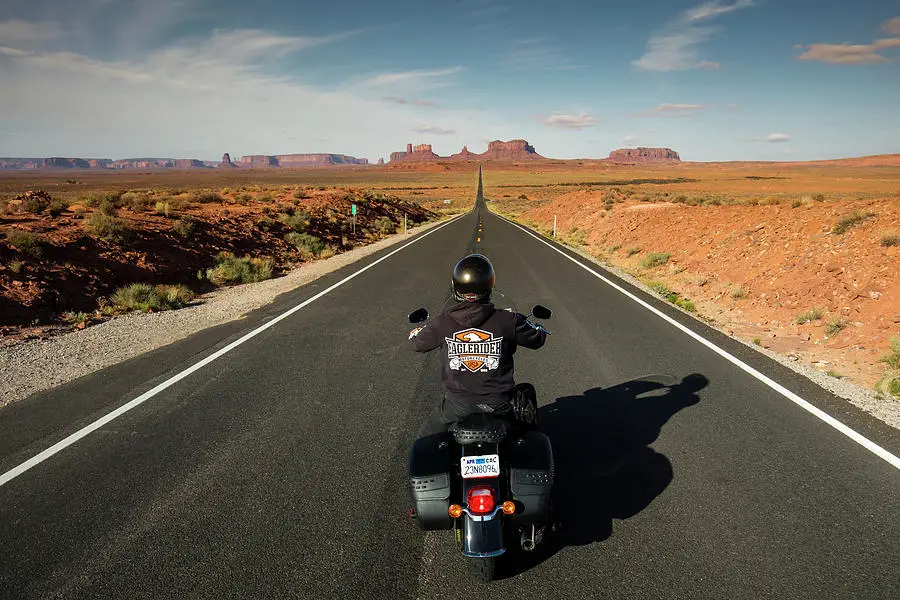
I asked him for one last ride three days before my son locked me away.
That’s not a figure of speech, either. Sunrise Meadows Nursing Home. Room 114. My son Daniel had already paid the deposit with my own money, pulled straight out of an account he wasn’t supposed to be able to touch alone.
I found the paperwork sitting in his truck. Along with something else entirely. A receipt for a storage unit I never even knew existed.
Unit 47. Rented under his name. Paid up eight months in advance, starting the exact same week my husband Ray died.
I’m seventy-two years old. My left leg drags a little when I walk too far. My hands shake sometimes, especially in the mornings before my coffee kicks in. To Daniel, all of that apparently meant I was finished. A problem to be filed away in a building that smelled permanently of bleach and boiled vegetables.
But my memory works just fine, thank you very much. And I remembered things going missing, one at a time, quiet as a thief in stocking feet. Ray’s tools from the garage. His three hunting rifles. The coin collection he’d spent thirty years building. My own mother’s rings, the ones she’d worn every single day of her married life.
Daniel said I’d lost them. Said I was “getting a little confused, Mom.” He said it so many times, in that same gentle, patient voice, that I almost started believing him.
Almost.
So on a Friday morning, I put on Ray’s old leather riding jacket, the one that still smelled faintly of him if I pressed my face into the collar, and I walked half a mile down to the Roadside Diner. My leg screamed the entire way, every step a small negotiation with pain, but I kept walking anyway.
Because every single Friday, without fail, the bikers come through that diner. Ray had ridden with them forty years back, before we married, before the kids, back when he still had all his hair and none of his sense. He always told me, more times than I could count over the decades: if you ever need real help, don’t call a lawyer first. Find a rider.
I walked into that diner and table after table of ordinary, decent-looking folks glanced up at me and then looked right back down at their eggs, unwilling to make room at their booth for an old woman in a stranger’s jacket. Then I found him, tucked into the corner booth. A big man. Gray beard down past his collarbone. A Hells Angels patch stitched onto worn, cracked leather that had clearly seen more miles than most cars.
I didn’t ask him for help, not exactly. I asked for something better.
“Can I ride with you?”
He looked at me for a long moment, long enough that I started to think I’d made a fool of myself walking half a mile for nothing. Then he slid his chair back with a scrape against the linoleum and nodded toward the seat across from him.
“You can ride with me,” he said. “After you eat.”
While I picked at a plate of eggs I didn’t have much appetite for, he noticed the bruise on my wrist. Four finger marks, going from purple to a sickly yellow at the edges. He asked me one simple question, and my entire story came pouring out of me like a dam breaking after years of pressure. Daniel. The nursing home. Monday, nine in the morning, already scheduled and paid for. And the storage unit.
Grizz, that was his name, set his coffee cup down real slow and deliberate. Then he pulled out his phone and made a call I couldn’t quite hear over the sound of my own heartbeat.
Twenty minutes later, eleven motorcycles rolled into that diner parking lot, engines rumbling low enough to rattle the windows.
“Ma’am,” Grizz said, standing up to his full, considerable height. “Let’s go see what your boy’s been hiding in Unit 47.”
We cut the lock at two in the afternoon. Grizz rolled that steel door up himself, the metal groaning and shrieking with the effort.
And when the afternoon sunlight hit what was sitting inside, I finally understood everything, all at once, like a wave crashing over my head. Because sitting right there in the middle of that unit, on two wooden sawhorses, was my husband’s casket.
Ray’s casket. The one I had personally paid four thousand dollars for, standing in the funeral home showroom with my knees barely holding me upright. The one I stood beside at his funeral eighteen months earlier and wept over until I nearly collapsed.
I never once saw it lowered into the ground. Daniel had handled the burial arrangements himself. Said I was too fragile for that part. Said I should remember Ray at home, surrounded by our things, not standing at some cold graveside.
Now, finally, I understood exactly why he’d insisted on that.
The casket sat there, clean and polished, brass handles still shining like the very day I’d picked it out from the catalog. I grabbed Grizz’s arm to keep myself from going straight down onto the concrete. My good leg buckled beneath me. The bad one had never held much weight to begin with.
“That’s my husband’s coffin,” I said, and my own voice came out sounding like a stranger’s, thin and disbelieving. “What in God’s name is it doing here?”
Grizz didn’t answer right away. He looked at me the particular way you look at someone right before you’re about to hand them terrible news. Then he walked over slowly, his boots loud against the concrete floor, and lifted the lid.
Inside, there was no body. There never had been.
Instead, the entire coffin was packed full, top to bottom. Ray’s tools, each one wrapped carefully in oilcloth to keep the rust away. His three hunting rifles, cleaned and freshly oiled like he’d just put them away himself. The coin collection, still nestled in its wooden display case. My mother’s rings, tucked inside a velvet pouch I hadn’t laid eyes on since 1987.
And underneath all of it, resting at the very bottom, a gray metal fireproof box with a small keyhole set into the front.
I had to lower myself down onto an overturned milk crate, my legs no longer trustworthy. One of the bikers, a quiet fellow with a long silver ponytail down his back, steadied my elbow so I wouldn’t miss the crate entirely and land on the concrete instead.
I want you to understand something clearly, because it took me longer than it should have to understand it myself. My son hadn’t just stolen from me.
He had faked burying his own father in order to hide what he was stealing. He knew, with total certainty, that I would never in a thousand years ask to open a grave. He knew that grief itself would keep me a thousand miles away from the one place he’d chosen to hide everything.
Let me back up a little, because you deserve to understand exactly how a mother ends up sitting on a milk crate in a rented storage unit, staring down into an empty coffin that once held all her worst tears.
Ray died on a Tuesday morning, in his sleep, beside me. His heart simply stopped. Sixty-eight years old, and gone before the coffee had even finished brewing downstairs.
I woke up next to him and I knew, before I even reached out to touch his shoulder, that something was wrong. Forty-six years of marriage teaches a woman the difference between a husband who’s merely sleeping and one who’s already gone somewhere she can’t follow.
Daniel showed up at our door about an hour after I called him, voice shaking too badly to get through more than a sentence. He took over everything from that moment forward. The funeral arrangements. The paperwork. The bank accounts. All the phone calls to relatives I was too broken to make myself.
At the time, I was grateful for it, genuinely grateful. I could barely breathe some mornings, let alone plan a burial for the man I’d loved since I was nineteen years old. I signed whatever he set in front of me at our kitchen table, while casseroles from well-meaning neighbors piled up on the counter until the whole kitchen smelled like other people’s grief food.
That was my mistake. I signed things I never actually read.
One of those documents, I found out much later, made Daniel a co-owner of the house Ray and I had lived in for thirty years. Another gave him direct access to Ray’s accounts. A third was a power of attorney, granting him the legal right to speak for me “if I became unable to do so myself.”
He decided I had become unable about six months later.
It started small. So small that I genuinely doubted my own mind for a while, which I imagine was exactly the point. He’d move my reading glasses up onto the top of the refrigerator, somewhere I could never reach without a step stool, and then tell me I’d lost them again. He’d hide my checkbook in a kitchen drawer I never used and insist I’d misplaced it myself. Every single time something went missing, he had that same sad, patient tone waiting, like he was speaking to a confused child.
“Mom, we really need to talk about your memory.”
I fought him on it, at first. I told him I wasn’t confused, that I knew perfectly well where I’d left things, that somebody was moving them around behind my back. That’s when the grabbing started.
The first time, he squeezed my upper arm hard enough to leave marks and hissed under his breath that I was embarrassing myself in front of his wife. The second time was worse than the first. The bruise Grizz noticed at that diner counter was the third one I’d collected in as many months.
I stopped fighting him out loud after that particular lesson. A woman my size, with a leg that drags and hands that shake, doesn’t win a wrestling match against a grown man built like his father.
But I started paying attention instead. Quiet attention. The kind he never expected from a mother he’d already decided was slipping into senility.
I watched where he went during the day. I copied down numbers off envelopes he’d leave carelessly face-down on the counter. I searched through his truck one afternoon when he’d parked it in my driveway and run inside to use the bathroom, keys still dangling in the cupholder, trusting me completely because trust was the one thing he’d never bothered stealing back.
That’s exactly how I found the storage receipt. Unit 47, Fort Line Self Storage. And tucked just behind it, a locksmith’s business card, with “spare key made” scrawled across the back in Daniel’s own careful, tidy handwriting.
Something inside me, some old animal instinct, told me not to go alone. A seventy-two-year-old woman with a dragging leg doesn’t confront a man who leaves bruises on her wrist. Not by herself. Not without witnesses standing behind her who frighten him considerably more than he frightens them.
So I remembered what Ray always used to say. And I went looking for riders.
Now here we all stood, eleven bikers and one old woman, staring down into a coffin stuffed full of my stolen life.
Grizz lifted the fireproof box out and set it down on the concrete with a heavy, final-sounding clunk. He tried the lid. Locked, of course, exactly as I’d expected.
One of the younger riders, a wiry man everyone called Pocket, knelt down beside it and pulled a small leather roll out from inside his vest. Lock picks, the little metal tools glinting faintly in the storage unit’s dim overhead light.
“Give me thirty seconds,” Pocket said, already working.
He managed it in twenty.
The lid popped open with a soft click. Inside were papers. Bank statements with certain amounts circled in red pen. Property deeds I didn’t recognize. And a manila folder, labeled in Daniel’s same neat, careful block printing.
The folder was titled, plain as anything: “Mom – Transfer Plan.”
Grizz read it first, standing there in the dim light while I watched his jaw tighten beneath that gray beard, a muscle jumping visibly in his cheek. Then he handed the folder over to me without a single word, because I imagine there was nothing gentle enough to say.
My own son had mapped the whole thing out like a business proposal. Move me into Sunrise Meadows on Monday morning. Use the power of attorney to list the house for sale within ninety days of my admission. Liquidate Ray’s coin collection and tools through a dealer three states away, cash only, no paper trail anywhere to follow. Split absolutely nothing with his sister, my daughter Carol, who he’d told me repeatedly had stopped calling because she simply didn’t care about me anymore.
Carol. My Carol. I hadn’t heard my own daughter’s voice in over a year, because Daniel had sworn up and down that she’d washed her hands of me entirely.
The folder had her voicemails logged inside it, page after page. Fourteen separate calls to Daniel’s phone, all of them some version of the exact same desperate question. Why won’t Mom return my calls. Is she okay. Please, Daniel, just let me talk to her for five minutes, that’s all I’m asking.
He had been standing between us this entire time. A human wall built brick by brick between a mother and her own daughter.
I sat back down heavily on that milk crate. Seventy-two years old, wearing my dead husband’s riding jacket, and I finally let myself feel every single ounce of it all at once. The grief. The betrayal, sharp and total. The plain animal shock of understanding that the baby I had once rocked to sleep in my own arms had planned every piece of this with the cold precision of a man closing a real estate deal.
Grizz crouched down next to me on the concrete. For such a big man, he moved gentle, careful, like someone long practiced at being too large for delicate moments.
“Ma’am,” he said quietly. “I need you to breathe with me a second. In. Out. Good. Now I need you to make a choice, and I need you to make it quick.”
“What choice,” I whispered.
“We can call the police right this second. Or we can wait a minute, because that lock we just cut trips a text alert straight to whoever rents this unit. And I’d put real money down that your boy is already on his way here.”
My blood ran cold straight through my veins. Daniel was coming.
Grizz stood, and the other ten stood right along with him, without a single word spoken between them. Not one man said anything at all. They simply moved, slow and easy, forming a loose wall of leather and denim between me and that open steel door.
I heard the truck first. Tires biting into gravel too fast. Then a door slamming hard enough to echo off the neighboring units. Then Daniel’s voice, already shouting before he’d even rounded the corner.
“Who the hell cut my lock? I swear to God I’m calling the—”
He came around that corner and stopped dead in his tracks. Eleven bikers stared back at him in total silence. And behind them, sitting on an overturned milk crate, sat his own mother, holding his personal folder in her shaking hands.
The color drained straight out of my son’s face, like water pulled down a drain.
“Mom,” he said, his voice shifting instantly into that soft, worried tone he always used when he wanted something from me. “Mom, what are you doing here? You shouldn’t be here. This isn’t what it looks like.”
I had raised that boy from a squalling infant. I nursed him through the measles and two broken arms from two separate bicycle accidents. I taught him to ride his first bike on our old street, my hand pressed flat against the back of his seat, running beside him until he found his own balance. And in that exact moment, standing in that storage unit, I watched him decide which lie to reach for first.
“It looks like you buried an empty casket,” I said. And my voice, for the first time in months, didn’t shake at all. It held steady, all the way through, like something inside me had finally solidified. “It looks like you’ve been stealing from your own father’s grave. A grave that doesn’t even exist.”
“You don’t understand,” he said quickly. “I was protecting your assets. For you. You’re not well, Mom, everyone can see it, the doctor even said—”
“Carol called you fourteen times.”
He stopped mid-sentence, mouth still hanging open on whatever word had been coming next.
“You told me she’d abandoned me. You told her I didn’t want to see her anymore. You put my husband’s casket in a storage unit, and my mother’s rings in a lockbox, and you were going to put me in a home and sell everything I own before I ever found out any of it. Before I could even properly say goodbye to Ray.”
Daniel’s eyes flicked over to the bikers standing behind me, then back to my own face, measuring them the way he’d always measured people, calculating whether his usual charm could still get him out of a room he’d walked himself into. It always had before. Even I had fallen for it, more times than I cared to count.
Grizz spoke up then, calm as still water on a windless afternoon.
“Son, I’ve buried two brothers who got treated by their own kids the exact same way you’ve been treating your mother. Watched them die ashamed and broke, in places just like the one you picked out for her. So I’d think real careful about whatever you say next. There’s eleven of us standing here. We’ve got nowhere to be and all afternoon to spend being here instead.”
Daniel tried one last time. He turned to me with those wet, pleading eyes, the same trick that had worked on me his entire life, from childhood scraped knees straight through to adulthood.
“Mom. I’m your son. Your only son. Are you really going to trust a bunch of strangers over your own boy?”
I looked at him for a long, long time. Long enough for the diner, the ride out here, the bruises, and forty-six years of Ray’s voice in my ear to settle fully into my chest, heavy and certain.
“Ray always told me, if you ever need real help, don’t call a lawyer. Find a rider.” I held up the folder so he could see the title written in his own handwriting, clear as day. “These strangers gave me a chair when six different tables turned me away this morning. You gave me bruises, and an empty grave, and a folder with a plan to erase me from my own life. So yes, Daniel. I trust them over you. I trust anyone over you now.”
The police arrived about fifteen minutes later. Grizz had called them quietly, right after that truck first hit the gravel outside, phone held low against his hip where Daniel couldn’t see it happening. They collected the folder, the lockbox, the receipts, the casket itself, all of it, tagged and photographed piece by piece.
Turns out faking a burial to commit fraud carries a whole stack of felony charges with long, official-sounding names. Turns out a power of attorney means absolutely nothing once you can prove in court that the person holding it used it to systematically rob the very person it was meant to protect.
Daniel is out on bail now, awaiting his trial date. He’s not permitted within five hundred feet of me under any circumstances. The house is back in my name alone, with Carol’s name added right beside mine, exactly where it always should have been.
Ray, the real Ray, had been cremated the entire time. Daniel had kept the urn sitting on a shelf in his own garage, right next to the paint cans and old motor oil, a final cruelty I still find myself unable to sit with for very long without having to put it down again.
Carol drove eleven hours through the night the very moment I finally called her myself. She walked into my kitchen at dawn, and we held each other and cried until the coffee on the counter had gone completely cold. A whole stolen year between us, taken from both of us by a manila folder titled “Transfer Plan.”
I never did move into Sunrise Meadows. Monday came and went entirely without me, and I spent it instead in my own garden, down on my knees in the dirt, planting tomatoes that Ray would have complained were set too close together, exactly the way he always did every single spring.
Instead of a nursing home, I have a standing appointment now, one I look forward to all week long.
Every Friday, I walk to the Roadside Diner. My leg still drags a little. My hands still shake some mornings. But now there’s always a chair waiting for me at the corner table, and Grizz always saves the seat facing the door, so I never have to sit with my back to it again.
Last Friday, he set his coffee cup down and asked if I still wanted that ride. The one I’d begged him for on the very worst morning of my entire life.
I said yes.
He handed me a helmet, helped me swing my bad leg over the seat behind him, and told me to hold on tight and lean the way he leaned, into every curve.
We rode out past the edge of town, past fields already turning gold in the late afternoon light, wind roaring loud in my ears, my arms wrapped tight around the waist of a man who had been a complete stranger three months earlier and was, somehow, entirely family now.
Seventy-two years old, on the back of a Harley, laughing out loud like a teenage girl with nowhere she had to be.
I thought I was asking that man for one last ride to escape the end of my life.
Turned out I was asking him for the beginning of the rest of it.

Specialty: Emotional Turning Points
Rachel Monroe writes character-driven stories about betrayal, second chances, and unexpected resilience. Her work highlights the emotional side of family conflict — the silences, the misunderstandings, and the moments when someone quietly decides they’ve had enough.