The box was too small to matter to anyone except the child carrying it.
Sarah Miller held it against her chest with both arms as Mercy General Hospital swallowed her up in noise. Nurses moved fast, phones rang somewhere down every hallway, gurney wheels squeaked against the polished floor, and every grown-up around her seemed to know exactly where they were going, except her.
She was five years old, but that morning had made her older in a way no child should ever have to become. Her mother, Anne, had pushed her out of the path of a speeding car before the metal struck. Sarah remembered the screech of tires, the hard sidewalk under her knees, and her mother’s body going suddenly, terribly still in the middle of the street. She remembered yelling for help until her throat burned raw.
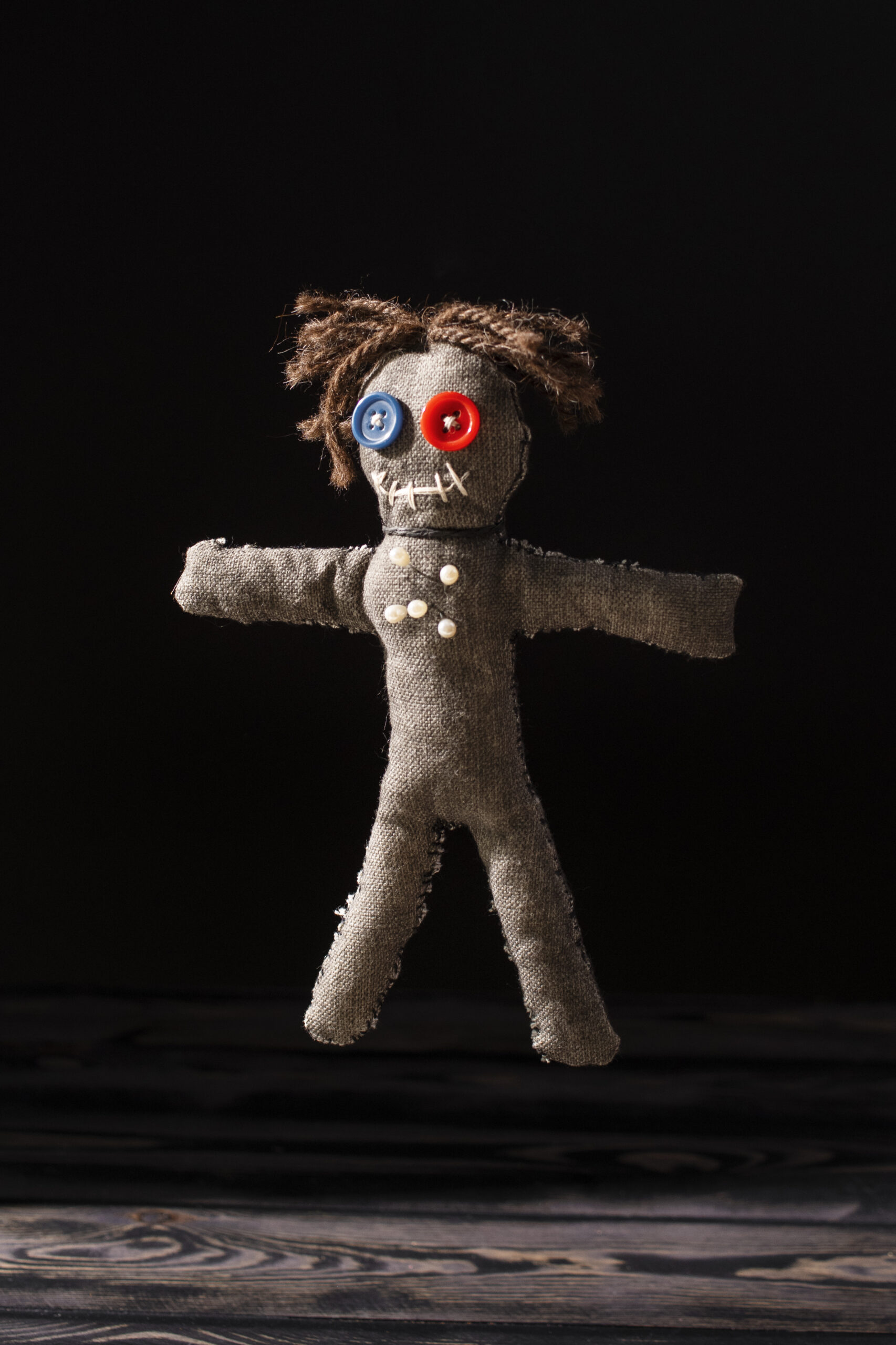
Now she stood at the admissions counter clutching the only form of payment she understood. Three dolls slept inside the cardboard box. Emma had yellow hair and one missing shoe. Penny was tiny enough to fit inside Sarah’s coat pocket. Luna was the rag doll Anne had sewn from a faded blue shirt, with uneven button eyes and a crooked, lopsided smile Sarah loved more than anything else in the entire world.
“Please take them,” Sarah said, holding the box up over the counter’s edge.
The admissions clerk looked down at it like it was something spilled that needed cleaning up. “Take what, honey?”
“My dolls,” Sarah said, lifting the box higher. “They are worth a lot because they are all I have.”
The clerk’s face tightened with the tired impatience of someone who had long ago learned to hide behind rules and forms. “Where is your adult?”
“My mommy is upstairs. Her name is Anne Miller.”
The name didn’t move the clerk at all. “Your father?”
Sarah shook her head.
“Grandmother? Aunt? Anyone with insurance cards?”
“It’s just us.”
The clerk lowered her voice, though the words still traveled clearly enough. “Pretty toys won’t pay for doctors, sweetheart.”
Sarah didn’t cry. She only pulled Luna out of the box and held the doll up like proof that love could somehow be counted, weighed, exchanged. “Mommy made this one herself. She can sew anything. She can fix sinks too. She is very, very good at things.”
A young resident paused near the desk, softening visibly at the sight of the small girl. The clerk slid a form toward him before he could say anything at all. “No insurance, no guarantor, no emergency contact on file.”
“She was hit by a car,” Sarah said.
“I understand,” the clerk answered, though her expression made it clear she didn’t, not really.
Then came the line that made the whole hallway go quiet around one particular man. “Bring insurance by morning, or your mother may never wake up again.”
Matthew Sullivan had been walking past with his phone in one hand, halfway through reading an email. He’d come to visit an employee whose accident had interrupted a quarterly meeting he was already running late for. His assistant had already arranged flowers to be sent up, press releases sat waiting in his inbox for approval, and a driver idled at the curb outside, engine running.
Matthew lived his life in towers and boardrooms and conference calls, in rooms where people stood the moment he walked in. Hospitals made him uneasy in a way he never fully examined, so he’d planned to keep this visit short, in and out, back to the office by two.
Then the little girl said her mother’s name again.
“Anne Miller. Please save Anne Miller.”
Matthew stopped so suddenly that the man walking behind him nearly collided with his shoulder. Anne Miller was not just common noise to him. She was summer sidewalks and shared pencils and scraped knees. She was the girl who had sat beside him the year his father died, back in third grade, when he still didn’t understand why the world had gone so quiet at home. She was the only child in his class who had ever noticed when he came to school hungry, and had quietly split her own lunch with him without once making him feel poor for needing it. She was also the girl he’d lost entirely when his mother moved them three states away before he ever got the chance to say goodbye properly.
Matthew stepped up to the counter. “What did you say her name was?”
Sarah looked up at him with red, swollen eyes and a small, brave chin held high. “Anne Miller. Do you know her?”
The clerk’s expression shifted the moment she recognized him. People usually did, sooner or later. Matthew ignored her entirely and turned instead to the young resident. “Where is she?”
The resident hesitated. “Sir, I can’t discuss a patient with a stranger.”
Matthew glanced down at Sarah, then back up at him. “This child is not standing here alone anymore.”
The words came out before he’d fully decided to say them, but they felt true the instant they left his mouth.
A senior surgeon arrived a moment later with a chart in hand, already launching into an explanation of trauma, head injury, fractures, ICU bed availability, and payment complications layered over the whole thing.
Matthew held out one hand, stopping him mid-sentence. “Start the surgery. Bill me personally.”
Sarah stared up at him. The surgeon stared too. The clerk looked, for a moment, like someone had yanked the chair out from under her.
“Sir, the cost could be significant,” the surgeon said carefully.
Matthew finally glanced down at the chart in the man’s hands. Anne Marie Miller. No emergency contact listed. No insurance on file. No one waiting in that hallway except a five-year-old girl clutching a box of dolls.
“Then make it significant after she lives,” he said.
Sarah wrapped both arms around his leg without asking who he was first. Fear had taught her, in the space of one terrible morning, to recognize shelter the instant it appeared. Matthew knelt down and let her cling to him. Up close, he could see exactly how small she really was, how her sleeves were clean but worn thin at the cuffs, how her sneakers had been carefully mended by someone with a needle and thread and not much else.
“Your mother pushed you away from the car?” he asked gently.
Sarah nodded. “She flew. Then she didn’t wake up.”
Matthew swallowed hard against the anger rising fast in his throat. He was angry at the driver who’d caused this. Angry at the admissions desk. Angry at the entire polished, indifferent system that could force a five-year-old child to bargain with dolls for her mother’s life. Most of all, he was angry at time itself. He had spent years building an empire, floor by floor, deal by deal, while Anne Miller had apparently been somewhere close enough this whole time to lose absolutely everything, and he’d never once known to look for her.
In the hospital cafeteria, he bought Sarah a sandwich, a juice box, a small bowl of fruit, and a warm muffin still steaming slightly from the case. She ate slowly, carefully, like food came with rules she’d had to memorize the hard way. Halfway through the sandwich, she wrapped the remaining half in a paper napkin.
“For later,” she said matter-of-factly.
That single gesture hurt him more than any number on a hospital invoice ever could.
Over the following two days, Sarah became his shadow. She slept curled up on a waiting room sofa with Luna tucked under her chin. She told him, in fragments, that Anne used to study to become a teacher, but had stopped once Sarah was born, because babies needed somebody to stay home with them. She told him Anne counted out coins carefully at the grocery store and smiled, a little too brightly, whenever she had to put something back on the shelf. She told him, in a voice so casual it broke his heart, that Anne sometimes said she wasn’t hungry at dinnertime.
Matthew listened to all of it, and every single detail pressed a fresh bruise into his conscience.
On the third day, once the doctors confirmed Anne was stable but still unconscious, Matthew left Sarah in the care of a kind nurse and drove out to the address listed on the hospital paperwork.
Apartment 12 was painted a light, faded blue, the color worn thin by years of weather. Inside, the place was clean enough to be proud of, and empty enough, in all the ways that mattered, to be ashamed of only by the larger world that had allowed it to get this way. The refrigerator held leftover pasta, half a block of cheese, and milk close to its expiration date. The pantry held a can of tomato sauce, the dusty remains of a cereal box, and a jar of peanut butter scraped down almost to clear glass.
On the kitchen counter sat the papers Anne had clearly been fighting for weeks. Electricity, overdue. Water, overdue. Phone, sent to collections. Health insurance, canceled. Eviction notice, seven days remaining.
Matthew sat down at the small kitchen table and felt something inside his chest quietly fold in on itself. Beside the stack of bills sat a notebook filled with Anne’s neat, careful handwriting. Jobs applied for. Interviews requested. Money remaining. Things to sell. The list included a blender, a clothes iron, a stack of old college textbooks, and, near the bottom, her grandmother’s ring.
He turned another page and found a photograph tucked beneath the eviction notice. Two children stood hand in hand in front of a chain-link school fence. The boy had messy hair and a guarded, careful smile. The girl beside him looked entirely fearless.
Matthew touched the edge of the photograph gently, as though it might bruise under his fingers. He remembered that exact day. He remembered Anne asking her mother to take the photo because he was moving away soon. He remembered not fully understanding how much it would hurt until the car actually pulled out of the driveway and he watched their old street disappear behind him.
Before he left the apartment, Matthew made three phone calls. The rent would be paid in full for the next full year. The utilities would all be cleared and reconnected. The refrigerator and pantry would be completely restocked before Anne ever came home to see it. He also ordered art supplies, a stack of children’s books, and enough groceries to fill every shelf twice over, so Sarah would never again have to wrap half a sandwich in a napkin for later.
When he returned to the hospital that evening, Sarah ran straight to him across the waiting room. “You came back.”
“I promised.”
“People don’t always keep promises,” she said quietly, like she was stating a simple fact of the world she’d already learned the hard way.
Matthew knelt down until his eyes were level with hers. “Then we will start with this one.”
Anne woke on the seventh morning. Matthew had stepped out for coffee when Sarah’s scream ripped down the hallway, sharp and sudden. He ran back and found Anne blinking hard against the overhead light, weak and disoriented, with Sarah’s small hand trapped tight inside her fingers.
“Mommy,” Sarah sobbed.
Anne’s voice came out barely above a breath. “My girl.”
Matthew stopped near the doorway, because the moment clearly belonged to the two of them alone. Anne reached up and touched Sarah’s face, checked her small arms for any sign of injury, tried to push herself upright before the pain pulled her firmly back down onto the pillow.
Only then did she notice him standing near the door. For several long seconds, she simply stared. Recognition came slowly at first, then all at once, like a wave finally reaching shore.
“Matthew?”
He stepped closer to the bed. “Hi, Anne.”
Her eyes filled instantly with tears. “I thought I dreamed you.”
Sarah leaned in over the bed rail. “He helped me. I gave the doctor my dolls, and Matthew heard your name and he came.”
Anne closed her eyes as tears slipped sideways into her hair on the pillow. She tried, in one shaky breath, to apologize for the apartment, the overdue bills, the trouble, the lost years between them, all of it tumbling out at once.
Matthew stopped her gently, one hand raised. “Heal first. Everything else can wait.”
It could not wait for very long, as it turned out.
Three days after Anne woke up, a man named David Carter arrived carrying grocery store flowers and a polished, well-rehearsed apology. The nurse at the desk announced him simply as Sarah’s father. Sarah went completely still. Anne’s face lost every trace of color. Matthew stepped back toward the window, close enough to stay in the room, far enough to let Anne make her own choice about what happened next.
David looked at Sarah the particular way people look at something they only regret breaking once someone else has already gone to the trouble of repairing it.
“You’ve gotten big,” he said.
Sarah studied him carefully, her head tilted slightly. “I was a baby when you left. How did you miss me if you didn’t even know me?”
David’s smile faltered and failed entirely.
Anne asked Matthew to take Sarah down for juice, but the walls in that hospital wing were thin, and some truths simply walked right through them regardless. David had heard about the accident. He had also heard, apparently through the same grapevine, that Matthew Sullivan was covering the bills. He talked about second chances, about fatherhood, about wanting to help now that he supposedly had a better job than before. Anne listened to all of it patiently, until his words started circling back to the same empty place they always eventually reached.
When Matthew and Sarah came back into the room, David looked frustrated and Anne looked pale with exhaustion.
“I want to be part of my daughter’s life,” David said.
Sarah held tight to Anne’s hand. “You can visit if Mommy says yes. But you can’t live with us.”
David looked genuinely offended that a boundary like that would come from a five-year-old. Matthew looked over at him then, and the whole room seemed to cool by several degrees. David’s gaze dropped down to Matthew’s watch, his tailored suit, the quiet authority sitting in his posture.
“And who are you supposed to be?”
Matthew didn’t raise his voice at all. “The person who was here.”
David laughed once, a sharp, thin sound with no real humor in it. “Money makes people brave.”
Matthew stepped a little closer, not close enough to threaten, only close enough to be perfectly clear. “A father shows up before the bill needs paying.”
The sentence landed harder in that room than any amount of shouting could have managed. Anne turned her face away toward the window, because it was a truth she had been carrying alone, in silence, for five long years.
David left with a supervised visitation arrangement and no real control over the room he’d just walked out of. Anne came home two weeks later, half expecting overdue notices piled on the counter, an empty refrigerator, and the familiar quiet shame of starting completely over with nothing to her name.
Instead, the lights worked. The pantry sat fully stocked. Rent receipts waited in a neat folder on the kitchen table. Sarah’s bookshelf held a row of brand-new books sitting proudly beside her old, well-loved library favorites.
Anne opened the refrigerator and covered her mouth with one hand. “Matthew, I can’t accept all this.”
“You can accept help,” he said simply.
“That is not the same thing as owing someone your entire life.”
Anne sat down slowly at the kitchen table, her legs still weak beneath her. Sarah ran off to her room to fetch the drawings she’d made during the long hospital days. Once they were alone, Anne pulled a small wooden box out from the top kitchen drawer.
“My mother told me to keep important things in here,” she said.
Inside were small treasures from a poor childhood, made rich only through memory. A single shell from an old school field trip. A stub of red pencil, worn down to almost nothing. A folded note written in Matthew’s own childhood handwriting. A button, torn loose from a blue shirt he’d ripped climbing the fence behind old Mrs. Peterson’s backyard decades ago.
Matthew picked up the button and laughed softly, turning it over between his fingers. “You kept this?”
Anne smiled, a little sadly. “I kept more than that.”
At the very bottom of the box lay the same photograph he’d already found tucked beneath the eviction notice. Beside it sat a small strip of faded blue fabric.
Matthew looked toward Sarah’s bedroom door. “Luna,” he said quietly.
Anne nodded. “When Sarah was afraid at night, I made her a doll out of pieces I’d saved for years. I thought if I stitched something kind into it, she might feel a little less alone in the dark.”
Matthew covered his mouth with one hand, understanding hitting him all at once. The rag doll Sarah had tried to offer up in exchange for her mother’s life had been sewn from the exact shirt he’d worn on the very last day Anne ever saw him as a boy. All week long, without either of them knowing it, Sarah had been carrying a small, stitched piece of his own forgotten childhood in her arms.
That was the thing that finally broke him open completely. Not the overdue bills. Not the hospital corridors. Not even the old photograph tucked under an eviction notice. It was this small, stubborn proof that Anne had remembered him, all these years, inside a life that had tried its very hardest to leave her nothing extra to hold onto.
In the months that followed, Anne took a genuine position at Matthew’s company, not as some quiet act of charity, but because she was organized, steady, and sharper in a room than half the executives who routinely spoke over her in meetings. Sarah went back to school with a pair of new shoes, a lunchbox that was always full, and Luna still tucked carefully beside her pillow every single night without fail.
David visited under terms Anne set herself, and Sarah met him politely each time, but she never once confused his arrival with actual devotion.
Matthew, meanwhile, learned the names of every one of Sarah’s teachers. He learned exactly how she liked her apple slices cut. He learned the specific tone of voice Anne used whenever she was pretending, not very convincingly, that she wasn’t tired.
One Saturday afternoon, the three of them walked together through the park while Sarah rode ahead of them on a small blue bicycle, wobbling occasionally but never quite falling. Anne moved slowly beside him, still healing, though the sun warmed her face and left a soft color there that hadn’t been present in the hospital.
“I used to think survival was the best thing I could give her,” she said quietly.
Matthew watched Sarah wobble, catch herself, and laugh out loud at nothing in particular. “You gave her far more than survival.”
Anne glanced over at him. “What did I give her, then?”
“A heart that knows exactly how to offer everything it has, and still somehow stand tall afterward.”
Sarah braked too hard up ahead, hopped off the bike, and came running back toward them both. She grabbed Anne’s hand with one of hers and Matthew’s with the other.
“Are we going to be friends forever?”
Anne looked over at Matthew, and for the first time in longer than either of them could remember, the years that had once stood between them no longer felt stolen. They felt, somehow, returned.
“If Matthew wants that,” she said.
Matthew squeezed Sarah’s small hand carefully. “I want that.”
Sarah nodded once, satisfied, as though she’d just formally approved a very serious contract between all three of them.
“Good,” she said, “because Luna already knows you.”
Matthew laughed, and Anne laughed right along with him, and for the first time in years, neither sound carried a single trace of fear behind it.
A child had walked into a hospital carrying a box of dolls, believing with her whole heart that love should be enough to buy a miracle. The world had very nearly told her she was wrong.
But love, it turned out, had simply been finding its own quiet way back the entire time.
And when Matthew looked at Anne and Sarah there in the spring light, sunlight catching in Sarah’s hair as she climbed back onto her bicycle, he finally understood that the richest thing he had ever received in his entire life had arrived in a small cardboard box, carried by two small, determined hands.

Adrian Hawthorne is a celebrated author and dedicated archivist who finds inspiration in the hidden stories of the past. Educated at Oxford, he now works at the National Archives, where preserving history fuels his evocative writing. Balancing archival precision with creative storytelling, Adrian founded the Hawthorne Institute of Literary Arts to mentor emerging writers and honor the timeless art of narrative.