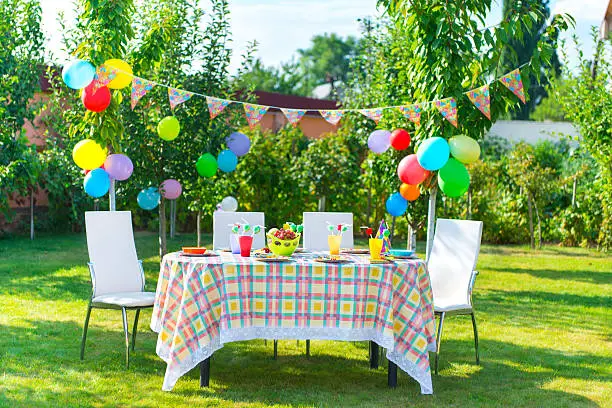
My father showed up uninvited at my son’s seventh birthday party with a lawsuit threat in one hand and a gift bag in the other.
He had not seen me since I was fifteen. He had never met my son. But he walked through my backyard gate like he still owned the right to ruin my life, like twenty years hadn’t happened, like the last time he’d looked at me wasn’t the day he threw my clothes onto a porch in black trash bags.
The kids were chasing balloons across the grass. My husband was crouched by the picnic table, lighting the candles on a dinosaur cake that had taken me two attempts and a YouTube tutorial to get right. My son, Noah, was laughing somewhere near the fence, frosting already smeared across one cheek, when my father stepped onto the patio, adjusted the collar of a cheap suit that looked like it had been pulled out of a closet for exactly this occasion, and said, “We need to talk.”
I froze for half a second. Not from fear. From memory.
At fifteen, I came home from school on an ordinary Tuesday and found my clothes sitting in trash bags on the porch, the black plastic already damp from a light rain that had started that afternoon. My father stood in the doorway, arms crossed, and told me, “You’re too much trouble. Figure it out.” That was the whole conversation. No explanation. No warning that had preceded it, at least none I remembered as significant enough to justify what came next. My mother had died two years before that, and in the two years since her funeral, whatever thin thread had held my father in the shape of a parent had apparently worn through completely.
My aunt took me in that same night, after a neighbor found me sitting on the porch steps with the bags stacked around me and called her. My father never called after that. Not once. No birthdays. No graduation, though I sent an invitation to his last known address out of some stubborn hope I couldn’t quite kill off. No wedding, three years ago, small and lovely, my aunt walking me down the aisle instead. No hospital visit when Noah was born, screaming and purple and perfect, while I lay in a recovery room wondering, for one weak moment, whether anyone had told my father he was a grandfather.
Nothing. Twenty years of nothing.
And now he stood beside my son’s dinosaur cake, wearing that cheap suit and the same cold eyes I remembered from the doorway, like no time had passed at all except the parts that were convenient for him to skip.
“Leave,” I said.
He smiled at me the way you smile at a child throwing a tantrum, indulgent and dismissive at once. “You don’t want to make a scene.”
I looked past him at the children, at my husband who had already set down the lighter and was moving toward us without being asked. Then I looked back at my father.
He lowered his voice, leaning in slightly, like we were sharing a private joke. “I know you have money now. Your little company did well for itself. I’m owed something, after everything I sacrificed.”
I almost laughed out loud, right there in the middle of my son’s birthday party, surrounded by balloons and half-eaten cupcakes. Sacrificed. He had thrown a child away at fifteen, and now, two decades later, he had returned only once that child became valuable enough to be worth the drive.
“How much?” I asked, because I already knew where this was going and I wanted him to say it out loud, in front of witnesses, rather than let it stay implied.
His smile widened, like he’d been waiting for the question. “Fifty thousand. Call it repayment. Or I can sue for elder support instead, if that’s easier for you. Maybe tell the court you abandoned your own father in his old age.”
My hand stayed steady around the paper cup I was holding, though something in my chest had gone tight and hot. “You abandoned me,” I said. “At fifteen. On a porch. In trash bags.”
He shrugged, an actual shrug, like we were discussing something that had happened to someone else entirely. “You survived.”
That single sentence erased the last soft place I had kept for him, some small, stubborn corner of my heart that had apparently, without my permission, been holding out hope that there was an explanation, a version of events where he felt something close to regret. There wasn’t. There never had been.
Noah came running toward us just then, a red balloon bouncing on its string above his head. “Mommy, who is that?”
My father bent down too quickly, too eagerly, his knees cracking audibly in the quiet. “I’m your grandpa,” he said, reaching a hand toward my son’s shoulder.
I stepped between them before his hand made contact.
“No,” I said.
His face hardened instantly, the friendly-stranger act dropping away. He reached past me anyway, toward Noah, like the word grandpa alone gave him some automatic right of passage through me.
I caught his wrist before his fingers touched my son and pushed his hand back, firmly, no room for negotiation in the motion.
“Do not reach for my child.”
For the first time since he’d walked through the gate, my father looked unsure of himself. I leaned in slightly and kept my voice low, meant only for him.
“You have five minutes to leave.”
He laughed through clenched teeth, though it didn’t quite land the way he wanted it to. “Or what?”
I glanced up toward the security camera mounted under the patio eave, the one my husband had installed the year before after a string of package thefts in the neighborhood.
“Or everyone here sees exactly why I stopped being afraid of you.”
His eyes flicked to the camera. Then to the guests scattered across the yard, several of whom had gone quiet, sensing something was wrong even if they couldn’t hear the specifics. Then back to me.
“You’re threatening me?” he asked.
“No,” I said. “I’m documenting you.”
My husband stepped up beside me then, calm in the particular way he gets when something needs to be handled rather than felt. “Sir,” he said, “the gate is that way.”
My father’s smile came back, thinner now, aimed at my husband instead. “So this is the man who thinks he can replace me.”
My husband didn’t raise his voice. “You left the position vacant.”
A few of the adults near the patio had gone completely silent, drinks forgotten in their hands. My aunt was standing near the cake table, her face pale with a kind of anger I hadn’t seen on her in years, not since the week she took me in and spent an entire evening on the phone with a caseworker, trying to figure out what to do with a fifteen-year-old who’d shown up on her doorstep with nothing but two trash bags and a backpack. She was the one who had bought me school shoes that year. Signed my permission slips. Sat with me at the kitchen table on nights I asked, over and over, why my own father didn’t want me, and never once had a good answer, because there wasn’t one.
She walked forward slowly, deliberately, the way you approach something you’ve been dreading for a long time.
“Robert,” she said, “leave.”
He sneered at her. “Of course you’re here. You always filled her head with lies about me.”
My aunt’s hands were shaking slightly at her sides, but her voice came out steady. “I filled her fridge,” she said. “You filled trash bags.”
That silenced even him, if only for a moment.
Then I took out my phone and opened a folder I had built years earlier, back when my therapist told me, gently but firmly, that healing didn’t mean pretending the past had no paperwork, that some things were worth keeping evidence of even after you thought you’d moved past needing it.
Photos of the trash bags on the porch, timestamped from that night. Messages from a neighbor who had witnessed the whole thing and later gave a statement. A copy of the abandonment report my aunt had filed with the county not long after taking me in. A letter from my father’s own attorney, dated the year I turned sixteen, refusing to provide any support and claiming, in cold legal language, that I had “voluntarily left the home.”
I turned the screen toward him.
“You want to sue me?” I said. “Start with this.”
His face drained of color, the confidence he’d walked in with visibly leaking out of him in real time.
Behind me, Noah had started crying, overwhelmed by the raised voices and the tension he was too young to fully understand but old enough to feel. That was the only sound that mattered to me in that moment.
My father, still trying to find his footing, looked past me one more time. “He deserves to know his grandfather,” he said.
“No,” I said. “He deserves peace.”
My attorney, who happened to be one of the other parents at the party, someone I’d known for years before I ever needed her professionally, stepped forward with her phone already in her hand.
“Mr. Ellis,” she said, using his name like a formality that stripped away whatever authority he thought he still had, “I’d suggest you leave before this becomes a police matter.”
He stared at her, and for the first time, I watched him do the math, watched him realize the room wasn’t going to tip in his favor no matter how loudly he talked.
“And if you contact my client again,” she added, “we’ll file first.”
My father walked back through the gate with the gift bag still hanging from his hand, unopened, the tissue paper crumpled from being carried the whole time.
Nobody clapped. Nobody needed to. The silence after he left felt cleaner than any applause could have.
I knelt down beside Noah and wiped the frosting and tears from his cheek with my thumb. “I’m sorry, baby,” I said.
He sniffed, still catching his breath. “Was he mean to you?”
I looked at my son in his little dinosaur shirt, at the birthday candle wax already hardening in small puddles on top of the cake, and I chose the truth without the poison behind it.
“Yes,” I said. “But he doesn’t get to be mean here.”
My husband relit the candles. My aunt cut the cake, her hands steadier now. The party continued, quietly at first, then louder, because children have a way of pulling joy back into a room that adults had almost managed to ruin.
That night, after Noah fell asleep with two plastic dinosaurs tucked under his arm, I sent my attorney every file I had.
The next morning, my father emailed a formal demand letter. Fifty thousand dollars. A public apology. Access to his grandson.
My attorney responded with a cease-and-desist, the abandonment records, the security footage from the party, and a clear warning that any elder-support claim he attempted to file would be met with a counterclaim documenting decades of neglect and abandonment.
He did not sue. People like my father count on fear, not facts, and once the facts were laid out in front of him, there was nothing left to threaten me with.
Two weeks later, I received one final voicemail from him.
“You became cold,” he said. “Your mother would be ashamed.”
I listened to it once, sitting in my car in the driveway, and then I deleted it.
My mother would have been ashamed of the man who left her child on a porch in trash bags. Not of the woman who built a locked gate around her son’s peace.
A month later, Noah asked if the “mean grandpa” was coming back.
“No,” I told him. “Some people don’t get a second chance just because they show up late.”
He nodded, satisfied with that answer in the simple way kids can be, and went back to lining up his dinosaurs along the windowsill.
That was when I finally understood something I wished I had known at fifteen, sitting on that porch surrounded by trash bags, waiting for someone to come back and tell me it was a mistake.
Being abandoned did not make me unwanted.
It made me free to build a family where no child would ever have to beg to stay.
My father came asking for fifty thousand dollars.
He left with the only thing he had truly earned.
Nothing.

Sophia Rivers is an experienced News Content Editor with a sharp eye for detail and a passion for delivering accurate and engaging news stories. At TheArchivists, she specializes in curating, editing, and presenting news content that informs and resonates with a global audience.
Sophia holds a degree in Journalism from the University of Toronto, where she developed her skills in news reporting, media ethics, and digital journalism. Her expertise lies in identifying key stories, crafting compelling narratives, and ensuring journalistic integrity in every piece she edits.
Known for her precision and dedication to the truth, Sophia thrives in the fast-paced world of news editing. At TheArchivists, she focuses on producing high-quality news content that keeps readers informed while maintaining a balanced and insightful perspective.
With a commitment to delivering impactful journalism, Sophia is passionate about bringing clarity to complex issues and amplifying voices that matter. Her work reflects her belief in the power of news to shape conversations and inspire change.