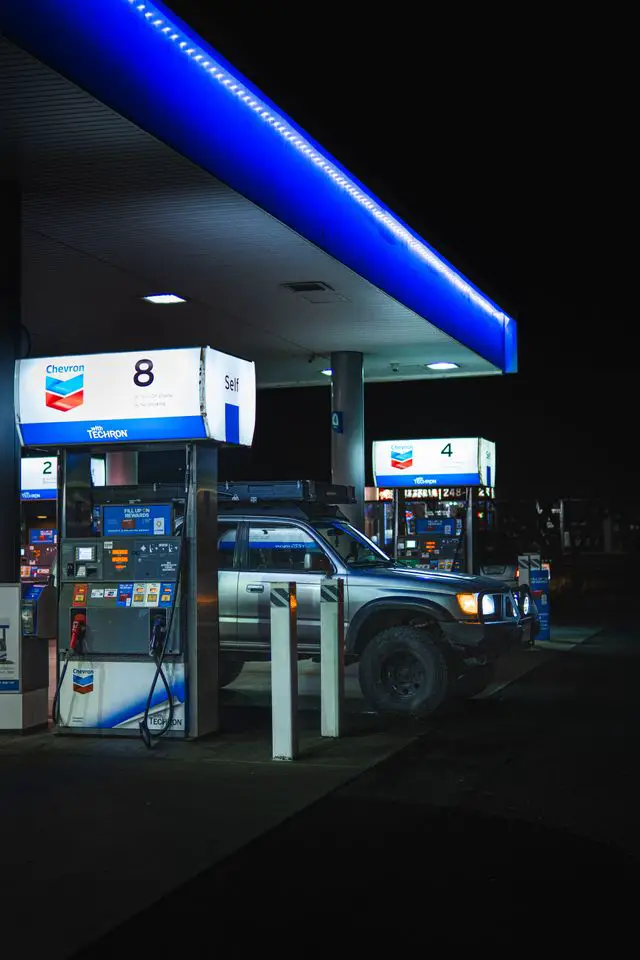
My mother had been crying at my brother’s grave for eight years before I found him alive behind the register of a convenience store on Arlington Road.
It was 10:47 on a wet Thursday night in Akron, Ohio, the kind of night when the streets go slick and empty under the gas station lights and every car that passes throws up a long hiss of water. I had stopped for coffee because I was too tired to make it home without it. My mother’s doctor had called that afternoon to tell me her blood pressure was up again, and to say, carefully, that grief has a way of becoming physical when a person carries it too long without setting it down.
I remember standing in front of the coffee machine watching the dark liquid drip into a paper cup and thinking about absolutely nothing except whether Mom had remembered her evening pill.
Then the cashier said my name.
Not loudly. Not dramatically. Just quietly, the way a man says a word he has been holding in his mouth for years.
“Maya.”
The cup slipped out of my hand. Hot coffee went across the tile and over my shoe, and I barely registered it.
The man behind the counter had gone completely still too.
He had a beard now. His hair was shorter than I remembered. There were tired lines around his eyes that had not existed when he was twenty-four. But no amount of time could erase the way his left eyebrow sat slightly higher than the right, or the small pale scar beneath his chin from the winter he fell off our neighbor’s porch railing trying to prove he could clear it in one jump.
Ivan.
My brother.
The brother whose closed casket my mother had kissed until her legs went out from under her and my uncle had to hold her up.
For a few seconds the store was painfully quiet. The drink coolers hummed. The fluorescent lights buzzed. A man in a Browns hoodie walked past the window without looking in.
Ivan stared at me like he had seen a ghost.
I almost laughed, because that was supposed to be my line.
“You’re dead,” I whispered.
His face broke. Not into tears, not yet. Into fear.
He looked past me toward the front windows. Then up at the security camera in the corner. Then down at the register, where his hands were shaking so badly he printed a receipt he did not need.
“Maya,” he said, so low I barely caught it. “Don’t tell Dad you found me.”
Those words landed harder than seeing him alive.
Don’t tell Dad.
Not Mom. Not the police. Dad.
Ivan pushed the receipt across the counter with one trembling finger. On the back, in black marker, was an address and a time.
11:30.
Then he said the sentence that turned my blood to ice water.
“If Dad finds out before you hear me out, Mom is in danger.”
I drove away from that store with both hands locked around the wheel and the receipt lying faceup on the passenger seat like a warrant.
For eight years, my family had lived around Ivan’s death the way a house lives around a crack in the foundation. You learn where not to step. You learn which subjects make the floor give way.
My mother, Elena Reyes, never recovered from it. Every Sunday after church, she carried fresh flowers to Holy Cross Cemetery and sat in the grass beside my brother’s headstone. Rain, snow, August heat, none of it mattered. She kept a folding stool in the trunk of her old Buick along with garden gloves, a bottle of water, and a rag for wiping the dust off his name.
Ivan Daniel Reyes. Beloved son and brother. 1994 to 2018.
I had seen those numbers so many times they felt burned into the inside of my skull.
My father, Victor Reyes, paid for that stone in cash. He chose the plot. He handled the funeral home himself. He ordered the casket closed before my mother could see Ivan’s face, and he said the crash had simply been too severe for anything else. He said the authorities had identified my brother by his watch, his St. Michael necklace, and the registration found in the burned car.
He said a good mother should not put herself through seeing what was left.
Everybody listened to him, because people always listened to my father.
Victor Reyes owned three auto parts stores around Summit County. He sponsored the scoreboard at the high school baseball field. He donated tires to the church raffle every fall. He knew police officers by their first names and shook hands with judges at charity breakfasts downtown. In public he was calm and generous and pressed clean, the kind of man who called older women ma’am and quietly paid for a veteran’s coffee at the diner counter.
At home, his kindness had rules.
My mother learned those rules first. Ivan learned them next. I learned them last, because I was the youngest, and because my brother spent most of my childhood standing between me and whatever mood my father had brought home from the office.
After Ivan died, Dad got quieter. Not softer. Just quieter.
He stopped going with Mom to the cemetery after the first month.
“I’ve made my peace,” he told people at church.
My mother never did.
And now, driving through wet streets with my brother’s handwriting on a receipt beside me, I understood that my father had not made peace with anything.
He had made arrangements.
The address led me to a brick apartment building over an old laundromat at the edge of Barberton. Half the sign outside had burned out, so it read LAUN RY in flickering blue letters. The parking lot smelled like rain and dryer vents. I sat in my car for almost four full minutes before I could make my legs work.
A man in a gray hoodie opened the side door before I knocked.
Up close he looked worse than he had under the store lights. Thinner. Worn down to something rougher than I remembered. His eyes moved constantly, checking the street behind me, the parked cars, the lit windows across the lot.
“Were you followed?” he asked.
I stared at him.
That was the first thing my brother said to me after eight years. Not I’m sorry. Not I missed you. Were you followed.
I pushed past him into the stairwell, because if I stood out there another second I was going to start screaming.
His apartment was one room on the second floor. A mattress on a metal frame. A plastic table. A microwave. A folding chair. A small coffee maker with a stain ring under it. Beside the window sat a pair of binoculars and a spiral notebook filled with license plate numbers in his cramped handwriting.
And taped to the wall beside the door was a photograph of our mother standing at his grave.
The sight of it knocked all the anger straight out of me and left something worse behind.
“You’ve been watching her,” I said.
Ivan closed the deadbolt. Then the chain. Then a third lock I had not noticed on the way in.
“I had to know she was still alive.”
I turned so fast my shoulder hit the wall. “Still alive? Do you hear yourself? She’s been grieving you for eight years, Ivan. She talks to a stone every Sunday. She sets a plate for you on Christmas Eve and then pretends she just forgot to put it away. She still buys your cereal when it goes on sale.”
His face tightened. “I know.”
“No, you don’t. You don’t get to know from across the street through binoculars. You don’t get to call that love.”
He took it without defending himself, and somehow that made it worse.
“Sit down,” he said.
“I don’t want to sit down.”
“Maya.”
“Don’t use that voice with me. You let us bury you.”
His eyes filled then, but he still did not cry. “The body wasn’t mine.”
“I worked that out when I saw you selling lottery tickets.”
“It was Eddie Navarro.”
I went completely still.
The name meant something. It took a second to find it. Eddie had worked for my father when I was in high school, a quiet man who sat at the back counter of the East Market store sorting invoices and drinking gas station coffee out of the same dented thermos. I remembered him because he had once changed a flat tire for me in the rain when my father did not answer his phone.
“Eddie died in that car?”
Ivan nodded.
Something sick started climbing my throat. “How?”
“He was driving Dad’s old Buick. The same one Dad told everyone I’d taken to Cleveland.”
I gripped the edge of the plastic table. “Why would Eddie have your watch? Your necklace?”
Ivan reached under the mattress and pulled out a yellow envelope so worn the corners had gone soft as cloth. He set it down in front of me like a confession.
“Because Dad put them there.”
I sat down then. Not because he had told me to. Because my knees had stopped agreeing to hold me.
He opened the envelope. Inside were copies of checks, insurance forms, a death certificate, a funeral home receipt, photographs of handwritten ledgers, and a stack of bank statements with lines highlighted in yellow. Nothing dramatic. Nothing cinematic. Just ordinary paper, the kind people fold into drawers and forget about.
That made it worse.
“This is what he built the lie with,” Ivan said.
I could not look away from the death certificate. My brother’s name sat there in official black type, merciless.
“You knew about Dad’s businesses,” he said. “You just didn’t know all of it.”
I laughed once, bitterly. “He sells brake pads and alternators.”
“That was the front. Most of it was real, at first. Then he started buying salvage titles, running cars through auctions under different names, filing insurance claims on parts that never existed. He had notaries signing after hours. Adjusters getting envelopes. People at the county clerk’s office who knew when to look at the ceiling.”
My father’s face appeared in my mind exactly as it looked at church. Clean suit, gentle smile, one hand resting on my mother’s back as though he were holding her upright.
“No,” I said.
Ivan did not argue with me. He just slid a bank statement across the table.
There was my father’s company name. There were transfers I did not understand. There was Eddie Navarro’s name. And there was my brother’s.
“I worked for him,” Ivan said. “Not at first. I thought I was helping with inventory. Then he started giving me deposits to make. Then envelopes to deliver. Then he wanted me sitting in on meetings, because he said one day the stores would be mine.”
His mouth twisted. “I was twenty-three and stupid enough to think that sounded like love.”
The room tilted slightly. “What happened?”
He looked toward the window again, though the blinds were shut.
“Eddie found out Dad had been using his name on paperwork. Loans. Titles. Claims. Things Eddie could have gone to prison for. He wanted out. He said he’d talk.”
I swallowed. “And Dad?”
“Dad said he’d handle it.”
The way Ivan said handle it sounded exactly like our father. Calm. Professional. Empty.
“Two days later,” he went on, “Dad told me to drive up to Cleveland and pick up documents from a warehouse. I was supposed to take the Buick. Something about it felt wrong, and Eddie had already warned me not to trust him, so I took my own car and parked near the pickup lot instead. And I watched Eddie get into the Buick.”
He stopped. Rain tapped against the window glass.
“I followed at a distance. On Route 8 the Buick went off the road near a construction barrier. It was bad. By the time I got close there was smoke everywhere.”
I pressed my hand over my mouth.
“I called 911 from a pay phone and left before they got there,” he said. “I know exactly how that sounds.”
“You left him.”
“I thought my father had just tried to kill me. I thought if I stayed, I’d be next.” He drove both hands into his hair. “I was scared, Maya. I was so scared I couldn’t think straight. I went to a motel outside Canton and waited for somebody on the news to say Eddie’s name.”
“And?”
“The next morning Dad called me.”
My chest went tight. “What did he say?”
Ivan’s voice dropped so low I had to lean in.
“He said, You were always too soft. Stay dead, or your mother and your sister will pay for your mistake.“
I could not move.
“That was when I knew,” he said. “He’d already identified Eddie as me.”
I looked at the death certificate again. One signature belonged to the county medical examiner’s office. Another belonged to the funeral director. The same funeral director who had put his hand on my mother’s shoulder and told her that closure sometimes requires trust.
Trust. That word made me want to put the table through the wall.
“I tried to come home,” Ivan said. “Three times.”
“Don’t.”
“I did.”
“Don’t make it sound noble.”
“It wasn’t noble. It was pathetic. I got as far as the street once. I saw Mom through the kitchen window. She was sitting at the table in her robe holding my old hoodie. Dad was standing behind her. He wasn’t touching her. But she looked terrified.”
My throat burned.
“He saw me on the porch camera the next morning. I don’t know how, maybe someone told him. He called the motel where I was staying and told me the exact time you left campus for your Tuesday class.”
I remembered that year.
The strange black sedan parked across from my apartment building for two straight weeks. The way Dad suddenly insisted on driving up to Kent State to get me every Friday. The way he always said, There are dangerous people in this world, Maya. Be grateful you have a father who pays attention.
Ivan pulled out another photograph. It was me at twenty years old, crossing campus with a backpack over one shoulder, taken from a long way off.
My hands went numb.
“He sent me that,” Ivan said. “No message. Just the picture.”
For a long moment there was nothing in that apartment but rain and the low thump of dryers turning downstairs.
I wanted to hate my brother. Part of me still did. Hatred was easier than understanding. Hatred gave a shape to eight years of grief.
But looking at that photograph, I felt something worse than hate. I felt my entire family rearranging itself inside my memory. Every warning from my father. Every locked drawer. Every time my mother started a sentence and stopped when he entered the room. Every time he told people that grief had left her confused.
“What does Mom know?” I asked.
Ivan’s eyes came up. That was the question he had been waiting for.
“She saw the watch.”
“At the funeral home?”
He nodded. “Dad gave her a sedative before he took her there. Said the doctor recommended it. But it didn’t put her all the way under. She told me once, before everything, that she remembered waking up in a small room and seeing my necklace and my watch sitting on a metal tray. Not on a body. On a tray.”
And I remembered it too. Not clearly. Not until he said it out loud.
My mother sitting in our dark living room a month after the funeral, whispering, “His watch was clean.”
And my father coming in from the hallway. “Enough, Elena.” Gently. Gently enough that anyone listening would have thought he was comforting her.
“She never said it again,” I whispered.
“Because he made sure nobody believed her.”
Ivan handed me a folded document.
It was from a doctor I recognized. Not my mother’s current physician. An older one my father had chosen years ago, a man he played golf with twice a month.
The document described my mother as emotionally unstable, prone to confusion, and dependent upon her husband for financial decisions.
My stomach turned over. “What is this?”
“The beginning of a guardianship file,” Ivan said. “He never filed it back then. He didn’t need to. But he’s using it now.”
“Why now?”
He pulled out one last page.
A property transfer. Our house. The East Market store. A storage building out near the freeway. All of it being moved into a limited liability company I had never heard of.
The signature line for my mother was blank.
“The house is half hers,” Ivan said. “So are pieces of the businesses. He needs her signature before he can sell it all clean. He’s been telling people she’s declining. He’s been setting this up for months.”
I thought about her doctor calling me that afternoon. Her blood pressure. Her forgetfulness. The way she had stopped drinking coffee after my father told her caffeine made her act strange.
“How do you know he’s moving now?”
Ivan slid a small photograph across the table.
A woman standing beside my father at a backyard party. Younger than my mother, dark hair, a careful smile. In front of her, a little girl in pink sneakers holding a paper plate with cake on it.
On the back, in someone’s handwriting: Columbus, 2017.
“No,” I said.
“Her name is Rebecca Shaw,” Ivan said. “The girl is Hannah.”
My mouth went dry. “She’s his daughter.”
He looked away. “Yes.”
The room became too small to hold me.
Eight years my mother had wept at a grave while my father built a second life two hours down the interstate. Eight years he let her fold my brother’s shirts and light candles for him at Mass while another little girl called him Dad.
I stood up so fast the chair scraped across the floor. “I’m taking Mom out of that house tonight.”
Ivan caught my wrist. “No. You can’t just walk in there.”
“Watch me.”
“Maya, listen to me. If he thinks you know, he’ll have her sign everything before morning. Or he’ll get a doctor to say she’s incompetent. Or he’ll put her somewhere and tell everyone that his daughter has become hysterical.”
I pulled my wrist free. “Then what are we supposed to do?”
“Get her out quietly. Get these papers to somebody he can’t buy. And keep him talking long enough to hang himself.”
I looked at him. “You’ve planned this.”
“I have.”
“Then why did you wait until now?”
His face changed. Pain moved across it so sharply that I almost looked away.
“Because Rebecca called me three days ago.”
I blinked. “She knows you’re alive?”
“She found me through Eddie’s sister. I still don’t know how. She said Dad told her he was selling everything and moving them to Arizona. She thought she was finally getting the life he’d promised her. Then she found papers in his office with Mom’s name on them. Medical forms. Transfer documents. A draft letter to a senior living facility outside Toledo.”
I stopped breathing. “He was going to put her away.”
“Not tonight. Maybe not next month. But soon. Rebecca panicked because she finally understood that a man who could erase one family could erase hers just as easily.”
Before I could answer, the floorboard outside the apartment creaked.
Ivan’s head snapped toward the door.
Another creak. Slow. Measured. Not a neighbor heading down to the laundry room.
Someone stopped just outside.
Then came a knock. One. Two. Three.
Ivan moved without a sound and pressed one finger to his lips.
A voice came through the door.
“Maya.”
My father.
Not shouting. Not angry. Almost disappointed.
“I know you’re in there.”
My body went cold from my scalp to my heels. Ivan’s face drained of everything.
Dad knocked again. “Open the door before this becomes embarrassing.”
That was my father’s particular gift. He could make a threat sound like etiquette.
Ivan pointed toward the window. A fire escape.
I looked at him like he had lost his mind. We were on the second floor in the pouring rain and my father was standing six feet from the door.
“Maya,” Dad said. “Your mother’s worried about you.”
That almost broke me. He was already using her.
I pulled my phone out of my coat pocket and hit record.
Ivan shook his head hard. I ignored him.
My father sighed on the other side of the door. “I know he’s filled your head with stories. Your brother has always been weak. He ran from responsibility and let your mother suffer because he couldn’t face what he’d done.”
Ivan closed his eyes.
Dad’s voice softened. “Come home with me. We’ll get your mother settled. Tomorrow we can have Dr. Keller speak with her again. You know she hasn’t been herself.”
Again.
That word mattered. That word was a date and a plan and a paper trail.
Ivan leaned close to my ear. “Now.”
We went out the window into cold rain.
The metal fire escape was slick under my shoes. Halfway down my foot went out from under me and Ivan caught my elbow hard enough to leave a bruise I would find two days later. Below us a freight train groaned somewhere past the buildings. My father was still talking in that hallway, still performing for a door that no longer had anyone behind it.
At the bottom we ran across the alley and in through the back entrance of the laundromat. A woman folding towels looked up as we came through soaked and gasping. Ivan kept his head down. I pulled my hood up.
We crossed the laundry room, went out the front, and got into my car just as the side door of the apartment building swung open.
My father stepped out into the rain.
For one second, under that broken blue sign, he looked directly at us.
I don’t know if he saw my face.
I know he saw the car.
“Drive,” Ivan said.
I drove.
We did not go to my house. We did not go to my mother’s. Ivan directed me to a twenty-four-hour diner near the county line, one of those places with pie rotating in a lit glass case and truckers drinking coffee like medicine. In a back booth sat a woman in a navy raincoat with silver hair cut sharp to her chin.
She stood when she saw my brother.
“Maya Reyes?”
I nodded, still shaking.
“Patricia Shaw. I’m an attorney.”
“Rebecca’s attorney?”
“For the moment,” she said. “Possibly yours as well, if you want to keep your mother safe.”
I laughed, because nothing was funny.
Patricia did not smile. She laid a legal pad on the table and took out a pen.
“Tell me exactly what happened tonight.”
For the next forty minutes I told a stranger the entire history of my family while rain streaked the diner windows and my brother stared into a mug of coffee he never once lifted. Patricia listened without interrupting. She stopped me only twice, both times to clarify dates.
When I played the recording from outside Ivan’s apartment, she leaned in close to the phone.
At the line about Dr. Keller speaking with my mother again, her pen stopped moving.
“There,” she said.
“What?”
“That implies prior coordination. Medical capacity. Possibly guardianship. That matters a great deal.”
She turned to my brother. “Do you still have the original ledger pages?”
“Safe deposit box in Kent.”
“Good.”
Then she looked at me. “Can you get your mother out of that house without alerting your father?”
I thought about my mother’s bedroom. Her pill organizer on the nightstand. The little blue suitcase she used for church retreats. The way Dad kept her car keys in the bowl beside his chair, though he always said it was just so she wouldn’t misplace them.
“I can try.”
Patricia’s expression sharpened. “Don’t try. Do it clean. No confrontation, no accusations. Tell her you’re taking her to breakfast. Take her phone if your father tracks it. Bring her medications. Bring any mail or documents with her name on them.” She paused. “And Maya. Do not let your father get her alone with a notary.”
At 5:42 the next morning I parked two blocks from my parents’ house and walked through the drizzle with an umbrella I did not need.
The house looked exactly the same as it always had. White siding. Blue shutters. Two planters on the porch my mother still filled every spring. The flag my father put out years ago and never took down except to replace it when it faded.
I stood across the street for a moment and hated that house for looking so innocent.
My mother opened the door in her robe.
“Maya?” She looked past me at the empty street. “Is everything all right?”
I hugged her harder than I meant to. She made a small surprised sound and patted my back.
“What happened?”
“Nothing,” I lied. “I couldn’t sleep. Come have breakfast with me.”
“At this hour?”
“I want pancakes.”
That almost made her smile. “You never want pancakes.”
“I do today.”
She glanced over her shoulder into the quiet house. “Your father got home very late.”
“Let him sleep.”
Her face tightened at that, just slightly. Just enough.
I stepped inside and kept my voice light. “Go get dressed. I’ll pack your pills. We’ll go to Molly’s, the one you like.”
She hesitated. Something in her knew. Not the whole truth, not yet, but enough of the shape of it.
She went to her bedroom without asking another question, which told me more than anything.
While she dressed I moved fast. Pills. Insurance cards. Her checkbook. The folder where she kept church donation receipts. A stack of mail from the kitchen drawer. Her phone off the charger.
And then I saw it.
A manila envelope on my father’s desk, half tucked beneath a folded newspaper.
ELENA REYES — CAPACITY REVIEW.
My hands went cold.
Inside were forms from Dr. Keller, an unsigned letter to a senior living facility outside Toledo, and a draft petition naming my father as guardian over my mother’s affairs.
At the bottom of the stack was a property transfer with a yellow sticky note attached.
Need Elena signature before Friday.
Friday was the next day.
I folded everything back exactly as I had found it and photographed every page.
When I turned around, my mother was standing in the doorway.
She had already seen my face.
“Maya,” she whispered. “What did he do?”
The question came out so clear and so steady that I nearly went to my knees.
“Come with me,” I said.
She looked down the hallway toward the bedroom. And for the first time in years, my mother did not look confused.
She looked trapped.
“Is it Ivan?” she asked.
I could not lie to her. Not anymore. I nodded once.
The sound that came out of her was not a sob. It was smaller than that, and much older. Like a door somewhere inside her opening after a very long time locked.
“He’s alive?”
“Yes.”
She put one hand flat against the wall.
“I knew his watch was clean.”
I had her in the car before the sun came up.
We were on the highway when my father called. Her phone lit up in the cup holder. VICTOR. She stared at it like it was something coiled.
“Don’t answer,” I said.
It rang until it stopped. Then mine rang. I let it go.
A minute later a text came through.
Where is your mother?
Then another.
Do not make this ugly.
My mother read them over my shoulder, and her face changed. It was not fear leaving. It was anger arriving.
We met Ivan in the basement fellowship hall of St. Matthew’s Lutheran, because Patricia said public, quiet places were safer than houses. The church secretary knew my mother from the food pantry and let us in early. The room smelled like coffee and old hymnals and lemon cleaner.
Ivan stood near the folding tables with his hands shoved deep in his jacket pockets.
When my mother saw him, she stopped walking.
For eight years I had watched that woman grieve with discipline. She folded her grief into the laundry. She stirred it into soup. She carried it out to cemetery grass and tucked it under fresh flowers every single Sunday.
There was no discipline in her now.
She crossed that church basement like the floor had vanished beneath her and caught my brother’s face in both hands.
“My boy,” she said.
And Ivan broke apart. He went down on his knees in front of her like he was twelve years old and sobbed into her coat.
“I’m sorry,” he kept saying. “I’m sorry, Mom. I’m so sorry.”
She held on to him so fiercely her knuckles went white.
I stood beside a stack of metal chairs and cried without bothering to wipe my face.
Patricia gave us ten minutes. Then she came down the stairs with two cups of coffee and the expression of a woman who has watched too many families destroyed by documents signed under pressure.
“We need to move,” she said, gently.
By noon, the paper began doing what paper does when the right person is holding it.
Patricia filed an emergency notice with probate court challenging any guardianship petition. She sent copies of the forged capacity file to an investigator with the state insurance department, because the death certificate had been attached to a life insurance claim. Rebecca drove up from Columbus in a dented Honda with Hannah sitting pale and silent in the passenger seat, and she brought bank statements, emails, and photographs from my father’s second life.
Hannah was seventeen now. She had my father’s eyes.
That was the hardest part. Not because I hated her. I didn’t. She looked every bit as gutted as I felt. She had been raised inside her own version of Victor Reyes, one where the doors also locked from the outside.
Rebecca sat across from my mother in Patricia’s office and could barely lift her head.
“I didn’t know about the funeral,” she said. “Not at first. He told me he was divorced. Then he told me you were sick. Then he told me his son had died and he couldn’t leave because of the guilt.”
My mother listened without saying a word.
Rebecca twisted a tissue between her fingers until it came apart. “I believed what was convenient. That’s my shame, and I’ll carry it. But I swear to you, Elena, I did not know he had faked anything.”
My mother looked at Hannah, who was staring down at her shoes.
“What did he tell you about us?” she asked.
The girl’s eyes filled. “That you didn’t want him to be happy.”
My mother closed her eyes.
A smaller woman might have turned cruel right then. A woman with less grief in her might have punished that girl for being living proof of the betrayal.
My mother only said, “That sounds like him.”
At three that afternoon, my father arrived at Patricia’s office.
He did not come alone. He brought his own attorney, a man named Leonard Pike in a camel coat, wearing the weary expression of someone who has just realized his client left several things out.
Dad walked in looking immaculate. Navy suit. White shirt, no tie. Hair combed back. Wedding ring catching the overhead light.
He looked at Ivan first.
Not with shock. Not with relief.
With annoyance. Like my brother was a bill he had already settled.
“Well,” he said. “You always did enjoy making scenes.”
My mother flinched.
Ivan started to stand, and Patricia touched his arm.
“Mr. Reyes,” she said, “you will not be addressing him directly.”
Dad smiled at her. The church-donor smile. “Counselor, this is a family matter.”
“No,” Patricia said. “It stopped being a family matter when you used a false death certificate to collect an insurance payout and then attempted to have your wife declared incompetent.”
Leonard Pike turned his head very slowly toward my father.
There it was. The first crack.
Dad’s smile did not disappear. It adjusted. “Elena has been unwell for years. My daughter is emotional. My son is unstable. And that man,” he said, tipping his chin at Ivan, “abandoned his family.”
My mother stood up.
She was small beside him. She had always been small beside him.
But that afternoon, in that conference room, with rain drying on the window glass and a county clerk’s stamp fresh on the papers between them, my mother looked taller than my father for the first time in my life.
“I saw the watch,” she said.
His jaw went tight. “Sit down, Elena.”
“No.”
One word. Quiet. Clean.
It changed the room. My father actually blinked.
Her hands were trembling but her voice was not. “You told me I imagined it. You told everyone that grief had ruined my mind. But I saw my son’s watch and his necklace on a tray before that funeral. Clean. Not burned. Not on his body. On a tray.”
“Mija,” Dad said softly, using the word he only ever reached for when he needed tenderness to do a job for him. “You were sedated.”
“I was awake enough.”
“That isn’t how memory works.”
“No,” my mother said. “That is how you work.”
Nobody moved. Not even Hannah.
And then my father’s eyes darkened, just for a second, and the mask slipped far enough that every person in that room saw the man we had actually lived with. Not the sponsor. Not the donor. Not the respected businessman who paid for veterans’ coffee.
The man who could bury a son and call it protection.
“You have no idea what I did to keep this family comfortable,” he said.
Patricia reached toward the recorder sitting in the middle of the table. “Mr. Reyes, I’d strongly advise you to stop talking.”
But my father had spent too many years being obeyed to recognize good advice when he heard it.
He looked at Ivan. “You should have stayed gone.”
My brother went white.
Then he looked at me. “And you should have minded your mother instead of chasing ghosts.”
I had always assumed I would feel fear when he finally turned that voice on me in public.
I didn’t.
I felt eight years of cemetery grass under my shoes. I felt hot coffee hitting tile. I felt my mother’s hand shaking in mine as we pulled out of that driveway before dawn.
“No,” I said. “I minded her today.”
The investigators arrived twenty minutes later.
Not with flashing lights. Nothing like television. Just two people from the state in plain coats, followed by a local detective who did not shake my father’s hand.
That was the second crack.
Men like my father count on handshakes. They count on old favors and golf outings and officers who say Victor, let’s step outside a minute.
Nobody said that.
They asked him to come with them.
Leonard Pike stood and whispered something urgent into his ear. My father’s face had gone gray around the mouth.
Before he left, he looked at my mother one last time. “You’ll regret this.”
Her answer was almost too quiet to hear.
“I already do.”
It took months for the lie to finish collapsing. Lies that large never come down all at once. They come down in sections.
The death certificate went first. DNA from Ivan and from a surviving member of Eddie Navarro’s family established what the paperwork had buried: the man in my brother’s grave was Eddie.
His sister, Rosa, came up to Akron in a black coat and stood with us when the county placed a temporary marker beside the stone.
Edward Navarro. Beloved brother.
His name, back where it belonged.
Rosa did not forgive us, because forgiveness was never ours to receive. But she let my mother hold her hand, and the two of them stood there a long time in the cold, grieving two different men under the same gray sky.
The insurance claim opened everything else. Forged identification. False statements. Improper medical letters. Business accounts running through shell companies. Not all of it made the papers. Some of it was sealed. Some of it is still under review.
My father’s friends vanished the way powerful men’s friends do when a room gets hot. The funeral director retired abruptly. Dr. Keller stopped returning calls. Leonard Pike withdrew as counsel inside of two weeks.
Victor Reyes, who once stood at church breakfasts with his hand over his heart during the pledge, became a sentence people lowered their voices to finish.
My mother did not become whole overnight.
People want easy endings. They want the mother smiling again, the son home, the daughter sleeping soundly, the bad man gone behind a courtroom door and forgotten.
Real life is not that generous.
She still woke some nights calling my brother’s name. Sometimes she looked at him across the kitchen and cried because he was buttering toast. Not because he was gone. Because he was there, and her heart did not yet know what to do with the correction.
Ivan moved into the spare room for a while. At first he slept with the light on. I pretended not to notice.
He got a job at a repair shop owned by a man from our church who asked him nothing beyond, “Can you show up on time?” He could. He showed up early every single day for a year.
Hannah came over once with her mother, standing awkwardly on the porch holding a grocery-store pie like an apology.
My mother opened the door. For one long second nobody spoke.
Then she took the pie. “Come in before it gets cold.”
“It’s already cold,” Hannah whispered.
My mother nodded. “Then we’ll warm it up.”
That is how healing started in our house. Not with speeches. With warmed pie. With coffee poured into mismatched mugs. With Rebecca sitting at the far end of the table, eyes red, saying she was sorry without asking anybody to make her feel better about it. With Hannah and Ivan discovering they both hate raisins in bread pudding. With me watching my mother move around her own kitchen without asking permission from a man who no longer lived in it.
The house stayed. Patricia protected my mother’s share of everything before the businesses were frozen. The East Market store closed first, then the other two. There were debts we hadn’t known about and liens that took months to untangle.
But the house stayed, and that mattered more to her than anything. Not because it was fine. It wasn’t. The siding needed work and the upstairs faucet still squealed. But every corner of it held proof that we had existed before my father’s lie.
Ivan’s height marks were still penciled inside the pantry door. My school photographs were still crooked in the hallway. Her blue hydrangeas still came back beside the porch every June.
The first Sunday she did not go to the cemetery, she woke early out of pure habit. I found her in the kitchen in her church dress, holding her car keys.
Ivan was at the sink rinsing a coffee cup.
They looked at each other.
Her face folded. “I don’t know where to go.”
He dried his hands slowly. Then he crossed the kitchen and took the keys out of her palm.
“Let’s go see Eddie,” he said.
So we did. All three of us.
We brought flowers to Eddie Navarro’s real marker, the one his sister had chosen after the county corrected the burial. My mother knelt carefully and brushed the dirt away from the base.
“I’m sorry,” she whispered.
Ivan stood behind her with his hands in his pockets, crying without a sound.
Afterward, she walked over to the empty patch where my brother’s name had been removed from the old stone. The cemetery had not finished the work yet. There was only pale grass and a rectangle of disturbed earth.
She stood there a long time.
Then she reached into her purse and took out the St. Michael necklace. The real one. The one that had sat in an evidence bag for eight years.
She pressed it into Ivan’s hand.
“I don’t want this buried again,” she said.
He closed his fingers around it. “No. Me neither.”
A year later my father pleaded guilty to charges tied to fraud, forgery, and financial exploitation. There were other investigations, other names, other men who suddenly claimed they had barely known him. I did not attend every hearing. My mother did not attend the sentencing. She said she had already given Victor Reyes enough rooms of her life.
But I went once.
Not because I needed to see him punished. Because some part of me needed to see him small.
He stood in a county courtroom in a suit that no longer fit him properly, listening while a judge read out pieces of the truth he had spent eight years burying. When he turned and saw me, his expression hardened, and for one second I was a child again, waiting to be corrected.
Then I remembered the recorder. The papers. The grave. My mother saying no in a conference room with her hands shaking.
I looked back at him and felt absolutely nothing move inside me.
That was when I knew he had lost the last thing he ever really had over any of us.
Not money. Not reputation. Fear.
That Thanksgiving, my mother hosted. She insisted on it.
The turkey came out dry because Ivan forgot to baste it while arguing with Hannah about the Lions game. Rebecca brought sweet potatoes and looked nervous until my mother asked for the recipe. I made green beans nobody touched, because apparently my family only respects a vegetable if it’s covered in cheese.
Before we ate, my mother stood at the head of the table.
For years that had been my father’s chair. Nobody mentioned it.
She looked at Ivan. Then at me. Then at Hannah, and at Rebecca. Her eyes were shining, but she was smiling.
“I spent eight years thinking this table was haunted,” she said. “Turns out it was just waiting.”
Ivan laughed through his tears. We all did.
And for the first time in almost a decade, my mother sat down to a meal without setting aside a plate for the dead.
People ask me sometimes how I felt when I saw my brother alive behind that register.
They expect me to say joy. They expect a miracle.
The truth is that the first thing I felt was fury. Then terror. Then grief all over again, because getting someone back does not give you back the years that were stolen while they were gone.
My mother still keeps flowers in the house every Sunday. Not cemetery flowers anymore. Kitchen flowers. Yellow ones when she can find them. She says the table looks better that way.
Ivan still works on cars, though he refuses to touch paperwork unless somebody else checks it twice. He wears the St. Michael necklace under his shirt, and on hard days I catch him holding it between two fingers, checking that it’s real.
Hannah comes over most Sundays now. She still calls my mother Mrs. Reyes, though Mom keeps telling her that Elena is fine.
Rebecca and my mother are not friends, exactly. Life is not that tidy. But they are two women who survived different versions of the same man, and some days that turns out to be its own kind of understanding.
As for me, I still stop at that convenience store once in a while. Not often. Just enough to stand in the exact spot where the world split open under fluorescent lights.
The coffee machine has been replaced. The cashier is usually a college kid with earbuds in. Nobody working there knows that once, on a rainy Thursday night, a dead man said my name between the lottery tickets and the cigarette display.
Nobody knows a single receipt changed everything.
But I do. I keep it folded in a small box with the first corrected copy of my brother’s records, my mother’s old cemetery gloves, and a photograph from last Christmas.
In that photo, Ivan is standing behind our mother’s chair with both hands on her shoulders. Hannah is laughing at something outside the frame. Rebecca is pretending she isn’t crying. And I am holding a mug of coffee and smiling like a woman who survived the worst thing she could imagine and then survived finding out it had never even been true.
For eight years my mother wept over a grave with my brother’s name carved into it.
Now that name lives where it belongs. Not in stone. Spoken across a kitchen. Called from a porch. Written on birthday cards in her looping hand.
Heard in my mother’s voice every time she says, “Ivan, come eat before it gets cold.”
And every time he answers, every ordinary Coming, Mom, another small piece of our house gets built back.

Lila Hart is a dedicated Digital Archivist and Research Specialist with a keen eye for preserving and curating meaningful content. At TheArchivists, she specializes in organizing and managing digital archives, ensuring that valuable stories and historical moments are accessible for generations to come.
Lila earned her degree in History and Archival Studies from the University of Edinburgh, where she cultivated her passion for documenting the past and preserving cultural heritage. Her expertise lies in combining traditional archival techniques with modern digital tools, allowing her to create comprehensive and engaging collections that resonate with audiences worldwide.
At TheArchivists, Lila is known for her meticulous attention to detail and her ability to uncover hidden gems within extensive archives. Her work is praised for its depth, authenticity, and contribution to the preservation of knowledge in the digital age.
Driven by a commitment to preserving stories that matter, Lila is passionate about exploring the intersection of history and technology. Her goal is to ensure that every piece of content she handles reflects the richness of human experiences and remains a source of inspiration for years to come.