The Seam
At the baby shower, my daughter in law dropped the blanket I had spent four months knitting into a trash can and smiled. “We only use designer things here,” she said. I took it back out, folded it carefully, and went home without arguing.
That night my son called me from his car, and his voice was breaking so badly I barely recognized it.
“Mom,” he said. “What was folded inside that blanket?”
I was still wearing my good navy blouse when Kyle called. I had not changed out of it, had not even taken off my shoes, though one heel had been rubbing my foot raw since noon. My purse sat unopened on the chair beside me. The house was dark except for the little yellow light above the stove, the one Frank installed years ago because he said every kitchen needed one honest light to come home to.
And on the kitchen table, folded so carefully that it almost hurt to look at, was the blanket.
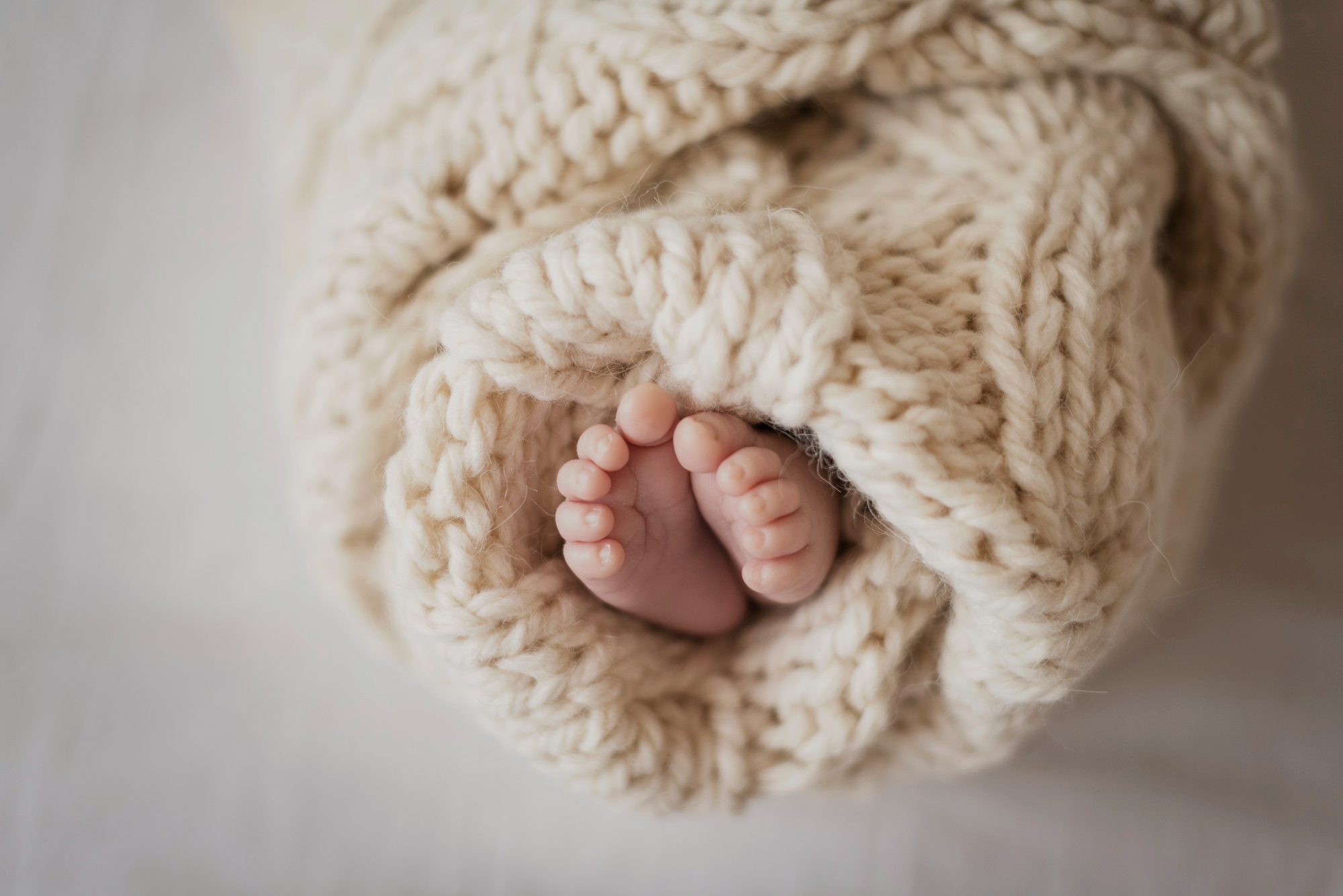
Cream wool. Small blue sailboats worked along the border. And in one corner, hidden where nobody would ever think to look unless they cared enough to go looking, a tiny pair of initials.
F.M. Frank Mercer. My husband. Kyle’s father. The grandfather that baby would never get to meet.
The same blanket Madison had held above a trash can in front of twenty people and let go of like it was used wrapping paper.
She had laughed when she said it. Not loudly. Not meanly enough that anyone in the room could have called it cruel without seeming oversensitive themselves. Just that light, polished little laugh people use when they want an insult to sound like a joke, so that anyone who objects becomes the one who ruined the mood.
A few of the guests laughed along with her. My son did not.
But he did not stop her either.
That was the part I could not stop seeing after I got home. Not Madison’s manicured hand opening above the can. Not the blanket dropping onto torn gold tissue paper and a smear of frosting from someone’s discarded plate. Not even Gail, Madison’s mother, beaming as though her daughter had just done something charming and quotable.
What I kept seeing was Kyle over by the wall, holding a glass of iced tea he had not touched, his face going white, his mouth opening once and then closing.
My boy had always been gentle. Too gentle, sometimes. He had spent his whole life stepping around conflict the way you step around broken glass in bare feet. When he was small I called it kindness. Frank called it choosing easy, and he never said it cruelly, because Frank loved that boy more than he loved breathing, but Frank saw things clearly. He usually did. I saw it too, eventually, though it took me longer, the way it does with your own children.
Still. I had not expected my son to stand against a wall and watch his wife throw away something I had made with hands that no longer work right.
I am sixty eight years old. For forty years I ran Mercer’s Alterations on Bell Street in Cedar Ridge, Ohio, in a narrow shop between the post office and a hardware store that still sells bait worms out of a refrigerator by the register. I hemmed wedding gowns and let out funeral suits. I fixed prom dresses at eleven o’clock at night for girls whose mothers were working doubles. I patched choir robes for three different churches and sewed name tags into Little League jerseys for boys who swore up and down they would never lose them and lost them anyway.
My hands used to be known in that town. People would say, take it to Darlene, she’ll fix it.
Now the arthritis has made them stubborn. Some mornings I have to run warm water over my fingers in the sink before they will close around a coffee mug. I do not say that for pity. I say it because that blanket was not something I made with idle hands in front of the television.
That blanket cost me.
Every row took time, and some nights it took real pain, the kind that makes you set the needles down in your lap and wait for your hands to come back to you. And some nights I put them down and cried, not because of the ache, but because Frank was not sitting across from me in his recliner, pretending to watch the news while quietly checking my progress out of the corner of his eye the way he had done for forty three years.
Frank died ten months before that shower.
He lived just long enough to know that Kyle and Madison were expecting. Barely. When Kyle brought over the ultrasound photograph, Frank held it in both hands and stared at that grainy little shape like somebody had handed him a window into heaven.
“Well,” he said, and his voice came out rough. “Look at that.”
He tried to smile at me, but I saw the tears first.
Frank had wanted to be a grandfather more than he ever let on. He had it all planned in his head. Fishing trips out to Miller’s Pond. Saturday pancakes with too much syrup. Terrible jokes told with a completely straight face. The old wooden train set he had kept boxed in our attic since Kyle was six years old, waiting, because Frank was not a man who threw things away and he was not a man who asked life for very much either.
But he had been waiting for that child. And, as I found out at the end, he had been preparing for a lot longer than any of us knew.
A week before he passed, he asked me to bring him the old cigar box from the top shelf of our closet.
I had seen that box for years and never once opened it. I assumed it held receipts or old coins or the sort of things men keep because throwing them out feels like disrespecting their own memories. Frank’s hands were too weak by then to work the lid, so I opened it for him, sitting on the edge of the hospital bed we had set up in the living room where he could see the yard.
What was inside made me sit down hard.
He looked almost embarrassed. Shy, even, at seventy one years old and eight days from the end. “Don’t make a fuss, Dar,” he said.
But how could I not.
That box held years. Not money, not exactly, though there was money in it. It held years. Patience. Small, quiet, unrecorded sacrifice. Proof that my husband had been thinking about a grandchild long before there was any grandchild to think about.
Then he told me what he wanted done with it, and he made me lean in close because his voice had gotten so thin.
“Make something,” he whispered. “Something from you. Hide it inside. Make them open it. Make it last.”
So I made the blanket.
I chose cream wool because it was soft and clean and would go with anything. I knitted the blue sailboats around the border because Frank loved the water more than he loved almost anything on land. And in one corner I worked his initials so small that only someone who cared enough to look closely would ever find them.
Then I wrapped it in plain cream paper, tied it with a blue ribbon, and carried it to Gail’s house in the good part of the suburbs for Madison’s baby shower.
The place looked like a magazine spread. White flowers, beige balloons, gold lettering on everything. A dessert table nobody wanted to touch because it had clearly been arranged to be photographed rather than eaten. A little American flag standing in a ceramic pot by the front steps, the kind of quiet neighborhood detail Frank would have noticed and nodded at without a word.
Madison sat under a balloon arch while her friend Brooke filmed every single gift for social media, narrating each one in a bright voice.
A designer diaper bag. A cashmere layette set. An imported stroller that cost more than my first car. Every box had a brand name on it, and every brand name got its moment of admiration.
Then Madison opened mine.
For one second, I thought the room softened. There was a small sound, a couple of women saying oh.
Then her smile changed. It did not disappear. It changed, the way a smile does when a person has decided something.
“Oh,” she said. “It’s handmade.”
I started to get up out of my chair. “There’s something special about the seam,” I said. “If you look at the—”
But she was already turning toward Brooke’s phone.
“That’s sweet,” Madison said, to the camera, not to me. “Very homemade.”
Then she stood up, carried it the four steps to the trash can by the dessert table, held it out over the opening, and smiled.
“We only use designer things here.”
And she let it fall.
I got up. I walked across that room in complete silence with twenty people watching. I reached into the trash can and took my blanket back out and shook the tissue paper off it. I folded it, the way I have folded ten thousand things in forty years, into a neat square with the corners squared. I put it in my bag.
And then I said thank you to Gail for having me, and I got my coat, and I left without arguing.
I did not cry in the car. I want that on the record. I cried later, at my own kitchen table, but I did not give them that.
Hours later, Kyle called me from his car. I could hear the engine idling.
“Mom,” he whispered. “Please tell me you still have the blanket.”
“I have it,” I said.
He let out a breath like a man who had come up from underwater.
Then he asked the question.
“Mom. What was folded inside that blanket?”
I looked down at the tiny hidden seam along the inside of the border, the one I had closed with a slip stitch so fine that even I had trouble finding it now.
And I understood, finally, that Madison had not thrown away a blanket.
“How did you know there was something in it?” I asked him.
There was a long pause. When he spoke again his voice had gone unsteady.
“Because Dad told me. Two weeks before he died. I came by while you were at the pharmacy and he told me you were making something and that when the baby came, I should open the seam.” He made a broken sound. “Mom, I forgot. I swear to God I forgot until I was lying in bed tonight and it came back to me all at once. He said, when the baby comes, look inside the seam. And I stood there today and I watched her put it in the garbage.”
So I told him.
Inside that seam, stitched between two layers of cream wool, was a savings bond, an envelope, and a folded letter.
The savings bond had been purchased in 1989. Frank bought it four years before Kyle was born, when we were newly married and had almost nothing, and he bought it because his own father had died without leaving him a dime and he had decided that no child of his would ever start from zero. He renewed it and added to it, quietly, for thirty five years, out of a paycheck that was never large. He had been putting money into that box for a grandchild before he even had a child.
The envelope held cash. Not an enormous amount. Eleven thousand, four hundred dollars, in bills of every denomination, some of them so old and soft they felt like cloth. Every one of those bills came from a jar in our garage that Frank called the pond money. When he did a side job, wiring somebody’s garage or fixing a neighbor’s water heater on a Saturday, he took a portion and put it in that jar. For forty years I thought he was saving for a fishing boat. I used to tease him about it. He would say, one of these days, Dar.
He never bought the boat.
The letter was two pages, in his slanted, half legible handwriting, and it was addressed to a grandchild he never met.
“He wrote it in October,” I told Kyle, “when he still had steady hands. He starts by telling the baby who he was. That’s the first page. He says, I was your grandfather, my name was Frank, I fixed things for a living and I was not very good with words. Then he says he’s sorry he won’t get to meet them, and that he hopes somebody tells them he was looking forward to it.”
Kyle was crying openly by then. I could hear him trying not to.
“The second page is for you,” I said.
“What does it say?”
I had it memorized by then. I had read it more times than was probably good for me.
“It says, Kyle, be braver than I was. I let a lot of things go that I should have said out loud. Do not let people be small around the ones you love. Speak up while there’s time to. And then he says, take the money, buy something that lasts, and take my grandchild fishing for me.”
There was a very long silence on that phone line.
When Kyle spoke again, his voice had changed. It was still wrecked, but something underneath it had gone hard in a way I had never heard from my son in thirty one years.
“She threw away my father’s letter,” he said. “She threw away his letter and thirty five years of his savings and she did it for a phone video.”
“She didn’t know that,” I said, because it was true, and because even then some tired old instinct in me wanted to make it easier for everyone. “She didn’t know what was in it, Kyle.”
“That’s not the point, Mom.” And then he said the thing that I think saved us, the thing I had waited his whole adult life to hear him understand. “She didn’t know what was in it. She threw it away because you made it. Because you’re the one who made it. That’s worse.”
He came over that night. It was after eleven. He sat at my kitchen table under Frank’s honest little stove light with the blanket in front of him, and I got my seam ripper, and I sat down next to him and opened four inches of stitching I had spent an hour closing.
I laid it out on the table. The bond. The envelope. The letter.
He read the letter twice. The second time, he read it out loud, and his voice broke on the line about being braver, and he put his head down on my kitchen table and cried the way he had not cried at his father’s funeral, where he had been busy being strong for everybody.
Then he sat up and wiped his face with the back of his hand and said, “I stood against the wall.”
“You did.”
“You saw me.”
“I did.”
“Why didn’t you say anything, Mom? To her, to any of them, why did you just take it out of the trash and leave?”
I thought about that for a while before I answered him, because it deserved a real answer.
“Because arguing with a woman like Madison in front of an audience is a game she wins,” I said. “Not because she’s right. Because she’s the one who chose the field. If I’d shouted, I’d have been the difficult mother in law who made a scene at a baby shower, and that’s the story people would’ve told for ten years. My blanket would’ve become a punchline.” I put my hand over his. “And because, honey, I wasn’t there for Madison. I was there for you. And you already knew it was wrong. I could see it on your face from across the room. There wasn’t one thing I could say to you that you weren’t already saying to yourself.”
He looked at me for a long moment.
“That’s worse,” he said. “That’s so much worse than if you’d yelled at me.”
“I know,” I said. “Your father used to do the same thing to me.”
Here is what happened after, and I am going to tell it plainly, because a good ending is not the same as a tidy one.
Kyle went home that night and had the first real fight of his marriage. Not the first argument, they had plenty of those. The first fight where he did not fold.
He told me later that Madison’s initial reaction, when he explained what had been inside, was not horror. It was defensiveness. She said he was making her feel like a monster over a misunderstanding. She said she would not have done it if she had known. She said, and this is the part Kyle repeated to me twice because it had lodged in him like a splinter, “Well, why didn’t she just say something?”
I had tried to. There’s something special about the seam. She had turned toward the camera before I finished the sentence.
But I want to be fair, because I have had a long time to think about all of this and being unfair would make me smaller than I want to be at sixty eight.
Madison came to my house eleven days later. Alone. Seven months pregnant, standing on my porch in the cold, and I could see from the way she was holding her purse strap that she had rehearsed something in the car.
She did not get through the rehearsed part.
What came out instead, sitting at that same kitchen table, was a mess. She said she was sorry. Then she said she did not know how to be sorry in a way that would count. Then she said something that surprised me so much I had to put my cup down.
She said, “My mother has spent my whole life telling me what things say about a person. What car says. What handbag says. What street says. And I have never once in twenty eight years been in a room where I wasn’t being measured. And I know that’s not an excuse.”
“No,” I said. “It isn’t.”
“I know.” She looked at her hands. “But I was so tired that day, and everybody was filming, and your gift was the only thing in that whole pile that wasn’t a brand, and I panicked. I looked at it and I thought, everyone’s going to see this and know we’re the kind of people who get handmade things. And I made it a joke before anyone else could.” Then she started crying. “And I threw away his letter.”
We sat there for a while.
I would like to tell you I forgave her on the spot. I did not. What I said was, “I’m not ready to say it’s all right, because it isn’t. But I appreciate you driving over here and I appreciate you telling the truth instead of the speech you practiced in the car.”
She laughed a little at that, wetly, and said, “How did you know?”
“Honey, I altered wedding dresses for forty years. I know a rehearsed woman when one walks in my door.”
It was not fixed that day. It took a long time, and there were setbacks, and there was a period around the birth when things were bad again because Gail got involved and Gail has never in her life apologized for anything.
But the boy was born in March. They named him Frank Mercer Bell. Kyle told me that one was not a discussion, it was a statement, and he made it in the hospital before anyone could suggest a family name from Madison’s side.
Kyle did not take the money and buy something that lasts, not the way Frank probably meant it. He and Madison talked about it for weeks. And then they used part of it to buy a used sixteen foot aluminum fishing boat with a small outboard motor and a trailer that needs work, and they put the rest in an account for the boy, and Kyle keeps the boat in my driveway because their HOA does not allow it, which I find funny in a way I try not to say out loud.
The blanket is in the nursery. Not in a frame, not on a shelf. On the crib, being used, going through the wash, the way a blanket should be. I closed the seam back up myself. It took me two hours with these hands, and I made the stitches deliberately visible this time, a small ridge of cream thread you can feel if you run your thumb along it, so that boy will grow up knowing there is a place where something was hidden and given back.
The letter is in a frame, in the hallway between the nursery and their bedroom. That was Madison’s idea. I did not ask her to do it.
Little Frank is two now. He came out to Miller’s Pond with his father and me in June, in the aluminum boat, wearing a life jacket that swallowed him whole. He caught nothing. He fell asleep sitting up with his cheek against his father’s arm about forty minutes in, and Kyle sat very still for an hour so as not to wake him, exactly the way his own father used to sit.
I looked at the two of them, and at the water, and I thought about a man putting bills in a jar in a garage for forty years and telling his wife it was for a boat.
He got the boat. It just took a while, and he was not in it, and I have decided that is not the same thing as him missing it.
Madison and I are not close. I want to be honest about that, because I think stories like this always want to end with everyone laughing around a table, and that is not what happened. We are cordial. We are careful with each other. She calls on Sundays, which she did not used to do, and she has never once since that day made a remark about anything I have made with my hands, and last Christmas she asked me, quietly and with no camera anywhere, whether I would teach her to knit.
I said yes. She is terrible at it. Her tension is all over the place and she gets frustrated and puts it down. But she picks it back up, and that counts for more than being good at it.
Sometimes I think about that afternoon at the shower and I wonder what would have happened if I had said something. If I had stood up under that balloon arch and told twenty people exactly what was folded into the seam of that blanket.
Madison would have been humiliated. Gail would have been horrified. Brooke’s video would have gone somewhere terrible. And Kyle would have been rescued, again, from having to feel the full weight of standing against a wall while his wife threw away his mother’s work.
He needed to feel that weight. He had been choosing easy his whole life, the way his father said. And it took a trash can and a phone call at eleven at night and two pages of his dead father’s handwriting to make him stop.
So no. I do not regret walking out quietly.
Frank told me once, years ago, when I was upset about something a customer had said to me in the shop, that the loudest person in a room is almost never the strongest one in it. He said, you don’t have to win the afternoon, Dar. You just have to still be standing at the end of the year.
I am still standing. My hands are worse than they were. I have started a second blanket anyway, smaller, in green, because there is another baby coming in the fall.
There will be something in the seam of that one too.
I have not decided what yet. But I know where I will hide it, and I know who will think to look.

Ethan Blake is a skilled Creative Content Specialist with a talent for crafting engaging and thought-provoking narratives. With a strong background in storytelling and digital content creation, Ethan brings a unique perspective to his role at TheArchivists, where he curates and produces captivating content for a global audience.
Ethan holds a degree in Communications from Zurich University, where he developed his expertise in storytelling, media strategy, and audience engagement. Known for his ability to blend creativity with analytical precision, he excels at creating content that not only entertains but also connects deeply with readers.
At TheArchivists, Ethan specializes in uncovering compelling stories that reflect a wide range of human experiences. His work is celebrated for its authenticity, creativity, and ability to spark meaningful conversations, earning him recognition among peers and readers alike.
Passionate about the art of storytelling, Ethan enjoys exploring themes of culture, history, and personal growth, aiming to inspire and inform with every piece he creates. Dedicated to making a lasting impact, Ethan continues to push boundaries in the ever-evolving world of digital content.