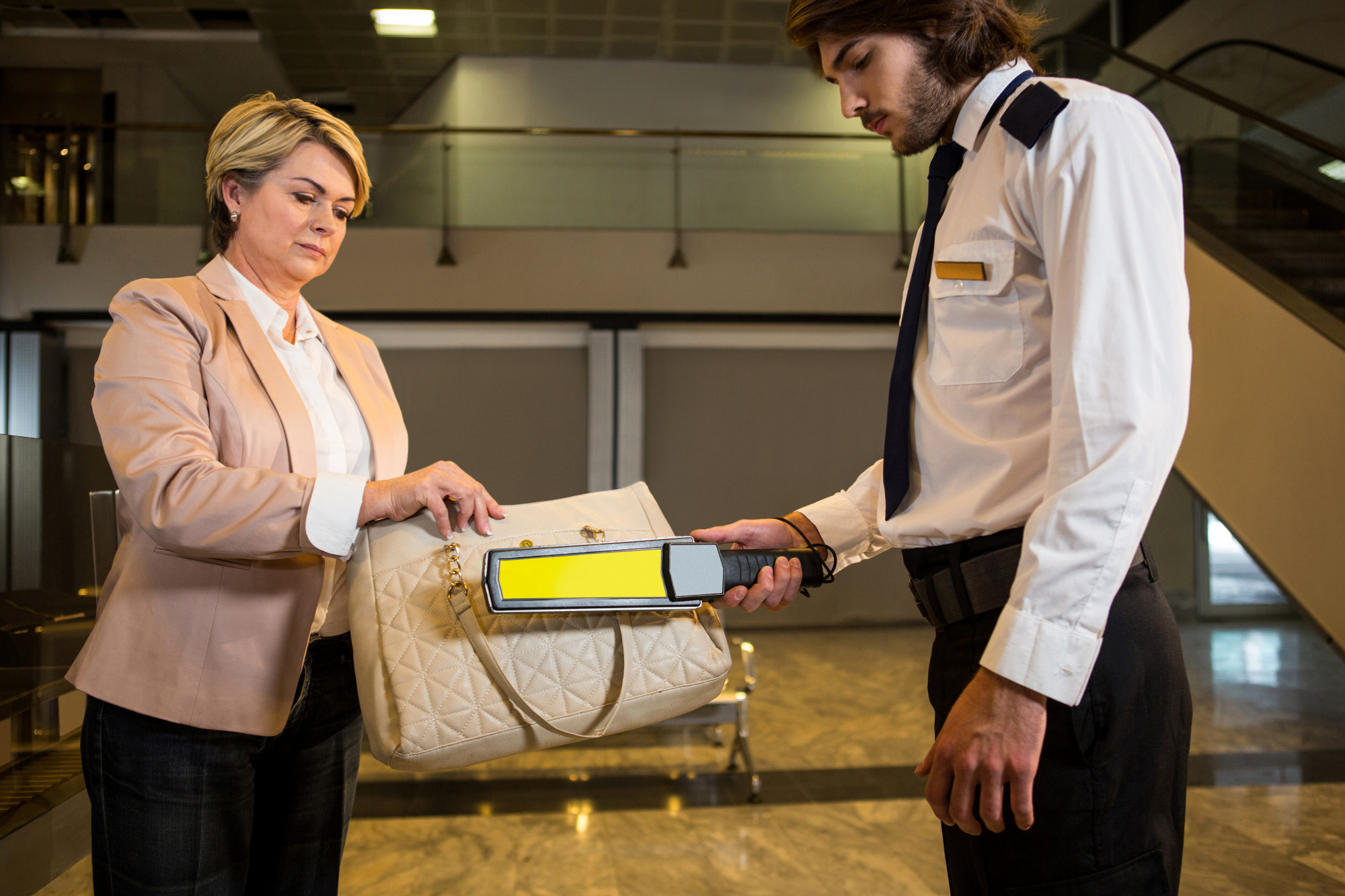
My husband smiled when the K9 lunged toward our luggage. It wasn’t a large smile. Grant Harper was far too controlled for that. It was only a slight upward pull at one corner of his mouth, the kind of expression most people would miss unless they had spent eighteen years watching him charm investors, lie to colleagues, and look directly into their eyes while telling them they were imagining things. But I saw it. I saw the flicker of anticipation across his face, the pulse jumping inside his jaw, and the way his hand tightened around the handle of his carry on as the German shepherd moved closer to the conveyor belt.
He believed I was about to be destroyed in front of everyone. He believed airport security was about to tear open my suitcase, discover the locked metal case he had hidden inside, and hand him the ending he had been planning for months. Me in handcuffs. Him grieving in public. His mistress free to step into my life while I disappeared behind a steel door somewhere far from home. What Grant didn’t know was that I had already changed the script. By the time the dog reached the conveyor belt, the locked case was no longer inside my suitcase. It was inside his mistress’s bag.
The first thing I noticed when we entered the premium security line at O’Hare was the smell of roasted coffee and floor polish. It was 6:40 in the morning, and the terminal glowed beneath that cold, expensive light that makes everyone look either exhausted or dishonest. In Grant’s case, it was both.
I stood beside him holding a paper cup of vanilla latte, my black cashmere coat folded over one arm, and watched him glance at my suitcase for the fifth time in less than two minutes. Relax, he said too casually. We’re ahead of schedule. His voice was warm, almost playful. To anyone else, he looked like a successful husband taking his wife on a luxury vacation. At forty nine, Grant still knew how to wear concern like a custom suit. He had silver beginning at his temples, broad shoulders, a polished executive smile, and the kind of effortless confidence that made strangers trust him inside elevators. It had once made me trust him too.
I took a slow sip of coffee and smiled back. I’m perfectly relaxed. Good. He leaned toward me and kissed my temple. That’s all I want this weekend, Eve. No stress. Just you and me. You and me. And apparently Layla Bennett, wearing a cream wool trench coat and six hundred dollars worth of highlights, standing ten feet behind us and pretending she wasn’t booked on the same flight.
Layla lifted one hand in a bright little wave when our eyes met, then immediately looked embarrassed by her own boldness. She had perfected that expression during the previous year. Half innocent. Half flirtatious. Entirely performed. At thirty one, she had mastered the art of looking expensive without ever appearing to try.
Grant had introduced her to me two years earlier at a company Christmas party as his new executive assistant. She had shaken my hand with both of hers and told me how much she admired my work. Three months later, she was sending Grant messages after midnight. Six months after that, she was wearing earrings that cost more than my first car. Now she was flying to London on the same itinerary as the romantic trip my husband had supposedly arranged to save our marriage.
Grant told me Layla needed to deliver confidential financial projections to a board member during our layover before taking a separate return flight to Chicago. He said it with a straight face, as though encrypted email didn’t exist. At the time, I smiled and told him I understood. I hadn’t understood. I had calculated.
Go ahead and put your bag up first, Grant said, resting one hand against the small of my back. Then I’ll place mine behind it. There it was again. The urgency beneath the softness. He wanted my suitcase on that belt, separated from the others just enough to be clearly identified as mine when the alarm went off.
I placed my Briggs and Riley carry on carefully on the belt beside Grant’s garment bag. Layla stepped behind us and placed her cream leather weekender on the belt too. The line moved forward. Then the atmosphere shifted. A customs officer entered our lane with a German shepherd beside him, lean and focused, black and tan coat gleaming beneath the fluorescent lights. The moment I saw it, I felt Grant become still beside me. Not visibly still. He wasn’t careless enough for that. But I felt it in the tightening of his body, the pause in his breathing, and the way excitement sharpened the air around him.
The previous night, at around two in the morning, I had watched him slide out of bed and stand over my suitcase inside the darkness. I kept my breathing steady and my eyes barely open beneath lowered lashes as he knelt on the bedroom rug and unzipped the inner lining. He used a utility knife to cut a clean slit through the fabric, then slid a small locked metal case into the frame of the luggage with careful, practiced hands. He smoothed the lining back into place, zipped the compartment, and patted the suitcase once like a man sealing a deal. Then he returned to bed and slept beautifully. What he didn’t know was that I got up twenty minutes later, removed the case, opened it inside my home office, and discovered exactly what kind of husband I had married.
Evelyn, Grant’s voice sounded light and affectionate. You okay? I turned toward him with a pleasant smile. Of course. The K9 began moving down the line, sniffing roller bags and briefcases. My suitcase disappeared into the X ray tunnel. Grant watched it so intently that I was surprised the officers didn’t notice. I stepped through the body scanner, raised my arms, and waited. No alarm sounded. My suitcase rolled out first. The TSA officer glanced at the monitor, then at the bag, and waved it through without a second look. I reached for the handle and lifted it from the rollers. Beside me, Grant stopped breathing. The instant confusion. The flash of disbelief. He stared at the suitcase in my hand as though looking at a ghost. The case was supposed to be inside it.
Then the German shepherd walked directly past me. It ignored Grant’s garment bag, ignored the passenger ahead of us, and walked straight toward Layla’s cream leather weekender and sat down firmly beside it. Positive alert, the handler said. Layla blinked. Excuse me? Two officers moved in from the adjacent lane. There must be some mistake, she said, giving a brittle laugh, looking toward Grant. That’s my bag. Grant didn’t move. He stared at Layla’s bag the way a man looks at a burning building when he knows exactly what is inside.
Three months earlier, on a rainy Tuesday in October, I had stood inside my kitchen staring at a charge for nine hundred eighty four dollars at a boutique hotel downtown and trying to decide whether I was married to a liar or slowly becoming one of those women who invent betrayal because they cannot tolerate ordinary disappointment. The hotel wasn’t one Grant used for work. It was intimate, expensive, discreet.
Grant walked in from work that evening carrying the cold, wet smell of the city. Something smells amazing, he said. Chicken Parmesan. He kissed my cheek. You spoil me. I picked up my phone and turned the screen toward him. What is this charge? He glanced down, only once, not long enough for an innocent man trying to remember a transaction. What charge? The Langford House. Nine hundred eighty four dollars this afternoon. That isn’t possible. It’s on the statement. That’s strange. So you weren’t there? No. I was inside a budget review from noon until five. Ask anyone.
He leaned both palms against the island and looked at me with a kind of patient concern that tightened my skin. You’ve had a brutal month, he said softly. You’re exhausted, Ev. You’re not thinking clearly. At the time, it was only one sentence. I didn’t know it would become the refrain of that winter. That night, after he fell asleep, I checked the statement again. The charge was gone. Not pending. Not reversed. Gone.
I had spent twenty years untangling corporate fraud, tracing hidden assets through shell accounts. I did not misread financial records. Still, during the following weeks, Grant made me question things I had never questioned before. He changed his phone passcode after sixteen years of using the same one. He began showering the moment he returned home. There was warm floral perfume on his jacket, a scent that wasn’t mine. You’re exhausted, he would say. You’re not thinking clearly. The phrase became his favorite instrument.
The thing that finally awakened me wasn’t romantic. It was a receipt inside the pocket of his charcoal suit. I found it on a Sunday morning while sorting dry cleaning. Grant was inside the shower. I reached into the breast pocket and pulled out a folded receipt from Bellamy Jewelers on Oak Street. A charge for fourteen thousand six hundred dollars. One diamond bracelet, custom setting, gift wrapped. My birthday had been in August. Our anniversary was in June. Christmas was still weeks away.
When Grant came downstairs, I was sitting with the receipt lying flat on the table between us. What’s that? You tell me. He glanced down and smiled in disbelief. Oh, that. That? It’s a corporate gift, he said. One of our investors recently closed a major deal. His wife had a birthday. Bellamy wraps investor gifts now.
I held his gaze. Would you like to try again? He leaned back and crossed his arms. What exactly are you accusing me of? I’m asking why you purchased a fourteen thousand dollar bracelet and hid the receipt inside your suit. You weren’t supposed to search my pockets. Evelyn, he said quietly, I’m worried about you. I think you’re spiraling.
That afternoon, while he watched football, I sat inside my office with the receipt beneath my desk lamp and searched for Bellamy Jewelers. I found a photograph from a fundraising event three weeks earlier. Grant stood near the back of the frame wearing a tuxedo, smiling down at a blonde woman in a black silk dress. Layla Bennett was wearing a diamond bracelet I had never seen before. By midnight, I was no longer looking at an affair. I was looking at a cover up.
I work inside forensic compliance. My job is to examine numbers people are desperate to hide and question them until they begin bleeding. I began with patterns. Grant’s schedule developed strange pockets of vagueness. I created a timeline inside a spreadsheet. The inconsistencies appeared faster than expected. Then the numbers became stranger. Consulting payments routed toward a business called Norell Advisory Group. Fifteen thousand dollars here, twenty two thousand there, always below the threshold that triggered an automatic internal review. Norell had no website, no employee page. Its registered address belonged to a postal store in Naperville. The manager listed was L. Bennett.
By the end of that night, I had found three more entities connected to the same mailbox, all receiving recurring payments approved through one executive authorization. Grant Harper. Affairs are humiliating. Fraud is something different. Fraud has structure. Fraud has appetite.
I met my oldest friend Dana, a trauma nurse with dry humor, for coffee. Let me make certain I understand, she said. Your husband is cheating with his assistant, stealing from his employer, and now wants to take you overseas. Yes. This isn’t only cheating, Evelyn. This is setup behavior. I’m going to let him make his move, I said. That sounds like something people say moments before they end up featured on a crime program.
The night before our flight, I packed the exact version of myself Grant expected. Silk blouses, cashmere, the passport holder he gave me for our tenth anniversary. My girl, he said, kissing my forehead. Try to sleep tonight. You’ve looked worn out all week.
At 2:11 that night, Grant moved. I kept my breathing slow and steady. The mattress shifted as he slipped from the bed. Not the bathroom. The suitcase. I heard the delicate scrape of a utility blade cutting through fabric. He was slicing into the suitcase lining. My husband wasn’t improvising. He had done something like this before, or had rehearsed it thoroughly enough that his hands moved without hesitation.
I waited twenty minutes after his breathing deepened, then carried the suitcase into my home office and locked the door. I peeled the lining back and reached inside. My fingers closed around cold metal. The case was smaller than expected, matte gunmetal gray, with a biometric latch plate and a backup key slot. No logo. No label. I used a thin tension wrench, two picks, and the same patience I once used to open a locked filing cabinet during a fraud investigation. It took twelve minutes.
Inside were two items. A vacuum sealed pouch containing several smaller packets of white powder, professionally wrapped. And a slim black flash drive. What I found on that drive was so methodical and cruelly complete that I had to press my palm against the desk to keep from standing and screaming. Dozens of spreadsheets showing transfers from Halcyon accounts into shell vendors I had already identified. Internal memoranda, false authorization trails, expense approvals bearing digital signatures resembling mine. My name appeared on draft consulting agreements I had never seen. There was even a scanned note written in a font intended to imitate my handwriting, discussing temporary asset concealment.
Grant wasn’t merely planning to have me detained at an airport. He intended to hand investigators a complete narrative in which I was the architect. The contraband would make me dangerous. The flash drive would make me guilty.
I copied everything onto an encrypted external backup and uploaded it to a secure cloud folder. I sent a time stamped evidence package to Dana with a subject line reading, if anything happens to me, open this immediately. Calling the police at that moment would have been emotionally satisfying and strategically foolish. Grant would deny everything and claim I had been unstable for months. If I wanted the truth to survive him, I needed him surprised.
By dawn, I had resealed the case, repaired the suitcase lining well enough to survive a quick inspection, and repacked everything exactly as Grant expected. Then I placed the metal case inside a garment sleeve in my closet and returned to bed beside my sleeping husband. Layla had insisted upon joining us at the airport hotel before the flight, which meant luggage would be clustered inside the same suite. Grant had chosen proximity because he believed it gave him control. What it gave me was access. By the time we reached the airport, the locked case was no longer inside my suitcase. It was waiting inside Layla Bennett’s cream leather weekender.
The officer reached into the side compartment of Layla’s bag and frowned. Sir, I need another table. He lifted out the case with both hands. Matte gray. Heavy. Grant’s face emptied. Not merely turned pale. Emptied. Every practiced expression he had ever worn fell away at once. He knew the case. He knew exactly how it had arrived there.
A man wearing a dark security blazer entered the lane, scanned the scene, and changed direction toward us. Marcus Reed, six foot two, broad shouldered, who now worked inside federal airport security investigations. He was also married to Dana. Mrs. Harper, he said. Marcus. You all right? Yes, I said. At the moment.
The case was opened under controlled inspection. The vacuum sealed packets came out first. Layla made a choking sound. Then the flash drive appeared beneath the packets inside the foam lining. I watched the exact second Grant realized the problem had become terminal.
Grant, please, Layla said, tell them it isn’t mine. He stared at her with open contempt. I don’t know what you packed. I told you to handle your own luggage. She shook her head, tears gathering too quickly. Oh my God, Grant.
Marcus looked at the drive and then toward me. Mrs. Harper, do you know anything about this case? I removed my hands from my coat pockets. Yes. Grant became completely still. Continue, Marcus said.
That case was inside my suitcase last night, I said. I watched my husband hide it there at approximately two in the morning. He cut into the lining and placed it inside the frame. I removed it after he fell asleep. I opened it inside my home office. I copied the flash drive, photographed the case, photographed the damage to my suitcase, and sent the evidence to a secure account.
I kept my voice calm. The drive contains financial records connected to Halcyon Biotech. Shell vendors, false consulting agreements, forged approvals, and documents designed to frame me as the person moving money. I looked toward Layla. Several vendors route through entities connected to Ms. Bennett.
Grant found his voice. This is insane. No, I said quietly. It is organized. He stepped toward me, all polish gone. You expect anyone to believe I planted narcotics inside my wife’s luggage? I expect them to believe what your records demonstrate. He laughed once, harsh and disbelieving. She has been paranoid for months, he told Marcus. She is obsessed.
You’re exhausted, Ev, I said. He stopped. I stepped slightly closer, just enough that he had to hear me over the conveyor belts and distant boarding announcements. You’re not thinking clearly. His face changed. Not rage this time. Recognition. The sick, helpless recognition of a man realizing that the sentence he used to diminish me had become evidence of the entire structure behind him.
Layla began crying fully, mascara streaking down her face. Grant, please tell them I didn’t know about any of this. He didn’t even look at her. The agents separated them within minutes. Marcus requested secondary interviews and a digital hold. Halcyon’s name triggered interest inside the right offices once I provided the vendor names I had traced and the time stamped evidence already preserved.
Grant attempted twice to regain control, first demanding an attorney, then telling an agent I was experiencing a mental health episode. Neither attempt succeeded. When officers finally escorted him away, he turned once and looked back toward me. I expected fury. What I saw was disbelief so profound that it almost made him look young. He truly hadn’t believed I would fight this way.
Marcus returned after a while carrying a paper cup of water. You all right? I accepted the cup. I will be. That was one hell of a morning. Yes, I said. It truly was.
I should tell you what came after, because the airport was only the beginning of a much longer unwinding. The federal investigation into Halcyon Biotech expanded within weeks, drawing in the SEC alongside the DEA once the narcotics connection surfaced formally in the case files. Grant’s attorneys tried, predictably, to paint me as an unstable spouse who had orchestrated an elaborate revenge scheme, but the digital forensics told a different story than the one he had spent months rehearsing. Metadata does not lie the way people do. The flash drive’s creation dates, the document editing histories, the IP addresses tied to every falsified signature, all of it traced back cleanly to devices registered in Grant’s name and accessed from his office at Halcyon. The narrative he had built to frame me collapsed under the same forensic scrutiny he had once relied on other people never applying to him.
Layla, it turned out, knew considerably more than her tears at the checkpoint suggested. Investigators found her name on three of the shell entities as an authorized signatory, not merely a passive beneficiary of Grant’s affection. She eventually accepted a plea agreement in exchange for cooperating fully, providing testimony about the vendor structure and the timeline of the fraud that helped prosecutors build an airtight case against Grant. I do not know what became of her beyond that. I did not particularly want to know. Some people you simply let recede into the noise of a life you are actively trying to rebuild.
Grant was indicted eight months later on charges including wire fraud, embezzlement, forgery, and attempted possession with intent to distribute, the last charge stemming from the packets recovered inside that gunmetal case. His attorneys negotiated a plea deal that spared him the maximum sentence but still left him facing years in federal prison, along with a restitution order that consumed nearly everything we had built together over eighteen years of marriage. The divorce, once it finally moved through the courts, was almost anticlimactic by comparison. There was very little left to divide once the restitution judgments were satisfied, and I found I did not particularly mourn the house, the cars, or the accounts we had shared. I mourned, instead, the version of myself who had spent months doubting her own memory because a man she trusted told her, gently and repeatedly, that she was too tired to think clearly.
I kept my career. Forensic compliance work, it turns out, does not much care about the personal scandals of the people who practice it, provided their own hands stay clean, and mine had never been anything but. If anything, the story that eventually made its way through certain professional circles, quietly, the way these things do, only reinforced what colleagues already suspected about me. That I noticed things. That I did not let go of a thread once I started pulling it.
Dana asked me once, months after everything settled, whether I regretted not simply confronting Grant the moment I found that hotel receipt, whether a full year of careful documentation and quiet surveillance had been worth the toll it clearly took on me during those months of doubting my own sanity. I thought about it for a long time before answering. I told her that if I had confronted him immediately, with nothing but suspicion and a canceled charge, he would have talked his way free of it within the hour, the way he had talked his way free of every uncomfortable question for two decades. I needed the whole structure laid bare before I said a single accusing word out loud, because Grant Harper was a man who had spent his entire adult life rehearsing how to survive being caught. The only way to actually catch him was to make sure that when the moment finally came, there was nothing left for him to talk his way around.
I still think, sometimes, about that instant at the checkpoint when I said his own words back to him. You’re exhausted, Ev. You’re not thinking clearly. I did not plan that particular line of attack, not exactly, though I had certainly imagined some version of that reckoning during the long nights when sleep would not come. What I remember most clearly is not the satisfaction of watching his face change, though there was some of that, some ugly human satisfaction I will not pretend I didn’t feel. What I remember most is the specific, quiet relief of hearing my own voice sound completely steady while I said it. No tremor. No doubt. Just a woman finally, fully certain of what she had seen with her own eyes, standing in an airport at seven in the morning, refusing one last time to let anyone tell her otherwise.

Laura Bennett writes about complicated family dynamics, difficult conversations, and the quiet moments that change everything. Her stories focus on real-life tensions — inheritance disputes, strained marriages, loyalty tests — and the strength people find when they finally speak up. She believes the smallest decisions often carry the biggest consequences.