My mother’s text arrived at 4:18 on a Thursday afternoon, two days before my sister’s engagement dinner.
Don’t come Saturday. Harrow House has a strict headcount and everything is already confirmed. It would be easier if you sat this one out. You understand.
I was standing at the kitchen counter in my Nashville apartment with a grocery bag pressed against my hip. Inside were Meyer lemons, a bunch of flat-leaf parsley, two cartons of farm eggs, and a block of butter I had bought because the fat content was better than the brand our supplier usually carried.
I read the message once. Then again. By the fourth time, the words had stopped functioning as language and become what they actually were: a door closing quietly so that nobody in the hallway would have to admit it had been shut.
There was no apology. No explanation for how a daughter and a sister had somehow become the one person who could be removed from a family dinner without discussion.
Just a logistical problem, neatly solved.
I set the phone face down and put the groceries away. The lemons went into the crisper drawer. The parsley went into a glass of cold water beside the sink. The butter went on the top shelf, where I would see it before I left for work in the morning.
People imagine exclusion as something dramatic. They picture tears, shouting, a slammed door, a glass trembling in somebody’s hand.
But when you have been excluded in small, careful ways for most of your life, it feels less like being struck and more like hearing a familiar appliance switch on in another room. You notice it. You know exactly what it is. Then you keep moving.
My name is Nora Voss. I was twenty-nine years old the afternoon my mother told me not to come to my older sister Claire’s engagement dinner.
I understood precisely what she meant.
I had been understanding for twenty-six years.
Claire was two years older than me and had always occupied the center of our family with the ease of someone who had never once had to wonder whether there was room for her. Growing up in Franklin, Tennessee, she had birthday parties with printed invitations that matched the napkins, bakery cakes decorated to fit whatever theme she had settled on that year, and photographs arranged in little albums my mother kept in the bottom drawer of the living room hutch.
For Claire’s eighth birthday, my mother rented a pony.
For her sixteenth, she hired a photographer and ordered a white sheet cake from a bakery in Brentwood because Claire said grocery-store frosting tasted cheap.
My birthdays happened at home. There was always dinner. There was usually a cake. I don’t want to make my childhood crueler than it was. My parents fed me, clothed me, paid for piano lessons until I begged to quit, and showed up whenever the school required a parent to sit in a folding chair under fluorescent lights.
But Claire was celebrated. I was maintained.
There is a difference, and children can feel it long before they can name it.
When Claire made the middle-school cheerleading squad, my mother called both grandmothers, three aunts, and the church secretary before dinner was on the table. When I won a statewide essay contest the following spring, the certificate stayed folded in the bottom of my backpack for twelve days because nobody thought to ask how the ceremony had gone.
Claire’s college acceptance letter was framed and hung in the hallway beside the family photographs. Mine ended up under a stack of grocery coupons and church bulletins on the kitchen counter until coffee spilled across one corner of it.
We were not poor. My father managed a regional insurance office and my mother worked part-time for a real estate attorney before deciding that her real talents lay in organizing charity auctions, church luncheons, and everyone else’s social calendars. There was money for beach vacations, for new living room furniture when the old set started to look tired, for matching Christmas pajamas my mother insisted on until Claire and I were old enough to find it humiliating.
The difference between what Claire received and what I received was never money.
It was attention.
Small choices repeated across eighteen years become a language. A new dress for one daughter and a hand-me-down for the other. A framed photograph. A chair pulled a little closer at the dinner table. A story told proudly to strangers at a church potluck. A name spoken with brightness. Another name spoken as an afterthought.
By the time I was twelve, I had stopped asking why.
I became quiet instead.
Quiet children are convenient. Adults call them mature, independent, low-maintenance. They rarely notice that sometimes a child becomes easy because she has stopped expecting anyone to come when she calls.
The one thing I had that nobody in my family understood was my palate.
Even when I was small, I could taste differences other people simply ignored. I knew when my mother made tomato sauce from the Romas my father grew beside the back fence and when she used the canned ones from the grocery store. I could tell whether the butter in the mashed potatoes was salted. I knew when the lemonade needed more sugar and when it actually needed more acid, which is not the same thing at all.
At eleven, I embarrassed my mother at a church supper by asking Mrs. Hollis whether she had used imitation vanilla in her pound cake.
Mrs. Hollis laughed. My mother did not.
“You don’t need to analyze everything you eat,” she told me in the car on the way home.
“I wasn’t analyzing it.”
“Then what were you doing?”
“Tasting it.”
She sighed the way she often did when I answered a question honestly.
Claire thought my interest in food was strange. My father decided I was picky. My mother treated it as one more habit I would eventually outgrow.
I never did.
The kitchen was the only room in that house where being observant felt useful. At the dinner table, noticing things could get you accused of being sensitive. In the kitchen, noticing things kept the milk from scorching and the pie crust from turning tough.
I learned to cook beside my grandmother, Ruth, who believed that most people ruined food by rushing it. She lived twenty minutes away in a brick ranch house with a screened porch and a pecan tree that dropped hard green shells across the driveway every fall.
When I was ten, she taught me to make biscuits.
“Don’t punish the dough,” she said, when I pressed down too hard.
I remember that sentence more clearly than almost any other piece of advice an adult ever gave me.
Grandma Ruth did not understand my ambitions any better than the rest of the family, but she respected competence wherever she found it. If I chopped onions evenly, she noticed and said so. If I burned something, she let me try it again without making the mistake feel like a verdict on my character.
At her house, food was not decoration. It was evidence that somebody had paid attention.
By seventeen, I knew I wanted to cook professionally. Not home baking. Not catering trays for church functions. Not decorating cupcakes on weekends while doing something practical Monday through Friday.
I wanted restaurant cooking. I wanted the discipline of it, the precision, the strange controlled panic of a busy service. I wanted the kind of work that keeps you awake at two in the morning because you have suddenly understood what a sauce was missing and you have to write it down in the dark before the thought evaporates.
During my senior year, I told my parents I wanted to apply to culinary school.
My mother responded by printing out information about pre-law programs at Vanderbilt, Belmont, and the University of Tennessee and leaving the stack on my desk.
My father looked up from his laptop and said, “Cooking’s a nice hobby, Nora, but you need something stable.”
Claire was home from college that weekend. She was nineteen and engaged to a boy she would marry and divorce before she turned twenty-five.
“You’d be on your feet all day,” she said. “Doesn’t that sound exhausting?”
“It sounds like work.”
She smiled as though I had just proven her point for her.
I applied to the Culinary Institute of America in Hyde Park without telling a single one of them.
When the acceptance letter came, I opened it sitting in my car outside a Walgreens, because I did not want my mother’s face to become part of the memory. I sat behind the wheel with the air conditioning blowing against my knees and read the first sentence three times.
Then I cried. Not because my family had doubted me. Because somewhere in New York, people who understood food had looked at what I could do and said yes.
When I finally told my parents, my mother went quiet. My father asked how much it would cost. Claire said New York winters were miserable.
Nobody framed the letter.
I kept it anyway.
Culinary school was the first place in my life where I was not the odd person at the table.
Everyone there noticed things. They argued about salt. They talked about texture the way other people talk about weather. They understood why a person might spend an entire afternoon testing the same broth six different ways just to find out which one was right.
I worked two part-time jobs and lived with four other students in an apartment where the pipes knocked all night and the kitchen light flickered whenever somebody used the microwave. We practiced on each other constantly. Tuesday nights became tasting nights. Somebody would bring home bruised fruit from work, somebody else would find a discounted cut of meat, and all five of us would crowd into that narrow kitchen trying to turn almost nothing into something worth remembering.
There was always smoke. There was always too much noise. Somebody was usually chopping onions after midnight.
I had never felt more at home anywhere.
The work was harder than I had imagined. My hands stayed cracked through the whole first winter. My forearms carried small burns in various stages of healing. I learned that talent gets you noticed once, but discipline is what makes people trust you the second time.
I also learned how little glamour there is in a professional kitchen. Clogged drains. Broken freezers. Late deliveries. Chefs with impossible standards. Nights when you spend four hours making something a stranger eats in six minutes without looking up from his phone.
I loved it anyway. I still do.
After graduation I spent months staging in New York restaurants, working unpaid in exchange for experience. I peeled vegetables and cleaned fish and scrubbed sheet pans and swept floors and learned how quickly a serious kitchen exposes arrogance.
Eventually I was hired at a French-Japanese place in the West Village under a chef named Lucien Park, who communicated almost exclusively through criticism.
“This is acceptable” was the closest he came to praise during my entire first year.
He was demanding and impatient and the best teacher I have ever had.
Lucien taught me that beautiful food is not made by making it complicated. It is made by removing every excuse. A plate cannot be almost balanced. A sauce cannot be close enough. Either the food says what you intended it to say, or it does not.
For three years I worked dinner service six nights a week.
My family knew I was in New York. They knew I worked at a restaurant. Beyond that, they showed almost no curiosity at all.
My mother asked whether I had health insurance. My father asked whether I planned to move back South eventually. Claire occasionally sent me photographs of houses she thought I would like if I ever settled down.
Nobody asked what I was learning. Nobody asked what I had cooked that week.
At first I offered the details anyway. I told my mother when Lucien let me design a special. I told my father when a food critic mentioned one of my dishes by name. I told Claire when I made junior sous-chef.
That’s nice. Good for you. Sounds busy.
Eventually I stopped handing pieces of myself to people who handled them like receipts they hadn’t asked for.
Three years later, Lucien recommended me to a friend opening a restaurant in Nashville. I took the sous-chef position because I wanted to come back to Tennessee without going back to the life I had left.
The restaurant was called Wisteria. It occupied a renovated brick building a few blocks south of downtown, with tall windows, worn pine floors, and a small courtyard out back where we grew herbs in raised beds.
The opening months were brutal. A freezer failed during our second week. One of the investors backed out three days before the first rent payment was due. We changed the menu so often that the printers started joking they should charge us rent.
We worried about payroll. We worked through storms and staffing shortages and the winter week when half of Nashville’s pipes froze solid.
But the food was good. And then it became very good.
People started making reservations weeks ahead. A local critic praised our roasted trout with smoked onion broth. A travel writer described the dining room as quietly confident, and our owner printed the phrase out and taped it above his desk.
Eighteen months after opening, the executive chef left for a hotel job in Chicago. The owners offered me the position.
At twenty-eight, I became head chef of one of the most talked-about new restaurants in Nashville.
I did not call my family.
That sounds harsher than it felt at the time. I wasn’t hiding anything. They had simply stopped asking years earlier, and I had stopped carrying my accomplishments across town to people who received them like packages that had been delivered to the wrong address.
My mother knew I worked in restaurants. That was how she put it.
Nora does something with food.
Nora works in a kitchen somewhere in Nashville.
At a family Christmas, I heard her tell a friend from church, “We keep hoping she’ll find something more stable, but you know how creative people are.”
The woman nodded sympathetically.
I was standing about ten feet away.
I could have corrected her. I could have explained that I managed twenty-eight employees, negotiated directly with farms and suppliers, designed four seasonal menus a year, tracked labor costs, trained cooks, and routinely worked seventy-hour weeks.
Instead I carried my plate into the kitchen and helped wash dishes.
Old habits are hard things to break.
The following spring, I tried one more time.
For my mother’s fifty-eighth birthday, I arranged a table at Wisteria for my parents and Claire. I planned the menu myself. I asked our pastry chef to recreate the coconut cake Grandma Ruth used to make when my mother was a child, working from what I could remember of it.
I called my aunt Linda to confirm the date worked for everyone. Then I sent my mother the reservation details.
She replied that she would check their schedules.
They never came.
She never formally canceled. The reservation simply sat there, empty, in the middle of a Saturday night.
At seven-fifteen, our host asked whether he should keep holding the table. At seven-thirty, I told him to release it.
The coconut cake went to a couple celebrating their fortieth anniversary. They sent a note back to the kitchen saying it reminded them of home.
I kept that note in my locker for months.
Claire’s second engagement happened the following September.
Her fiancé, Daniel Mercer, was a pleasant man who sold commercial real estate and coached youth soccer on Saturday mornings. He was patient, uncomplicated, and considerably kinder than her first husband had been. They had been together two years.
When Claire called to tell me she was engaged, she sounded cheerful but distracted.
“We’re having a dinner at Harrow House next Saturday,” she said. “I wanted to let you know so you wouldn’t accidentally make other plans.”
I waited.
She did not say she wanted me there.
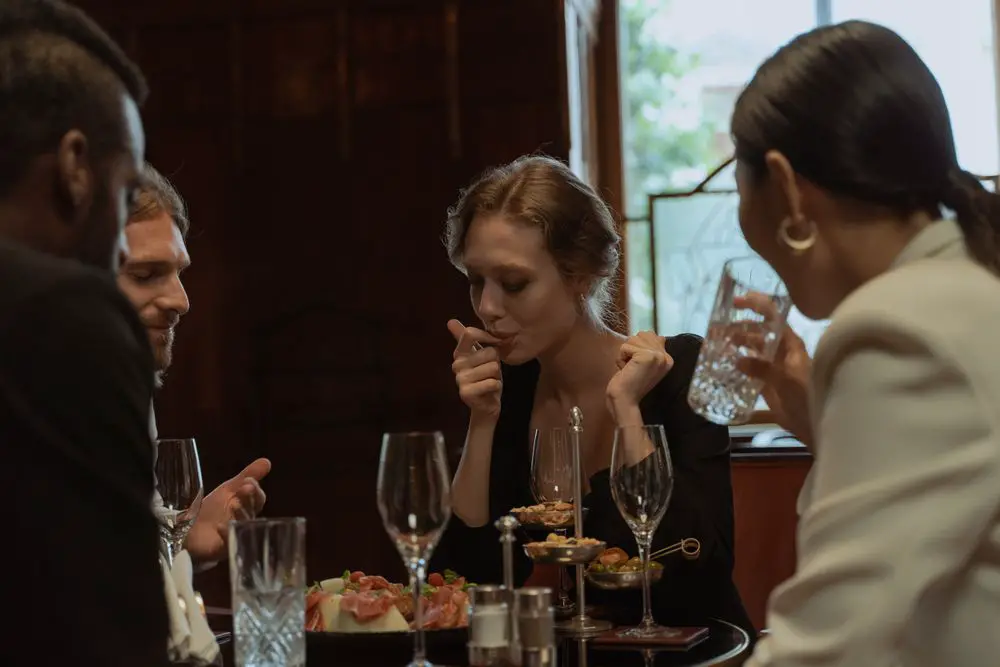
Harrow House was one of the more expensive restaurants in Franklin, about forty minutes from Nashville. It occupied an old Southern home with white columns and polished floors and a deep front porch. It was the kind of place where people held rehearsal dinners and retirement parties and family meals that required linen napkins.
“What time?” I asked.
“Seven.”
“All right.”
“It’s mostly Daniel’s family and a few close friends.”
“Of course.”
Another pause.
“You understand, right?”
There was that word again.
“Yes,” I said.
She exhaled, relieved.
Two days later, my mother sent the text about the headcount.
I did not respond.
Saturday afternoon I tied on my apron at Wisteria and went to work.
We had a full dining room, two anniversary tables, a private party of twelve, and a visiting restaurant critic whose reservation had been made under another name. There was no room left in my head for Harrow House.
I moved through prep, tasting sauces, checking deliveries, correcting knife cuts, and helping one of our youngest cooks remake a custard without humiliating him about the first one.
By five-thirty, the kitchen had settled into the focused rhythm that comes just before service. Pans heating. Tickets beginning to print. The room filling with the sharp smell of citrus and browned butter and wood smoke and roasting garlic.
My phone stayed in my office.
What I did not know was that two things had happened that morning.
The first was that American Table magazine had published its annual list of the country’s best new chefs.
My name was on it.
I had agreed to the interview three months earlier after Wisteria’s publicist wore me down. A photographer spent half a day in the kitchen. A writer asked me questions while I cleaned mushrooms, because sitting still and talking about myself made me deeply uncomfortable.
By the time the article ran, I had nearly forgotten about it.
The feature included four photographs, a profile of the restaurant, and a quote I barely remembered giving.
I learned to cook in a family where nobody really saw me. Maybe that’s why I cook the way I do. I want every plate to make people stop and notice what was almost overlooked.
The second thing I did not know was that Harrow House had built part of its engagement menu around ingredients from Bellweather Farm, a small family operation outside Columbia.
Bellweather had nearly closed two years earlier after losing contracts with several hotel groups. Wisteria began buying their produce directly, featured the farm by name on our menus, and connected the owners with other chefs around the region. By that fall, Bellweather’s heirloom vegetables and farm eggs and late strawberries were appearing in restaurants all over Middle Tennessee.
Harrow House’s operations director had eaten at Wisteria several times. She knew my name.
At the bottom of the printed engagement menus, she included a short supplier note.
Tonight’s seasonal vegetables and farm eggs are provided by Bellweather Farm, whose regional revival was led in partnership with Chef Nora Voss of Wisteria, recently named one of American Table’s Best New Chefs.
My mother had chosen Harrow House because she wanted to impress Daniel’s family.
The Mercers had the kind of money that made my mother straighten her posture. Daniel’s father owned several building-supply companies. His mother sat on museum boards. His older sister, Rebecca, wrote about food and travel for a regional magazine.
My mother had spent two weeks discussing flowers, seating arrangements, and whether the private room photographed well.
She had also removed me from the guest list.
According to my cousin Jenna, who was seated near the far end of the table, the first person to notice the menu note was Rebecca Mercer.
The guests had just started arriving. My mother was moving around the room in a navy dress, making introductions and adjusting place cards.
Rebecca sat down, unfolded her napkin, and picked up her menu.
“Is anyone here related to Nora Voss?” she asked.
My mother stopped beside the table. “I’m sorry?”
Rebecca pointed to the note at the bottom. “Nora Voss. The chef at Wisteria. She was named to the American Table list this morning.”
My mother took the menu out of her hand.
Voss was her maiden name, the name both Claire and I carried because my father had legally taken it when they married. There was no pretending it was a coincidence.
“Is she your daughter?” Rebecca asked.
The room had not gone entirely quiet, but several people nearby had turned to listen.
My mother looked at Claire. Then back down at the menu.
“She’s our younger one,” she said. “She works in the food industry.”
According to Jenna, the pause that followed lasted long enough to become an answer all by itself.
Rebecca pulled out her phone. Daniel’s cousin searched my name. By the time the first course arrived, seven members of his family had the article open.
The main photograph showed me standing at Wisteria’s pass in my chef’s coat, one hand resting flat on the stainless steel. I was not smiling. I was looking straight into the camera with the expression of a woman who knew exactly where she was standing and precisely what it had cost her to get there.
One of Daniel’s cousins turned her phone toward Claire.
“She looks like you,” the woman said. “This is your sister?”
“Yes,” Claire said.
Jenna told me later that her voice sounded like a door closing.
My mother recovered quickly. She had decades of practice at protecting appearances.
“We’re extremely proud of her,” she told Daniel’s mother. “Nora has always been very independent. She doesn’t stay in touch as much as we’d like, but that’s just her nature. Some children need more distance.”
Daniel’s mother gave a polite nod.
And then, from the other side of the table, Aunt Linda said, “Nora stays in touch with me.”
My mother’s smile tightened.
“And with Mom,” Linda continued. “Last I heard, she invited all of you to her restaurant twice.”
“That isn’t quite—”
“Didn’t she arrange a reservation for your birthday last year?” Linda asked. “I remember it because she called me to check your schedule first.”
The entire table went quiet.
My aunt has many flaws. Silence has never been one of them.
My mother set the menu down beside her plate. “We had a conflict.”
“You never told Nora that,” Linda said.
“This is not the time.”
“I didn’t pick the time. Rebecca asked a question.”
My mother’s smile became smaller and much more careful.
Across the table, Daniel lowered his eyes. He was a decent man trapped in a room where politeness had become a weapon, and he knew it.
His mother looked at mine. “Has Nora cooked for you there?”
My mother folded her napkin once. “Not recently.”
It was the kind of answer that gives away more than the truth would have.
Daniel cleared his throat. “We should make a reservation ourselves. I’ve heard Wisteria’s excellent.”
Claire said nothing at all.
The dinner went on, but whatever my mother had planned for the evening was already gone.
The first appetizer included Bellweather eggs. The second course featured vegetables from the farm’s autumn harvest. Each time a server explained the ingredients, somebody mentioned Wisteria or asked another question about me.
Rebecca read sections of the article aloud. One guest recognized my name from a local morning show. Another said his company had tried and failed to book Wisteria’s private room for a holiday dinner.
By dessert, four different people had congratulated my mother on raising one of the best new chefs in the country.
Each time, she said, “We’re very proud.”
Jenna said it sounded like a line somebody had handed her thirty seconds before the curtain went up.
Claire’s engagement was no longer the main subject of conversation at Claire’s engagement dinner.
I do not say that with any pleasure.
I did nothing to make it happen. I did not send the menus. I did not publish the article. I did not contact Daniel’s sister or ask a single person to mention my name.
I simply existed beyond the version of me my family had been presenting for a decade.
My work walked into that room even though I had been told not to.
At Wisteria, we were halfway through service when my phone started vibrating in my office. I ignored it. A cook burned a pan of hazelnuts. A server needed an allergy clarification. One of the private-party guests requested a change after the dish had already been plated.
There was no time to check messages, and no reason to expect any.
Near eleven, after the last dessert left the kitchen, I poured myself a glass of water and picked up my phone.
Fourteen missed calls.
Six from my mother. Three from my grandmother. Two from an unfamiliar number that turned out to be Aunt Linda’s new phone. One from Claire.
Claire had also left a voicemail, forty-seven seconds long.
I did not listen to it right away.
Instead I walked out the back door and sat down on the concrete step in the alley behind the restaurant. The night was cool. Somewhere past the brick buildings, a truck changed gears out on the interstate. I was still in my chef’s coat and my hair smelled faintly of smoke.
I called my grandmother first.
She picked up before the second ring.
“Why didn’t you tell us?”
“Tell you what, Grandma?”
“The magazine.”
Her voice was trembling, but not with grief and not with anger. With something closer to wonder.
“Oh,” I said.
“Nora, it’s everywhere. Linda sent it to me and then I bought the magazine online but I couldn’t figure out where the pages were, so Jenna had to show me on her tablet.”
I smiled into the dark. “I forgot it was coming out today.”
“You forgot?“
“It’s been busy.”
She made a sound of pure disbelief. Then she said, “Stay right there. I’m going to read it to you.”
My grandmother was seventy-three years old and she read slowly when she wanted every word to land.
I sat on that step behind Wisteria at 11:17 at night while she read my entire profile aloud to me.
She read the opening paragraph about the menu. She read the description of the kitchen. She read the section about Bellweather Farm and the strawberries.
Then she reached the quote about growing up unseen.
Her voice stopped.
For several seconds neither of us said anything at all.
“Nora,” she said softly.
“It’s all right.”
“No. It isn’t.”
“Grandma—”
“I should have asked.”
“You did ask, sometimes.”
“Not enough.”
She finished the article. Then she drew a breath.
“Honey. You are extraordinary. Do you know that?”
The alley blurred in front of me.
I had worked in kitchens hotter than a Tennessee attic in July. I had handled burns and cuts and failed services and broken equipment and reviews that made investors nervous.
Five words from my grandmother nearly took me apart.
“Thank you,” I said.
“I’ve been telling people for years that you do something important,” she went on. “I just never knew what to tell them. Your mother kept saying you worked at some place called Heart Grove.”
Despite everything, I laughed. “Wisteria, Grandma.”
“I know that now.”
“You could have asked me.”
“I should have,” she said. “I should have asked you directly instead of trusting what somebody else said about you. I’m sorry.”
“You don’t have to apologize.”
“Yes I do. Being old doesn’t excuse being lazy about the people you love.”
That was my grandmother. She could make an apology sound like a rule she intended to hold herself to.
“Will you cook for me?” she asked.
“Anywhere you want.”
“At the restaurant.”
“Then come to the restaurant.”
“I’ll wear something nice.”
“You can wear pajamas.”
“I will not embarrass you in your own restaurant.”
“You couldn’t.”
“Well,” she said. “That remains to be seen.”
After we hung up, I listened to Claire’s voicemail.
The first five seconds were silence.
Then she said, “I don’t know how you managed to make tonight about yourself without even being there, but somehow you did.”
Her breathing was uneven.
“I hope you’re happy.”
Another pause. Then her voice dropped.
“American Table, Nora. You couldn’t have told me?”
The message ended.
I listened to it twice. Then I deleted it.
I did not feel triumphant. I felt tired.
For years my family had shown no interest whatsoever in my work. Now Claire was angry that I had failed to warn her the rest of the world might be.
I had not made her dinner about me. I had simply failed to make myself smaller for it.
My mother called again the next morning. I let it go to voicemail.
She said the dinner had been lovely. She hoped I was doing well. She had seen the article and thought maybe it was time for us to catch up.
Near the end, she said, “I know we haven’t always been as supportive as we could have been. I think that’s mainly been a communication issue.”
A communication issue.
I listened to it while trimming mushrooms before lunch service. Butter foaming in a pan nearby. Garlic just beginning to turn translucent. My staff moving through the familiar morning rhythm of mise en place all around me.
My mother had spent years telling people I worked in a kitchen somewhere. She had declined invitations, ignored promotions, and removed me from a family dinner by text message.
Now the problem was communication.
I set the phone down on the counter and went back to work.
My father texted a week later. He had never once called when a text would serve.
Saw the article. Looks like things are going well. Your mother and I would like to visit the restaurant sometime, if you’re open to it.
I read it standing outside Wisteria on a short break, holding a paper cup of coffee that was going cold in my hand.
It was not an apology. It did not acknowledge the empty reservation on her birthday or the years of treating my career as a phase I was taking an unreasonably long time to grow out of.
But it was a door opened a few inches.
I left it unanswered for twelve days.
Then I wrote back.
I’d be willing to have you. Send me a date and I’ll make a regular reservation.
He replied almost immediately.
Regular reservation?
Yes. Come as guests. Not as people expecting a private room or special treatment because you’ve suddenly discovered I work here.
Several minutes passed.
Then: Fair enough.
Grandma Ruth came first.
She arrived on a Tuesday evening wearing a lavender blouse, pearl earrings, and the navy church shoes she saved for important occasions. Aunt Linda drove her. They were twenty minutes early.
I found them standing near the host stand while Grandma studied every detail of the dining room, the tall windows, the open kitchen, the flowers on the tables, the framed menu near the entrance.
When she saw me, her face changed. She didn’t say anything at first. She just held out both arms.
I crossed the room and let her hold on to me.
“You look official,” she whispered.
“I am official.”
“I know. I read the whole thing twice.”
I showed them the kitchen before service. Grandma walked slowly, careful not to touch anything. My cooks greeted her with a formality that nearly made me laugh. Our pastry chef offered her a spoonful of pear sorbet and she closed her eyes when she tasted it.
At the pass, she stared at the line of polished plates under the heat lamps.
“You built all this?”
“Not alone.”
“But you lead it.”
“Yes.”
She nodded once, as if confirming something to herself.
Then she reached into her purse and handed me a folded index card.
It was her tomato relish recipe, written out in blue ink. I recognized the card immediately. She had been using the same package of lined index cards for close to thirty years.
“I thought you might want it,” she said.
“I already know how to make this.”
“I know you do. But now you’ll have my handwriting.”
I had to turn away for a moment.
That evening I cooked for her. Not a tasting menu designed to impress a critic. Food she would understand. Cornbread made with browned butter. Roasted chicken with cider jus. Green beans blistered in cast iron. Tomatoes dressed with herbs from the courtyard out back. For dessert, our pastry chef made the coconut cake from the notes I had written down from memory the year before.
Grandma tasted everything slowly, the way she had taught me to.
After dinner she told the server, “My granddaughter is the chef here.”
The server smiled. “We know.”
My parents came three weeks later.
My mother wore a cream-colored jacket and arrived with the posture she used at charity events. My father looked uncomfortable in a tie. They had chosen a Friday, our busiest service of the week.
I did not greet them at the door. I was cooking.
They were shown to a table near the center of the dining room. Not the private room. Not the chef’s counter. A regular table, the same as any other guest would receive.
From the pass, I watched my mother look around.
She saw the full dining room. She saw servers moving with practiced precision between tables. She saw cooks glancing toward me and waiting for instruction. She saw forty strangers eating food I had created.
For the first time in her life, she was standing inside a truth she could not shrink down into a single dismissive sentence.
I sent them the same menu we served everyone else. My mother ordered the trout. My father chose the short ribs.
They ate quietly at first. Our manager told me afterward that my mother asked three questions about the menu and listened carefully to all three answers.
Near the end of the meal, my father asked whether I might have time to speak with them.
I waited until service slowed. Then I took off my apron, washed my hands, and walked out into the dining room.
My mother stood as I came up to the table. “Nora.”
“Mom.”
She hugged me carefully, the way you hug someone whose reaction you’re unsure of.
My father stayed seated, looking at the tablecloth.
“The food was remarkable,” my mother said. “We had no idea.”
“I know.”
That answer unsettled her. She glanced toward the open kitchen. “You’ve created something very impressive here.”
“Thank you.”
“We always knew you were talented.”
I looked at her.
She stopped.
In the past, I would have rescued her from that silence. I would have softened my face or changed the subject or found some small kindness to hand her.
I did none of it.
“No,” I said quietly. “You didn’t.”
My father lifted his eyes.
My mother’s face tightened. “Nora, I don’t think this is the place—”
“You asked to come here.”
“Yes, because we wanted to support you.”
“You had opportunities to support me before a magazine told you I mattered.”
My father put both hands around his water glass.
“That’s true,” he said.
My mother turned to look at him sharply.
He kept going. “We should have come before. We should have asked more questions. I should have taken you seriously the first time you told us what you wanted, and I didn’t, and I’ve known that for a while now.”
It was more than I had expected from him. It was more than he had ever given me.
My mother sat back down. For a moment she looked older than I remembered her being.
“I thought you were going through a phase,” she said.
“For twelve years?”
“I didn’t understand the industry.”
“You didn’t try to.”
She looked down at her hands. “I suppose I believed you’d eventually choose something I could understand.”
“And when I didn’t?”
She folded her napkin. “I stopped asking.”
“Yes.”
Around us the dining room went on moving. Silverware against plates. A server laughing quietly near the bar. From the kitchen, the metallic rhythm of a restaurant beginning to close down after a long night.
My mother looked toward the pass.
“When you were little,” she said, “you never seemed to need as much.”
Something inside me went very still.
“That’s what adults tell themselves about whichever child they pay less attention to.”
Her eyes filled. “I didn’t know.”
“You didn’t ask.”
“No.”
It was the first time in my life she had agreed with me without defending herself in the same breath.
My father was staring at the tablecloth. “I saw the empty reservation in the book that night,” he said.
I turned to him. “What?”
“Your mother’s birthday. I called the restaurant the next day. I wanted to know if we could reschedule it.”
“You never told me that.”
“I was ashamed.”
“Did you reschedule?”
“No.”
“Then the shame didn’t help either one of us.”
He accepted that without arguing. I think he had already worked it out himself.
My mother’s voice was very quiet. “I’m sorry.”
The words were not polished. They were not followed by an explanation.
I waited for the rest of it. For something about communication, or intentions, or how hard motherhood had been, or how differently things looked from her side.
Nothing came.
My father said, “We failed you.”
My mother flinched, but she did not contradict him.
I pulled out the empty chair across from them and sat down.
“I’m not interested in pretending none of it happened,” I said. “I’m also not interested in punishing you forever. But you don’t get to rewrite the past just because the present looks good in a magazine.”
My mother nodded once. “What do we do?”
“You ask questions. You listen to the answers. You stop describing my life to other people as though you know anything about it.”
“All right.”
“And you don’t use my name to impress anyone.”
Her eyes came up to meet mine, and I knew immediately that I had found the boundary that actually mattered. Aunt Linda had already told me my mother had mentioned the article at a church luncheon the previous Sunday.
“I understand,” she said.
“I hope you do.”
They did not leave healed. Families do not repair themselves over one expensive meal, and anyone who tells you otherwise is selling something.
But when my father stood up to go, he thanked every server who had waited on them, by name.
And my mother stopped near the glass beside the open kitchen and looked in for a long moment.
“I wish I’d seen this sooner,” she said.
“So do I.”
This time, I did not comfort her.
Claire reached out the following week.
Can we talk?
I nearly ignored it. Instead I suggested coffee at a diner halfway between Franklin and Nashville, one of those places with red vinyl booths and bottomless coffee and framed photographs of local high school football teams covering every wall.
She arrived in a gray sweater, her engagement ring catching the fluorescent light every time she moved her hand.
For several minutes we talked about nothing. Wedding plans. Traffic on I-65. Grandma’s knees.
Then Claire wrapped both palms around her coffee mug.
“You embarrassed Mom.”
“I wasn’t there.”
“You know what I mean.”
“No. I don’t.”
She looked toward the window. “Everyone kept talking about you.”
“I didn’t ask them to.”
“You could have told me about the article.”
“You could have asked what was happening in my life.”
Her jaw tightened. “It was my engagement dinner.”
“And I had been told not to come.”
“That was Mom.”
“You called to tell me about the dinner without inviting me to it.”
“I thought you’d be working.”
“You didn’t ask.”
She opened her mouth and then closed it again.
The waitress came by and refilled our coffee. Claire thanked her a little too brightly.
When we were alone again she said, “You’ve always done this.”
“Done what?”
“Stayed quiet until everyone else feels guilty.”
I almost laughed. “Claire. I stayed quiet because nobody listened when I spoke.”
“That isn’t fair.”
“Neither was being removed from a headcount.”
Her eyes filled, and she blinked it back.
“I wanted one night that was mine.”
“You’ve had a lifetime of nights that were yours.”
It landed harder than I had intended. She looked down at the table.
And for the first time, I saw what was underneath her anger.
It was fear. Not fear of me. Fear of losing the position she had occupied since the day I was born.
Our mother had not simply overlooked me. She had taught Claire that attention was a scarce resource and that my existence was a threat to her share of it. Claire had spent thirty-one years defending territory nobody had ever tried to take.
“I didn’t ruin your dinner,” I said, more gently. “My work was mentioned on a menu. Other people asked questions about it. That’s the whole thing.”
“You became the only thing they talked about.”
“I wasn’t even in the room.”
“I know.” She covered her eyes briefly with one hand. “That was the worst part.”
I waited.
She lowered her hand. “You weren’t there, and somehow everybody saw you more clearly than they saw me.”
There it was. Not cruelty. Not entirely. A confession.
I sat back. “I spent twenty years in rooms where nobody saw me at all.”
Claire’s face crumpled for one second before she got hold of it.
“I thought you didn’t care.”
“About what?”
“About being included.”
“I learned not to show it.”
She stared into her coffee. “Mom always said you preferred being on your own.”
“Mom said a lot of things about me instead of asking me.”
Another long silence.
Then Claire said, very quietly, “I’m sorry I blamed you.”
It was not a perfect apology. But it was a real one, which is rarer.
“I’m sorry your dinner was uncomfortable,” I said. “I mean that. But I’m not going to apologize for the article, or for building a life you didn’t know anything about.”
“I know.”
“Do you?”
She nodded.
After a while she said, “Would you come to the wedding?”
“Am I actually invited?”
Her eyes came up to mine. “Yes.”
“Because you want me there? Or because Daniel’s family knows who I am now?”
Color came into her cheeks. “Because you’re my sister.”
“That hasn’t always been enough.”
“No,” she said. “It hasn’t.”
I went to the wedding the following spring.
I was not a bridesmaid. Claire offered, and I declined, because I did not want a ceremonial promotion manufactured out of guilt.
I sat beside Grandma Ruth in the second row.
The ceremony was held in a restored warehouse outside Nashville, white flowers and soft string lights and long tables set beneath exposed wooden beams.
My mother wore pale blue and introduced me to three different people without once mentioning the magazine.
That mattered more than she probably realized.
At the reception, Rebecca Mercer found me near the bar.
“I owe you an apology,” she said.
“For what?”
“The engagement dinner. I had no idea I was opening a family wound.”
“You asked a completely normal question.”
“Still.”
“You don’t owe me anything.”
She smiled. “For what it’s worth, your mother looked like she wanted the floor to open up.”
“I heard.”
Rebecca hesitated. “Daniel was furious when he found out you’d been deliberately left off the list.”
That surprised me. “He never said anything.”
“He didn’t want to make Claire’s night worse.”
“That sounds like Daniel.”
“He made her promise you’d be invited to the wedding.”
I looked across the room. Daniel was dancing with my sister, one hand at her waist, his expression steady and kind and entirely without calculation.
For the first time, I understood why Claire had chosen him.
Later, she found me near the edge of the dance floor, barefoot, holding her shoes in one hand.
“I’m glad you came,” she said.
“So am I.”
She glanced toward our mother, who was talking with an aunt beneath a strand of lights.
“I almost didn’t invite you.”
“I know.”
She looked embarrassed. “Daniel said if I left you out again, it would stop being a mistake and start being the truth about who I am.”
I thought about that.
“He was right.”
“I know.”
Then she laughed softly, though her eyes were wet. “You could pretend to hesitate.”
“I’ve done enough pretending.”
She leaned her head against my shoulder for a moment.
It was not a grand reconciliation. It was a small, honest moment between two women who had been carefully taught to misunderstand each other.
It was enough to start with.
We did not become suddenly close. Claire does not call every week. My mother did not transform into a woman who understands me without effort.
But she asks now.
Not perfectly. Sometimes awkwardly. She asks what’s on the menu. She asks whether we were busy. She has learned the names of two of my cooks and she remembers that Bellweather delivers on Thursdays.
My father reads every review and texts only when he has something specific to say.
Tried the trout last night. Now I understand why the sauce took you three weeks.
Grandma Ruth comes once a month. She orders whatever I send out and tells strangers at neighboring tables that the chef is her granddaughter.
Aunt Linda brings people from her church and behaves as though she discovered me personally.
The American Table feature hangs in a plain black frame beside the pass at Wisteria. Below it I hung Grandma’s handwritten tomato relish recipe.
Not because I need a magazine to tell me what I built. I know what the work required. I know the mornings that started before sunrise and the nights that ended after midnight. I know the burns and the missed holidays and the empty reservation on my mother’s birthday and the years when nobody from my family walked through those doors.
I keep it there because it marks the day the life I had built quietly became impossible for them to ignore.
The following October, almost exactly a year after the engagement dinner, Bellweather delivered the last strawberries of the season.
They came before sunrise in shallow cardboard flats, smaller than summer berries, dark red and fragrant, with soft spots that meant they had to be used that day.
I was alone in the kitchen. The dining room was dark. The city had barely started moving. A delivery truck groaned somewhere out in the alley and the first pale light came through the east-facing windows.
I spread the berries across the prep table and tasted one.
Sweet first. Then bright with acid underneath.
The flavor reminded me of something I could not put a name to.
I started thinking about toasted cornmeal, and buttermilk, and black pepper. Maybe a cake. Maybe a chilled soup. Maybe something that would fail twice before it turned into what it was supposed to be.
That was the part of cooking I still loved most. The moment before the answer. The quiet space when the ingredients are sitting there waiting and nobody has decided yet what they have to become.
My phone buzzed against the counter.
For half a second, I thought of my mother’s text from the year before. Don’t come. Headcount is final. Sit this one out.
Instead the screen showed a message from Claire.
Daniel and I are bringing Grandma for dinner next Thursday. Regular reservation. No special treatment.
A second message came right after it.
But maybe coconut cake if the chef feels generous.
I smiled.
Then a third message arrived, this one from my mother.
Bellweather strawberries came in today, didn’t they? I remembered it was Thursday.
I stood there looking at that sentence far longer than it deserved.
Not because it was profound. Because it was specific.
She had listened. She had remembered.
For most of my life I had wanted a dramatic correction. I had imagined that someday my family would understand all of it at once, the birthdays and the dismissals and the empty chair and the twenty-six years of being spoken about but almost never spoken to. I had imagined a scene.
Real change did not arrive like that.
It came in much smaller forms. A remembered delivery day. A regular reservation. A father who tasted a sauce and understood that it had taken three weeks to build. A sister who admitted out loud that being seen had always frightened her. A mother who walked into my restaurant without once trying to claim ownership of what she found there.
None of it erased anything. That was never the point.
Forgiveness, I finally understood, is not declaring that the wound never mattered. It is deciding that the wound will not be allowed to design every room that comes after it.
I set the phone down and picked up another strawberry.
For years I thought being unseen was the injury that shaped my whole life. Maybe it was. But it also gave me room. Nobody was watching, so I learned to work without applause. Nobody expected much, so I learned to expect a great deal from myself. I built differently because I built without an audience.
Now people know my name. Reservations fill weeks out. Articles get written. Guests sometimes ask to meet me, and occasionally someone comes into the kitchen holding a magazine and looking faintly surprised that I’m an actual person.
But the recognition did not create the life. It arrived after the life was already standing on its own.
The work was real when my mother called it a hobby. The kitchen was mine when my family believed I was passing through. The food mattered before anyone important tasted it.
I looked at the framed article on the wall. Then I looked at my grandmother’s recipe card beneath it. The card had started to curl at one corner. Her handwriting slanted across the lines in blue ink, firm and familiar.
Don’t punish the dough.
Pay attention.
Taste before you decide what’s missing.
The lessons had been there the whole time.
I turned back to the strawberries.
By seven, I had tested the first version. By eight, I had decided it was too sweet. By nine the line cooks had arrived and the kitchen filled up with sound. Knives against boards. The hiss of burners. The walk-in door opening and closing. Coffee poured into paper cups. Someone laughing near the dish station.
I adjusted the batter, added black pepper, cut the sugar, folded in a spoonful of cultured buttermilk.
The second version was better. Not perfect. Better.
I stood at the pass with a fork in my hand while my staff waited for my verdict. The cake was warm. The cornmeal gave it a texture that held. The strawberries had softened without losing themselves entirely.
It needed one more thing.
I reached for a lemon. As I cut into it, the scent came up clean and sharp off the board.
“Acid,” one of my cooks said.
“Exactly.”
He grinned.
I squeezed a few drops over the berries and tasted it again.
This time the dish held together. Not because every flavor had disappeared into harmony. Because each one stayed recognizable and still belonged on the same plate.
I looked around the kitchen. At the cooks who trusted me. At the framed article. At my grandmother’s recipe card. At the pale morning light spreading across the stainless steel.
For most of my life I had mistaken invitation for belonging. I thought belonging meant somebody else making room at their table.
But belonging was never a chair assigned by my mother. It was not a place card, or a headcount, or a name printed beneath somebody else’s celebration.
Belonging was the work. The people who showed up. The room I built with my own two hands. The truth I no longer had to explain to anybody.
The strawberry dish went on the menu that night. We served it with cornmeal cake, cultured cream, black pepper, and lemon.
Grandma Ruth tasted it the following Thursday. She closed her eyes after the first bite.
Claire watched her. “Well?”
Grandma opened her eyes and pointed her fork across the table at me.
“She finally learned not to punish the dough.”
Everyone laughed. Even my mother.
I stood at the end of the table in my chef’s coat, listening to the sound move around the room.
No speeches. No magazine. No one pretending the past had gone differently than it did.
Just four people eating something I had made, each of us understanding a little more than we had a year ago.
My mother looked up at me. “This is the best thing you’ve ever cooked.”
I knew that it wasn’t.
But I also knew exactly what she meant.
“Thank you,” I said.
Then I went back to the kitchen. The tickets were waiting. The dining room was full.
And for the first time in my life, I understood that I had never needed anybody’s invitation to stand in the rooms I had built myself.

Lila Hart is a dedicated Digital Archivist and Research Specialist with a keen eye for preserving and curating meaningful content. At TheArchivists, she specializes in organizing and managing digital archives, ensuring that valuable stories and historical moments are accessible for generations to come.
Lila earned her degree in History and Archival Studies from the University of Edinburgh, where she cultivated her passion for documenting the past and preserving cultural heritage. Her expertise lies in combining traditional archival techniques with modern digital tools, allowing her to create comprehensive and engaging collections that resonate with audiences worldwide.
At TheArchivists, Lila is known for her meticulous attention to detail and her ability to uncover hidden gems within extensive archives. Her work is praised for its depth, authenticity, and contribution to the preservation of knowledge in the digital age.
Driven by a commitment to preserving stories that matter, Lila is passionate about exploring the intersection of history and technology. Her goal is to ensure that every piece of content she handles reflects the richness of human experiences and remains a source of inspiration for years to come.