The morning after we laid my son to rest, my house in East Nashville was so quiet I could hear the refrigerator humming from two rooms away.
David had been forty-one years old. Careful, steady, the kind of man who still called before driving across town just to ask whether I needed anything from Kroger. The official explanation for his sudden passing had been simple enough to fit on a report, but nowhere near simple enough for a father.
Tara, my daughter-in-law, moved through the house in black with perfect softness. She accepted condolences with lowered eyes. She touched people’s hands at exactly the right moment. She looked like a grieving widow in every way a person is supposed to look.
Maybe that was what bothered me.
I spent thirty-one years as a court reporter in Davidson County. My whole working life was sitting very still and listening while people told the truth, avoided the truth, or dressed the truth up in better clothes. After that long, you start noticing pauses. You notice hands. You notice when grief arrives too neatly pressed.
I said nothing.
That first night after the funeral, I stood in my own kitchen while Tara quietly sorted through mail that did not belong to her. Upstairs, her grown son Brett had music loud enough to rattle the walls of a house I built with my own hands in 1989.
My son had been in the ground less than a day.
And somehow, the two of them were already comfortable.
The next morning at 8:40, my phone rang.
A young man from Nashville International said he worked in passenger services at Terminal C. Then he said a sentence that made the room tilt around me.
“Mr. Coleman, your son checked in for a flight at five this morning. He left a bag here with your name and phone number on it.”
For a moment I could not make my mouth work.
David had not been alive at five that morning. He had not been standing at an airline counter. He had not been boarding anything to Miami.
But someone had checked him in.
Or David had arranged something before any of us understood what was coming.
I drove the twenty-two miles with both hands locked on the wheel, passing roads I had known for four decades and seeing none of them clearly. All I could think was that my son had been trying to tell me something in his last weeks, and I had mistaken his silence for exhaustion.
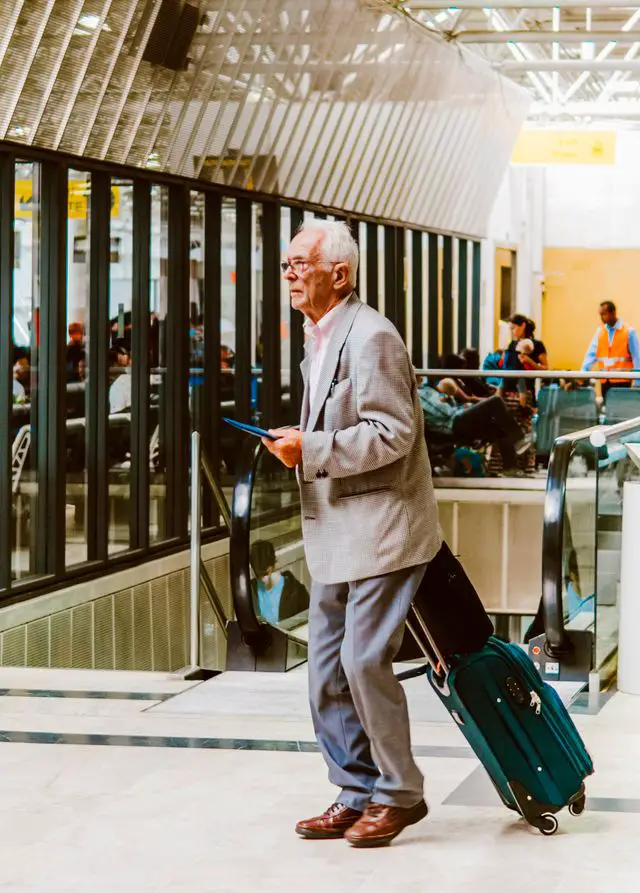
The airport worker handed me a navy blue carry-on. Inside the lining, in David’s handwriting, was his name.
I carried it back to my car before I opened it.
On top was his passport. Beneath that, an envelope holding twenty thousand dollars in cash, stacked with the kind of careful precision only David would have used. And underneath everything, a small black voice recorder with a yellow sticky note on the back.
Dad, press play.
My hands were shaking when I did.
At first there was only room noise. A refrigerator hum. The flat acoustic of tile.
Then I recognized it. My kitchen.
The first voice that came through was Tara’s.
Behind me, I heard a breath catch.
I turned just enough to see my daughter-in-law standing beside the open car door, one hand over her mouth, her face drained of every practiced expression she had worn since the funeral. She had followed me. I had not heard her car pull in behind mine.
On the recording, Tara’s voice was casual and unguarded in a way I had never once heard in eleven years of Sunday dinners.
“I told you it would work. David never suspected a thing. By the time he caught on, it was too late.”
My heart was going hard against my ribs. I looked up at her. Her eyes were wide, her face pale, caught somewhere between shock and something else. Fear, maybe. Or guilt.
She did not look like a widow anymore.
The recording shifted. A man spoke, and it was not my son.
“And the money? It’s all set?”
“Yes,” Tara said on the tape, her tone entirely businesslike. “Once everything clears, we’ll have what we need to start over.”
My grip tightened on the recorder.
Start over.
I pressed pause and looked at her over the roof of the car.
“What’s going on?”
She looked at me with her eyes darting. “I don’t know. I mean, I didn’t know he recorded that.”
“Then who were you talking to?”
She hesitated. Then she sighed and let her shoulders drop, and something in her face reorganized itself into an expression I would spend the next several weeks learning to read correctly.
“I didn’t think it would go this far,” she said. “David was in trouble, Ray. He got involved with some people. Dangerous people. He thought he could handle it and when he couldn’t, he came to me.”
The parking garage seemed to shrink around us.
“What kind of trouble?”
She shook her head, and tears came up into her eyes on cue. “I don’t know everything. Just that he needed a way out. Something he couldn’t do on his own.”
I looked back down at the bag on my passenger seat. The money. The passport.
It seemed like David had been preparing for an escape.
But standing there in that garage with the engine ticking as it cooled, one very small thing snagged in my mind and stayed snagged.
She had said I didn’t know he recorded that.
Not what is that. Not who is that. Not that isn’t me.
She had gone straight past denial and landed on the only thing that actually mattered to her, which was the existence of the recording itself.
A liar who is genuinely surprised asks a question first. A liar who is caught skips to damage control.
I had listened to eleven thousand people talk on the record. I knew the difference.
I said, “All right.”
That was all. Just all right.
I put the recorder in my jacket pocket, closed the bag, and drove home with Tara following behind me the whole twenty-two miles.
I want to be honest about the next part, because pretending I was clever from the first second would be a lie, and this story has enough of those in it already.
That night I sat at my kitchen table with the recorder in front of me and I nearly called Tara in to listen to the whole thing with me. I nearly asked her to explain it, sentence by sentence, the way you’d ask a witness to walk through a timeline.
What stopped me was thirty-one years of watching lawyers make exactly that mistake.
You never show a witness your evidence before you understand it yourself. The moment they know what you have, they stop telling you what happened and start telling you a story built to survive it.
So I did not ask her anything else that night.
I sat in my kitchen, and I listened to the whole recording twice, all the way through, with a legal pad and a pen.
It ran nineteen minutes.
The first thing I noticed on the second pass was the room tone. Not the words. The sound underneath the words.
The refrigerator in my kitchen has a compressor that kicks on with a small mechanical shudder, then settles into a hum with a slight wobble in it, because the coils need cleaning and have needed it since about 2019. I have listened to that sound every morning for six years.
It was on the recording.
Whatever Tara had been saying, and whoever she had been saying it to, she had said it standing in my kitchen. In my house. With my son almost certainly upstairs or out in the yard.
The second thing I noticed was the timestamp.
The recorder was a Sony, one of the cheap digital ones they sell for lectures and interviews, and it stored files with automatic date and time metadata. I plugged it into my laptop, and the file properties came up on the screen in plain text.
The recording had been made eleven days before my son died.
The third thing I noticed took me another hour, and it changed the entire shape of what I was looking at.
There were two files on that device.
The nineteen-minute one, and a second file that ran four minutes and eleven seconds. Created six days later. Five days before David died.
I opened the second file.
There was no room noise this time. It had been recorded somewhere small and close, and I could hear a car engine idling underneath.
“Dad,” my son said. “If you’re hearing this, then something happened and I didn’t get to say it to your face.”
I had to stop it there. I had to get up and stand at the sink with both hands on the counter for a while before I could sit back down and start it again.
“I need you to listen all the way to the end before you do anything,” he said. “Please. I know you. You’re going to want to go straight at somebody. Don’t. Not yet.”
I pressed my palm flat against the table.
“About two years ago I started noticing money moving,” David said. “Not big. Small enough that if you weren’t looking you’d call it noise. Four hundred here, eleven hundred there. Out of the business account first, then out of the joint account, then out of the equity line I opened when we did the roof.”
He paused. I could hear him breathing.
“I thought it was me at first, Dad. I actually thought I was losing track. I went back through eighteen months of statements twice thinking I’d find my own mistake. That’s how much I didn’t want it to be what it was.”
David had run a small commercial HVAC company out of a shop off Dickerson Pike. Eleven employees. He had built it from a single van and a used compressor when he was twenty-six years old.
“By January I had a number,” he said. “It’s two hundred and sixty-one thousand dollars, give or take. Over roughly twenty-six months. Some of it’s cash withdrawals, some of it’s transfers, and about ninety thousand of it went out as payments to a vendor account called Brightline Mechanical Supply. I’ve never bought a bolt from Brightline Mechanical Supply. It doesn’t exist. It’s a shell with a P.O. box in Antioch and a registered agent named Curtis Mahaffey.”
My pen stopped moving on the pad.
“Curtis is Tara’s brother,” David said. “You’ve never met him. There’s a reason for that.”
I sat there in my kitchen while my dead son explained to me, in the calm and orderly way he explained everything, that his wife of eleven years had been moving money out of his company for two years, running it through a fake supplier her brother had registered, and that in the last four months the amounts had started getting larger and less careful, which he read as a sign that whatever they were doing was approaching some kind of deadline.
“I hired a forensic accountant in February,” he said. “Her name’s Priya Raghunathan, her office is in Green Hills, and there’s a folder in the bag with everything she’s produced so far. She has copies of all of it. If something happens to me, go see her. She already knows to expect you.”
He stopped again.
“The reason I’m recording this instead of calling you is that I don’t know yet how far it goes. And I’m scared that if I say it out loud to you on the phone, you’ll come over here and put your fist through a wall, and then they’ll know I know.”
He laughed a little. It was a terrible sound to hear.
“You’ve got a face, Dad. You’ve had it since I was nine. You can’t sit on anything.”
Then his voice changed.
“There’s one more piece. About three weeks ago I put a recorder on top of the cabinet in your kitchen. In your house, not mine, because Tara sweeps our place. She actually does. I watched her do it with an app on her phone and pretend she was checking the wifi.”
I looked up at the top of my own cabinets.
“She and Curtis meet at your house on Thursdays when you go to the VFW breakfast,” David said. “They’ve been doing it for months. They think it’s the one place nobody’s looking.”
He exhaled.
“I have not confronted her. I’m not going to until Priya finishes. But I’ve got a bag packed with a passport and cash and the accountant’s file, and it’s in the trunk of my truck, because if this goes sideways I want to be able to move and I don’t want a paper trail through a bank.”
He was quiet for a moment.
“I love you. Whatever happens, I want you to know I wasn’t stupid about this. I was just slow. I kept giving her the benefit of the doubt because I loved her and because she’s Brett’s mother and because I didn’t want to be the guy who suspects his own wife.”
The recording ended.
I sat in my kitchen for a long time.
Upstairs, I could hear Brett’s music through the floor.
And here is what I want you to understand about that night, because it is the thing that mattered most.
Everything in me wanted to go up those stairs.
Everything in me wanted to walk down the hall to the guest room where Tara was sleeping in my house, in my son’s family’s house, and shake her awake and put that recorder in her face and make her listen to my boy’s voice.
I did not do it.
Not because I am a better man than that. I am not.
I didn’t do it because David had asked me not to, and because he had been right about me, and because a man who has spent thirty-one years watching cases fall apart knows exactly how they fall apart.
They fall apart when the person who has the evidence tells the person who committed the crime that the evidence exists.
So I went to bed.
I lay there in the dark for four hours without sleeping. And around two in the morning I got up, took the recorder out to my truck, and locked it in the toolbox bolted to the bed, along with the passport and the cash and the accountant’s folder.
Then I went back inside, made coffee at four thirty like I always do, and when Tara came down at seven I told her I hadn’t been able to bring myself to listen to the rest of the tape yet.
She put her hand on my arm and said, “You don’t have to, Ray. Maybe some things you just don’t need to know.”
I said, “Maybe you’re right.”
That was the first lie I ever told my daughter-in-law, and I want to be honest that it did not cost me a thing.
Priya Raghunathan’s office was on the second floor of a small brick building in Green Hills with a dentist below her and a yoga studio next door.
She was somewhere in her forties, with reading glasses pushed up into her hair and a desk that looked like a filing system had exploded on it and then been reorganized by someone who understood the wreckage completely.
When I said my name, she stood up.
“He said you’d come,” she said. “I’m very sorry, Mr. Coleman.”
She closed the door and sat me down and did not offer me any of the things people had been offering me for four days. No condolences about a difficult time. No talk about a better place.
She said, “How much do you already know?”
I told her about the recording.
She listened without interrupting, and when I finished she pulled a banker’s box out from behind her desk and set it on the table between us.
“Then I’ll start from the beginning and go slowly,” she said, “because there’s more than he had when he made that tape.”
Here is what she laid out over the next two and a half hours.
Beginning in early 2023, small transfers had started leaving Coleman Mechanical’s operating account. They were coded to look like supply purchases and routed through an entity called Brightline Mechanical Supply LLC, registered in Tennessee, sole member Curtis Mahaffey.
Curtis was Tara’s older brother. He had two prior convictions in Rutherford County, one for passing forged instruments and one for theft over ten thousand dollars, the second of which had gotten him thirty months.
David had not known any of this when he married her. Priya had found it in about forty minutes of public records searching.
The transfers had started at a few hundred dollars a month and grown. By the middle of last year they were running eight to twelve thousand a month. Priya’s traced total was two hundred and seventy-four thousand dollars, higher than David’s figure because she had found two accounts he had not.
And then she turned a page and said, “This is the part he was still working on when he died.”
Four months before, someone had submitted an application for a term life insurance policy on David Coleman in the amount of one million two hundred thousand dollars.
The named beneficiary was Tara Coleman.
The application had been submitted electronically. The medical questionnaire had been completed and signed. And a paramedical exam had been conducted at the house on a Tuesday morning by a mobile examiner.
“There’s a problem with the exam,” Priya said.
“What problem?”
“The examiner’s report lists David’s height as five foot nine.”
I sat very still.
My son was six foot two. He had been six foot two since he was seventeen years old, and I had watched him duck through the doorway of my kitchen ten thousand times.
“Somebody sat for that exam,” Priya said, “and it wasn’t your son.”
I said, “Curtis.”
“I don’t know that yet. But the policy was issued in March, and the first premium was paid out of an account David didn’t have access to. And Mr. Coleman, the reason I couldn’t tell your son this in February is that I didn’t find it until three weeks ago. I called him on a Thursday. He didn’t call back.”
She looked at me steadily.
“He died the following Tuesday.”
There was a long silence in that office.
“What was the cause of death on the certificate?” she asked.
“Cardiac event,” I said. “He had an arrhythmia diagnosed six years ago. He was on medication for it.”
“Was there an autopsy?”
“No. His doctor signed it. He had a documented history, he was found at home, there was nothing suspicious about the scene.”
Priya took her glasses off her head and set them on the table.
“Mr. Coleman,” she said, “I’m a forensic accountant. I follow money and I don’t speculate outside my lane, and I want to be very careful here. But I need to tell you what I would do if this were my father.”
“Say it.”
“I would take everything in this box to the district attorney’s economic crimes unit today. Not the police non-emergency line. Not a lawyer who does divorces. The DA’s white collar people, because insurance fraud plus a twelve hundred thousand dollar payout plus a death within days of an accountant’s phone call is not something you sit on.”
I looked at that box for a while.
Then I said something I had not planned to say.
“I know a prosecutor.”
Her name was Yolanda Briggs, and I had transcribed her cases for nine years before I retired. She had been a young ADA when I met her, sharp and impatient and prone to talking faster than my machine could comfortably take, and I had gone back to her office more than once to tell her to slow down.
She was a division chief now.
When I called her direct line and said my name, she said, “Ray Coleman. I heard about your son. I was going to send flowers and I didn’t know if that was the right thing.”
“It was the right thing,” I said. “Yolanda, I need forty minutes.”
She gave me ninety.
I sat in a conference room on the fourth floor of the Justice A. A. Birch Building, in a chair on the wrong side of the table for the first time in my life, and I played my son’s voice for a woman I had watched try eleven homicides.
When it ended, she did not say anything for a while.
Then she said, “Play me the other one.”
I played the nineteen-minute file.
She listened to the whole thing with her chin on her hand, and she made me play the last four minutes twice.
At the very end of that file, after Tara and the man had stopped talking and there was nothing but room tone, a door opened and closed. And then, faintly, at the edge of the microphone’s reach, the man said one more sentence.
“Four months on the contestability and we’re clear.”
Yolanda sat back in her chair.
“Do you know what a contestability period is, Ray?”
“No.”
“Life insurance policies have a two-year window after issuance where the carrier can investigate and rescind for material misrepresentation on the application. Most of them also have a suicide exclusion for the same period.” She tapped the table twice with one finger. “But there’s a shorter clock people in this world care about a lot more. Carriers routinely order a full investigation on any claim filed within the first twelve months. Some run it tighter. Some flag anything under six.”
She looked at me.
“That man is counting months. On a policy issued in March. In a conversation recorded in a kitchen, eleven days before the insured died of a cardiac event with no autopsy.”
She stood up and went to the door and asked her assistant to get somebody named Hollis on the phone.
Then she turned back to me.
“I’m going to say something to you now as a friend and not as a prosecutor, and then I’m never going to say it again, because after today everything between us is on the record.”
“Go ahead.”
“Do not go home and confront that woman. Do not let her know one thing about this. Not a look, not a comment, not a change in how you talk to her. If she runs, if she gets a lawyer, if she and her brother get their stories aligned before we’re in position, I lose the case and your son doesn’t get anything out of this at all.”
I said, “I’ve kept quiet in a courtroom for thirty-one years, Yolanda. I can keep quiet in my own kitchen.”
She almost smiled. “I know you can. I’ve watched you do it while lawyers said some remarkably stupid things about your typing.”
Then the friend part was over, and she sat back down and started asking questions in the flat, methodical way I had heard her ask them for nine years, and I answered every one of them for the next two hours.
The next five weeks were the hardest of my life, and not one dramatic thing happened in them.
That is what nobody tells you about this kind of thing. There is no confrontation in a driveway. There is no scene where you finally say the sentence you have been rehearsing. There is just an enormous amount of ordinary time that you have to walk through without letting your face give you away.
I made coffee every morning at four thirty. Tara came down at seven. I asked about her day. She asked about mine.
Brett stayed in the upstairs bedroom, playing music and eating everything in my refrigerator and treating me like a piece of furniture that had come with the property.
Twice a week I drove to Green Hills and sat with Priya, and twice more I went downtown and answered questions for a DA’s investigator named Wes Hollis, who was maybe thirty-five and wrote down everything I said in a notebook with a mechanical pencil.
Here is what they built while I was making conversation over eggs.
The insurance carrier, once subpoenaed, produced the full underwriting file. The paramedical examiner who had gone to the house that Tuesday morning was located in Murfreesboro. When Hollis showed her a six-photo array, she picked Curtis Mahaffey out of it in under four seconds and said, “That’s the guy. He was nice. He had a bad cough.”
The application itself had been submitted from an IP address belonging to a residence in Antioch leased to Curtis.
Tara’s phone records, obtained by warrant, showed one hundred and fourteen calls between her and her brother in the eleven weeks before David’s death, including four on the day Priya had called David and gotten no answer, and one lasting thirty-one minutes at 11:40 at night, two days before he died.
And Brightline Mechanical Supply, which had never sold my son a single piece of copper, had three hundred and eleven thousand dollars pass through it in twenty-eight months, of which two hundred and seventy-four thousand came out of Coleman Mechanical.
The rest came from two other small contractors in Middle Tennessee.
Curtis had done this before. Tara was simply the first sister he had been able to install inside a company.
The hardest day was the exhumation.
I want to be careful how I write about that, because there are people reading this who have buried somebody, and I do not want to be casual about what it costs.
Yolanda came to my house herself to ask. She sat in my living room, in the chair David used to sit in, and she explained that the medical examiner could not tell us anything without it, and that a cardiac event in a man with a documented arrhythmia would look exactly like a cardiac event in a man with a documented arrhythmia unless somebody went looking for what else might be there.
She said certain compounds clear the body quickly and would likely be gone. She said others do not. She said toxicology on tissue after burial was imperfect and might give us nothing at all.
She said the decision was mine and there was no wrong answer.
I asked her to give me one day.
That night I sat on my back steps until almost two in the morning, and I thought about my son at nine years old telling me he had broken the neighbor’s window and could he please just pay for it out of his own money instead of me finding out later.
He had always wanted the truth on the table. Even when it cost him.
The next morning I called Yolanda and told her to do it.
They exhumed him on a Wednesday in March. I did not go.
The toxicology came back nineteen days later.
They found flecainide in his liver tissue at a concentration well beyond therapeutic range. Flecainide is an antiarrhythmic. It was one of the two medications my son took for his heart. At a normal dose it holds a rhythm steady.
At a high enough dose, in a man with his history, it does the exact opposite, and it does it in a way that leaves behind a body that looks precisely like a man whose bad heart finally quit on him.
David’s prescription had been refilled eight days before he died. The pharmacy record showed a ninety-day supply. When Hollis inventoried the bottle recovered from the house, there were fifty-one tablets missing.
Nobody had to say the rest of it out loud.
They arrested Curtis Mahaffey first, on a Tuesday morning, at a job site in Smyrna where he was working under a name that was not his.
They arrested Tara that afternoon, in my driveway, as she was coming back from the grocery store with a bag of the pears I like.
I was standing at the kitchen window. I did not go outside.
She saw me through the glass while Hollis was reading her rights, and she looked at me with an expression I had never seen her wear in eleven years, and I want to tell you exactly what was on her face because I have thought about it every day since.
It was not fear.
It was calculation. She was already, in that driveway, in handcuffs, working out what she was going to say.
Brett came down the stairs about ninety seconds later, shouting, asking me what I had done.
I told him he had two hours to get his things out of my house.
He said, “You can’t do that.”
I said, “Son, I built this house before your mother was old enough to drive. Two hours.”
He was gone in fifty minutes.
The case took fourteen months to resolve.
I am not going to pretend that fourteen months was clean or that I was steady through all of it. There were weeks where I did not leave the house. There were mornings I made two cups of coffee out of habit and then sat there looking at the second one.
Yolanda’s office charged both of them.
Curtis went first, and he went hard, because he had two priors and because the paramedical fraud alone was federal-adjacent and gave them enormous leverage. Three months in, his attorney came to the table.
He gave them Tara.
He said the money had been her idea from the start. He said she had brought him the company. He said the policy had been her idea too, and that he had sat for the medical exam because she asked him to, and that she was the one who had access to the medication.
He said all of that in exchange for a recommendation, and I do not for one second believe he told the entire truth, because men like Curtis Mahaffey never do. But the parts that were corroborated were corroborated hard, by phone records and IP addresses and a bank trail Priya had already mapped down to the dollar.
Tara’s attorney took it to the eve of trial and then folded.
She pleaded to theft over two hundred fifty thousand dollars, insurance fraud, forgery, and second degree murder.
I sat in the courtroom for the plea and for the sentencing, in the third row, on a wooden bench in a building where I had worked for three decades.
It was strange, being on that side. I knew the acoustics. I knew where the court reporter would set her machine. I knew the exact spot on the wall where the light comes in around eleven o’clock and makes it hard for anybody in the jury box to read a document.
I had never once, in thirty-one years, been the person the case was about.
At the sentencing, Yolanda asked whether I wanted to give a victim impact statement.
I told her I did.
I want to tell you what I said, because I worked on it for six weeks and I threw away eleven drafts, and the version I finally read was almost nothing like the ones I started with.
The early drafts were about her. What she had taken. What she had pretended. The way she had stood in my kitchen in black with her hand on my arm telling me maybe some things I just did not need to know.
I threw all of that out.
Because after a while I understood that if I stood up in that courtroom and spent my four minutes talking about Tara, then she would have gotten the last thing too. The very last thing my son had left, which was somebody who would talk about him.
So I stood up, and I read this.
“My son was named David Ray Coleman. He was born on the fourteenth of June, 1983, at Baptist Hospital, and he weighed seven pounds one ounce, and I was twenty-four years old and I had absolutely no idea what I was doing.
He was a careful boy. He wanted the rules explained to him. When he was six he asked me why we stop at stop signs when nobody’s coming, and I gave him some answer about the law, and he thought about it for two days and then came back and told me he thought it was because you don’t know who’s coming. He was six.
He built a business out of one van and a used compressor. He employed eleven people, and when the shop was slow in 2020 he paid all eleven of them out of his own savings for two months rather than lay anybody off, and he never told me he did it. I found out from his foreman at the funeral.
He was six foot two. That is the detail that broke this case open, and I want it in the record, because for two years the woman who was married to him was moving his money out of his company and she never once noticed how tall he was. She sat across from him at dinner for eleven years and she did not know a fact about him that a stranger could see from across a parking lot.
That is what she was to him. That is the whole measure of it.
He figured it out. That’s what I want people to understand. My son was not a fool and he was not a victim of his own trust. He found it himself, on his own, going through eighteen months of statements twice because he did not want it to be true. He hired an accountant. He built a file. He recorded his wife in my kitchen. He packed a bag with his passport in it and put it in his truck because he thought he might have to move fast, and he was right.
He did everything correctly. He was just five days short.
I have spent thirty-one years in rooms like this one listening to people explain themselves. I have heard every version of I didn’t mean for it to go that far. I heard that sentence in an airport parking garage the day after I buried him.
I don’t need to hear it again, and I’m not asking this court for anything, because there is nothing this court can give me.
I just wanted somebody to write down who he was.”
Yolanda told me afterward that the judge asked for a copy.
Tara got thirty-two years. She’ll serve a substantial portion of it. Curtis got twenty-one.
The insurance carrier rescinded the policy in about four days once the application fraud came out, so the twelve hundred thousand dollars that all of this was for never existed at all, which is the part that I still find hardest to sit with. Two hundred and seventy-four thousand of my son’s money is largely gone, spread across two years of vehicles and rent and a boat that got repossessed in 2024.
Some restitution was ordered. I will see a fraction of it, decades from now, in payments of forty dollars.
I did not do any of this for the money.
I want to tell you about one more thing, and then I’m finished.
About three months after the sentencing, I finally opened the navy blue carry-on all the way.
I had taken the passport and the cash and the folder out of it back in that parking garage, but I had never emptied the interior pockets, because for a long time I could not make myself handle a bag my son had packed with his own hands.
In the zippered pocket on the inside of the lid, there was one more envelope.
It was addressed to me in David’s handwriting, but not in the careful print he used on labels. In his regular hand, the fast slanted one he’d had since high school.
Inside was a single sheet of notebook paper.
Dad,
If it went bad, I’m sorry. I know that’s a stupid thing to apologize for but I keep thinking about you having to do all this by yourself and I hate it.
Two things.
One. Don’t blame yourself for not seeing it. I lived in the house with her and I didn’t see it for two years, and I’m the one who’s supposed to be good with numbers. You saw something was off at Thanksgiving. You said so. I told you that you were being hard on her. You weren’t.
Two. Don’t let this be the last thing you do. I know you. You’ll get your teeth into this and you’ll hold on for as long as it takes, and I’m counting on that, but when it’s over I want you to actually stop. Go fishing. Fix the porch rail you’ve been talking about since 2011. Call Aunt Judy back.
You spent your whole life writing down what happened to other people. Go have something happen to you.
I love you. Thanks for teaching me to keep records.
D.
I sat on my kitchen floor with that piece of paper for a while.
Then I got up, and I went out to the garage, and I found the two-by-fours I had bought in 2011 for the porch rail.
I fixed it that weekend.
It’s not perfect. My hands aren’t what they were, and one of the balusters sits about a quarter inch proud of the rest, and every time I come up those steps I see it.
I’ve decided to leave it that way.
Because he was right about me. I do get my teeth into things and hold on. That’s why the recording got listened to twice instead of once. That’s why I noticed a refrigerator hum and a timestamp and a man counting months. That’s why the thing my daughter-in-law was most certain about, that a sixty-seven-year-old retired court reporter would not know what to do with a bag full of evidence, turned out to be the single worst assumption anybody ever made about me.
But he was also right about the other part.
A man can spend his whole life sitting very still in the back of a room, writing down other people’s lives with perfect accuracy, and reach the end of it having recorded everything and lived almost nothing.
I’m seventy now. I go fishing on Tuesdays with a man named Earl who talks too much. I called Aunt Judy. She’s ninety-one and sharper than either of us.
And every so often, when the house gets quiet enough that I can hear that refrigerator humming from two rooms away, I go out and stand on the porch and put my hand on that crooked baluster.
My son asked me for two things.
I got them both done.

Lila Hart is a dedicated Digital Archivist and Research Specialist with a keen eye for preserving and curating meaningful content. At TheArchivists, she specializes in organizing and managing digital archives, ensuring that valuable stories and historical moments are accessible for generations to come.
Lila earned her degree in History and Archival Studies from the University of Edinburgh, where she cultivated her passion for documenting the past and preserving cultural heritage. Her expertise lies in combining traditional archival techniques with modern digital tools, allowing her to create comprehensive and engaging collections that resonate with audiences worldwide.
At TheArchivists, Lila is known for her meticulous attention to detail and her ability to uncover hidden gems within extensive archives. Her work is praised for its depth, authenticity, and contribution to the preservation of knowledge in the digital age.
Driven by a commitment to preserving stories that matter, Lila is passionate about exploring the intersection of history and technology. Her goal is to ensure that every piece of content she handles reflects the richness of human experiences and remains a source of inspiration for years to come.