“Could you not afford a decent black dress?”
My sister’s voice cut through the quiet of the cemetery like a glass edge.
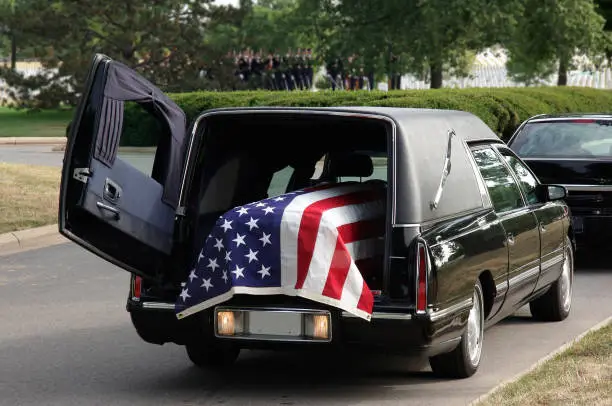
The funeral had already been hard enough. The sky over our small Ohio town hung low and gray, the kind of February sky that makes every headstone look colder than it already is. A folded American flag rested near my father’s casket. Damp grass clung to the soles of my shoes. Somewhere behind us, traffic moved along the county road, soft and distant, as if the rest of the world had decided not to stop for grief.
Jasmine stood across from me in a designer black silk dress, her hair pinned perfectly, her nails painted a deep red that looked almost too bright against all that mourning. She pointed one sharp fingernail straight at the ribbons on the chest of my Marine Corps dress blues.
“Relax, Sophie,” she sneered. “You’re not in a combat zone. I know you’re always desperate for attention, but this is Dad’s funeral. Don’t turn it into a circus.”
A few relatives behind her covered their mouths and pretended to cough. They were laughing. Right there, at the edge of my father’s grave, surrounded by people who shared my blood, I stood completely alone.
They had no idea.
Only hours before catching the flight home, I had stood in uniform under another cold sky and watched the Stars and Stripes settle over the caskets of two young Marines under my command. I had clenched my jaw until it ached. I had bitten the inside of my cheek raw, because I refused to break in front of their families. I had buried men who trusted me with their lives.
Now I was standing in an Ohio cemetery while my own family treated me like an embarrassment.
The gravediggers began their work. Wet dirt struck the lid of the casket with a heavy, final sound. Black mud broke against polished mahogany. I did not move. Not one muscle in my face twitched. My eyes tracked the rhythm of the shovels out of habit more than choice, the way you watch anything when you’ve trained yourself never to look away from hard things.
Jasmine did not even wait until the grave was filled. She turned on her thin stiletto heels and walked away, and the rest of them followed her as if she had blown a whistle. Designer shoes crunched on gravel. Black coats swung in the wind. A parade of polished grief moved toward the expensive cars waiting beyond the cemetery road and the imported wine waiting at Jasmine’s house.
They left me standing beside a six-foot drop.
I looked down once. Then I brushed a speck of dust from the red stripe running down the leg of my trousers. The fabric was crisp. The line was straight. Regulation perfect. I turned with a precise about-face, my heel snapping against the pavement, and walked toward the parking lot.
I did not look back.
The rental car was a beat-up Ford SUV that smelled like stale cigarettes and pine air freshener, the kind of vehicle you get when the smiling clerk says “it’s all we have left” and hands you the keys before you can argue. I reached for the rusted door handle, and before I could pull it open, my phone buzzed against my ribs.
I took it from my breast pocket. The screen was cracked in the top right corner, and a message from my mother glowed through the spiderweb of glass.
When you get to the house for the wake, find a quiet corner to stand in. Ethan has important partners coming over. Don’t embarrass your sister.
I stared at the words for a long time.
Not one question about whether my flight had been safe. Not one word about the man we had just lowered into the ground. Just an order. Stand in the corner. Stay out of the way. Do not embarrass Jasmine. Hide the uniform.
My thumb hovered over the cracked glass. The sharp edge bit lightly into my skin, and I pressed down hard enough to leave a mark. Then I locked the screen and tossed the phone onto the passenger seat.
I slid behind the wheel and shut the door. The heavy clunk sealed me inside. For a moment I rested my forehead against the hot, cracked leather of the steering wheel and closed my eyes, and the smell of the rental car faded away.
I wasn’t in an Ohio parking lot anymore. I was back in the dirt.
Three years earlier, somewhere far from home, the air inside the bunker had been thick with diesel, sweat, dust, and cordite. Red tactical lights cast long shadows across the concrete walls. I sat on an ammunition crate with sand on my hands and a pen between my fingers, signing the authorization that sent every cent of my hazard pay directly into my mother’s bank account.
Dad’s hospital bills needed paying. That’s what I told myself. That’s what family meant.
That same night, the siren screamed. Incoming. The ground above us shook hard enough to rattle my teeth and drive dust into my eyes. We held our line. I survived. The money cleared the next morning.
For three years after that, my mother and sister never once called to ask if I was still breathing. They took the money. They used it to keep up their clean suburban story. And now they wanted the woman who had paid for all of it to stand quietly in a corner like something they were ashamed to own.
My eyes opened. The ache in my chest went cold. Not broken. Cold. Clear.
I sat up straight and reached into the hidden pocket of the duffel bag on the floor. I bypassed my personal phone and pulled out a matte black secure device, the kind of phone that does not belong at funerals, country clubs, or suburban wakes. My thumbs moved across the keypad with practiced speed.
Pull all current corporate files connected to Ethan Whitmore’s firm. Include Department of Defense bidding project 132. Status, ethics flags, partner involvement. Send immediately.
I hit send. Then I slid the device back into the bag, turned the key, and listened to the V8 catch with a rough, low growl. Gravel snapped beneath the tires as I pulled out of the cemetery lot.
I was not going to hide in a corner. They wanted to treat me like a uniform with no name. Fine. The civilian battlefield had just opened its front door.
Jasmine’s house sat inside a gated community outside Columbus, the sort of neighborhood where every lawn looks professionally trimmed and every mailbox costs more than my first car. American flags hung from several porches, stiff in the cold afternoon wind, clean and decorative, as if patriotism itself had been chosen by a design consultant.
When I pushed open Jasmine’s heavy oak front door, the first thing that hit me was the air conditioning. It carried the sharp scent of expensive cologne, scented candles, and catered food, and it swallowed whatever trace of cemetery dirt still clung to my boots.
The house was enormous. Vaulted ceilings. Polished hardwood. White orchids arranged everywhere in heavy glass vases, not one or two but dozens. It looked less like a wake and more like a luxury showroom staged for a magazine shoot. My family moved through the rooms in designer black and tailored suits, holding crystal glasses of dark red wine. Ice clinked softly. Laughter rose too easily against the high walls.
This was not mourning. This was networking with a casket in the background.
A waiter in a white shirt passed with a silver tray. His eyes landed on my dress blues, the brass buttons, the ribbons, the red stripe down my trousers, and he paused, pulled the tray closer to his chest, and stepped aside as if he had accidentally walked into the wrong room. I moved past him without a word.
Near the bay windows I found an empty corner. The exact kind my mother had assigned me. I planted my boots shoulder-width apart, clasped my hands behind my back, and settled into parade rest.
Then I scanned the room.
My eyes found Jasmine immediately. She stood in the center of the living room, surrounded by three corporate executives in gray suits, holding a silk handkerchief and dabbing at the corner of an eye that was perfectly dry.
“It was just so hard,” she said, making sure her voice carried over the soft jazz drifting from the ceiling speakers. “The sleepless nights. Sitting by Dad’s bed for weeks. Ethan and I hired private nurses. We spared no expense. We just wanted him comfortable.”
The executives nodded with solemn approval.
My fingernails pressed into my palms.
Not one mention of the hazard pay. Not one mention of the transfers I had sent from halfway around the world while the ground shook over my head. Not one mention of the money I had earned in sand and fear so our father could die in a clean hospital bed instead of a county ward. Jasmine wore the credit like jewelry. She had used my sacrifice to decorate her image, and then she had pointed at my uniform and called it a circus.
The muscles in my neck tightened. In my memory I heard Brigadier General Thomas Vance’s voice from years ago, rough and steady in the heat. Listen to me, Lewis. In uniform, loyalty is written in blood. Out there, it’s written on sand. The first selfish wind can blow it away.
He had been right about that.
I squared my shoulders. I did not belong in that room. These people lived among mirrors, credit lines, and rehearsed emotions. I had lived among brass casings, dust, and decisions that left no room for pretending.
Then the crowd shifted, and an old man stepped out from the hallway.
He did not fit among the silk dresses and the watches. His black suit was faded and poorly fitted, the shoulders hanging loose on a body that had once been stronger. On his left lapel, a small silver veteran pin caught the light.
Master Sergeant Miller. He had served with my father in the first Gulf War. He was the only person in that entire zip code who knew what mud and fear actually tasted like.
Miller ignored the waiters. He ignored the executives. He walked straight toward my corner, his scuffed black shoes sounding dull against the polished floor. As he came closer, his eyes narrowed, and he looked at my jacket.
Not the way civilians look at it. Not like a costume. Not like a decoration.
He read it.
His gaze moved across the ribbons. Bronze Star. Combat Action Ribbon. Unit citations. Campaign medals. To everyone else in that house, they were little squares of color. To him, they were a map. A record of places, losses, and nights most people will never understand.
Then his eyes moved upward, to my collar. To the silver eagle pinned flat against the dark fabric.
Colonel.
Miller stopped three feet away. Exactly three feet. The old habit had never left him. The slight bend of age vanished from his posture, his spine pulled straight, and the look in his eyes shifted from recognition to a respect so immediate and complete that the room around us seemed to fade. His right hand twitched at his side. His fingers straightened.
He was about to salute.
He never got the chance.
A wave of red wine and perfume pushed into the space between us. Jasmine swept in from the crowd and stepped directly between us, her sharp elbow catching Miller’s arm as she brushed him aside like a piece of furniture.
“Oh, Mr. Miller,” she said brightly, “you don’t need to pay any attention to Sophie.” She turned toward me with a glossy smile that did not reach her eyes. “She always loves playing dress-up.”
The words landed hard. Jasmine took a slow sip from her glass, leaving a red mark on the rim.
“She makes such a huge scene out of these little soldier outfits. I guess when you don’t have a real career in the corporate world, or a husband to take care of you, you have to find some way to feel special.”
The room went quiet enough for me to hear the ice settle in someone’s glass.
She was standing in a house dressed with flowers paid for by money I had earned in combat. She was drinking wine bought inside a life protected by people she mocked. And she was smiling like she had said something clever.
Miller’s face darkened. I watched the rage climb his neck. His hands curled into fists, his mouth opened, and he drew a sharp breath. He was going to say it. He was going to tell that room exactly what the eagle on my collar meant. He was going to tell them who they were insulting.
I looked at him. One small movement. One hard stare. A brief, tactical blink.
Stand down.
It was not a request. Miller caught it. His jaw clenched so hard I heard his teeth click. He swallowed the anger, stepped back, and obeyed.
Jasmine noticed none of it. She thought she had won. She flipped her hair over her shoulder and glanced toward a cluster of cousins by the kitchen island, and they smirked back at her, champagne flutes raised, eager for the show. They thought silence meant weakness. They thought I was absorbing the insult because I knew my place.
Let them think it. Let them dig as deep as they wanted.
The crowd parted again, and a man in a charcoal bespoke suit walked through with a half-empty glass of Pinot Noir in one hand.
Ethan Whitmore. Jasmine’s husband. Corporate defense lawyer. Smooth talker. Gold-rimmed glasses, expensive watch, a man who had built his entire life around speaking in rooms where other people were paid to nod.
He stopped beside Jasmine and looked me over. Not at me. Over me. His smirk lifted slowly.
“So, Sophie,” he said, projecting his voice so half the room could hear. “What is it you actually do in the military? Day to day, I mean.”
I said nothing. My hands stayed clasped behind my back.
Ethan sipped his wine and let the pause stretch, giving his audience time to lean in. “Do you drive supply trucks? Manage a warehouse? Hand out blankets and boots to the grunts?”
A few people chuckled, and the sound scraped against me. My relatives drifted closer, forming a loose half circle. They wanted to watch the wealthy lawyer put the family disappointment back in her place.
Jasmine leaned into her husband’s shoulder. “She probably teaches new recruits how to scrub toilets,” she said. “Don’t ask her hard questions, Ethan. It’s embarrassing. If she actually did anything important, we would have seen her on the news by now.”
Ethan laughed.
My eyes moved past them, across the room, to where my mother sat on a white leather sofa near the stone fireplace. She held a cup of black coffee in both hands, thick gold rings covering her fingers. She heard every word. She saw the circle closing around me. She did not stand. She did not defend me.
Instead, she set her cup down on the glass coffee table with a sharp clink and sighed, the way you sigh at a difficult child who causes trouble on purpose.
“Sophie,” she said, her voice flat and tired, “I’ve told you this a hundred times. You should learn something from your sister.” She gestured vaguely at the room, the flowers, the caterers, the high ceilings. “Look at the life she built. At your age, you should be settling down. Find a nice corporate job. Make real money. Buy nice things. That would be better than running around in the dirt, sleeping outside, dealing with crude soldiers. You are throwing your life away for nothing.”
For nothing.
Three years ago I had sat in a dark bunker while the earth trembled hard enough to rattle my teeth, and I had signed over every dollar of my combat pay so my father could receive care. My mother had taken that money, spent it, and now sat on a white leather sofa calling my sacrifice nothing.
That was the final cut. Not because she misunderstood. Because she did not care. She cared about appearances, and I did not fit her polished suburban picture, so I had become something to hide.
The air in my lungs turned to ash. Then the emotion burned away, and all that remained was calculation. The patience was gone. The red line had been crossed.
I stopped looking at the floor. Slowly, I raised my head and looked directly into Ethan’s eyes.
The quiet daughter vanished.
Ethan’s smirk faltered. A bead of sweat appeared at his temple. His fingers tightened around the stem of his wine glass. He did not understand what had shifted, but some old animal instinct in him finally woke up and told him he was standing too close to someone he had badly misjudged.
I released my hands from behind my back and let my arms fall to my sides. The brass buttons on my cuffs clicked softly. The room seemed to pull in a breath. I took one slow step forward into Ethan’s personal space, and the hardwood did not creak beneath my boots.
I said nothing at first. I only looked at him, and I let the silence stretch until it became uncomfortable.
Ethan expected me to shrink. He expected an apology. He expected the family scapegoat to play her role, absorb the hit, and keep the peace. I did not move. I studied him instead. The soft jaw. The loose posture. The weight shifted onto one heel. The expensive suit on a man who had never been tested by anything he couldn’t bill by the hour.
People who talk for a living hate silence. It makes them feel small.
Finally, I spoke. My voice was low. Controlled. Flat.
“Yes,” I said. “Sometimes my job is exactly that.”
No one laughed.
“Sometimes my job is keeping the wolves far enough away that you have the right to sit in this air-conditioned room, drink expensive wine, and judge the people standing watch.”
The words dropped into the room like stone. My mother inhaled sharply.
Ethan felt the room turn. He felt the eyes of his corporate partners on the back of his neck, and his ego could not tolerate that. Not in his own house. Not in front of his audience. His face flushed. He stepped closer, trying to take the space back, and pointed his wine glass toward my face.
“What is with that attitude, little girl?” he said. “You think you can come into my house and talk down to me? You think putting on a cheap blue suit makes you a hero?”
I did not blink.
“I know how the real world works,” he went on. “I deal with the Department of Defense. I sit in rooms with generals, executives, real decision-makers. Not grunts.” He laughed sharply. “You think those little ribbons matter in the real world? They don’t. So what are you? Some low-level captain? A desk jockey major? Pushing papers and pretending you matter?”
Jasmine laughed beside him. She believed he was burying me. The cousins began smiling again. The little kingdom was restoring itself. The wealthy lawyer was crushing the uniform. That was how the script was supposed to go.
I let him finish. You do not interrupt a man while he is making a mistake that cannot be repaired.
Then I stepped fully out of the corner and came to attention. It was not a casual movement. It was precise. Drilled. Clean. The pressed wool of my dress blues settled into place. The brass caught the recessed lights. My boots gave me an extra inch, and when my spine locked straight, Ethan had to look up at me.
His smirk faded.
In that exact moment, the secure device in my breast pocket vibrated once. A short, sharp pulse. Confirmation. The files on Ethan’s firm had arrived. His firm. His Department of Defense bid. Project 132.
The trap did not need drama. It only needed truth.
I opened my mouth.
“Colonel Sophie Lewis.”
The words landed like a hammer on an anvil. The room froze.
“Commander of Strategic Task Force 132.”
Silence followed. Absolute silence.
Because in that room, the title was not just a rank. It was a key. It opened a door Ethan had been clawing at for six months.
Across the room, my mother’s saucer slipped and clattered against the glass coffee table. Jasmine’s mouth parted. And the color drained from Ethan’s face so quickly he looked ill. His breathing stuttered. The glass tilted in his hand, and dark wine spilled onto the toe of one polished shoe.
He knew. Of course he knew.
Strategic Task Force 132 was not some random line on an officer’s record. It was the designation printed across the top of the defense project his firm had been chasing with everything it had. A five-hundred-million-dollar contract. The bid that was supposed to make him senior partner. The project he had name-dropped at dinners and golf outings and private receptions as if it were already his.
He had just spent ten minutes publicly mocking the military career of the person whose assessment could determine whether his firm ever touched it.
I tilted my head slightly. “Are you ready to discuss my desk job now, Ethan?”
His heel caught the edge of the Persian rug as he stepped backward. He stumbled, recovered, and somehow looked smaller standing up than he had a moment before going down.
“M-Ma’am,” he whispered.
The word rang through the quiet room.
“I didn’t know,” he stammered. “I didn’t know the commander of the task force was you.”
Ten minutes earlier he had called my uniform a cheap blue suit. Now that same uniform stood between him and the future he had already spent in his head.
Near the fireplace, Uncle Robert fumbled with an iPad, his thick fingers moving fast across the screen, the blue glow reflecting in his glasses. Then he stopped, and his face changed.
“Oh my God,” he breathed. “There’s a Department of Defense press release from last week. She was just decorated. She’s leading the whole division.”
The words moved through the room like a cold draft. People stepped back. One by one, they opened space around Ethan and Jasmine, because in their world, loss of status is contagious, and suddenly Ethan looked infected.
Jasmine felt it happening. She looked around at the cousins, the executives, the family friends, and watched her perfect audience retreat. She grabbed Ethan’s sleeve.
“What is wrong with you?” she demanded, her voice climbing high and panicked. “So what if she’s a colonel? Who cares about some press release? She’s still Sophie. Don’t let her talk to you like that in our house.”
She did not understand. She had spent her whole life believing that volume was power, that she could embarrass a problem until it disappeared, that the girl who used to sit quietly at the dinner table could always be bullied back into her seat.
She pulled his sleeve again.
He snapped. He turned on her so fast she let go.
“Shut your mouth, Jasmine.”
The room recoiled. His voice cracked through the house, not controlled now, not polished. Fear had stripped the smooth corporate finish right off him.
Jasmine froze. Her wine glass slipped from her fingers and shattered on the hardwood, red spreading at her feet. Her lower lip trembled as she looked toward our mother, waiting for rescue.
Our mother stared at the floor.
Jasmine looked toward the cousins. No one moved.
The queen of that room lost her crown the moment it stopped being useful to anyone else.
I stood still. I did not smile. I did not gloat. I simply watched the perfect family turn on itself under the smallest weight of consequence. They did not love each other. They loved the story they performed together. And the second the story cracked, every one of them stepped away from the broken glass.
My mother rose from the sofa unsteadily, one hand braced against the coffee table, the rings on her fingers clicking together as she reached toward me.
“Sophie,” she whispered, and her voice cracked in a way that might have sounded like emotion if I had not known her my whole life. “Why didn’t you ever tell me? If I had known you held this kind of position, if I had known you were commanding people, I would have—”
“You would have what?”
I did not raise my voice. I did not need to. The room was so silent that every word carried.
“You would have let me stand closer to Dad’s casket? You would have allowed your country club friends to see my uniform without feeling embarrassed?”
She flinched. Her mouth opened, but nothing came out.
“A family that only shows love when power or money enters the room is not a family,” I said. “It is a transaction. And your account is empty.”
The words hit her harder than shouting ever could have. She sank back onto the sofa, staring at the floor, her hands limp in her lap.
I shifted my gaze to Jasmine. She was backed against the oak dining table now, trying to make herself small. The arrogance was gone. The glossy smile was gone. Her mascara had begun to smudge at the corners of her eyes.
I walked toward her. Slowly. My boots made almost no sound, but she watched every step like each one was a verdict. I stopped two feet away.
“You built this house of cards on my sacrifice,” I said quietly. “You took the combat pay I earned sitting in bunkers halfway across the world. You used it to pay Dad’s hospital bills. Then you took the credit.”
She shook her head. “Sophie, please—”
“You stood in this room and told people you spared no expense. You played the devoted daughter. Then you looked at this uniform and felt disgust, because you thought it meant I was beneath you.”
“No,” she whispered. “That’s not—”
“You mocked it because you thought it meant I was poor. You thought I was a failure because I don’t work in a glass office. You spend your life begging for attention from people who would step over you the moment your image stops serving theirs.”
Her breathing turned shallow. I leaned closer by a single inch.
“I do not care about appearances, Jasmine. I care about character. And today, you showed everyone yours.”
That was all it took. Her knees gave, and she sank onto the expensive rug and covered her face with both hands and cried. Not the delicate, polished crying she had performed at the funeral. This was raw. Humiliated. Real.
She waited for Ethan to pull her up. He did not move. He was staring at the wine stain on his shoe as if his entire future had pooled there. She waited for the cousins. No one stepped forward. The crowd had abandoned her, because weakness frightened them, and they had built their lives around proximity to power, and the power had just moved away from her.
I turned from her, and the weight I had carried for years did not explode. It simply lifted. A slow, clean removal, like unbuckling armor after too many days in the field.
I started toward the door.
Ethan stumbled into my path. The voice that once filled boardrooms was gone. His hands were pressed together in front of his chest, soft palms against soft palms, a man begging in the only language he understood.
“Colonel,” he said, breathless. “Please. That defense contract is the lifeline of my firm. We leveraged everything around it. If we lose that bid, I lose the company. I lose the house.”
I looked through him. Not around him. Through him.
“You cannot make me approve what I no longer trust,” I said. “A firm represented by a man who panics, insults service members, and mistakes arrogance for competence has no business handling military assets.”
His mouth opened. Nothing came out.
“I will follow procedure,” I continued. “The committee will review the file. Every concern will be documented. Every conflict will be examined. Every decision will be clean.”
That frightened him more than anger would have. Because clean meant he could not negotiate. Clean meant he could not charm his way around it. Clean meant the record would speak, and he already knew what the record said.
I stepped past him. He moved aside.
At the center of the living room, the crowd shifted one more time, and Master Sergeant Miller stepped into the open space.
He no longer looked like the tired old man who had walked into that house an hour earlier. The bend in his shoulders was gone. His spine straightened with a force that came from somewhere deeper than muscle. He stopped three paces in front of me.
Two Marines. Two generations. One room full of people who had spent their whole lives mistaking polish for honor.
Miller’s right heel struck the hardwood, and the sound cracked through the silence. His right arm snapped up. Sharp. Clean. Perfect. Fingers locked straight, thumb tucked tight, the edge of his hand resting near his eyebrow in a flawless Marine Corps salute.
He did not look at my ribbons. He did not look at the eagle on my collar. He looked into my eyes.
“Honor to welcome you home, Colonel,” he said, in a voice built for calling commands over wind and engines and incoming fire.
And for the first time since I had stepped off the airplane, something in my chest loosened.
Not because my family had finally seen me. They had not. They had only seen what I could cost them. But Miller had seen me before the room ever understood my rank. He saw the uniform as more than fabric. He saw every cold night, every hard order, every name I carried that would never appear in Jasmine’s pretty speeches.
I planted my boots. I lifted my hand and returned his salute, and we held it for a long moment.
Around us, my sister cried on the rug. My mother sat hollow on the sofa. Ethan stood with wine on his shoes and fear in his throat. They shared my DNA, and in that moment they felt farther away than any battlefield I had ever crossed. The man in the faded black suit, with no blood connection to me at all, was the only family in the room.
I lowered my hand. Miller lowered his. A small smile passed between us, quiet and brief. Enough.
Then I turned away from the wreckage. I crossed the foyer, pulled open the heavy oak door, and stepped into the evening air. It hit my face sharp and clean, rushing past me into the house, cutting through the stale perfume and wine and fear. The door closed behind me with a final, solid thud.
I walked down the long driveway, gravel crunching under my boots. Behind me, inside that oversized suburban mansion, a false empire was collapsing under the weight of one truth. Ethan was probably still trying to calculate the damage. Jasmine was mourning the sudden death of her image. My mother was likely counting all the ways she had mistaken my silence for weakness.
I did not care. They were no longer on my map.
My SUV sat beneath a flickering streetlamp, dusty and ordinary among the polished luxury cars. Before I got in, my phone vibrated twice. A secure message lit the screen.
Defense contract files for Firm 132 are prepared. Committee review ready for tomorrow morning. Awaiting your order.
I stared at the words. Five hundred million dollars. An entire career. A mansion, a reputation, a life built on borrowed importance, all of it waiting on process.
Not revenge. Process.
That was the difference between people like Ethan and people like me. He wanted power to protect his pride. I respected power because I knew what it could cost.
I typed two words. Copy that. Then I slid the phone into my pocket, removed my white cover, and set it carefully on the passenger seat. The brass emblem caught the light for one brief second before the shadows settled over it.
This suburb was not home. It had never been home. Home is not blood by itself. Home is where respect does not have to be begged for. Where sacrifice is not measured by whether it looks expensive. Where people know the difference between silence and surrender.
I slid behind the wheel and turned the key. The V8 roared to life, rough and steady, the dashboard glowing red across the dark cabin. The radio clicked on automatically, catching an AM station through a wave of static, and a man’s voice came through low and clear.
Yea, though I walk through the valley of the shadow of death, I will fear no evil.
Psalm 23.
I gripped the steering wheel. In the rearview mirror, Jasmine’s mansion sat against the Ohio night. A few windows glowed with warm light, but the house no longer looked powerful. It looked staged. Hollow. Temporary.
They had thought they could break me with their insults, their silence, and their polished contempt. They forgot something simple. You cannot frighten someone with darkness when she has already learned how to move through it.
I shifted into drive. The headlights cut across the empty suburban road, clean and bright, and I pulled away from the curb and left the house behind.
I had survived mortar fire. I had survived concrete bunkers, sleepless nights, and the quiet work of burying people too young to die. And that night, I survived the battlefield that had shaped me long before the Marine Corps ever did. Family.
The chains did not snap loudly. They simply fell away.
By morning I would put the uniform on again. I would walk into a room where procedure mattered, where records mattered, where truth did not need a designer dress or a wine glass to be believed. Ethan’s firm would receive exactly the review it had earned. Not more. Not less.
As for Jasmine and my mother, I wished them the life they had chosen. A life of rooms full of people who clap only while the money is flowing. A life where love has conditions and loyalty has a price tag. They could keep it.
I had finally learned that the most powerful answer to people who spend years trying to make you small is not shouting. It is leaving whole. It is living well beyond their reach. It is becoming someone they can no longer understand, control, or use.
The road opened ahead of me, black and quiet beneath the headlights. I pressed the accelerator, and the engine rose, drowning out the past, the fake smiles, the old insults, and every miserable memory of that house.
For the first time in years, I was not driving away from family.
I was driving toward peace.
And I was free.

Laura Bennett writes about complicated family dynamics, difficult conversations, and the quiet moments that change everything. Her stories focus on real-life tensions — inheritance disputes, strained marriages, loyalty tests — and the strength people find when they finally speak up. She believes the smallest decisions often carry the biggest consequences.