Not one bill. Not two.
Everything.
His rent. His car insurance. His phone. His “temporary” credit card payments that had been temporary for three years. Even the expensive gym membership he’d sworn to me he canceled because money was tight.
And I only found out because his girlfriend posted a video.
There he was. My brother. Laughing in a rooftop restaurant with the whole city glittering behind him, wearing a designer jacket I’d never seen before, raising a glass of champagne toward the camera. The caption read: Celebrating our weekend trip before Bali next month.
Bali.
Three days before that video went up, Tyler had called me at 10:40 at night, breathing fast, telling me his electricity was going to be shut off in the morning if he couldn’t come up with six hundred dollars.
I sent it. I sent it standing at my kitchen counter eating instant noodles out of the container, because my own mortgage payment was due that Friday and I’d been rearranging numbers in my head for four straight days trying to make everything land without an overdraft.
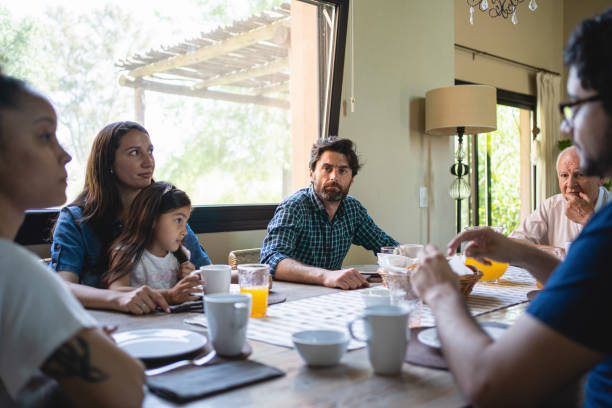
So on Sunday, when my mother passed the mashed potatoes across the table and said, in the exact same tone she’d use to mention that it might rain, “Tyler needs help with his car payment again,” something inside me that had been bending for eight years finally stopped bending.
I looked at my brother.
He was wearing the jacket from the video.
“Where did you get that?” I asked.
Tyler froze. Just for half a second, but I saw it, the way a person freezes when a door they thought was locked starts to open. “What?”
“The jacket.”
Dad sighed. It was the specific sigh he’d been deploying my entire life, the one that meant Rachel is about to make dinner unpleasant. “Don’t start.”
Mom put a hand on Tyler’s arm, protective, automatic. “He’s been under a lot of pressure lately.”
I need to tell you about that word, pressure, because it did more damage to my life than any dollar amount ever did.
My name is Rachel. I’m thirty-four. Tyler is thirty-one. From the time we could walk, our parts in this family were cast and never revisited. I was the capable one. He was the sensitive one. When I brought home straight A’s, that was just Rachel being Rachel, and the report card went on the fridge without commentary. When Tyler passed a class he’d been failing, we went out to dinner. When I struggled with something, I was told to work it out, because I always did. When Tyler struggled, the entire household reorganized itself around his comfort like water finding a low spot.
Nobody ever said out loud that one child was infrastructure and the other was precious cargo. They didn’t have to. We all knew our jobs.
By twenty-six, I had a steady position in medical billing, a small condo I’d saved four years to put a down payment on, and a credit score I was quietly proud of. Tyler had a series of jobs he described as beneath him and a talent for arriving at every family gathering with a fresh crisis already in progress.
The arrangement matured into its adult form without anyone announcing it. I had money. Tyler had needs. Mom and Dad had developed a vocabulary specifically designed to move the first thing toward the second.
It started small. It always starts small. Two hundred dollars for groceries after he lost the warehouse job. Then his phone bill, “just until the new gig starts.” Then he totaled a car he’d been driving without insurance, and Dad called me at eleven at night, and I still remember the exact sentence, because he used it so many times over the years it became a kind of family liturgy.
Just cover this one and we’ll make it right.
They never made it right. Not once. Not one time in eight years.
The system got more sophisticated as it went. Mom would call and cry, and she’d tell me Tyler was just finding himself, that he’d always been more fragile than me, that he’d never had my toughness. Dad would send short emails with no greeting and no signature, just the amount and the deadline and the assumption. And if I ever hesitated, if I ever asked a single question about where the money was actually going, the machinery would turn.
I asked once. Exactly once. I asked to see the utility bill before I sent four hundred dollars, and my mother did not speak to me for eleven days, and when she finally did, she said, “I never thought you’d become the kind of person who makes her family beg.”
So I stopped asking. That was the deal I made with myself without ever noticing I was making it. I stopped asking, and in exchange, I got to keep my membership in my own family.
Which brings us back to the mashed potatoes.
I set my phone on the dining room table, screen up, and played the video.
Champagne. Rooftop lights. His girlfriend leaning in to kiss his cheek. And the word Bali glowing along the bottom of the screen like a confession nobody had thought to hide.
The dining room went silent. Truly silent, the kind where you can hear the refrigerator running in the next room. My aunt studied her plate. My cousin muttered, “Wow.” And Tyler’s girlfriend, who had come to dinner and was now watching her own post play back to a room full of his relatives, turned a deep, spreading red.
Mom recovered first. Mom always recovered first. “People are allowed to enjoy themselves, Rachel.”
“Of course they are,” I said. “With their own money.”
Tyler slammed his fork down hard enough to make the water glasses jump. “You always act like you’re better than me.”
“No,” I said. “I acted like your sister. That was my mistake.”
And then I said the word I’d swallowed at a hundred dinners exactly like this one.
“Enough.”
Tyler shot up out of his chair so fast it hit the wall behind him.
“How dare you refuse?”
I want you to sit with that sentence for a second, because I’ve been sitting with it for a year and a half.
Not that’s not fair. Not you don’t understand. How dare you refuse. Eight years of my labor had converted, in his mind, into a standing entitlement, and my declining it wasn’t a disappointment. It was insubordination.
Every face at that table turned to me, and I knew precisely what they were waiting for, because I had handed it to them every single time before. The softening. The backpedal. The nervous laugh and the “look, I didn’t mean it like that.”
I folded my napkin. I set it beside my plate.
I stood up.
“Why not?” I said.
Then I picked up my purse and walked out of my parents’ dining room in front of every person there.
Behind me, nobody spoke. And the reason my hands weren’t shaking, the reason I could walk out that calmly, is that not one of them had any idea what was already in motion.
I hadn’t just stopped paying for Tyler.
I had stopped paying for all of them.
My phone started ringing before I reached my car. Mom first. Then Dad. Then Tyler, twice. I let every call go to voicemail, got in, and drove home with the radio off, listening to nothing but my own steady breathing, which surprised me.
At 9:17, Mom texted: Your brother is crying. Come back and fix this.
Fix this.
That was always the phrasing. It was how they asked for my wallet without ever saying the word money, because saying it out loud would have made the transaction visible, and the entire system depended on the transaction staying invisible. Money was crass. Fixing things was love. And I was the fixer, which made me loved, which made me useful, which made me quiet.
At 9:24, Tyler sent: You’re really going to ruin my life over one vacation?
I laughed out loud, alone in my parking lot.
One vacation.
Here’s what none of them knew.
Eight months before that dinner, on an ordinary Tuesday, I’d been updating my budget spreadsheet and added a tab out of pure morbid curiosity. I wanted to total up what I’d sent my family over the years. I’d never done it. I’d been doing it in pieces, one transfer at a time, one crisis at a time, and some part of me had always understood that the sum would be unbearable to look at directly.
I looked at it anyway.
Then I sat on my kitchen floor and cried for the better part of an hour, and the next morning I made an appointment with an attorney named Ms. Patel. Over the following months, very quietly, we built the file.
Because there was one thing my family had conveniently, completely forgotten.
Two years earlier, my father had come within eleven days of losing the house to foreclosure. He hadn’t told me until the situation was almost terminal, and when he finally did, sitting at my kitchen table with his hands shaking around a mug of coffee he never drank, I did what I had always done.
I paid the arrears. All of it. Thirty-eight thousand dollars of back payments, penalties, and legal fees that wiped out everything I’d saved toward a bigger place.
But that time, for reasons I couldn’t have explained then and can only half explain now, I didn’t just wire the money. I asked Ms. Patel to structure it. She drew up a family assistance agreement, and my parents signed it, and I’m confident they signed it the way people sign a rental car waiver, without reading, assuming it was paperwork that would never mean anything.
The terms were simple. They could live in that house rent-free, indefinitely, as long as they did not pressure me for additional financial support, did not misrepresent their financial need, and did not funnel my assistance to Tyler.
They had done all three. Repeatedly. And in several cases in writing, because my father emails like a man who has never once considered that a message might be read by a third party.
The morning after that dinner, I called Ms. Patel and told her to send everything.
By noon, the family group chat detonated.
Mom: What is this notice???
Dad: You canceled the house payment?
Tyler: You psycho. My landlord just called me.
I let them type themselves into a full-blown panic for about twenty minutes. Then I sent one message.
Read page three.
Page three was the ledger.
Every transfer I’d made for Tyler over eight years, dated and itemized. Every bill I’d covered. Every loan my mother had personally promised he’d repay. Every email from my father saying just cover this one and we’ll make it right, quoted in full, attached as an exhibit.
The total was one hundred eighteen thousand, four hundred and thirty dollars.
I know what that number did to me the first time I saw it, so I have some idea what it did to them. That was a down payment. That was a decade of retirement contributions. That was every vacation I didn’t take, every car repair I nursed along instead of fixing properly, every time I told a friend I couldn’t do dinner because things were tight that month, while my brother posted champagne from a rooftop.
Then came page four, and page four was the part they hadn’t seen coming.
Page four was the family assistance agreement, breached clauses highlighted in yellow, with Ms. Patel’s formal notice of enforcement stapled to the front.
At 12:16, Dad called again. This time I answered.
His voice was unsteady in a way I’d never heard from him. “You wouldn’t put your own parents out on the street.”
“I didn’t,” I said. “You put yourselves in breach.”
Mom was sobbing in the background, loud enough that the phone picked it up. “We only helped your brother because he struggles!”
“No,” I said. “You helped him pretend he doesn’t. There’s a difference, and I’m the one who paid for it.”
Then Tyler grabbed the phone, and I heard him before he was even properly on the line. “You owe me!”
I asked him one question. Not as a trap. Genuinely, because I wanted to hear him try.
“For what?”
And my brother, who had never once in his life been short of words when he wanted something from someone, went completely silent.
That silence was the first honest thing he ever paid me.
The family meeting happened two days later, and it did not happen at my mother’s table.
That was deliberate, and it might have been the single most important decision I made in the entire mess. Every significant conversation in our family’s history had occurred in that dining room, where Mom could refill plates while she rewrote reality, where Dad could sigh, where Tyler could raise his voice until volume itself became the argument, and where I could be surrounded and outnumbered and talked over until I gave in just to make the noise stop.
We met in Ms. Patel’s conference room instead. With documents. With a witness. With consequences that did not evaporate the moment someone started crying.
Tyler arrived furious, jaw set, visibly rehearsing. Mom looked like she hadn’t slept in three days. Dad carried the folder of paperwork like it weighed more than the house it concerned.
Ms. Patel laid the agreement on the table and spoke first, which was also deliberate.
“I want to be clear at the outset. My client is not evicting anyone today. She is enforcing repayment terms that you signed and that remain in force, and she is ending all voluntary financial support going forward.”
Mom’s chin trembled. “But family helps family.”
I looked at my mother, and I finally said the thing I’d been carrying for eight years.
“Family does not build one child into a bank and the other into a prince.”
Tyler scoffed loudly, the same scoff he’d been using since he was fourteen. “You’re just jealous because I actually enjoy my life.”
That was when Ms. Patel slid the second folder across the table.
Bank statements. His.
Weekend trips. Designer clothing. Sports tickets, the good seats. Cash withdrawals, hundreds at a time. Restaurant tabs that ran past what I spend on groceries in a month. All of it running in parallel with the frantic calls to me about shutoff notices and rent deadlines and a car payment that was going to destroy his credit forever.
His girlfriend had sent the records.
She’d seen my ledger, because I’d forwarded it to her the night of the dinner with a short note saying I thought she deserved to know what she was building a life on top of. It turned out Tyler had told her that our parents were comfortable and covered his expenses, and that his older sister was a bitter, controlling woman who was, in his words, obsessed with managing him.
She left him the day before the meeting.
I watched his face when Ms. Patel mentioned where the statements came from, and I’ll be honest with you, that hurt him considerably more than the money did.
Dad dragged both hands down his face. “Tyler. Tell me this isn’t real.”
Tyler said nothing.
And for the first time in my life, my mother did not leap in to defend him. She just looked at the statements, and then she looked at me, and something moved behind her eyes that might have been understanding or might have just been the arithmetic finally landing.
The terms we left with were simple. My parents had ninety days to refinance or sell and repay what I’d put into the house. Tyler had thirty days to sign a structured repayment plan or face civil action on documented debt. And every automatic payment I’d been running for eight years stopped that afternoon, in the parking lot, on my phone, one after another.
No more rent. No more car insurance. No more phone. No more emergency transfers at eleven at night.
Tyler exploded before we’d cleared the room. “You’re destroying me!”
“No,” I said. “I’m introducing you to your own bills.”
I won’t pretend the months that followed were clean or satisfying, because they weren’t. They were ugly.
Tyler lost the apartment he’d been posting from within six weeks. The Bali trip evaporated. He moved into a roommate situation an hour outside the city and took a warehouse job that he described to anyone who’d listen as humiliating, which I found interesting, given that it was the same category of job I’d worked through college.
Mom called me cruel for about two months. Heartless. She told me I’d made her a stranger in her own home. Cousins I hadn’t spoken to in years texted to say they’d heard I’d had my own brother thrown out on the street, which was creative, since I’d never held a lease in my name.
And then one evening my father called, alone, and said something that ended all of it for me.
He admitted he’d known. Not everything, but enough. He’d seen some of Tyler’s spending. He’d known the stories didn’t add up. And he’d said nothing, for years, because, in his exact words, “your sister always handles things.”
Your sister always handles things.
There it was. My entire life in six words, delivered by my own father as an explanation rather than an apology.
So I stopped handling things.
They sold the house eleven months later. It was less dramatic than I’d braced for. They bought a two-bedroom condo across town that they can genuinely afford, and my mother told me last spring, almost grudgingly, that it’s easier. Less to clean. Less to lie awake about. Tyler is on year two of his repayment plan and has made every payment, which I did not expect and which I try very hard not to make more meaningful than it is. We speak occasionally. It’s cordial. It isn’t close. I’ve made my peace with the possibility that it never will be.
Here’s the part I think about most, though.
A few months after everything settled, on a Friday evening, I drove downtown, parked, took the elevator to the top floor, and had dinner at the rooftop restaurant from Tyler’s video.
Alone. At a table by the glass, with the whole city lit up underneath me.
I ordered whatever I wanted without checking the prices first, which I need you to understand was a genuinely emotional act for a woman who had eaten instant noodles standing up to fund someone else’s champagne. And when the check came, I paid it with my own card, for myself, for the first time in eight years without a knot in my stomach.
The waiter, clearing my plate, asked if I was celebrating anything.
I smiled at him.
“Yes,” I said. “Retirement.”
He looked confused, because I’m thirty-four.
I didn’t explain it to him. But I’ll explain it to you.
Not retirement from work. Retirement from being useful to people who had confused my sacrifice with their permission. Retirement from being the load-bearing wall of a family that stood on me for years and never once looked down.
They spent eight years teaching me that love meant availability. That being the capable one meant being the one who pays. That asking a single question made me the villain in a story I was personally financing.
And the night I finally said enough, my brother asked me how I dared to refuse.
I still think it’s the most honest thing anyone in my family has ever said out loud, because he was right to be shocked. In thirty-one years, nobody had ever told him no.
The only thing he got wrong was assuming nobody ever would.

Laura Bennett writes about complicated family dynamics, difficult conversations, and the quiet moments that change everything. Her stories focus on real-life tensions — inheritance disputes, strained marriages, loyalty tests — and the strength people find when they finally speak up. She believes the smallest decisions often carry the biggest consequences.