The Red Folder
My sister blocked me beside my grandfather’s flag draped casket and announced, loud enough for two hundred people to hear, “She ran from her duty. She is a disgrace to this family.”
Then she called me a deserter.
She thought the plain black coat and the wet hair and five years of silence proved I had nothing left. She did not know about the authorization letter folded inside my pocket, or about the general who was, at that moment, stepping out of a black sedan behind me.
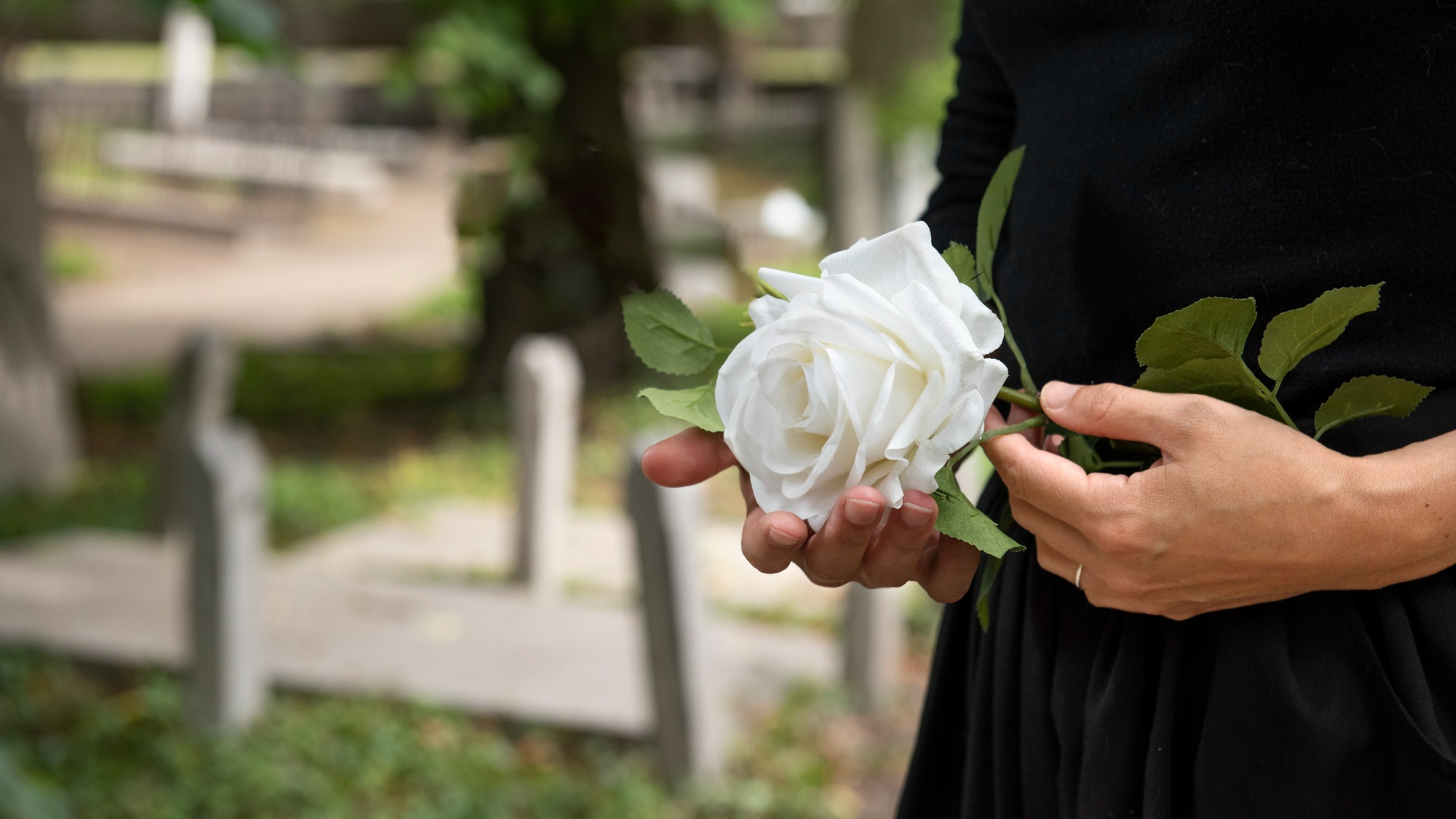
Rain had been falling over Arlington since before dawn, turning the gravel dark and shining and beading on the shoulders of the honor guard. They stood beside my grandfather’s casket in white gloves, faces still beneath a low gray sky, the way they stand for everyone, the way they had stood eleven thousand times before.
Thomas Whitaker had spent fifty one years of his life in service to his country. He hated ceremonies. He hated politicians. He hated overcooked steak and he hated being thanked. The funeral my sister had arranged for him had all the performance he had spent his entire life avoiding.
Black SUVs lined the curb. Defense contractors, distant relatives, and people from charity boards crowded together beneath umbrellas. Some of them had not visited him in years. Several had not visited him ever. They had come to be seen mourning Thomas Whitaker, which is a different activity entirely from mourning Thomas Whitaker.
I had come to say goodbye.
At 8:23 in the morning I walked up toward the chapel in an old black coat and boots that had been resoled twice. The only thing on my hands was a silver ring that looks like cheap costume jewelry unless you happen to recognize the insignia cut into the edge of it, and almost nobody does, which is rather the point of it.
Becca recognized nothing.
“Stop,” she said.
She stood beneath an umbrella held by an assistant she had hired for the day, in a tailored coat, wearing our grandmother’s diamonds in her ears. Two private security men waited a pace behind her, because my sister had decided that a funeral at Arlington National Cemetery required private security.
Her eyes traveled over me slowly, taking in the coat, the boots, the wet hair I had not bothered to dry.
“Look who finally decided to show up.”
Every conversation within thirty feet of us died. Umbrellas shifted. Faces turned toward the noise the way faces always do.
“I came for Grandpa,” I said.
Her smile got sharper. “You don’t get to say his name.”
I felt the folded authorization letter against my ribs. It had been issued at 6:40 that morning, in a windowless office in Virginia, and signed by a man my sister had watched deliver briefings on television.
I left it where it was.
“Where were you when he was dying?” she demanded. “Where were you when this family needed you? Where were you for five years, Elle?”
“I was working.”
She laughed. It was loud enough to pull the last of the mourners toward us, which I understood, even then, was the entire purpose of it.
“Working. You vanished for five years. No holidays. No phone calls. Not one explanation to anyone. You walked away from every single obligation this family ever gave you, and now you show up at his funeral looking like that.”
A cousin lowered his eyes. One of Grandpa’s old business partners studied the gravel with tremendous interest. Nobody interrupted her. That is the thing about a person like my sister. She does not need allies. She only needs an audience that would rather look at the ground than at her.
Becca stepped closer to me, close enough that I could smell her perfume through the rain.
“Our grandfather gave his entire life to duty,” she said. “And you couldn’t keep one single promise.”
I had kept more promises in five years than she would make in a lifetime.
I had kept silent when silence cost me birthdays and weddings and my grandmother’s funeral. I had obeyed an order that erased my address, restricted my communications to a monitored channel, and turned my family’s growing anger into one more thing I was required to carry without explanation. Every one of those years, I had known exactly what they thought of me, and I had not been permitted to say a word.
But my sister has never in her life been able to tell the difference between restraint and weakness.
She lifted her chin and turned slightly, so that her voice would carry properly to the crowd.
“She ran from her duty,” Becca announced. “She is a disgrace to this family.”
And then she delivered the word she had clearly been saving for a while.
“She’s a deserter.”
The rain tapped against dozens of umbrellas. Nobody said anything.
The honor guard did not move. They are not permitted to move. The flag over my grandfather stayed bright and perfect and precisely folded at the corners while my sister tried to bury my name in the ground beside him.
One of the security men stepped toward me. “Ma’am. You need to leave.”
I did not step back.
“Becca,” I said quietly. “Are you sure you want to do this here?”
She heard it as a plea. She has always heard everything as a plea.
“Remove her.”
That was when tires hissed against the wet curb.
A black sedan came to a stop near the chapel. Two uniformed officers got out first, and the second of them opened the rear door.
The general stepped out into the rain.
His dress uniform was immaculate in a way that only happens when someone has spent forty minutes on it. Ribbons and insignia covered the left side of his chest. Every veteran in that crowd straightened before they consciously realized they were doing it, which is a thing you can watch happen and which I have never gotten tired of seeing.
Becca glanced over my shoulder with mild irritation, the way you glance at a car alarm.
Then she saw where he was looking.
At me.
The security man’s hand froze about four inches from my arm.
The general crossed the gravel without so much as acknowledging my sister’s existence. Rain silvered the brim of his cap. The two officers followed him with a sealed red folder carried between them.
Becca’s smile held for one second longer than it should have. Then the color went out of her face all at once.
He stopped in front of me and raised his hand in a formal salute.
I returned it.
Somebody behind Becca made a sound.
“Major Whitaker,” the general said, and his voice cut clean through the rain the way a voice does when it has spent thirty years being obeyed. “Your five year nondisclosure order was lifted at 0600 this morning.”
Becca took one unsteady step backward.
The general took the red folder from the officer, walked past me, and set it down on my grandfather’s flag draped casket. Then he looked at the senior member of the honor guard.
“Open it,” he said. “Read the first page aloud.”
I want to be honest about what was in that folder, because these stories always want it to be something enormous, and the truth was smaller and better.
It was not a medal citation. There was one of those, eventually, months later, in a room with no windows and eleven people in it, which is how those things actually happen.
What was in the folder, on the first page, was an official memorandum from the Department of Defense confirming the following: that Major Elena Whitaker had been assigned to a classified program under a Special Access designation from March of one year to March of five years later. That during that period she had been prohibited by lawful order from disclosing her assignment, location, or duty status to any person, including immediate family. That her service record contained no adverse action of any kind. That she had at no point been absent without leave, discharged, separated, or subject to disciplinary proceedings.
And then the sentence the honor guard read out into the rain, in the flat careful voice of a young man reading something he does not fully understand yet, and which I heard land in two hundred people like a stone in water.
Major Whitaker’s continuous active service during the referenced period is hereby affirmed, and any characterization of her absence as desertion, dereliction, or voluntary separation is without factual basis and is formally corrected by this memorandum.
The rain kept falling. Nobody moved at all.
“There is a second page,” the general said. “Read that one too.”
The second page was the part I had not known about. I want that on the record, because I have been asked a hundred times since whether I orchestrated it, and I did not. I had gotten a phone call at 5:15 that morning telling me my order was lifted, and I had gotten the letter at 6:40, and I had driven to Arlington in the rain intending to say nothing to anyone and to stand at the back.
The second page was a request. It had been submitted eleven months earlier, through channels, by a retired Command Sergeant Major named Thomas Whitaker, aged eighty three, and it asked, in the specific and correct and completely uncompromising language of a man who had spent five decades learning exactly how to write to the Department of Defense, that upon the lifting of his granddaughter’s nondisclosure order, a representative of the Department attend in person at whatever family gathering next occurred and make her service status known to her family, in his presence if he was living and at his grave if he was not.
The final line of his request, which the honor guard read out and which I have had framed since, said this.
She has been carrying this alone. I would like her not to have to carry it alone at my funeral.
That is my grandfather. That is the whole of him in one sentence.
He knew. That is the thing my sister has never been able to metabolize. He had known the entire time.
He had not known the details, because he did not have the clearance and would not have asked if he had. But he had known enough. Around year two, he had done what a retired Command Sergeant Major with fifty one years of relationships does, which is make three phone calls, and someone at the other end of the third one had said, in a very careful voice, that Thomas should not worry, and that he should not ask again.
That was all he needed. He had been in that world his whole life. He knew exactly what it means when a man says do not ask again in a careful voice.
And for three years, while my sister was telling the family I had abandoned them, my grandfather had said nothing, because he had been told not to. He had defended me in the only way available to him, which was to refuse, absolutely, to agree with her. Family members told me later that whenever Becca started, he would simply say, “That’s enough,” and change the subject, and he had done this so consistently for so long that people had begun to think of him as being in denial about his granddaughter.
He was not in denial. He was under orders. He had chosen, at eighty one years old, to let his family think he was a stubborn old man losing his grip rather than break a confidence he had never officially been given.
And then, knowing he was dying, he had filed a request with the Department of Defense to make sure that the record would be corrected out loud, in front of witnesses, on the day it was finally allowed to be.
He built me a door. He knew he would not be alive to open it. He built it anyway.
I did not say anything to Becca that morning. I want to be clear about that, because everyone expects that I did, and the truth is I could not have gotten a sentence out. The general put his hand on my shoulder briefly, which is not regulation, and said, “Your grandfather was extremely persistent, Major,” and then he stepped back and let the funeral happen.
The funeral happened. That was the strange and merciful thing about it. Rifles, taps, the flag folded thirteen times by young men who had never met him. Somebody handed the flag to Becca, because she was listed as next of kin on the arrangements, and she took it with both hands and her face did something I had never seen it do.
Afterward, at the reception in a hotel ballroom she had booked and decorated, nobody spoke to my sister.
I do not mean that she was shunned dramatically. It was quieter and far worse than that. People simply did not approach her. The defense executives who had come to be seen mourning Thomas Whitaker found reasons to be elsewhere in the room. The cousin who had looked at the ground came and found me and apologized so badly and so sincerely that I ended up comforting him. Grandpa’s old business partner shook my hand for a long time and could not finish his sentence.
Becca stood by a table of untouched canapés holding a folded flag, in a coat that cost more than my car, entirely alone in a room she had organized.
I went over to her. I have been asked why more than any other question about that day.
The answer is that I stood at the back of that ballroom and looked at my sister and I understood something I had been too angry to see for five years, which was that she had needed me to be a deserter.
Our parents died when I was eleven and she was fifteen. Grandpa raised us both. And Becca had spent her entire adult life inside a house built by a man whose life was one long unbroken line of service, and she had never found her way into that line, and she had known it. She had money and boards and diamonds and none of it counted in the only currency that had ever mattered in our family. Then her little sister put on a uniform and vanished into something she was not allowed to know about, and the only story available to Becca that did not end with her being the lesser Whitaker was one in which I had run.
She did not build that story out of cruelty. She built it out of terror. And then she had defended it for five years the way people defend the thing holding them up.
So I went over.
I said, “I’m sorry I couldn’t tell you.”
She looked at me and her face came apart. She said, “You let me say that. In front of everyone. You let me stand there and say that.”
“I couldn’t stop you,” I said. “That’s the part I need you to understand. I wasn’t allowed to stop you. Not that morning and not for five years. Every birthday you didn’t get a call, every message you sent me that came back undeliverable, I knew what you were thinking and I couldn’t say one word. That was the order. That was the job.”
“He knew,” she said. It was not a question. “Grandpa knew. That’s why he never let me. All those times he said that’s enough.” She started to cry, badly, holding the flag. “I thought he was going senile. I told people that. I told people our grandfather was losing it because he wouldn’t admit what you’d done.”
“I know.”
“He filed a form,” she said. “He was dying and he filed a form so that a general would come to his funeral and tell me I was wrong.”
“No,” I said. “He didn’t do it to tell you you were wrong. He did it so I wouldn’t have to.”
She and I are not close now, four years on. I want to be honest about that. There is a version of this ending where the sisters embrace in the ballroom and everything is healed, and it did not happen, because five years of being called a deserter does not evaporate in an afternoon, and because Becca is still Becca, and she has spent a great deal of the intervening time being sorry in ways that are mostly about her.
But we talk. She calls on Sundays. She has never once, in four years, said anything about my work, which for my sister is an act of restraint bordering on the heroic.
And she gave me the flag.
Not that day. About eight months later, she drove to my house unannounced and put the triangle case on my kitchen table and said, “This was never mine. I was next of kin on a form. You were his.” Then she left before I could argue, which was probably wise of her.
It sits on a shelf in my living room now, next to a framed copy of page two.
I stayed in. People ask me that too. Five years of silence, a family that turned on me, and I went back to work six days after the funeral, and I am still in, and I will be until they make me stop.
I stayed because of something my grandfather said to me when I was seventeen and had just told him I was going to enlist, and he had not smiled or been proud, he had just gone quiet for a long time and then said, “Elle, the work is mostly invisible. That’s not a flaw in it. That’s the shape of it. If you need people to see you doing it, you’ll be miserable and you’ll be bad at it. Do it because it needs doing and let the seeing take care of itself.”
I did not fully understand that until I was standing in the rain at Arlington and a young man in white gloves was reading my own service record out loud off the lid of my grandfather’s casket.
Because the thing about that morning is that the record did not change anything. Everything on those two pages had been true for five years. It was true every Christmas I missed. It was true every time my sister said the word deserter at a family dinner I was not at. It was true while I stood in the rain in a cheap coat being told to leave by a security guard my sister had hired.
The general did not make it true. He just made it audible.
That is what my grandfather understood, and it is the only thing I would want anyone to take from any of this. He could not clear my name for five years and he did not try, because he had been told not to and because he was a man who kept confidences. But he knew that the day would come when the silence lifted, and he knew he would probably not be alive for it, and so he sat down at eighty two years old with his terrible handwriting and a form he had to request twice and he made absolutely certain that when that day arrived, his granddaughter would not be standing in a room full of people explaining herself alone.
He did not defend me. He did something better. He arranged, from beyond his own death, for me not to need defending.
They played taps for him in the rain. The honor guard folded the flag over him thirteen times. And down the hill, past eleven thousand other white stones, the rain kept falling on a cemetery full of people who did work nobody watched.
I go out there on the anniversary. I stand at his stone in the same old black coat, and I do not say much, because he would have hated a speech.
I just say the thing he said to me when I was seventeen, back to him.
The work is mostly invisible. That’s not a flaw in it. That’s the shape of it.
And then I go back to work.

Ethan Blake is a skilled Creative Content Specialist with a talent for crafting engaging and thought-provoking narratives. With a strong background in storytelling and digital content creation, Ethan brings a unique perspective to his role at TheArchivists, where he curates and produces captivating content for a global audience.
Ethan holds a degree in Communications from Zurich University, where he developed his expertise in storytelling, media strategy, and audience engagement. Known for his ability to blend creativity with analytical precision, he excels at creating content that not only entertains but also connects deeply with readers.
At TheArchivists, Ethan specializes in uncovering compelling stories that reflect a wide range of human experiences. His work is celebrated for its authenticity, creativity, and ability to spark meaningful conversations, earning him recognition among peers and readers alike.
Passionate about the art of storytelling, Ethan enjoys exploring themes of culture, history, and personal growth, aiming to inspire and inform with every piece he creates. Dedicated to making a lasting impact, Ethan continues to push boundaries in the ever-evolving world of digital content.