I never rang the bell.
I had kept a copy of the key since before the wedding, a key Hannah had given me years earlier while laughing about something else entirely, pressing it into my palm with that particular carelessness she always had about things she trusted.
“Just in case I burn dinner one day and need you to come save me,” she had said.
I had kept it in the small dish on my dresser where I keep the things that matter, beside my late husband’s watch and the photograph from Hannah’s graduation. I had never used it. I had never thought I would need to.
That cold December afternoon I used it.
The house did not smell like dinner. It did not smell like the warm and ordinary evening I had been hoping to interrupt with a surprise visit. It smelled like cold grease and something underneath that I could not name precisely but recognized, the particular stillness of a space where someone has been holding themselves very carefully for a very long time.
Hannah was at the sink.
Barefoot on the kitchen tile, which was pale stone and held the cold the way stone does in December, conducting it upward through the feet and into the body. Her sleeves were pushed to the elbows and soaked through. The kitchen window had been left open to the winter air outside.
Her fingers were purple.
Not cold-pink. Not slightly chilled. Purple, the color of tissue that has been deprived of circulation for too long.
At the dining table beneath the chandelier I had personally paid to have installed sat Ethan Walker and his mother, Mrs. Margaret. They were eating roasted chicken from the china I had given Hannah on her wedding day, the set she had admired in the shop window on a Saturday afternoon years before the wedding and mentioned once, casually, as something she found beautiful.
Mrs. Margaret lifted her wineglass and said, without turning from her plate, “A decent wife knows how to serve before she starts asking for luxuries.”
Ethan did not look at my daughter. He chewed with the slow satisfaction of a man who considers his comfort the natural order of things.
“Hannah is always dramatic,” he said. “She enjoys acting delicate.”
My daughter said nothing.
She lowered her eyes and murmured, barely above a whisper, “Yes, Ethan.”
That small sound broke something in me that I did not know could break.
Hannah had always been the child who cried over injured birds. Who worried about strangers having bad days. Who had once made me turn the car around on a busy road because she thought she had seen a lost dog near the shoulder and could not continue until she knew it was all right. She had been, from the beginning, someone with more care in her than the world generally knew what to do with.
And now she was whispering in her own kitchen.
She still had not seen me.
Mrs. Margaret held out her empty plate without standing, without even turning fully in her chair, with the casual expectation of someone who has never considered that service might have a cost.
“Wash this too. Then bring us more bread.”
Hannah wiped her hands on her apron and took a step forward.
Ethan stood abruptly. He took the plate from his mother and shoved it against Hannah’s chest.
“Didn’t you hear me? Stop washing and bring more food.”
The plate slipped. It hit the floor and shattered across the tile.
Hannah flinched.
Not with surprise. With recognition. The reflexive brace of a body that has learned to anticipate certain things and has long since stopped being surprised by them.
Then she looked up and saw me standing in the doorway.
“Mom?”
Her lips were pale. A bruise showed near her wrist, partly covered by the wet sleeve, the particular yellowish-purple of something several days old. She tried to arrange her face into a smile and did not manage it. What came instead was the expression of someone who has been holding something together for a very long time and has just seen the one person whose presence makes holding it together impossible.
Ethan turned around.
He looked surprised for one second and then angry, which told me everything I needed to know about the sequence of his emotions.
“Seriously? Your mother just walks into my house like she owns the place?”
Mrs. Margaret adjusted her pearls with the unhurried calm of someone who considers any disruption a failure of other people’s manners.
“No wonder Hannah is spoiled. You raised her to believe she was a princess.”
I did not shout. I did not move toward Ethan. My body wanted to do several things in that moment and I did none of them, because the situation required clarity rather than reaction and I had enough years behind me to know the difference.
I looked at my daughter.
“Come with me, Hannah.”
Ethan slammed his palm flat on the table. The dishes rattled. Hannah flinched again.
“She is not going anywhere. She has things to finish.”
Hannah took one step toward me.
Ethan pointed at her.
“Don’t.”
She stopped.
And that was the moment the anger in me changed quality. Until that second, it had been the burning, expanding anger of a mother who has just seen something she cannot unsee. After it, the anger became something colder and more precise, the anger that does not need to raise its voice because it has already decided what it is going to do.
I took my phone from my coat.
Mrs. Margaret produced a small, contemptuous laugh. “Oh, please. Are you calling the police because your daughter had to wash the dishes?”
“No,” I said.
Ethan smiled. He still believed this was manageable, which told me that nothing in his experience had yet taught him that some situations cannot be managed because they have already been decided.
“Then who are you calling?” he asked.
Someone answered on the second ring.
“Mr. Bennett,” I said. “Activate the protocol. The Brookline property. Immediately. Please send the notary, the security team, and the complete ownership file.”
Ethan’s smile shifted.
“What file?”
I lowered the phone.
“The file for the owner of this house.”
The kitchen went completely silent. Even the wind outside seemed to pause.
Then Ethan laughed, a sound that was less certain than he intended it to be. “I am the owner of this house.”
“No, Ethan,” I said. “You are occupying it. Those are different things.”
Hannah looked at me with an expression I had not seen on her face since she was a child confronted with something she did not have the framework to process.
“Mom. What are you saying?”
I put the phone in my pocket and looked at Ethan the way I had not allowed myself to look at him before that moment, not as my daughter’s husband, not as a member of the family I had tried for three years to accommodate and understand. I looked at him as what he actually was: a man sitting in a house that was not his, eating from china that was not his, using possessions he had not purchased, treating a woman whose patience he had mistaken for permission.
“In approximately five minutes,” I said, “you are going to understand why putting your hands on my daughter was the worst decision you have made.”
He stared at me.
“The house is in my name,” he said.
“The property,” I said, “is held in a family trust that predates your marriage to Hannah by eleven years. What you signed on your wedding day was a temporary occupancy agreement. You have the right to live here contingent on specific conditions. You have been in violation of those conditions for some time.”
Mrs. Margaret had risen slowly from her chair. For the first time since I had walked through the door, her composure had developed a crack.
“That is impossible,” she said.
“You signed as a witness,” I replied. “Page seven.”
“I do not read every page people put in front of me.”
“That has always been your choice to make,” I said. “Your signature is on the document regardless.”
Hannah had not moved from the spot where she stood. She was still shaking, though no longer only from the cold.
“Mom,” she said quietly. “Why didn’t you ever tell me?”
That question landed harder than anything Ethan had said. It was the right question and it deserved an honest answer, and I was going to give her one, but not in this kitchen with her husband standing three feet away.
“Because I hoped I would never need to,” I said. I looked at her directly. “And because I wanted you to have the freedom to love someone without knowing there was a net beneath you. I wanted it to be a real choice.”
Her eyes filled. She pressed her lips together.
Mr. Bennett arrived in four minutes rather than five. He had worked for our family for twenty-two years and had the particular efficiency of someone who has spent two decades turning instructions into actions without requiring elaboration. He came with two members of the security firm we retained, a notary, and a file folder containing the complete documentation of the trust that had held the Brookline property since I purchased it when Hannah was nineteen years old.
I had bought it as an investment initially, and then as something else when Hannah fell in love with the neighborhood during a drive one spring afternoon. I had updated the trust documents the year before she met Ethan, adding the occupancy provisions that my attorney had insisted on when I mentioned she was in a serious relationship. He had seen enough family estate situations to understand that protection, built quietly and in advance, was worth considerably more than protection pursued after the fact.
Ethan read the summary page that Mr. Bennett handed him with the expression of a man trying to find the error he is certain must be there.
There was no error.
“The trust cannot be dissolved without the signature of the primary beneficiary,” Mr. Bennett said, with the calm of someone reciting established fact. “Mrs. Morrison is the trustee. The occupancy agreement signed at the time of the marriage is conditional. Condition four specifies that evidence of harm to the beneficiary constitutes immediate grounds for review and potential revocation of occupancy rights.”
“What kind of harm?” Ethan asked. His voice had changed register.
Mr. Bennett looked at him. “Physical harm.”
The bruise on Hannah’s wrist was visible to everyone in the room.
Mrs. Margaret sat back down. Not gracefully. The way a person sits when their legs have made the decision for them.
Ethan put the papers on the table. He had the controlled expression of someone working through a problem rapidly, calculating options, looking for the angle that returns him to a position of advantage. He had been doing this, I suspected, for the entirety of their marriage. Looking for the angle.
“This will not hold in court,” he said.
“You are welcome to consult an attorney,” I replied. “Mr. Bennett can recommend several. The trust documentation has been reviewed by two independent firms and is entirely sound.”
“Hannah,” Ethan said, and his voice shifted again, into the register I recognized from the handful of family occasions where I had watched him manage her, softer now, almost tender, the voice of someone who has learned that control comes in multiple temperatures. “Tell your mother this is a misunderstanding. Tell her we are fine.”
Hannah was quiet for a long moment.
She looked at her hands, which had begun to return to their normal color now that she had moved away from the cold sink. She looked at the broken pieces of the plate on the floor. She looked at the wet sleeves of her shirt.
Then she looked at Ethan.
“I don’t think I can do that,” she said.
His jaw tightened. “Hannah.”
“No,” she said. It came out steadier than I think either of them expected.
That single word, in that kitchen, at that moment, is the thing I will remember longest from that December afternoon. Not the legal documents. Not Ethan’s expression when he understood the situation had moved outside his control. Not Mrs. Margaret’s silence, which was its own kind of revelation from a woman who had been speaking without pause since I arrived.
Just Hannah saying no. Quietly. Once. With her purple hands finally warming at her sides.
Mrs. Margaret gathered herself with the effort of someone reassembling a structure that has taken damage. She stood, straightened her jacket, and looked at me with an expression that had lost its earlier certainty but was trying to recover something from the wreckage of the evening.
“You are destroying a marriage,” she said.
“No,” I said. “I am ending an arrangement that stopped being a marriage some time ago.”
“Hannah chose Ethan.”
“Hannah chose someone she believed Ethan was going to be. People make that mistake. The choice that matters now is the one she makes going forward.”
Mrs. Margaret looked at her son. Whatever she saw in his face, it seemed to resolve something for her. She picked up her coat from the chair without further conversation and walked through the kitchen toward the front door. I heard it close behind her. I did not hear her say anything to Hannah on her way out.
Ethan remained.
He stood in the kitchen with the trust documents on the table in front of him and the security team waiting quietly in the doorway and Mr. Bennett with his file folder and Hannah standing ten feet away, and he went through several expressions in the space of a minute. Anger, and then calculation, and then something that might have been the beginning of understanding how thoroughly the evening had changed the geography of his situation.
“What happens now?” he asked.
“Mr. Bennett will explain the formal process,” I said. “You will need to vacate the property within the time period specified in the agreement. There is a review proceeding for the breach of the occupancy conditions. Your attorney will want to see these documents.”
“And Hannah?”
I looked at my daughter rather than answering him.
Hannah answered for herself.
“I think you should go, Ethan.”
He looked at her for a long moment. Then he looked at the floor. Then he picked up his coat from the back of his chair, very slowly, with the movements of a man who is trying to retain some quality of dignity in a situation that has stripped most of it away, and he walked out of the kitchen.
The front door closed a second time.
The house was very quiet.
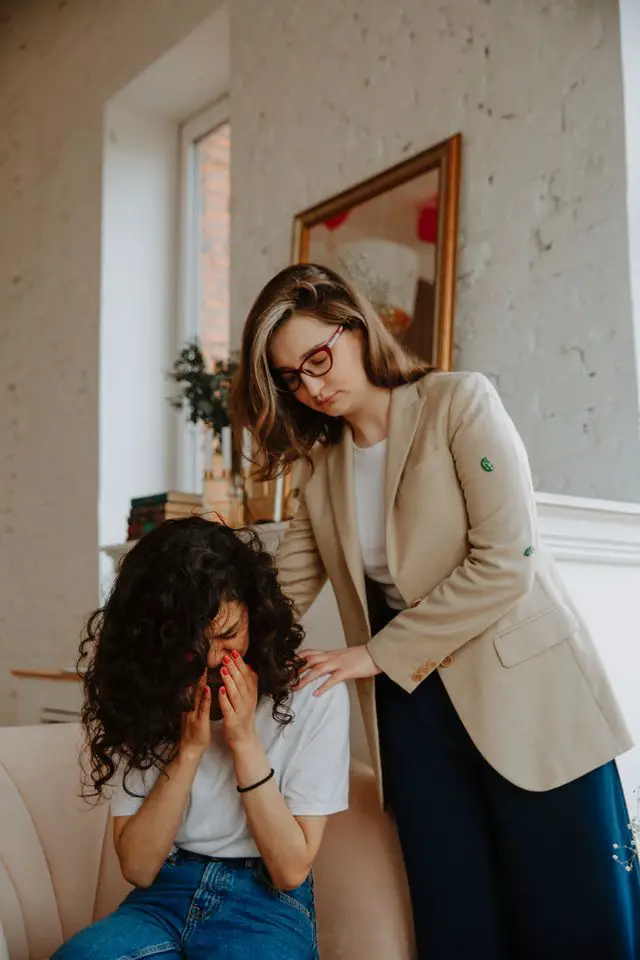
Hannah sat down in one of the dining room chairs, in the warm light of the chandelier, at the table where an hour earlier she had been serving people who had not thought to ask whether she was cold. She put her face in her hands and cried, not the restrained and careful crying of someone managing how they appear but the full, exhausted grief of someone who has been carrying something too heavy for too long and has finally been permitted to put it down.
I pulled a chair beside her and put my arms around her and said nothing, because there was nothing that needed to be said yet. Everything that needed to be said would take time and multiple conversations and probably a great many evenings not unlike this one, sitting together working through the layers of what had happened and what it meant and what came next. None of that needed to happen in the next five minutes.
What the next five minutes needed was for Hannah to cry until she was finished, and for her mother to stay beside her while she did it.
Mr. Bennett and his team waited in the hallway with the quiet professionalism of people who have been present for difficult moments before and understand that their job at this particular stage is simply to remain available.
When Hannah finally lifted her head, her face was blotched and her eyes were swollen and she looked, in that moment, more like herself than she had in the three years since she married Ethan Walker.
“How long have you known?” she asked.
“I suspected for about a year,” I said. “I knew something was wrong before that, but suspicion and knowledge are different things and I wanted to be certain before I acted.”
“What made you certain?”
“Last Thanksgiving,” I said. “The way you apologized to him for laughing too loudly at something your cousin said. You caught yourself immediately and looked at him before you finished the sentence, and then you made yourself smaller. I recognized it then.”
She absorbed this. “I thought I was being subtle.”
“You were. Most people wouldn’t have noticed. I noticed because I was watching for you specifically.”
She looked at her hands. The purple had faded entirely now. Her fingers were their ordinary color, slightly red at the knuckles from the cold water, but recognizably hers.
“The bruise,” she said. It was not a question.
“Yes,” I said.
“It’s not the first.”
“I know.”
She looked up at me. “How did you know that?”
“Because a first bruise produces a different kind of flinch than a bruise that comes from a pattern,” I said. “You flinched the way someone flinches when they already know the shape of what is coming. That is not a first-time reaction.”
She was quiet for a long moment.
“I kept thinking it would get better,” she said. “When we first moved into the house, he was different. He was the person I thought I was marrying. And then gradually it shifted, and I kept trying to find the version of him that I knew and thinking that if I could just do things correctly enough, he would come back.”
“He didn’t come back because he was never entirely that person,” I said. “The version you fell in love with was real, but it wasn’t the whole of him. The rest of it was always there.”
She nodded slowly. It was the nod of someone confirming something they have already understood in a part of themselves that they hadn’t been ready to act on.
“I was ashamed,” she said. “I didn’t want you to see it.”
“I know.”
“I didn’t want you to think I had been foolish.”
“You weren’t foolish,” I said. “You were in love and then you were afraid, and those two things together have kept a great many very intelligent people in situations they should have left. There is no version of this where I think less of you.”
She rested her head on my shoulder the way she used to when she was young and had come home from something difficult at school. We sat like that for a while in the warm light of the chandelier.
Then she asked about the trust.
I explained it fully, the way I had not been able to while Ethan was in the room. I had bought the Brookline property eleven years ago, three years before Hannah met Ethan, because I had seen it listed and recognized it as the kind of investment that builds value slowly and reliably over decades. I had placed it in the family trust for tax efficiency. When Hannah fell in love with the house during a visit, I had quietly updated the trust to make her the primary beneficiary, which meant the property would transfer to her outright at a time of my choosing or upon my death.
The occupancy provisions had been my attorney’s idea. I had resisted them initially, because building legal protections into a marriage before it begins feels like a declaration of mistrust, and I had not wanted to begin Hannah’s marriage with mistrust. But her attorney had been patient and clear with me. The provisions existed not to express doubt about Ethan but to protect Hannah regardless of who she married, because the protection of a person you love is not conditional on what you think of their partner.
I had signed the updated documents six months before the wedding and not told Hannah, for the reason I had already given her: I wanted her to have a marriage that felt real, chosen freely, without the knowledge of a safety net. I had never expected to use the provisions. I had hoped to transfer the property to her outright when she and Ethan were settled and when it seemed right.
The bruise on her wrist had ended that calculation.
“You should have told me,” she said, but the reproach was mild, complicated by other things.
“Maybe,” I said. “I’ve thought about it. I’m still not certain. If you had known about the trust, would you have made different choices? Or would you have worried differently, stayed differently, left at a different time for a different reason? I can’t know.”
She thought about this. “I don’t know either.”
“What I know,” I said, “is that you are sitting in your own kitchen in your own house, and the person who was making you afraid is gone, and you have time and space now to figure out what you want the next part of your life to look like. That is what I built the trust to give you. Not a rescue. Time and space.”
Hannah looked around the kitchen. At the window, which someone had finally closed against the December air. At the good china on the table, still holding the remnants of a dinner she had made for people who had not thanked her. At the broken plate on the floor, which Mr. Bennett’s team had quietly swept up while we sat together.
“I don’t know where to start,” she said.
“You don’t have to start tonight,” I said. “Tonight you just have to be somewhere safe.”
She was somewhere safe.
The formal legal process that followed was neither quick nor simple, which is true of most processes worth undertaking. Ethan’s attorney reviewed the trust documents and advised him, I was told through Mr. Bennett, that contesting them would be expensive and almost certainly unsuccessful. The occupancy agreement was clear. The conditions were clear. The breach was documented.
He vacated the property within the specified period. He did not contest the conditions of separation. There were negotiations around the division of other marital assets, conducted entirely through attorneys, and those negotiations required several months and a quality of patience from Hannah that I watched her develop in real time, slowly and with visible effort.
I moved into the Brookline property with her for the first two months.
This was not a plan. It became the plan because Hannah asked me to stay the night after Ethan left and then asked me to stay the following night, and by the third day we had established a rhythm that suited us both and neither of us brought up the subject of my leaving. I slept in the guest room and made coffee in the mornings and we cooked dinner together most evenings and talked, sometimes for hours, about things we had not talked about in years.
We talked about her father, who had died when she was sixteen and whom she had been missing in ways she had not fully articulated to herself until the marriage fell apart and she understood how much of her life had been organized around looking for people who would stay.
We talked about the years of her marriage, not all at once but gradually, the chronology of how things had changed and what she had told herself at each stage and which stories she had stopped telling me and why. This was not easy conversation. Some of it required us to sit with things that were painful for both of us, me for not having moved sooner, Hannah for not having reached for help sooner, both of us for the time that had passed in the wrong direction.
We talked about what she wanted to do with the house. She decided to stay in it, which I had not predicted but which made sense when she explained her thinking. She had chosen the neighborhood, had fallen in love with the rooms and the kitchen windows and the particular quality of light in the late afternoon. Ethan had occupied those things, but he had not created them and he had not taken them with him. They were still hers if she wanted them.
She wanted them.
By spring, the house had become genuinely hers. She had repainted two rooms in colors she had originally wanted and Ethan had overruled. She had rearranged the furniture in the living room into a configuration that made no sense to me but made perfect sense to her. She had planted something in the back garden, I could not remember what, only that she had shown me a photograph of the seedlings with an expression I had not seen on her face in years.
She began seeing a therapist in January, which she told me about without prompting and which I received without comment beyond asking whether the person was good. Hannah said she thought so. I said that was what mattered.
She also called me one evening in March to tell me, with the particular quality of voice someone uses when they have worked out how to say something difficult, that she was not angry with me for not telling her about the trust, but that she had needed to examine whether she was and had determined that she was not.
“I needed to think about whether I would have done anything differently if I had known,” she said. “I don’t think I would have. I think I needed to come to this myself. You knew that.”
“I hoped it,” I said. “Knowing is a strong word.”
She was quiet for a moment. “You were right about the freedom,” she said. “I needed to make a real choice. Even the choice to stay too long was mine. I own it. That matters to me.”
Mrs. Margaret I did not speak to again for a long time. In the summer she sent a card to Hannah, brief and not entirely comfortable, acknowledging that what Hannah had been through was more difficult than she had understood. It was not an apology in any complete sense. It was more like the first tentative evidence that something in her understanding had shifted, that the version of events she had maintained through the dinner and the confrontation and the months afterward had begun to give way to something more accurate.
Hannah received it, replied briefly, and did not force the correspondence into something it was not ready to be.
I thought about that card for some time afterward, about what it takes to write something like it. Mrs. Margaret was a woman who had organized her entire self-concept around a particular kind of pride, the pride of someone who is always correct, always composed, always in a position of social authority. Writing even an incomplete acknowledgment to the daughter-in-law she had spent three years dismissing required her to work against the grain of everything she had built. I do not know whether she managed it out of genuine reconsideration or simply out of the social calculation that isolation from her son’s former family was no longer serving her. Probably both, in proportions I could not measure from the outside.
It was enough that she wrote it. Whatever the proportion.
Hannah’s thirty-second birthday was in June.
We celebrated in the kitchen of the Brookline house, the same kitchen where she had stood in December with purple hands and soaked sleeves and a bruise on her wrist that she was trying to hide. I had brought flowers and she had made dinner, something elaborate she had been practicing for weeks, and we ate at the dining room table under the chandelier and the house smelled of garlic and white wine and something baking.
Halfway through the meal she put her fork down and looked at me.
“I want to thank you,” she said. “For the key. For the trust. For coming that day.”
“You don’t need to thank me for that,” I said.
“I know I don’t need to. I want to.”
I looked at her. She was wearing a green dress I had not seen before and her hair was different, cut shorter since the winter, and she was sitting at her own table in her own kitchen in her own house eating a dinner she had cooked herself with both hands visible and no fear in her posture.
“You’re going to be all right,” I said.
“I know,” she said. She picked up her fork again. “I already am, mostly.”
I believe her.
The property will transfer to her name outright within the year, when the final conditions of the trust are satisfied. It will be her house in every sense, with no agreements and no conditions and no documents required to make it so.
That is what I built the trust to be.
Not a rescue. Not a weapon. Not a demonstration of anything.
Just a net. Built quietly, in advance, before it was needed, so that when my daughter finally let herself fall, there was something beneath her to catch.

Laura Bennett writes about complicated family dynamics, difficult conversations, and the quiet moments that change everything. Her stories focus on real-life tensions — inheritance disputes, strained marriages, loyalty tests — and the strength people find when they finally speak up. She believes the smallest decisions often carry the biggest consequences.