The moment I saw a white Rolls-Royce sitting in the middle of my locked workshop, I knew somebody had made a very expensive mistake.
It was 5:47 on a Tuesday morning outside Fort Worth. The sky was still black. The parking lot lights were buzzing the way they do in the last hour before dawn, and the Texas heat hadn’t started coming up off the pavement yet.
I unlocked the side door of Mercer Heritage Motors with my coffee in one hand and my keys in the other. Cutting oil, fresh paint, rubber, cold steel. That smell has met me at that door almost every morning for seventeen years.
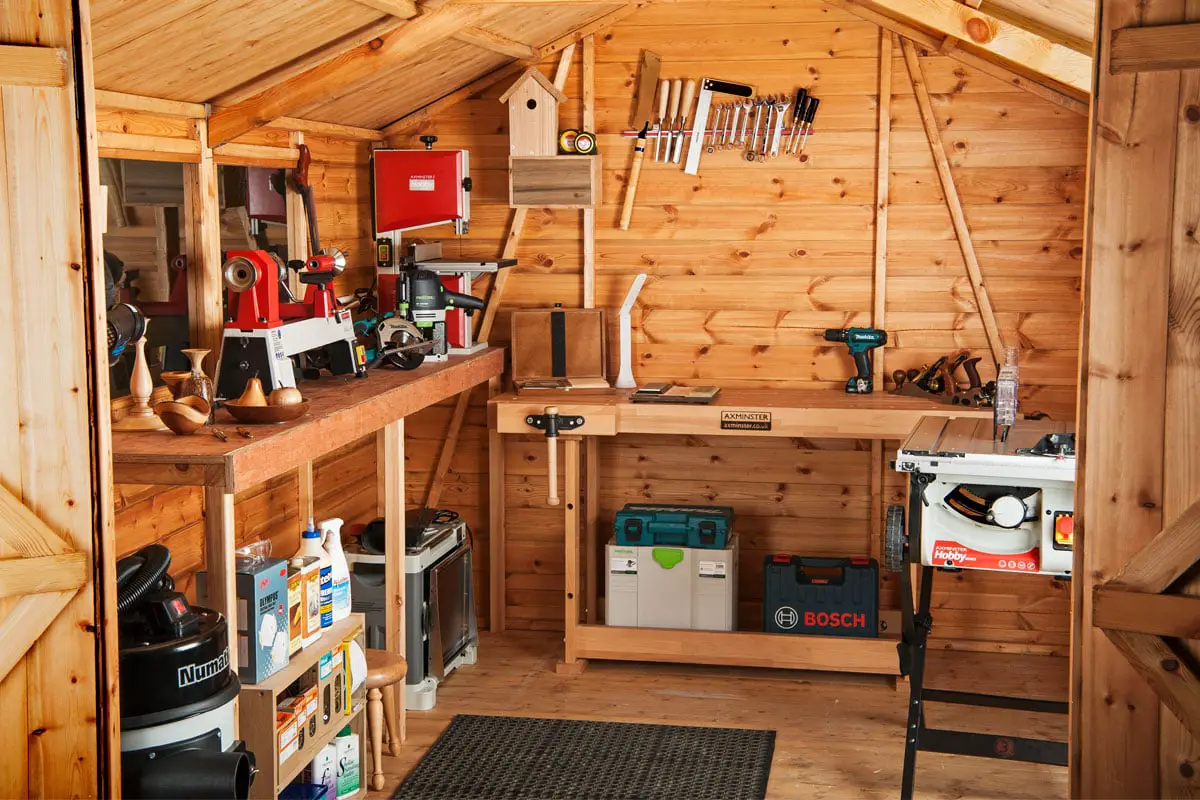
My shop is not a backyard garage.
There’s close to two million dollars of equipment inside that building. Fabrication machinery. Two paint booths. Diagnostic systems that cost more than my first house. Specialty tooling you can’t just go buy on a Tuesday. And customer vehicles that can never be replaced by anybody at any price.
Every inch of it got paid for with long nights, missed holidays, and about fifteen years of saying no to things other people take for granted.
That morning, the place felt wrong before I could tell you why.
The security lights come on one row at a time, front to back. Lift 3 held a stripped ’69 fastback. A black roadster sat under a cover near the booth. Two customer trucks were parked by the alignment rack, right where they’d been when I locked up.
Then the lights reached bay 2.
I stopped so fast that hot coffee came over the lip of the cup and across my fingers.
A spotless white Rolls-Royce Ghost was sitting directly under the brightest lights in the building.
It had not been there when I left at 8:16 the night before.
I know every vehicle that comes onto my property. I know the owners, the insurance carriers, the repair orders, the storage agreements. Nobody puts a four-hundred-thousand-dollar sedan in my shop without me knowing about it a week in advance and signing three pieces of paper.
But there it was. Parked dead center in the bay, squared up, like somebody had staged it for a photograph.
I set the coffee on a workbench and walked all the way around it.
Doors locked. Paint flawless. No broken glass. No scrape marks on the frame. No handprints in the dust on the fenders, and there was dust on the fenders.
The steel gate outside had still been locked when I pulled in. I’d unlocked it myself.
So had the building.
There was a folded document under the driver-side wiper.
I pulled it out.
Across the top it said temporary ownership declaration. Underneath it was a name.
Denise Carver.
President, Briar Glen Homeowners Association.
I read it twice, though I didn’t need to.
Denise Carver had been trying to shut down my workshop for four years.
She complained about delivery trucks arriving during legal business hours. She complained my security lights were too bright, after the county inspector approved them. She reported chemical smells that no inspector ever found, parking violations on my own commercially zoned lot, excessive noise, and — my personal favorite — visual pollution caused by restored cars sitting behind my fence.
Every single complaint failed.
My permits are clean. My property was zoned commercial before the first house in Briar Glen had a foundation poured. My environmental inspections are current, and I keep more documentation in that office than some county departments keep in a basement.
Denise hated that.
She also wanted my land.
Two years back she offered to buy the property for one point three million. It sounded generous right up until I found out she was working with a development group planning to flip it for nearly four.
I said no.
I remember her smile going tight when I said, “The shop isn’t for sale.”
After that the complaints doubled.
And now a car supposedly belonging to that woman had appeared inside my locked business overnight.
I carried the document into my office and opened the security dashboard.
Every door sensor showed normal. Alarm armed at 8:21 the previous evening. Disarmed at 5:44 that morning by my own code.
No alerts. No forced doors. No gate faults.
I pulled up the overnight camera footage.
At 12:58 a.m., bay 2 was empty.
At 1:13 a.m., the video froze.
The image sat perfectly still for six seconds.
When the feed picked back up, the Rolls-Royce was already parked under the lights.
I watched it again.
Then a third time, leaning in close.
That wasn’t static. That wasn’t a dropped frame or a bad connection. The timestamp kept running in the corner while the picture held still, which means somebody interrupted that recording without disabling the system.
My coffee suddenly tasted like burnt dirt.
I printed the access logs. I copied the footage onto three separate drives and put one in my truck. I locked the ownership document in the office safe.
By eight, my guys started rolling in.
Marcus Dale, my lead tech, pushed his box through the service entrance and stopped dead.
“Did we win the lottery?”
“No.”
“New customer?”
“No.”
He looked at my face for a second.
“How bad is it?”
“I don’t know yet,” I said. “Nobody touches that car. Nobody photographs it. Nobody leans on it.”
At 9:30 the office phone rang twice, stopped, and rang again.
Denise always does that. She believes that answering on the second call makes a person feel summoned. I’d bet money on it.
I picked up.
“Good morning, Caleb.” Smooth. Cheerful. “I trust you found my vehicle.”
I looked through the office glass at the white Rolls.
“How did it get inside my locked building?”
“That isn’t the important question.”
“It is to me.”
“The important issue,” she said, “is that you are currently holding property that legally belongs to me.”
I leaned back in my chair and let the silence run a second.
“I never agreed to store your car.”
“You may want to reconsider your wording, Caleb. Refusing an owner access to her property can have consequences.”
And there it was.
Not surprise. Not confusion. Not a single question about how a car she owned ended up somewhere she hadn’t put it.
A threat, wrapped up in polite language.
“You should come out here and explain what happened,” I said.
She laughed, soft, in the back of her throat.
“I believe the documents explain everything.”
She hung up.
At 12:07 a black SUV came through the lot.
Denise got out in a cream blazer and narrow sunglasses, wearing the expression of somebody arriving to collect a prize. A man in a gray suit followed her with a leather briefcase.
They came into my office and she sat down without being asked.
“This is my attorney, Martin Shaw. We’re here to retrieve the Rolls-Royce.”
Martin set a folder on my desk.
Inside were title transfer documents, a temporary registration, a bill of sale, and a notarized ownership statement.
First glance, it all looked right. Seals in the correct positions. Current form numbers. Signatures where signatures go.
But the paper smelled strongly of fresh toner, and every page had that unnaturally crisp edge you only get off a machine that’s still warm.
It didn’t look like a file somebody had carried through a real transaction over several weeks. It looked like a packet printed that morning.
Denise crossed one leg over the other.
“I understand this may be embarrassing for you, Caleb. I’m willing to handle it privately.”
“Embarrassing for me?”
“You have an unauthorized vehicle inside your business.”
“You put it there.”
Martin lifted a hand.
“My client has not admitted to placing the vehicle anywhere. We’re simply asking that her property be released.”
I started turning pages. Slowly. Reading each one all the way through, which I could tell irritated her.
Then I got to the transfer date.
My face didn’t move. But something inside my chest clicked into place like a socket finding a bolt.
According to that document, ownership changed hands on Saturday, April 18.
That date was impossible.
I knew it was impossible because I had personally seen that same Rolls-Royce six weeks earlier, during an inspection connected to a local estate dispute. Insurance company hired me to document condition and originality on four vehicles.
On April 18, that car was sealed inside a monitored storage warehouse almost sixty miles from here.
And I had signed the paperwork proving it.
Denise smiled across the desk.
“I assume everything is in order.”
I closed the folder.
“I assume you won’t mind waiting while I verify it.”
Her smile lost about ten percent of itself.
“There’s nothing to verify.”
“That’s strange,” I said. “Because according to your title, this car was sold in one county while it was locked inside a secured warehouse in another.”
And for the first time in four years, Denise Carver stopped smiling.
She recovered fast. People like her usually do.
She leaned forward, put both hands flat on my desk, and used the patient voice you’d use with a child at a restaurant.
“You restore cars, Caleb. You are not a title specialist.”
“No. But I understand dates.”
Martin reached for the folder.
“There may be a simple clerical explanation.”
“Then you’ll be happy to explain it.”
I got up and opened the filing cabinet behind my desk.
My shop has survived seventeen years on documentation. Every vehicle enters with photographs, mileage, VIN records, delivery receipts, insurance information, and signed authorizations. Collectors trust me with cars worth more than houses because I have never once relied on memory when paper could tell the truth.
I laid three documents on the desk facing them.
An inspection authorization dated April 16.
A secure warehouse verification dated April 19.
And a transport manifest showing that vehicle had not left that facility at any point in between.
Martin read all three. The muscles around his mouth pulled tight.
Denise barely glanced at them.
“These prove the car was stored somewhere. They don’t prove ownership wasn’t transferred.”
“Who sold it to you?”
“That’s confidential.”
“The registered owner is deceased.”
“The estate had authorized representatives.”
“Which representative?”
Her eyes narrowed.
“You are crossing a line.”
“No,” I said. “Somebody crossed my locked gate.”
The office went quiet. Out in the shop one of my guys fired up an engine and the low rumble came through the glass. Past the service doors the light had gone gray. Storm building.
Then my desk phone rang.
County records office.
I’d called them at 6:20 that morning.
I picked it up while Denise watched my face.
“Caleb Mercer.”
“Caleb, it’s Dana Whitfield.”
Dana handles complex title verification for the county and has helped me untangle antique registrations twice before. She’s careful, she’s quiet, and I have never seen anyone successfully pressure her about anything.
“What did you find?”
“I located the transfer record you referenced.”
“And?”
“The filing exists. But the supporting documents currently attached to it do not match the archived submission package.”
I turned my chair away from the desk.
“Meaning what?”
“Meaning several fields were changed after the original filing date.”
“Can that happen legally?”
“Not in the way this record shows it.”
Behind me I heard Martin’s chair shift on the floor.
“The signature certification number doesn’t match the original entry,” Dana went on. “The seller information was replaced. And the title image currently attached to the record has different metadata than the archived version.”
“Is the title valid?”
“I can’t make a final determination over the phone. But I’ve referred it for formal review.”
“When?”
“This morning. About twenty minutes ago.”
I thanked her and hung up.
Denise was watching me.
“What did she say?”
“That your paperwork is under review.”
“There’s no reason for a review.”
“The county disagrees.”
Martin started gathering the documents, noticeably slower than he’d put them down.
“If there are administrative discrepancies, my client will cooperate fully. Until then, we maintain the vehicle belongs to her.”
“Then it can stay right where it is until the records match.”
Denise stood up so fast her chair scraped.
“You’re making a serious mistake.”
“Maybe.”
“You have spent years resisting progress in this community. Don’t imagine your little collection of tools makes you untouchable.”
I looked out the window at the shop I’d built from a rented bay and a borrowed welder.
“My little collection of tools is insured for close to two million dollars.”
Her jaw tightened.
“And the property underneath them is worth more.”
That sentence stayed with me for a week.
She had supposedly come to recover a car. And the second she got angry, she talked about my land.
Martin put a hand lightly on her arm.
“We should go.”
On her way to the door, Denise looked back at the Rolls-Royce through the glass.
It was not the look of an owner admiring her property.
It was fear. Half a second of it. But I saw it.
I got in the next morning before sunrise with a flashlight and a magnifying inspection lamp.
The car hadn’t moved.
I started with the obvious stuff. Paint codes. Wheel markings. Glass etching. Factory labels in the door jamb. Interior tags.
All correct.
Then I got down under the windshield and looked at the identification plate.
One character sat slightly higher than the ones on either side of it.
Less than a millimeter.
I want to be honest — ninety-nine people out of a hundred would never see that, and forty of them would be mechanics. But I have spent seventeen years comparing stamped numbers on restored vehicles, mostly because people try to pass off replacement bodies as originals and it’s my job to catch it.
Factory stamping follows a pattern. Depth, spacing, surface finish, alignment. It isn’t random. Machines don’t get bored and drift.
This one was wrong.
I photographed the plate under magnification and compared it against the number printed on Denise’s title.
They matched each other perfectly.
Then I went into the archived estate records from my inspection file.
Two hours in, I found it. An inventory photograph taken shortly after the original owner’s death, before probate opened.
Same dashboard. Same windshield. Same plate.
Except one character was different.
Somebody had altered that vehicle’s identity after it entered probate.
I sat alone in my office for a long while with those two photographs side by side on the desk.
My father spent his whole life fixing machines in a two-bay garage with a roof that leaked every spring, and he used to tell me: machines don’t care how convincing your story is. They leave evidence.
He was right about that and about most things.
By noon Dana emailed a formal notice confirming the state title enforcement division had opened a review.
I expected Denise to get cautious after that.
She got more aggressive instead.
Martin sent daily demands for release of the vehicle. Denise left voicemails accusing me of interference, unlawful storage, and retaliation against the HOA.
I answered every single one, politely, in writing.
I am reviewing the records.
I am cooperating with the county.
I will release the vehicle when ownership is validated.
And here’s the thing I learned that week. The calmer I got, the more she talked.
On one call she mentioned a private filing code that had never appeared in a single document she’d handed me.
On another she named the notary office that had approved the transfer.
I checked. That office was closed for renovation on the date shown.
A later document listed a transaction address that had been demolished nine months earlier. I drove past the lot myself on a Saturday. Gravel and weeds.
I saved everything. Emails, timestamps, attachments, voicemail recordings, camera logs, and a copy of every changing version of that title packet — and there were four versions by the end, which is four more than there should have been.
Three days later a new demand came from Martin.
This one was different. The polite language was gone. He wanted the car released by 5:00 Friday and warned that his client would pursue all available remedies.
At 4:18 that afternoon, Dana called.
“Do not move that vehicle.”
“Wasn’t planning on it.”
“Good. State investigators will conduct an in-person inspection Thursday morning.”
“Should I notify Denise?”
“She’s already been notified.”
I looked through the glass at the car.
“Who’s coming?”
Dana paused a beat.
“Title enforcement division.”
“And?”
“The county sheriff’s office.”
For nearly a week that woman had been acting like official attention would force me to fold.
Thursday morning, she was going to get all the official attention anybody could want.
At 9:02 Thursday, two government vehicles came through my gate.
First was the state title enforcement division. Second was the county sheriff.
My guys stopped working one at a time. The air tools went quiet and the shop filled up with the ticking sound of cooling engines.
I walked out to meet them.
The lead investigator introduced herself as Laura Benton. Mid fifties, plain navy jacket, hard-sided evidence case in one hand and a handshake like a bank vault closing.
Beside her stood Deputy Sheriff Grant Ellis with a clipboard under his arm.
Neither one of them looked remotely interested in an argument.
“Is the vehicle secured?” Laura asked.
“Hasn’t moved since I found it.”
“Has anyone touched the identification plate?”
“Only for noninvasive photography. Magnifier and a light, no contact.”
“Good.”
They inspected the gate first. Then the alarm logs. Then the footage.
Laura watched that six-second freeze four times in a row without saying anything.
“Who has administrative access to this system?”
“Me and the security company.”
“Any recent service calls?”
“None authorized by me.”
Deputy Ellis wrote that down and underlined it.
At 9:21, Denise arrived.
She stepped out of her SUV in a pale blue blazer and oversized sunglasses. Martin followed with two folders held against his chest like a shield.
And when she saw the government vehicles, she smiled.
She actually looked relieved.
“I’m so glad this is finally being handled properly,” she said.
Laura gave her a polite nod. “That’s why we’re here.”
Denise put her hand out. “I have endured nearly a week of obstruction from Mr. Mercer.”
Laura did not take the hand and did not respond to the accusation at all.
She said, “We’ll review the documentation in the conference room.”
That was the first moment Denise looked uncertain.
People who live on intimidation depend on getting an immediate reaction. Laura Benton gave her absolutely nothing to work with, and you could see it landing.
We sat around the long table beside my office. The Rolls-Royce was visible through the glass wall behind us the entire time.
Laura started simple.
“When did you acquire the vehicle?”
“April 18.”
“From whom?”
“An authorized representative of the estate.”
“Name?”
Denise glanced at Martin. He opened a folder.
“The seller’s identity is documented in the transfer packet—”
“I asked your client.”
Martin closed the folder.
Denise cleared her throat.
“Victor Hale.”
That name did not appear anywhere in the estate records I’d reviewed six weeks earlier. Not on the representative list, not in the correspondence, nowhere.
Laura wrote it down.
“Where did the transaction take place?”
“A private office in Arlington.”
“Address?”
Denise hesitated. Martin supplied it.
Then Laura went to work, and it was one of the most impressive things I’ve ever watched anybody do sitting down.
She asked who had possession of the car at the time of sale. Who delivered the keys. How payment was made. Who witnessed the signature. What time of day. Whether it rained.
Every answer came fast. And every answer moved a little.
First Denise said the representative handed her the keys personally. Ten minutes later she said a transport driver delivered them.
She said she had the car inspected before purchase. Then, under one more question, she admitted she had never actually laid eyes on it until the week it appeared in my workshop.
When Laura asked how the vehicle came to be inside my locked building, Denise folded her arms.
“I believe Mr. Mercer arranged that himself.”
I stared at her across the table.
“You called me before anyone else on earth knew it was there.”
“You have always been hostile toward the HOA.”
“That doesn’t explain how you knew where the car was.”
Martin cut in. “My client isn’t here to debate unsupported accusations.”
Laura looked at him, perfectly calm.
“No. She’s here to establish ownership.”
Then she opened the evidence case.
Certified estate records. Enlarged photographs. System audit reports. And copies of every version of every transfer document Denise had submitted.
She laid two photographs side by side on the table.
One was the identification plate recorded during the original estate inventory.
The other was the plate currently on that car.
Even without magnification, the altered character was obvious once you knew to look.
Denise’s face changed.
Martin leaned in so far his tie touched the table.
Laura laid a transparent measuring guide across both photographs.
“The spacing differs. The stamping depth differs. And the finish around this character shows recent disturbance.”
Denise shook her head. “I know nothing about vehicle identification plates.”
Laura set down a certified warehouse log.
“This vehicle was secured in a monitored facility on April 18. The same date you state you purchased it at an office in Arlington.”
“The paperwork may have been signed without the car present.”
“Then why did you tell me you inspected it before purchasing?”
Denise looked at Martin.
He did not answer.
Laura opened the database audit.
“The original electronic filing listed a different seller. That seller information was later replaced. The certification number was changed. And a new title image was attached after the submission date.”
“That sounds like a government error,” Denise said.
“The modification came through credentials associated with a private title processing account.”
Martin slowly closed his folder and set both hands on top of it.
“The notary location shown in your packet was closed on the certification date,” Laura went on. “The listed transaction address had already been demolished. The payment record cannot be verified. And the estate representative named in your documents was not authorized to transfer this vehicle.”
The room went completely still.
Outside the glass, morning sun came off the hood of that Rolls-Royce and scattered white light across my concrete floor.
Laura looked directly at Denise.
“Can you explain these inconsistencies?”
“I relied on professionals.”
“Which professionals?”
“My attorney can provide that information.”
Martin’s head snapped around.
“I did not prepare the original transfer packet.”
That sentence hung in the air for a good three seconds.
Denise stared at the man like he’d hit her, though all he’d done was step out of her story before it closed on him.
She leaned over and whispered something.
He whispered back.
Laura waited.
After a couple minutes Martin requested a private consultation, and the two of them went out into the hallway.
I could see them through the glass but I couldn’t hear a word. Denise pointed at the workshop twice. Martin shook his head and held both palms out flat in front of him, which in my experience is the universal gesture of an attorney who has just decided how much of this he is willing to own.
When they came back in, every bit of confidence she’d carried through my front door was gone.
Laura closed the evidence file.
“At this time, the title cannot be validated.”
Denise gripped the edge of my conference table.
“I have the original documents.”
“You have documents,” Laura said. “They do not establish lawful ownership.”
“That car belongs to me.”
Deputy Ellis stood up.
“Not according to the verified record.”
He handed her an official notice stating the vehicle would be removed pending completion of the title investigation and the estate’s ownership review.
Her face went the color of drywall.
“You cannot take my car.”
“The title failed verification, ma’am.”
And right at that moment, a diesel engine came rolling across my parking lot.
A tow truck had been sitting outside my gate the entire time.
Denise rushed to the conference room window.
“No. Absolutely not. No.”
Nobody argued with her. That’s the part I keep coming back to. Not one person in that room raised their voice or told her she was wrong. They just kept doing the next thing on the list.
The driver backed in beside the service entrance. Under Laura’s direct supervision, that Rolls-Royce was strapped and prepared for transport, and every metallic click echoed off the walls of my shop.
Denise stood behind the glass holding her purse with both hands.
For a solid week she had been demanding that car leave my property.
Now it was leaving.
Just not with her.
When the tow truck pulled through my gate, Laura turned to Deputy Ellis.
“We’ll need the remaining access records.”
He nodded. Then he looked at Denise.
“And we’ll need an explanation for how that vehicle entered a locked building without the owner’s permission.”
That’s when I understood the failed title was only half her problem.
The lot felt strange and empty after the truck disappeared down the road.
For a week that car had been sitting in the middle of my shop and in the middle of nearly every thought I had. Now there were just faint tire marks on the concrete.
Denise stayed in the conference room with Martin another twenty minutes. When she finally came out, she wouldn’t look at me.
Her blazer was wrinkled at the elbows. Sunglasses in her hand. Her face had that tight stunned look people get when the ending they rehearsed gets swapped out on them without warning.
At the front door she stopped.
“This isn’t over.”
I leaned against the reception counter.
“I agree.”
She looked at me then. Really looked.
And for the first time in four years there was no smug smile, no manufactured patience, no HOA title sitting on her head like a crown.
Just fear.
Deputy Ellis walked her back to the conference room to finish his questions.
I went out into the shop.
Marcus was standing next to the empty bay with a rag in his hand.
“So,” he said. “We’re not getting paid for that storage.”
I laughed for the first time in eight days.
“Send the state an invoice.”
By noon the shop was back to normal rhythm. Grinders throwing sparks behind the screens. The compressor cycling by the booth. Somebody playing old country music too quiet on a radio beside lift 4.
Trouble can feel enormous while it’s happening. Then the tools start moving again and the phone rings and a customer walks in wanting to know about his transmission, and ordinary life takes the room back.
Investigators worked the title records for weeks after that. They asked me for camera footage, system logs, photographs, delivery records, and copies of every message either Denise or Martin had ever sent me.
I gave them all of it. Took two hours to organize because it was already organized.
My security company found that someone had used an outdated service credential to interrupt my camera feed. That credential belonged to a subcontractor who had once performed work at several Briar Glen properties.
Nobody ever told me every detail of what investigators concluded. But I knew enough.
That car was put inside my shop to manufacture a confrontation.
She expected me to do one of two things. Either release it without verification, which would have made me an accessory to whatever that title actually was. Or refuse loudly enough for her to accuse me of unlawfully withholding a four-hundred-thousand-dollar vehicle from its documented owner.
Either one gave her leverage.
Either one gave her a story where she was the wronged party and my business was reckless or hostile, and that story would have supported one more run at my permits, my reputation, or my property.
What she did not plan for was patience.
She expected shouting. I kept records.
She expected fear. I checked dates.
She expected the words HOA president to outweigh evidence.
They did not.
The Briar Glen board started holding emergency meetings.
Neighbors who had spent years ignoring how that woman operated began comparing notes with each other. Several residents turned up strange violation notices and questionable fees that seemed to appear right after they’d disagreed with her about something.
The weekly HOA emails stopped coming.
A month after the tow truck left, the board voted to suspend Denise pending an internal financial and records review.
I found out from a resident named Susan, a retired teacher who came by my office holding a folder against her chest.
“I owe you an apology,” she said.
“For what?”
“For believing her.”
“You’re not the one who put a car in my building.”
“No. But a lot of us stayed quiet because arguing with Denise was exhausting.”
I understood that better than she knew.
People like Denise don’t always win because they’re convincing. Sometimes they win because everybody around them gets too tired to keep checking.
Susan looked out through the glass at the shop.
“She told us you were refusing reasonable offers because you wanted the neighborhood to suffer.”
“I refused because this place isn’t for sale.”
“She also told us the county was planning to revoke your operating permit.”
“County renewed it three months ago.”
Susan closed her eyes for a second.
“That figures.”
Before she left she set the folder on my desk. Inside were copies of HOA meeting minutes showing Denise had repeatedly discussed acquiring my property, in closed session, while publicly insisting her complaints were about neighborhood safety.
I forwarded them to my attorney.
Not for revenge. Because I was done letting that woman rewrite the truth in rooms I wasn’t standing in.
Two weeks later Dana Whitfield called.
“The title review is complete.”
I set down the wrench I was cleaning.
“Conclusion?”
“The transfer failed validation. The ownership claim is invalid.”
“And the car?”
“It’ll be returned through the legal process connected to the original estate.”
I looked at empty bay 2.
“Thank you for checking.”
“That’s the job.”
“No,” I said. “A lot of people would’ve seen an official-looking document and stopped right there.”
Dana was quiet a second.
“Official-looking isn’t the same as official,” she said.
After that call I walked the length of my shop.
Afternoon sun coming through the high windows, catching dust in the air over the benches. The fastback on lift 3 finally had its engine in. A customer’s blue coupe waiting on paint. Marcus down at the far end arguing with a stubborn door hinge and losing.
Everything looked completely ordinary.
That was exactly what I wanted.
That evening after everybody went home, I stood by myself next to bay 2.
The polished concrete still carried a faint rectangular outline where those tires had sat for eight days.
I thought about how close her plan came to working.
If I’d trusted that temporary ownership statement, the car leaves with her that first morning and I never know what I helped move.
If I’d ignored six missing seconds of footage, I never understand why it was there at all.
If I’d been rattled by the attorney, the title, the blazer, the tone — I fold before anybody checks a single record.
My father used to say machines tell you the truth if you listen long enough.
As I got older I figured out the same thing goes for paperwork.
A false story can look polished. It can carry seals and signatures and professional language in perfectly organized folders.
But every shortcut leaves something behind.
A date that can’t be true.
A stamp sitting a hair too high.
A notary office that was closed for renovation.
Six seconds of a camera feed that didn’t move.
The following Monday I got one last email from Denise.
No greeting. No signature line.
She offered to withdraw every pending HOA complaint against my business if I would agree not to pursue civil action related to the vehicle.
I read it once.
Then I forwarded it to my attorney without replying.
That afternoon I installed a new security system, replaced every service credential in the building, and put cameras on the gate from three separate angles.
And above my office door I hung a small metal sign that used to hang in my father’s garage.
It says: MEASURE TWICE.
Most people assume that’s about the machine work.
For me it means something else now.
Check the document. Check the date. Check the person who’s telling you to stop asking questions.
Months later, Briar Glen elected a new board. The complaints against my shop stopped. The development company that had been circling my property quietly lost interest and moved on.
Mercer Heritage Motors is right where it’s always been.
Mine.
One Friday evening I shut down the compressors and killed the lights one row at a time, back to front, the reverse of how they come on.
The shop settled into that particular silence a building gets when the work is done.
I locked the office, checked the new camera feeds on my phone, and stepped outside under a wide orange Texas sky.
Behind me sat two million dollars of equipment, seventeen years of work, and a building somebody had tried to take by wrapping a false story around an expensive car.
Denise believed power came from titles and influence and money and appearances.
She was wrong.
Real power turned out to be a lot quieter than that.
It was a locked filing cabinet.
A working camera.
A record that matched yesterday’s record.
And a man patient enough to notice when one number sat a little higher than all the others.
I locked the gate and put the keys in my pocket.
The truth never needed to shout.
It only ever needed somebody willing to verify it.
Disclaimer: This story is a work of fiction created for entertainment purposes. Any resemblance to real persons, events, or places is coincidental.

Specialty: Legal & Financial Drama
Michael Carter covers stories where money, power, and personal history collide. His writing often explores courtroom battles, business conflicts, and the subtle strategies people use when pushed into a corner. He focuses on grounded, realistic storytelling with attention to detail and believable motivations.