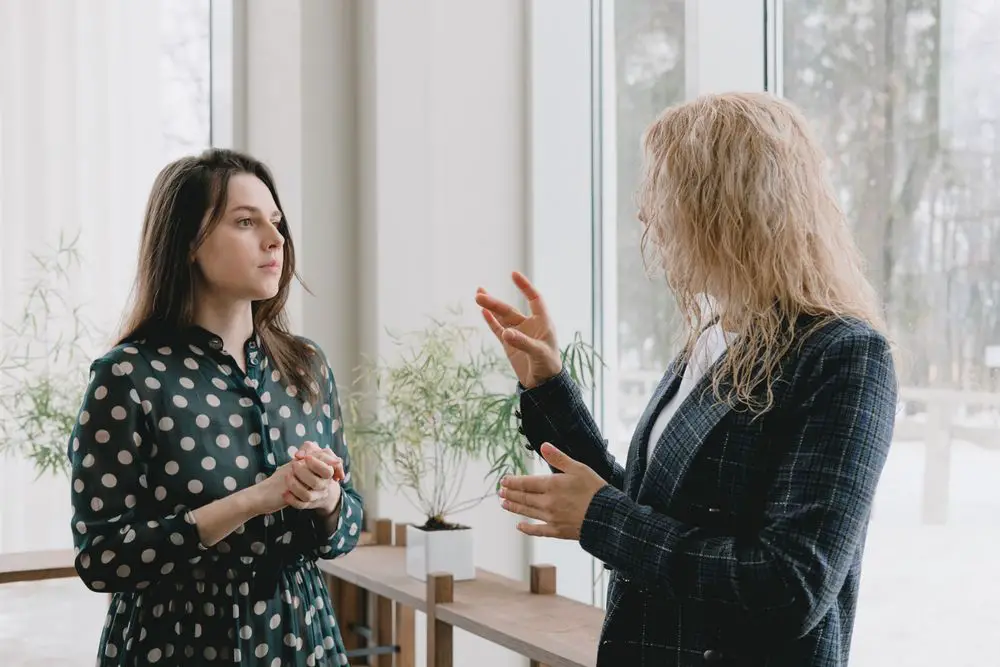
My sister looked at me across the Christmas dinner table and said, “I dare you to disappear for a few days, and you will see that no one will miss you.”
I did not cry. I did not storm off. I looked her in the eye and said, “I accept your challenge.”
The room went quiet in the particular way that rooms go quiet when something has been said that cannot be unsaid.
Twenty-three relatives sat around my mother’s extended dining table, the one inherited from my grandmother, the one that had seated three generations of Padilla arguments and celebrations. Forks stopped moving. Wine glasses paused halfway to lips.
My mother Elena looked at my father Richard with the expression she wore when she wanted him to fix something but would never say it aloud. My sister Vanessa sat across from me, three years older, thirty-five, her blonde hair perfectly styled, her white cashmere immaculate, her manicured nails tapping against her wineglass like she had just delivered a closing argument instead of a casual insult at Christmas dinner.
“I am serious,” she continued, in the practiced warmth she used when she wanted to sound reasonable while being cruel. “You are always here, Teresa. Every birthday, every holiday, every Sunday dinner. But would anyone actually notice if you stopped coming? What would be different?”
She looked around the table for support.
My cousin Daniel laughed nervously. My aunt Sophia adjusted her napkin. My father said, “Vanessa, that is enough,” in the voice of a man fulfilling an obligation, checking a box so he could tell himself later that he had tried.
My mother said nothing. She never said anything when it mattered.
I looked at Vanessa and saw the calculation behind her eyes. She was not being cruel by accident. She was being cruel because she could. Because for thirty-two years, I had let her.
I had swallowed every comment about my career, my apartment, my relationship status, my quiet life working from home doing something with computers that no one in my family had ever thought to ask about. I had accepted my position at the edge of every photograph, the last to be asked a question and the first to be dismissed.
But something had changed in me that afternoon. Maybe it was the weight of three decades pressing down. Maybe it was the knowledge of what I had in my coat pocket, hanging by the front door, that none of them knew about. Maybe it was simply the sudden, clear understanding that I did not have to be here anymore.
“I accept your challenge,” I said again.
I stood up. My chair scraped against the hardwood floor, and the sound was loud in the silence. I walked to the front hall, took my coat from the hook, and slipped my hand into the pocket.
The envelope was still there, thick, cream-colored, sealed with wax. It had arrived three days ago from a law firm I had never heard of.
“Teresa,” my father said, his voice sharper now. “Sit down. We are not done.”
“You are done with dinner,” I said. “I am done with being told I do not matter.”
I opened the front door. Cold December air hit my face. Behind me, I heard Vanessa’s voice, lighter now, almost triumphant.
“She always does this. Makes everything about herself. She will be back in an hour.”
I closed the door on her words and walked down the front steps, past the Christmas lights lining the lawn, past the cars parked along the street, and I kept walking.
I drove home through holiday traffic that gave me too much time to think. My hands were steady on the wheel. My mind was not. When I got to my apartment, I sat on the couch without turning on the lights. The small Christmas tree I had decorated myself blinked its colored lights in the corner. I pulled the envelope from my coat pocket and held it.
Three days ago I had opened it in shock. Now I opened it again and read the letter I had memorized but still could not quite believe.
Dear Miss Padilla,
It is my duty to inform you that you are named as the primary beneficiary in the estate of your grandmother, Leonora Padilla, who passed away on November 15. The estate includes, among other assets, the Padilla family home valued at approximately $1.2 million and a separate financial trust totaling $3.8 million. Please contact our office at your earliest convenience to schedule a meeting regarding the transfer of these assets. Your grandmother also left a personal letter for you, which we will provide upon your visit.
I had read it twenty times since it arrived.
My grandmother, who had died alone in a nursing home six weeks earlier, whom my parents had visited exactly twice in her final year, whom Vanessa had called a burden and a drain on family resources, had left me everything.
I had not told a single person. Not because I was hiding it, but because I did not know how. Because the news was too large and too strange. Because my grandmother and I had not been close in years. Because I had assumed, like everyone else, that she had nothing left to leave.
But sitting in my dark apartment on Christmas night with Vanessa’s words still in my ears, I understood something I had not understood before. My grandmother had seen me. She had seen all of them, and she had seen me. And she had made her choice.
I picked up my phone and called the number on the letterhead. It was after hours, but a recorded message gave me an emergency contact. I left a voicemail. My voice was steady.
“My name is Teresa Padilla. I received your letter. I need to meet as soon as possible.”
Then I did something I had never done before. I turned off my phone, put it in a drawer, and went to sleep.
In the morning, there were three messages. One from my mother saying my father was very disappointed. One from Daniel asking if I was okay. One from the law office confirming a meeting the next morning at ten.
I confirmed. I did not respond to my mother or Daniel.
For the first time in my life, I was going to let my actions speak for themselves.
The law office of Morrison and Associates occupied the entire seventeenth floor of a building in the financial district. Margaret Chen was a woman in her sixties with silver hair and reading glasses hanging from a chain, and she shook my hand with the grip of someone who had handled important things for a long time.
“Miss Padilla,” she said, sitting across from her desk. “Your grandmother was a remarkable woman. I worked with her for twenty years. She was precise, intelligent, and she had a very clear idea of what she wanted.”
I nodded, not sure what to say. I had not known my grandmother had a lawyer. I had not known much about her private life at all.
“Did you know that your grandmother tried to leave you something once before?” Margaret asked.
I shook my head.
“Ten years ago, she attempted to set up an educational trust for you. She wanted to pay for college, or graduate school, whatever you needed. Your father intervened. He convinced her that you did not need the money, that you were not academically inclined, that the family’s resources should be focused on Vanessa, who was already in business school and showing such promise.”
The words landed like stones.
My father had done that.
“Your grandmother was furious when she found out the truth,” Margaret continued. “But the opportunity had passed. She told me: Richard took that from her. He took my chance to help her when it would have mattered most. So she waited. She planned. And when she knew she did not have much time left, she made sure that nothing could be taken from you again.”
She slid a document across the desk.
“This trust is irrevocable. Your father cannot contest it, cannot touch it, cannot change anything about it. Your grandmother structured it specifically to prevent him from interfering.”
I looked at the numbers. $3.8 million. The house on Hawthorne Street, where I had spent summer afternoons as a child, where Vanessa had once broken a vase and blamed me and I had been punished for it.
“Your grandmother also left you a letter,” Margaret said. “She asked me to give it to you in person.”
I opened the cream envelope carefully. My name on the front in shaky handwriting.
My dearest Teresa,
If you are reading this, then Margaret has done her job and I am gone. I need you to know something I should have told you years ago. You were always my favorite. Not because you were better than Vanessa, but because you were kinder. Because you sat with me in the garden when no one else would. Because you asked me questions about my life and actually listened to the answers. Because you were the only one who saw me as a person instead of an obligation.
I watched your father take from you. I watched him pour everything into Vanessa and leave you with nothing. I should have stopped him. I was too weak, too afraid of conflict, too convinced that there would be time later. There is never enough time later.
This money is not an inheritance. It is a correction. It is me trying to give you back some of what was stolen from you. Use it however you need. Go back to school, start a business, travel, buy a house, do nothing. It does not matter to me. What matters is that you know someone in this family saw your worth. I saw it. I always saw it.
Do not let them make you feel small anymore. Teresa, you are not small. You never were.
All my love,
Grandmother
I folded the letter with hands that were shaking.
“There is one more thing,” Margaret said. “Your grandmother wanted me to tell you: the garden is waiting for her.”
My grandmother’s garden behind the Hawthorne Street house. The one she had tended for forty years. The one where she had taught me the names of plants and the secrets of soil and the patience required to grow something beautiful from nothing.
“She always said the garden would be mine someday,” I said quietly. “I assumed it was just something people say.”
“She meant all of it,” Margaret said.
She walked me to the elevator.
“The trust will be transferred within thirty days. The house is already yours. And Teresa, your grandmother was proud of you. She told me that every time we spoke.”
I rode the elevator down seventeen floors in a daze.
My family had spent years telling me who I was. My grandmother had spent years quietly telling a different story, writing it into legal documents and estate plans and a letter she asked to be delivered in person. The two versions of me could not both be true. The courts had already decided which one they believed.
Back at my apartment, I finally checked my phone. Twelve missed calls. Most from my mother. Two from Vanessa. One from my father. The last voicemail from my mother said: Teresa, your father is very upset. Vanessa is upset. We are all upset. You need to call us and apologize for ruining Christmas.
I read the message three times. Then I deleted it. Then I deleted all of them.
I turned off my phone and put it back in the drawer.
For the first time in thirty-two years, I was going to let them wait.
The first week of my disappearance was the hardest, not because I missed my family, but because I had to learn how to stop waiting for them to notice I was gone.
I answered client emails for my freelance web design work. I read my grandmother’s letter until I had memorized every word. On the fourth day, I drove to Hawthorne Street.
The house was a Victorian painted soft yellow with a wraparound porch, a turret, and a garden that sprawled across the entire backyard. I had not been there in five years, not since my grandmother’s health had failed and my parents had moved her to the nursing home without asking anyone else’s opinion.
The garden was overgrown. The flower beds choked with weeds. The rose bushes wild and untrimmed.
I sat on the back porch steps and looked at it.
This was mine now. All of it. The house, the garden, the memories.
I could sell it. I could live in it. I could do anything I wanted, because it was mine.
On day twelve, Margaret called.
“Your father filed a motion to delay the trust transfer. He is claiming your grandmother was not of sound mind when she signed the documents.”
My stomach dropped. “Can he do that?”
“He can try. But your grandmother anticipated this. She had a cognitive evaluation done by an independent physician six months before she signed. She was completely lucid. We will file a response and the court will see the truth. He will lose.”
I had time. I had nothing but time.
I went back to the garden every few days. I cleared one section, then another. I found the old rose bushes my grandmother had planted when I was a child, still alive under all the neglect. I trimmed them the way she had taught me.
I talked to her while I worked. I told her about the trust and the house and Vanessa’s challenge. I told her I was sorry I had not visited more in those final years.
On day twenty-one, Margaret called with news.
“The court denied your father’s motion. The trust transfer will proceed as scheduled.”
I sat on the hotel bed where I had been staying under a quiet name, paying cash, and let the words settle into me.
I had won. Not just the trust, but something larger. The right to exist on my own terms, without their permission, without their approval, without the careful management of their disappointment.
I moved into the Hawthorne Street house on January 15, three weeks after walking out of Christmas dinner. The house was cold and dusty and smelled like time that had stood still, but it was mine.
I painted the kitchen sage green, my grandmother’s favorite color. I hung my own photographs on the walls, pictures of friends and places I had loved, things my family had never been interested in. I turned the spare bedroom into an office where I would work and eventually build something new.
I still had not told anyone where I was.
My mother left voicemails I deleted without listening. My father sent a formal letter that I put in the trash. Vanessa stopped trying to contact me after the first week.
In April, I hired a contractor to renovate the kitchen. I worked with the designer myself, making every decision, signing every check. The workers called me Miss Padilla, then Teresa, then boss. They taught me to patch drywall, replace a faucet, level a cabinet. I learned that I was capable of more than I had ever been told.
In May, I planted vegetables. Tomatoes and peppers and zucchini in the sunny corner of the garden where my grandmother had grown the same things.
In June, my mother showed up at the front door.
I saw her through the window, standing on the porch with her hands clasped, wearing a dress I recognized from a decade earlier. She looked smaller than I remembered, more fragile. The porch light caught the gray in her hair.
I opened the door.
“Mom.”
“Teresa. Can we talk, please?”
I stepped aside.
She walked through the living room slowly, looking at everything I had done, and her voice when she spoke was barely a whisper.
“You have made this beautiful. It looks like her.”
We sat in the kitchen. I made tea, the same kind my grandmother used to drink.
She told me about marrying my father at nineteen. About being chosen by a man everyone looked up to, and slowly understanding that being chosen meant giving up everything else. Her opinions, her friends, her sense of herself. She told me she had watched him take from me and said nothing, because she was too afraid of losing the life she had built.
“I knew it was wrong,” she said. “Every time he praised Vanessa and ignored you, I told myself it wasn’t that bad. Every time she got something you deserved, I told myself you would be fine. You were strong. You did not need me the way she did.”
“That was not true,” I said.
“I know. You needed me more. You needed someone to fight for you, and I did not do it. I failed you, Teresa. I have carried that every day for thirty years.”
“Why are you here, Mom?”
She looked at me with wet eyes.
“Because I do not want to die without trying. Because your grandmother showed me it is never too late to do the right thing. Because I am finally ready to choose you.”
I set down my tea.
“Choosing me means choosing truth. It means admitting what you did to me to anyone who asks. It means standing up to Dad even when it is hard. It means being present, consistently, for the rest of our lives.”
She reached into her purse and placed an envelope on the table.
“I filed for divorce this morning.”
I stared at her.
“Your father doesn’t know yet. I am telling him today after I leave here. I have been planning this for months. Since the party. Since I saw you walk out that door, I realized I had been choosing him for thirty-five years, and I had nothing to show for it except a daughter who did not trust me.”
She pushed the envelope across the table.
“I am choosing you now. I hope it is not too late.”
I looked at the envelope, then at my mother’s face. She was terrified. But she was here.
“It is not too late,” I said. “But it will take time.”
“I have time. I have the rest of my life.”
We sat together in the kitchen as the afternoon light faded, two women learning to be mother and daughter for the first time. It was not easy. It was awkward and painful and full of silences that stretched too long.
But it was a start, and a start was more than I had ever had before.
The divorce was final in August. My father moved into a condominium across town. He called me once a week and I let the calls go to voicemail. He sent letters that were formal and distant and showed, in the way they were written, a man still more interested in managing the situation than in acknowledging what he had done.
I did not respond. I was not punishing him. I simply was not ready.
My mother came every Sunday without fail. We worked in the garden together, and then we sat on the porch and drank tea and talked. At first about small things. Then about larger ones, her childhood, her marriage, the dreams she had set aside.
In September, I enrolled in a part-time landscape design program at the community college. Not for money or status, but because I wanted it. Something purely for myself.
I studied plant biology and design principles and soil science. My instructor Patricia, who had been designing gardens for forty years, visited the Hawthorne Street garden and walked through it slowly.
“You have a gift,” she said. “This space feels loved. That is something you cannot teach.”
“It was my grandmother’s,” I said. “I am just continuing what she started.”
She looked at me with sharp, knowing eyes.
“You should think about doing this professionally. Not the web design. This, you are genuinely good at.”
The idea followed me home and stayed.
In October, Vanessa showed up at the house.
I was in the garden when I heard her car door slam. I looked up and there she was, standing at the edge of the flower beds in designer jeans and a cream sweater, completely out of place among the dirt and the plants.
“Teresa. Can we talk?”
Her voice was careful, controlled. But her eyes were different. I had never seen my sister look lost before.
“I want to apologize,” she said.
I waited.
“For the way I treated you growing up. For Christmas. For daring you to leave. For telling everyone you were in treatment. For being the golden child and using it to make you feel small. For all of it.”
“Is that everything?” I asked.
She took a breath.
“I have spent six months watching my life fall apart and finally understanding why. Dad is alone. Mom left him. Marcus and I are barely speaking. My friends look at me differently, like they are waiting for me to do something cruel. And I realized I built this. I built it on being better than you, on having more than you, on making sure everyone knew I was the successful one and you were the failure.”
Her voice cracked.
“But you were never the failure. I was.”
We stood in the garden as the October sun filtered through the leaves. The roses were past their bloom, but the garden was still beautiful in its own quiet way.
“I am not going to pretend everything is fine,” I said. “You hurt me for thirty years. That does not disappear because you had a realization.”
“I know.”
“But I am willing to try. Slowly. With boundaries you will respect, or I will walk away and not return.”
She nodded, tears streaming.
“I will do that.”
We did not hug. We did not make promises. We stood in the garden, two sisters beginning to learn each other.
The winter was quiet. Peaceful. My mother came every Sunday. Vanessa came twice, the visits awkward and careful and slightly easier each time. My father did not come at all, but he sent a Christmas card with a handwritten note.
Thinking of you. Hope you are well. Love, Dad.
I put it in the drawer with the other letters and did not respond.
In January, I launched my landscape design business.
I called it Hawthorne Gardens, after the street where my grandmother’s house stood, after the place where I had found myself.
Patricia wrote me a letter of recommendation. Daniel designed my website. My mother came to the small launch party at the house and cried when she saw my name on the door.
The business grew slowly, then faster. Word spread about the woman who could transform any space, who understood plants the way other people understood people, who treated every garden as though it mattered. By spring I had more clients than I could manage. I hired an assistant named Maya, just out of the landscape design program, who asked questions constantly and reminded me of someone I used to be.
In March, a year after Daniel’s birthday party, I received an invitation from my father. Thick cream paper. Elegant handwriting.
He wanted to see me. He would come to my garden at a time of my choosing. He would wait for my response.
I stared at the letter for a long time. My father asking permission. My father offering to come to my territory, my terms. It was such a small gesture, and yet it was the first time in thirty-three years he had made it.
I thought about it for three days. I walked the garden at dawn and dusk, watching the light change, watching the things I had planted grow. I read my grandmother’s letters again.
I thought about the girl I had been. The one at the edge of every photograph. The one who swallowed every insult. The one who believed she was invisible.
She was gone now.
I wrote back three sentences.
Saturday at ten in the morning. The garden. I will be there.
He arrived exactly on time, walking the path I had laid myself, through the gate I had repaired. He looked older than I remembered, diminished somehow by the year of solitude and consequence.
He looked at the garden for a long moment.
“You have done beautiful work here,” he said. “Your grandmother would be proud.”
“She is the reason I could do it,” I said.
“I know.” He was quiet for a moment. “I was wrong, Teresa. About everything. About you, about your grandmother, about the trust, about the way I treated you your whole life. I was wrong, and I am sorry.”
I had waited thirty-three years to hear those words. I had stopped believing they would come.
“Why now?” I asked.
“Because I was afraid.” His voice cracked. “Afraid of admitting I was wrong. Afraid of losing control. Afraid that if I acknowledged your worth, I would have to acknowledge how badly I had failed you. It was easier to keep believing my own story, the one where I was the good father and you were the problem.”
He looked at me with wet eyes.
“I have spent this last year alone for the first time in my life, and I have had to face what I did. To your mother. To you. To your grandmother. I cannot undo it. But I can tell you the truth. I am sorry.”
“Thank you for saying that,” I said. “It means something. But it does not fix everything.”
“I know. I am not asking for forgiveness. I am asking for a chance, a small one, to be in your life however you will have me. On your terms. Always.”
I thought about my grandmother. About patience. About the garden. About the way things grew slowly, roots first, then stems, then leaves, then flowers.
Nothing good happened fast.
“I cannot promise anything,” I said. “But I am willing to try. Slowly.”
He nodded, relief and gratitude warring in his face.
“I understand. I will respect whatever boundaries you set.”
We stood in the garden for a long time without talking. The sun climbed higher, warming the flowers, warming the soil, warming something between us that had been frozen for decades.
When he left, walking back down the path I had built, I watched him go and felt something I had not expected. Not forgiveness, not yet, but the beginning of something. A seed in good soil, waiting for spring.
Two years passed.
Two years of slow, careful rebuilding. My father came to the garden every other Saturday and asked real questions about my work and my life and actually listened to the answers. Vanessa came once a month. We were not the kind of sisters who finish each other’s sentences, but we were something, and that something was growing.
My mother came every Sunday without fail. She had become a different person in the years since the divorce. She laughed genuinely now, in a way I had never heard growing up. She told stories about her own life before my father, about the woman she had been, about the dreams she was slowly and carefully picking up again.
Hawthorne Gardens employed six people. I was invited to speak at conferences, to contribute to publications, to judge design competitions. The business had become something I had not quite dared to imagine when I was sitting in my apartment on Christmas night holding a letter I could not yet believe.
In the spring of the third year, I received an award.
The Oregon Landscape Design Association named me Emerging Designer of the Year. The ceremony was at a hotel downtown. Black tie. Three hundred people. I invited my whole family: my mother, my father, Vanessa, Daniel, my aunts and uncles and cousins. I did not know who would come. I just knew I wanted them there.
I stood backstage in a deep green gown, the color of new leaves in spring. My hands were shaking.
Maya squeezed my arm.
“Just be yourself,” she said. “That is why you are here.”
When they called my name, I walked into the light. The audience was too bright to see clearly, but I could make out shapes in the front rows.
I accepted the award, heavy crystal that threw rainbows across the stage, and I stepped to the microphone.
“Thank you,” I said. “I did not get here alone. I had help. I had people who believed in me before I believed in myself.”
I looked toward the front row, where I could just make out my mother’s face.
“My grandmother was one of those people. She left me more than money and a house. She left me proof that I was seen, that I mattered, that I was worth investing in. That gift changed my life.”
The room was very still.
“I also had people who did not believe in me. People who told me, directly and indirectly, that I was not enough. I used to think they were right. I used to think my job was to shrink myself, to take up less space, to accept the scraps of attention and affection that came my way.”
I paused.
“I was wrong. I was never the problem. The problem was a family system that taught some of us we were golden and some of us were invisible. It took me thirty-two years to learn that. It took losing everything I thought I was supposed to want in order to find what I actually needed.”
I looked out at the audience.
“I am still learning. Every day. But I know this now: I am enough. I have always been enough. And if there is anyone here tonight who feels invisible, who feels like they will never be seen, I want you to hear me. You are enough. You have always been enough. Do not let anyone tell you otherwise.”
The applause was overwhelming.
Afterward, in the reception hall, my family found me.
My mother first, fierce and tight.
“Your grandmother would be so proud,” she whispered.
My father approached slowly, as though he understood he was approaching something that required care.
“Teresa, that was beautiful. You are beautiful. I am sorry it took me so long to see it.”
“Thank you for coming,” I said.
Vanessa appeared at his elbow, tears running freely.
“I am so proud of you,” she said. “I know I do not have the right to say that, but I am.”
I reached out and took her hand.
“You have the right. We are working on it. That is what matters.”
Daniel appeared with champagne. My mother laughed, that genuine laugh I had come to love. My father stood to one side, learning his new place in a family that was rebuilding itself slowly and imperfectly and beautifully. And in the center of it all, I stood with my award and the people I had chosen and the life I had built.
Five years have passed since I walked out of that Christmas dinner.
I am thirty-seven. Hawthorne Gardens employs twelve people. We design landscapes for homes and businesses and public spaces, creating beauty in places that had forgotten they could be beautiful.
The garden behind the Hawthorne Street house is something of a neighborhood landmark now. People walk by just to see what is blooming, to catch a glimpse of what my grandmother planted and I have continued.
My mother comes every Sunday. She has gray hair and laugh lines and a small apartment where she paints watercolors and hosts book club meetings. She tells me she is happier than she has ever been.
My father comes every other Saturday. He volunteers at a community garden now, teaching children how to plant vegetables, how to be patient, how to watch things grow. He tells me it is the most meaningful work he has ever done.
Vanessa and I have dinner once a month. We are not close the way some sisters are, but we are becoming something. She talks, I listen. I talk, she listens. It is not perfect. It is real.
My grandmother’s letters are still in my drawer, worn soft from reading. I take them out sometimes on quiet evenings and read them again. The words never change. But I do. Every time I read them, I am someone new, someone who has grown a little more, learned a little more, become a little more herself.
I understand now what she was trying to say.
It was not about the money.
It was never about the money.
It was about being seen. It was about having someone in your corner who believed in you so completely that they planned for your future even knowing they would not be there to see it. It was about love expressed not in praise or presence but in the quiet, enduring work of making sure you could not be overlooked again.
The garden taught me that roots grow deep and unseen for years before the first flower appears. The work happens in darkness, in silence, in the patient accumulation of strength. And then one day, without announcement, the bloom comes, and everyone who sees it assumes it happened overnight.
They do not know about the years of preparation. The quiet tending. The faith that something beautiful was coming.
That was what my grandmother gave me.
Not money. Faith.
Faith that I was worth the wait. Faith that I would bloom when I was ready. Faith that the garden would flourish if I kept tending it.
She was right.
The garden flourishes.
I flourish.
And every morning when I walk through the gate and see the roses and the peonies and the vegetables I planted with my own hands, I think of her. The woman who saw me when no one else did. The woman who wrote it down and signed it and made it irrevocable.
The woman who taught me that you do not have to be loud to matter.
You just have to keep growing.

Laura Bennett writes about complicated family dynamics, difficult conversations, and the quiet moments that change everything. Her stories focus on real-life tensions — inheritance disputes, strained marriages, loyalty tests — and the strength people find when they finally speak up. She believes the smallest decisions often carry the biggest consequences.