Judge Calder’s question came quietly, but it landed harder than any accusation Russell Crane had made all morning.
“Mr. Hollis,” he said, holding the incorporation papers between both hands, “why is your wife’s maiden name listed as the company’s original majority owner?”
For the first time since I had walked into Courtroom Four, Adrian went still.
His confident expression faltered. Paige turned toward him, her polished composure tightening into confusion. Russell leaned forward so quickly his chair scraped against the floor.
“My wife’s what?” Adrian said.
The judge looked over the rim of his glasses. “Elena Lane. Seventy-two percent ownership of Hollis Transit Systems at the time of incorporation.”
A murmur passed through the courtroom.
I kept my hands folded on the table, though beneath it my fingers were trembling. Not from fear. From the weight of twelve years spent waiting for the truth to be spoken aloud in a room that had to listen.
Adrian recovered just enough to produce a single sharp laugh.
“That’s impossible.”
“It is not impossible,” Judge Calder said. “It is printed on the original state filing.”
Russell whispered urgently to Adrian. Adrian ignored him.
“She signed those papers as a formality,” he said. “That was before the company had any value.”
The judge’s expression remained unchanged. “Then you acknowledge the filing is authentic?”
Adrian’s face drained further.
Across the aisle, Samuel and Owen sat close together near the court officer. Samuel’s eyes were fixed on his father. Owen was looking at me, searching my face for an explanation I had never wanted him to need inside a courtroom.
I gave him the smallest nod I could.
Russell stood. “Your Honor, we would request a brief recess to review these documents.”
“You may have ten minutes,” Judge Calder said. “I suggest you use them carefully.”
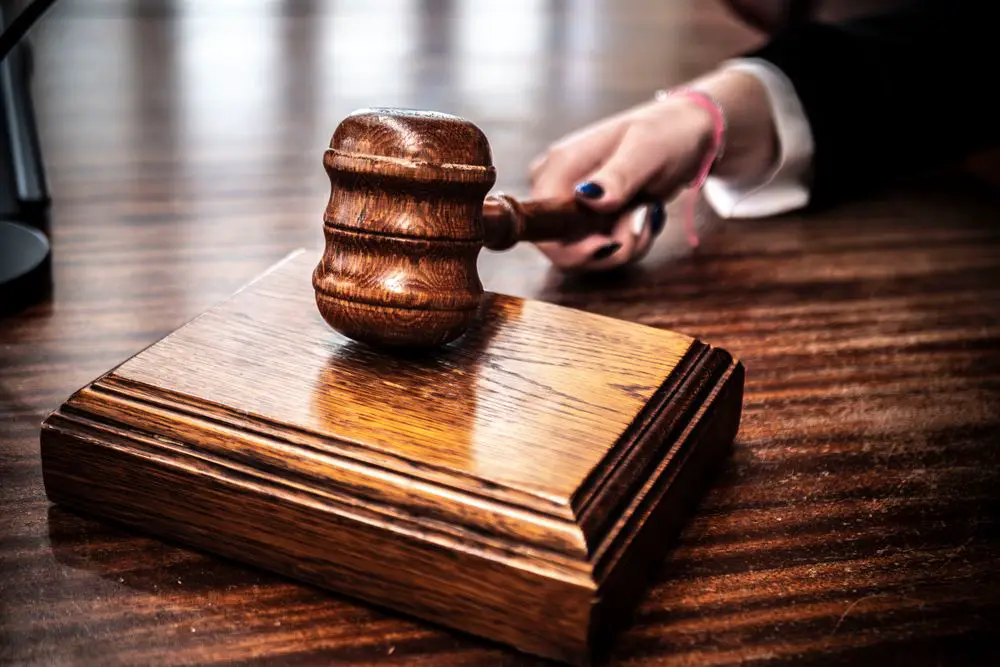
The gavel came down.
The moment we stepped into the corridor, Adrian turned on me with disbelief rather than anger.
“What have you done?”
I looked at the man I had once loved, the man who used to fall asleep at our small kitchen table with fuel receipts around his elbows and genuine hope written across his face.
“I told the truth,” I said.
Paige appeared at his elbow. “Adrian. What is she talking about?”
He did not answer her.
That silence told her more than any explanation could have.
The first chapter of Hollis Transit Systems had nothing to do with glossy brochures or regional contracts or the glass-walled offices Adrian now occupied. It had been one rented van, a spreadsheet, and a man with ambition larger than his savings account. Adrian had the charm to win clients, but no collateral, no credit history, and no patience for paperwork.
I had all three.
My grandmother had left me a modest inheritance and a narrow brick house in Alexandria. I sold the house, cashed the bonds she had hidden in a metal recipe tin, and used the proceeds to launch what Adrian called our dream. At the time, it had been our dream. The distinction felt important only in retrospect.
I handled the filings because Adrian hated forms. I signed the first lease because the landlord trusted my steady job at the hospital administration office. I negotiated the first insurance policy during my lunch break. I tracked invoices at night while Adrian drove airport routes until dawn, learning the roads and the rhythms of a business we were building together from less than nothing.
When the twins were born, I stepped back from the public side of things because they needed me more than the company did. Or so I believed.
Adrian began calling himself founder. Then sole founder. Then self-made.
I let it pass. At first because it seemed harmless, later because correcting him in public felt like breaking something already fragile. Later still because I had spent enough years accommodating the version of himself he needed to be that accommodation had become indistinguishable from habit.
But when he told our sons I had contributed nothing, something inside me finally stopped protecting him from himself.
Russell approached me during the recess with careful politeness.
“Mrs. Lane, are there additional documents we should know about?”
“Yes.”
His jaw tightened. “What kind?”
“Board minutes. Tax filings. Capital contribution records. Early loan guarantees. Emails. Payroll history.”
Adrian stepped closer. “You kept all of that?”
“I kept everything.”
Paige looked at him with an expression I recognized from my own past, the specific way a woman looks at a man when she has just heard something that makes several previous conversations rearrange themselves into a different shape.
“You told me she had no involvement,” she said.
“Not now,” Adrian said.
The words were quiet, but their effect was immediate. Paige stepped back as though the hallway beneath her had shifted.
I crossed to the boys and knelt.
“You two okay?”
Samuel looked at the floor. “Did Dad lie?”
I took a breath. I had promised myself I would not make them carry adult bitterness. Especially now.
“There are things he didn’t explain honestly,” I said. “But grown-up problems are not your job to fix.”
Owen’s hand found mine. “Are we still going to live with you?”
“I’m going to do everything I can to keep your lives steady,” I told him.
Samuel frowned. “But Dad said Paige already picked our rooms.”
I closed my eyes for one brief second. When I opened them, Judge Calder’s clerk was calling us back inside.
The second half of the hearing felt different from the first. Adrian no longer reclined in his chair. Russell’s voice had lost its theatrical certainty. Paige sat with her hands folded tightly in her lap.
Judge Calder asked me to explain the documents. I began at the beginning, not dramatically, not with anger, but with facts.
“I provided the first capital investment. I held the majority share because the company was built using my inherited funds and my personal guarantees. Adrian managed operations. I managed administration and finance until the twins were born.”
Russell rose. “Mrs. Lane, did you receive a salary during that time?”
“No.”
“So you were unpaid?”
“I deferred compensation because the company needed cash flow.”
The judge looked at him levelly. “Counsel.”
Russell adjusted his tie. “Mrs. Lane, why did you allow Mr. Hollis to appear publicly as sole owner?”
“Because we were married,” I said. “Because I trusted him. Because I believed protecting his confidence protected our family.”
The courtroom went very still.
Russell tried a different angle. “The prenuptial agreement states that business assets under Mr. Hollis’s name remain his separate property.”
“It does,” I said. “But the shares listed here were never under his name.”
Adrian’s attorney opened his mouth, then closed it.
“There is also a later transfer agreement included,” Judge Calder said. “Unsigned.”
“Yes.”
“Because she refused,” Adrian said.
I looked at him. “Because you brought it to me two weeks after my mother died and told me it was routine housekeeping.”
His face hardened.
Russell asked, “Did you understand what that document would have done?”
“Yes. It would have transferred my ownership to Adrian for one dollar.”
Paige inhaled sharply.
Judge Calder paused.
“Your Honor,” I said, “I am not here to punish Adrian. I am here because he filed for primary custody claiming I have no financial stability, no professional background, and no meaningful contribution to the family business. Those claims are false.”
The judge nodded slowly, then asked where we had been living since the separation, who paid the rent, and with what income.
I produced a second packet: consulting contracts, the past year rebuilt quietly while Adrian assumed I was adrift. Small transportation companies. Compliance reviews. Fleet documentation. Contract bids.
“This appears substantial,” Judge Calder said.
“It is enough for housing, school expenses, and savings. The boys have the same pediatrician, the same school, the same friends, and the same bedtime routine.”
Samuel gave Owen a faint smile. That small exchange nearly undid me.
Russell shifted tactics.
“Mrs. Lane, are you suggesting Mr. Hollis is an unfit father?”
“No.”
Adrian blinked.
“Adrian loves the boys. He takes them to baseball when he remembers. He reads to Owen when Owen asks twice. He knows Samuel hates tomatoes but forgets Samuel is allergic to cashews. He is not a monster. But he has been careless with their feelings because he was focused on winning.”
The silence deepened.
Adrian looked away.
Judge Calder ordered a temporary arrangement: the boys would remain with me during the school week, Adrian would have scheduled parenting time on alternating weekends and one dinner evening, and both parents were forbidden from discussing the case with the children. He also ordered full financial disclosure regarding Hollis Transit Systems.
Adrian’s face tightened at that last part.
The hearing ended without applause or triumph. It ended with papers being gathered, chairs scraping softly, and my sons walking toward me as if I were the only solid thing in the room.
Outside the courthouse, rain silvered the pavement.
Owen lingered when the boys reached the car.
“Mom?”
“Yes?”
“Did you really start Dad’s company?”
I brushed damp hair from his forehead. “I helped start it.”
“Why didn’t you tell us?”
Because I was tired. Because I was ashamed of how small I had let myself become. Because I thought peace meant silence.
“I wanted you to know your father as your father,” I said, “not as someone I was arguing with.”
Owen considered this. “Can people be two things?”
I smiled sadly. “Most people are more than two.”
That evening, after the boys fell asleep, I sat at the kitchen table with the court papers spread around me. The rain had stopped. My phone buzzed.
Adrian.
I let it ring twice, then answered.
“Elena.”
His voice was rough.
“Yes.”
“I didn’t think you’d use those papers.”
“I didn’t think you’d tell our children I abandoned them.”
Silence.
Then, quietly: “I panicked.”
That almost made me laugh, not from humor but from recognition. Such a small word for such a large damage.
“About what?”
“Losing everything.”
“You filed for divorce with three attorneys, Adrian.”
“I know.”
“You brought Paige.”
“I know.”
“You asked the court to take the boys from their home.”
His breath caught. “I didn’t think it would go that far.”
That was Adrian’s oldest flaw. He believed consequences were distant things, negotiable, problems that could be charmed or delayed until someone else absorbed them.
“It went that far because you pushed it there,” I said.
Another silence.
Then: “What do you want?”
I looked around the kitchen. The boys’ spelling lists were clipped to the refrigerator. Owen’s muddy sneakers sat by the door. Samuel’s library book lay face-down on the counter in the way I always told him not to leave books.
“I want honesty,” I said. “In court. With the boys. With yourself.”
“And the company?”
There it was. Not sorrow. Not regret. The company.
“I don’t know yet,” I said.
He told me investors would panic if the ownership situation became public. I told him it had become public when he made our divorce a performance. He said he could fix it, which was what he always said after something broke. He mentioned that Paige was asking questions, that she might resign.
“She should,” I said.
“You sound different,” he said finally.
“I am different.”
“No,” he said. “You sound like the woman from the beginning.”
That reached further into me than I expected. For a moment I remembered him at twenty-nine, soaked from rain beside that first van, laughing because the windshield wipers had stopped working and our first passenger had given him a five-dollar tip. I remembered loving his optimism. I remembered believing he would never use it against me.
“That woman trusted you,” I said.
“I know.”
“Don’t call again tonight.”
I ended the call.
The next morning I found an envelope taped to the townhouse door. No return address. Inside was a photocopy of a company memo dated nine years earlier, with a handwritten note in blue ink across the top: You need to know what he hid before the twins were born.
The memo referenced a board meeting I did not remember attending and a resolution I did not remember signing. My name appeared beneath it in a signature that looked almost like mine.
Almost.
The boys were upstairs brushing their teeth, laughing about toothpaste foam. Their ordinary morning sounds floated down while I stood frozen in the doorway.
At the bottom of the envelope was a second page. A handwritten note.
Ask Adrian why your father called him the night before the accident.
My father had died eleven years ago.
Adrian had told me he never spoke to him that week.
I sat in the entry for a long moment, listening to my sons argue about whose fault the hot water shortage was, holding a piece of paper that was quietly rewriting the past.
My father, Daniel Lane, had been a retired mechanic, careful and methodical, with oil permanently worked into the lines of his hands and a habit of checking the weather before any drive. He had died on a wet November road, his truck sliding through a guardrail on the way back from visiting a friend in Richmond.
That was what I had been told.
Adrian had held me at the funeral while I shook too hard to stand alone. He had handled phone calls, insurance forms, the sale of my father’s tools. He had been gentle then, or at least he had seemed gentle. He told me grief made people search for patterns where there were none.
I folded the note and went to make lunches.
That afternoon, I drove to the storage unit I had rented after leaving Adrian. Inside were the remains of a life I had not been ready to sort through. Framed photographs. Christmas decorations. Boxes labeled kitchen, office, boys baby clothes. One dented green toolbox that had belonged to my father.
I had avoided opening it for months.
The lock snapped free. Dust rose when I lifted the lid.
Inside were wrenches wrapped in cloth, a cracked flashlight, work gloves stiff with age, and a small notebook tucked beneath a tray of screws.
My father’s handwriting filled the first pages with his characteristic entries.
Mileage. Oil change. Brake pads. Weather strip.
Near the back, the notes changed.
Hollis van inspection. Fuel line concerns. Adrian rushed. Talked to E. after holidays?
E. That was me.
November 14. Called A. Not right. Papers and trucks don’t match. He got angry. Said I didn’t understand business.
November 15. Call again tomorrow. Elena needs to know.
The accident had been November 16.
I sat down on a cardboard box because my knees had become unreliable.
It was not proof of anything dramatic. It did not say Adrian had caused harm. But it said he had spoken to my father. It said there had been an argument. It said my father had intended to tell me something.
And Adrian had let me believe there had been nothing between them that week.
My phone rang. The screen showed Paige Ellison.
I answered.
“Elena. I’m sorry to call. I know I’m probably the last person you want to hear from.”
“You’re not at the top of the list,” I said.
A small, startled breath on the other end. Not quite a laugh.
“I deserved that.”
She told me she had resigned that morning. Adrian had asked her to wait, then asked her to wait until after the financial review, then said leaving now would make him look guilty.
“That sounds familiar,” I said.
“I believed him. Not about everything. I knew your marriage was ending. I knew he was still legally married, and I told myself all the things people tell themselves when they want to feel less responsible. But I didn’t know about the company. I didn’t know about the boys.”
Her voice thinned.
“Why are you calling me, Paige?”
“Because yesterday, after court, I went back to my office to clean out my desk. Someone had already been there. Files moved. A drawer open. And there was a flash drive taped under my keyboard.”
A cold awareness moved through me.
“What was on the label?” I asked.
“Lane original records.”
“Where are you now?”
“In my car. Near a coffee shop on Maple Avenue.”
“Stay there. Don’t call Adrian.”
“I wasn’t planning to.”
“Twenty minutes.”
Paige was parked at the far end of the lot, wearing sunglasses despite the gray sky. Without the polished office lighting, she looked younger and more tired. She got into my passenger seat without speaking at first. We sat watching people carry coffee and paper bags in and out of the shop, the world continuing its ordinary business while ours rewrote itself in a parking lot.
She handed me a small silver flash drive.
“I haven’t opened it,” she said.
“Why give it to me?”
“Because your name is on it.”
I studied her. “And because?”
She looked at her hands. “Because Adrian has a way of making people feel chosen when he needs them. I mistook that for love.”
There was no performance in her voice. No attempt at sympathy-gathering. Just a tired, honest sentence.
Against my expectations, my anger softened around its edges. Not disappeared. Not forgiven. But changed shape.
“I’m not ready to comfort you,” I said.
“I know.”
“But I appreciate you bringing this.”
She nodded. Then she opened her phone and showed me a photograph of a conference room whiteboard. Half erased. Names and dates. The phrase Legacy Restructure at the top. Several names visible: Adrian. Russell. Victor Sloane, the CFO. Beside my name, a question mark. And beneath it: DL file unresolved.
My hand stilled.
DL.
Daniel Lane.
“Who is DL?” Paige asked.
“My father.”
She stared at me.
“Why would your father have a company file?”
“I don’t know yet.”
But the notebook in my bag seemed to answer that differently.
I drove to see Mira Patel, the family law attorney who had helped a friend through a custody dispute. I had represented myself in court because I needed to speak plainly, and because part of me wanted Adrian to see the woman he had underestimated. But plain truth was no longer enough. There were documents now. Signatures that looked almost like mine. A notation about my dead father in a corporate restructuring plan.
Mira listened without interrupting, her reading glasses off, her eyes missing nothing.
When she finished reviewing everything, she said: “Do not confront Adrian alone about your father.”
“You think there’s something serious here.”
“I think there are enough inconsistencies to handle this carefully.”
“Carefully means slowly.”
“Carefully means correctly and safely. The custody arrangement is stable. Your boys are protected. But this matter involving your father may reach beyond family court.”
I nodded, though every part of me wanted answers that hour.
“Let the evidence speak before your fear does,” Mira said.
That sentence followed me through the afternoon, through grocery shopping, through helping Owen find his missing library book, through the familiar ritual of dinner and baths and the quieter house that came after.
Then Adrian called again.
This time I answered without thinking, and before either of us could arrange ourselves into positions, I asked him.
“My father called you the night before he died.”
Nothing. Not even a breath.
That silence confirmed more than any denial could have.
“Is it true?” I asked.
“Yes.”
The room shifted slightly around me. I gripped the kitchen counter.
“You told me you hadn’t spoken to him.”
“I know.”
“Why?”
“Because you were grieving. Because it wouldn’t have helped.”
“What did he call about?”
Adrian exhaled. Beneath the polished CEO voice, I heard something older and more frightened.
“He thought Victor was moving money through maintenance invoices.”
Victor Sloane. The CFO.
Papers and trucks don’t match, my father’s notebook had said.
“He told you that?”
“He suspected it. He didn’t have proof.”
“And you didn’t tell me.”
“I wanted to handle it.”
“You always wanted to handle things by hiding them.”
“That’s not fair.”
“It is the kindest version of the truth.”
He fell quiet.
“Did my father die knowing he was right?” I asked.
“I don’t know.”
“Did you know?”
“No,” he said quickly. “No, Elena. I didn’t know. I swear I didn’t.”
I wanted to believe him. That was the painful part. Some reflex still reached for the man who had held my hand in waiting rooms and said we could survive anything.
“Why is there a company file labeled DL?” I asked.
He answered slowly. After my father died, Victor had brought him documents. Said my father had been confused, asking questions that could damage the company if they became rumors.
“So you buried it,” I said.
“I was trying to keep the company alive.”
“My father was dead.”
That ended whatever defense he had been constructing.
“I’m sorry,” he said.
For years I had thought of grief as a room I had already walked through. Now I understood someone had locked doors inside it and hidden the keys.
“Adrian, did you forge my signature?”
“No.”
“Did Victor?”
“I don’t know.”
“That is not good enough anymore.”
“I know.”
For the first time, he sounded as though he meant it.
The next day was Adrian’s scheduled dinner with the boys.
He arrived at five-thirty in his own car, not the company SUV. Jeans. A gray sweater. No watch. No Paige.
The boys ran to him with cautious happiness. He hugged them both longer than usual.
Before they left, he looked at me over their heads.
“I told them I said things I shouldn’t have. About you. About where they would live. I told them it wasn’t fair.”
“What did they say?”
“Samuel asked if I was only apologizing because the judge told me to.”
Despite everything, I almost smiled. “What did you tell him?”
“That I deserved the question.”
They left in a swirl of small voices and closing doors.
For two hours the townhouse felt too quiet. I opened the flash drive on an old laptop disconnected from the internet, following Mira’s instructions.
Six folders.
Original Ownership. Maintenance Audit. Lane Correspondence. Victor Invoices. Transfer Drafts. Personal.
I opened Lane Correspondence first.
Scanned letters between my father and someone identified only as M.R., all dated in the weeks before the accident. My father’s language was plain and direct and unmistakably his.
I don’t want to accuse anyone without proof. But the numbers are wrong. The same repair is billed twice under different van IDs. Elena’s name is being used on documents she hasn’t seen. Please keep copies somewhere safe.
M.R. had replied: I’ll secure everything. Do not confront them again until we meet.
A sound at the door startled me.
Only the boys returning with Adrian, Owen with sauce on his sleeve, Samuel carrying a paper menu like a souvenir. Adrian stood behind them, quieter than I had ever seen him after time with the children.
“They ate actual dinner before dessert,” he said.
“Miracles happen.”
Owen threw his arms around me. Samuel tried not to smile.
After they went upstairs, Adrian lingered in the doorway.
“There’s something I should give you.”
He set a small brass key on the entry table.
“Your father had a storage locker. Near the old bus depot. After he died, a notice came to the company office because he’d listed Hollis Transit as an emergency contact. Victor told me it was probably spare tools. I paid the fee for a while, then forgot about it.”
“You forgot about my father’s belongings.”
“I told myself I’d tell you when things calmed down. Then time passed, and it became one more thing I was ashamed to mention.”
I picked up the key.
“Why give it to me now?”
He looked toward the stairs where his sons had just disappeared.
“Because Samuel asked me tonight if grown-ups can fix lies after they tell them.” He looked at me. “I told him they can try. I don’t know if that’s true, but I want it to be.”
I closed my fingers around the key.
“Thank you,” I said, and meant it only for that moment.
After he left, I found Samuel sitting on the stairs in his pajamas.
“You heard?”
“Some,” he admitted.
I sat beside him. “You know eavesdropping is not ideal.”
“I know.”
He leaned his head against my shoulder. “Is Dad trying?”
I thought about Adrian’s apology to the boys. The key. The years of silence. The small difference between trying and undoing.
“I think he is starting to,” I said.
Samuel filed that away the way he always did.
“Are you okay?” he asked.
The question nearly undid me completely.
I kissed the top of his head. “I’m getting there.”
The next morning, after school drop-off, I drove to the old bus depot.
The storage building stood behind a chain-link fence, its sign faded by years of weather. An elderly manager named Mr. Alvarez checked the key and led me down a row of narrow doors.
Unit twelve. Paid up through the year.
“Paid by whom?” I asked.
He checked his clipboard. “Automatic renewal. Name on file is Lane.”
“My father has been gone eleven years.”
Mr. Alvarez looked uncomfortable. “Then someone kept the account active.”
The lock opened with a reluctant scrape.
Inside: three boxes, a folded tarp, a metal filing cabinet.
The first box held photographs. My father holding Samuel and Owen as newborns. My mother laughing on our old porch. Me at twenty-seven beside Adrian and the first Hollis van. We looked exhausted and radiant.
The second box held documents.
The third held cassette tapes.
On top of the filing cabinet sat a small recorder with a strip of masking tape across it.
For Elena.
I pressed play.
Static, then my father’s voice, warm and familiar enough to make my chest ache.
“Elena, sweetheart, if you’re hearing this, it means I didn’t get the chance to say it plain.”
I covered my mouth.
“I know you trust Adrian. I want to trust him too. Maybe he’s just scared. Maybe he’s letting the wrong man steer him. But your name is on more than the company papers now. Someone is using it, and I think it started before the twins were born.”
A car passed outside on the gravel.
“I made copies. Gave one set to Margaret Reed, the attorney who helped your grandmother. She said not to move too fast. She said there was something bigger underneath the invoices.”
M.R.
Margaret Reed.
“She also found a trust document,” my father continued. “Not your grandmother’s. Not mine. One connected to Hollis Transit. Elena, I don’t understand all of it, but there’s a child named in those papers.”
My breath stopped.
“Adrian may not even know. Or maybe he knows everything. I’m going to ask him tonight. If I’m wrong, I’ll apologize. If I’m right, you need to protect yourself and the babies.”
The recording clicked and ended.
I searched the filing cabinet carefully until I found a folder labeled REED COPY. Inside were legal pages, handwritten notes, and one sealed envelope yellowed at the edges. On the front, in neat handwriting: Open only after confirmation.
The seal had already been broken.
Inside was a single birth certificate.
The child’s name was Lily Grace Hollis.
Father: Adrian Hollis.
Mother: Unknown.
Date of birth: eight years ago.
The same year my sons were born.
Clipped behind it was a recent school photograph of a smiling little girl with Adrian’s eyes.
I stood in the narrow storage unit with my father’s voice still fading in the air and a photograph of a child I had never known existed, and I understood several things at once, in the way that understanding sometimes arrives complete rather than gradual.
My father had not died because of bad roads or bad weather alone. He had died while trying to protect me from something he had discovered at the worst possible time. He had given his copies to an attorney. He had made a recording. He had been a careful man doing the most careful thing he knew how to do, which was to leave evidence behind in case he did not make it to the next conversation.
He had not made it.
But he had made sure the truth did.
I sat on a cardboard box in the storage unit and stayed there for a long time. Not crying. Not planning. Just letting the weight of what I now held settle into me fully before I decided what to do with it.
Then I called Mira.
She answered on the second ring and I told her everything: the recording, the birth certificate, the photograph, Margaret Reed’s name.
Mira was silent for longer than her usual pauses.
“Elena, this changes the scope of what we’re dealing with significantly.”
“I know.”
“The child’s existence doesn’t automatically create a legal claim against you or the company. But combined with what’s already in front of the court, and if the signature on those company documents was forged, and if Victor Sloane was moving money through maintenance invoices, we are no longer talking about a custody dispute with complicated financial elements.”
“What are we talking about?”
“We are talking about a pattern of fraud that may have been in place for nearly a decade, possibly longer. And about a man who may have known about a child for eight years and said nothing.”
“He may not have known.”
“Elena.”
“I’m not defending him. I’m being accurate. There is a difference.”
Mira was quiet again. “Yes. You’re right. The evidence will tell us what he knew and when. But I need you to do something for me.”
“What?”
“Find Margaret Reed. If she’s still practicing, she held your father’s copies for eleven years without being told to destroy them. That means she believed they would be needed someday. She may know considerably more than what she gave your father.”
I looked at the folder in my lap.
“And the photograph?” I asked.
Mira took a measured breath. “Do not contact Adrian tonight. Do not confront him about the child. Let me file an emergency disclosure request with the court. If there is a child with legal ties to Hollis Transit’s trust structure, the court has to know before any financial settlement moves forward.”
“Mira,” I said, “if this child exists and Adrian has been supporting her, she is as innocent in this as Samuel and Owen are.”
“I know. And the court will treat her that way.”
“I need you to promise me that whatever happens, that girl is not the target of any of this.”
“You have my word,” Mira said. And then, more gently: “Your father would be proud of you.”
I ended the call and sat for a moment longer in the storage unit with the photograph in my hand, looking at a little girl I had never met who had her father’s eyes, and I thought about what it meant to inherit a life shaped by other people’s secrets.
She had not chosen any of this. Neither had my sons. Neither had I.
I placed the photograph carefully back in the folder and stood up.
The drive back took twenty minutes through early afternoon traffic, the city moving around me with its ordinary indifference to the extraordinary. I bought coffee from a drive-through and drank it in the parking lot of the boys’ school, watching the building where they were sitting in classrooms learning fractions and history and the other things children learn while the adults in their lives slowly sort out the larger truths.
Samuel was allergic to cashews. Owen asked twice when he wanted something. They both still believed the world was basically fair if the adults tried hard enough.
I was going to try hard enough.
Margaret Reed’s law office was in a building two miles from the courthouse, her name still on the directory in the lobby. I had not called ahead. I was done making appointments for conversations that required the element of the unexpected.
She was a woman in her late seventies with a silver bob and the unhurried authority of someone who had spent decades in rooms where the truth eventually surfaced. When her assistant showed me in and she looked up from her desk and saw my face, she closed the file she had been reading without marking her place.
“Elena Lane,” she said.
Not a question.
“You knew my father.”
“I did.” She gestured to the chair across from her desk. “Sit down. I have been waiting eleven years for someone from your family to come through that door.”
She told me what she knew.
My father had come to her office nine weeks before he died, carrying copies of documents that showed two sets of company books, one for investors and one that routed maintenance payments to accounts she could not immediately trace. He had also shown her a draft trust document that named an infant girl as a beneficiary of a holding company nested inside Hollis Transit’s financial structure. He had not known who the mother was or whether Adrian knew the document existed.
“He was afraid,” she said. “Not of Adrian exactly. More of what Adrian might have gotten himself into without fully understanding it. He described your husband as someone who wanted success badly enough to let other people steer him without asking enough questions.”
“That is accurate,” I said.
“He asked me to keep copies somewhere safe and not to contact you unless something happened to him. He intended to speak to Adrian first, give him a chance to correct things before taking it further.”
“He died the next day.”
Margaret Reed’s expression held a quality that was not quite grief but was close to it.
“I know. I waited for the right time. There was never a right time that wasn’t also the wrong time.”
“My sons are eight,” I said. “The girl in that photograph is eight.”
She nodded.
“Whoever the mother is,” I said, “did my father know?”
“He had a name.” Margaret opened a drawer and removed a folder I recognized from the storage unit copies. She had her own. “A woman named Carolyn Sloane.”
Victor Sloane’s daughter.
I let that land.
The CFO’s daughter. The man who had brought Adrian the documents claiming my father had been confused, asking dangerous questions.
“Victor Sloane used his daughter’s child to create a trust inside the company structure,” I said slowly.
“That appears to be the architecture,” Margaret said. “Whether Adrian was aware of the extent of it, I cannot say. But the trust was designed to pull money out of the company over time and route it through a series of accounts that would not be visible in a standard audit.”
“And my ownership was the legitimizing layer,” I said. “Because my name gave the original structure credibility.”
“Yes.”
“So they needed me to sign the transfer document.”
“Yes. Your refusal stopped the final step.”
I thought about that afternoon two weeks after my mother died. Adrian setting the papers on the kitchen table. Calling it routine housekeeping. The pen in my hand, the exhaustion of grief, the small stubborn instinct that had made me say not now and set the pen down and go back to bed.
That small stubborn instinct had cost someone years of effort.
I was glad I had been too tired to cooperate.
“Margaret,” I said, “there is a little girl who has done nothing wrong.”
“I know.”
“Whatever I do with this, she doesn’t get harmed.”
“You have a generous heart,” Margaret said. “For someone who has been harmed extensively.”
“I have two sons,” I said. “Generosity toward innocent children isn’t generosity. It’s the minimum.”
She studied me for a moment.
“What do you want to do?”
I thought about the recording in the storage unit. My father’s voice, careful and steady, asking me to protect myself and the babies. I thought about Samuel on the stairs asking if grown-ups could fix lies after they told them. I thought about Paige in the parking lot saying I mistook being chosen for love.
I thought about Adrian at twenty-nine, laughing in the rain beside a van with broken windshield wipers, genuinely happy, genuinely hopeful, before the need for success had made him into someone who let other people’s decisions nest inside his without asking enough questions.
“I want to know exactly what he knew and when,” I said. “I want the boys protected. I want that little girl’s financial future protected from the people who used her to build a fraud. And I want my father’s name to mean something.”
Margaret Reed opened a fresh legal pad.
“Then let’s start at the beginning,” she said. “And this time, let’s finish it.”
I walked out of her office two hours later into a late afternoon that had turned cold and clear, the kind of weather that makes everything look precise and slightly unreal. My phone showed a message from Mira, three from Adrian, and one from Samuel asking what was for dinner.
I answered Samuel first.
Then I called Mira and told her everything.
Then I sat in my car for a few minutes with my hands on the steering wheel and thought about my father checking the weather before every drive, recording his voice onto a cassette tape, writing in a notebook no one was supposed to find.
He had been a careful man.
I was his daughter.
I started the car.
There were things still to do, conversations still to have, truths still to be spoken in rooms that had to listen. There was a little girl somewhere who did not yet know the strange inheritance coming toward her, and two boys at home who needed dinner and bedtime and the ordinary reassurance that some things stayed the same even when others came apart.
I drove toward all of it.
Ready, finally, to finish what my father had started.

Laura Bennett writes about complicated family dynamics, difficult conversations, and the quiet moments that change everything. Her stories focus on real-life tensions — inheritance disputes, strained marriages, loyalty tests — and the strength people find when they finally speak up. She believes the smallest decisions often carry the biggest consequences.