Northstar
My sister blocked the church doors minutes before her wedding and told me I could watch the ceremony from the back, but that I was forbidden from the reception, because Preston’s wealthy family could not be allowed to discover that her sister collected garbage on airplanes.
Our parents defended her. They said she had every right to protect her reputation on her wedding day.
I did not beg. I ended the relationship, walked out of the church, and climbed into a chauffeured car bound for a private hangar where six silver jets carried the emblem of Northstar Executive Air, the company I had built from nothing and which was, that September morning, valued at just over seventy million dollars.
The church doors were less than ten feet away when Vanessa planted herself in front of me. “You can attend the ceremony, Claire. But you are not welcome at the reception.”
For a moment I thought the organ had swallowed part of the sentence.
Behind my sister, sunlight came through the stained glass and scattered crimson and cobalt across the stone floor. Guests in tailored suits and glittering dresses moved around us carrying white roses and expensive perfume and the low murmur of people who believe they belong somewhere exclusive.
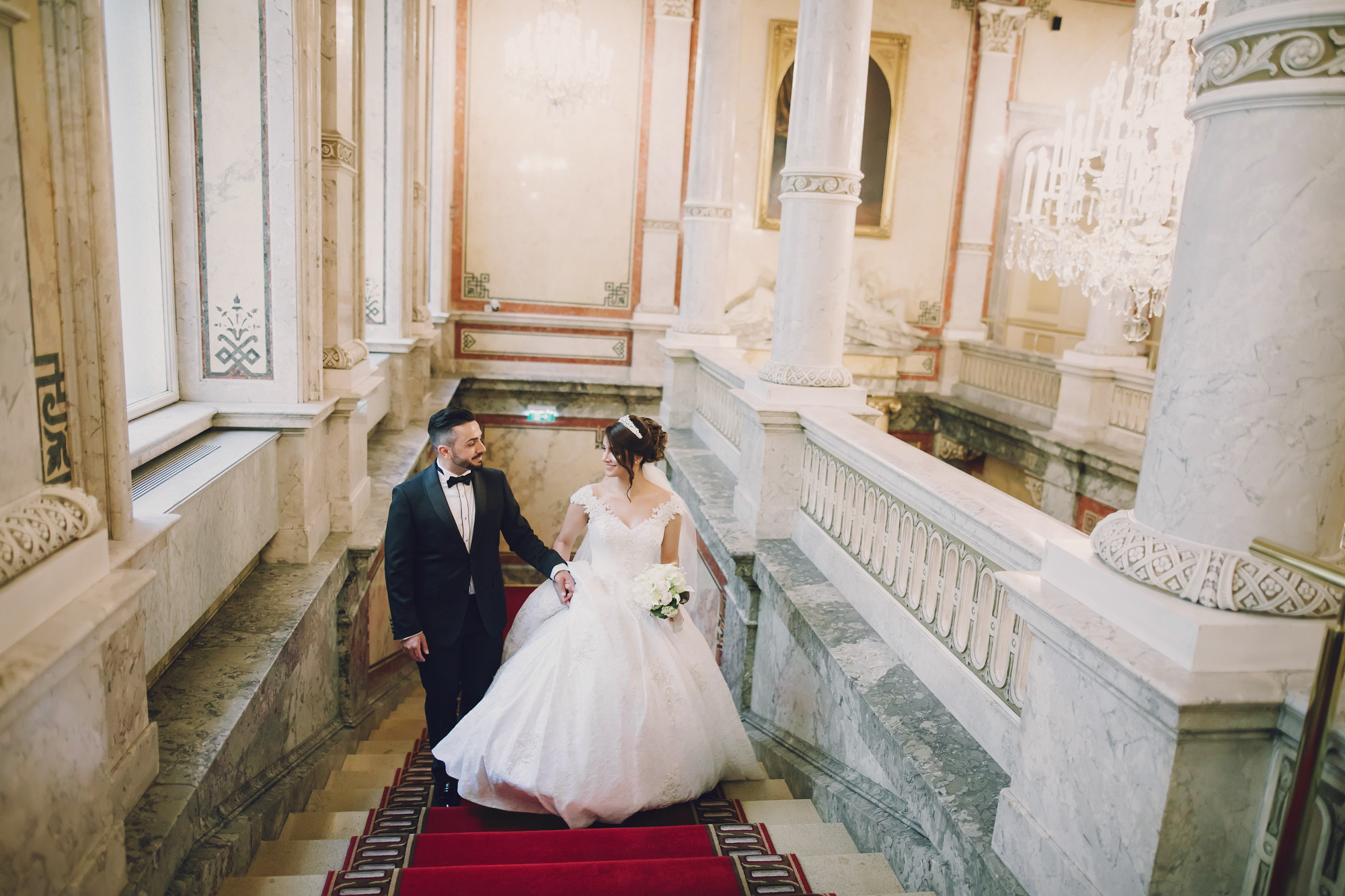
Vanessa looked flawless in ivory. Her dark hair was swept beneath a cathedral veil and crystals sparkled at her throat. Her expression was colder than the marble under our feet.
I lifted the cream colored invitation she had mailed me. “You invited me.”
“Mom insisted I send you something.”
Our mother, Diane, stood a few feet away in silver, her mouth pressed into a careful line. Our father, Martin, adjusted a cuff link without looking at me.
“The ceremony starts in fifteen minutes,” I said. “There were no reception details in the envelope. I assumed it was a printing error.”
“It wasn’t.”
A woman in a pearl hat slowed as she passed. Vanessa noticed, and stepped closer, and lowered her voice.
“Preston’s family invited judges, investors, executives, major donors. I can’t spend the whole evening explaining what my sister does for a living.”
My fingers tightened around the card. “You could tell them the truth.”
Vanessa gave a small humorless laugh. “I know the truth, Claire. You pick up garbage on airplanes.”
Two guests glanced our way. Vanessa leaned in, her perfume thick and sweet.
“You’re a glorified cabin cleaner. I cannot have Preston’s father wondering why you’re standing next to me in the family photographs.”
People like Preston’s father.
I looked past her at our parents. My mother’s eyes flicked toward the guests. “Please don’t make a scene,” she whispered.
“I’m making a scene?”
“Today is about Vanessa.”
My father finally met my eyes. “Your sister has worked hard to get into Preston’s circle. She has a right to protect the impression she makes.”
“From her own sister?”
He sighed. “Try to be reasonable, Claire.”
I waited for one of them to tell me it was a joke. Nobody did.
I want to tell you where the lie came from, because it matters for everything that followed, and because it was not entirely a lie.
Six years earlier, I had needed a job badly and had taken the only one available, which was cabin cleaning for a regional charter company. Between flights, I wiped down tray tables and emptied seat pockets and vacuumed the carpets of small private jets for men who did not look at me. Vanessa had found this hilarious and humiliating in equal measure, and she had told the story at every family gathering for years, and it had calcified in my family into the permanent fact of who I was. Claire, who cleans up garbage on planes.
What none of them ever asked, because it never occurred to them that the answer might be interesting, was what I had done next.
I had spent two years on those aircraft learning the business from the inside, the way you can only learn a thing by cleaning up after it. I saw what the charter companies did badly. I saw the empty legs, the planes flying home with no passengers, the scheduling waste, the clients who hated the experience and paid enormous sums for it anyway. I saw a whole industry run by people who had never once emptied a seat pocket and did not know what the customer actually touched.
And when I was twenty seven I took eleven thousand dollars in savings and a business plan written on the backs of cleaning logs, and I found one investor who would listen, and I started Northstar Executive Air with a single leased aircraft and a promise that we would do the thing the whole industry got wrong, which was to treat the client’s time as the actual product.
Six years later Northstar had six jets, four hundred employees, contracts with three Fortune 500 companies, and a valuation north of seventy million dollars. I was the founder and chief executive. I had never told my family any of it, and I need to be honest about why, because it is not a flattering reason.
I had not told them because I wanted them to love me before they knew. I had spent my whole life auditioning for a family that had already given the leading role to my sister, and some stubborn, wounded part of me wanted, just once, to be chosen for myself and not for what I could provide. So I stayed quiet. I let them believe I still cleaned cabins. I paid the portion of my mother’s hospital bill that insurance refused, quietly, through a routing that did not have my company’s name on it. I transferred money to my father when his retirement account cratered, and told him it was a small bonus from work. I completed Vanessa’s college applications the year she was too busy with parties to do them herself.
I did all of it in silence, and I told myself the silence was dignity, when really it was a test I kept giving my family and they kept failing without knowing they were being tested.
The morning of the wedding was the day I stopped grading the test.
The frightened little girl I had been wanted to plead with them. She wanted to remind Vanessa about the applications. She wanted to remind Mom about the hospital bill. She wanted to tell Dad exactly whose money had steadied his retirement.
But the woman standing in that church had spent too many years auditioning for a part her family had never intended to give her.
I folded the invitation once. Vanessa’s shoulders relaxed, because she assumed I was surrendering, because I always surrendered.
I looked directly into her eyes. “Fine,” I said. “After today, we no longer have a relationship.”
My mother gasped. “Claire, stop being dramatic.”
“I’m not being dramatic. I’m being precise.”
“You’ll regret this,” Vanessa warned.
“No,” I said. “I’ll regret how long it took me.”
I turned and walked toward the church steps, my heels striking the marble in a clean steady rhythm. Behind me my mother called my name once. My father muttered something about my attitude. Vanessa told them to let me go, because the photographer was waiting.
Outside, the cool September air touched my face. White ribbons fluttered from the iron railings, and a line of black cars waited to carry the important guests to a reception I was apparently too embarrassing to attend.
My phone buzzed.
WEATHER SHIFTING OVER THE NORTHERN CORRIDOR. AIRCRAFT SEVEN NEEDS CLEARANCE. CLIENT AWAITING YOUR DECISION.
I typed as I went down the steps. REROUTE THROUGH BRIARFIELD, USE AIRCRAFT FOUR, I’LL CALL THE CLIENT MYSELF.
Another message. UNDERSTOOD, MS. BENNETT. THE BOARD IS ALSO WAITING ON YOUR APPROVAL FOR THE DENVER ACQUISITION.
My car was at the curb, a black sedan with a driver named Anthony who had worked for me for four years and who opened the door and said, “How was it?”
“Short,” I said, and got in.
I did not cry in the car. I had done my crying about my family years earlier, in installments, and I had none left for that particular morning. What I felt, pulling away from the church while my sister got married inside it, was something closer to the release of a held breath. I had been carrying the weight of their approval my whole life, hauling it up every family gathering like luggage, and I had just, on the church steps, set it down. It is a strange and weightless feeling, setting down a thing you have carried so long you forgot it was heavy.
We drove to the hangar. Six silver aircraft sat on the apron with the Northstar emblem, a compass rose, on each tail, and I stood in the doorway of my own operations center and approved the Denver acquisition, and called the client myself about the weather, and by evening I had almost stopped thinking about the church.
I did not tell anyone in my company what had happened. I did not post anything. I did not send my family a triumphant message revealing what I actually did. I want to be clear about that, because the version of this story people expect involves me unmasking myself in the moment, and I did not, because revenge was not what I was after. I was after peace, and I had just bought it at the price of a family, and I intended to actually enjoy it rather than spend it on them.
The truth came out anyway, eight months later, and it did not come out because I engineered it.
I got married that spring.
His name is Daniel, and he is an aerospace engineer, and he did not know for the first four months of our relationship that I owned the company whose planes he consulted on, because I had learned to keep that particular card face down for reasons that no longer applied to him but that I was slow to unlearn. When he found out, from a colleague, he laughed for about a full minute and then said, “You let me explain winglet efficiency to you for twenty minutes on our second date,” and I said yes, I had, and it had been delightful.
We were married at a venue outside the city, and it was covered by a national business program, not because I sought the coverage but because Northstar had just become the first executive charter company to commit to a fully sustainable aviation fuel fleet, which was a genuinely significant industry milestone, and the network was doing a profile on the company, and the profile happened to include the founder’s wedding. I did not fully register, when I agreed to the segment, that it would air to millions of people, or that it would identify me, on screen, with a lower third that read Claire Bennett, Founder and CEO, Northstar Executive Air, valuation $70M+.
My family found out who I was the same way the rest of the country did. On television. On a Tuesday night.
By midnight my phone showed seventy eight missed calls.
I did not answer any of them.
The voicemails were a study in the human capacity to rewrite the past in real time. My mother, tearful, saying she had always known I would do something wonderful. My father, gruff, saying he was proud of me and that they should talk. And Vanessa, whose message I saved and have listened to more than once, not out of cruelty but because it is such a perfect artifact, saying, in a warm voice I had not heard from her since we were small, “Claire. Oh my gosh. I had no idea. Why didn’t you ever tell us? We could have been supporting you this whole time. Call me back, we have so much to catch up on.”
We could have been supporting you this whole time.
I let the calls sit for three days.
Then Vanessa and my parents came to Northstar headquarters.
I did not have to see them. My assistant told me they were in the lobby, that they did not have an appointment, that Vanessa had said it was a family emergency. I sat in my office for a while and looked out at the apron where the aircraft sat, and I thought about the little girl who had done Vanessa’s college applications, and I decided, in the end, to go down. Not because I owed them anything. Because I wanted to see it. I wanted to watch the thing I had spent my whole life waiting for finally arrive, so that I could confirm, with my own eyes, that it was worth nothing now.
They were in the lobby, under the compass rose logo that took up the whole back wall. My mother and father sat on the leather bench. Vanessa stood, in a beautiful coat, holding a leather folder.
She smiled when she saw me, a wide bright smile, and crossed the lobby and tried to hug me, and I stepped back, gently, and she pretended not to notice.
“Claire,” she said. “This place is incredible. I can’t believe you built all of this.”
“You can, actually,” I said. “You watched me start it. You just decided it was funny.”
Her smile flickered and recovered. She is a professional. “That’s fair. I deserve that. We have a lot to talk about, and I want to say I’m sorry, I truly am, about the wedding, about all of it, we were awful and I’ve thought about it every day.” She said it smoothly, and I noticed that she had not put down the folder while apologizing, which told me everything I needed to know about the order of her priorities.
“What’s in the folder, Vanessa?”
She had the grace to hesitate. Then she opened it on the lobby table, because she is who she is and could not stop herself even at the exact moment when stopping herself was the only thing that might have worked.
It was an investment proposal.
Preston’s family, it turned out, ran a private equity operation, and the marriage that could not risk being contaminated by a cabin cleaner had, over eight months, run into trouble, because Preston’s family’s fund had run into trouble, and the whole glittering circle Vanessa had married into was not as solid as the pearl hats had suggested. They needed capital. They had seen the television segment. And my sister, who had blocked me from her reception rather than explain my existence to these people, had driven to my company with a proposal for me to invest eight million dollars into her husband’s family’s fund, with a personal note attached, in her handwriting, about how family supports family.
Family supports family. In my sister’s handwriting. On a document asking me for eight million dollars, eight months after she stood in a church and told me I collected garbage.
My father cleared his throat. “Claire, we know how it looks. But you have to understand, this is a real opportunity, and it would put you in a position with Preston’s family, socially, that could open a lot of doors for the company, and it would help all of us, and family should—”
“Stop,” I said. Not loudly. My father stopped.
I looked at the three of them, in the lobby of the company I had built out of eleven thousand dollars and two years of emptying seat pockets, and I felt the thing I had come down to confirm, which was that the arrival of their approval was worth exactly nothing, because it had not arrived for me. It had arrived for the compass rose on the wall.
“I want to tell you what I’ve figured out,” I said, “and then I’m going to have someone walk you out, and I’d like it to be the last time we do this.
“For thirty one years I thought if I was just useful enough, just quiet enough, just successful enough, you would love me the way you love Vanessa. I did her applications. I paid Mom’s hospital bill, the part insurance wouldn’t cover, in 2019, and none of you ever knew because I hid it. I steadied Dad’s retirement and called it a work bonus. I did all of it silently, and I told myself it was because I didn’t want credit, but the truth is I was buying something, and it never came, and it was never going to come, because you can’t buy the thing I wanted. You either give it for free or you don’t have it.
“And then Vanessa stood in a church door and told me the truth about how you all saw me, and it was the best thing she ever did for me, because it finally stopped me from paying.” I looked at my sister. “You blocked me from your reception so Preston’s father wouldn’t have to know your sister cleaned planes. And now you’re standing in my lobby because your husband’s father needs your sister who cleans planes to save his fund. Do you see it, Vanessa? Do you see what you’re actually holding in your hand?”
She did not answer. For once in her life, she did not have the smooth thing ready.
“The answer is no,” I said. “Not to the investment. To all of it. I’m not going to fund Preston’s family. And I’m not going to be your family again in exchange for money, which is the actual proposal in that folder, whatever the numbers say. You didn’t come here because you love me. You came here because I turned out to be useful in a way you didn’t expect, and useful is the only way any of you have ever known how to see me. And I am done being useful to people who can’t see me any other way.”
My mother started to cry, and said the thing mothers say, that of course they loved me, that they had always loved me, that I was being unfair.
And I said the truest thing I had.
“Maybe you did love me, Mom. In your way. I’ve decided it doesn’t matter anymore whether you did. Because love that only shows up when I’m valuable isn’t a kind of love I need. I have people now who knew me before the television segment. My husband explained winglets to me for twenty minutes before he knew I owned the airline. That’s the love I was looking for my whole life, and I found it, and I found it away from you, and I’m not going to trade it back for a lobby reunion and an eight million dollar ask.”
I had them walked out. My head of security, a kind man named Reuben, did it gently, and my mother hugged him on the way out because she needed to hug someone, and Vanessa left the folder on the table, and I threw it away myself, not dramatically, just into the bin by the reception desk, the way you throw away anything you are finished with.
I did not fund Preston’s family. Their fund did not survive the year. Vanessa and Preston separated eighteen months later, and I heard about it the way you hear about people you used to know, secondhand and without much feeling. She reached out twice more, once angry, once wounded, and I did not answer either, not out of spite but because there was genuinely nothing left in me to answer with.
I am not entirely without a family now. That is the part these stories usually skip. My father, of all of them, wrote me a letter about a year after the lobby, an actual letter, and it was not asking for anything, which was how I knew to read it. He wrote that he had thought about what I said, the part about only being able to see me as useful, and that he was ashamed to realize it was true, and that he did not expect anything from me and was not writing to repair things but only to tell me he finally understood what he had done. He said he had gone back and figured out, from the dates, that the small work bonus that saved his retirement in 2016 had been me, and that he had not been able to sleep since.
I wrote him back. We are, slowly, carefully, something now. Not close. But real. He comes to the hangar sometimes and I show him the aircraft, and he is genuinely interested, and he has never once, in three years, mentioned money or Vanessa or opportunities. He just looks at the planes and asks how they work, and I tell him, and it is enough. It is more than I ever got from him when I was auditioning for it.
My mother and I exchange cards. Vanessa and I do not speak. I have made my peace with all of it.
I still, on some mornings, walk out onto the apron before the crews arrive, when the six aircraft are sitting quiet in the early light with the compass rose on their tails, and I think about the woman I was at twenty five, on her knees between flights, wiping down a tray table for men who did not look at her, saving eleven thousand dollars, writing a business plan on the backs of cleaning logs.
My sister called it collecting garbage on airplanes. She meant it as the smallest thing a person could be.
She never understood that I learned the entire industry down there on my knees, in the part of it nobody important ever looks at, and that everything I built, I built out of paying attention to exactly the thing she was too proud to be seen near.
The cabin cleaner saw the whole business more clearly than any of the men in the reception she barred me from. That is the part I would tell that young woman on her knees, if I could reach back to her. Keep looking. They think you’re beneath noticing. That’s your advantage. Nobody guards the thing they think is garbage.
I built Northstar out of what my family threw away, including, in the end, me.
And it turned out to be worth seventy million dollars, and worth infinitely more than that, because it was mine, and because I never once had to explain to anyone who loved me why I was standing beside them in the photographs.

Specialty: Quiet Comebacks & Personal Justice
David Reynolds focuses on stories where underestimated individuals regain control of their lives. His writing centers on measured decisions rather than dramatic outbursts — emphasizing preparation, patience, and the long game. His characters don’t shout; they act.