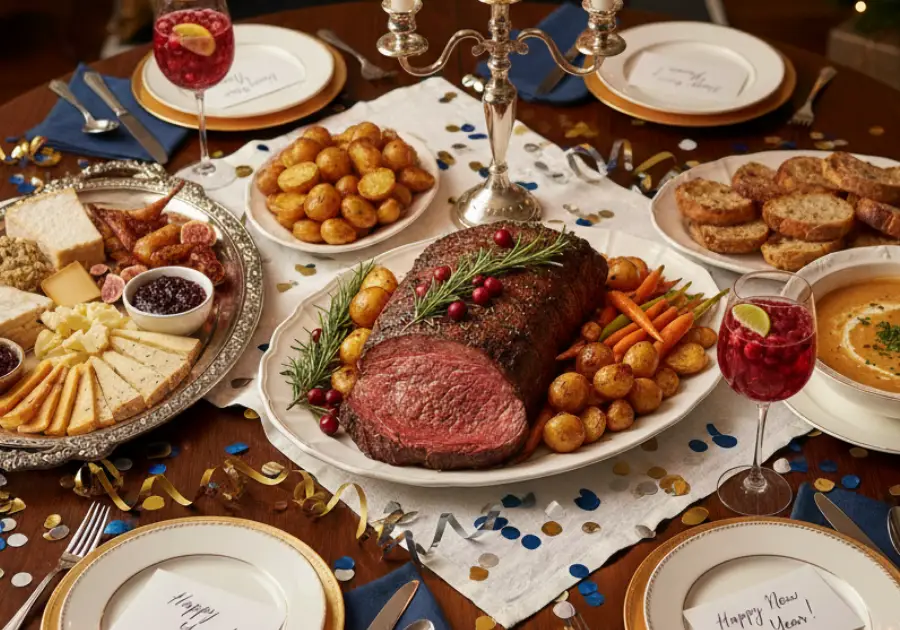
I cooked Christmas dinner for seventeen people, and not one of my children came.
Three months later, I disappeared with every dollar they thought was waiting for them.
That sentence sounds cold when I say it out loud now.
Maybe it should.
But cold is not always cruelty. Sometimes cold is just what’s left after the last warm thing in you finally stops trying to survive on scraps.
On Christmas Eve my kitchen smelled like roasted turkey and honey ham and cinnamon cider and buttered potatoes, and the pecan bread Richard used to bake every December until the year he stopped.
The windows over the sink had gone black with winter.
The clock above the stove clicked over to 8:40.
Every tick sounded louder than the one before it.
I had set seventeen places in the dining room.
White linen. Red napkins. The silver polished until I could see my own tired face bending back at me out of a spoon. Candles down the center of the table.
And a handwritten name card beside every single plate.
Laura. Michael. Fiona.
Their spouses.
My eight grandchildren.
I had bought little stockings for the younger ones, even though two of them are nearly grown now.
Grandmothers are foolish that way. In our minds, the child who once ran down the hallway in socks is always still hiding somewhere inside the teenager who forgets to text back.
I stood in the kitchen in my green velvet dress wearing Richard’s pearls, the ones he gave me on our thirtieth anniversary and made me open at the breakfast table because he couldn’t wait until dinner.
I told myself not to look at the driveway again.
Then headlights came past the front window, and I looked anyway.
They kept going.
I called Laura first.
Straight to voicemail.
I called Michael.
Voicemail again.
Fiona’s phone rang twice before she sent me away.
There are sounds that tell you more than any words could. A call rejected after two rings is one of them. You can hear the thumb.
I went back into the dining room and sat down at the head of the table.
The turkey sat uncarved.
The cider steamed a little less every time I looked at it.
The candles burned lower.
Nine o’clock passed. Then ten. Then eleven.
By 12:15 in the morning, the gravy had formed a skin, the cider had gone cold in the pot, and the turkey didn’t look like dinner anymore. It looked like evidence.
The room had that particular quiet a house gets when it has prepared itself for people who never arrive.
The heat came on and a chair creaked somewhere behind me and for half a second I thought somebody had walked in.
Nobody had.
That was the night something inside me went still.
Not broken.
Clear.
Richard had been dead ten years by then.
He died on an ordinary Tuesday morning in our bathroom while he was tying his necktie for work.
One moment he was asking whether I’d seen his brown belt. The next his hand was flat on the vanity and his knees were going.
The paramedics counted over his chest for so long that I started to hate the sound of numbers. I stood in that doorway gripping the frame hard enough to cramp my fingers while strangers begged my husband to come back.
He did not come back.
After the funeral, my three children sat around me in the living room and said all the right things.
Laura is the oldest, so she took my hand like she was signing a contract with grief.
“We’ll get through this together, Mom.”
Michael sat forward with his elbows on his knees.
“You’re not going to be alone.”
Fiona, my youngest, cried against my shoulder and whispered, “We’ll take care of you.”
I believed them.
Of course I did. A mother believes her children a long time after the evidence has stopped supporting it.
And for a while they meant it.
Laura brought casseroles in glass dishes with blue lids. Michael mowed the lawn without being asked. Fiona came by with the kids and for a few hours at a time the house filled up with noise again. Little shoes in the hallway. Cartoons in the family room. Juice boxes in the trash.
Those first few months, I thought maybe grief wouldn’t swallow me whole.
Then, slowly, I became inconvenient.
The calls got shorter.
The visits became occasional.
Sunday dinners disappeared one at a time until nobody even mentioned them anymore, and then it had been two years, and then it had been five.
The first Mother’s Day after Richard died, they sent flowers with a printed card that already had all their names signed on it in the same typeface.
The first birthday I spent without him, Laura sent a text.
Happy birthday, Mom. Love you.
That was it. No voice. No visit. No knock at the door.
I made excuses for them for years.
They were busy. They had jobs. They had children of their own. Maybe the house hurt them, because it still carried Richard everywhere in it. His jacket in the hall closet. His tackle box in the garage. His handwriting on the recipe cards and the file labels in the cabinet under the stairs.
But after a while, excuses weigh more than loneliness does.
One year I drove almost two hours to bring Michael the chocolate cake I have baked for his birthday every year since he was six years old.
When I pulled into his driveway there were balloons tied to the mailbox. Cars up and down the curb. Music coming out of the house.
He opened the door, saw me standing there holding that cake, and his whole face changed.
“Mom.” He dropped his voice. “I didn’t know you were coming.”
“It’s your birthday, sweetheart.”
He glanced over his shoulder. There were people laughing in his kitchen. I could smell barbecue sauce and beer through the open door.
“It’s just a thing with Anna’s family,” he said. “This really isn’t a good time.”
He left me standing on that porch with the cake in both hands.
I cried so hard on the drive home that I had to pull into a gas station on Route 9 and sit there until the road stopped blurring.
I found out about my granddaughter Emily’s graduation on Facebook.
There she was in her cap and gown, smiling between Laura and her husband, with a caption about how fast time goes.
Nobody had told me the date. Nobody had saved me a seat.
I mailed Emily five hundred dollars and a handwritten letter telling her how proud her grandfather would have been of her, and what he used to say about her when she was small.
She texted back: Thanks Grandma.
Nothing else.
When I slipped in the garage and fractured my wrist, Laura said she’d come by after work.
She never did. She didn’t call either.
And when the doctors found a lump in my breast and I spent four days waiting on scan results with terror sitting in my throat like a stone, I told no one.
Not because I was brave.
Because by then I understood there was nobody to tell.
The hospital intake desk had my emergency contacts on file. That piece of paper knew my children better than they knew me. It listed three names that do not answer.
The biopsy came back benign.
I remember sitting in my car in the clinic parking lot with the printed result in my lap and feeling nothing at all for almost a full minute.
The fear was gone. The silence stayed.
I folded the paperwork and put it in the kitchen drawer with the old warranties and insurance letters and the birthday cards I could never make myself throw away.
A document can be colder than an empty room.
At least a room doesn’t pretend to love you.
And still. Still, that Christmas, I tried one more time.
I called them weeks in advance. I said I didn’t want gifts. I didn’t want anything fancy.
I wanted one evening. One proper family dinner. One night that felt the way it used to feel when Richard was alive and the grandchildren ran through that hallway in their socks.
Laura said, “We’ll see.”
Michael said, “I’ll try.”
Fiona smiled through the phone and said, “That sounds nice, Mom.”
I took those three scraps and I made a feast out of them.
That is what mothers do, right up until the day they stop.
So I cooked for seventeen people. I scrubbed the baseboards. I polished the silver. I wrapped presents. I wrote out name cards at the kitchen table with my reading glasses on.
And I stood at that window every time a set of headlights went past, believing right up until midnight that the next car might be the one that turned in.
None of them did.
At midnight I looked around at all that untouched food, at the place cards, at the gifts, at seventeen chairs sitting there like accusations.
The dining room seemed to freeze around me. The candles leaned and guttered. The silverware sat perfectly straight beside plates nobody had touched. A serving spoon still stood in the mashed potatoes exactly where I’d set it two hours earlier.
The house was still breathing. Nobody in it was moving except me.
And in that stillness I finally understood something with a clarity that felt almost physical.
My children had not forgotten me.
They had simply decided I no longer mattered unless I was useful.
I stood up.
I blew out the candles one at a time.
And then I made the first honest decision I had made in ten years.
If my children wanted to live as though I were already gone, then I would give them exactly that.
What they did not know was that the widow they had been ignoring still controlled every bit of it.
The house.
The eleven acres behind it.
Richard’s investment accounts.
And the lake property he bought in 1974, before any of the three of them were born.
Every dollar they had been privately counting for a decade while dressing their questions up as concern.
Because they had been asking. Not directly. Greed rarely wears its own clothes when it comes to visit family.
Have you updated your will, Mom?
Who’s handling the lake house when you’re gone?
You should get things sorted now so there won’t be confusion later.
They never once asked what I needed.
Only what would be left.
The morning after Christmas, I packed all that untouched food into containers and drove it to a church kitchen across town that serves hot meals four days a week.
The woman who took the trays from me didn’t ask a single question about why there was enough turkey for seventeen people or why my hands were shaking.
She just said, “Bless you, this is going to feed a lot of folks tonight.”
I left the wrapped stockings in a box by their door.
Then I came home and washed the dishes and stripped the table.
And before I put the chairs back, I took a photograph of that dining room.
Seventeen empty places. Seventeen name cards. Seventeen people who had shown me, without any ambiguity at all, exactly where I stood.
In January I hired a lawyer.
I picked him because he listened before he advised. That mattered to me more than his office or his suit.
He sat across from me with a yellow legal pad and asked, “What do you want to happen?”
Nobody had asked me that in ten years.
I almost cried right there from the shock of it.
Then I told him.
I told him about Richard. About the missed holidays. About Michael’s porch. About Emily’s graduation. About Laura and my wrist. About the four days I waited on biopsy results by myself with the phone face down on the counter.
I didn’t exaggerate one word of it. I didn’t have to. The facts were ugly enough without any decoration.
By the end of that meeting he had written out three lists.
Assets. Beneficiaries. Immediate protections.
In February I signed documents my children cannot undo.
We went through beneficiary forms, trust documents, deed records, account statements, and all the old files Richard kept in the locked cabinet under the stairs, which took two full afternoons and a locksmith.
The lake property was transferred according to the plan.
The house paperwork was updated.
The accounts were redirected.
I kept copies of every single page.
And then I wrote letters.
Not angry letters. Angry would have been easy, and it would have let them off.
I wrote the truth.
I wrote about the Christmas table. I wrote about the cake on Michael’s porch. I wrote about a hospital intake form with three emergency contacts on it that had become purely decorative.
I wrote about what it felt like to understand that I could die in that house and my children might find out about it from paperwork.
Then I sealed them and gave them to my lawyer.
He asked if I was sure.
I said yes.
In March, I vanished.
That’s the word my children used later. Vanished. As though I’d been taken.
I was not taken. I left.
I packed only what belonged to me.
Richard’s photograph. My jewelry. My medical records. A suitcase of clothes. A box of recipe cards.
And the green velvet dress, folded under tissue paper.
I moved into a small apartment in a quiet town they would not know to search.
I bought two mugs, one blue towel, a new kettle, and a notebook.
On the first morning I made coffee and drank it standing at the window.
Nobody called.
That was fine. By then, silence had stopped being a wound and turned into weather.
When my children finally came looking for me, it was not because they missed their mother.
It was because they had gone to check on the fortune and found it gone.
Laura called first. Her voice was sharp and breathless and offended.
“Mom. Where are you?”
I let it go to voicemail.
Michael called seven minutes after her.
“What did you do?”
I saved that one. Not because it hurt me. Because it told the truth so plainly.
He did not ask where I was.
He asked what I had done.
Fiona left a message at 3:42 that afternoon. At first she sounded like she was crying.
Then she said, “You can’t just make decisions like this without talking to us.”
I laughed once, quietly, standing in my small kitchen with a dish towel in my hand.
Because I had been talking to them for ten years.
They just hadn’t been listening.
The next day, all three of them turned up at my lawyer’s office.
Laura came first with a leather purse and a face full of certainty. Michael came in behind her with his jaw set and his phone already in his hand, like he was ready to record somebody else’s guilt.
Fiona came last. Pale and quiet.
The lawyer put three folders on the conference table. Each one held a copy of the same letter.
Each letter opened with the same sentence.
My dear children, this is the first family dinner I have attended without being invisible.
Laura read hers first, because Laura always reads first. Control has always been the way she dresses fear in clean clothes.
By the second paragraph her voice had started to shake.
Michael stopped pacing.
Fiona sat down without being asked to.
The letter told them about the Christmas table. About the name cards. About the calls that went unanswered and the food that went cold.
And then it told them what I had done.
The house would not be theirs.
The lake property would not be theirs.
The investment accounts they had been quietly dividing in their heads since their father’s funeral had been redirected.
A portion went to the church kitchen that took my Christmas food without asking why my hands were shaking.
A portion went to a scholarship fund in Richard’s name for students who have lost a parent and still show up for their lives anyway.
A portion was set aside for my own care. My own housing. My own medical needs. My own peace.
And the rest went into a trust that supports my grandchildren directly, under conditions I chose myself, very carefully.
Education. Medical need. Emergency housing.
Not cars. Not vacations. Not a parent’s wish list disguised as a child’s future.
Michael exploded first.
“She can’t do this.”
The lawyer folded his hands on the table.
“She already has.”
Laura’s face went red. “We are her children.”
“Yes,” he said. “She mentioned that several times.”
Fiona wasn’t listening to any of it.
She was looking at the photograph clipped to the back of her letter.
The dining room at 12:15 in the morning. Seventeen untouched plates. Seventeen empty chairs. The stockings stacked by the mantel. The name cards lined up down the table like evidence, which is exactly what they were.
Fiona put her hand over her mouth.
“Mom took a picture?”
“She documented everything,” the lawyer said.
There was a long silence in that room. He told me afterward that it was the first honest thing that had happened in it.
Then Michael turned on his sister.
“Why are you crying?”
She looked up at him like she was seeing him clearly for the first time in her life.
“Because we did this.”
“Don’t start,” Laura snapped.
But Fiona did start.
She stood up with the letter in her hand.
“We left her alone on Christmas. All three of us. She set the table for seventeen people.”
Michael muttered something about everybody being busy.
Fiona pointed at the photograph.
“Busy for a phone call? Busy for one message? Busy for ten years?”
That was when the lawyer slid the last envelope across the table.
It had Richard’s old handwriting copied onto the front from an anniversary card I’d kept.
TO BE OPENED ONLY AFTER THEY UNDERSTAND WHY.
Laura reached for it. He put his hand flat over the seal.
“Before you open this,” he said, “you should know your mother left instructions for each of you. Not money. Instructions.”
Michael’s confidence drained right out of his face.
“What kind of instructions?” Fiona whispered.
He broke the seal.
Inside were three smaller envelopes.
Laura. Michael. Fiona.
Laura’s held copies of every unanswered message I had sent her over five years. Texts, voicemail transcripts, two letters. Forty-one pages.
At the top I had written one line.
You always said you were busy, so I’ve made this simple.
Michael’s held a photograph of me on his porch holding a chocolate cake, taken by his own doorbell camera, printed from the copy Anna had once texted me by mistake and immediately tried to unsend.
At the top of that one I had written:
This was the day I stopped confusing access with love.
Fiona’s envelope was different.
It held the hospital intake form.
Emergency contacts: Laura. Michael. Fiona.
And clipped behind it, the benign biopsy result, dated four days later.
Fiona read it and broke apart.
Not dramatically. Not loudly. She just sat down and cried into both her hands.
“She went through that alone,” she said.
Nobody answered her.
Because there was no answer that could make it any smaller.
The lawyer handed them the last page.
It was not a curse. It was not revenge.
It was a boundary.
I wrote that I was alive. That I was safe. That I did not want visits, or demands, or apologies performed under financial pressure, or one single argument about money.
If they wanted a relationship with me, they could each write one letter.
Not a text. Not a voicemail.
A letter.
And in it they could tell me one thing they remembered about me that had nothing to do with anything I had ever given them.
Then they could wait.
For once in ten years, I would be the one who decided whether to answer.
Laura left angry.
Michael left threatening lawyers he never hired.
Fiona stayed in that conference room after the other two were gone.
She asked my lawyer whether I was eating.
It was the first practical question any of my children had asked about me in years.
He told her he couldn’t share details. She nodded and said she understood.
Then she folded that hospital form back into its envelope like it was something fragile.
Two weeks later, three letters came.
Laura’s arrived first. Four pages.
Work had been stressful. The kids had schedules. Holidays are complicated. Grief had been hard on everyone, not just me.
She used a great many words without ever once using the word sorry.
I put it in a drawer.
Michael’s came second. One page.
He said I had embarrassed the family. He said his father would never have wanted this. He said somebody was clearly manipulating me.
I put that one in the trash.
Fiona’s came last.
Plain notebook paper. The handwriting shook.
Dear Mom.
I remember you cutting my toast into triangles because I said the squares tasted wrong.
I remember Dad pretending not to notice when you slipped me twenty dollars before school trips.
I remember you staying up the entire night sewing my angel costume for the church pageant because I forgot to tell you about it until bedtime.
I remember you.
And then she wrote the sentence that made me sit down at my own kitchen table.
I am ashamed that I remembered the inheritance more clearly than I remembered the mother.
I read that line three times.
Then I cried.
Not because it fixed anything. It didn’t. One true sentence does not rebuild a decade.
But it was the first true sentence any of my children had given me in years, and I had begun to think none of them had one left in them.
I wrote back to Fiona a month later.
Only to Fiona.
I told her I was safe. I told her I was not ready to see her. And I told her that if she wanted to begin again, she could begin by showing up consistently for somebody who can no longer be bought with last-minute affection.
She has written every month since.
Sometimes I answer. Sometimes I don’t.
Laura sent flowers on Mother’s Day. I donated them to the senior center down the road.
Michael has not written again.
That is also an answer.
By summer, my small apartment had started to feel like mine.
I hung Richard’s photograph by the kitchen window where the morning light hits it. I bought a yellow chair. I learned the names of two women down the hall, June and Patrice, who argue constantly about a television show neither of them likes.
And I started volunteering twice a week at a church kitchen.
The first time I carried trays out into the dining room, a little boy with ketchup on his sleeve looked up at me and told me the mashed potatoes were good.
I almost laughed out loud at the sweetness of it.
After all those years cooking for people who couldn’t be bothered to show up, a stranger’s child looked me in the eye and thanked me for potatoes.
Life is strange that way. It doesn’t always give you back what was taken.
Sometimes it just gives you proof that you weren’t a fool for wanting to give in the first place.
This past Christmas Eve, I did not cook for seventeen.
I cooked for six women from my building, two volunteers from the kitchen, and one widower named Walter who brought a store-bought pie and apologized for it three separate times.
I wore the green velvet dress.
I wore Richard’s pearls.
At 8:40 I looked up at the clock in the community room and felt the old pain brush right past me.
But it did not own that room.
People were laughing. Somebody knocked over a cup of cider. Walter’s pie was far too sweet and we ate all of it. June asked me for Richard’s pecan bread recipe and wrote it down on the back of an envelope.
And for the first time in ten years, Christmas Eve did not feel like a test I had failed.
Near the end of dinner, my phone buzzed on the table.
Fiona.
Merry Christmas, Mom. I know I don’t deserve an answer. I just wanted you to know I went to the church kitchen today. I stayed until the dishes were done.
I looked at that message for a long time.
Then I put the phone face down and went back to the table, where June was arguing with Patrice and Walter was cutting the last of his terrible pie.
There would be time for answers later.
That’s the gift I finally gave myself.
Time. Choice. And silence that belongs to me.
My children spent ten years teaching me that I no longer mattered unless I was useful.
So I taught them the one lesson they had spent all that time avoiding.
A mother can love you with her whole heart and still close the door when you keep leaving her outside of it.

Specialty: Quiet Comebacks & Personal Justice
David Reynolds focuses on stories where underestimated individuals regain control of their lives. His writing centers on measured decisions rather than dramatic outbursts — emphasizing preparation, patience, and the long game. His characters don’t shout; they act.