127 Driftwood Lane
When my wife was gone, I inherited the old beach cabin, while my son received the villa in Italy. He looked at the papers and said, “You can go live in that forgotten place by the water.” Then he told me to leave, as though everything of value already belonged to him.
I drove to the cabin only to find somewhere quiet to breathe. But when I opened the door, I stopped in the entryway, because the cabin was not empty at all. My wife had left one letter, one deed, and a secret my son was never meant to find.
The attorney’s office was too quiet after my son laughed.
Not a loud laugh. Not the kind that fills a room and fades. It was short and sharp and almost satisfied, the sound of a man watching the last piece of a puzzle fall exactly where he wanted it.
Mr. Thompson sat behind his desk with my wife’s will open in front of him, his glasses low on his nose. Outside the window, traffic moved past the courthouse square, careless and ordinary, while I sat there in my dark suit still feeling Helen’s absence like a chair pulled out from under me.
Bradley flipped through the pages as if grief were paperwork.
“The villa in Italy,” he said, tapping a line with one finger. “That’s mine.”
Mr. Thompson nodded. “According to your mother’s instructions, yes.”
Then Bradley read the next section, and his smile changed.
“And Dad gets the beach cabin.” He turned to me, eyes bright with the kind of pity that is really pride wearing a costume. “Well. That makes sense. You always liked fixing broken things.”
I looked down at my hands.
I had built bridges for a living. Real ones. Steel and concrete, storm resistant foundations, public projects that took years and saved towns from flooding. I had spent forty years solving complicated problems with patience and measurements and the willingness to check my work.
But sitting beside my only son, listening to him reduce thirty eight years of marriage to a list of properties, I felt smaller than I had ever felt on any job site.
Mr. Thompson cleared his throat and slid a small envelope across the desk. Inside were two brass keys, slightly tarnished. One had a blue tag with faded handwriting. 127 Driftwood Lane.
“The property is paid off,” he said gently. “No mortgage, no outstanding claims. Helen was very specific that it go to you. Only to you.”
Bradley leaned back. “Perfect. He can retire with the seagulls.”
I finally looked at him. “Bradley.”
“What?” he said, almost bored. “Mom made her wishes clear.”
“She was buried eight days ago.”
“And the estate still has to be handled.” His voice cooled. “Speaking of which. I’m putting the house on the market.”
The house. Our house. The one where Helen planted hydrangeas by the porch. The one where Bradley took his first steps across the living room rug. The one where I had assumed I would grow old inside memories I was not ready to fold into boxes.
“You can’t just push me out,” I said.
He closed the folder with a soft snap. “Dad. Mom left the house to me. You have the cabin. Don’t make this harder than it has to be.”
There it was. Not anger. Not guilt. Convenience.
By the next morning there were movers walking through rooms I had painted with my own hands. Bradley stood near the front door on his phone, already talking about appraisals. The good china was wrapped in newspaper. Helen’s antique lamp went into a box. A photo from our last Christmas sat facedown on the entry table, as though even it did not want to watch.
I packed what was mine. Tools. Work boots. Clothes. A few books. The wooden level my father gave me the day I became an engineer. Helen’s old gardening gloves, though I was not sure I had any right to take them. Our wedding photo went into the front pocket of my duffel bag, against my chest.
Bradley did not offer to help. When I backed out of the driveway he lifted one hand in a half wave without looking up from his screen.
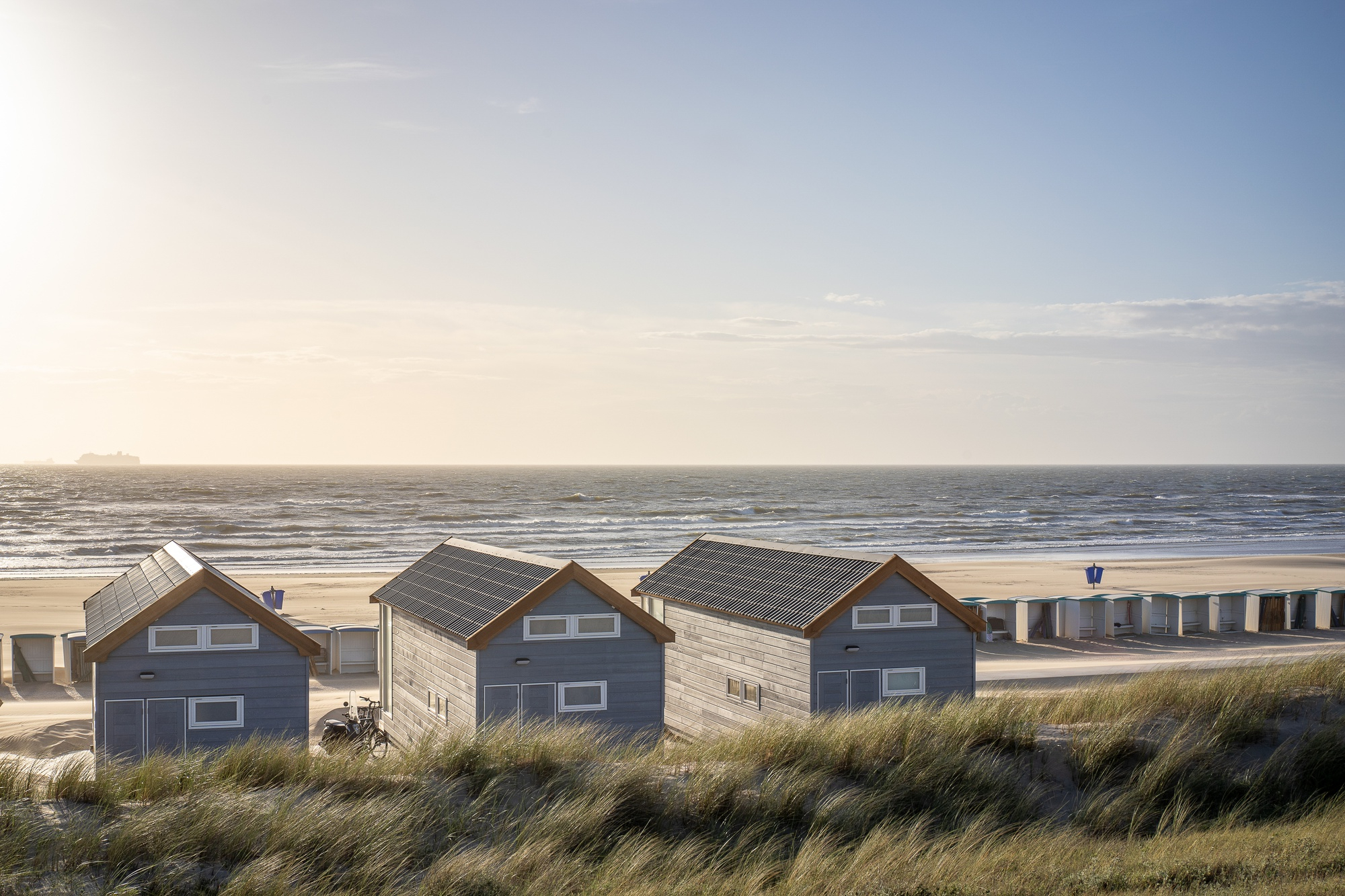
The drive to the coast took a little over two hours, and by the time I reached Clearwater the afternoon had gone that pale gold that makes everything look kinder than it is. Driftwood Lane was narrow and sandy and quiet. Some of the houses had been rebuilt into shiny rentals with glass balconies. Others looked like time had been slowly taking them apart.
Number 127 was one of the second kind. Faded blue paint peeling from the siding, a porch that sagged on one side, a boarded window facing the road, weeds coming up through the driveway.
I sat in my truck for a full minute. So this was what Helen thought I deserved. A forgotten place by the water.
I took the key and walked to the door, and the lock turned smoothly. Too smoothly. The door opened without the swollen resistance of a house left empty for years.
And the first thing I smelled was lavender. Not mold. Not rot. Lavender.
I stepped inside and stopped.
The floor was swept. A blue throw was folded over the couch. Fresh flowers stood in a mason jar on the coffee table. In the kitchen, two plates sat in a drying rack beside two cups and a clean dish towel. The refrigerator hummed.
Someone had been here. Recently.
There was mail stacked on the side table. A prescription bottle on the counter. Reading glasses beside a paperback with a receipt tucked in as a bookmark. Most of the envelopes were addressed to someone named Carol Martinez. But one, near the bottom, had my wife’s name on it. Helen Miller. Same address.
Helen had been coming here. Not once. Not by accident. Regularly.
On the coffee table was a photo album, and I opened it and felt the room tilt.
There was Helen on the beach outside the cabin, smiling in a way I had not seen in years, not polite, not tired, really smiling, with her arm around a younger woman with dark hair. The next photo showed them cooking. Another showed Helen on the porch, laughing, while the woman held a mug in both hands. In several the woman was on crutches. In one, Helen was tucking a blanket around her knees the way you do it when you have done it a hundred times.
My wife had been caring for someone. My wife had a whole life by the water I had known nothing about.
Then footsteps sounded on the porch, and a key slid into the lock from outside, and I stood so fast the album nearly fell.
The door opened and the woman from the photographs stepped in carrying a grocery bag.
“Helen?” she called softly. “They had the crackers you wanted.”
Then she saw me, and the bag lowered slowly, and for a long moment neither of us moved. She was younger than me, early thirties, dark hair pulled back, forearm crutches braced under her arms. Her face was pale with surprise, but there was something else in it too, and the something else was recognition.
“You’re Eugene,” she said.
“I am,” I said. My voice came out rough. “And I don’t know who you are, or why my wife’s name is on your mail, or why there are pictures of the two of you all over this room. So I think you’d better tell me.”
She set the grocery bag on the counter, carefully, and lowered herself into a kitchen chair, arranging the crutches against the table with the practiced economy of someone who does everything in a particular order. She looked at me for a long moment, and then she said something that took the ground out from under me for the second time in a week.
“She never told you about me. I asked her not to. I have to start there, before you get angry at her, because if you’re going to be angry at anyone in this it should be me.”
“Who are you?” I said.
“My name is Carol,” she said. “Carol Martinez. And Helen was, she.” She stopped, and her eyes filled, and she pressed the back of her hand to her mouth for a moment, and then she got control of it. “Helen was my mother. My birth mother. She gave me up for adoption thirty two years ago, and I found her four years ago, and she has spent every week since then in this cabin with me, and I am so sorry that you’re finding out this way, standing in my kitchen, from a stranger.”
I had to sit down.
I sat down in the other kitchen chair, across from a woman I had met ninety seconds earlier, and I tried to make the arithmetic work, and it worked, that was the terrible thing, it worked perfectly. Thirty two years ago. Helen and I had been married six years by then, but before me, before all of it, Helen had had a life I knew only in outline. A hard young womanhood she did not like to discuss. A gap of a couple of years in her twenties that she always waved off. I had never pushed. You do not push at the parts of a person they keep shaded, if you love them, and I had loved her, and so I had never learned that in the shaded years there had been a baby.
“She was nineteen,” Carol said quietly, watching my face do its work. “She wasn’t married. Her family, from what she told me, was not kind about it. She gave me up because she believed she had nothing to give a child, and she spent the rest of her life believing she’d done a terrible thing, and I spent the first part of mine believing I’d been thrown away, and then four years ago I hired someone to find her, and she drove to a coffee shop to meet me and she was shaking so hard she spilled it.”
“Four years,” I said.
“Four years.”
“She came here every week for four years and never told me.”
Carol nodded, and now the tears came properly. “I asked her not to. That was me. When we first found each other I was, I didn’t want to blow up her whole life, I didn’t want to be the scandal that showed up and wrecked a marriage and a family, I told her I would rather have a piece of her quietly than lose her by asking for all of it. So she came on the days she said she had errands, or her book club, or the garden club, and she came here, to me. And I got sicker.” She gestured at the crutches, at the prescription bottle. “MS. It progresses. She started coming to help. Groceries, appointments, the things that get hard. And she bought this cabin two years ago, in her own name, so that I’d have somewhere to live that no one could ever take from me, because I don’t have anyone else, Eugene. I don’t have a family. I have her. Had her.”
The room was very quiet. The refrigerator hummed. Outside, a gull said something to another gull.
And I understood, all at once, several things at the same time.
I understood why Helen had left me the cabin.
Bradley had laughed at it. You always liked fixing broken things. He had seen a peeling blue house on a sandy lane and a father he could dismiss, and he had thought his mother was giving her husband the scraps.
Helen had not been giving me scraps. She had been giving me the one thing she could not say out loud while she was alive. She had been giving me Carol. She had left this cabin to me, specifically to me and to no one else, because she knew exactly what our son was, and she knew that if the villa or the money or anything of obvious value had been attached to Carol, Bradley would have found her, and fought her, and destroyed her. So Helen had hidden her second daughter inside the one inheritance her son would find worthless. She had wrapped the most precious thing she had in the plainest possible paper, and she had handed it to the one person she trusted to open it carefully.
“There’s a letter,” Carol said. “She left it here, for you, in case, she’d been getting things in order. She knew she was sick before, before the end. She didn’t tell you that either. She didn’t want you to spend the last months watching her die. It’s in the drawer, in the bedroom.”
I got the letter.
I am not going to reproduce all of it, because some of it belongs only to me. But I will tell you the shape of it.
She apologized. Not for Carol. She said she would never apologize for Carol, that finding her daughter had been the great grace of her later life and she would not diminish it with an apology. She apologized for the silence. She wrote that she had been a coward about it, that she had told herself she was protecting everyone when really she had been protecting herself from a conversation she did not know how to have, and that she had run out of time to have it, and that she was sorry to hand it to me from the other side of the grave.
Then she explained the will, in her plain handwriting.
She wrote that she had given Bradley the villa and the money because those were the things Bradley wanted, and giving them to him was the only way to keep him from looking any further. She wrote, and I have this part memorized, our son loves things, Eugene, and I have finally stopped pretending he loves people, and the kindest thing I can do for Carol is make sure Bradley gets everything he thinks is worth having, so that he never once thinks to wonder what I did with the beach cabin.
And she wrote that she was leaving me the cabin because I was the only person in the world she trusted to look after Carol when she was gone, and that she knew it was an enormous thing to ask, and that she was asking it anyway, because in thirty eight years I had never once failed to fix a thing she handed me that was broken.
The last line said: You built bridges your whole life. I need you to build one more. Between the family you know about and the daughter you don’t. Please.
I sat on the edge of the bed in that cabin and I cried the way I had not been able to cry at the funeral, and Carol, in the next room, cried too, and after a while she came and stood in the doorway on her crutches and said, “I’ve been so afraid of you. For four years. The husband. I thought if you ever found out you’d hate me. You’d think I was, I don’t know. A homewrecker. A liar. A mistake she was ashamed of.”
And I stood up, and I looked at this young woman with my wife’s exact way of tilting her head when she was afraid, and I said the only true thing I had.
“You are the last thing she loved. And she left you to me. That makes you mine to look after now, if you’ll let me. I don’t fully understand it yet. But I understood the letter, and I understood the cabin, and I am not going anywhere.”
Here is what happened after, because a discovery is not an ending, and the real story is the years that followed.
I did not go back and fight Bradley for the house. Helen had been right about him, and Helen had made her choices for good reasons, and unwinding them would only have led Bradley straight to Carol, which was the one outcome his mother had spent two years and a hidden cabin preventing. So I let it go. I let him sell the house with the hydrangeas. I took the small settling of the estate that was mine, and I moved my tools and my boots and my father’s level into 127 Driftwood Lane.
And then I did what I have always done. I fixed the broken thing.
I fixed the cabin, first, literally, because it needed it and because my hands needed something to do while my heart caught up. I rebuilt the sagging porch, the right way, the way I would build anything, so it will outlast me. I replaced the boarded window with a real one that looks out at the water. I made the whole place accessible for Carol, ramps and grab bars and a bathroom she can actually use, all the things a bridge engineer knows how to build when the thing that needs crossing is a doorway.
And I fixed the other broken thing, which was that a thirty two year old woman had spent her whole life believing she had no family, and now, late and strangely, she had one. Me.
It was not simple. I want to be honest. There were hard months. There were days when I looked at Carol and saw only the evidence that my wife had kept an enormous secret from me for four years, and I had to sit with the grief of that, the marriage I thought I’d had against the marriage I actually had. But grief is patient and so am I, and Carol, it turned out, was the easiest person in the world to love, because she was Helen’s daughter through and through, the same head tilt, the same dry humor, the same way of going quiet and then saying the truest thing in the room.
Her MS progresses. That is the reality we live inside. Some seasons are better than others. I drive her to her appointments now, the way Helen used to, and I have learned the medications and the physical therapy exercises and which days are hard, and I am there for the hard ones. She calls me Eugene still, not Dad, and that is right, I am not her father. But when the nurse at the clinic asked her, the second year, who her emergency contact was, she wrote my name, and I saw her write it, and I had to go out to the truck for a minute.
Bradley found out eventually. Of course he did. He came to the coast about eighteen months in, having heard from a cousin that his father was living with a young woman by the water, and he arrived at the cabin ready to be scandalized, ready to protect his late mother’s memory from whatever sordid thing the old man had gotten into.
He stood in the doorway of the rebuilt cabin, and Carol came out of the kitchen on her crutches, and Bradley looked at her, and I watched him see it. The head tilt. The eyes. Helen’s eyes, in a stranger’s face.
“Who is this,” he said, but his voice had already lost its certainty.
“This is your sister,” I said. “Half sister. Her name is Carol. Your mother gave her up for adoption when she was nineteen, and found her again four years ago, and spent the last years of her life loving her, in this cabin, quietly, because she knew exactly how you’d react if you found out there was another person with a claim on her heart.”
I did not say, another person with a claim on the money. I did not have to. Bradley heard it anyway, and I watched it land, and I watched him understand that his mother had looked at him clearly and had structured her entire estate around the certainty that he could not be trusted with a vulnerable person, only with a villa.
He left. He did not handle it well. He said some things about being lied to, about his mother’s secret life, about how typical it was that the scandal got dumped on him, and I let him say them, and then I closed the door, gently, on my son, and I have not seen him since. He got the villa. He got the money. He got, in the end, exactly what Helen predicted he wanted, and not one thing more, and I have come to understand that this was not cruelty on her part but the deepest kind of clear sight. She gave each of her children what they were actually capable of receiving. Bradley got things. Carol got a father. I got a purpose for the years I thought would be empty.
Carol and I still live at 127 Driftwood Lane. The porch is solid now. The lavender still grows, because I plant it every spring, Helen’s variety, from cuttings I found in a pot behind the shed that she must have started herself. On good days Carol sits out on the rebuilt porch with a mug in both hands the way she does in the photographs, and I sit beside her, and we watch the water, and neither of us says very much, which is its own kind of conversation.
I found the deed, that first day, along with the letter. It was made out to me, free and clear, 127 Driftwood Lane, no mortgage, no claims. And clipped to it, in Helen’s hand, was a single line she must have written knowing I would find it exactly where I found it.
It said: Not a forgotten place. A hidden one. There’s a difference, and you of all people know it.
I did know it. A bridge engineer spends his life learning that the most important structures are the ones nobody sees, the foundations under the water, the reinforcement inside the concrete, the load bearing pieces hidden precisely because they carry the most weight.
My son laughed at a peeling blue cabin and called it the place his father deserved.
He never understood that his mother had hidden the most valuable thing she owned inside the one inheritance he would never think to want. He got the villa. I got a daughter, a purpose, and the last secret of a woman I loved for thirty eight years and, it turns out, did not fully know, which is not the tragedy I first thought it was, because the part I did not know was the best part of her.
She built one last bridge, my Helen. She just needed me to finish it.
I did. I finish it a little more every day, one board, one appointment, one quiet morning on the porch at a time.

Lila Hart is a dedicated Digital Archivist and Research Specialist with a keen eye for preserving and curating meaningful content. At TheArchivists, she specializes in organizing and managing digital archives, ensuring that valuable stories and historical moments are accessible for generations to come.
Lila earned her degree in History and Archival Studies from the University of Edinburgh, where she cultivated her passion for documenting the past and preserving cultural heritage. Her expertise lies in combining traditional archival techniques with modern digital tools, allowing her to create comprehensive and engaging collections that resonate with audiences worldwide.
At TheArchivists, Lila is known for her meticulous attention to detail and her ability to uncover hidden gems within extensive archives. Her work is praised for its depth, authenticity, and contribution to the preservation of knowledge in the digital age.
Driven by a commitment to preserving stories that matter, Lila is passionate about exploring the intersection of history and technology. Her goal is to ensure that every piece of content she handles reflects the richness of human experiences and remains a source of inspiration for years to come.