What Chloe Saw
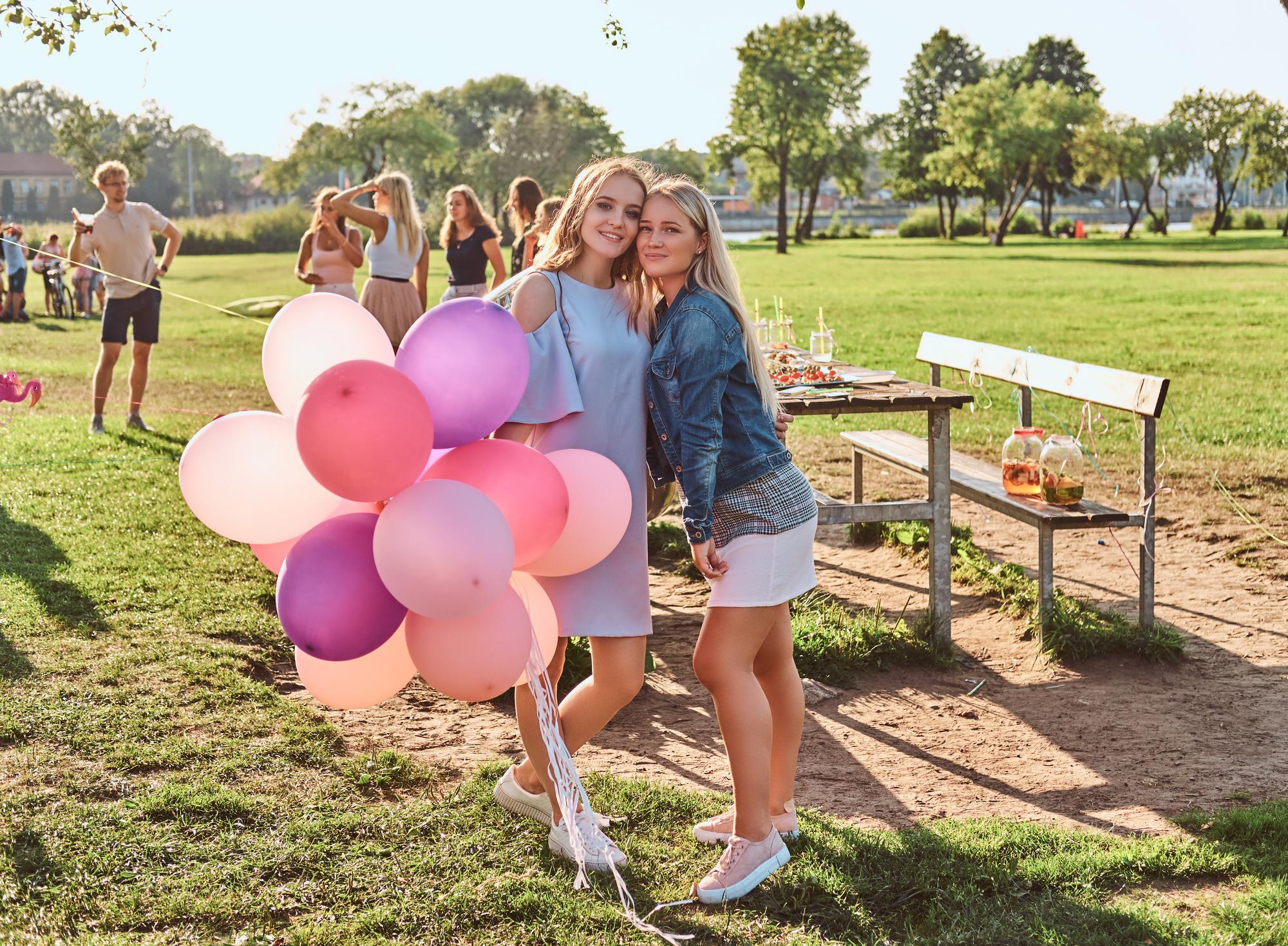
The birthday party was Liam’s idea of a good time, which meant it was large and loud and organized around a charcoal grill he had been talking about for three weeks. Forty people in the backyard, the good string lights we only brought out for occasions, a cooler of beer and a separate one for the white wine I had requested because I was the one who drank it. The neighbor’s dog kept appearing at the fence line and Chloe kept feeding it chips through the slats and I kept gently redirecting her and she kept waiting until I turned around and doing it again.
It was a good afternoon.
Liam was in the middle of everything the way he liked to be at his own gatherings, moving from group to group with the ease of a man who is genuinely comfortable in his own life. He had turned thirty that morning and I had made him the lemon cake he had been requesting since February, and he had eaten a slice standing over the counter before breakfast like a child, which was so unlike his usual self-possession that I had laughed out loud and he had grinned with his mouth full and for a moment he had looked exactly like the twenty-four-year-old I had met at a mutual friend’s housewarming, before the mortgage and the career and the careful adult steadiness he wore now like a well-fitted coat.
I loved him most in those unguarded moments.
I should say that clearly, at the beginning, because what came later could make it easy to revise this, to rewrite the afternoon as something I should have seen through. I was not performing happiness. I was happy. The lemon cake, the string lights, Chloe feeding contraband chips to the neighbor’s dog, my husband at thirty looking briefly like himself at twenty-four. It was a good afternoon, and I was present in it, and none of what came later changes that it was real.
Marcus arrived at two with a bottle of expensive whiskey and new boots.
This is the thing about Marcus: he arrived with new something at every gathering, not flashily, not in the way of someone who needs to be noticed for what he owns, but with the quiet confidence of a man who pays attention to craft and quality and wears the results of that attention without announcement. The boots were custom leather, dark brown, with a particular stitching detail along the toe that I would not have registered at all except that Chloe did.
Chloe registered everything.
She was three years and four months old and she had her father’s eyes and my stubbornness and a quality of observation that her pediatrician had described at her last checkup as advanced perceptual awareness, which was the clinical way of saying that she noticed things, specifically, and remembered them with a fidelity that occasionally unnerved me. She had told me, two weeks earlier, that the mailman had a new hat and she was not sure she liked it. She had told me, the week before that, that the woman at the grocery checkout smelled different from last time. She catalogued the world with the seriousness of a small scientist who believes data is important and loss of data is a minor tragedy.
So when Marcus sat down and crossed his legs and the boot came into view, I was not entirely surprised that she stopped what she was doing and looked at it.
I was surprised by what she said.
She pointed at it with the direct unceremonious index finger of a three-year-old and announced, to no one in particular and therefore to everyone:
“Daddy cries there.”
The patio erupted.
Forty people, the particular laughter of a crowd that has been given something unexpected and charming, a child’s nonsense elevated by its confidence and timing. Liam laughed. Marcus laughed, leaning forward with his elbows on his knees and grinning at Chloe with the ease of a man who is fond of her and finds her endlessly entertaining.
I laughed too, and crouched down beside her, because she looked momentarily confused by the response, her small face uncertain about whether she had done something wrong or something right.
“What do you mean, sweetheart?” I asked. “Daddy cries where?”
She looked at Marcus’s boot with the patient expression she uses when adults are being slow.
“There,” she said. “At Marcus’s. Where Marcus lives. Daddy cries there.”
The laughter had already begun to thin, people leaning slightly forward, processing the recalibration.
Chloe, interpreting our attention as encouragement, continued.
She was not a dramatic child. She did not perform. She simply described what she had seen in the direct present-tense narration of someone who understands language as a tool for conveying information and has not yet learned that some information is not supposed to be conveyed.
She had woken up thirsty one Sunday morning, she explained in her way, the fragmented but precise way of a three-year-old who knows the sequence of events even if the syntax is still approximate. She had gone to find Daddy. She had found him not in the house but through the window. He was sitting on the step outside Marcus’s door. He was crying. She had watched him for a while because she did not know what to do. Then she had gone back to bed.
She said this clearly.
She said it to me and to Liam and to Marcus and to forty people in a backyard in the afternoon sun.
Then she looked at my face and the faces around her and something in what she saw made her stop.
The silence was the particular kind that has weight.
I was still crouching. I was at Chloe’s eye level and I was aware of this because when the silence fell I thought very specifically about not standing up, about staying where I was, about not doing anything with my body that I had not decided to do. I was aware of Liam to my left. I was aware of Marcus directly ahead of me. I was aware of forty people not making a sound.
I looked at my daughter’s face.
She was looking at me with the expression she gets when she is trying to understand whether she has done something wrong, the uncertainty of a child who told the truth and found that truth doing something complicated in the air around her.
“It’s okay, bug,” I said. My voice came out steady, which surprised me. “Thank you for telling me.”
I stood up.
I did not look at Liam.
I did not look at Marcus.
I picked up my wine glass from the table and I walked into the house through the back door and I stood in my kitchen and I looked at the lemon cake on the counter, the one I had made that morning, and I thought about absolutely nothing for a period of time I could not have measured.
The guests left within the hour.
People have an instinct for when a gathering has crossed into something private, and our friends and family, to their credit, found their coats and their goodbyes with a speed that was merciful and did not linger in the particular way that would have made everything worse. I moved through the leave-takings on autopilot, the hug and the thank you for coming and the yes it was so good to see you, and I did it competently enough that I was almost proud of myself.
My mother took Chloe.
She appeared in the kitchen while I was loading the dishwasher and she did not say anything about what had happened, only that she was going to take Chloe for the night, as a birthday treat, a sleepover with Grandma. She said it in a tone that did not invite discussion and I loved her for it. Chloe went willingly, excited by the irregularity, and I kissed her at the door and held her slightly longer than usual and she patted my cheek with her small hand in the way she does when she is being the comforter, which she sometimes is without quite knowing it.
Then the house was quiet.
Marcus had left without speaking to me, which told me something. He had said goodbye to the other guests, I had seen him from the kitchen window, working the departure with the social competence he always had. But he had not come to find me.
Liam came inside after the last car left.
I was sitting at the kitchen table. The dishwasher was running. The cake was still on the counter, two slices taken from it, the rest intact under its glass dome. I had not turned on the overhead light and the kitchen was in the particular blue-gray of late afternoon moving toward evening.
Liam stood in the doorway.
He had the look of a man who has been outside deciding something and has not finished deciding it. He looked tired in a way that was not the tiredness of a party but something older, something that had been there for longer than the afternoon.
He sat down across from me.
We looked at each other across the table Richard had built, no, that is the wrong story. Across my kitchen table. The ordinary one we had bought at a furniture store four years ago and that had a water ring on one corner from a plant I no longer owned.
“How long,” I said.
He put his hands flat on the table. He looked at them.
“Two years,” he said.
I had been bracing for a number, any number, and had told myself I was ready for whatever it was, and I was not ready. Two years is not a moment of weakness or a bad month or a crisis that arrived and passed. Two years is a life running alongside the one I thought we were living. Two years of Sunday park runs. Two years of Chloe in the back seat, going to Marcus’s, her father crying on a step outside a door.
“Chloe saw you,” I said.
“I know.” His voice was very low. “I didn’t know she had woken up. I didn’t know she saw me.”
“She remembered the boots,” I said. “She recognized the boots today and she remembered.”
Something moved through his face.
“She asked me about it once,” he said. “A few weeks ago. She asked why I was sad at Marcus’s. I told her I hadn’t been sad, I’d just been tired.” He stopped. “She didn’t mention it again. I thought.”
“She was waiting,” I said. “She was waiting until she understood where to put it.”
He was quiet.
I looked at my husband. Thirty years old today. The man who had stood at an altar and meant what he said, I believed he had meant it, I did not think vows were currency he spent carelessly. The man who got up in the night with Chloe without being asked and who remembered every logistical detail of our life without a calendar and who made me feel, in the ordinary texture of our days, that I was known and accounted for.
Also: the man who had been in love with his best friend for two years and had said nothing.
“Were you ever going to tell me?” I asked.
The question sat between us.
“I don’t know,” he said. “I told myself it would end. That it was something I would get through. I told myself it wasn’t hurting anyone.”
“It was hurting you,” I said. “Chloe saw you crying on a step.”
He closed his eyes.
“Yes,” he said.
I had not cried yet. I was aware of this as a fact about my current condition, neither proud nor concerned, simply noting it. The feeling in my chest was not grief, not yet, it was something more structural, the sensation of a thing you have been standing on shifting under your weight, the recalibration your body does before your mind catches up.
“What do you want?” I asked.
He opened his eyes. He looked at me the way he had looked at me in the best moments of our marriage, directly, without the management that crept in sometimes, without the careful steadiness. Just looking.
“I don’t know how to want what I want,” he said. “I’ve spent my whole life not knowing how to want it.”
I understood what he was telling me. Not about Marcus specifically. About the whole shape of it, the traditional man, the family rock, the pride in being what he had been raised to believe a man should be. The Sunday mornings volunteering to take Chloe so I could sleep, which I had thought was generosity, and was also a reason to go where he needed to go.
“I’m not angry,” I said, and found that this was true, or at least mostly true, or at least true in the way that the anger was there but underneath something else, something sadder and more complicated and more human than anger alone.
“You should be,” he said.
“Maybe,” I said. “Probably. Ask me again in a month.”
He did not sleep at home that night. He asked, and I said I needed the space, and he took a bag and went to a hotel because he would not go to Marcus’s, which told me that whatever was happening between the two of them was also in a state of upheaval that I was not in a position to map yet.
I sat in the kitchen for a long time after he left.
Then I called my mother.
She answered on the first ring, which meant she had been waiting, which meant she had understood more about the afternoon than she had let on in the kitchen.
I told her everything, or as much of everything as I understood. She listened without interrupting, which is not her natural mode and indicated the scale of her effort.
When I finished she said, “How are you?”
“I don’t know yet,” I said.
“That’s right,” she said. “That’s the right answer.”
She offered to bring Chloe back in the morning or keep her through the weekend, whichever I needed. I said through the weekend and she said of course and then she said, “She’s a remarkable child, your Chloe,” and I said I knew, and she said, “She told the truth because she thought it would help. She saw her daddy was sad and she thought telling you would help.”
I thought about this for a long time after we hung up.
The weeks that followed were not clean.
Clean is not how these things go, regardless of what you imagine in advance. There is no moment where the situation resolves into clarity and you know exactly what you feel and what you want and what comes next. There are instead many smaller moments, some of them clear and some of them contradictory, and you move through them one at a time.
Liam and I talked, several times, in the kitchen and once on a long walk that went further than either of us intended and ended at a park bench where we sat for forty minutes without covering any of the distance we had walked. He told me things about himself that he had not told me in seven years of marriage, about being seventeen and terrified and deciding that the terror was information he would simply never act on. About meeting me and genuinely loving me and believing, for a long time, that love of the kind we had was sufficient, that it could be, that other things were manageable.
About when it had stopped being manageable, which was not a single moment but a gradual one.
I told him things too. About what our marriage had been to me. About which parts I would grieve and which parts I had already, in some quiet room of myself, begun to release. About Chloe and what she needed from both of us, which we agreed on completely, which was the ground we kept finding when everything else was uncertain.
We were not the couple who screamed or broke things or said the specific words designed to leave permanent marks. This is partly temperament and partly, I think, the fact that we had genuinely liked each other for seven years and that does not simply expire. It changes form. It becomes something else, something that has to be carefully identified to see what it still is.
What it still was, we found, was a functional co-parenthood and a residual tenderness and a mutual respect that the circumstances had damaged but not destroyed.
Whether that was enough to build a different kind of future on was a question we approached slowly, without rushing the answer.
I saw Marcus once, about six weeks after the party.
He came to the house when Liam was there, which I had asked Liam to arrange, because I had things to say and I wanted to say them to both of them in the same room. Marcus arrived looking the way people look when they have been living inside guilt for an extended period and the guilt has become their primary weather.
I did not yell at him.
I had thought about what I wanted to accomplish in that conversation and yelling was not it. What I wanted was to be seen, which is a different and more demanding thing.
I told him that what had happened was between him and Liam and that I was not going to make him the central figure of my anger because he was not the person who had made vows to me. I told him that the friendship I had believed in was real to me and that its loss was something I was grieving separately from the marriage. I told him that I had genuinely liked him, for years, and that this made things more complicated and not less, and I wanted him to know I understood that.
Then I told him that I needed him to not be in our lives in the way he had been, that the Sunday park runs and the constant presence and the practical-family status were not something I could continue, and that if there was a future in which he existed at the edges of our co-parenting arrangement as someone Chloe knew, we were a long way from it.
He listened to all of it.
He said he was sorry. He said it the way Liam had, without fluency, and for the same reason.
I said I knew.
He left, and Liam walked him out, and I sat at the kitchen table and let the silence be what it was.
Liam moved into an apartment eight blocks away.
We chose the distance deliberately. Close enough that Chloe could understand, in her concrete three-year-old way, that Daddy was nearby, that nearby was a real distance she could picture. She adapted with the resilience children have when the adults around them are honest about what is happening without loading it with their own grief.
We told her that Mommy and Daddy loved her exactly the same and were going to live in two houses so they could both have a special place for her. We told her she had not done anything wrong. We told her, when she asked why in the direct way she asked everything, that sometimes grown-ups change how they live together, and that this was one of those times.
She thought about this.
“Will you still have cake at Daddy’s?” she asked.
Liam said yes, absolutely, whatever kind she wanted.
She seemed to find this satisfactory.
She asked me, one night a few weeks after he moved out, when I was putting her to bed, whether I was sad.
“A little bit,” I said. “Are you?”
She thought about it with her hand on my arm, the particular considering quiet she does when she is being serious.
“I was sadder when Daddy cried,” she said. “I didn’t know what to do.”
“You did know,” I told her. “You told the truth. That’s what you do when you don’t know what else to do.”
She looked at me in the dim light.
“Did it help?”
I thought about how to answer honestly in a way that was also true.
“Yes,” I said. “It helped.”
She settled against her pillow.
“Okay,” she said, with the completeness of a child who has received the information she needed and is ready to sleep.
I sat beside her until her breathing changed and then I sat a little longer, listening to the house, this house that was mine now in a way it had not been before, with its ordinary sounds and its kitchen table and the lemon cake recipe on the counter that I had not made again yet but would, someday, for a different occasion, because it was a good recipe and it did not belong to any one afternoon.
It belonged to me.
I turned off the light and went to sit by the window for a while, in the dark, in the quiet, in the beginning of whatever came next.

Adrian Hawthorne is a celebrated author and dedicated archivist who finds inspiration in the hidden stories of the past. Educated at Oxford, he now works at the National Archives, where preserving history fuels his evocative writing. Balancing archival precision with creative storytelling, Adrian founded the Hawthorne Institute of Literary Arts to mentor emerging writers and honor the timeless art of narrative.