“Meet the family embarrassment,” my brother said to his groomsmen, tipping his champagne glass toward me like he was pointing out a stain on the carpet. “She works at a grocery store.”
They all laughed. Six grown men in matching tuxedos, laughing at the bridesmaid in the mustard-yellow dress. I just smiled, the way I’d been smiling for seven years, and walked away.
Twenty minutes later, a tall man in an impeccable black suit crossed the ballroom floor, stopped beside me, and said the words that ended my family’s favorite story forever.
“Ms. Anderson? I’m your head of security. Shall we leave?”
But I’m getting ahead of myself. Let me take you through that whole day, because you need to understand what seven years of being invisible feels like before you can understand what it felt like to finally be seen.
The morning of Marcus’s wedding started like every family gathering in the past five years, with a phone call from my mother explaining why I needed to dress appropriately and try not to embarrass the family.
I was standing in my hotel room at the Fairmont, looking at the mustard-yellow bridesmaid dress Patricia had specifically chosen for me, when Mom called with her final instructions.
“Emma, sweetheart, I know this is hard for you,” she said in that tone she’d perfected over the years. Part sympathy, part condescension, blended so smoothly you couldn’t tell where one ended and the other began. “Being around all of Marcus’s successful friends, seeing Patricia’s family with their achievements. Just remember that not everyone can be a doctor or a lawyer.”
“I’ll keep that in mind,” I replied, zipping up the dress that made me look like a diseased banana.
“And please don’t mention your job situation unless someone asks directly. It’s Marcus’s day, and we don’t want people feeling uncomfortable.”
My job situation. That’s what the family called it now. Not my career. Not my work. My situation. Like it was a medical condition requiring delicate handling around guests.
Here is the truth about my situation.
I built Anderson Global Logistics into a four-point-two-billion-dollar supply chain management company. We employ over eighty-five thousand people across forty-seven countries. We handle distribution for roughly thirty percent of the Fortune 500. We revolutionized cold-chain logistics for pharmaceutical companies, and at the moment my mother was coaching me on how not to embarrass anyone, we were three days from closing the largest merger in our industry’s history.
But to my family, I worked at a grocery store.
You’re probably wondering how a misunderstanding that enormous survives seven years. I’ll tell you, because the answer says everything about my family.
It started innocently. Seven years ago, when I was building my first distribution center, I worked nights at a Safeway. On purpose. I wanted to understand food retail from the ground up, not from a consultant’s slide deck. I wanted to know how product actually moves from suppliers to shelves, how inventory behaves at store level, what customers do at eleven o’clock on a Tuesday night. Most executives learn this business from spreadsheets. I learned it scanning barcodes and stocking shelves from midnight to six a.m., then going home, showering, and spending the day building the company that would eventually run logistics for that same Safeway and every one of its competitors.
When family asked about work in those early years, I’d say I was in food retail, or working in supply chain logistics. Somewhere between my mouth and their ears, that became: Emma works at a grocery store.
And once that story took hold, it was bulletproof. The first time I tried to explain what Anderson Global actually did, Uncle Richard patted my shoulder and said, “That’s great, honey. It’s good that you’re ambitious about your grocery store job.” When I mentioned hiring my first hundred employees, Aunt Susan nodded warmly and said, “Oh, are you managing a department now? That’s wonderful progress.”
Do you understand what that’s like? I told them the truth, and the truth bounced off. They had built a version of me they liked, a version that made everyone else in the family taller by comparison, and no fact was going to be allowed to interfere with it. Eventually I stopped correcting them. It was easier. And honestly, some quiet part of me was curious how long they could maintain the delusion.
The answer, apparently, was indefinitely.
The rehearsal dinner the night before the wedding had been particularly brutal. Patricia’s family are genuine achievers. Her father built a successful construction company from a single pickup truck. Her brother Jason had just sold his tech startup for fifty million dollars. Her mother is a federal judge. They’re warm, accomplished people who clearly expected Marcus’s family to be equally impressive, and my family spent the evening performing for them like seals.
“So, Emma,” Jason asked me during cocktails, friendly and genuinely curious. “Marcus mentioned you work in food service. Are you planning to open your own restaurant?”
Before I could open my mouth, Marcus jumped in.
“Oh, no. Emma’s not the entrepreneur type. She works at a grocery store. It’s honest work, though.”
The pause in the conversation was physically painful. Jason recovered fast, too polite to show surprise, but I caught Patricia’s parents exchanging a glance across the room, the kind of glance that asks how a family full of doctors and lawyers produced a daughter whose crowning achievement was apparently avoiding unemployment.
“Food retail is fascinating,” I said simply. “The logistics alone are incredibly complex.”
“I’m sure,” Patricia’s father replied kindly, and immediately changed the subject to Marcus’s law practice.
Not the entrepreneur type. I stood there holding my club soda and thought about the eighty-five thousand people whose paychecks clear because of the company I founded, and I said nothing, because I had learned that saying something changed nothing.
Later that evening, I overheard Patricia’s mother talking to my mother near the hotel bar. I hadn’t meant to eavesdrop. I’d just gone to get a glass of water, and their voices carried.
“Patricia mentioned Emma might be godmother to their children someday,” Mrs. Whitfield said carefully.
“Oh, Emma would love that,” Mom replied. “She’s wonderful with kids. Of course, she’s not in a position to be much of a financial influence, but she’s very loving.”
“Financial influence?”
“Well, you know. She’s still finding her way professionally. We help her out when we can. Family takes care of family. But your grandchildren will have plenty of successful role models without needing to worry about Emma’s situation.”
We help her out when we can. I have never taken a dollar from anyone in my family. Not one. But apparently the charity they imagined giving me had become part of the story too, a detail they’d invented to make my modest car and my simple clothes make sense.
I left the bar, went up to my room, and spent the rest of the night reviewing acquisition documents for a one-point-eight-billion-dollar merger, trying to remember why I’d thought coming to this wedding was a good idea.
The morning of the ceremony brought fresh humiliations, distributed at regular intervals like courses at a very cruel dinner.
During hair and makeup, the other bridesmaids discussed their careers. Patricia’s sister and her two college friends: a pediatric surgeon, a founder launching her second startup, a partner at a consulting firm. Impressive women, all of them, and genuinely nice.
“And Emma works in grocery,” Patricia explained when they asked about me. “She’s been doing that for years now.”
“Oh,” the surgeon said politely, hunting for something kind. “That must be stable work.”
“Very stable,” I agreed, not mentioning that Anderson Global’s stability comes from holding exclusive logistics contracts with every major food retailer in North America, including the chain they thought employed me as a cashier.
The conversation moved on to vacations. Someone’s family had a house in the Hamptons. Someone else was planning a month in Europe. When they asked about my travel plans, I said I didn’t have any scheduled. It seemed simpler than explaining that I’d be in Singapore in four days closing the biggest deal of my career, then London for board meetings, then Bavaria to open a factory.
The ceremony itself was beautiful, I’ll give them that. Patricia looked radiant in her grandmother’s lace, and Marcus, whatever else I can say about him, looked genuinely happy. I stood at the altar holding the bridal bouquet and tried to focus on their joy instead of the commentary drifting up from the pews behind me.
“Poor Emma,” I heard Aunt Susan whisper. “That color is so unflattering on her. Patricia should have chosen something more appropriate for her complexion.”
“The dress isn’t the problem,” someone whispered back. “It’s the stress. Financial pressure ages you.”
I kept smiling. I kept smiling when the photographer positioned me slightly behind the other bridesmaids for the formal photos, “for composition,” he explained, though everyone standing there understood it was to minimize the visual impact of the family member who didn’t quite fit. I have smiled through worse. Board coups. Hostile negotiations. A warehouse fire in Ohio. I can smile through anything. That’s not a boast. Some days I think it’s a wound.
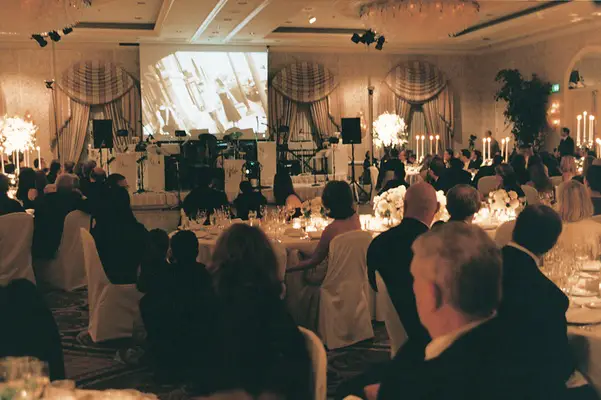
The reception filled the Fairmont’s Grand Ballroom, a genuinely lovely space that, in a detail I savored privately, I had considered purchasing two years earlier before deciding the location didn’t fit my real estate portfolio. The dinner was excellent, though I barely tasted it, because the toasts had begun.
“To Patricia’s family,” Marcus said, champagne held high. “Judge Whitfield, who’s dedicated her life to justice. To Jason, who just sold his company for more money than most of us will see in a lifetime. To Mr. Whitfield, who built his construction empire from nothing.”
Then he turned to our side of the room.
“To my family. Uncle Richard, who just made partner at his accounting firm after twenty years of dedication. To cousin Derek, who opened his second dental practice this year.” He worked through the list, achievement by achievement, and then his eyes found mine, and something almost pitying settled into his expression.
“And to family members who support us in their own special ways. My sister Emma, who flew all the way from Seattle to be here despite the expense. She works in food service, which is honest, necessary work, and we love her for her dedication to simpler values.”
The applause was polite and pointed. Around the room, people looked at me with the gentle sympathy usually reserved for recovering addicts and the recently divorced. Despite the expense. I had flown in on my own plane.
It was during the dancing that the evening finally broke me loose from seven years of silence.
I’d stepped onto the terrace for air. The night was cool and the music was muffled through the glass, and I was standing in the shadows near the railing when I heard Patricia’s mother speaking with Marcus by the terrace bar, her voice sharp with maternal concern.
“Marcus, I need to ask you something directly. Is Emma financially stable? I don’t mean to pry, but Patricia mentioned she might want Emma as godmother to your children, and given her circumstances…”
Marcus laughed. My brother laughed.
“Emma? God, no, she’s been struggling for years. She’s sweet, but she can barely take care of herself. Same grocery store job for what, seven years now? Never promoted, never tried anything else. I think she’s just not built for ambition, you know?”
Mrs. Whitfield sounded relieved. “I was concerned about the influence. Not that there’s anything wrong with her work, of course. But Patricia comes from a family of achievers. We want our grandchildren to have the right kind of role models.”
“Don’t worry about that,” Marcus said. “Emma’s basically the family charity case at this point. Mom sends her money for rent sometimes. We all chip in for her car payments. She means well, but she’s just not capable of more than she’s doing now.”
I stood in the dark with my hands very still on the railing. Rent money I’d never received. Car payments no one had ever made. They weren’t just underestimating me anymore. They were inventing a whole dependent, damaged Emma and passing her around like a family heirloom.
I was about to go back inside when I heard Derek’s voice around the corner, holding court for a cluster of Patricia’s relatives.
“Did you see Emma’s car in the parking lot? It’s like fifteen years old. I actually felt embarrassed for her when the valet had to figure out how to start it. Marcus mentioned she’s been using food stamps.”
“That’s just sad,” one of Patricia’s cousins said.
“The whole family is successful except her,” Derek went on. “My mom thinks she might have some kind of learning disability that was never diagnosed. How else do you explain someone working the same entry-level job for seven years?”
“At least she seems happy,” the cousin offered charitably.
“I guess ignorance is bliss,” Derek said. “She has no idea how far behind she’s fallen.”
I’d heard enough. More than enough. Seven years of enough.
I pulled out my phone and typed a text to David, my head of security, who was posted with the car two blocks away, as he is everywhere I go, because a woman on the Forbes list does not actually get to move through the world unprotected, whatever her family imagines about her food stamps.
Ready for pickup.
His reply came in seconds.
Ten minutes. Helicopter fueled and ready.
The helicopter was already scheduled. That part wasn’t theater. The Singapore call was real, the merger was real, and the Tokyo markets genuinely do not care about wedding receptions. I had planned to slip out quietly around nine, say soft goodbyes, invent a headache. That was the plan. Leave the way I always left. Invisible.
I made my way back into the ballroom to begin those quiet goodbyes. And that’s when Marcus tapped his champagne glass again and decided to finish me off in public.
“Ladies and gentlemen,” he began, “I want to take a moment to thank everyone for being here tonight. Patricia and I are so grateful to be surrounded by such successful, accomplished people. Our families represent the absolute best of what hard work and ambition can achieve.”
He gestured expansively around the room.
“We have entrepreneurs who’ve built million-dollar companies. Doctors saving lives. Lawyers fighting for justice. Executives running major corporations. People who’ve taken risks, pushed boundaries, refused to settle for less than excellence.”
His eyes found me across the room, standing near the head table in my mustard-yellow dress, and the pity in them was almost tender. That’s the part that still gets me. He wasn’t trying to be cruel, not consciously. He believed every word.
“But we’re also grateful for family members who contribute in simpler ways. My sister Emma flew all the way from Seattle to be here tonight, even though I know the cost was probably difficult for her budget. She works in food service, which is honest, humble work. Not everyone can be a CEO or a surgeon, and that’s perfectly okay.”
And then, warming to his theme while the room hung on his words: “Emma represents something important. In a world obsessed with achievement and status, she reminds us that there’s dignity in simple work. Value in modest goals. She’s content with her life, and that’s actually quite admirable.”
Patricia’s father rose, expansive after several glasses of wine, and lifted his glass toward me.
“To Emma,” he called out, “for showing us that happiness doesn’t require success!”
And the whole room, two hundred people, raised their glasses to me like I was an inspirational poster about overcoming limitations. I stood there receiving a toast to my failure. I could see it in their faces, the pity, and underneath the pity, the relief. Relief that their own children had turned out so much better.
That’s when he appeared.
“Miss Anderson.”
The voice belonged to a tall man in an impeccable black suit who had crossed the ballroom without anyone quite registering his approach, which is a skill they teach you in the Secret Service, where David Martinez spent eleven years protecting presidents before he came to protect me. Six foot two, quietly alert, the kind of presence that changes the air pressure in a room.
“I’m David Martinez, your head of security,” he continued, his voice pitched to carry exactly as far as he wanted it to, which was to every nearby table. “I apologize for the interruption, but we have an urgent situation that requires your immediate attention.”
The conversations around us died.
“Security?” Mrs. Whitfield repeated, looking from him to me and back.
“The helicopter is waiting on the roof,” David continued smoothly. “Your nine p.m. conference call with the Singapore team cannot be delayed. The Chin Industries merger closes Monday morning, and the Tokyo markets open in three hours. The board is waiting for your final approval on the one-point-eight-billion-dollar acquisition.”
Somewhere to my left, Marcus’s champagne glass slipped out of his hand and shattered on the marble floor.
I looked around at the frozen room. Then I smoothed down that terrible mustard dress and stood up straight.
“I’m sorry to cut this short,” I said. “I tried to keep business separate from family time. But unfortunately, international markets don’t respect wedding schedules.”
“Emma.” Marcus grabbed my arm, his voice cracking. “What the hell is going on?”
David stepped in, not threatening, just present, with the professional readiness of a man who has bodily removed people from the vicinity of heads of state. “Sir, I’ll need you to step back from Miss Anderson.”
“Miss Anderson?” Patricia’s voice was barely a whisper.
I looked around the room at all those faces, the same people who had spent the evening discussing my failures and limitations like I wasn’t in the building, and I decided that seven years of silence was exactly seven years too many.
“I suppose I should explain,” I said. “My name is Emma Anderson, and I’m the founder and CEO of Anderson Global Logistics. We’re the largest privately held supply chain management company in North America, with operations in forty-seven countries and annual revenue of four point two billion dollars.”
The silence was absolute. You could hear the ice melting in the water glasses.
“The grocery store job Marcus mentioned, that part is true. That’s how I started. I worked nights at a Safeway for three years while building my first distribution center during the day. I wanted to understand every layer of food retail. Customer behavior. Inventory management. Supply chains. Employee dynamics. Most executives learn this business from consultants and spreadsheets. I learned it scanning barcodes and stocking shelves from midnight to six.”
Derek’s face had gone completely white. He looked like a man watching his own words from twenty minutes ago rise out of the terrace shadows and walk toward him.
“We handle distribution for about thirty percent of the Fortune 500,” I continued. “Walmart. Target. Kroger. Safeway. If you’ve bought groceries in the past five years, there’s a very good chance our systems moved that food from farm to shelf. We revolutionized cold-chain logistics for pharmaceutical companies. We developed the routing algorithms that optimize delivery for Amazon’s grocery division. We built the inventory management systems used by most major retailers in this country.”
Mrs. Whitfield was staring at me like I’d announced I was from another planet. “Your company…”
“Forbes ranked me forty-seventh on their list of richest self-made women,” I said. “Though honestly, I prefer the other numbers. Anderson Global employs over eighty-five thousand people worldwide, and we’ve been carbon neutral for three years running.”
Patricia found her voice first, and she didn’t aim it at me.
“Marcus. You said she worked at a grocery store.”
“She does.” My brother looked like a man trying to do arithmetic during an earthquake. “She told me she worked in food retail.”
“Food retail logistics,” I clarified, gently, because some part of me will always be his big sister. “I oversee supply chain operations for every major grocery chain in North America, plus expanding operations in Europe and Asia. When I said I worked in food retail, I meant I was rebuilding how food gets from producers to consumers. You heard ‘cashier’ because ‘cashier’ was the story you wanted.”
Uncle Richard was staring into his bourbon like it might contain an explanation. I remembered, suddenly, the Christmas he’d offered to help me polish my résumé. “The résumé help you offered was very thoughtful,” I told him. “Though my current position is working out well.”
David checked his watch, which is a thing he does with the subtlety of a stage direction when he thinks I’m spending too long anywhere. “Ms. Anderson, we really do need to leave. The Singapore call is critical. Chin Industries won’t wait, and if we miss this window, the merger could collapse. That’s eighteen thousand jobs hanging in the balance.”
“Of course.” I turned to the bride and groom. “Congratulations again on your wedding. It was beautiful, and I wish you both every happiness. I mean that.”
“Wait.” Marcus grabbed my arm again, and let go instantly when David shifted his weight. “Emma, I don’t understand. Why didn’t you tell us? Why let us think—”
“Tell you what?” I asked. “That I was successful? Would it have mattered?”
“Of course it would have mattered!”
“Really? Because based on what I overheard tonight, you all seemed pretty comfortable with your version of me. The family charity case. The sister who needs rent money. The learning-disabled one who was never diagnosed.”
“We never said you were learning disabled,” Derek protested weakly.
“You said it twenty minutes ago on the terrace,” I replied. “Right after the part about my food stamps and right before you explained how embarrassed you were by my car.”
He sat down. He actually sat down, right there, mid-reception.
Patricia’s father was still staring. “You really… you actually run a billion-dollar company?”
“She’s on the Forbes list,” a voice said from the back. One of the younger cousins was holding up her phone, screen glowing. “Emma Anderson. CEO of Anderson Global Logistics. Net worth estimated at two point three billion dollars.”
The murmur that rolled through that ballroom was like watching dominoes fall in slow motion. Phones came out all over the room. Two hundred people googling me at once.
“This doesn’t make sense,” Aunt Susan said, and her voice had turned almost accusatory, as if I’d wronged her by existing incorrectly. “If you’re so wealthy, why do you dress so modestly? Why do you drive that old car? Why live like… like a normal person?”
And there it was. The question that told me everything. Not why didn’t you tell us. Not how did we get you so wrong. But how dare you not perform your money where we could see it.
“Because money isn’t the most important thing in my life,” I said. “I thought family was. I thought showing up for the people you love mattered more than showing off your net worth. I thought being humble about success was a virtue. I drive a fifteen-year-old car because it runs and I don’t care. I live simply because I’m on a plane two hundred days a year and a mansion would just be an empty building with my name on the deed. None of that ever meant what you decided it meant.”
Marcus was shaking his head. “But you let us think you were struggling.”
“I didn’t let you think anything, Marcus. You assumed. All of you. You decided that because I didn’t brag at family gatherings, I must have nothing to brag about. You built an entire narrative about my life, complete with financial problems I don’t have and charity I never received, without ever asking me one direct question about what I actually do.”
“But you said you worked in food retail,” Patricia protested.
“I said food retail logistics. When I mentioned supply chain management, everyone nodded politely and changed the subject. When I talked about hiring employees, you assumed I meant a department at the store. When I said I traveled for business, you figured I meant training sessions at other locations.” I looked around the room. “You know what’s funny? Three years ago, when I missed Christmas, the family decided it was because I couldn’t afford the plane ticket. The truth is I was in Tokyo, personally negotiating a contract that brought two thousand manufacturing jobs back to the United States. Last year, when I couldn’t make Derek’s wedding, you assumed I was working extra shifts to make rent. I was in Germany, opening a facility that now employs fifteen hundred people.”
Derek looked like he might actually be sick.
“Miss Anderson,” David said gently. “The helicopter.”
I nodded. “I really do have to go. Singapore doesn’t wait, and there are a lot of people depending on this deal.”
As I moved toward the exit, the room parted around me like water. The same people who had toasted my inspirational failure five minutes earlier now stared with awe and confusion and, on the more self-aware faces, the first hot flush of shame.
At the door, I turned back one last time.
“For what it’s worth, Marcus, I hope you and Patricia are very happy together. Marriage should be about loving someone as they are, not as you’ve decided they should be. Maybe that’s worth remembering.”
The elevator to the roof was silent except for soft jazz. My reflection in the polished doors looked ridiculous, a billionaire in a diseased-banana dress, and I laughed out loud for the first time all weekend. David, who has stood beside me through hostile takeovers and one genuine bomb threat, permitted himself a small smile.
On the helipad, my pilot had the rotors already turning. David helped me in and raised his voice over the noise.
“How was the wedding, ma’am?”
“Educational,” I said, buckling in and pulling on the headset.
As we lifted off, I could see them down there, dozens of wedding guests spilling onto the hotel’s lower terraces, faces tipped up toward the helicopter, and somewhere in that crowd, my brother in his tuxedo, watching his invisible sister rise straight up into the night sky.
My phone was already convulsing with calls and texts. Marcus. Derek. Aunt Susan. Mom. Numbers I didn’t recognize, which meant the story was already traveling. I turned the phone off and watched the city lights slide beneath us.
Tomorrow I’d be back to supply chains and board meetings and the thousand small decisions that keep a global company breathing. My PR team would field inquiries about the CEO who left a family wedding by helicopter, and they’d say something bland and true, that Ms. Anderson had urgent business in Singapore. Tonight, though, I just sat with it. Seven years of shrinking myself, ended in seven minutes.
Here’s what I kept turning over as we flew. My family didn’t get me wrong because I hid too well. Plenty of people in my life know exactly who I am. My employees know. My board knows. The night crew at that Safeway knew me as Emma who asked too many questions about pallet flow, and even they eventually figured out the rest. My family got me wrong because the wrong version was useful to them. The struggling sister made everyone else’s ordinary accomplishments shine brighter. She was the floor they measured their height from. And I let it happen, year after year, because I told myself that humility was a virtue.
But somewhere over the water, I finally understood the thing it took a wedding toast to teach me. There’s a difference between humility and invisibility. Humility is knowing your success doesn’t make you better than the man stocking shelves next to you at three a.m. Invisibility is letting people you love write you out of your own life story, and calling your silence a virtue so it hurts less.
“Singapore, ma’am?” the pilot asked through the headset.
“Actually,” I said, “quick stop at the office first. I want to change out of this dress. It’s terrible, and I have a feeling the Singapore meeting is going to be photographed.”
David’s voice came through the comms, dry as sand. “Yes, ma’am. I did mention that mustard yellow wasn’t your color.”
Seattle’s skyline grew ahead of us, glass towers full of light, and on the forty-fourth floor of one of them, an office with my name on the door and a closet with a suit that fits. I found myself smiling, really smiling, all the way down to the helipad.
Three days later, we closed the Chin Industries merger. Eighteen thousand jobs secured, one-point-eight billion dollars, front page of the business section. The photo they ran shows me shaking hands in a charcoal suit, and I promise you, no one in that picture is wearing mustard yellow.
The family calls kept coming for weeks. I answered some of them. Mom cried and apologized and then, in the same breath, asked why I’d embarrassed them in front of the Whitfields, which told me the lesson hadn’t fully landed and maybe never would. Derek sent a long message that was mostly about how bad he felt, which is not the same thing as an apology. Uncle Harold, excuse me, Uncle Richard, asked if Anderson Global was hiring accountants. Marcus took the longest. When he finally called, a month after the honeymoon, he didn’t make excuses. He just said, “I’ve been telling people a story about you my whole adult life, and I never once checked if it was true. I’m sorry, Emma.” It was a start. I told him so.
Maybe we’ll rebuild something, my brother and I. Maybe some of the others will manage to love the real Emma instead of the one they invented. And the ones who can’t, well, I’ve stopped auditioning for their approval. It was never worth what I was paying for it.
Because Anderson Global Logistics didn’t revolutionize an industry by staying quiet and hoping somebody would notice.
And neither, from now on, will I.

Lila Hart is a dedicated Digital Archivist and Research Specialist with a keen eye for preserving and curating meaningful content. At TheArchivists, she specializes in organizing and managing digital archives, ensuring that valuable stories and historical moments are accessible for generations to come.
Lila earned her degree in History and Archival Studies from the University of Edinburgh, where she cultivated her passion for documenting the past and preserving cultural heritage. Her expertise lies in combining traditional archival techniques with modern digital tools, allowing her to create comprehensive and engaging collections that resonate with audiences worldwide.
At TheArchivists, Lila is known for her meticulous attention to detail and her ability to uncover hidden gems within extensive archives. Her work is praised for its depth, authenticity, and contribution to the preservation of knowledge in the digital age.
Driven by a commitment to preserving stories that matter, Lila is passionate about exploring the intersection of history and technology. Her goal is to ensure that every piece of content she handles reflects the richness of human experiences and remains a source of inspiration for years to come.