What the Lighter Said
My grandfather taught me three things before I was ten years old.
The first was how to read a topographic map, which he said was essential because anyone who could not locate themselves in unfamiliar terrain would spend their life being lost without knowing it. The second was how to sit with a person who was dying, which he said required nothing more than presence and the willingness to stay. The third was that the people who needed to announce their authority loudest were the ones who had the least of it.
He taught me all three things, and then he spent the last decade of his life maintaining the silence my father required him to maintain, and now he was in the ground and Thomas Whitmore was standing on the wet steps of the Army Navy Country Club handing me a paper cup of coffee and a silver lighter with a strip of paper taped to the bottom.
The lighter was a Zippo. Brushed silver with the combat infantryman badge on one side, worn at the edges from decades of use. I had seen it my entire childhood, had watched my grandfather turn it in his hands when he was thinking, the way other men handled worry beads or pen caps. It was as much a part of him as his posture.
I held it in both hands.
The paper strip had my name on it in his handwriting. Arthur Monroe’s handwriting was the handwriting of a man trained before keyboards, precise and vertical, formed with the deliberate attention of someone who believed that how you wrote said something about how you thought.
I unfolded it.
Evelyn. The locker is 714 at the Officers’ Club on Fort Myer. The key is inside the lighter. I am sorry it took me this long. Your grandfather.
I pressed the lighter’s hinge and it opened and inside, where the flint mechanism usually sat, someone had made a modification, a small space, fitted with a key.
Whitmore watched me process this.
“How long have you been holding that?” I said.
“He gave it to me six weeks ago,” Whitmore said. “He made me promise to give it only to you, only in person, only on the day of the funeral. He was specific about the conditions.”
“He was always specific about conditions,” I said.
Whitmore looked out at the rain.
“He talked about you,” he said. “In the last year, when his health was declining, he talked about you quite a bit.”
I did not know how to hold this information. My grandfather and I had spoken twice in the past decade, both conversations careful and brief, both conversations ending with the specific sadness of people who wanted to say more than they were saying and could not locate the permission.
“He didn’t call me,” I said.
“He wanted to.” Whitmore paused. “He told me your father had made it clear that choosing sides had consequences. Your grandfather was still dependent on Richard’s logistical support for several things, his medical appointments, the house, the management of his affairs. He believed if he pressed the issue, your father would find ways to make the last years difficult.”
“He was probably right about that,” I said.
“Yes,” Whitmore said. “He believed he was protecting you both by staying quiet. He understood later that it cost more than he calculated.”
The rain had lightened to a mist. Below us the parking lot held the cars of everyone who had come to bury General Arthur Monroe and then immediately resumed networking, because that was the world my grandfather had moved through for sixty years and that he had always understood more clearly than he had appeared to.
“The locker,” I said.
“I don’t know what’s in it,” Whitmore said. “He never told me. He only said you would know what to do with it.”
I wrapped my hand around the lighter.
My grandfather had spent ten years being quiet while my father performed cruelty at moderate volume in reception rooms, and in those ten years he had apparently been doing something in addition to being quiet, something that involved lockers on Fort Myer and keys hidden in lighters and a Deputy Assistant Secretary of Defense carrying out specific conditions for the delivery.
Arthur Monroe had always been specific about conditions.
I should explain the decade.
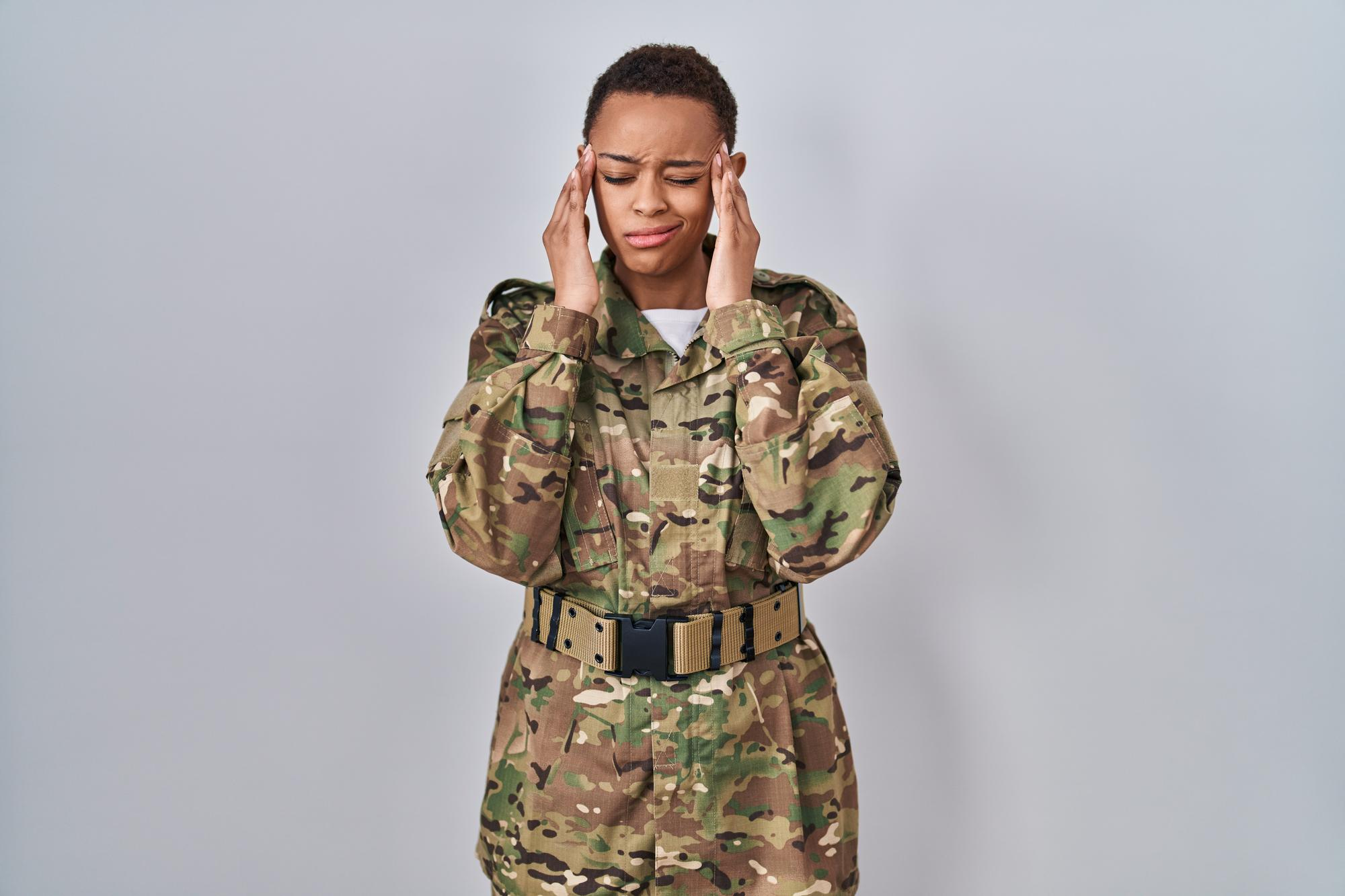
My name is Evelyn Monroe. I am thirty-eight years old. I am a colonel in the United States Army Medical Corps, which means I hold a rank that my father considers inadequate for a Monroe, a family that produces combat commanders and defense contractors and people who shape policy from rooms with good lighting, not doctors who take care of other people’s bodies in austere environments.
I had wanted to be a doctor since I was eleven years old, which was when I watched the medic assigned to my grandfather’s ceremonial unit treat a civilian who collapsed at a public event. The medic worked quickly and quietly and without drama and the civilian was fine and afterward I asked the medic if he had been afraid and he said there wasn’t time, you just do what the training taught you. I decided that was the kind of person I wanted to be.
My father decided otherwise.
Richard Monroe believed that medicine was for people who could not achieve influence by other means, that a doctor was a servant, that the military’s real function was strategy and power projection and that anyone who joined in order to practice medicine had misunderstood the institution at a fundamental level. He said these things explicitly, not in argument but as fact delivery, as though stating them concluded the discussion.
I had told him, at twenty-two, that I was applying to the Uniformed Services University and that I was going to be an Army physician, and he had looked at me with the expression he reserved for things that were beneath response and said that if I pursued this I should understand that the Monroe family’s support and network and goodwill were not available to people who did not act like Monroes.
I had told him I understood.
I had been correct about understanding. What I had underestimated was how long the estrangement would last and how many ordinary family occasions would become unavailable. My grandfather’s eightieth birthday. My grandmother’s last Christmas before she died. The weddings and the gatherings and the incremental moments that accumulate over a decade into the texture of a family.
I had my own texture. Two deployments, one to Afghanistan and one to Iraq, where I had run a forward surgical team under conditions that tested everything my training had given me. I had performed surgery in circumstances my father’s civilian friends would not have been able to imagine. I had soldiers who were alive because of decisions I made under pressure, and I had soldiers I could not save, and both of these facts had shaped me into a doctor and a person that I believed my grandfather would have recognized.
Whether he had known this from a distance or whether Whitmore had filled in the details, I could not be sure.
But the lighter in my hand suggested he had been paying attention.
The interior of the reception had rearranged itself by the time I went back in.
Whitmore had excused himself to speak with several people, the natural circulation of someone at his level moving through a room of people who wanted access to him. I watched him work the room with the practiced ease of a man who has been doing it for thirty years and knows that every conversation is also a communication about who you are willing to talk to and who you are not.
My father found me near the hallway fifteen minutes after Whitmore had saluted.
I had known he would. Richard Monroe was a man who catalogued hierarchy with the precision of a naturalist and who was physically incapable of allowing an anomaly to go unaddressed. The anomaly in this case was his disowned daughter being formally saluted by a senior Pentagon official while Richard Monroe stood in the same room and was not saluted first.
“How do you know Thomas Whitmore?” he said.
He said it without the performance, without the dinner-party tone. He was genuinely asking, which meant the salute had done something to his model of the situation and he was trying to recalibrate.
“You meet certain people,” I said, “on the worst day of somebody’s life.”
I walked outside before he could construct a response.
Later, I would think about that sentence and understand that it was more true than I had intended it to be. The worst days were when the real people appeared, when the performed versions fell away because there was no energy left for performance. I had met Whitmore in Kandahar, in a forward operating base, on a day when three soldiers from his convoy had been brought to my surgical unit and I had spent six hours doing what I had been trained to do and one of the three had lived and two had not, and afterward Whitmore had found me outside the unit washing my hands and had not said anything immediately, had just stood there with me in the way that some people know to do, and eventually had said thank you in a way that was not a formality.
We had stayed in contact. Not frequently, not intimately, but with the particular reliability of people who have been present for something real together and recognize each other as a result.
He had not mentioned my family at our previous encounters. When I had called him two weeks ago, when my grandfather’s health declined rapidly and I was trying to understand whether to come home, he had not mentioned knowing my grandfather either.
He had simply listened to me describe the situation and said he would be at the funeral.
I had not asked why he knew my grandfather.
I was learning the answer.
Fort Myer’s Officers’ Club was twenty minutes from the country club.
I drove there in my rental car with the lighter in my uniform pocket and the key inside it and the note folded in my other pocket, and I drove carefully because the rain had made the roads wet and because I was thinking about my grandfather and needed to think about him clearly.
Locker 714 was in the rear corridor near the fitness facilities, a row of old mahogany lockers that dated to a renovation in the 1970s and had been maintained since with the institutional care that the Army brings to things it has decided to keep. The locker was one of the larger ones, a full-length unit, and the key fit cleanly.
Inside was a banker’s box.
And on top of the box, an envelope with my name.
I took the box to one of the club’s private rooms, a small reading room off the main corridor that was empty at this hour, and I sat at the table with the banker’s box and the envelope and the lighter and I opened the envelope first.
It was twelve pages, handwritten, dated across multiple sessions, the earliest dated four years ago and the most recent from three weeks before he died. It was, essentially, a letter, but a letter written over time, added to and revised and continued, which gave it the quality of a conversation rather than a statement.
He wrote about my grandmother. About his own father, who had been a combat infantryman in the Second World War and who had taught him the same three things he had taught me, because some lessons are worth passing through generations intact. He wrote about his career, the specific moments that had mattered to him as opposed to the ones that had mattered to his record, which he noted were not always the same moments.
He wrote about my father.
This was the section I read most carefully and most slowly.
He wrote that Richard was a man who had never resolved the question of what he actually believed versus what the world he inhabited required him to believe, and that this unresolved question had made him rigid and had made him cruel to the people closest to him because they were the safest targets for the anxiety the unresolved question produced. He wrote that he understood this about Richard and had for a long time, and that understanding it had not made him effective at addressing it, which was his failure and one he regretted specifically with respect to me.
He wrote: Evelyn, I watched you leave and I knew you were right to leave and I said nothing because I had become a man who managed things rather than a man who addressed them, and I want you to know that I have thought about this for ten years and I understand that managing is not the same as caring and that I chose the easier thing when you needed me to choose the harder one.
I put the letter down for a moment.
Then I picked it up and kept reading.
The banker’s box contained, beneath a layer of his handwritten notes and clippings, three things.
The first was a file of correspondence, dating back eight years, between my grandfather and my commanding officers at various assignments. Not formal inquiries or interference, nothing that would have been inappropriate, but letters, handwritten, asking about my work, expressing pride in specific accomplishments that he somehow knew about, establishing through eight years of careful correspondence that he had been paying attention to my career from a distance when he could not pay attention in person.
My commanding officer at Fort Sam Houston had written back. My CO in Germany had written back. Whitmore, I now understood, had been corresponding with him for five years.
My grandfather had assembled, quietly and from a distance, a record of who I was and what I had done, because he could not be present for it and had found the next best thing, which was witnesses.
The second thing was a photograph. It was taken without my knowledge, which meant someone had taken it on his behalf. I was in my surgical scrubs at a base hospital, standing with three of my soldiers, and I was laughing at something one of them had said, and I looked entirely like myself.
On the back, in his handwriting: This is my granddaughter. She takes care of people. I am proud of her.
The third thing was a legal document.
My grandfather had amended his estate in February of this year, seven months before he died, which was after the most recent letter had been started but while he was still well enough for the amendment to be unambiguous. The amendment established a trust in my name funded by a specific account he had maintained separately from the estate that would pass through my father’s management. The amount was significant. The conditions were that it was mine outright, unrelated to any other family financial arrangements, to be used as I determined without reporting to or approval from any family member.
There was a note clipped to the document.
I could not be present. I can leave you the resources to build whatever comes next. Build something good. AG
I sat in the reading room at Fort Myer with my grandfather’s lighter in my hand and his letters on the table and the rain coming down outside the window, and I finally cried. Not for the money and not for the legal document but for the eight years of correspondence with my commanding officers and the photograph he had put on a shelf somewhere and the letters that had started four years ago and kept going, and for the knowledge that he had been there, paying attention from a distance, in the only way available to him.
I drove back to the country club for the dinner portion of the reception because Whitmore had asked me to and because I had come this far and the evening was not finished.
My father was in conversation with two contractors when I returned. He looked at me with the recalibrated expression he had been wearing since the salute, the one that was trying to integrate new information with an existing model that did not easily accommodate it.
I did not give him the opportunity for another approach.
I found my grandmother’s sister, my great-aunt Ruth, who was ninety-one and sharp and who had always liked me and who had been standing near the window looking at the room with the expression of someone who has attended many events like this one and has developed comprehensive opinions about all of them.
I sat with her.
She looked at my uniform.
“Arthur would have liked to see that,” she said.
“I know,” I said.
“He talked about you,” she said. “More than you think. More than he should have been allowed to, given certain arrangements.”
She said certain arrangements with a precision that told me she had always known about the certain arrangements and had her own views on them.
“He left me a letter,” I said.
“He told me he was going to,” she said. “He told me he should have written it years earlier.”
“He did write it years earlier,” I said. “He just kept adding to it.”
She smiled.
“That sounds like Arthur.”
We sat together through the dinner portion of the evening, Ruth telling me stories about my grandfather that I had not heard, the younger version of him, before the career and the family machine and the certain arrangements, the person he had been when he was simply becoming who he would be.
Caleb found me as the evening was ending. He had been drinking steadily since the afternoon and had the quality of someone who has been rehearsing something and has decided to deploy it.
“Whitmore,” he said. “What was that about.”
“He came to pay his respects,” I said.
“He barely looked at Dad,” Caleb said. “He walked past him.”
“He came to pay his respects to me,” I said.
Caleb looked at my ribbons again, the way my father had looked at them after the salute, with the specific attention of someone whose model of a thing has been disrupted.
“I didn’t know you knew people like that,” he said.
“There’s quite a bit you don’t know about me,” I said. “We haven’t spoken in ten years.”
He didn’t have anything to say to this.
“Caleb,” I said. “The door has always been open from my side. If you want to know who I am, the information is available. You’d have to ask sincerely.”
I did not wait to see whether he would. I went to find my coat.
My father stopped me at the entrance.
He looked, for the first time in my memory, genuinely uncertain.
“Thomas Whitmore,” he said.
“Yes,” I said.
“Kandahar,” he said. He had clearly done some research or some very fast asking in the intervening hours.
“Among other places,” I said.
He looked at me for a long time.
I did not feel sixteen. I had not felt sixteen since the salute, and actually I had not felt sixteen for quite some time before that, but the salute had made something visible that had existed underneath the old dynamic, which was that I was thirty-eight years old and had done things that mattered and had been doing them for a decade while he was in reception rooms performing grief into influence.
“I have grandfather’s lighter,” I said. I held it up briefly and put it back in my pocket. “He left it for me. There was a letter as well.”
My father’s jaw tightened.
“He never mentioned.”
“No,” I said. “I don’t think he did.”
I put on my coat.
“Dad,” I said. “I came for him. Not for you. But I’m here, and I’m going to be here in the world, and at some point you’ll have to decide what to do with that.”
I did not wait for the response. I had said what I needed to say and it had been enough and the rest was his to work with.
Outside, Whitmore was at the bottom of the steps.
“You went to the locker,” he said.
“Yes.”
“I hoped you would,” he said. “He was very specific that I shouldn’t tell you to go. He said you’d go when you were ready.”
“He knew me,” I said.
“He did,” Whitmore said. “Better than you knew.”
We stood on the steps for a moment.
“He was a good man,” Whitmore said. “The best of the Monroes, with respect.”
“I’ll take that,” I said.
I drove back to the hotel with the lighter in my palm and my grandfather’s letter folded in my pocket and three years of correspondence from my commanding officers sitting in a banker’s box in the back seat, and I thought about the things he had taught me before I was ten years old and about the person he had been paying attention to across a decade of distance, and I thought that the debt between us was settled now, or as settled as these things ever get, which is not completely but enough.
Enough to continue.
The lighter stayed in my pocket for the rest of the week and then came home with me.
I put it on my desk.
It is there now, next to the photograph where I am laughing and entirely myself, and on the back, in the handwriting of a man who had been paying attention, it says what it says, and I do not need to turn it over to know it.

Specialty: Quiet Comebacks & Personal Justice
David Reynolds focuses on stories where underestimated individuals regain control of their lives. His writing centers on measured decisions rather than dramatic outbursts — emphasizing preparation, patience, and the long game. His characters don’t shout; they act.